As the world slowly reopens, our commitment to support local is stronger than ever. Many of our local restaurants remained open for take-out and delivery, and helped sustain us throughout lockdown. One of our favorite locally-owned, independent restaurants is RANGE Kitchen & Tap. We wrote about RANGE back in 2018, not long after they opened, and the quality, service, and hospitality has only gotten better since then.
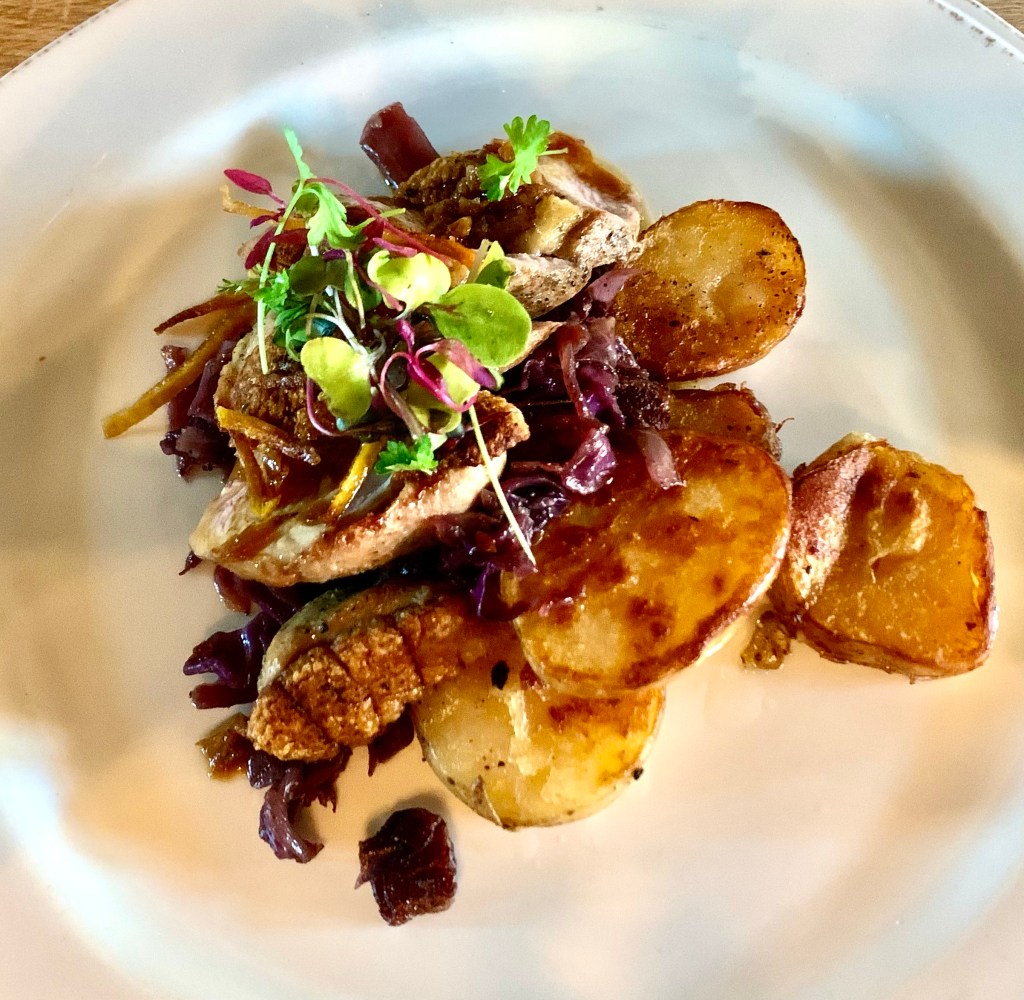
We recently paid RANGE a visit for dinner, and happened upon this week’s Wine of the Week. Along with their regular menu, RANGE always has at least two specials: a Fresh Catch and a Game of the Week. On this particular day, the Fresh Catch was Pan Seared Scallops served over a bed of Mushroom Risotto, and the Game was Duck Breast with an Orange Glaze served with Braised Red Cabbage, Bacon Lardon, and Confit Bintje Potatoes. (Kent had to look it up afterward because he stopped listening after “Duck Breast!”) Robyn has had the Scallops before, and knowing how delicious they are, didn’t hesitate to order them again.
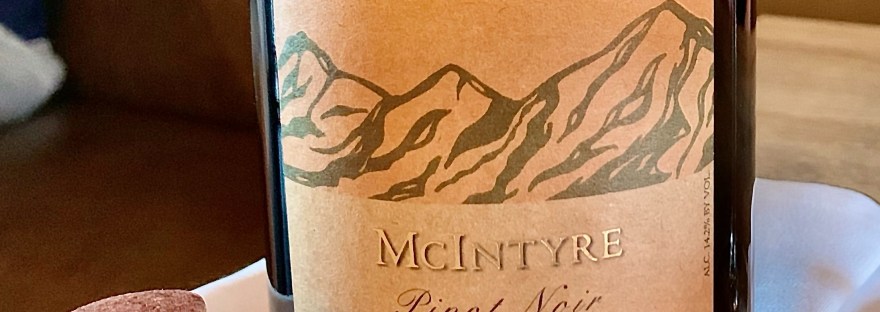
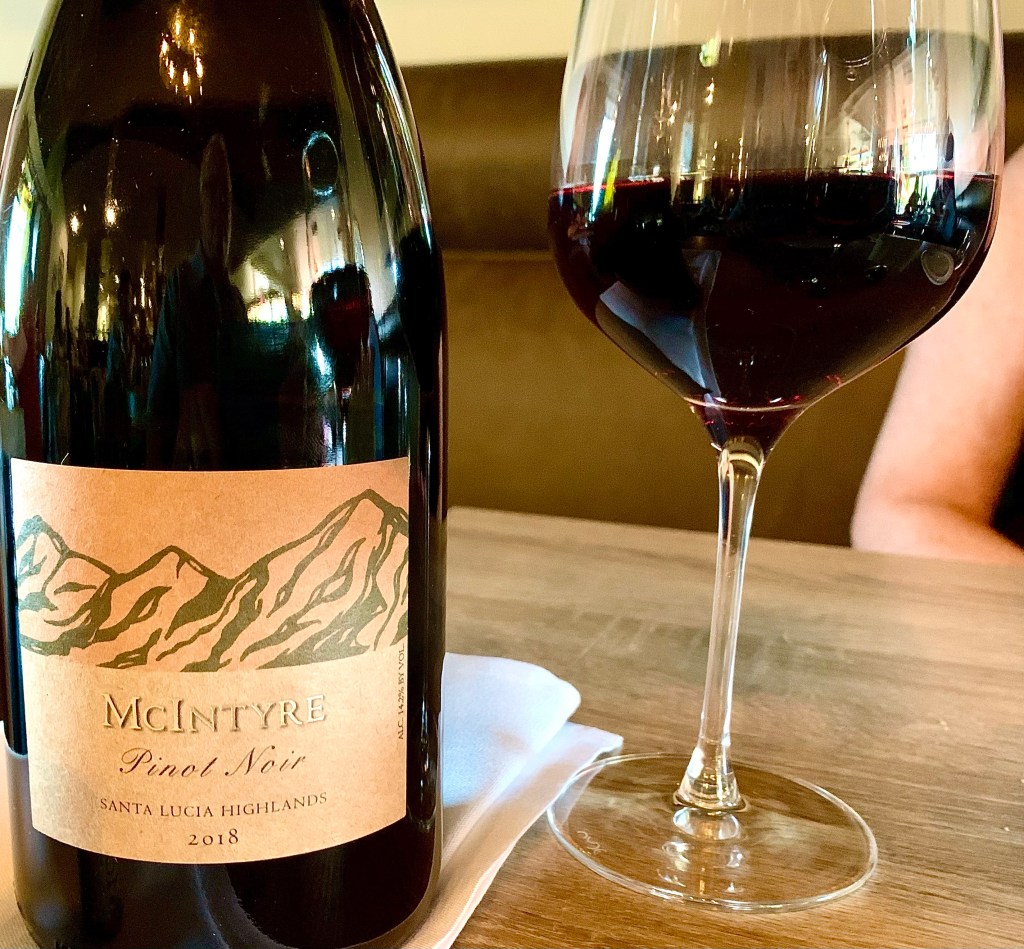
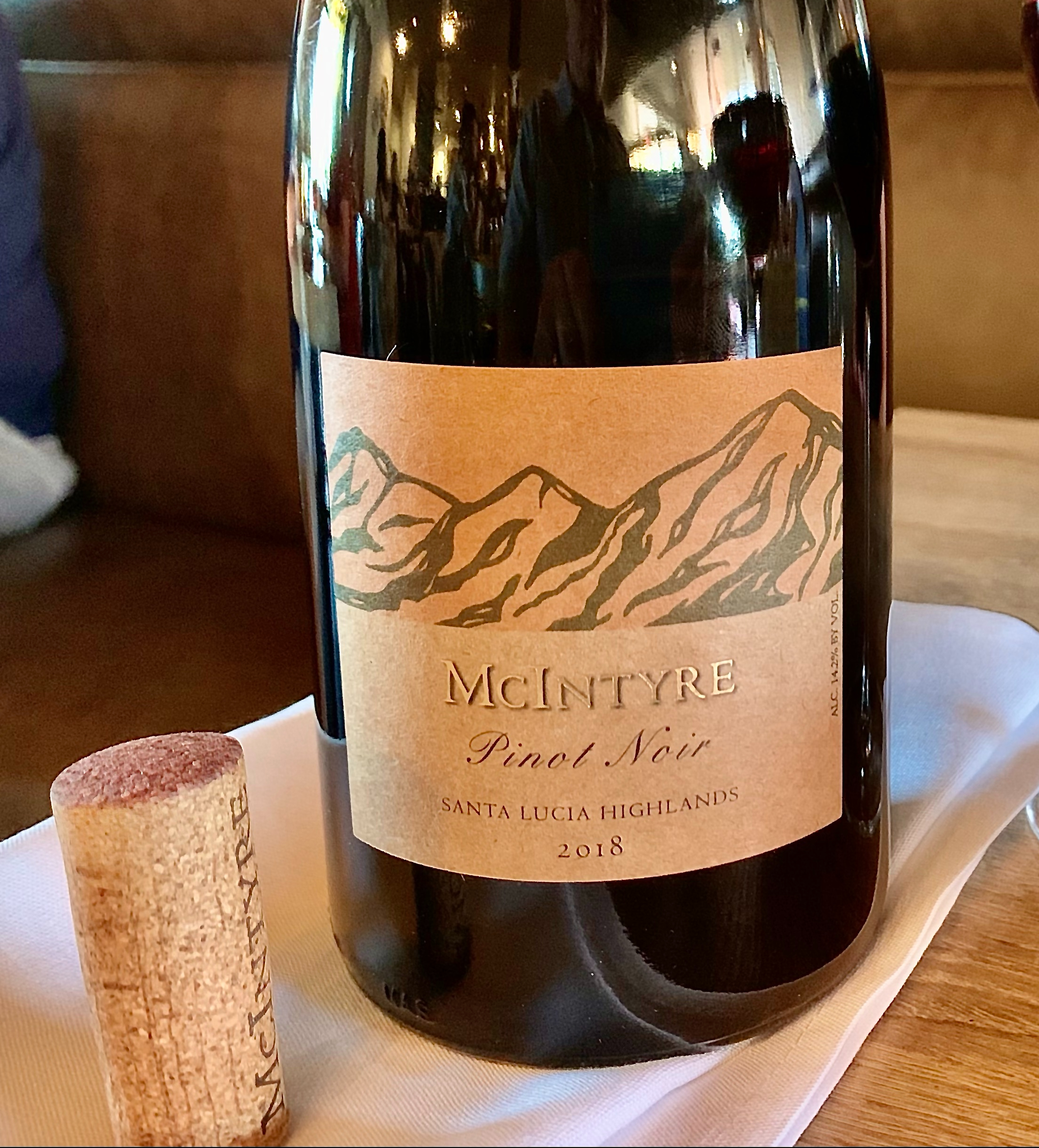
With our decisions made on our entrees, the next challenge was wine pairing. Usually, finding a single bottle that will pair with both light seafood and a rich duck dish can be a real conundrum. However, in this case, the Mushroom Risotto served with the Scallops made the decision a bit easier. Perusing the wine list, Kent’s eyes fixed on the McIntyre Pinot Noir Santa Lucia Highlands 2018. Our server concurred, and commented that of all the Pinot Noirs on the menu, this was her favorite with duck. Say no more.
Chef Kevin never disappoints, and as expected, the food was exquisite (you’ll have to imagine the Scallops and Risotto since we somehow managed to forget to take a picture) and the wine pairing was perfect with both entrees.
Deep garnet color. On the nose, smoky raspberry, bold red fruit and cherry, and plum notes. These carry to the palate, with flavors of raspberry, bing cherry, tobacco, leather, smoked meat, and baking spice. Integrated tannins, with smooth, medium acidity, medium body, and a long finish of ripe red fruit and black pepper.
McIntyre’s 60 acre Estate Vineyard was planted in 1973, making it one of the oldest Pinot Noir and Chardonnay vineyards in Santa Lucia Highlands. It is also one of the first vineyards in the region to be Sustainability In Practice (SIP) certified. As a smaller production winery, McIntyre wines are available at select restaurants and wine shops. If you come across them, try them!
What was your wine of the week?
Cheers!
Text and photos by Kent Reynolds and Robyn Raphael-Reynolds
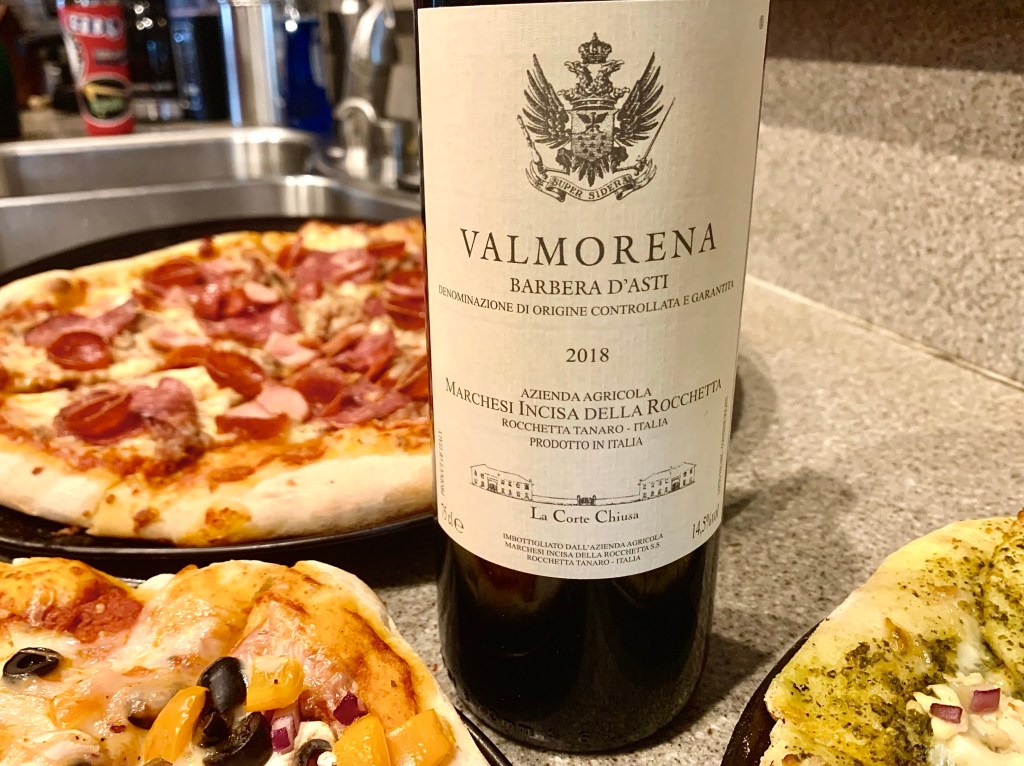
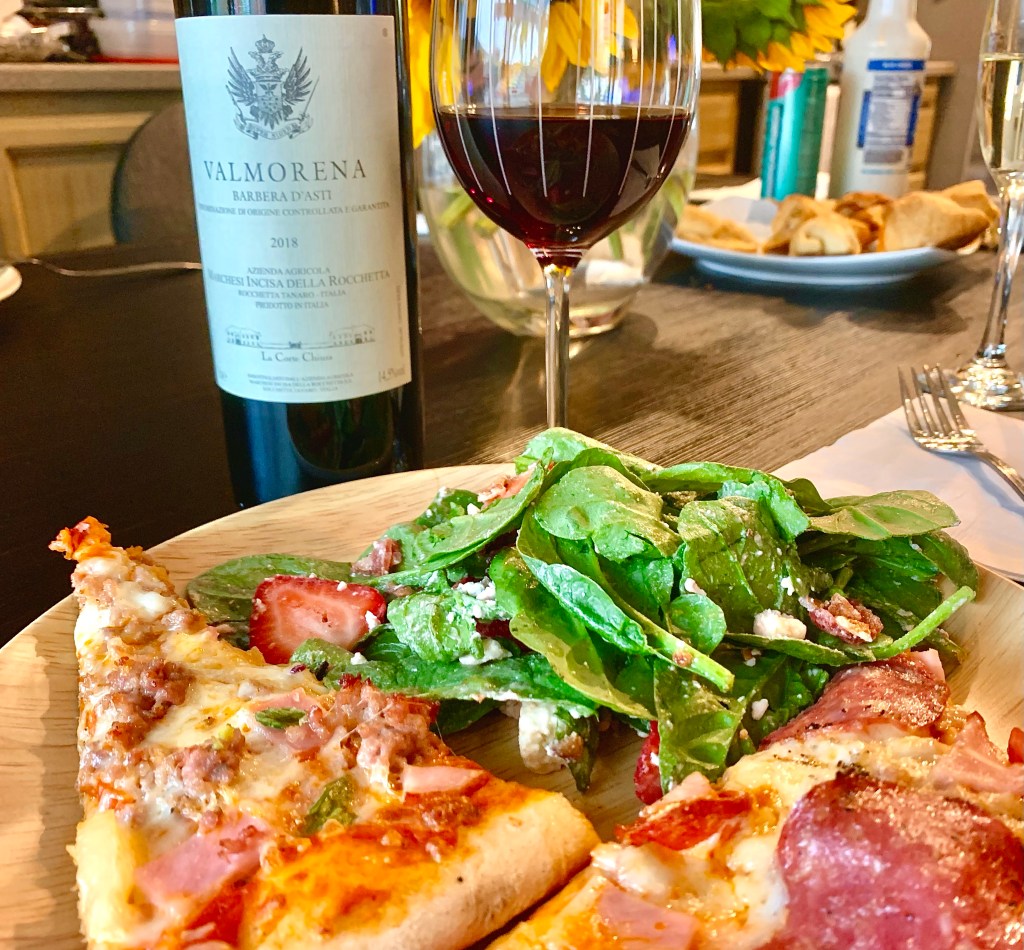
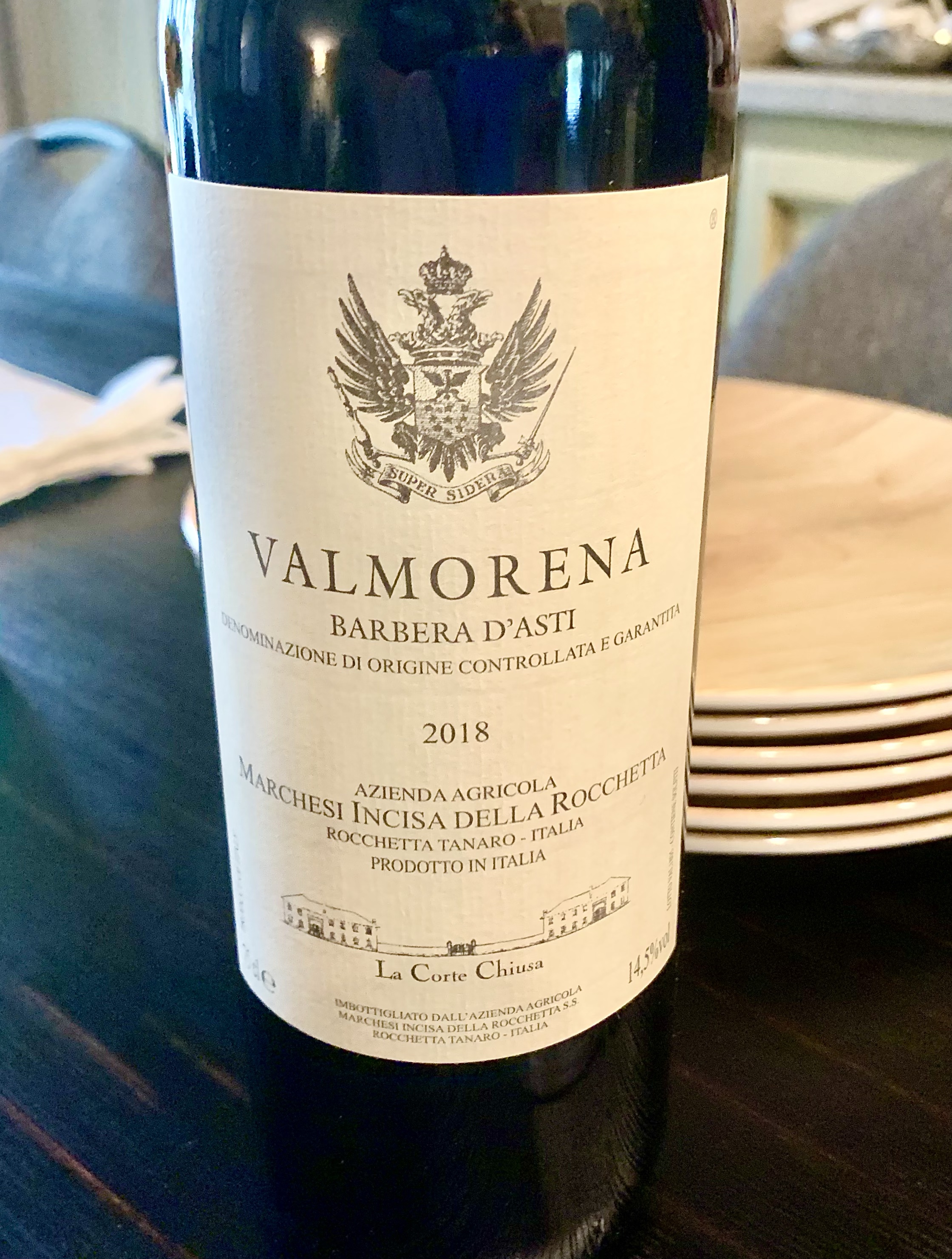
Every once in a while, you score a wine that absolutely exceeds expectations. Our Wine of the Week this week is one of those wines. A few weeks back, Wine.com was having one of their red wine sales. Always on the prowl for bargains, we checked it out and, among a few others we purchased, we snagged a couple bottles of Marchesi Incisa della Rocchetta Valmorena Barbera d’Asti 2018.
We are big fans of Barbera, but typically prefer bottles from Amador County in the Sierra Foothills, where Barbera grows exceptionally well. Barbera is one of the few varieties that we generally favor richer, fruit-forward New World versions over Old World. Maybe we just hadn’t found the right ones, but many of the Italian Barberas we’ve had have been rather thin and lacking, with acidity approaching excessive. Well, the Marchesi Incisa della Rocchetta Valmorena Barbera d’Asti 2018 was about to blow that stereotype right out of the water!
Marchesi Incisa della Rocchetta has more than 1,000 years of history in the Piedmont region of Italy. The Incisa family ancestors settled there in the 11th century. In the 13th century, local monks leased land from the Incisa family to cultivate grapes, and by the 19th century, the Marchese Leopoldo Incisa della Rocchetta had become known in the region for his viticulture and winemaking. He was an early pioneer in experimenting with Pinot Noir plantings in Piedmont. Members of the family have expanded to Tuscany, where Sangiovese is king, but the Piedmont estate is still owned and operated by members of the Incisa della Rocchetta family. In the 1990’s the Marchesa Barbara Incisa della Rocchetta inherited and purchased the estate and continues operations to this day, producing wines from local native grape varieties like Barbera, Grignolino, Moscato d’Asti and Arneis, while continuing production of international varieties such as Pinot Noir and Merlot.
With such prestigious and long-standing wine making history, how can you go wrong? You can’t. The Valmorena Barbera d’Asti 2018 is a stunning, breath-taking wine. It really changed our minds about Old World Barbera. We opened our first bottle with grilled pork loin and the experience was euphoric. Recently, we brought our second bottle to a friend’s house for a homemade pizza night. With seven hungry (and thirsty) adults in the house, suffice it to say we opened more than one bottle of good wine that night. But the one that stood out, head and shoulders above all others, by unanimous decision of all present, was our Wine of the Week, Marchesi Incisa della Rocchetta Valmorena Barbera d’Asti 2018. It’s just that good.
Garnet color. Aromas of blackberry bramble, plum, and spice. On the palate, black cherry, blackberry, plum, vanilla, white pepper, and earthy notes. Bone dry with medium tannins and bright acidity, perfect for food pairing and great with grilled pork loin or pizza. Or both, why not?
The Marchesi Incisa della Rocchetta Valmorena Barbera d’Asti 2018 is available from Wine.com. As of this writing, it is on sale (still or again, doesn’t matter!) for just $16.99. Many other wines from Marchesi Incisa della Rocchetta are also available and worth trying!
What was your wine of the week?
Cheers!
Text and photos by Kent Reynolds and Robyn Raphael-Reynolds
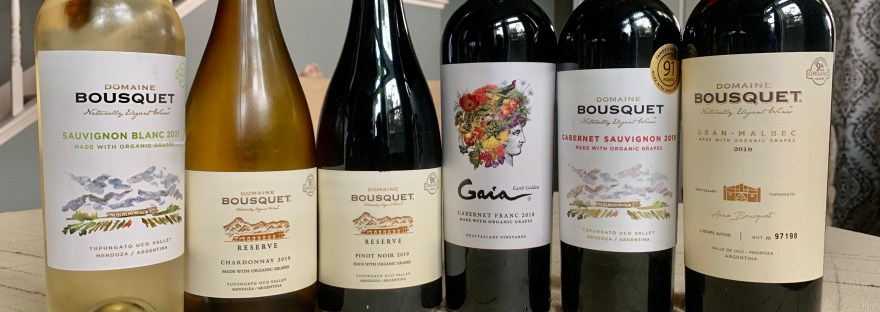
We wrote about Domaine Bousquet not long ago, when we received a sample of their Gaia Rosé 2020. In that post, we wrote a little about the history of the Bousquet family and the creation of Domaine Bousquet in the Gualtallary Valley, high in the mountains in Argentina, and the fantastic wine. So naturally, we were honored when we were invited to a virtual tasting including discussions with Anne Bousquet, current proprietor of the winery, and Franco Bastias, the winery’s chief agronomist. (What’s an agronomist? An expert in the science of soil management and crop production. Now you know, too.) Of course, to be a virtual “tasting”, one must have wines to taste. We were pleased to receive as samples, six bottles of Domaine Bousquet wine.
The following wines were provided as media samples for review. All reviews, descriptions, and opinions are our own. We received no additional compensation.
In their presentation, entitled “Dishing the Dirt”, Anne and Franco discussed what makes the terroir of Domaine Bousquet so unique. Spoiler alert: The subtitle is “The secret is in the soil.” Anne started us off with some history of the land, family, and winery.
In 1997, Anne’s father Jean Bousquet, moved from Carcassonne, in Languedoc, France, to the Gualtallary Valley, and purchased a plot of land that had never been cultivated. In this arid region, the driest wine growing region in the world, first things must come first, so in 1998, Jean Bousquet dug a 495 foot deep well for irrigation. Meanwhile, in 2002 as vineyards were taking shape, Anne and her husband, Labid Al Ameri, started to invest in the winery, while maintaining their non-wine-industry careers in Boston. The first vintage was released in 2005, and Labid joined full time in the sales department. By 2008, Anne was on board and she and her family relocated to Argentina. Jean retired in 2011, and Anne and Labid, and Anne’s brother, bought Domain Bousquet and assumed day to day operations. In the years since, production has increased, and in 2020, they sold approximately 7 million bottles of wine.
Domaine Bousquet is planted to 618 acres of vines, all of which are organic. In fact, they received their organic certification in 2005, the same year as their first vintage was released. With Domaine Bousquet coming out of the gate as certified organic, they raised the bar for other growers in the region, from whom Domaine Bousquet would buy grapes, and many of them have achieved organic certification as well. In addition to organic, Domaine Bousquet has also achieved certifications as vegan and sustainable.
As good as organic, vegan, and sustainable is, Domaine Bousquet doesn’t stop there. They have launched a “360° Sustainability Commitment”. This includes supporting the community and the people who live in and around the town. This is a three-prong commitment: environmental, social, and economic. We’ve covered the environmental part. On the social and economic sides, Domaine Bousquet is certified “Fair for Life.” This certification is part of a fair trade and corporate responsibility commitment for global change for the better and helping others. As part of this, the winery supports several children’s homes in the area, and has donated more than $113,000 to help those in the community experiencing economic hardship and social exclusion. Those are some causes we can get behind and gladly support by purchasing Domaine Bousquet wines!
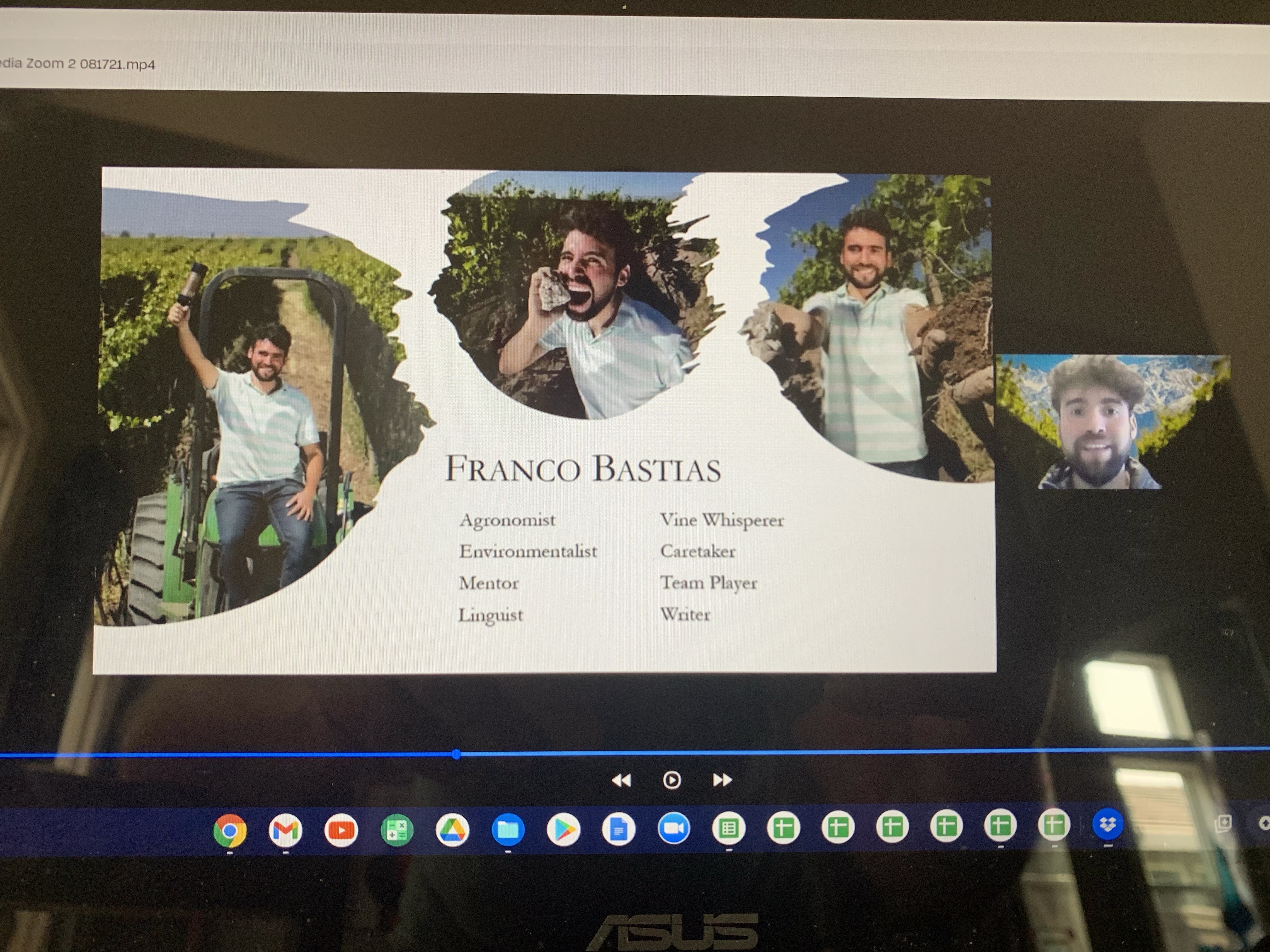
Next, we met Franco. Franco’s energy and enthusiasm were immediately evident, and infectious. He gave us some geography lessons, then, in video segments, took us deep into the soil. Literally.
The Uco Valley is comprised of three departments: Tupungato in the north, Tunuyan in the middle, and San Carlos in the south. Domaine Bousquet is located in Tupungato. This area of the valley was originally settled by Jesuit missionaries in the 17th century. By the early 1900’s, orchards, vineyards, and other crops were planted. It wasn’t until the early 2000’s, however, that the wine world started to take notice, as local producers started attracting attention to the region.
The soils in Tupungato vary from rocky to sandy and silt, which flowed down from the Andes mountains. At these elevations, and with the harsh winters there, diurnal temperature swings of up to 59°F can occur, resulting in fresh, fruity wines. One of the other distinctive conditions are calcareous soils, containing concentrations of calcium deposits, which add to the unique character of the wines.
In the video segments, Franco showed us cross sections of the soil conditions in soil pits, which are dug several feet deep directly adjacent to rows of vines. This was fascinating to see, as each of the wines featured have different soil conditions. As Franco walked us through the various soil pits, we tasted along with the wines. Isn’t that what it’s all about?
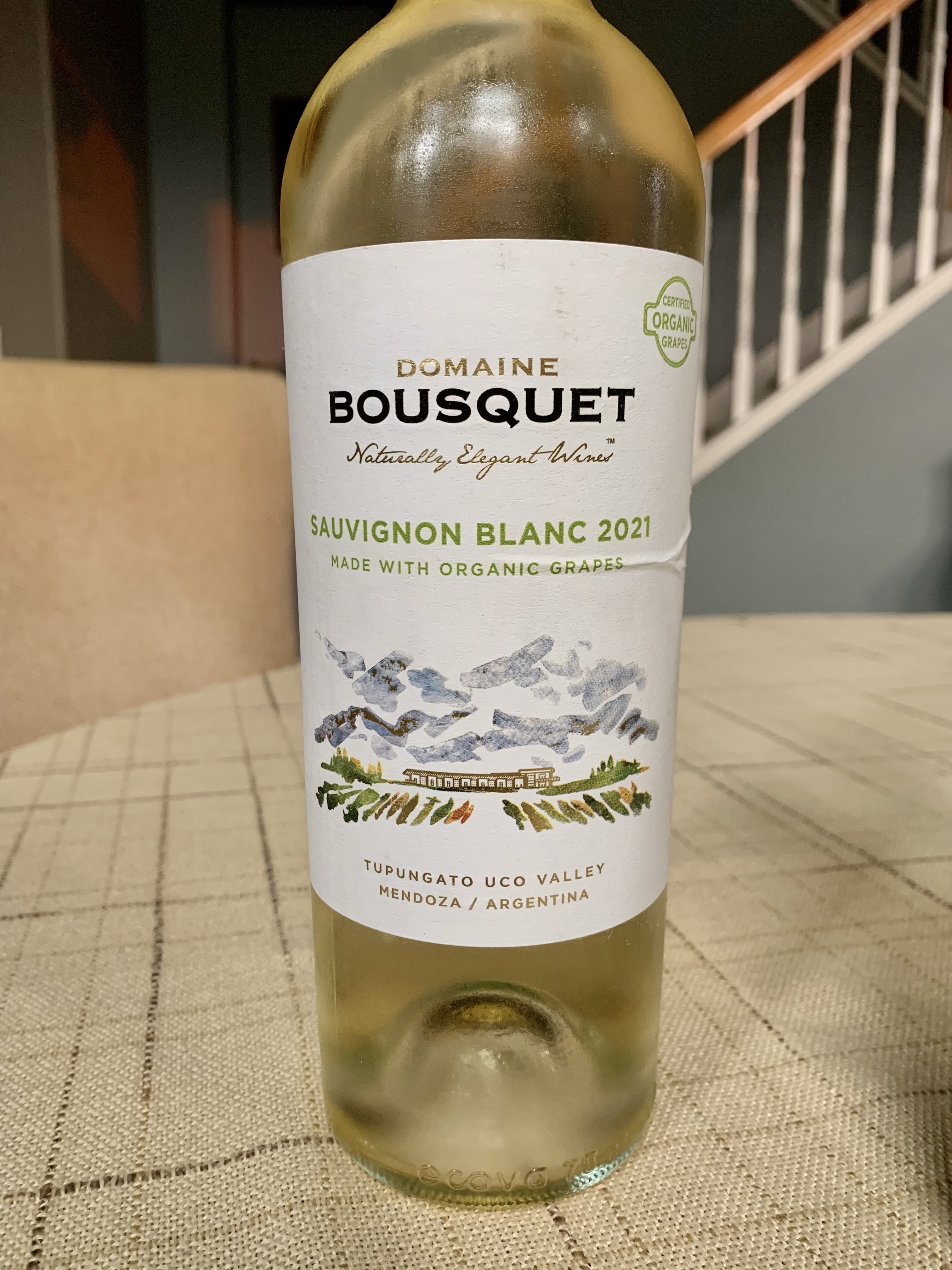
Domaine Bousquet Sauvignon Blanc 2021
Pale straw color. On the nose, apricot, peach, and pineapple. On the palate, pineapple, citrus, peach, and pear. Bracing acidity, yet very smooth with a soft finish.
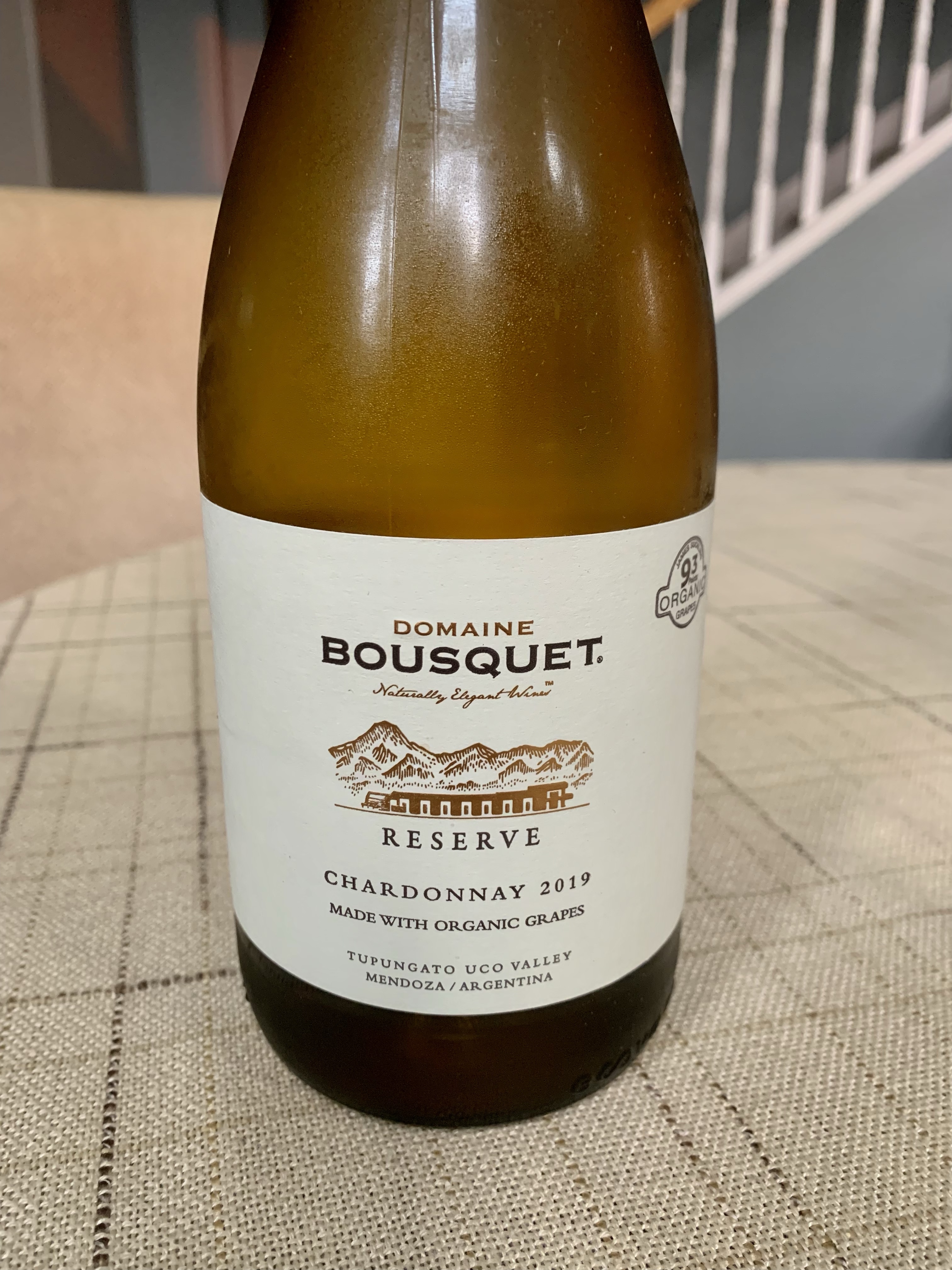
Domaine Bousquet Reserve Chardonnay 2019
A very unique and enjoyable Chardonnay. Golden color. Nose of pear, peach, and tropical fruit /mango. On the palate, a tropical paradise: pineapple, mango, with citrus, pear, and just a hint of butter. Creamy mouthfeel, with balanced, vibrant acidity. Medium plus body, with a citrus finish.
Domaine Bousquet Reserve Pinot Noir 2019
Bright ruby color. Cherry, raspberry preserves, and white pepper on the nose. On the palate, juicy fruit flavors of raspberry, strawberry, and red cherry, with cedar, and spice. Light-to-medium body, soft tannins, bright acidity, and a medium red fruit finish.
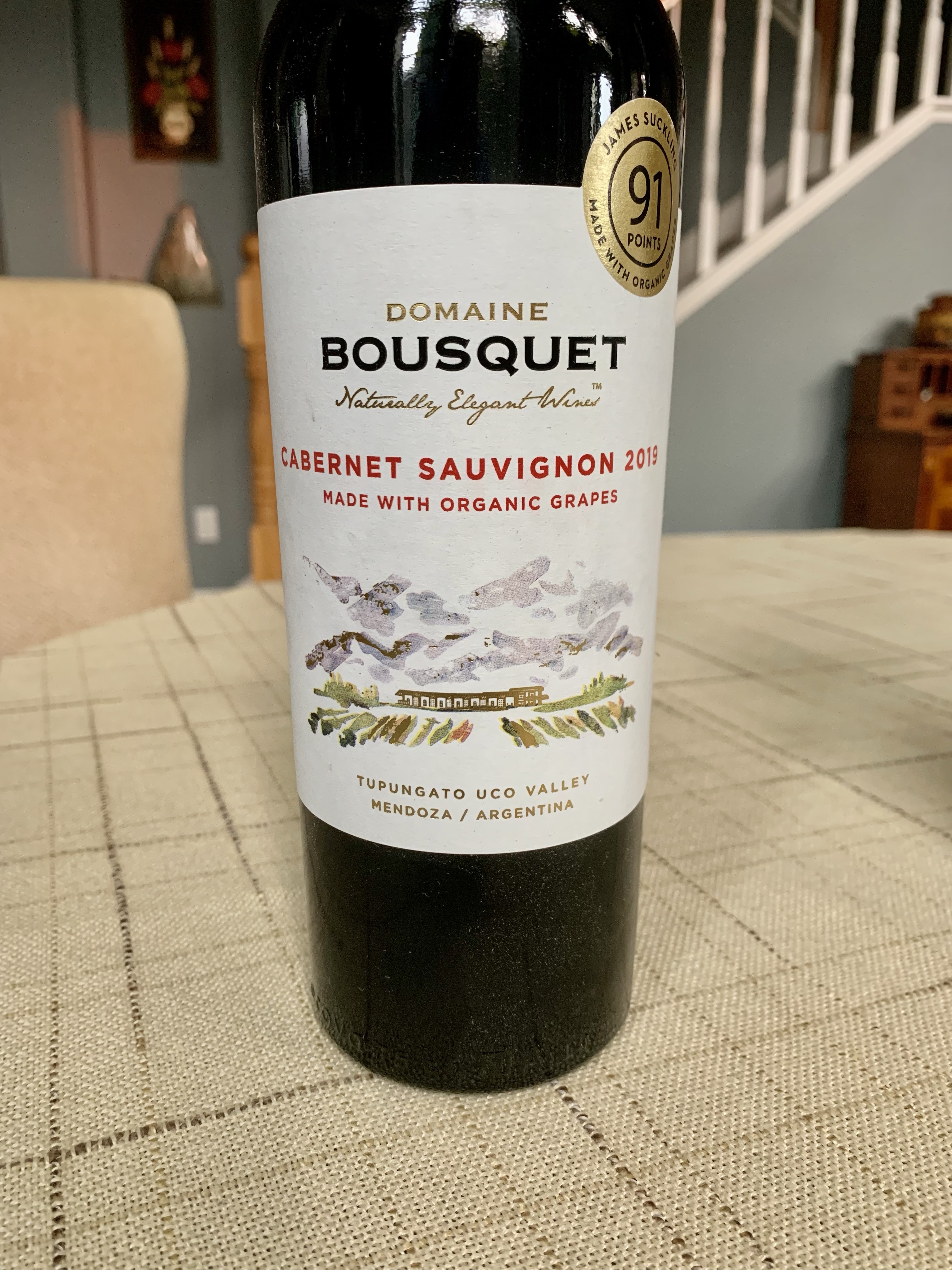
Domaine Bousquet Cabernet Sauvignon 2019
Deep garnet color with a ruby rim. Lots of classic Cab Sauv characteristics. Nose of blackberry, cassis, and black cherry. On the palate, black cherry, plum, black currant, blackberry, and cedar. Medium-plus body, integrated tannins, medium acidity, and a long finish of red fruit, baking spice, and pepper. Fresh & clean so the fruit really shines.
Domaine Bousquet Gaia Cabernet Franc 2018
Inky garnet color. Funky, earthy nose, with red cherry and boysenberry. On the palate, ripe, juicy blackberry, boysenberry, blueberry, and hints of bell pepper and baking spice. Big, full body, with ripe tannins, medium acidity, and a long finish of dark fruit and black pepper and minerals.
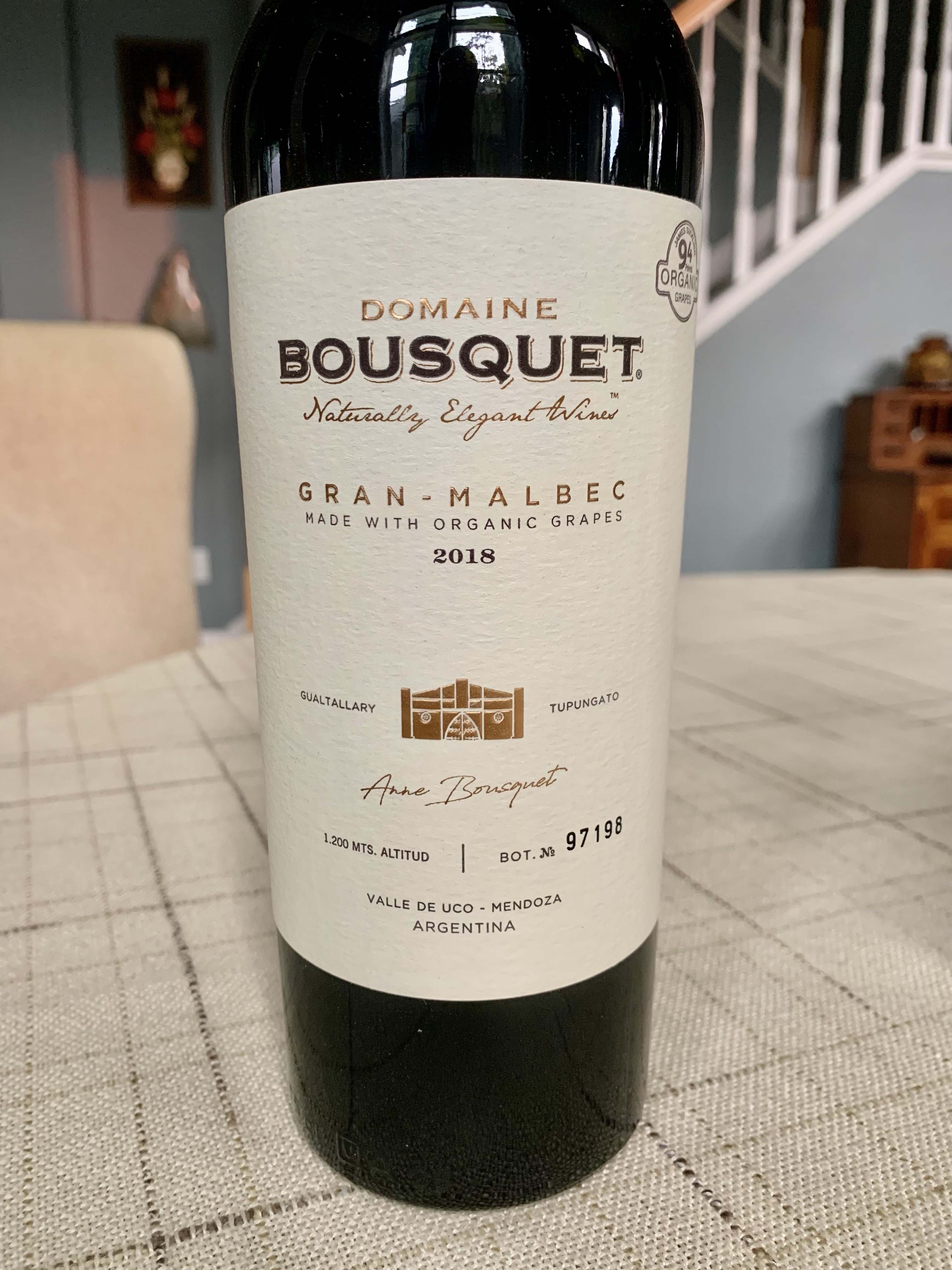
Domaine Bousquet Gran Malbec 2018
Wow! Very soft and smooth. Deep purple with a garnet rim. Black cherry, plum, and blackberry on the nose. On the palate, ripe blackberry, black cherry, blueberry, and Marionberry, with hints of cedar, cocoa, and baking spice. Rich, full body with velvety tannins, medium acidity, and a long finish of black fruit and chocolate.
All of the wines are very well structured and balanced. With minimal oak influence, each wine allows the fruit to take center stage and shine. In the days following the virtual tasting, we enjoyed finishing the bottles with our meals. All are very food friendly, yet able to stand on their own as evening sippers. Did we mention value? The SRP for these wines is shocking; they all drink well above their price point!
Domaine Bousquet Gaia Cabernet Franc 2018 / SRP $20
Domaine Bousquet Gran Malbec 2018 / SRP $25
We are very impressed with the wines that Domaine Bousquet is producing, and their commitment to sustainability and corporate social responsibility. We definitely recommend you seek out these wines and enjoy them for yourself.
Let’s get this out of the way up front. Petite Sirah and Syrah are not the same grape. They’re not even spelled the same. However, they do have a few things in common. Both are native to the Rhone,in France. Both go by different names in different parts of the world, most notably, Australia, where Petite Sirah is known as Durif, and Syrah is called Shiraz. What’s more, in 1996, genetic testing determined the Syrah is actually one of the parent varieties of Petite Sirah, the other being the nearly extinct grape, Peloursin.
Now that we have that cleared up, let’s talk about Petite Sirah from Suisun Valley. What? Where? Wait, you’ve never heard of Suisun Valley? You’re not alone. But you’ll be hearing that name more and more as this up and coming region makes its mark on the wine world.
Suisun Valley is located in Solano County, California, which is adjacent to Napa County. Suisun Valley is just a 30 minute drive southeast of Napa, and shares a similar climate with Napa. However, the soils here are more welcoming to what has become Suisun Valley’s signature grape, (drum roll, please): Petite Sirah.
As a lesser known region, Suisun Valley lacks the notoriety, traffic, crowds, and high prices of its northern neighbor. Instead, small family farms, many of them generations old, dot the landscape. Tasting rooms, too, are family owned and offer a casual and inviting tasting experience. Suisun is also very accessible, just off I-80 in Fairfield, California. (If you’ve been to Napa via I-80, you’ve driven through Fairfield.) There are currently 12 wineries in the valley, with just 3,000 acres under vine. Sounds delightful, no?
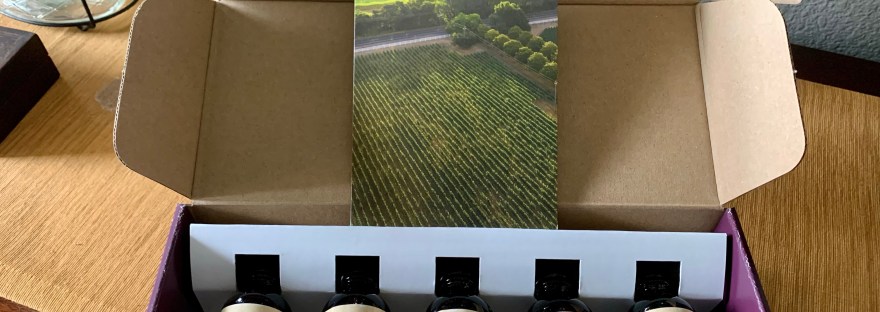
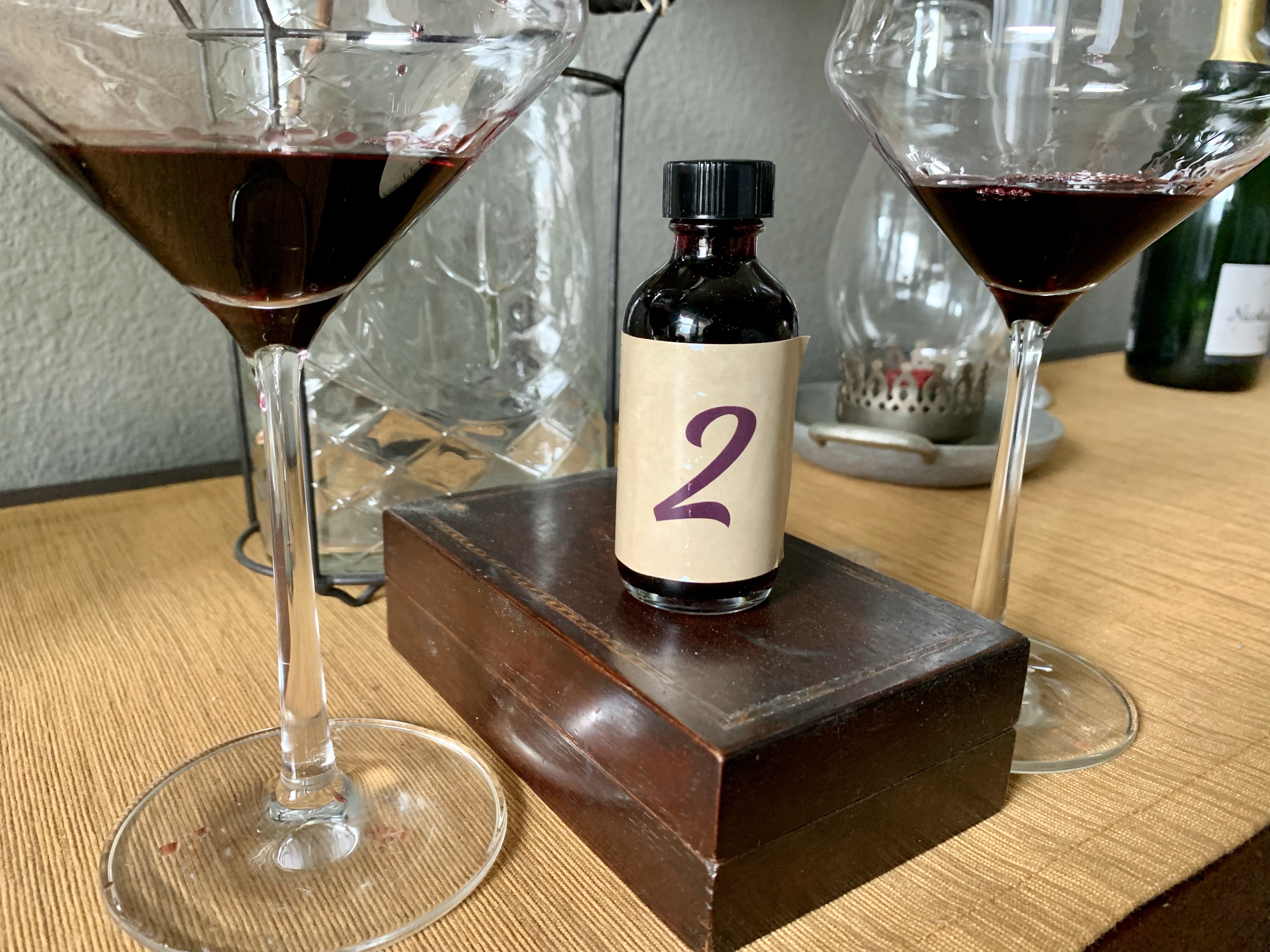
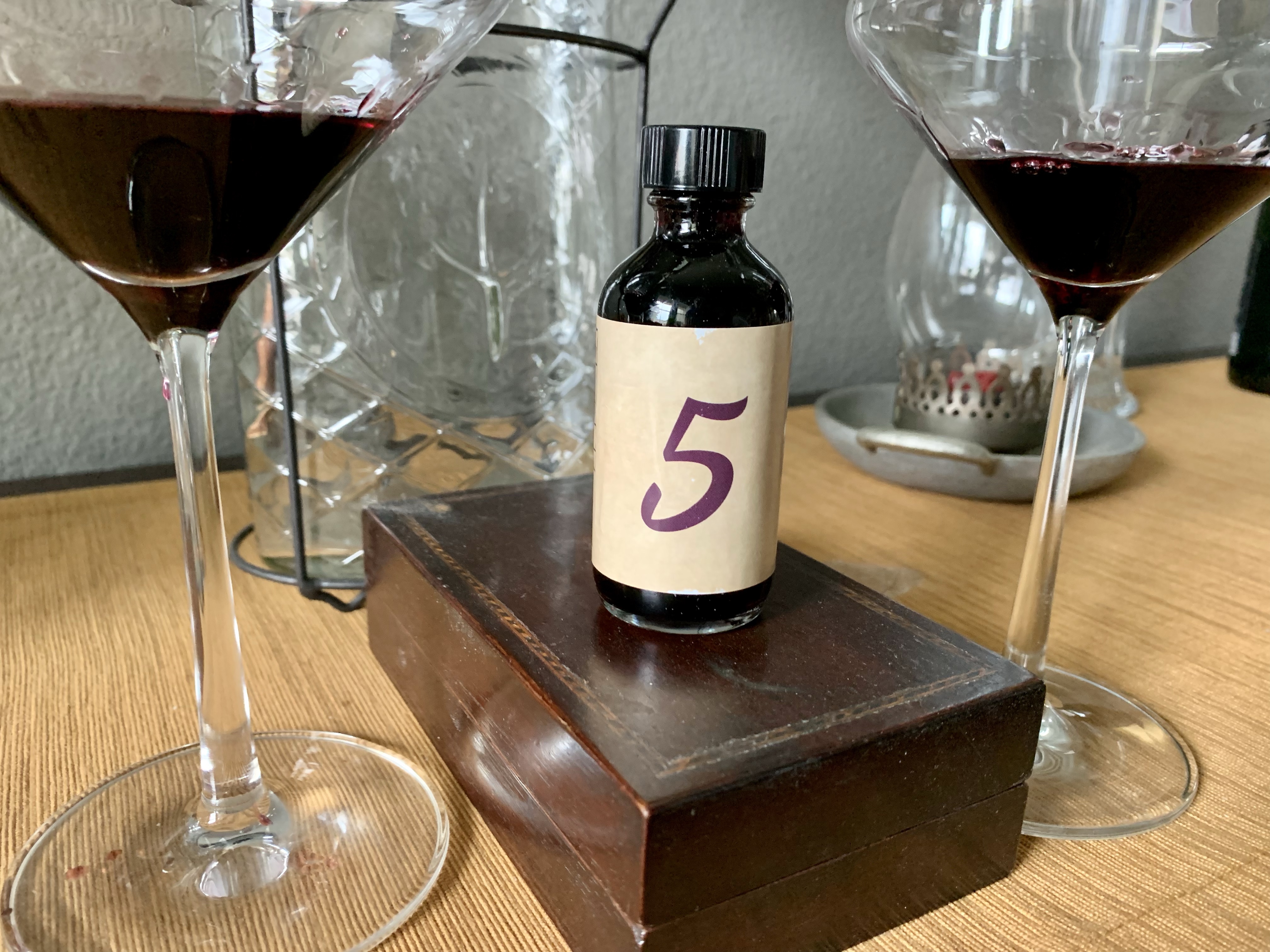
We had the opportunity to sample the wines from five Suisun Valley producers. The Suisun Valley Wine Co-op assembled this sample pack of 2 oz. tasters to tantalize our taste buds and leave us longing for more. It worked.
The following wines were provided as media samples for review. All reviews, descriptions, and opinions are our own. We received no additional compensation.
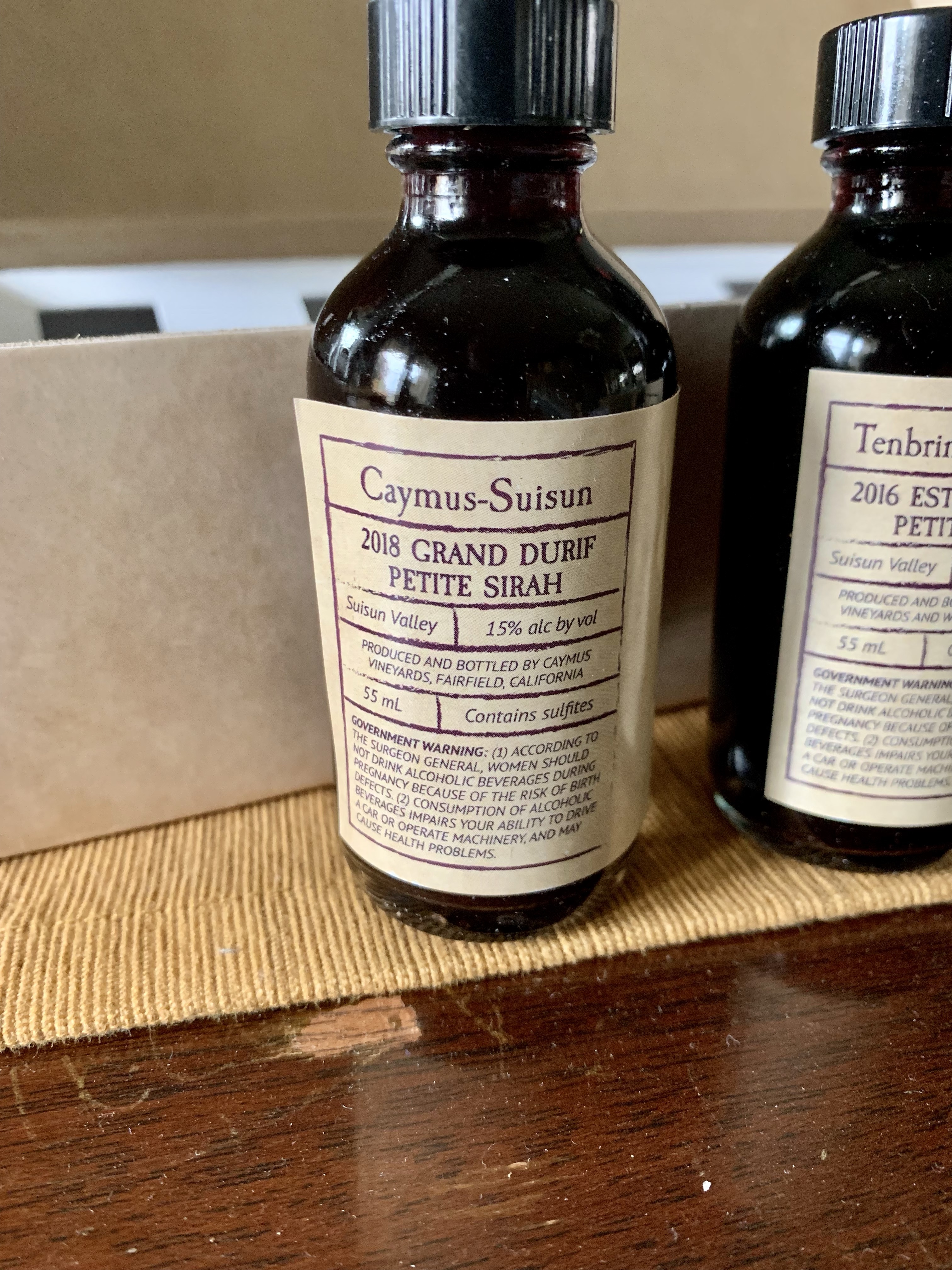
Caymus-Suisun Grand Durif Petite Sirah 2018
Inky purple color. On the nose, blackberry, plum, and black pepper. These continue on the palate, with “cabinet spice”, cedar, and tobacco. Full body with vibrant acidity and medium tannins. Long finish with black fruit, tobacco, smoke, and spice.
Mangels Vineyard Reserve Petite Sirah 2018
Bright purple color with a ruby rim, Nose of boysenberry, blackberry, and black cherry. On the palate, bing cherry, raspberry, and blackberry. Chalky texture and tannins, soft acidity, and a long finish of black and red fruit.
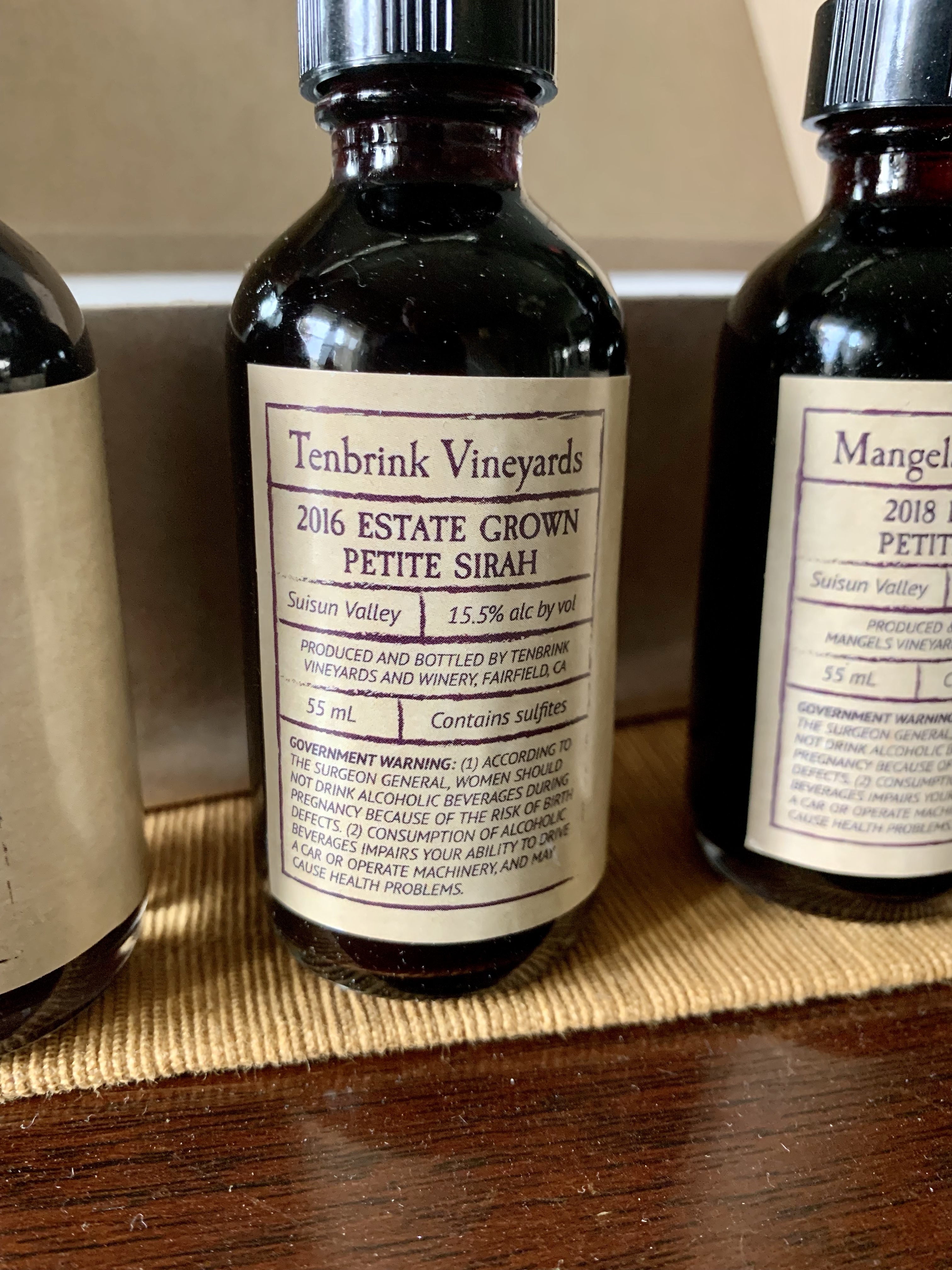
Tenbrink Vineyards Estate Grown Petite Sirah 2016
Deep purple with a ruby rim. Nose of blackberry, green pepper, and jalapeno. On the palate, blackberry and cherry, with a surprise guest: black olive. Full body, edgy tannins, and medium acidity. Nice, long finish.
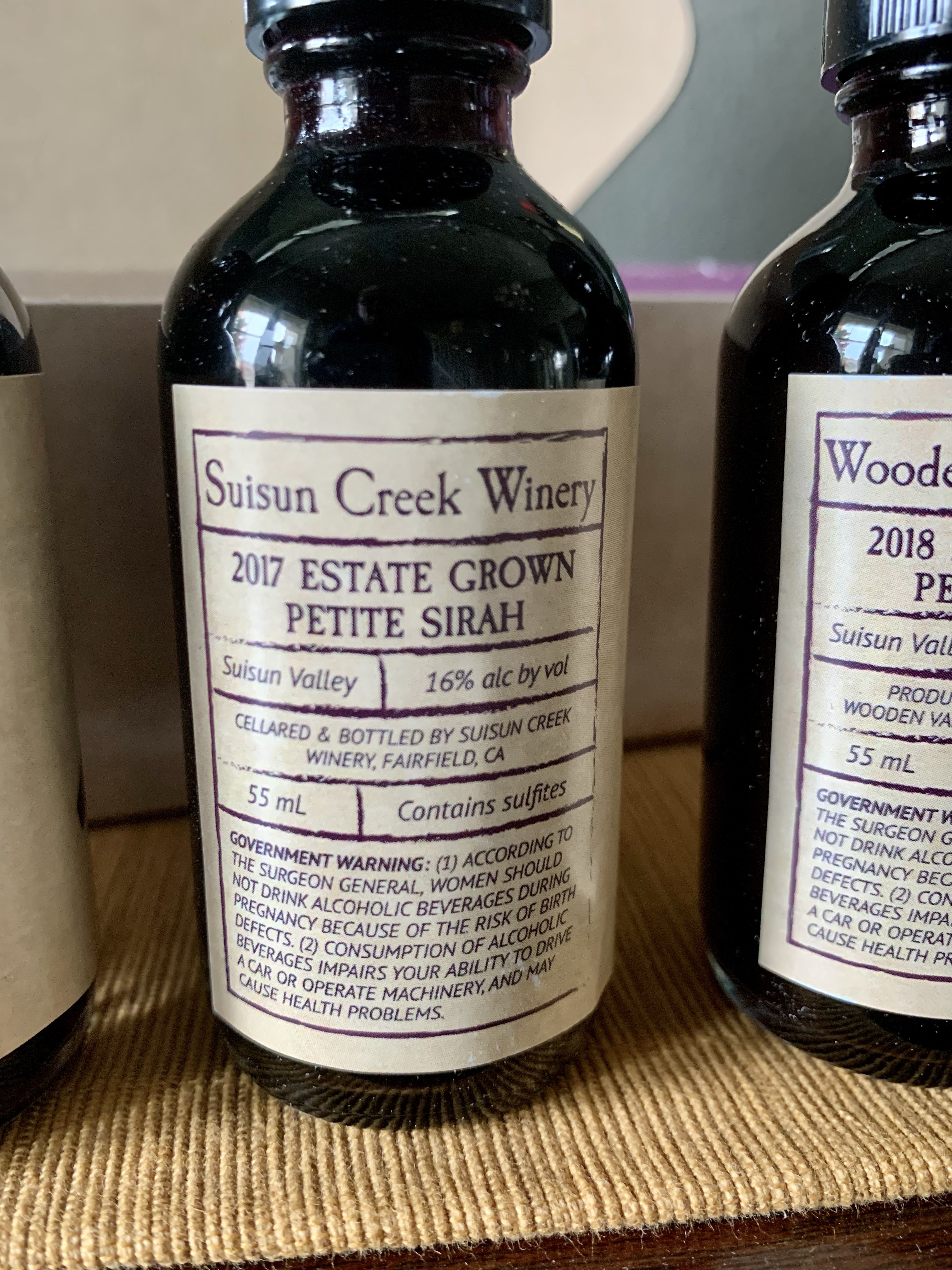
Suisun Creek Winery Estate Grown Petite Sirah 2017
Inky purple color, with ruby rim. Nose of blackberry, stewed prune, and boysenberry. On the palate, black cherry, plum, and blackberry. Smooth tannins, medium acidity, and as expected, a rich, full body. Pleasing, smooth finish.
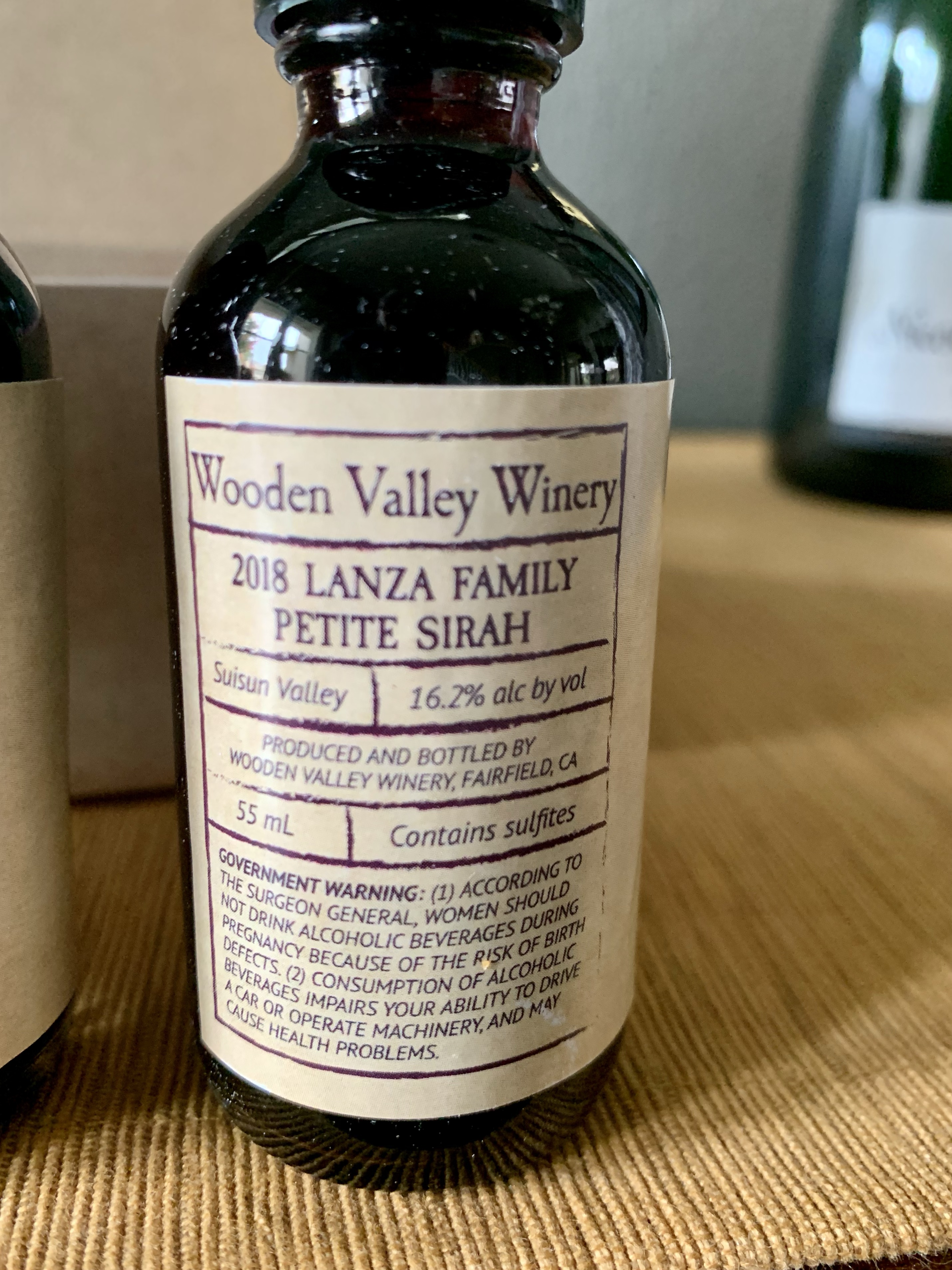
Wooden Valley WInery Lanza Family Petite Sirah 2018
Deep purple color. The nose is vegetal, with notes of blackberry and bramble. On the palate, bright blackberry, Marionberry, black cherry, jalepeno, and our new friend, black olive. Full body with drying, grippy tannins, bright acidity, and a long, smooth finish.
We enjoyed each of these samples, and it was very interesting to experience the diversity of style and character, considering each sample was the same grape, from the same small region. We look forward to the opportunity to visit Suisun Valley to taste more of the wines coming from this emerging region.
So much about this post is divergent from our usual notions and stereotypes about wine. Red wine in the summer? Certainly. Do you not drink Rosé in the winter? Oh, you don’t? Well, that’s a topic for another post. Our Wine of the Week being a budget-friendly, mid-week wine? Well, this just proves that good wine doesn’t have to break the bank. But the most surprising thing for us, is that our Wine of the Week this week is a…*gasp*…Red Blend from California. (Spoiler Alert: Wine Snobbery Geekery ahead.)
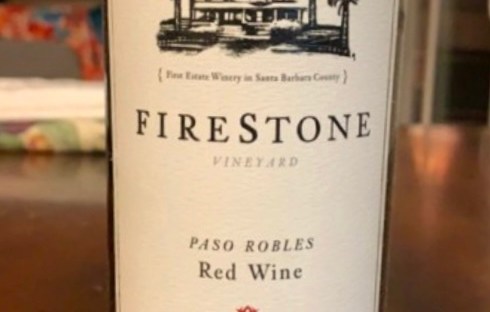
Don’t misunderstand. Many of the great wines of the world are red blends. Bordeaux? Red blend. Super Tuscan? Also a red blend. Côtes du Rhône? We’ve made our point. Nevertheless, stereotypes exist for a reason. California Red Blends have a reputation of being cheap, flat, and sweet; mass produced for the masses. And many of them are. And a lot of people like them. They just aren’t a style we typically prefer. To be fair, the Firestone Red Wine 2016 is from the designated Paso Robles AVA, so it isn’t technically a “California” Red Blend.
(Side note, designations matter. If you see “California” on the label, it means the grapes came from somewhere, anywhere in the vast state. The name of a county on a label means at least 75% of the grapes must come from that county, and if the wine carries a designated AVA name, it means 85% or more of the grapes came from that AVA. Why does this matter? Some regions have better growing conditions for certain grape varieties, a suggestion that the wine will showcase the characteristics of the terrier of the region, and be an overall better wine. Another topic for another blog post. We now return you to our regularly scheduled Wine of the Week blog.)
Firestone Vineyard was the first estate winery established in Santa Barbara County. In the 1970’s, before even Napa had established worldwide acclaim, Leonard Firestone saw potential in the Santa Ynez Valley. (In case you are wondering, yes, Leonard is the son of Harvey Firestone, of Firestone Tires fame.) With 325 acres under vine, and a commitment to sustainable farming, Firestone produces an enticing portfolio of wines. Their red varieties include Bordeaux and Rhone grapes; Cabernet Sauvignon, Merlot, Malbec, Cabernet Franc, and Syrah, while their whites vines are Chardonnay, Sauvignon Blanc, Riesling, and Gewürztraminer.
The Firestone Red Wine 2016 is a classic Bordeaux-style wine, composed of Cabernet Sauvignon and Merlot. We found it at wine.com (currently on sale for $14.99.) Here’s what we thought of it:
Yes, stemless. Don’t Judge.
A smooth and easy drinking red blend. Garnet color. Nose of cherry, raspberry, blackberry, and smoke. On the palate, ripe raspberries, cherry, fresh blackberry, cherry cola, tobacco, spice, and smoke. Medium body, with dry tannins and bright acidity. Medium finish.
In addition to wine.com, Firestone Vineyard wines are available through the Foley Food & Wine Society website.
Our appreciation for Russian River Valley wines has been on the rise lately. We’ve been exploring and drinking more wines from this region, and have been quite impressed with the quality and the distinct character of the wines, winemakers, and winery owners. So naturally, when we were offered samples of two bottles from Ron Rubin Winery, in the Russian River Valley, we gladly accepted.
The following wines were provided as media samples for review. All reviews, descriptions, and opinions are our own. We received no additional compensation.
The story of Ron Rubin Winery came to life in 2011, when Ron purchased a winery in the Green Valley neighborhood of the Russian River Valley. Ron got his start in the beverage industry at a young age, when as a child he would spend time in the warehouse of his family’s wholesale liquor company in Illinois. In 1971, Ron traveled to California to attend U.C. Davis to study viticulture and oenology. From this experience, and the exposure to the then-fledgling wine industry in California, Ron started to add California wines to the family portfolio. All this paved the way to his dream come true with the purchase of the Russian River Valley winery.
After purchasing the winery, Ron renovated the facility and employed the ancient principles of Fung Shui. He converted the estate vineyards to sustainable farming practices. The winery is now SIP-certified and Certified Sustainable by the California Sustainable Winegrowing Alliance. The estate is planted to 6.5 acres of Pinot Noir and 2.5 acres of Chardonnay. Certainly not enough for Ron Rubin’s dream, so he also sources grapes from five other growers in the neighborhood.
Ron Rubin calls himself a “beverage guy” and his experience proves this. Beyond wine and spirits, Ron has also distributed sparkling water and tea. In fact, he owns the Republic of Tea brand, which his son manages. His desire in winemaking is to produce affordable, high quality wines so people can enjoy “beautiful experiences.” He has a reputation of being unpretentious and welcoming, and has no interest in making high priced, exclusive wines. He wants people to be able to enjoy his wines for any occasion.
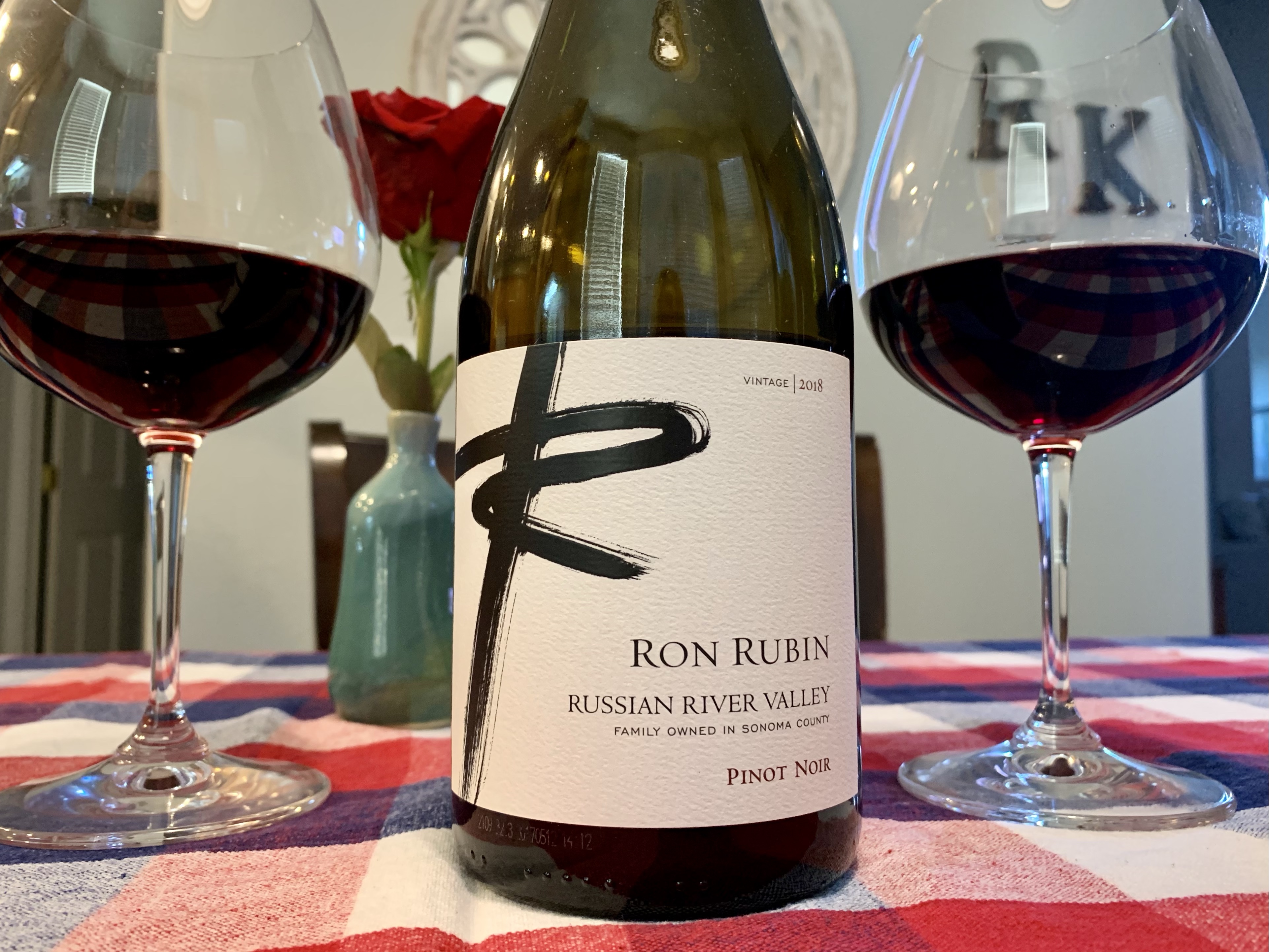
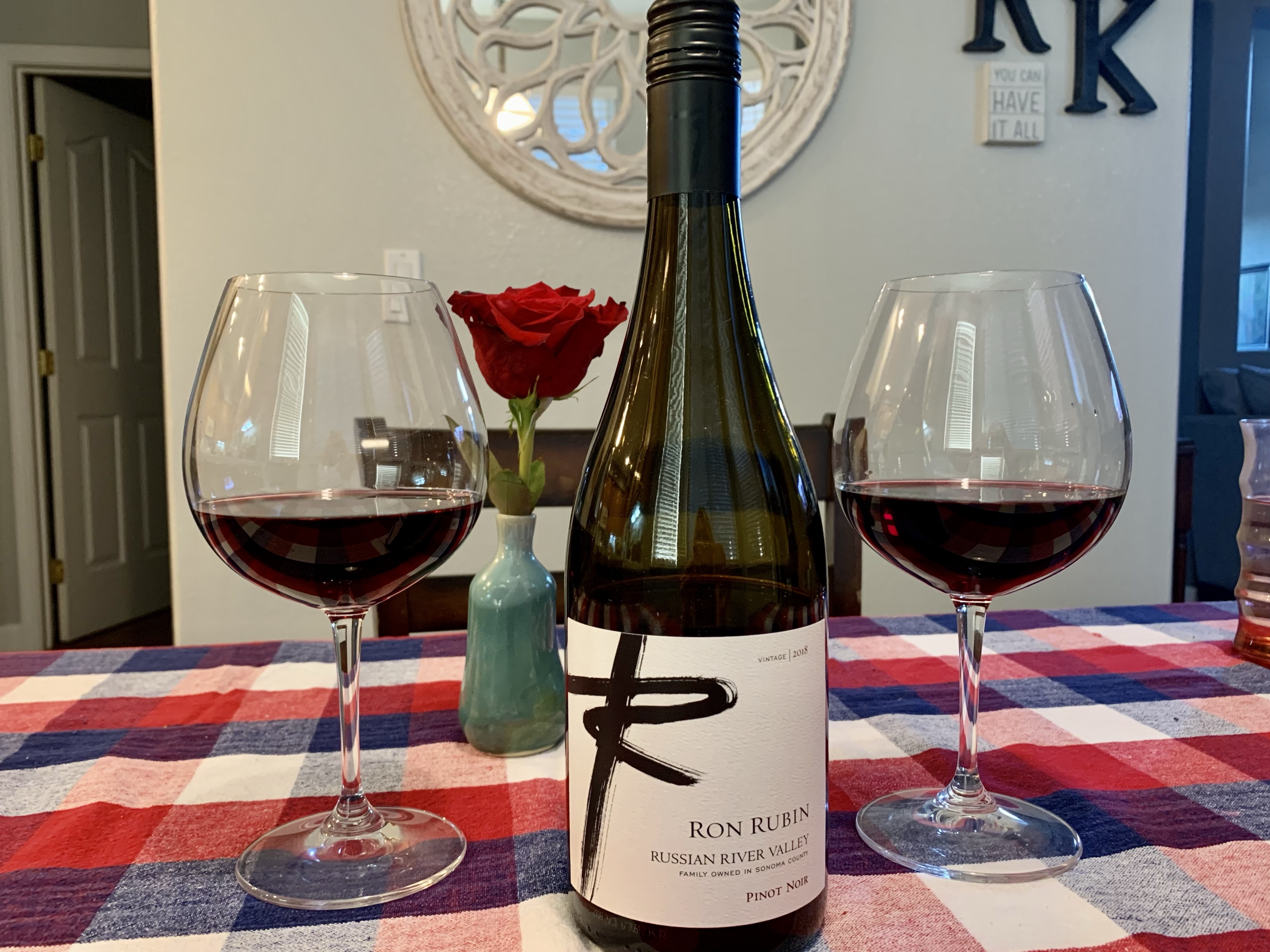
The wines we received were Pam’s UN-Oaked California Chardonnay 2020, and the Russian River Valley Pinot Noir 2018. Pam is Ron Rubin’s wife and first love. Like us, Pam has always preferred her Chardonnay to be unoaked, so he made it that way for her. We approve.
Ron Rubin Winery Pam’s Unoaked Chardonnay 2020
Golden straw color. The nose is floral and pear/apple notes. On the palate, yellow apple, pear, and elderflower. Medium body with a creamy mouthfeel and medium-minus acidity. Just a hint of sweetness on the finish. Very easy drinking, a great summer sip, with a fresh finish. (SRP: $14.00)
Ron Rubin Winery Russian River Valley Pinot Noir 2018
Brick red with an amber rim. The nose displays ripe red fruit and smoke. On the palate, black cherry, plum, raspberry, and some stewed plum notes, followed by tobacco smoke, cedar, and baking spice. Medium-minus body, soft tannins, bright acidity, and a long finish of red fruit, vanilla, and spice. A nice, budget-friendly Russian River Valley Pinot Noir. (SRP: $25.00)
Ron Rubin Winery wines are available directly from the Ron Rubin Winery website. In addition to the Ron Rubin Winery line, the winery also produces the River Road line of wines, available at Total Wine & More stores. Be sure to give them a try!
This past week we celebrated our 2nd wedding anniversary. So naturally, our Wine of the Week has to be a special bottle. Normally, we don’t pre-select our Wine of the Week; we decide which wine we enjoyed the most and write about that one. This week, however, we knew as soon as we pulled the bottle from the cellar and packed it for the drive to the Mendocino Coast that this would be the one.
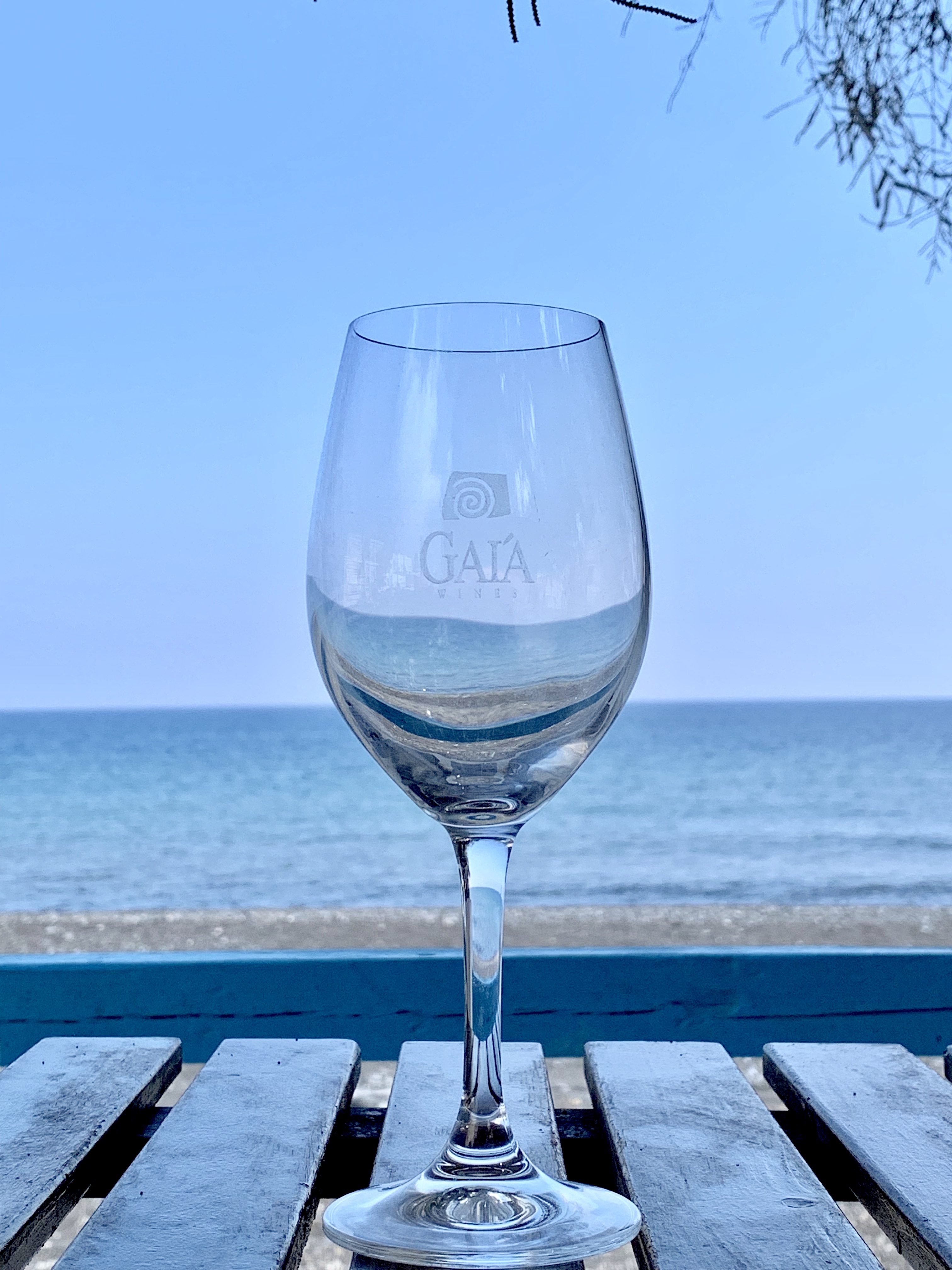
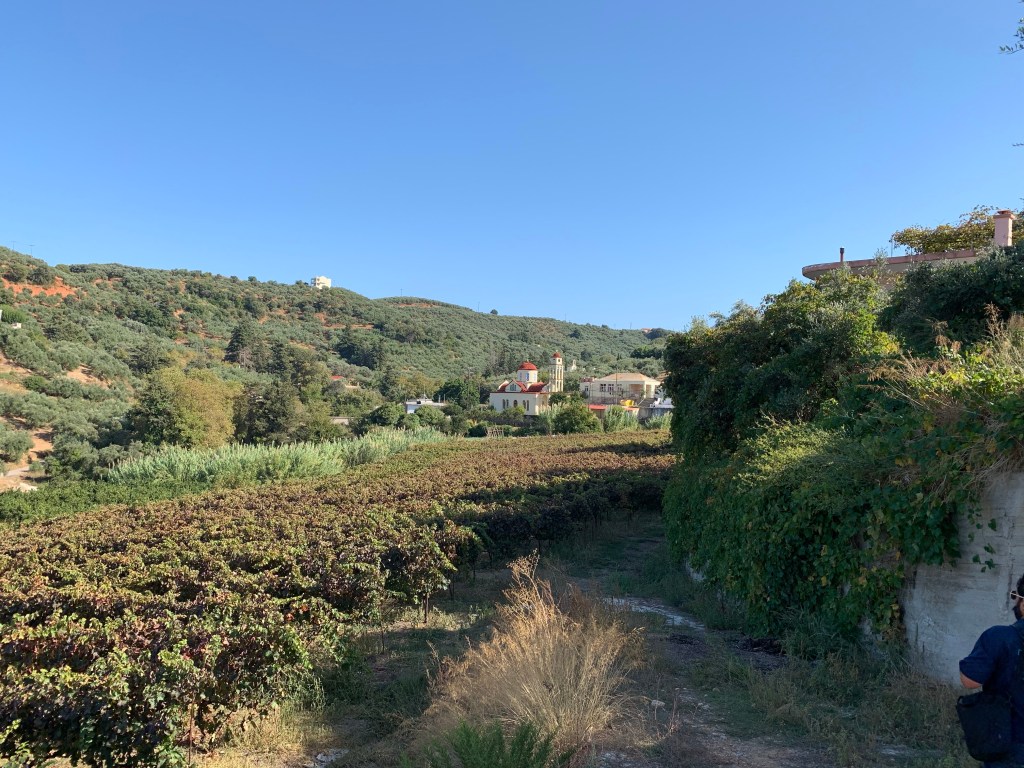
Some readers may recall that a few weeks after our wedding, we embarked on our Big Fat Greek Honeymoon. Of course, while in Greece, we visited some wineries on Santorini (Domaine Sigalis and GAI’A), and went on a guided wine tour on Crete. (If you go, check out Chania Wine Tours.) It was on this tour in the hills above Chania, Crete, that we discovered this gem. By happenstance, one bottle managed to come home in our suitcase.
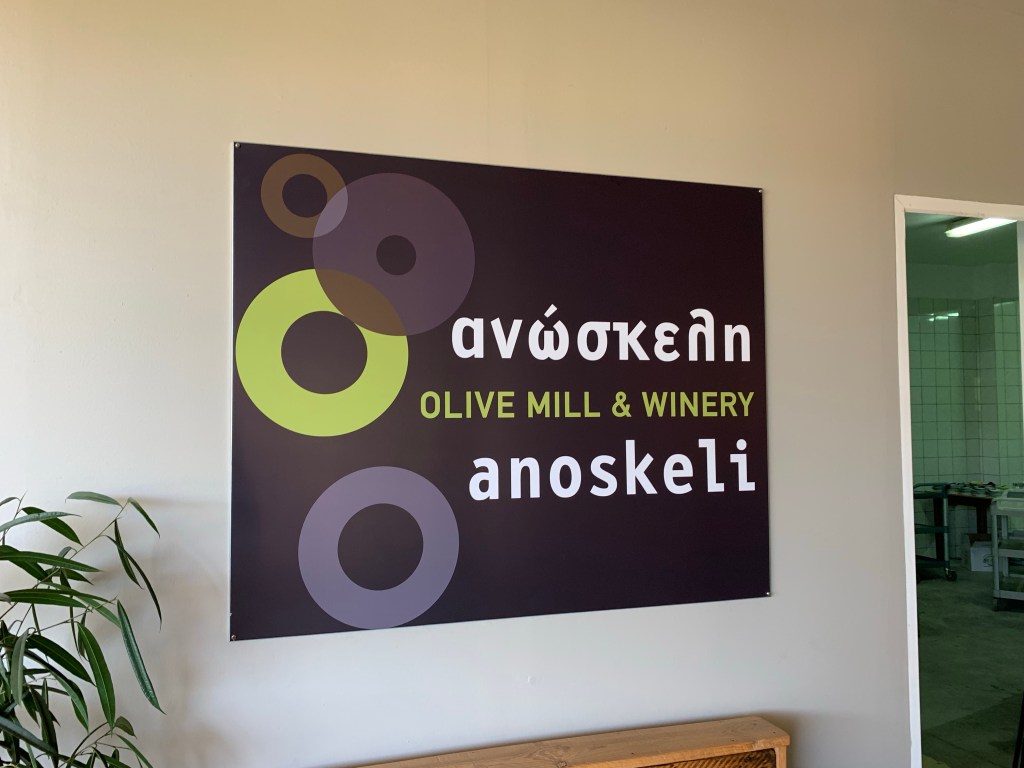
The Anoskeli Olive Mill & Winery started in 1983, and was named for the nearby town. The hillsides around Chania are covered in olive trees, and many of the families who live there make their own olive oil. So it was for the Mamidakis family. For three generations, they have produced olive oil privately. After establishing the family business, they purchased the town’s olive oil mill and eventually neighbors started to bring their olives for pressing. Soon, the family was producing Extra Virgin Olive Oil commercially. (We tasted their award winning olive oil, too, and a can of that came home with us as well!) In 2009, the Mamidakis family built the winery facility and started producing Cretan wine.
Greece has hundreds of native grape varieties, but wine grapes from other countries, like France, thrive there, too. The Anoskeli Playa Dry Red Wine 2018 is a blend of 80% Syrah, 10% Cabernet Sauvignon, and 10% Grenache Rouge. As with all the Greek wines we tasted on our honeymoon, and in the two years since, this wine displays a distinct sense of place; a terroir that takes us back with the first sip. A truly special bottle for our anniversary.
Though the Anoskeli Playa Red would pair magnificently with a host of foods, we opted to open it and simply enjoy it while sitting on the balcony of our hotel room, overlooking the Northern California headlands, and the crashing waves of the Pacific Ocean. (Yes, purists, we forgot to pack wine glasses, so the hotel water glasses had to do.) The wine, the view, the company, and the occasion combined to make this a magical and memorable evening.
Deep garnet with copper rim. Aromas of cherry and lightly stewed plum. On the palate, black cherry, blackberry, and stewed plum, with cedar, tobacco, vanilla, and baking spice notes. There is a certain terroir; chalk and saline; that speaks Crete. Medium body and tannins with bright acidity. Long finish of ripe red fruit.
We usually try to feature wines that are relatively widely available, but this bottle was just too good to not share. You can purchase directly from the winery, if you want to pay the shipping. Like many Greek wines, in Greece they are remarkably affordable. (Our notes indicate we paid €8 at the winery in 2019. The price on the website today is €14; about $16.50 USD; still a screaming deal!) However, international shipping is very expensive, so many of the best Greek wines stay in Greece. Still, if you get the chance, we definitely recommend you give this wine a try. You will not be disappointed.
We head back to Spain this week for our Wine of the Week. This time we are exploring Ribera del Duero. Though red wines from Ribera del Duero feature the same Tempranillo grape as the arguably more famous Rioja region, there are subtle differences between the wines from the two regions. Ribera del Duero is at a higher elevation, cooler climate, and receives less rainfall than Rioja. As a result, the grapes tend to be smaller, with thicker skins and a more concentrated flavor. With less stringent rules on aging, Ribera del Duero wines can be fresher and lighter, and less acidic, with bright fruit flavors.
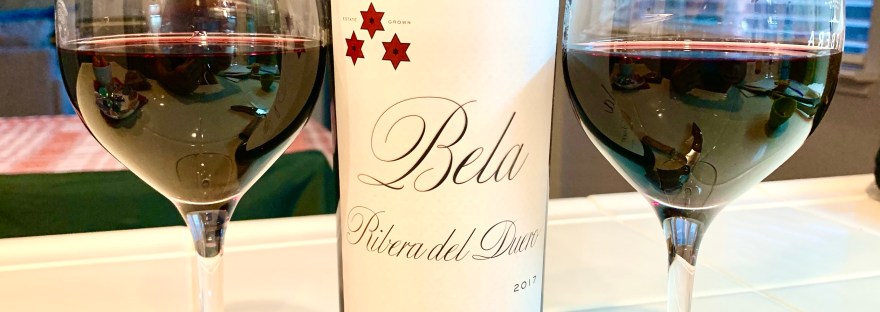
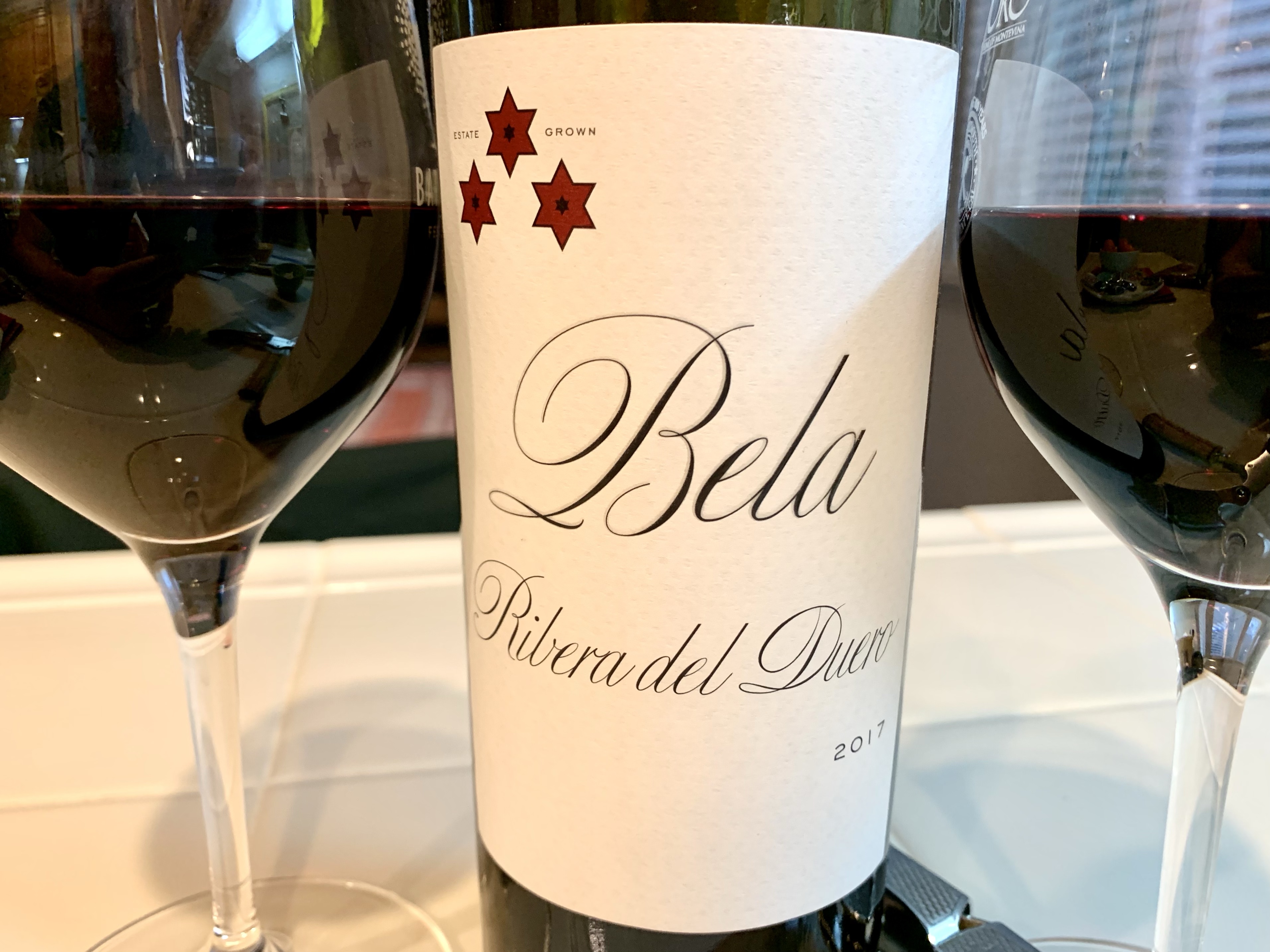
In our previous Wine of the Week from Spain, we reviewed Asúa Rioja Crianza 2016, part of the CVNE family of wines in Rioja. This week’s wine is a CVNE offspring, from Bela wines. Bela strives to emulate CVNE’s commitment to quality in Ribera del Duero. The official spec sheet explains the three stars on the Bela label represent the three children of CVNE’s founder, Sofia, Áurea, and Ramón. Sofia was known as Bela.
In the United States, Bela Ribera del Duero is distributed by Arano USA. Their website shares a few historical details about Bela. The winery was built in 1999, and the 74 hectare vineyard planted in 2002. The Bela Ribera del Duero 2017 is 100% estate hand harvested Tempranillo. After fermentation, the wine spent six months in new French and American oak barrels, followed by one year in neutral oak. The care and attention to detail in the wine making process shows clearly in the resulting wine.
Deep garnet color. Aromas of blackberry, boysenberry, vanilla, and baking spice. On the palate, blackberry, blueberry, cassis, plum, vanilla, and black pepper. Medium body with smooth tannins and fresh acidity. Soft and delicious, great with flank steak.
Next time you’re looking for a quality Spanish Tempranillo, give Ribera del Duero a try. The Bela Ribera del Duero 2017 is a shining example of what this region can produce.
Most wine lovers are familiar with the notion of appellations; designated wine regions identified by geography and legal protection. In the United States, appellations are known as American Viticulture Areas, or AVAs. Within an appellation or AVA, there can be sub-regions that, though perhaps not legally identified, can present climate and growing conditions which contribute to a unique terroir. One notable and well known AVA in Northern California is the Russian River Valley AVA. We recently learned that the Russian River Valley Winegrowers (RRVW) has defined six smaller sub-regions which they call Neighborhoods. How did we come by this newfound knowledge? Well, we were invited to a virtual tasting of single-vineyard wines from Gary Farrell Winery, exploring each of the Russian River Valley Neighborhoods.
The following wines were provided as media samples for review. All reviews, descriptions, and opinions are our own. We received no additional compensation.
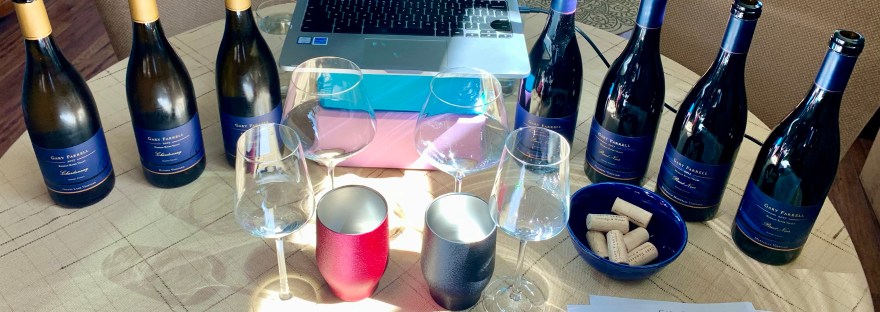
The event featured Gary Farrell Winery winemaker Theresa Heredia, who led us through history, geography lessons, and of course, tasting seven wines from the Gary Farrell Winery portfolio; three Chardonnays and four Pinot Noirs. As Theresa explained, although the wines are from the same respective grapes, grown in the same AVA, each neighborhood produces decidedly different wines with unique characteristics.
Gary Farrell started in the wine business in the late 1970’s, originally working with local wineries. In 1982, he produced the first wine under his eponymous wine label. Since then, Gary Farrell Winery has grown in reputation and prestige and is now one of the most notable small-lot producers of Chardonnay and Pinot Noir in the Russian River Valley. Though Gary Farrell sold the winery in 2004, the current owners are maintaining his legacy and standard of excellence.
Theresa Heredia started with Gary Farrell Winery in 2012. At that time, she brought with her a decade (now nearly two decades) of experience in cool-climate, small-lot Chardonnay and Pinot Noir production. Early in her career, she worked at Domaine de Montille, in Burgundy, France, where she gained an appreciation for the Burdunidan style of winemaking. Friendly and inviting, Theresa was an amazing host for our tasting.
In keeping with the Burgundian style, Theresa said that each of the wines in the tasting are terroir-driven, and aged in light-toast French oak barrels. The use of light toast oak is deliberate, since heavier toasts can mask the nuances of the wine itself. Theresa also mentioned, to our surprise, that the Russian River Valley AVA has more soil types than are found in all of France!
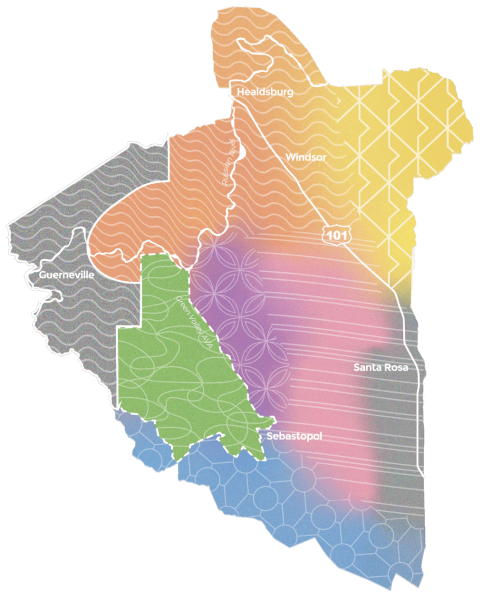
During a brief history lesson, Theresa shared her screen, and showed us the six Russian River Valley Neighborhoods on the RRVW website. This is an interactive site that allows you to explore each of the neighborhoods and see which characteristics define each one. Theresa mentioned that only one neighborhood, Green Valley, is a designated Sub-AVA within the Russian River Valley AVA. There are currently no plans to apply for AVA status for any of the other neighborhoods.
Image credit: Russian River Valley Winegrowers website
The seven wines we tasted, and the respective neighborhoods from which they hail, were, in order of tasting:
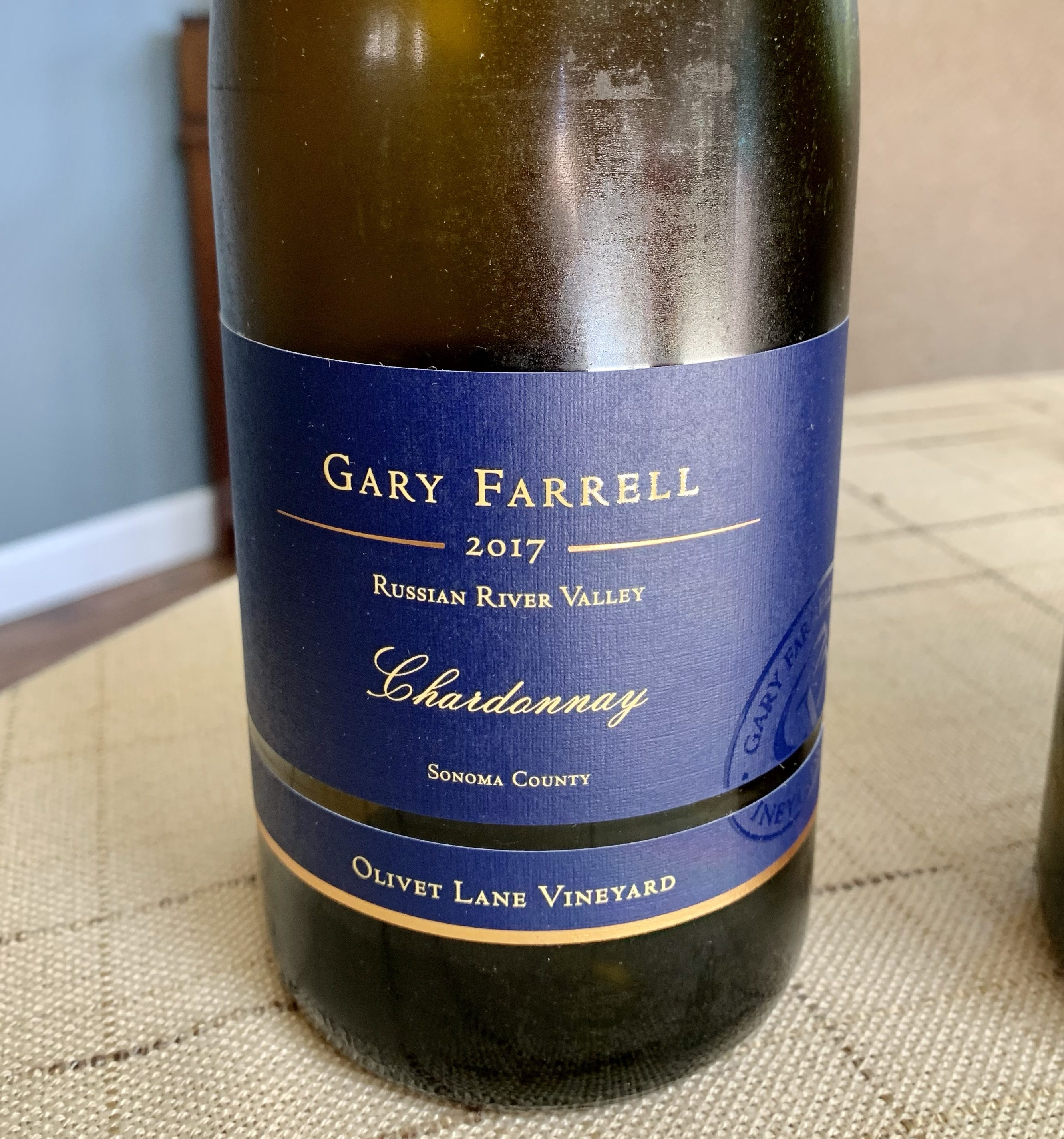
2017 Olivet Lane Vineyard Chardonnay – Santa Rosa Plains
2017 Martaella Vineyard Pinot Noir – Santa Rosa Plains
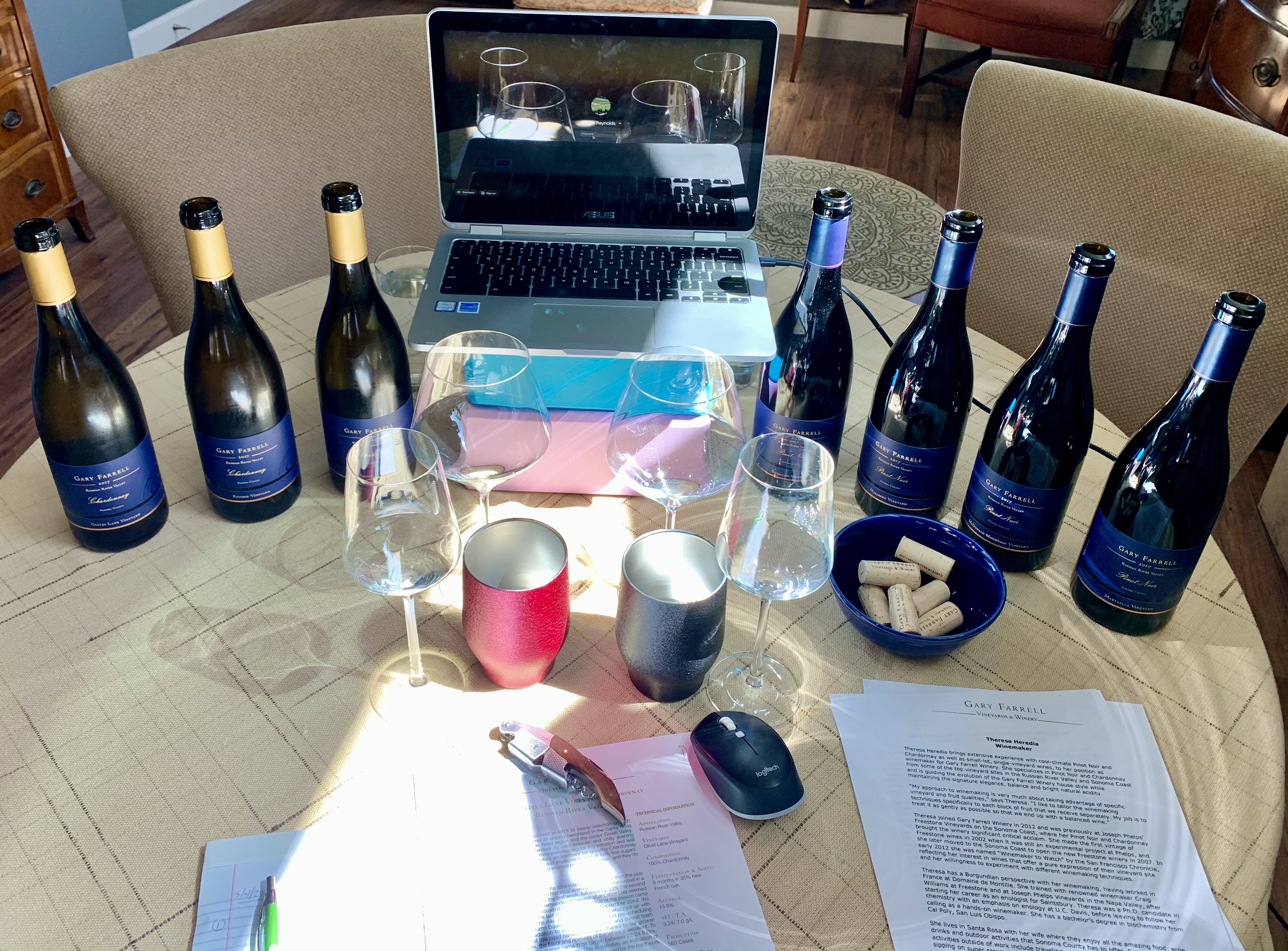
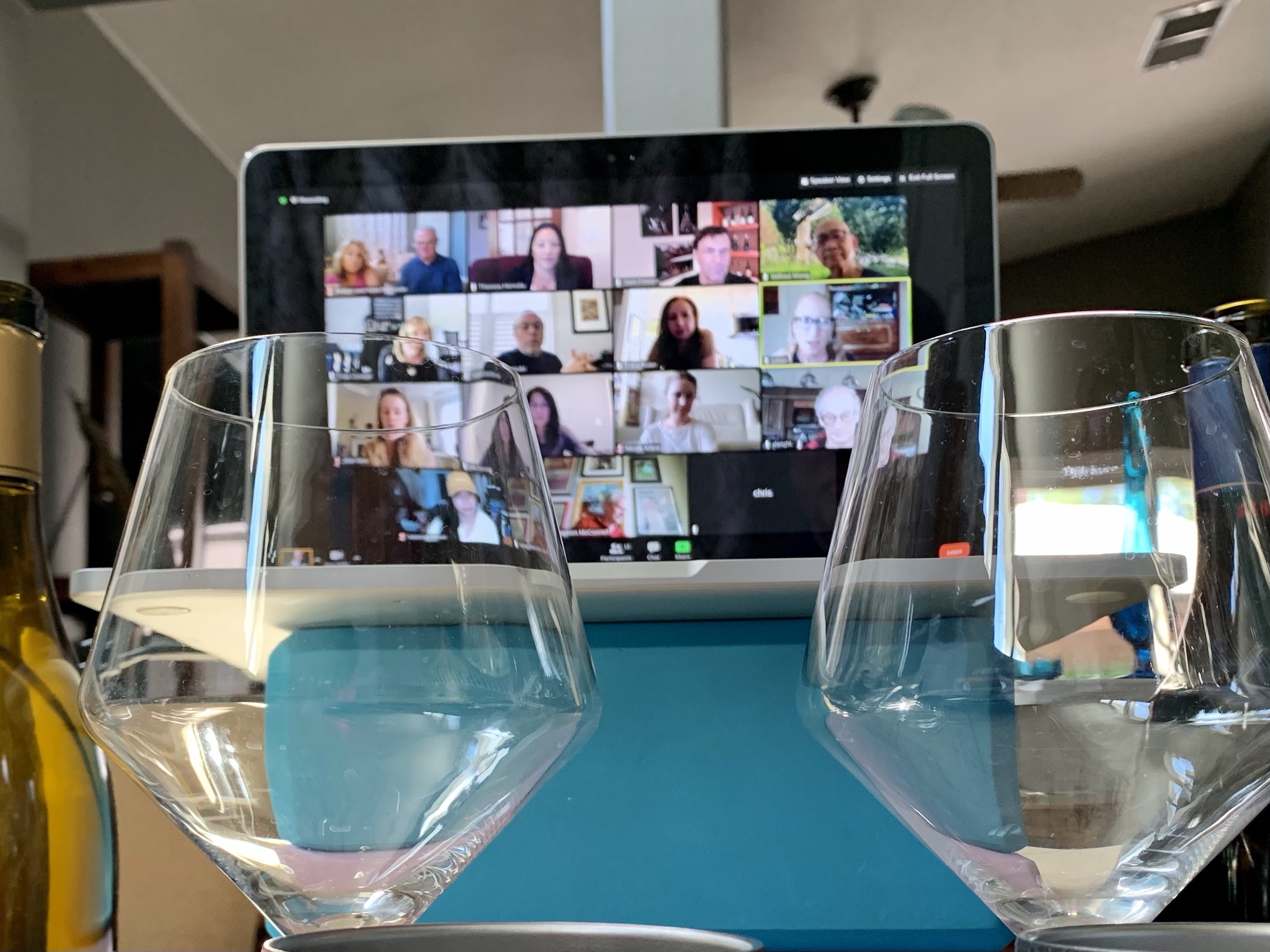
Ready to taste! (Behind the scenes at Appetite for Wine: yes, those are yoga blocks!)
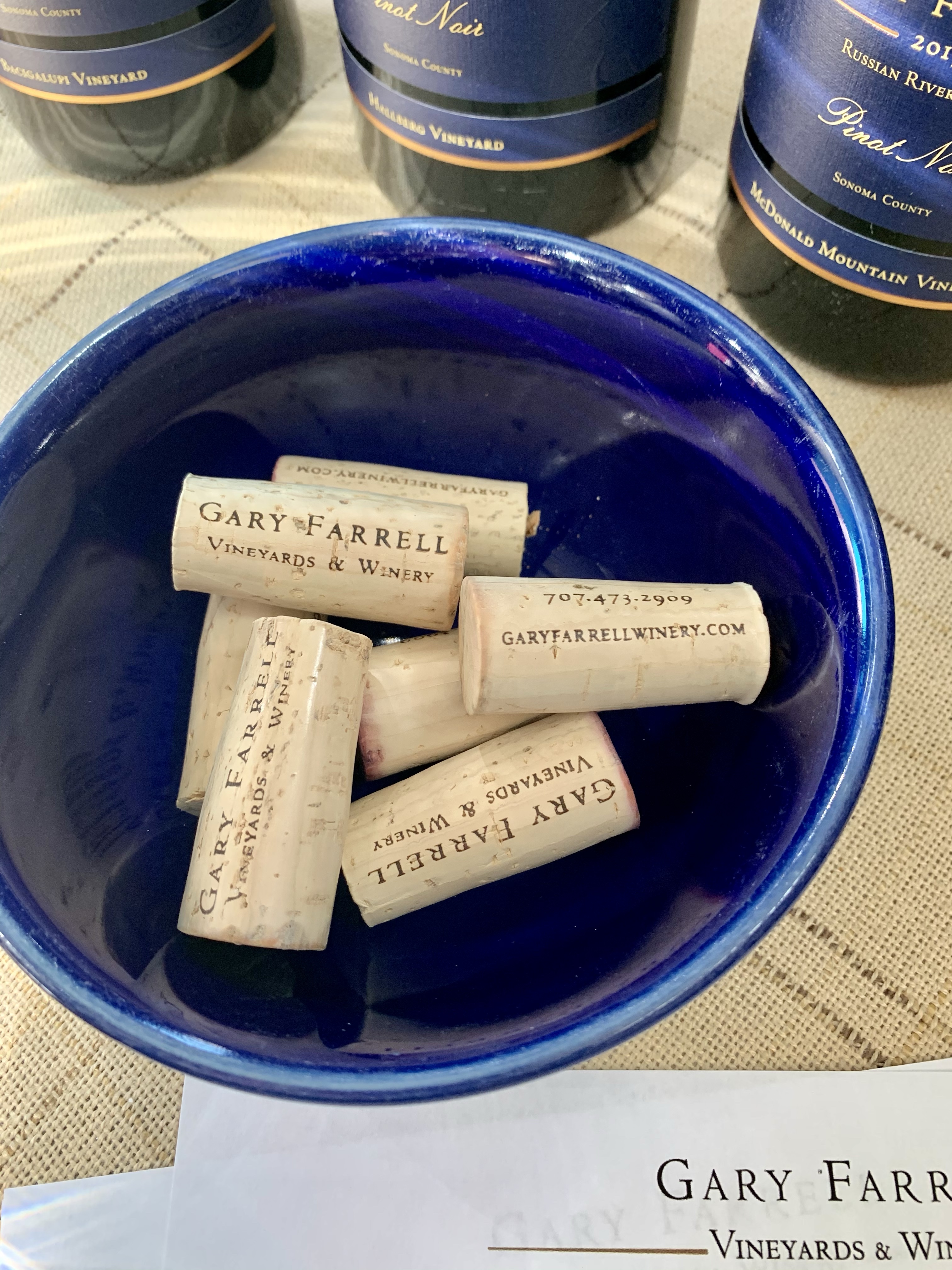
That’s a lot of corks for 11 am!
Why are those glasses empty?
The virtual tasting was packed with information; much more than can comfortably fit into a blog post anyone would actually read. Though it exceeded the allotted hour, it went much too fast. Since the tasting was at 11 a.m. Pacific, we sipped and spit, and re-corked the bottles, and then enjoyed them for the rest of the week! Here are our impressions of each wine:
2017 Olivet Lane Vineyard Chardonnay
Light and crisp, yet still exhibiting light buttery, toasty notes. Golden color. Aromas of apple, pear, and citrus. On the palate, apples, pear, pineapple, and floral notes. Medium body with bright acidity – more than most Cali Chards – nicely balanced. Full, lush, mildly creamy mouthfeel leading to a crisp finish of citrus and some light toast.
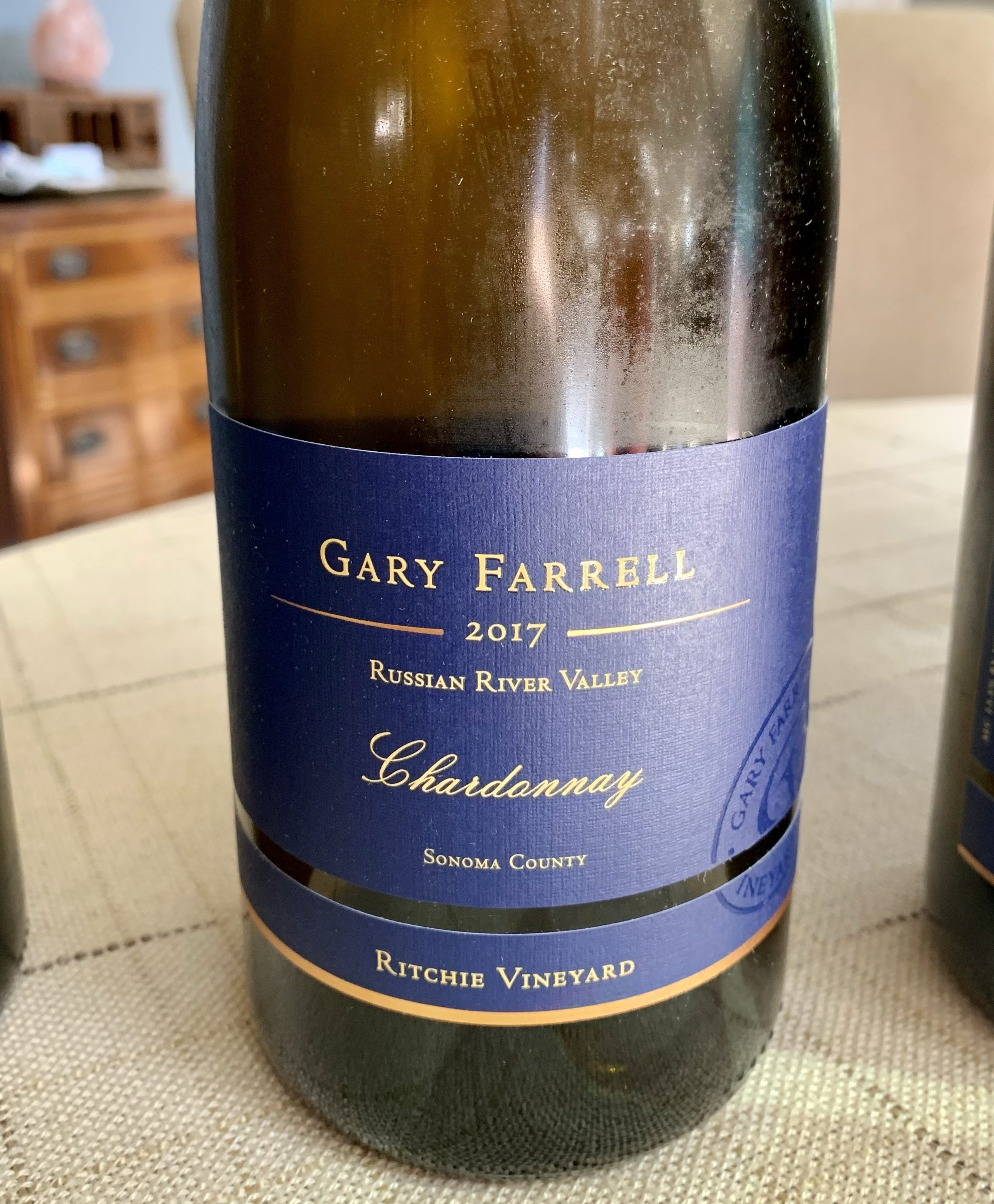
2017 Ritchie Vineyard Chardonnay
A classic but restrained California Chardonnay. Golden color with fresh pineapple the first aromas on the nose, followed by citrus and butter notes. On the palate, green apple, pear, pineapple and tropical notes, as well as citrus. Soft, creamy mouthfeel balanced with medium acidity. The finish has tropical fruit and just a hint of butter.
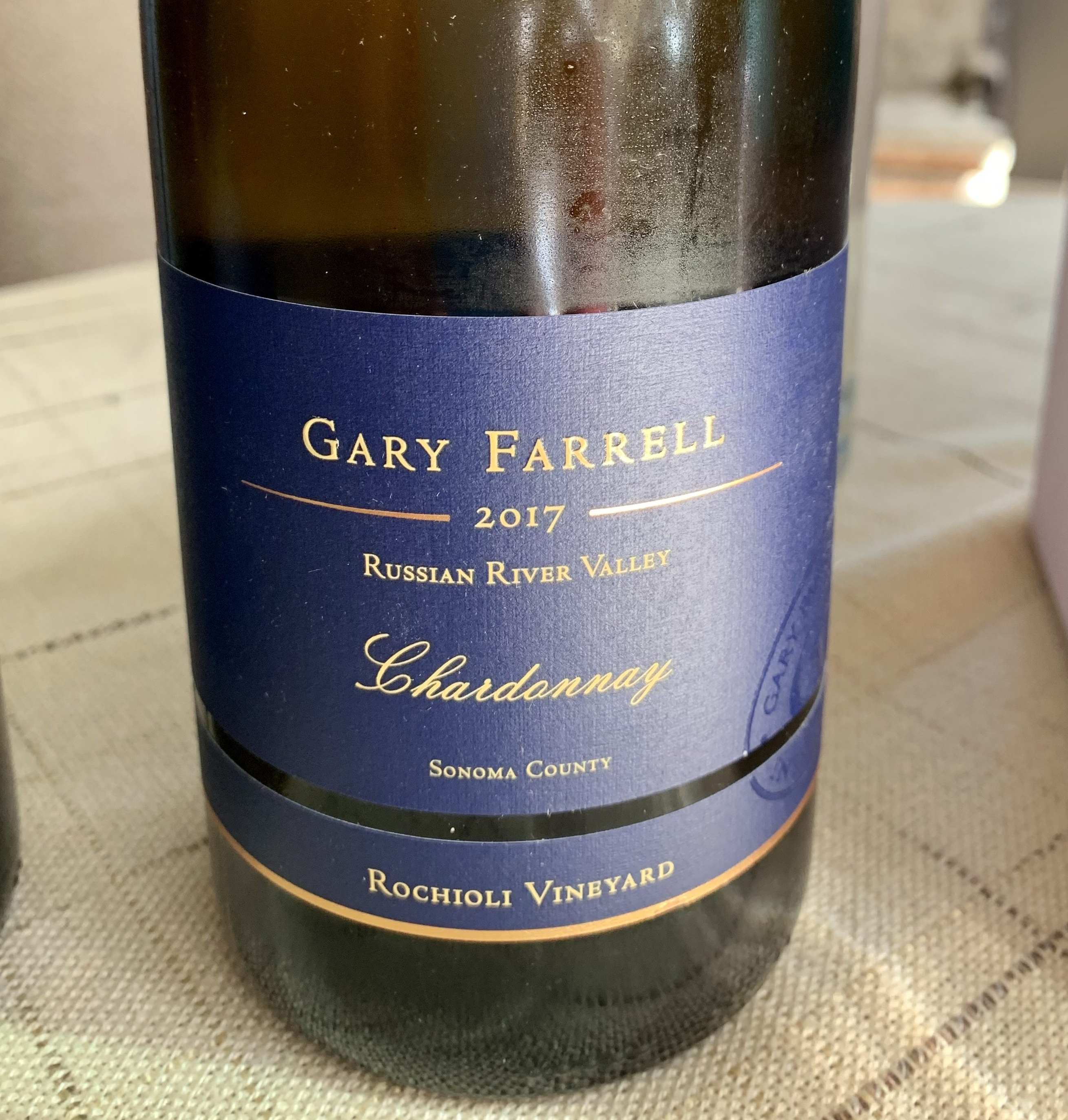
2017 Rochioli Vineyard Chardonnay
A more classic California Chardonnay, though in Gary Farrell style, subtle and elegant. On the nose, pineapple, pear, and citrus, with a whiff of butter. Surprisingly crisp acidity on the palate, with pear, apple, lemon curd, and butter, with a light toast note in the finish.
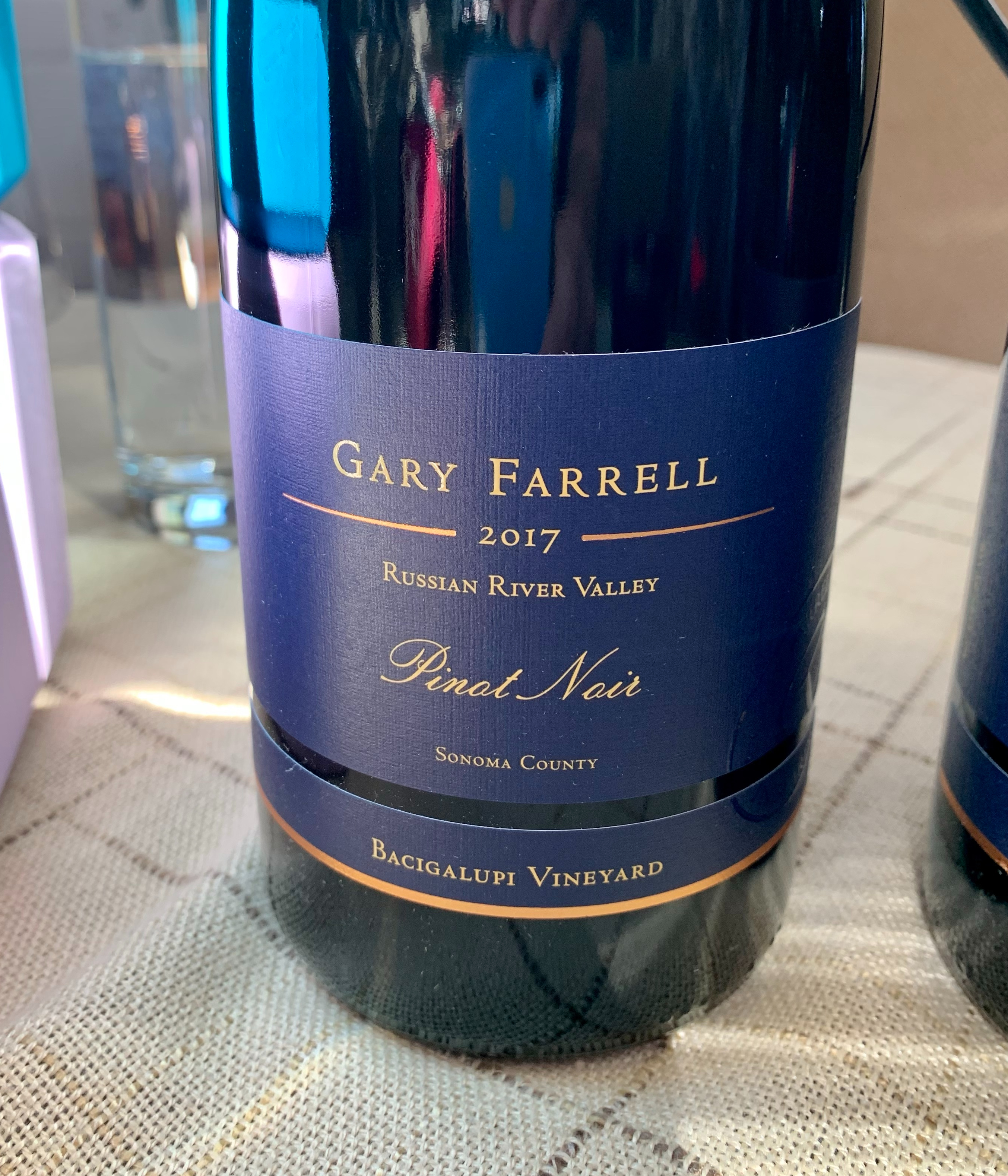
2017 Bacigalupi Vineyard Pinot Noir
Exquisite and our favorite of the tasting. The nose opens with cherry, raspberry, and cedar, with earthy notes. On the palate, the cherry leads the charge with raspberry, violet, cedar, and mushroom supporting. Medium body and acidity, with a long finish of red fruit and black tea.
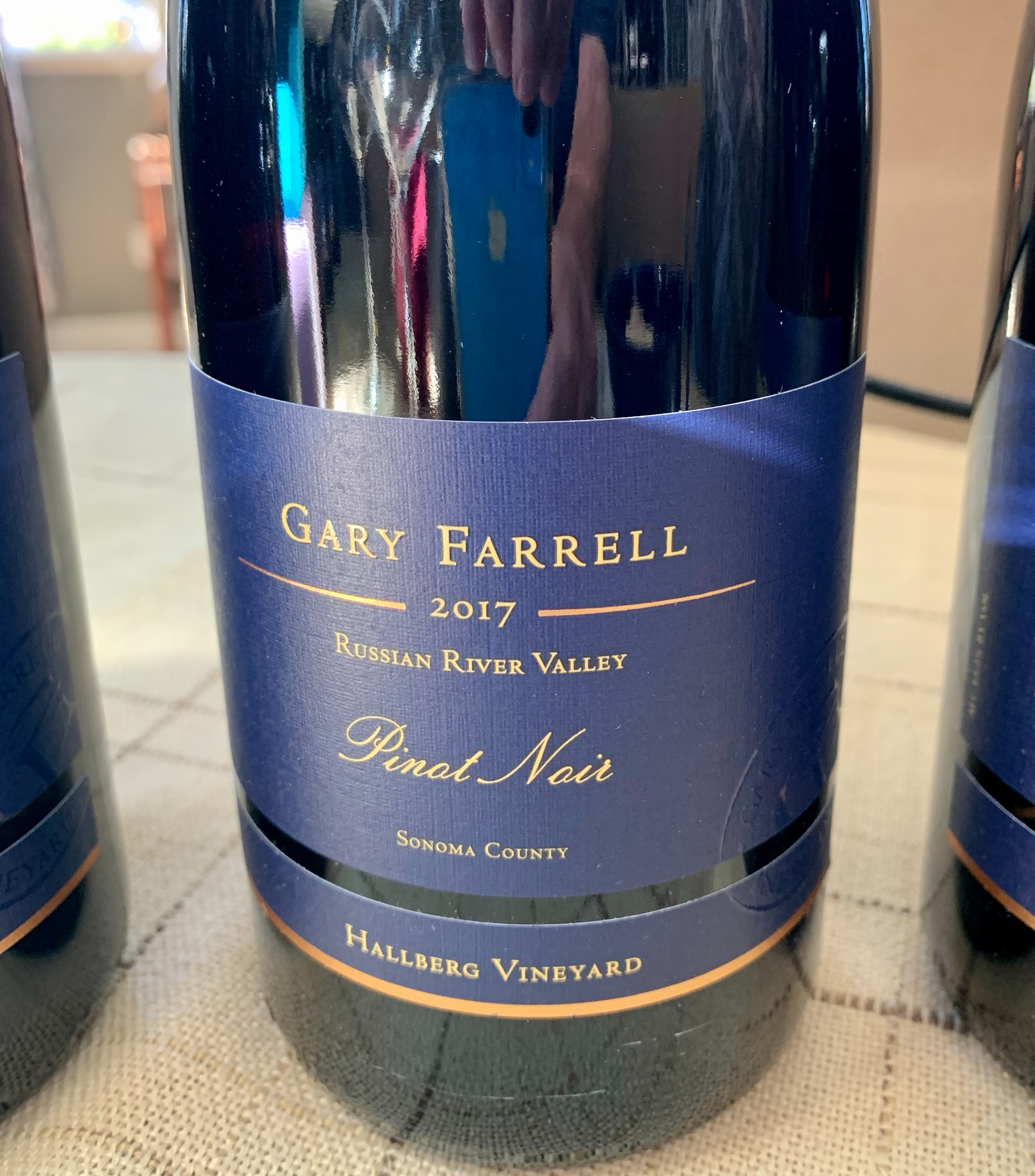
2017 Hallberg Vineyard Pinot Noir
Beautiful Pinot Noir. The nose opens with black cherry and blueberry, with some earthy notes. On the palate, lush cherry, raspberry, and blueberry fruit mingles with mushroom, earthy notes, and a general funk that I’ve come to appreciate in a well structured PN. Medium body and acidity lead to a pleasing finish of red fruit, black tea, and smoke.
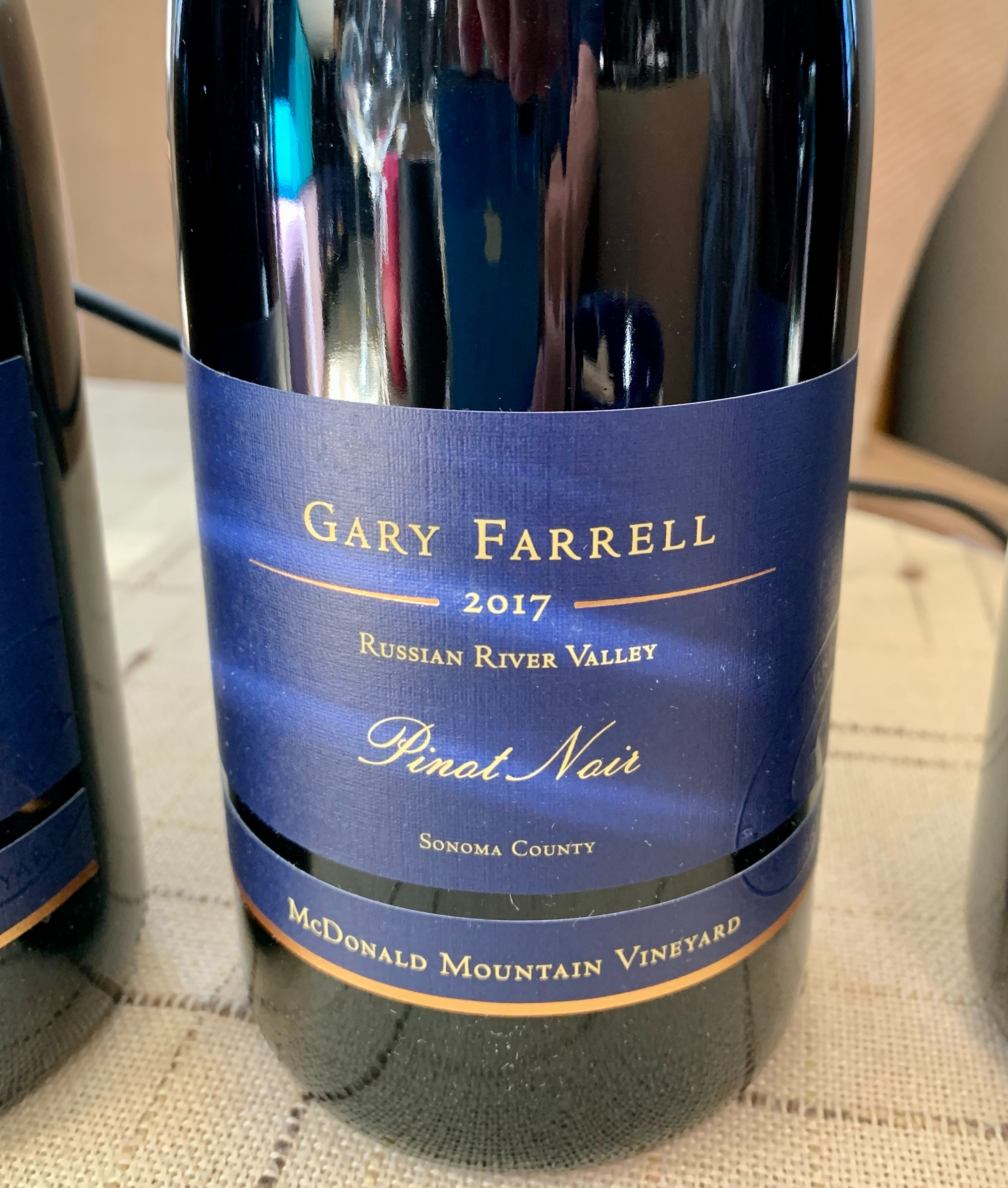
2017 McDonald Mountain Vineyard Pinot Noir
Quite interesting with herbal and vegetal notes up front, including bay leaf and eucalyptus, with red fruit following. On the palate, cranberry, pomegranate, and raspberry with the bay leaf enhancing the fruit. Medium body with bright, lively acidity. Long fresh finish.
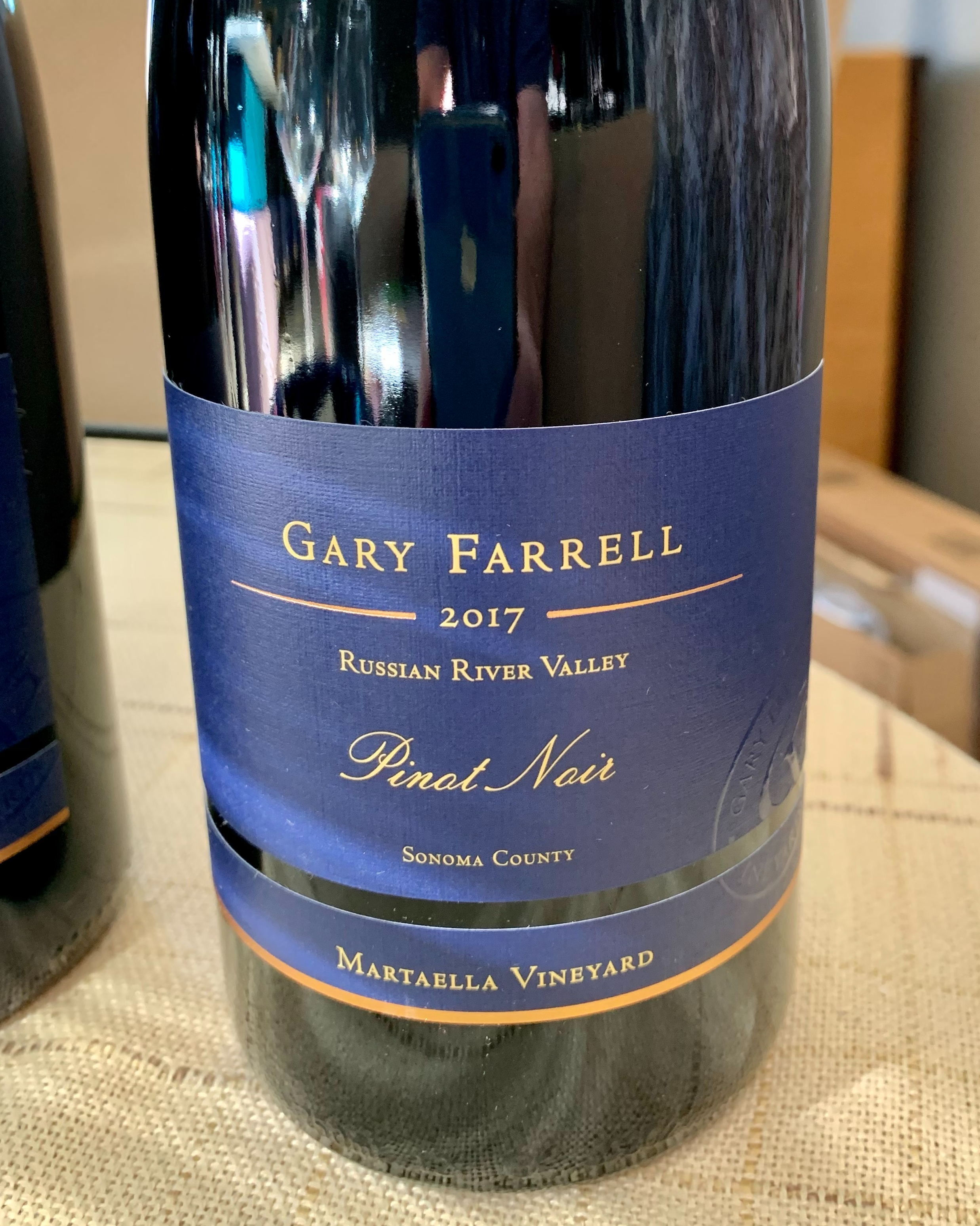
2017 Martaella Vineyard Pinot Noir
Nice, fruit driven Pinot. Aromas of cherry, raspberry, and cranberry. On the palate, these red fruit flavors continue, joined by blueberry, cedar, and bay leaf. Soft and velvety, with bright acidity and a long finish of red fruit and rose petal.
We heartily recommend any and all of these wines, and we look forward to venturing out to the Russian River Valley to explore the neighborhoods in person.
————————————————————
We close on a somber note. We were sad to learn this week, as we prepared this post, that earlier this month, Gary Farrell Winery oenologist, Mark Osbourne, was killed after being struck by a motorist while riding his bicycle. Even more tragically, the motorist is accused of driving under the influence. Our hearts and prayers go out to the Gary Farrell Winery family.
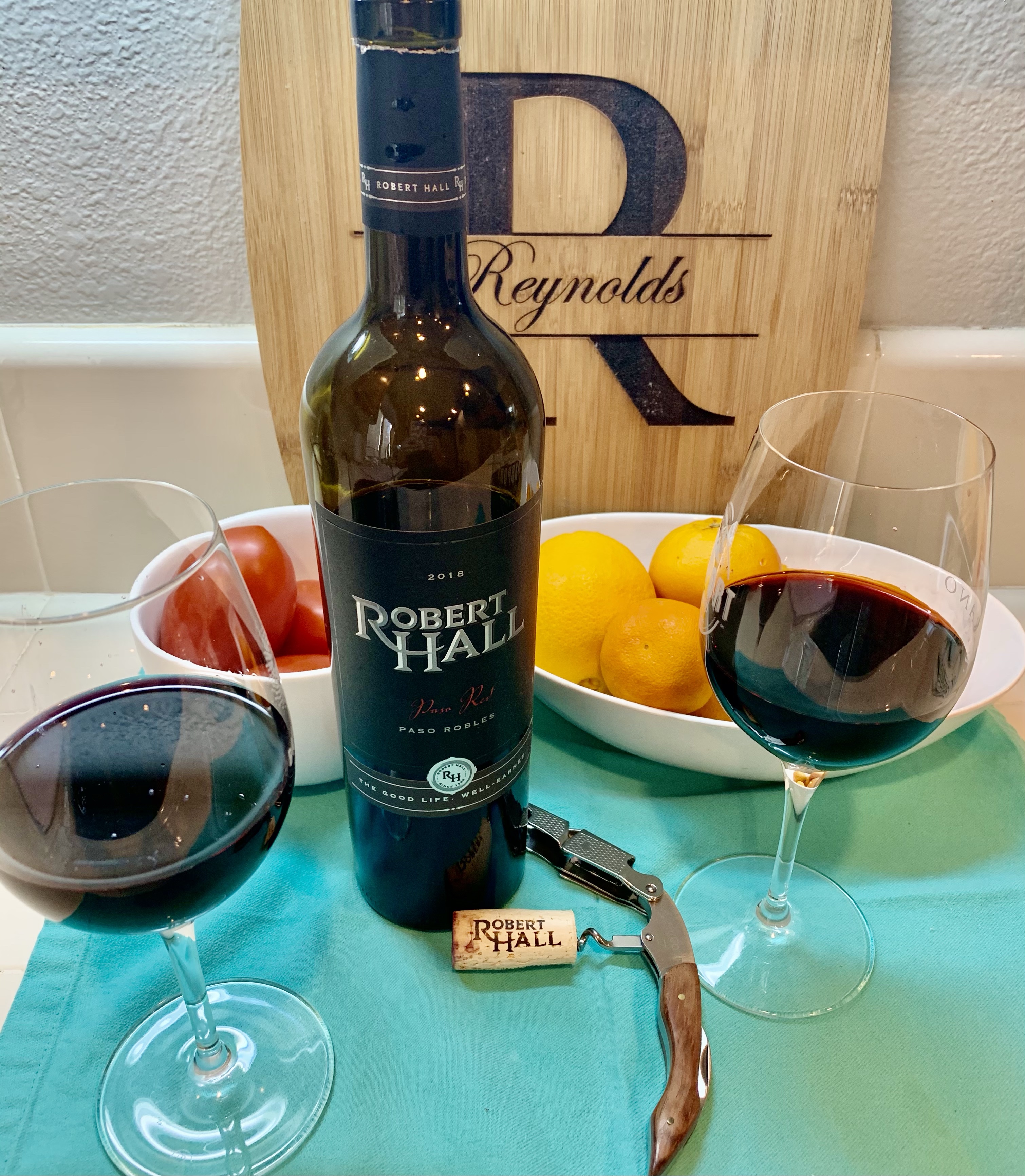
As many people already know, Paso Robles is trending in the wine world. Many consider it the next up-and-coming wine region; an underrated hidden gem. Despite all this, we regrettably have not explored the wines of Paso Robles much, and have never been wine tasting there. There are many good wineries in Paso Robles, and our friends who have been have given us dozens of recommendations. As happens every so often…so often it can seem a little creepy…we had been discussing Paso Robles with some friends not long ago, and the very next day we received an email offering us a sample of Robert Hall Paso Red 2018, from Paso Robles. After tasting the wine, our resolve to get to Paso, and soon, was dramatically intensified.
The following wine was provided as a media sample for review. All reviews, descriptions, and opinions are our own. We received no additional compensation.
Robert Hall was a successful businessman in St. Paul, Minnesota. After developing a taste for wine, he made his way west and founded his namesake winery in the heart of Paso Robles wine country. From the beginning, winemaker Don Brady has been leading production of a portfolio that now includes more than a dozen wines.
The Robert Hall Paso Red 2018 is a multi-award winning blend of grapes from all 11 sub-AVAs in the Paso Robles region. It is a wine that truly captures the essence of Paso Robles. Petite Sirah (43%), Syrah (21%),and Zinfandel (19%) drive the blend, supported by Petit Verdot (10%), and splashes of Grenache and Mourvedre filling it out. Sounds pretty good to us!
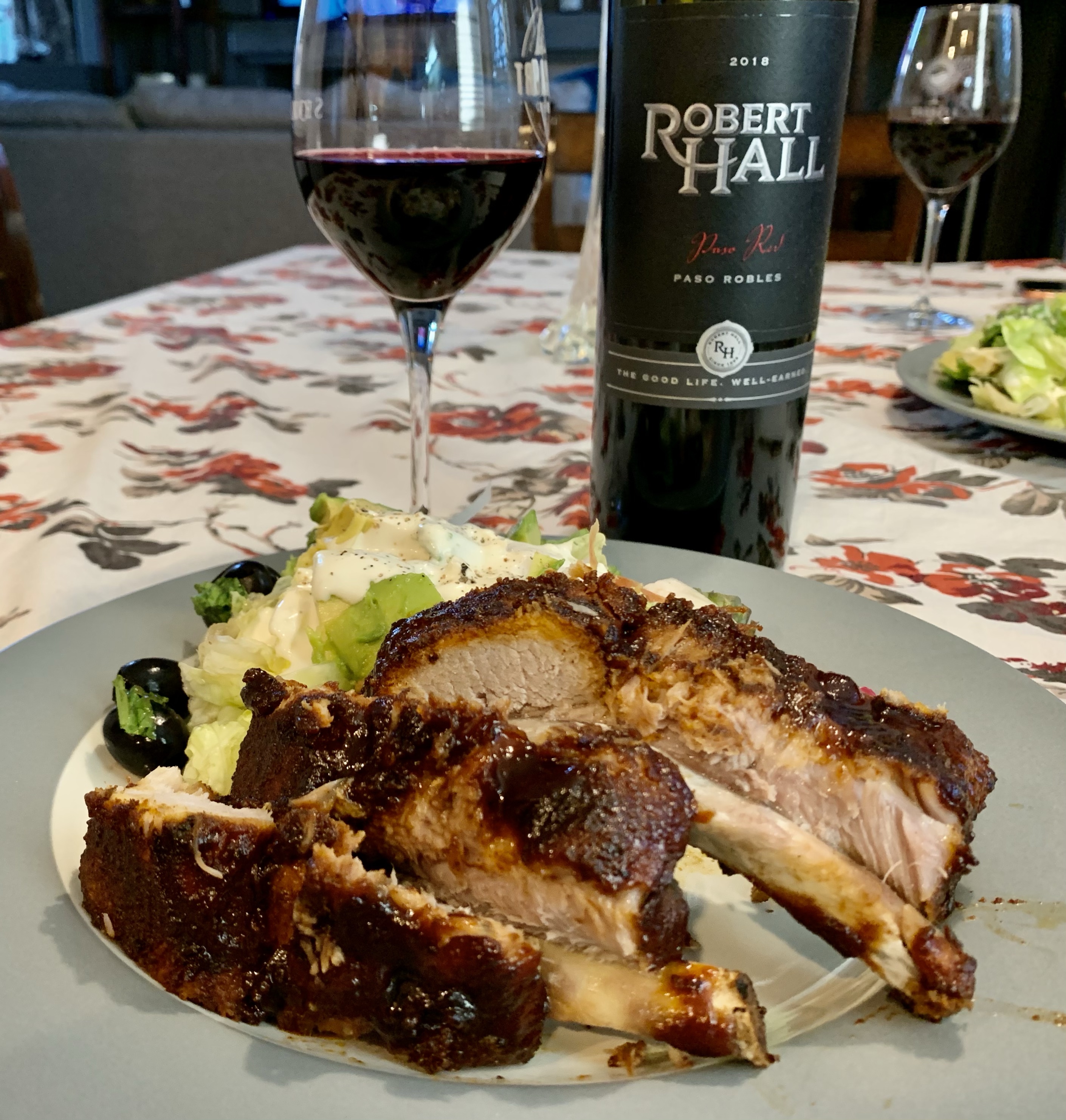
A rich, big, bold red blend. Vibrant deep purple color. The nose is filled with ripe black fruit: blackberry, boysenberry, and Marionberry, with smoky notes. On the palate, blackberry, black cherry, plum, tobacco, baking spice, and black pepper. Full bodied, with fine, smooth tannins and ample acidity. The finish is long with black fruit and spice. Excellent with baby back ribs.
Truth be told, we’ve found a lot of California Red Blends to be on the jammy side. When we tasted the Robert Hall Paso Red 2018 with our ribs, we thought it would be a bit jammy without food. Yet this wine is so well structured it holds up after dinner as a very nice sipper. Beware: this big wine sports an ABV of 15.5%! But why would you drink a big, bold red like this without food anyway? The food enhances the wine, and the wine enhances the food. Yin. Yang.
Did we mention the value quotient? Robert Hall Paso Red 2018 retails for just $20! You really need this wine in your life. It’s available at select retailers, or online at the Robert Hall Winery website. Try this, or any of the wines, and let us know what you think.


















 Appetite for Wine