Amador County, Andis Wines, Sierra Foothills, Vineyard Tour, Wine, Wine Tasting

Andis Wines – Block to Bottle Vineyard Tour

Full disclosure: Kent has been a big fan of Andis Wines, in Amador County, Sierra Foothills, for nearly 10 years. Their then-winemaker hosted a tasting at the local Total Wine & More store, and Andis quickly became one of Kent’s favorite wineries. Not just in the Foothills, but anywhere! We finally became members of Club Andis about a year and a half ago.  

Membership, as they say, has its privileges. Like complimentary admission to the monthly Block to Bottle Vineyard Tour. (Psst, it’s only $10 for non-members!) The tour starts just outside the tasting room, where Nick Pilatti, the Cellar Master himself, leads the group through the vineyards, tasting the wines produced from the vines right at your feet.

lrg_dsc00291-1

Joining us on the excursion this fine, spring day, was co-founder, Janis Akuna. The name, Andis, is an amalgamation of the first names of the founders: Andy Friedlander and Janis Akuna. Clever, eh? 

Andy and Janis founded Andis Wines in 2009. The pair had lived part time in the Napa Valley in the 1990’s. While working in high-pressure careers, they had a vision of a winery as a new challenge, in a quieter setting. However, upon returning to Napa after several years away, they found it busier and more crowded than they had remembered. A friend invited them to Amador County, and they found the home for their winery.

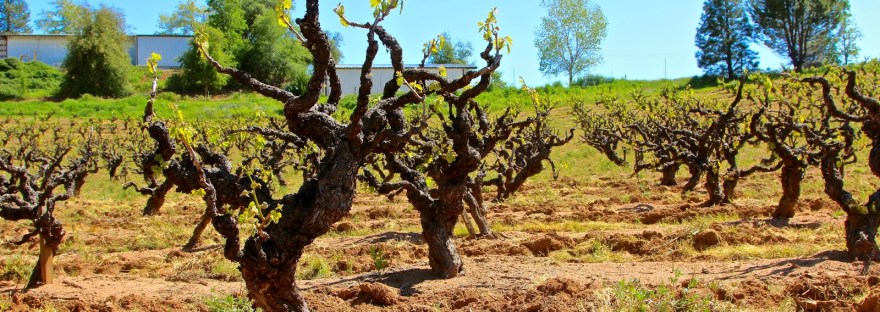
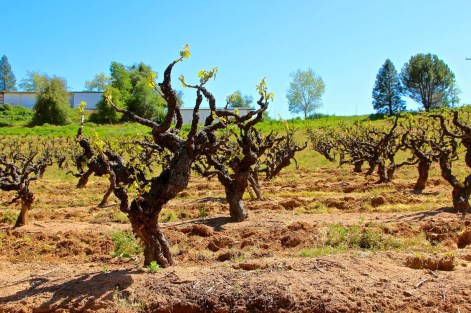
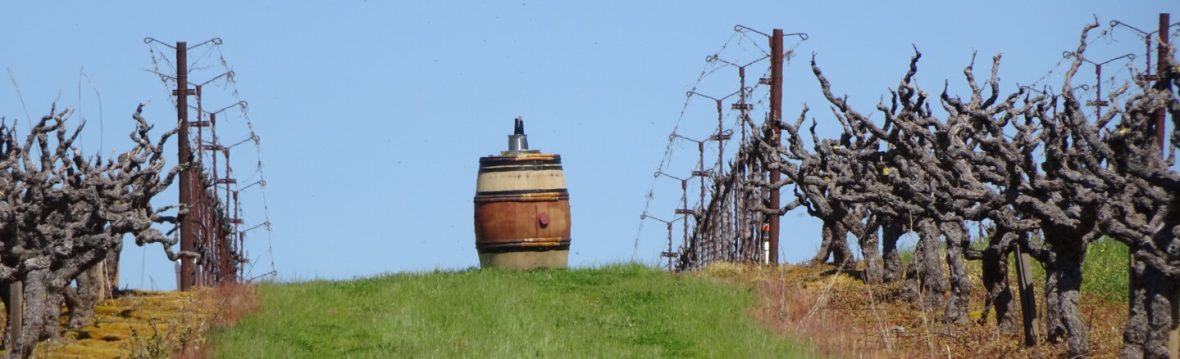
Andis Wines is situated on approximately 25 acres, of which 21 are farmed. There are nine different grape varieties planted, including Zinfandel, Grenache, Syrah, Petite Sirah, Barbera, and Sauvignon Blanc. Other than irrigation for newly planted vines, Andis practices dry farming, as well as sustainable practices. They also source fruit from other vineyards in the area, including Semillon, and Zinfandel from the Original Grandpère Vineyard; planted in 1869, it is the oldest documented Zinfandel vineyard in the United States! (Read our blogs about the OGP Vineyard here, and here.) Andis Wines is one of only a small handful wineries with access to these grapes. 

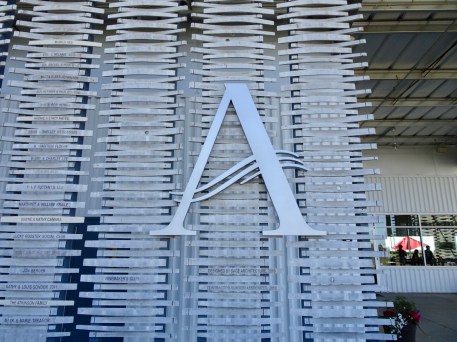
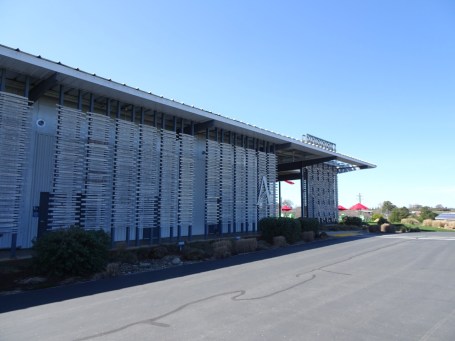
In 2010, their modern, state-of-the-art winery was completed and opened to the public. A striking, modern edifice, perched atop a hill with an amazing view, the winery is like no other we’ve seen. When you get closer, you see that the front of the building is covered with grey barrel staves, engraved with the names of club members. (Ours will be up there soon!) The Andis winery is unpretentious and inviting, with an open, airy tasting room with plenty of windows to drink in the view as much as the wines.lrg_dsc00286-1
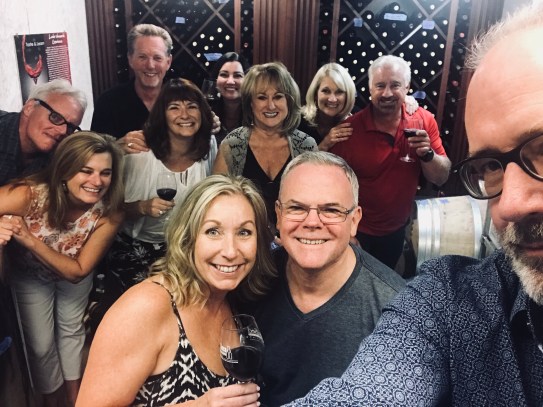
lrg_dsc00289-1On a sunny Sunday in late March, 2019, we gathered in the Andis Wines tasting room. The previous day had been cold and rainy, so there was much relief that this day dawned bright, clear, and warm. At noon, on the dot, Nick and his assistant, Vanessa, greeted us to begin the tour. As mentioned, Janis herself was to join in as well!

The first stop was the Sauvignon Blanc block. Vanessa poured each of us a taste of the 2018 vintage, and we sipped among the very vines from which the juice had come. One of our favorite domestic Sauvignon Blancs, it is crisp and fresh, with citrus, stone fruit, and honeysuckle. This is a great wine for sipping all summer.lrg_dsc00301-1Next we moved to the Grenache block. We have a particular fondness for Grenache, so we were excited to try this one. The 2016 Akuna Block Grenache is the first vintage from this vineyard block, which was planted in 2012. Elegant and restrained, this is everything we hope for in a quality Grenache; lighter bodied, with cherry, strawberry, and cranberry, bright acidity and grippy tannins. Nick suggests this wine as an alternative to Pinot Noir. 

Moving up the hill, off in the distance, we spotted the next stop: the Barbera block, where Andis grows the grapes for their Barbera d’Amador wine. Our favorite Barbera’s come from Amador County, and Andis’ selections are always at the top of our list. We tasted the 2016, the grapes harvested from vines planted in 2012. A lighter-bodied Barbera, this wine is bursting with fresh cherry and cranberry. It’d be so good with pizza or pasta! 

As we headed to our next tasting sample, we passed by another block that has really piqued our interest. All along the way thus far, all the vines had been pruned in preparation for the new season of growth. This block still had last year’s shoots. Nothing more than timing, Nick said. These would be pruned the following week. The interesting part is the variety of grape these vines produce: Schioppettino. Never heard of it? Neither had we! If you have read Appetite for Wine very long, you know Kent’s quest for unusual and obscure grape varieties. (He’s a proud member of the Century Wine Club, having tasted more than 100 different varieties!) 

Nick explained that Schioppettino is an obscure red grape, native to northwestern Italy. It produces light to medium bodied wines that are fruit forward and spicy. The first vintage is in barrel, not expected to be bottled for awhile. No, sadly there was no barrel tasting on this tour. Rest assured, however, when it is released and we get our hands on a bottle, we’ll be sure to tell you about it!

From there, we circled down the far side of the property, into one of the Zinfandel Blocks. Like the Barbera, Andis Wines Estate Zinfandel is always one of our favorites. The 2015 that we tasted this day is no exception. Rich, blackberry and black cherry fruit flavors, with chocolate, baking spice, and black pepper.

Making our way to the winery, we stopped on the crush pad for our final tour taste. Painted Fields is Andis Wines’ signature red blend. It is a field blend of mostly Cabernet Sauvignon and Petite Sirah, with a bit of Zinfandel and Mourvèdre to round it out. Velvety smooth, with bold fruit and soft oak influences, it is at home at a barbecue or fine dining table.  This wine is a perennial crowd favorite.

Our last stop was the barrel room (seriously, can you ever see too many barrel rooms? We think not!) before we returned to the tasting room where we started. After sampling a few more of Andis Wines portfolio, including their exquisite Semillon, Rosé of Barbera, Primitivo, and more, we made our selections and headed out. 

This was a fun and educational day at one of our all-time favorite wineries. We highly recommend the Block to Bottle Vineyard Walk. You can get more information or make reservations on the Andis Wines website.

Cheers!  

  • By Kent Reynolds and Robyn Raphael
  • Photos by Kent Reynolds and Robyn Raphael

Pinot Noir, Roussanne, Samples, Sonoma County, Sosie Wines, Wine

Old World Style at Sosie Wines

According to Google Translate, the French word Sosie is translated to English as Doppelganger. As you may know, a doppelganger is a look-alike; a body double; a twin.

Sosie Wines founders, Scott MacFiggen and Regina Bustamonte, have appreciated good wine and food for years. Regina recalls her grandmother mixing a bit of wine with some fizzy water for the kids during Sunday lunches. Scott’s grandfather owned a farm in Upstate New York. It was there that Scott learned how amazing farm-fresh produce tastes. These early experiences provided the inspiration for Sosie wines.

As adults, Scott and Regina traveled to France and became enamoured with the French countryside, the wines, and the Old World traditions that make the wines so great. So when they decided to launch their own wine brand, Scott and Regina wanted to bridge the gap between New World vineyards and Old World style wines.

Sosie Wines uses a minimal intervention winemaking style. They want the fruit to speak for itself, using native fermentation, and letting the natural aromas, flavors, and acidity shine through. Made in very small batches, with lower alcohol and higher acidity, in the Old World style, these wines are food friendly, with deep, complex character.

They were so committed to creating French-inspired, Old World-style wines, they chose their name, Sosie, as an indication that their wines are look-alikes to their French counterparts. They even designed their logo as a marriage of French and Californian influences: the California grizzly bear, featured on the state flag, with a proud French rooster standing upon the bear’s back.

Sosie_BearRoo_logo
Credit: Sosie Wines

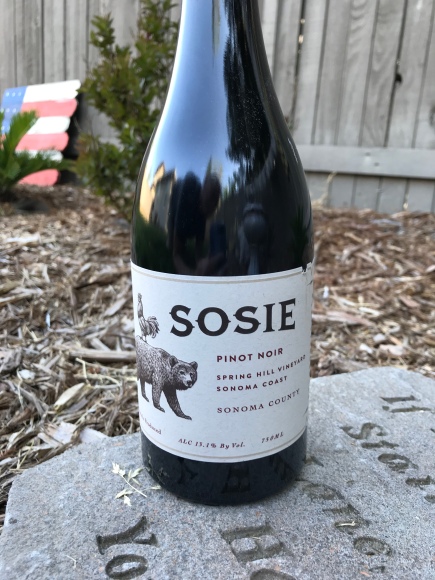
We recently received two bottles of Sosie wines as media samples for review; their 2015 Roussanne, Vivio Vineyards, Bennett Valley, Sonoma County, and the 2015 Pinot Noir, Spring Hill Vineyard, Sonoma Coast.

The following wines were provided as a media sample for review. All reviews, descriptions, and opinions are our own. We received no additional compensation.

Roussanne is a white grape from the Rhone Valley in France. It is traditionally blended with Marsanne, to make tasty Rhone white wines. A 100% Roussanne is relatively uncommon.

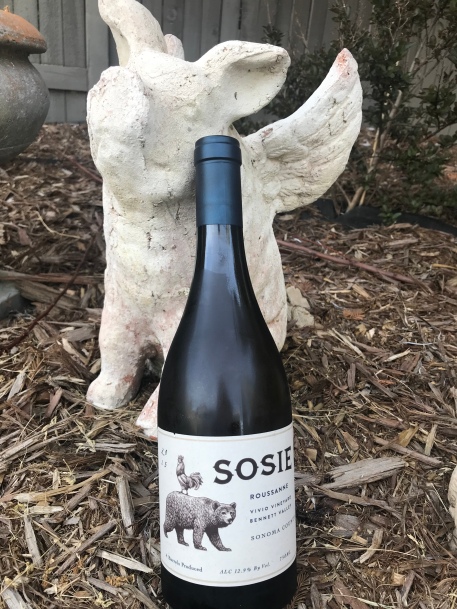
I’m not gonna lie, when I (Kent) saw the Roussanne, I was skeptical. I’ve only had a couple of 100% Roussanne wines before, and neither one impressed. Both had a distinct “funky” smell and taste, almost metallic or chemical in nature. The first bottle I tried, I returned and got a replacement. The replacement bottle tasted the same. I tried a different producer, and while it was slightly better, it still ranks as one of fewer than 10 wines I’ve ever poured down the drain. So, you can see why I was skeptical. I really thought that the day I found a Roussanne I liked, would be the day that pigs fly!

img_5533

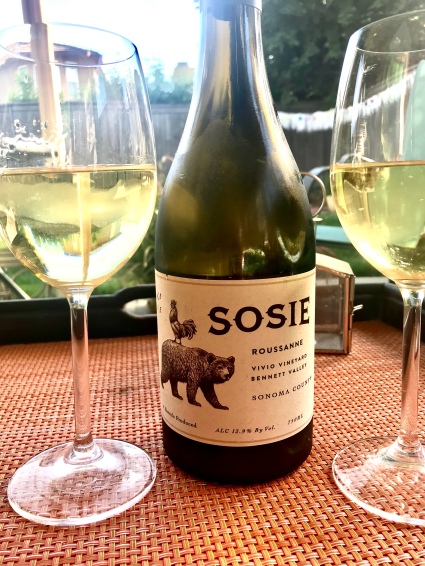
Well, that skepticism was blown away with the Sosie Roussanne. Hold on to your hats because that might be a Berkshire flying overhead! On initial pour, it did have just a momentary, slight funkiness (making Kent nervous), but that faded within seconds, leaving a clean, bright, fruity, and delicious wine that most definitely impressed! Here are our tasting notes:

img_5537

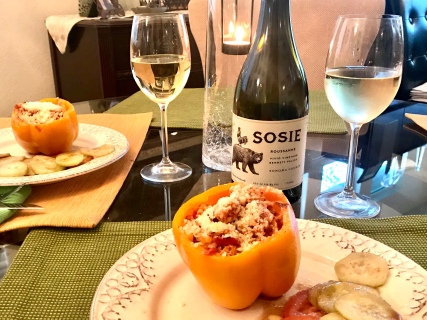
The first 100% Roussanne we’ve actually enjoyed! Golden color in the glass. Initial aromas are ripe apricot and nectarine. As it open up, there is some floral and herbal notes. On the palate, flavors of pear, honeysuckle, apricot, and some black tea notes. Medium body with a soft mouthfeel and bright acidity. Paired with turkey-stuffed grilled bell peppers, an amazing combination.

Only four barrels produced. Now that’s small batch! SRP: $38.00

img_5538

We’re kinda particular about our Pinot Noir. Many these days are overripe, overly extracted, and just too heavy. Almost like they’re trying to make it taste like Cabernet Sauvignon. We think Pinot Noir is meant to be balanced and elegant. The Sosie Pinot Noir is exactly that! Reminiscent of a Burgundian wine, as would be expected from a wine crafted in the Old World style, this wine has fresh fruit, balanced with earthy notes, smooth tannins, and soft acidity.

img_3036

An exquisite, elegant Pinot Noir. Brick red color. On the palate, there are aromas of raspberry, clove, and tobacco smoke, with hints of earth. On the palate, flavors of raspberry, dark cherry, baking spice, smoke, and forest floor. Velvety smooth tannins with bright, perfect for food pairing. Long finish of red fruit, earth, and smoke. Paired with grilled marinated pork chop and Brussels sprouts with pancetta, it was a match made in heaven!

Five barrels produced. SRP: $43.00

Sosie also produces a Syrah, a Rosé of Syrah, and a Cabernet Franc. I have no doubt that all are outstanding, and we hope to try them all! Sosie wines are available for purchase on their website. They care enough about your satisfaction, that they only ship when weather conditions warrant.

Give Sosie wines a try. Let us know, in the comments, how you enjoyed them.

Cheers!

  • By Kent Reynolds and Robyn Raphael
  • Photo credit: Kent Reynolds and Robyn Raphael

Amador County, Andis Wines, Original Grandpère Vineyard, Scott Harvey Wines, Sierra Foothills, Vino Noceto, Wine, Zinfandel

Small Plates and Vertical Tasting OGP Zinfandel

This is a repost of a project I published in 2017, in collaboration with Bri’s Glass of Wine. Sadly, I recently discovered that Bri has taken her site down. So I am posting this now on our site, because, frankly, I refer to it in a couple of subsequent blog posts, here and here. Plus, I happen to think it’s a pretty good post! Please enjoy!


Nestled in the heart of Sierra Foothills wine country lie what are reportedly America’s oldest producing Zinfandel vines. The Original Grandpère Vineyard (OGP for short) can trace its roots to the California Gold Rush era, with documentation dating back to 1869, and vines predating even that year. In keeping with Wild West tradition, the story of these vines is mixed with history, intrigue, and conflict.

Located in the beautiful, rolling hills of the Shenandoah Valley in Amador County, historical records identify the original owners of the vineyard as the Upton family. Over the years, ownership changed hands, Prohibition came and went, and White Zinfandel happened. In the 1970’s and early ’80s, the grapes produced in the vineyard were largely sold to make White Zin. In 1984, Scott and Terri Harvey purchased the land. At the time, Scott worked for Renwood winery. He named the vineyard Grandpere in honor of its age – Grand-père is French for Grandfather.

01 OGPRandyCaparoso
OGP Vineyard, photo credit: Randy Caparoso

While working at Renwood, Scott Harvey produced wine from his Grandpère Vineyard for the Renwood label. Meanwhile, Renwood Winery trademarked the name “Grandpère”, and using cuttings from the original vineyard, started producing Grandpère Vineyard Zinfandel from their own vines in a different vineyard. Through a series of events, including disputes, lawsuits, settlements, and divorce, Scott Harvey and Renwood parted ways; the use of the name “Grandpère” is legally protected and limited; and Terri Harvey owns the 1869 vineyard on her own. That Gold Rush era vineyard, with its 1869 heritage, is now known as the Original Grandpère Vineyard. The terms of a settlement agreement require that vintners using these grapes must use that entire name, or nothing at all.

Fast forward to 2017, and the few producers who are fortunate enough to source fruit from the Original Grandpère Vineyard are making some outstanding, elegantly restrained, nearly 150-year-old, Old Vine Zinfandel wines. I recently attended a Small Plates & Vertical Tastings event, accompanied by my daughter and her friend, that was hosted by three of those wineries making Original Grandpère Vineyard Zinfandel: Vino Noceto, Andis Wines, and Scott Harvey Wines. By no small coincidence…OK, no coincidence at all…Zinfandel is one of my favorite grape varieties. According to my Vivino stats, Zin is second only to Cabernet Sauvignon as my favorite varietal wine.

Each of the wineries poured a number of their OGP Zinfandel wines, paired with small bites to complement each vintage. We started at Vino Noceto…

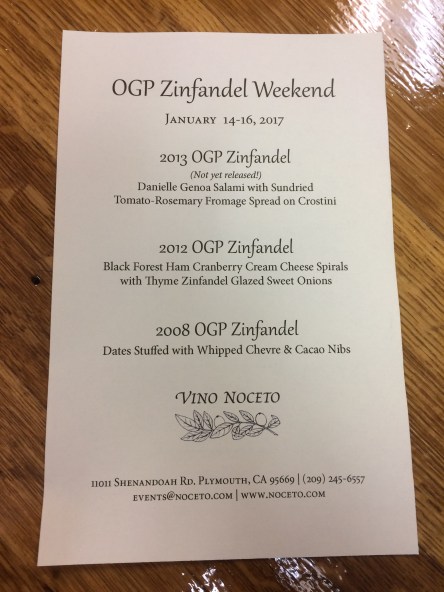
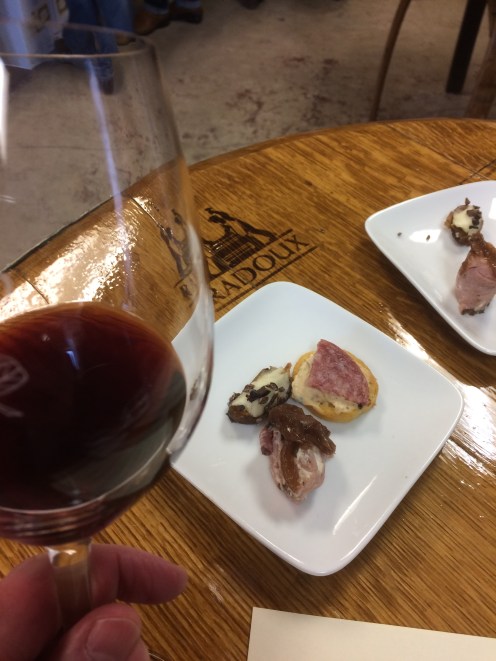
Our host, Bret, set us up at a cozy high-top bistro table, and got us started with the yet-to-be-released 2013 vintage, followed by the 2012 and 2008. The small bites for pairing included Genoa Salami with Sundried Tomato-Rosemary Fromage on Crostini (with the 2013), a Black Forest Ham and Cranberry Cream Cheese Spirals with Thyme Zinfandel Glazed Sweet Onions (with the 2012), and Dates Stuffed with Whipped Chevre & Cocoa Nibs (with the 2008).

02 Vino Noceto Menu

The bites were perfect pairings for each wine; drawing out the nuances of the tannins, acids, and flavors in the wines.

03 Vino Noceto OGP

Vino Noceto OGP Zinfandel 2013 ($32 retail)

Violet color in the glass. Aromas of blackberry and soft oak on the nose. Flavors of blackberry, boysenberry, cherry, and blueberry, with notes of spice and black pepper. Bright acidity with full, firm tannins. Long finish with dark berry, black pepper, and cherry notes.

04 VN 2013 in Glass

Vino Noceto OGP Zinfandel 2012 ($32 retail)

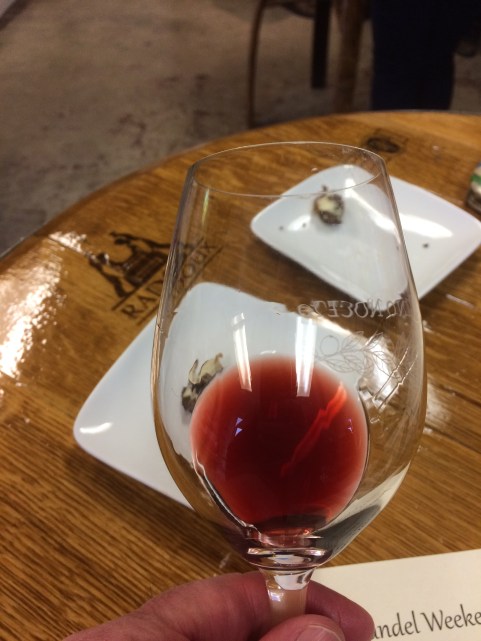
Ruby color with brick colored rim. Aromas and flavors of raspberry, cherry, and ripe strawberry. Very soft tannins with light acidity. Medium finish with red berry and spice notes. (It was very interesting to notice the contrast one year makes; from 2013 black fruit and firm tannins, to 2012 red fruit and soft tannins.)

05 VN 2008 in Glass

Vino Noceto OGP Zinfandel 2008 ($49 retail)

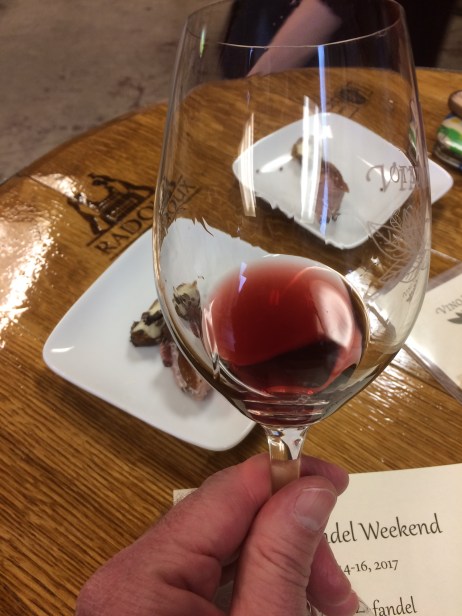
Brick red color. Nose of cherry and raspberry, with a hint of oak. Flavors of bing cherry, ripe raspberry, and spice. Tannins are soft and silky, balanced with bright acidity. Long, zesty finish with red fruit and spice.

06 VN 2012 in Glass

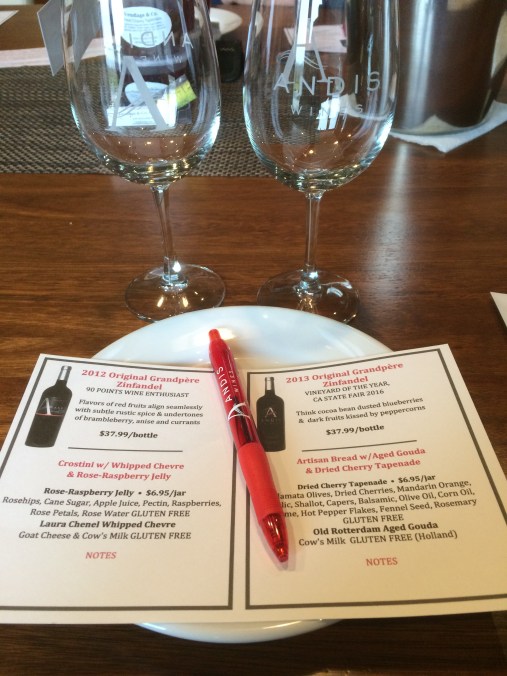
Next we traveled all the way across the road to Andis Wines. Here, we were seated at a large table in a private room with other guests, and treated to a detailed history lesson by our host, Art. He confirmed my earlier research, outlined above, and then poured us two samples and distributed the matching small bites to complement the wines. At Andis, we enjoyed the 2012 and 2013 vintages. Art explained that the 2012 vintage was made entirely by the original Andis winemaker, Mark McKenna; however, the 2013 was started by McKenna, but completed by Napa winemaker Doug Hackett.  McKenna used non-traditional methods; fermenting in stainless steel, then adding oak chips and dust to introduce the oak influences. Hackett is more traditional, aging in oak barrels. The contrast in winemaking styles was definitely apparent. With the 2012, we enjoyed a Crostini with Whipped Chevre and Rose-Raspberry Jelly. With the 2013, the pairing was Artisan Bread with Aged Gouda and Dried Cherry Tapenade. Again, the pairings were excellent.

06 Andis Menu

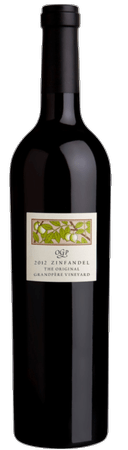
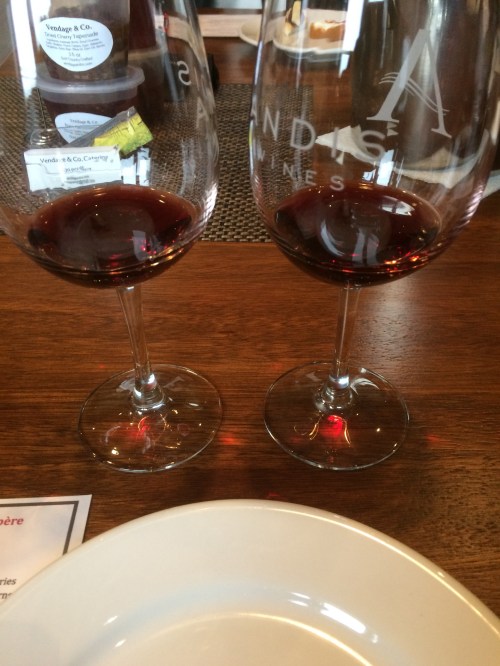
Andis Wines Original Grandpère Vineyard Zinfandel 2012 ($37.99 retail)

Ruby color. Nose of fresh raspberry and cherry, with a hint of soft oak. Flavors of sour cherry, raspberry, and ripe strawberry. Bright acidity with smooth tannins and a medium finish of red fruit flavors. My overall impression of this wine was “soft.”

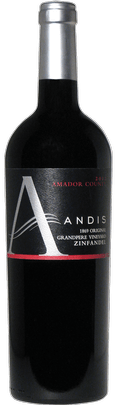
07 Andis OGP

Andis Wines Original Grandpère Vineyard Zinfandel 2013 ($37.99 retail)

Deep purple color. Nose of blackberry and spice. Flavors of blackberry, ripe raspberry, black cherry, and toasty oak. Medium acidity with firm tannins and a long, spicy finish. My overall impression of this one was “bright.”

08 Andis Tastes

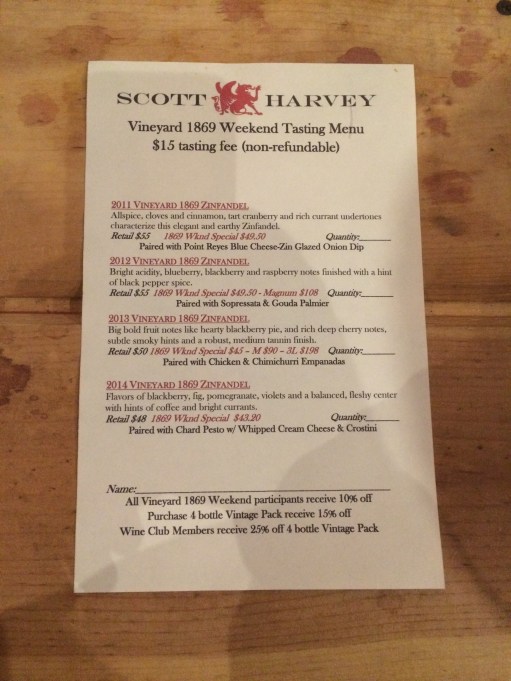
To finish out the day, we traveled the few hundred yards down the road to Scott Harvey Wines. Here, host Kelsey greeted us at the tasting bar as set up our tasting and small plates. Scott Harvey presented their vertical in the reverse of the traditional order, starting with 2011 and moving forward through 2014. Scott Harvey wines are aged in neutral French oak. The tastes included Potato Chips with Point Reyes Blue Cheese-Zin Glazed Onion Dip (2011), Sopressata & Gouda Palmier (2012), Chicken & Chimichurri Empanadas (2013, and Chard Pesto with Whipped Cream Cheese and Crostini (2014.)

09 Scott Harvey Menu

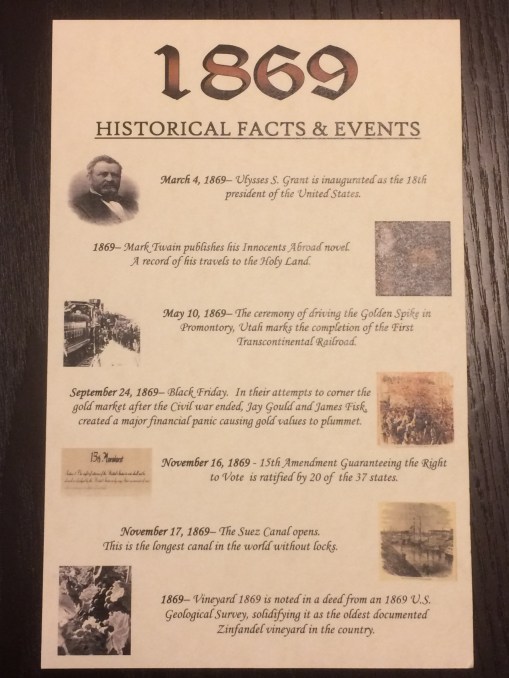
As an added bonus, Scott Harvey Wines compiled a “This Year in History” handout to highlight some other historical events that occurred in 1869. Did you know the Suez Canal opened the same year that the Original Grandpère Vineyard was recorded? Neither did I!

10 1869 History

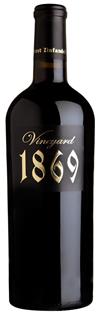
Given that Scott Harvey was in the middle of the multiple lawsuits surrounding the Grandpère name, he has abandoned the name entirely, and has dubbed his wines “Vineyard 1869.”

11 Scott Harvey OGP 1869 Vineyard

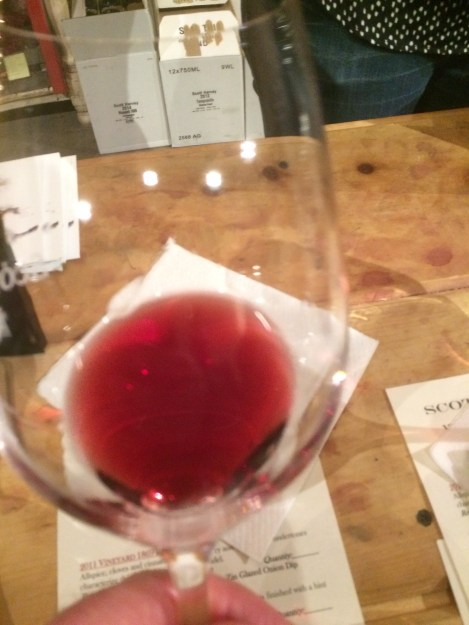
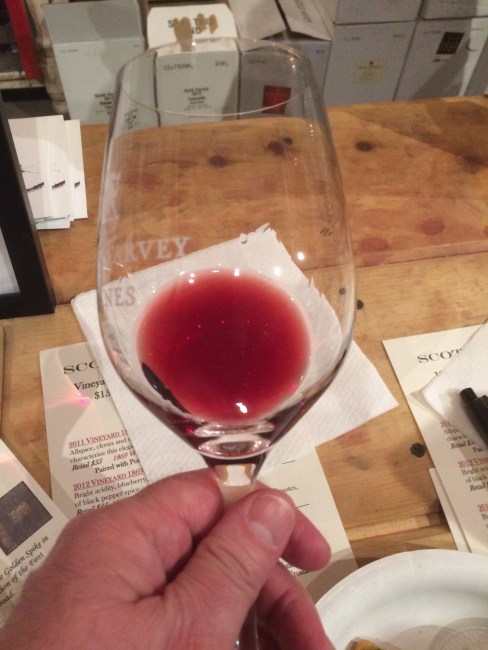
Scott Harvey Vineyard 1869 Zinfandel 2011 ($55 retail)

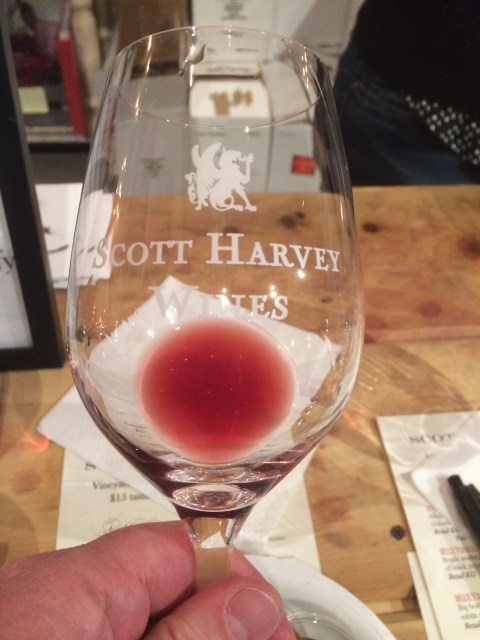
Bright ruby color. Aromas and flavors of raspberry, bing cherry, blackberry, and spice. Soft tannins with smooth acid, and a long finish with red fruit, spice, and black pepper.

12 SHW 2011

Scott Harvey Vineyard 1869 Zinfandel 2012 ($55 retail)

Bended with 6% Barbera. Ruby color. Bing cherry, raspberry, and stewed strawberry. Medium acidity and light, soft tannins. Long finish with red fruit flavors.

13 SHW 2012

Scott Harvey Vineyard 1869 Zinfandel 2013 ($50 retail)

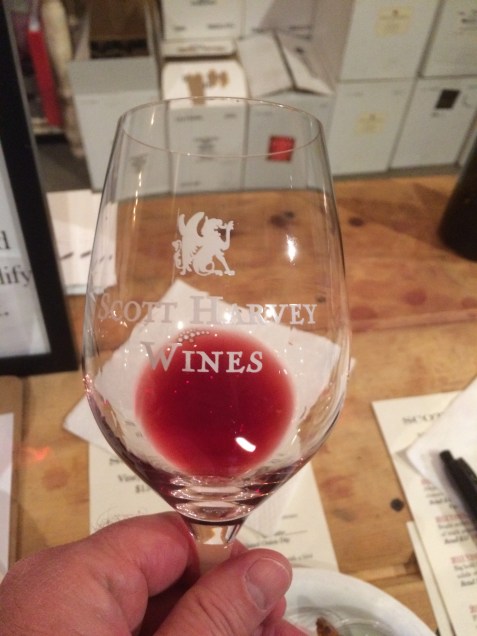
Bright ruby color. Flavors of raspberry, cherry, and white pepper. Bright, lively acidity with medium tannins. Long finish with red fruit and black pepper.

14 SHW 2013

Scott Harvey Vineyard 1869 Zinfandel 2014 ($48 retail)

Brick red color. Blackberry and black pepper on the nose. Flavors of raspberry, blackberry, and baking spice. Lively acidity with medium tannins. Long finish of red fruit and spice.

15 SHW 2014

This was a fun, educational event, exploring the history and evolution of winemaking in the Sierra Foothills. The event weekend starts on Friday and includes a Prix-Fixe dinner with wine pairings, and a walking tour of the Original Grandpère Vineyard on Saturday afternoon. I was only able to attend the Small Plates and Vertical Tasting on Sunday, but I hope to go again next year to participate more fully. This is an annual event, so if you are in Northern California in January, look into getting tickets and enjoy a taste of California winemaking history.

Cheers!

  • By Kent Reynolds

Historical References:

http://randycaparoso.blogspot.com/2015/04/the-original-grandpere-vineyard.html

http://www.scottharveywines.com/americas-oldest-documented-zinfandel-vineyard-vineyard-1869/

http://palatepress.com/2012/04/wine/the-oldest-zinfandel-of-amador-county-original-grandpere-vineyard/

http://winecountrygetaways.com/1869-old-vine-zinfandel-vineyard-in-amador-wine-country/

http://www.sfgate.com/wine/article/DRAMA-IN-AMADOR-Great-grapes-hard-feelings-2617116.php

Cabernet Sauvignon, Lucas & Lewellen, Sample, Santa Barbara County AVA, Santa Ynez Valley AVA, Wine

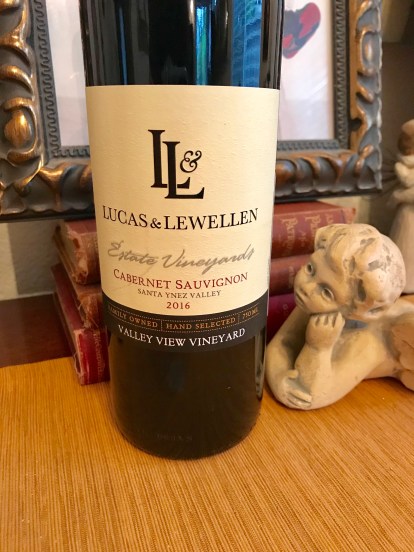
Review: Lucas & Lewellen Vineyard View Cabernet Sauvignon 2016

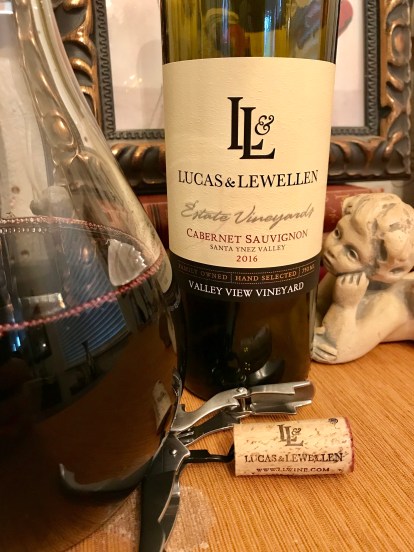
For a lot of people, Cabernet Sauvignon means Napa. Yet, as many people know, when you buy Napa, much of your dollar goes toward the name. There are many other regions producing high quality Cabernet Sauvignon at a fraction of the price of Napa. Recently, when we were offered a sample of the Lucas & Lewellen Vineyard View Cabernet Sauvignon 2016, from Santa Barbara County, we jumped at the chance!


The following wine was provided as a media sample for review. All reviews, descriptions, and opinions are our own. We received no additional compensation.

Lucas & Lewellen started as a partnership between Louis Lucas and Royce Lewellen in 1975. Mr. Lucas was a third generation grape grower. Mr. Lewellen was a Superior Court Judge. The two met through the Santa Maria Wine & Food Society. The two men shared a passion for fine wine and the Santa Barbara wine industry. Through their partnership, Lucas & Lewellen has established itself as a highly respected winery, with more than 400 acres of estate vineyards in Santa Barbara County.

img_2945

We were not disappointed with this Cabernet Sauvignon! With a SRP of $27, this Santa Barbara wine is a QPR champion. We’d expect to pay as much as 3x this much for a comparable Napa Cabernet. Readers, let this serve as notice that Santa Barbara County produces stand-alone Cabernet Sauvignon, beyond comparison.

img_2950

Deep, inky color. Aromas of blackberry, black currant, and vanilla notes. On he palate, big, bold flavors of ripe blackberry, cassis, black cherry, black plum, vanilla, and hints of smoke and spice. Tannins are big and chewy, and the acidity is well balanced. The finish is long, with black fruit and pepper. Drinking very well now, and the tannin structure would allow this wine to cellar for another 10 years. Paired with New York steak, grilled asparagus, and caprese salad, it was pure perfection.


Next time you are looking for a bottle of Cabernet Sauvignon that will “wow” your friends, neighbors, or dinner guests, consider Lucas & Lewellen Vineyard View Cabernet Sauvignon 2016. We are convinced that everyone will be impressed!

Cheers!

  • By Kent Reynolds and Robyn Raphael
  • Photo Credit: Kent Reynolds and Robyn Raphael
Harney Lane Winery, Lodi, Lodi Winegrape Commission, Wine

A New Tradition at Harney Lane Winery

When a wine region captures the imagination, and worldwide attention, wineries seem to pop up from nowhere. Don’t get us wrong, We’re fully in favor of more wine! Still, there’s something special and intriguing about a multi-generational, family owned winery that has been growing wine grapes for more than 100 years. And so it is at Harney Lane Winery in Lodi, California.

img_2841

Recently, we had the opportunity accompany our friends and fellow bloggers, John and Irene Ingersoll, for a tour and tasting at Harney Lane Winery. On our arrival, we were greeted by Kyle Lerner. Kyle is an engaging and friendly man, with a wealth of knowledge, wit, and humor. A business major in college, with no farming background, he married into the family, and was mentored by Patriarch George Mettler. Now, Kyle calls the vineyard his office, and with more than 25 years of farming, couldn’t be happier.

img_5322.jpg

Harney Lane Winery is a 5th generation farm. The family originally purchased the farmhouse on the property in 1900, and started growing grapes in 1907. For 99 years, the family sold all the grapes they produced. In 2006, they decided to put their produce into their own line of wine. That year, they produced 1,000 cases of wine. Today, they produce between 8,000 and 9,000 cases. Their wines are produced from 100% estate grown fruit, and despite the increase in production in the past 13 years, they use only about 10% of the grapes they farm. The other 90% are sold to other wineries. The entire estate is 100% certified sustainable under the Lodi Rules.

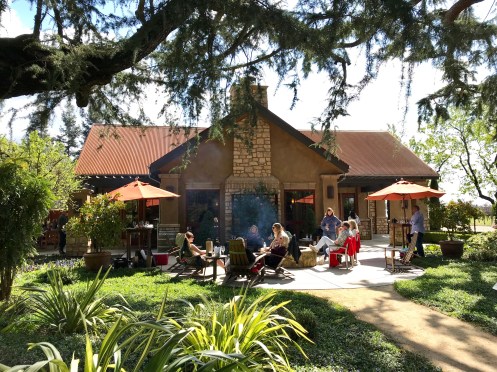
After pouring us each a sample of their now sold-out Chardonnay, Kyle escorted us on a tour of the park-like grounds, into one of the vineyards, and then to the barrel room for more tasting. The Chardonnay was delightful; crisp and light, just the way we like it, with only a hint of oak influence. The front grounds of the property are amazing! It’s like wandering through a fairy tale, with centuries-old trees, manicured flower beds, and meandering paths. Fountains, benches, and tables with chairs punctuate the walk, giving visitors the opportunity to sit and really relax while enjoying the beauty.


Wandering from the garden to the vineyard, Kyle explained the family commitment to sustainability. As we were there in early spring, we got to see early bud break in the Primitivo vineyard. From the vineyard, Kyle led us to the barrel room and more tasting. We were met along the way by Jorja Lerner, Kyle’s wife and daughter of George and Kathy Mettler.


As Kyle led us through a flight of reds, he talked about the family history and commitment to crafting exceptional, estate wines, balancing winemaker vision with consumer demand. If you think of Lodi wines, specifically Zinfandel, as being big, jammy, fruit-bombs, think again. While definitely exhibiting the local terroir, Harney Lane wines are elegant, restrained, and delicious. These are wines that are at home at both a fine-dining restaurant, and a backyard barbecue.


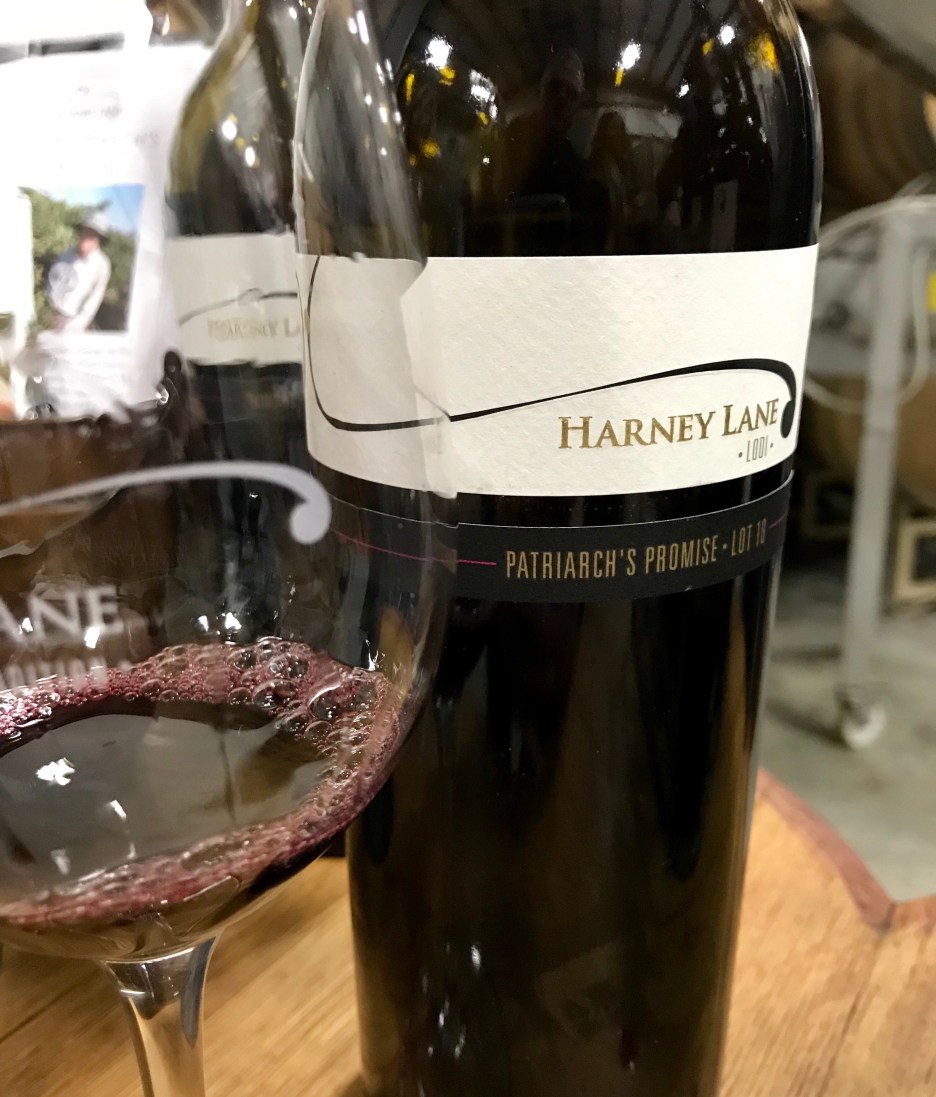
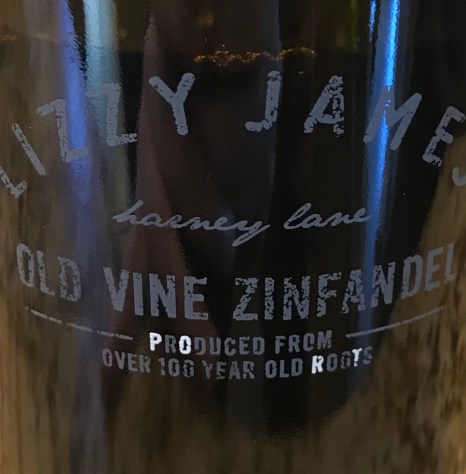
We started with a taste of the 2016 Tempranillo. Here’s a grape that most people don’t associate with Lodi, but Harney Lane does it right. The grapes for this wine come from 20-year-old vines, and it is excellent. Next, we tasted the 2016 Zinfandel, a well-balanced example of what Lodi can do with this iconic grape. Moving on, we tasted the Primitivo, Lot 18. Kyle explained that the Primitvio is a Non-Vintage wine, blended from a number of recent vintages. Lot 18 is a rustic and tasty blend of the ‘14, ‘15, and ‘16 vintages. Next up was Harney Lane’s Old Vines Zinfandel offering, and their flagship wine. The name, Lizzie James Old Vines Zinfandel, conjures up images of the Wild West, and such heroines as Calamity Jane and the Unsinkable Molly Brown. In reality, though no less inspiring, Lizzie James comes from the middle names of Kyle and Jorja’s children, Kirsten Elizabeth and Ian James. They opted for Lizzie instead of Elizabeth, since the former sounded more rustic and adventurous than “Elizabeth James.” Don’t you agree?

Finally, Kyle shared with us the Patriarch’s Promise Red Blend. First released in 2012, this proprietary red wine is made to honor George Mettler. George was only able to enjoy the first vintage of this wine, before losing his battle with cancer in 2013. Today, 10% of sales from this wine are donated to the American Cancer Society. The recipe for this wine is a closely guarded family secret. Always up for a challenge, we each sipped, evaluated, and tried to determine the blend. My first guess was a right-bank Bordeaux-style blend; Merlot dominated, based on the cherry and pencil shaving notes. However, Kyle confided to us that the current vintage is, in fact, a single varietal wine, from a rather obscure grape. Despite our best efforts to guess, cajole, and entice Kyle to spill the beans, none of us could identify the source of this deep, rich, delicious wine. Or did we? Kyle would never tell.

img_2852.jpg

We returned to the tasting room for one final treat: a taste of the Lizzie James Old Vine Zinfandel dessert wine. For those of you in the know, you are aware that there are strict rules around the naming of wines, and that U.S. Alcohol and Tobacco Tax and Trade Bureau (TTB) must approve any wine names in the U.S. So, for example, with few exceptions, any wine called “Champagne” must come from Champagne, France, and any wine with “Port” in the name, can only come from Porto, Portugal. Wanting to stay compliant, while still letting consumers know what they were getting, Harney Lane designed their label in a unique way, that the TTB approved, thus ensuring that Port fans everywhere would know they were in for a treat! Bravo, Harney Lane!

img_2853-1

After the tasting and tour, the four of us returned to the garden where we found a comfortable table in the sun, and enjoyed a final glass of Harney Lane wine, while relaxing and enjoying the new tradition that is Harney Lane Winery.

Next time you’re in Lodi, be sure to stop by for some outstanding wine, the tradition of five generations, and the relaxing surroundings that invite you to relax and enjoy.

Cheers!

  • By Kent Reynolds and Robyn Raphael
  • Photo Credit: Kent Reynolds and Robyn Raphael
Cabernet Franc, Chateau du Coudray-Montpensier, Chinon, Sample, Wine

Warm Reds for Cold Nights, Part 3

Well, we’ll admit that as we write this, it’s sunny and 72 degrees at our home in Northern California. Spring is definitely upon us here. However, other parts of the country as still in the harsh grip of winter. Besides, it was a couple of weeks ago when we opened and enjoyed this sample; on a cold, rainy, winter’s night. Plus, readers in the Southern Hemisphere are headed into winter, and will be needing some Warm Reds for their Cold Nights, soon.

For the third in our four part series of Warm Reds for Cold Nights, we travel to France. When most people think of big red wines from France, they think Bordeaux, Burgundy, or the Rhone. Yet in our ongoing quest for the lesser-known, our travels today take us to the Loire Valley, specifically to the communes that make up the region of Chinon.

The red wines of Chinon are crafted from Cabernet Franc grapes. Many of you may know Cabernet Franc as one of the two parents of Cabernet Sauvignon. (The other half of the greatest marriage in viticulture is Sauvignon Blanc.) Used as a blending grape in Bordeaux and other regions, Cabernet Franc stands, and shines, on its own in Chinon wines.

The following wine was provided as a media sample for review. All reviews, descriptions, and opinions are our own. We received no additional compensation.

img_2803

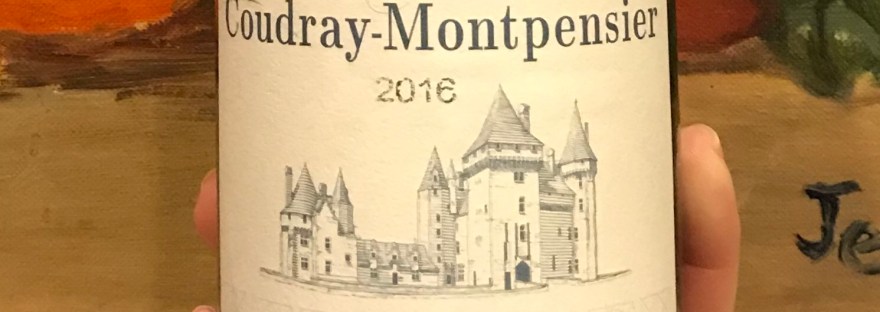
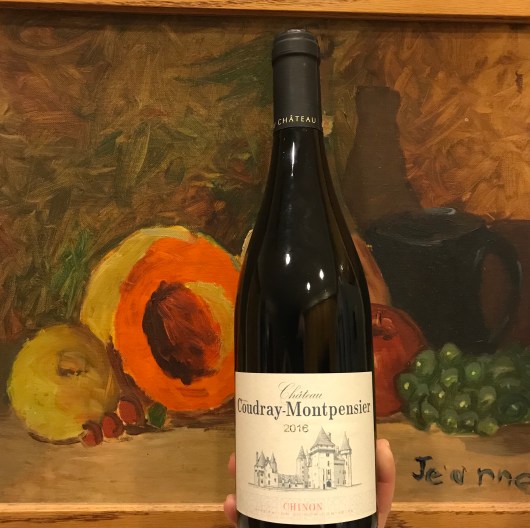
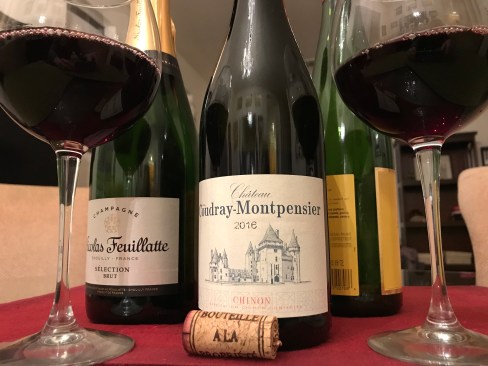
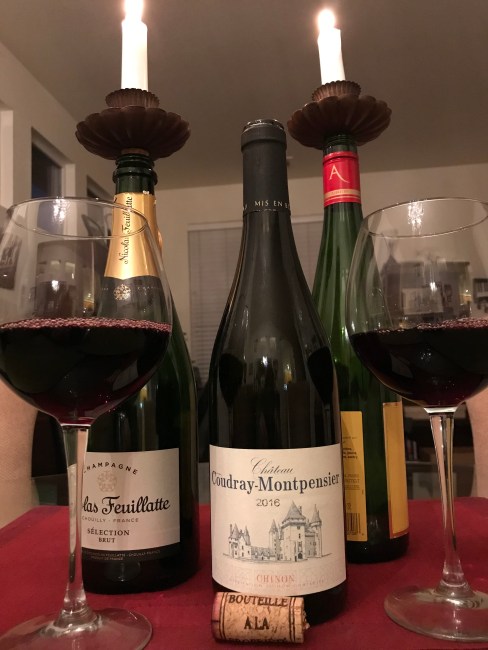
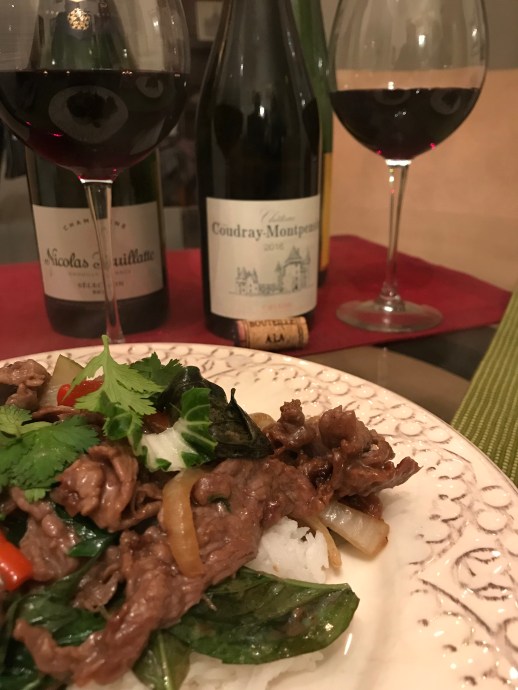
Chateau Courday-Montpensier dates back to 1090 AD, though the current castle on the site was built in the 14th century. There are 30 hectares of vineyards at the chateau, all planted to Cabernet Franc. The Chateau du Courday-Montpensier Chinon Rouge 2016 is 100% Cabernet Franc, that spent between 6 and 12 months in barrel before bottling. It is a classic representation of Chinon, quite delicious and food friendly.

img_2808img_2805

Rather than going with a more traditional food pairing with this Cabernet Franc, we opted for more of a Franco-Asian fusion menu: homemade Thai Basil Beef. The pairing was exceptional, with the exotic, savory beef complementing the rich, hearty wine, and vice-versa.

img_2810

Inky purple color. Aromas of ripe blackberry, raspberry, and black cherry. On the palate, fruit forward with blackberry, blueberry, raspberry, and cherry, with secondary notes of licorice, black pepper, and vanilla. Tannins are big and chewy, but melt away with food. Brisk acidity livens the senses and further enhances the food pairing. Excellent this winter’s evening with Thai Basil Beef. Definitely warming and satisfying. Wine Searcher average price: $16.00.

Even if spring has sprung in your neighborhood, don’t overlook the opportunity to enjoy a big, warming red wine with your BBQ or other hearty meal. Until next time…

Cheers!

  • By Kent Reynolds and Robyn Raphael
  • Photo credit: Robyn Raphael

Portugal, Portuguese Wine, Sample, Warm Reds for Cold Nights, Wine, Wine Blog, Wine Blogger, Wine Pairing, Wine Review, Wine Tourism in Portugal

Warm Reds for Cold Nights, Part 2

While some parts of the country are starting to see signs of spring, other regions are still being pummeled by harsh winter storms. Yes, some of the trees and bushes in our neighborhood have buds and blooms, but there is another major winter storm bearing down on Northern California as we write this.

The following wine was provided as a media sample for review. All reviews, descriptions, and opinions are our own. We received no additional compensation.

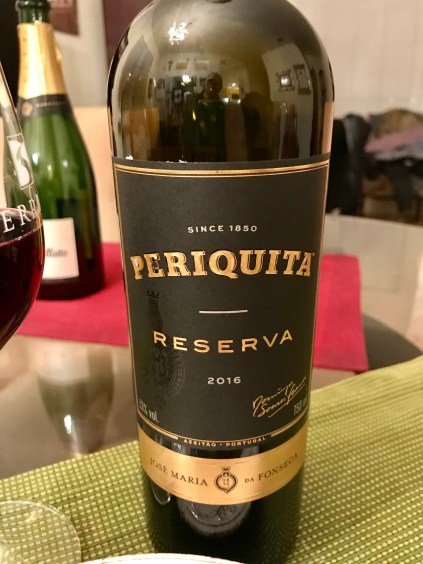
For the second installment of our four-part mini-series, we journey to Portugal. Portugal and her wines are trending strongly of late, and for good reason. Portugal is the sunniest country in Europe, and features amazing wine, food, and culture, miles of coastline, and warm, welcoming people. With more than 200 indigenous grapes, there is a wide variety of outstanding wine available at attractive prices. So we were quite pleased when we received a sample of José Maria da Fonseca Periquita Reserva 2016 for tasting and review.

img_2786

José Maria da Fonseca has a family history spanning nearly two centuries. Since 1834, the family has been carrying on the passion and commitment of the founder, as the oldest producer of table wine in Portugal. Not a family to rest on their laurels, the José Maria da Fonseca family invests in research and the latest technology in winemaking. Yet with all the advances, the passion of crafting fine wine shines through in the wine.

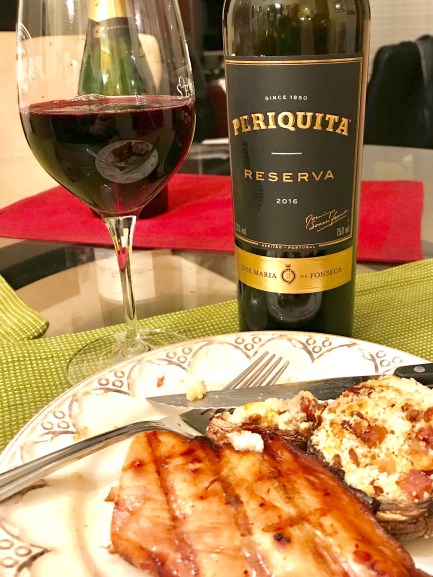
An alluring blend of 56% Castelao, 22% Touriga Nacional, 22% Touriga Francesca, the José Maria da Fonseca Periquita Periquita 2016 is aged for 8 months in French and American oak. We opened it to pair with grilled chicken, marinated in a locally produced Basque-style marinade and gorgonzola & bacon stuffed portobella mushrooms. Yes, grilled. As in, outdoors. It’s never too cold or too stormy for grilling at the Appetite for Wine house!

img_2785

Deep ruby color. On the nose there are aromas of raspberry, cherry, cedar, and earth. On the palate, complex and integrated flavors of blackberry, black cherry, cranberry, and red currant, with oak and cedar notes. Full bodied with a luscious, round mouthfeel and brisk acidity. Long, lingering finish of red fruit and white pepper. Paired with our grilled, marinated chicken and mushrooms, it was exquisite! Vivino average price: $15.99.

We are quite happy to have these warm reds to help us through these cold nights. Chapter three will be posted soon. In the meantime, check out José Maria da Fonseca, and let us know what you think.

Cheers!

  • By Kent Reynolds and Robyn Raphael
Classico, Lucas & Lewellen, Santa Barbara County, Santa Barbara County AVA, Santa Ynez Valley, Santa Ynez Valley AVA, Toccata, Wine

Review: Toccata Classico 2015

I first learned about Toccata wines several years ago, when one of their sales reps was hosting a tasting at a wine bar near my home. I happened in, by happy coincidence, and was immediately impressed by the quality, complexity, and character of the wines. Alas, the wines are not widely distributed, so Toccata was difficult to find and enjoy regularly.

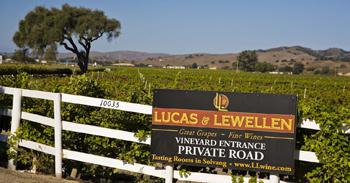
The Toccata label is owned by Lucas & Lewellen Vineyards, a family owned estate in Santa Barbara County. I’m fairly certain the Toccata tasting all those years ago was the first Santa Barbara wine I had experienced. Lucas & Lewellen is fairly well known to travellers along Highway 101 south of Paso Robles, as their large estate vineyards are adjacent to the highway, and are well marked with signs identifying ownership and often the variety of grape.

LL_LosAlamos_LoRes_001
Photo Credit: llwine.com

Years after that original Toccata tasting, my son started college at U.C. Santa Barbara; another happy coincidence. During the hours-long drives from Northern California to visit, as I passed the Lucas & Lewellen vineyards, I was reminded of the Toccata wines I had enjoyed. When I discovered that Toccata has a tasting room, just a few miles off Highway 101 in the quaint village of Solvang, I was thrilled to be able to enjoy these wines again while also enjoying time with my son, and the beauty of Santa Barbara. Still, once he graduated, and my regular trips to Santa Barbara came to an end, so did my ready access to Toccata.

To my sheer delight, I was recently offered a sample of the Toccata Classico 2015. There was no hesitation in my affirmative response to the offer!  

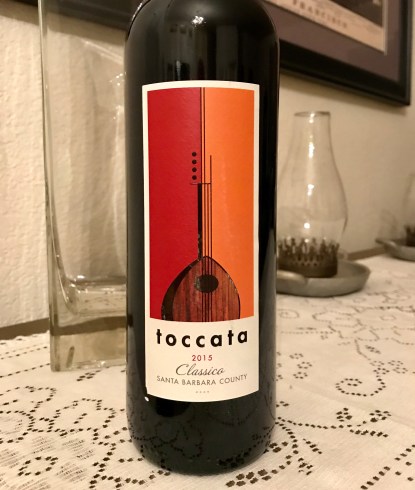
img_2346

Toccata wines are all Italian varieties and styles. Toccata Classico is a red blend made in the Super Tuscan style. The fruit comes from two estate vineyards; Los Alamos Vineyard in the Santa Barbara AVA and Valley View Vineyard in the Santa Ynez Valley AVA. The 2015 is composed of 50% Sangiovese, 30% Cabernet Sauvignon, and 5% each of Merlot, Cabernet Franc, Freisa, and Petit Verdot. Here’s what we thought of it:

The following wine was provided as a media sample for review. All reviews, descriptions, and opinions are our own. We received no additional compensation.

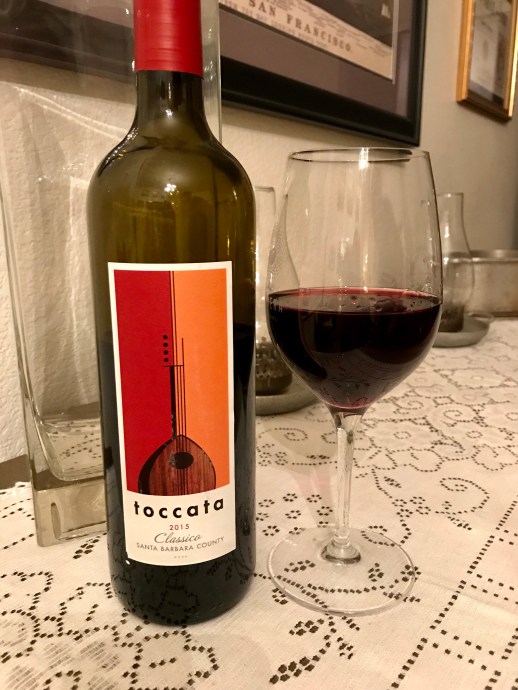
img_2348

Rich, deep purple with ruby rim. Initial nose is vanilla, with ripe red berry. On the palate, flavors of ripe raspberry, blackberry, and cassis, with baking spice, vanilla, tobacco, white pepper, and toasty oak. Firm, chewy tannins, with medium acidity. Rich and full bodied. The finish is long with red and black fruit, oak, and black pepper.

SRP $29.00 per bottle

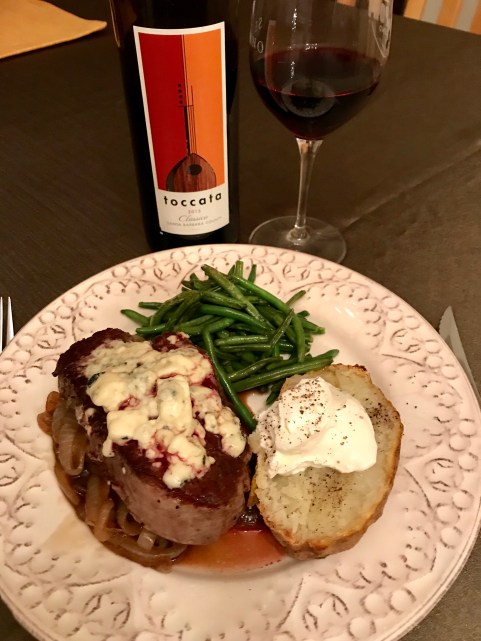
Perfect for Italian cuisine, and also fantastic with other genres of food, too. We loved it with Pan Seared Filet Steaks with Gorgonzola and Caramelized Onions. Sheer delight! img_2349

If you are in the Santa Barbara area, be sure to take a detour out to Solvang and visit the Toccata tasting room. It’s well worth the trip!

Cheers!

  • By Kent Reynolds
  • Photo credit, except where noted, and inspiration by Robyn Raphael
Family Estate, Family Winery, Placer County, Wine, Wine Country, Winery

Loder Vineyards

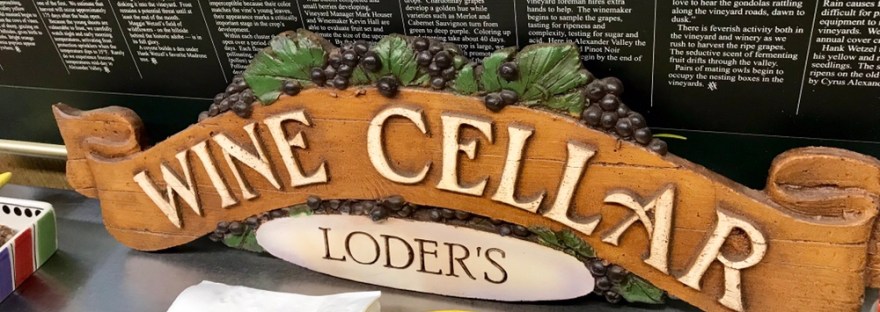
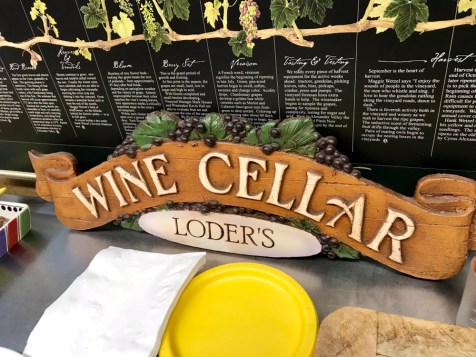
In Western Placer County, near where the suburban housing tracts meet the rural farms and ranches, the Loder family has a small parcel of wine grapes. Ron and Kathy Loder are long-time wine lovers. When they were raising their children, they had grassy fields for the kids to play and practice football. Once the kids were grown, Ron and Kathy decided to plant grapes and make their own wine.

Getting started wasn’t as simple as just planting some vines and waiting for them to produce fruit. Ron was serious about wanting to make good wine, so he contacted U.C. Davis; renown for their viticulture program; and asked for help. Ron and Kathy really, really wanted to grow Cabernet Sauvignon – their favorite varietal wines. However, the experts told them that their microclimate and soil were not suitable. Instead, they were advised to grow grapes more suited to the Mediterranean climate here – Barbera and Tempranillo, and interestingly, Cab Sauv’s parent, Cabernet Franc. In all they have about ¾ of an acre of Estate vines, and they also source other varieties from vineyards around Northern California.

A couple of weeks ago, we were invited to visit and experience Ron and Kathy’s production. The group started with appetizers and wine in the Loder family home, and then Ron escorted us out to the vineyard for an educational tour. One of first things I noticed about Ron is his passion for wine growing and winemaking. Ron enthusiastically talked us through the process, from initial plantings, to waiting the three years before the vines produce wine-quality grapes, to harvest, crush, and production. While in the vineyard, he brought out his refractometer, the instrument used to determine the brix (sugar level) in the grape juice, and allowed each of us to have a look.

Ron is also a humble man, relating the story of his efforts to cheat the process and make wine with grapes from two years old vines. It was a complete failure, and they marked the bottles with an “F”. They still have a few bottles, just as a reminder.

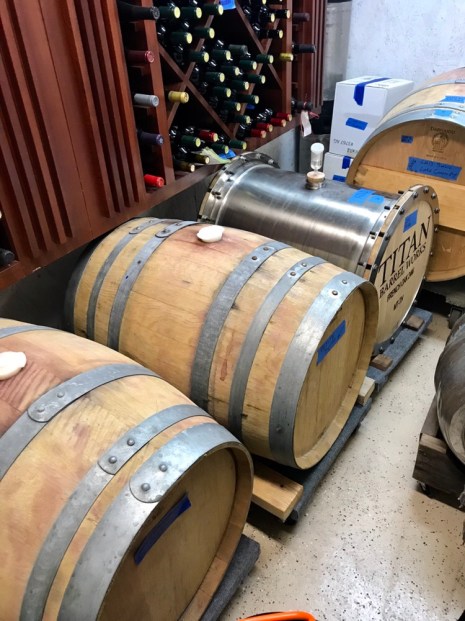
After the vineyard tour, we moved on to the fermentation room and cellar. Robyn even had the chance to punch down some recently harvested grapes that were in the fermentation tank! Then, of course, we got to sample more wine.

Loder Vineyards is not a commercial production, but with the quality of their wines, they should be. Touted as “no headache wine”, Ron uses a minimalist approach, with microscopic amounts of sulfites used, and little other intervention. All of the wines spend nearly two years in oak before bottling. Just a few weekends before our visit, they had just bottled their 2016 vintage.

img_2205

A true “friends and family” production, the Saturday following our visit, they would host their annual harvest and crush party. We were invited, but already had plans to be out of town.

img_2202

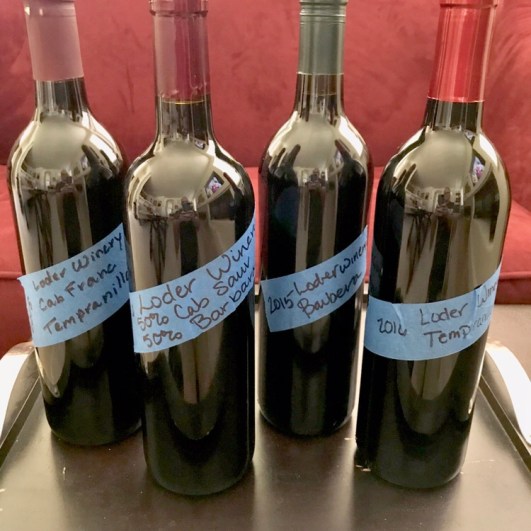
Ron’s vocational background is in commercial building construction. As such, when they first started bottling wine, they used blue painter’s tape as labels; having an ample supply on hand. This tradition continues today, and Ron says if he ever does enter commercial production, his labels will be designed in similar fashion.   

img_2239

All of the wines we tasted were well made and complex. Fruit forward without being jammy, with smooth tannins and balanced acidity and oak influences. We tasted Estate Barbera and Tempranillo, some interesting blends such as Tempranillo-Cabernet Franc (Kent’s favorite) and a Barbera-Cabernet Sauvignon. Yes, Ron and Kathy have made connections in the wine world, and source Cabernet Sauvignon from Lake County, so they can make and drink their beloved favorite. We barrel tasted the 2016 Cabernet Sauvignon, and it is already coming along, with promise to be a fantastic wine!

img_4164

We were honored to be invited to this event, and consider Ron and Kathy, and all of the other’s there that evening, to be new wine friends.

Cheers!

  • Text and photos by Kent Reynolds and Robyn Raphael
Côtes du Rhône, Châteauneuf-du-Pape, France, Gigondas, Rhone, Rhone Valley, Viognier, Wine

Exploring the Rhône through a Wine Glass

During the 2017 Wine Bloggers Conference, we were introduced to the wines of Cariñena, Spain. Predominantly Garnahca based wines, we were instantly in love. As we enjoyed the flavors of these wines, we began to yearn to explore other regions noted for their Garnacha wines. Perhaps the most famous of these regions is the Rhône Valley in France. There, as in most of the wine world, this fantastic and versatile red grape is known as Grenache.

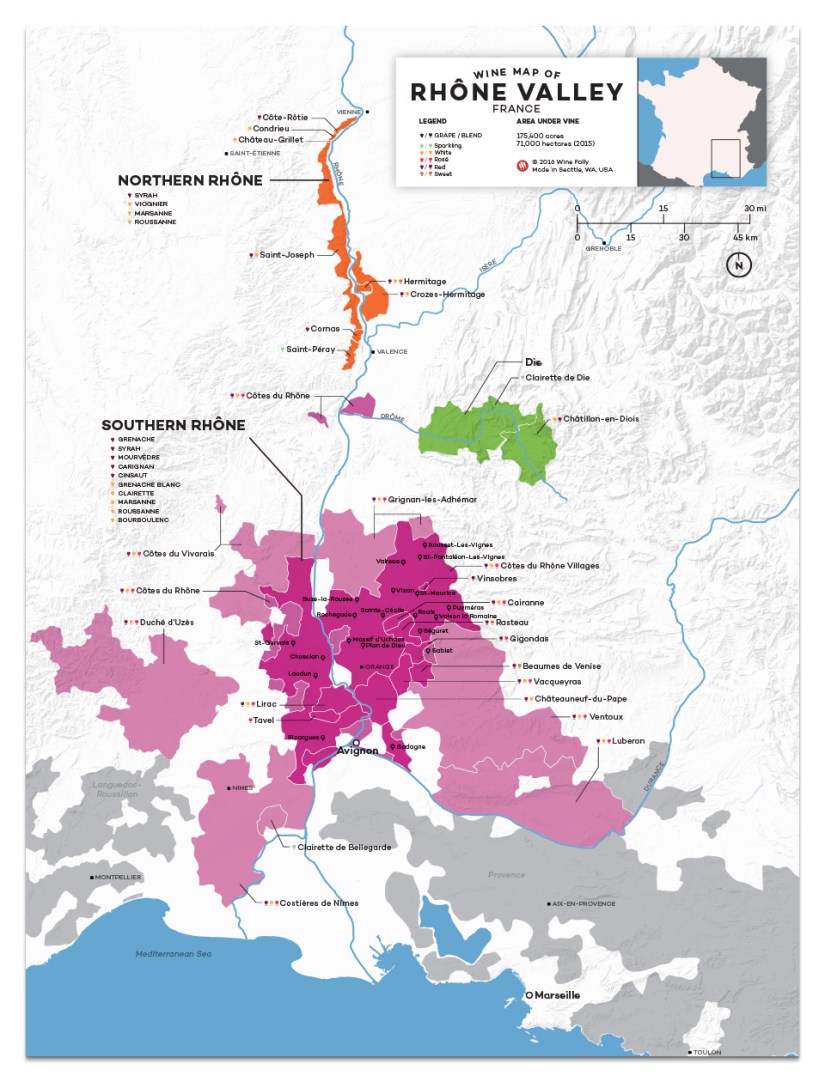
The Rhône Valley is in the southeast of France. It is one of the oldest grape growing regions in the world, with viticulture documented as early as the 4th century B.C. The valley runs some 150 miles in a north-south direction, and as such, encompassess a wide variety of soil and growing conditions. The Rhône Valley can generally be divided into the Northern and the Southern. In the Northern Rhône, Syrah is king, with the wines generally dominated by this grape. Village (and wine) names such as Côte-Rôtie, Condrieu, Crozes-Hermitage, and Hermitage may be familiar to you, as these are some of the more famous Syrah regions in France.

12x16-France-Rhone-wine-map2
Credit: WineFolly.com

In the Southern Rhône Valley, the wines are most often blends, with Grenache playing the lead role, usually supported by such cast of characters as Syrah and Mourvèdre. These wines are commonly known as GSM. In addition to reds, the Rhone Valley also produces some stunning white wines, from Viognier, Marsanne, and Roussanne grapes. While we’ve had Grenache and Viognier wines before, including GSM and Viognier from the Rhône Valley, we wanted to deliberately dive into some fine Southern Rhône Valley wines to explore and get to know the region as well as the wine.

The more well-known villages in the Southern Rhône are Côtes du Rhône, a rather generic term for wines from this area, Côtes du Rhône Villages – denoting a more specific identity of place and quality, Gigondas, Vacqueyras, and what is arguably the most famous and best quality Southern Rhône region, Châteauneuf-du-Pape. There are many other villages worth exploring, but we wanted to focus on the most famous and prolific for now.

The Southern Rhône is a Mediterranean climate, as one might expect in the South of France. Long, warm summers and mild winters provide ideal growing conditions for Grenache. In addition, the Mistral winds, blowing up to 60 miles per hour, some 150 days per year, provide cooling and drying to the tight, fungus-prone Grenache grape clusters. Hold on to your hat, to be sure, but appreciate those high winds for the effect they have on this cherished wine!

Before we dive into the wines, allow us to share another little tidbit from history. The famous Châteauneuf-du-Pape is roughly translated to “New Castle of the Pope.” In 14th century, the papacy moved from Rome to Avignon, a village along the Rhône River near the southern end of the valley. Apparently the Popes enjoyed the tranquility of French countryside! In 1317, Pope John XXII had a summer residence built at what is now Châteauneuf-du-Pape. Although construction was not completed until 1333, a year before Pope John XXII’s death, the name remains and the wines from this region remain coveted for their quality.

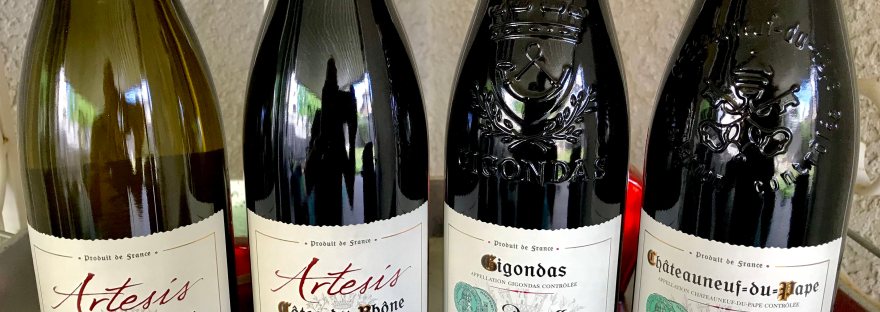
With our interest in Southern Rhône wines, we were pleased to receive the following bottles as media samples. Tasting through these wines, we were transported to the South of France in each glass. Though we have not yet been in person, the Rhône Valley is definitely high on our list of places to visit.

Now, on to the wines!

The wines below are media samples. All thoughts, opinions, and notes are our own. No other compensation was received.

Ogier Côtes du Rhône Artesis Blanc 2016


Golden color in the glass. Aromas of white flower, light straw, and tropical fruit. In the palate, there are flavors of lemon and grapefruit, with hints of mango, and soft floral and herbal notes rounding out the mouth. Soft, full mouthfeel with vibrant acidity. The finish is medium with pleasing notes of citrus, tropical fruit, and floral. Excellent pairing with grilled sea bass and rosemary quinoa.

Ogier Côtes du Rhône Artesis 2016

Deep, rich purple color. We decanted for about an hour before serving. On the nose, luscious aromas of blueberry, raspberry, and plum with spicy notes. On the palate, blackberry, black cherry, blueberry, and plum, with black pepper, baking spice, and vanilla. Notes of milk chocolate as the finish develops, ending with spicy black fruit. The mouthfeel and tannins are incredibly soft, round, and smooth, with medium acidity. We paired this with, of all things, carne asada tacos with a radish-cilantro salsa, and it was sublime. A truly amazing Côtes du Rhône.

Ogier Gigondas Dentellis 2014

Deep ruby color. Decanted for about an hour and pleasing aromas of raspberry, bramble, and black pepper. On the palate, there are flavors of cherry, red currant, cranberry, raspberry, and spice. At mid palate mineral and crushed granite notes emerge, along with hints of milk chocolate and black pepper. Medium body with mild tannins and acidity. We paired this with grilled Ahi tuna steaks, and the combination was amazing! The spice in the wine really enhanced the flavor of the tuna. This is a truly amazing wine!

Ogier Châteauneuf-du-Pape Reine Jeanne 2014

They call this the wine of kings, king of wines for a very good reason. Rich, complex, and delicious. Cherry red color with brick rim. Aromas of chocolate covered cherry, licorice, and smoke. On the palate there are flavors of black cherry, ripe raspberry, tobacco, licorice, cloves and other baking spice, and smoky notes. Tannins are firm but smooth, and ample acidity perfect for food pairing. We had this with grilled rib eye cooked medium rare, and it was heavenly perfection. Long, spicy finish with abundant red fruit and milk chocolate. Please may I have another?

As you can tell, we were very impressed with the wines of the Southern Rhône Valley. If you’d like to travel to the Rhône in a wine glass, head to your local wine shop and get yourself some of these amazing wines today!

Cheers

  • By Kent Reynolds and Robyn Raphael
  • Photo Credits, unless otherwise noted: Kent Reynolds

References: