American Viticulture Area, AVA, Chardonnay, Gary Farrell Winery, Pinot Noir, Russian River Valley, Russian River Valley Neighborhoods, Samples, Virtual Tasting, Wine

Welcome to the Neighborhood: Tasting Through the Russian River Valley with Gary Farrell Wines

Most wine lovers are familiar with the notion of appellations; designated wine regions identified by geography and legal protection. In the United States, appellations are known as American Viticulture Areas, or AVAs. Within an appellation or AVA, there can be sub-regions that, though perhaps not legally identified, can present climate and growing conditions which contribute to a unique terroir. One notable and well known AVA in Northern California is the Russian River Valley AVA. We recently learned that the Russian River Valley Winegrowers (RRVW) has defined six smaller sub-regions which they call Neighborhoods. How did we come by this newfound knowledge? Well, we were invited to a virtual tasting of single-vineyard wines from Gary Farrell Winery, exploring each of the Russian River Valley Neighborhoods. 

The following wines were provided as media samples for review. All reviews, descriptions, and opinions are our own. We received no additional compensation.

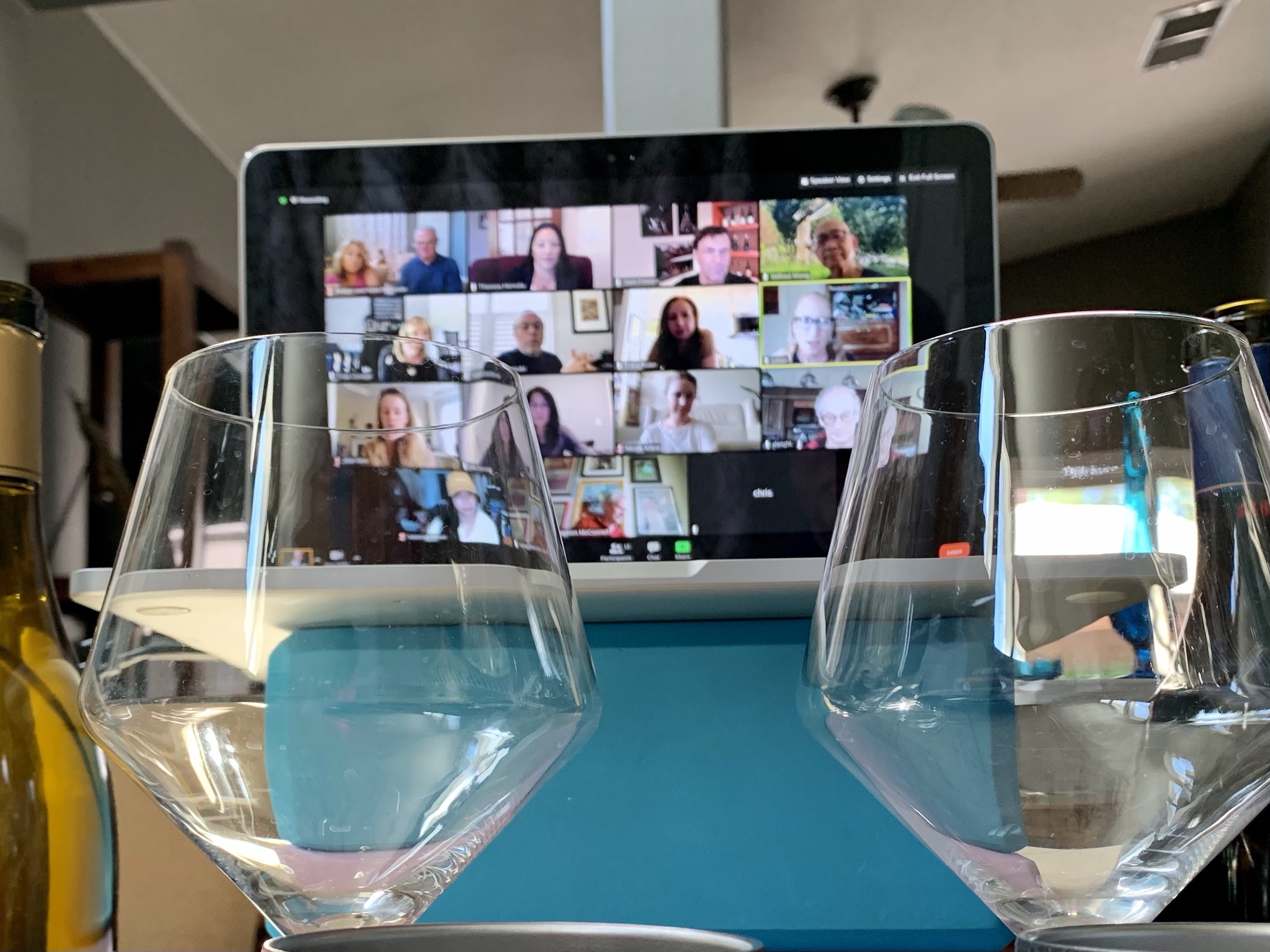
The event featured Gary Farrell Winery winemaker Theresa Heredia, who led us through history, geography lessons, and of course, tasting seven wines from the Gary Farrell Winery portfolio; three Chardonnays and four Pinot Noirs. As Theresa explained, although the wines are from the same respective grapes, grown in the same AVA, each neighborhood produces decidedly different wines with unique characteristics. 

Gary Farrell started in the wine business in the late 1970’s, originally working with local wineries. In 1982, he produced the first wine under his eponymous wine label. Since then, Gary Farrell Winery has grown in reputation and prestige and is now one of the most notable small-lot producers of Chardonnay and Pinot Noir in the Russian River Valley. Though Gary Farrell sold the winery in 2004, the current owners are maintaining his legacy and standard of excellence. 

Theresa Heredia started with Gary Farrell Winery in 2012. At that time, she brought with her a decade (now nearly two decades) of experience in cool-climate, small-lot Chardonnay and Pinot Noir production. Early in her career, she worked at Domaine de Montille, in Burgundy, France, where she gained an appreciation for the Burdunidan style of winemaking. Friendly and inviting, Theresa was an amazing host for our tasting. 

In keeping with the Burgundian style, Theresa said that each of the wines in the tasting are terroir-driven, and aged in light-toast French oak barrels. The use of light toast oak is deliberate, since heavier toasts can mask the nuances of the wine itself. Theresa also mentioned, to our surprise, that the Russian River Valley AVA has more soil types than are found in all of France!  

During a brief history lesson, Theresa shared her screen, and showed us the six Russian River Valley Neighborhoods on the RRVW website. This is an interactive site that allows you to explore each of the neighborhoods and see which characteristics define each one. Theresa mentioned that only one neighborhood, Green Valley, is a designated Sub-AVA within the Russian River Valley AVA. There are currently no plans to apply for AVA status for any of the other neighborhoods. 
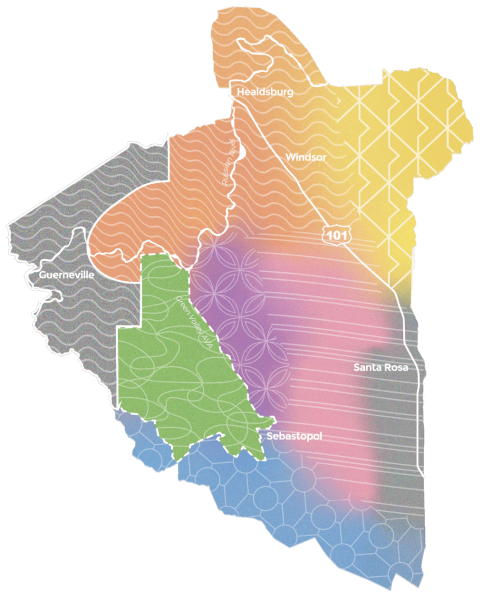
Image credit: Russian River Valley Winegrowers website

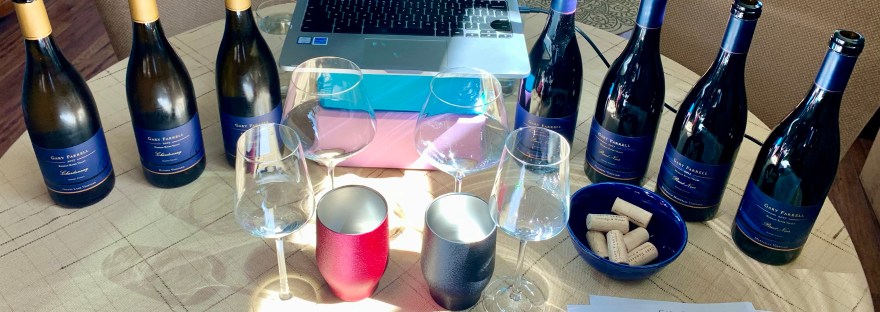
The seven wines we tasted, and the respective neighborhoods from which they hail, were, in order of tasting:

  • 2017 Olivet Lane Vineyard Chardonnay – Santa Rosa Plains
  • 2017 Ritchie Vineyard Chardonnay – Laguna Ridge
  • 2017 Rochioli Vineyard Chardonnay – Middle Reach
  • 2017 Bacigalupi Vineyard Pinot Noir – Middle Reach
  • 2017 Hallberg Vineyard Pinot Noir – Green Valley
  • 2017 McDonald Mountain Vineyard Pinot Noir – Sebastopol Hills
  • 2017 Martaella Vineyard Pinot Noir – Santa Rosa Plains
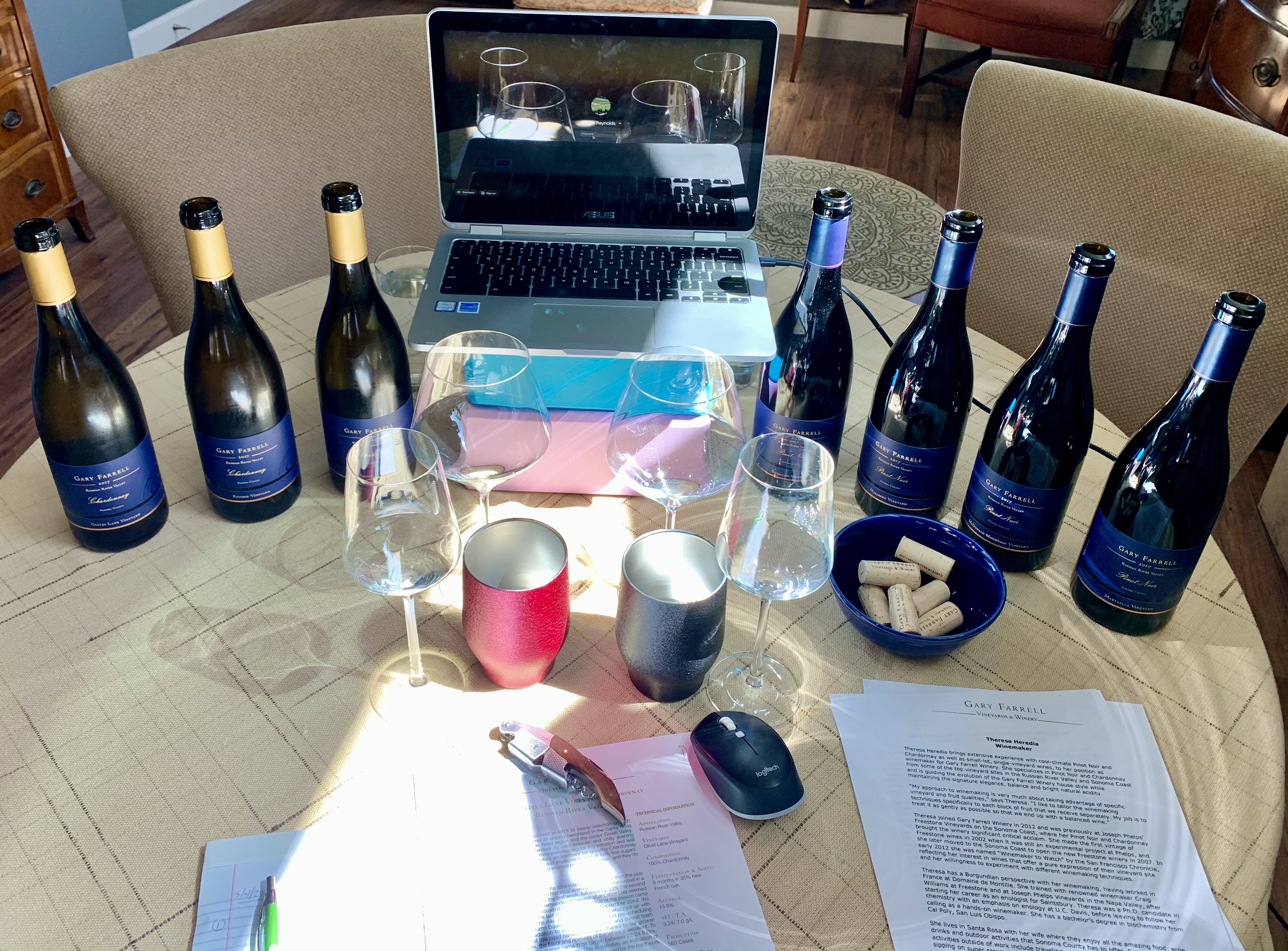
Ready to taste!
(Behind the scenes at Appetite for Wine: yes, those are yoga blocks!)
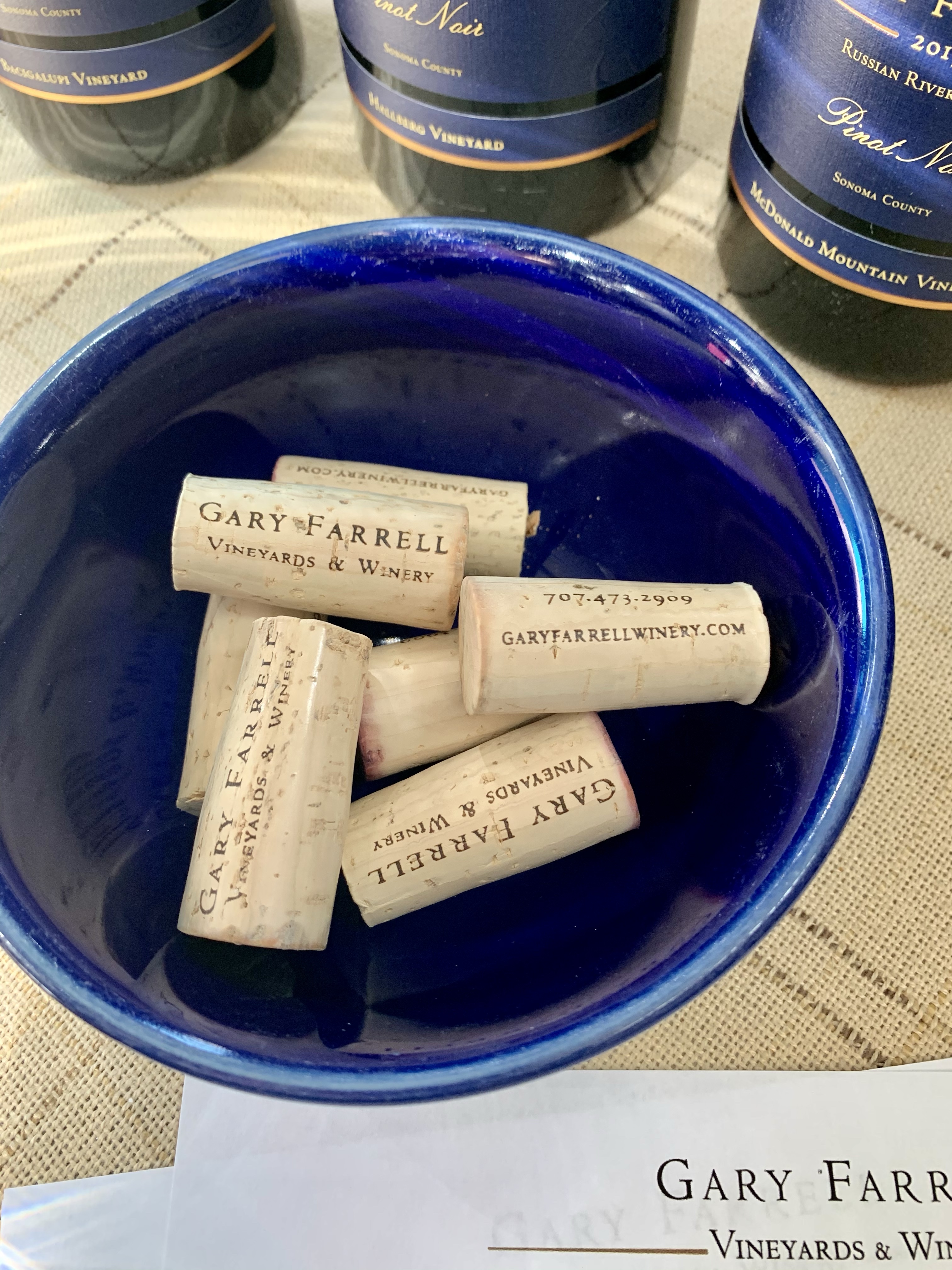
That’s a lot of corks for 11 am!
Why are those glasses empty?

The virtual tasting was packed with information; much more than can comfortably fit into a blog post anyone would actually read. Though it exceeded the allotted hour, it went much too fast. Since the tasting was at 11 a.m. Pacific, we sipped and spit, and re-corked the bottles, and then enjoyed them for the rest of the week! Here are our impressions of each wine:

2017 Olivet Lane Vineyard Chardonnay
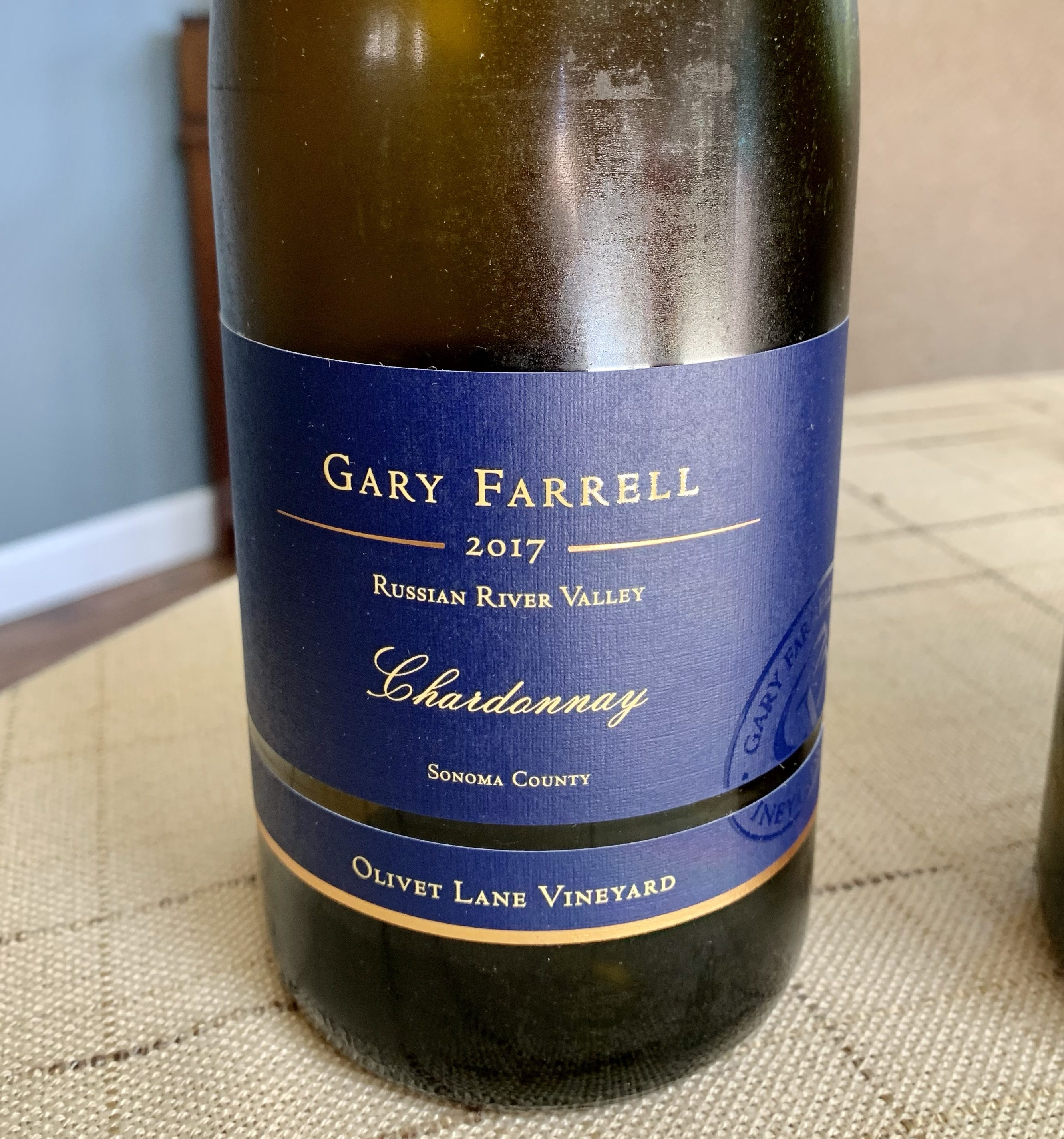
Light and crisp, yet still exhibiting light buttery, toasty notes. Golden color. Aromas of apple, pear, and citrus. On the palate, apples, pear, pineapple, and floral notes. Medium body with bright acidity – more than most Cali Chards – nicely balanced. Full, lush, mildly creamy mouthfeel leading to a crisp finish of citrus and some light toast.

2017 Ritchie Vineyard Chardonnay 
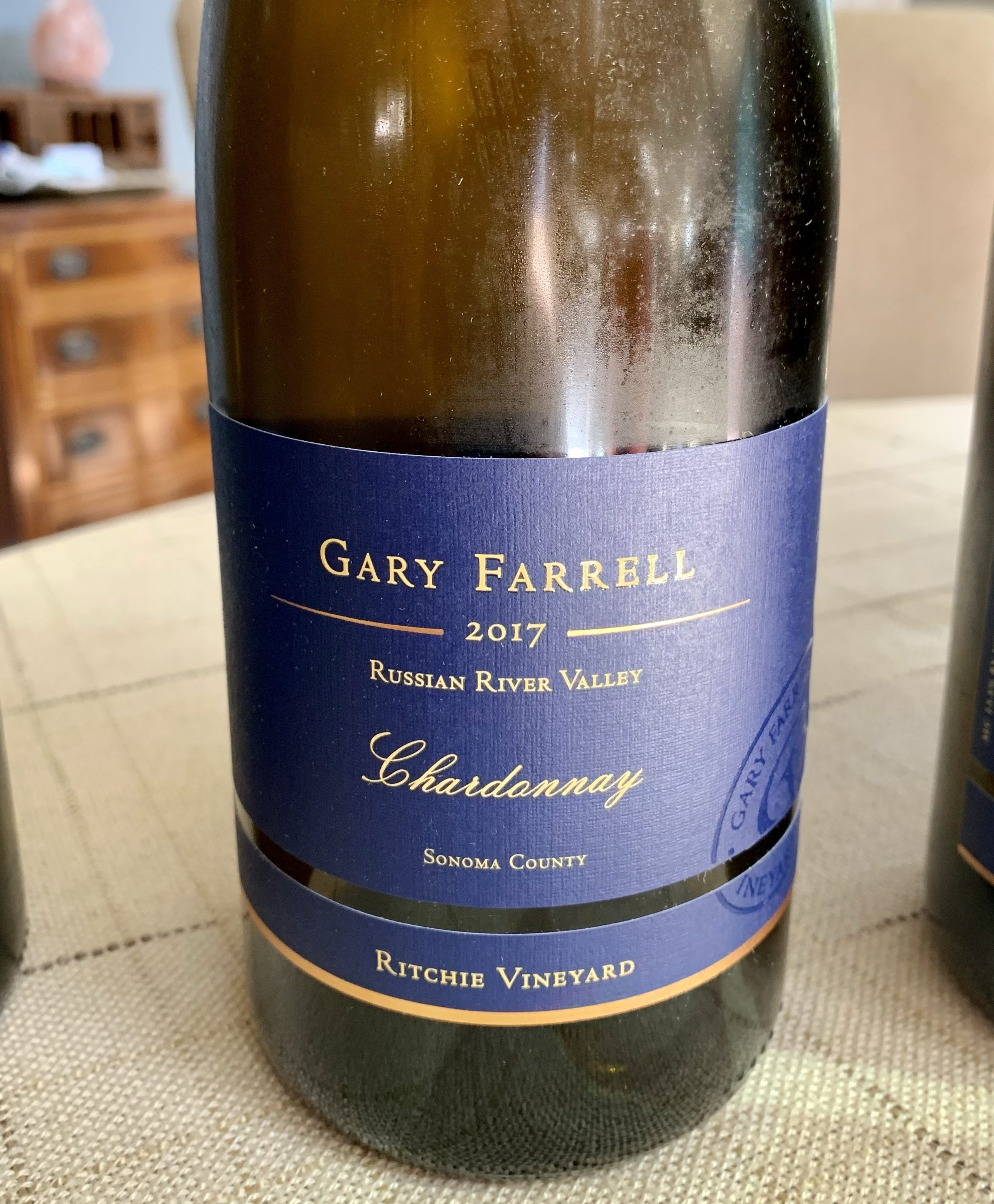
A classic but restrained California Chardonnay. Golden color with fresh pineapple the first aromas on the nose, followed by citrus and butter notes. On the palate, green apple, pear, pineapple and tropical notes, as well as citrus. Soft, creamy mouthfeel balanced with medium acidity. The finish has tropical fruit and just a hint of butter. 

2017 Rochioli Vineyard Chardonnay 
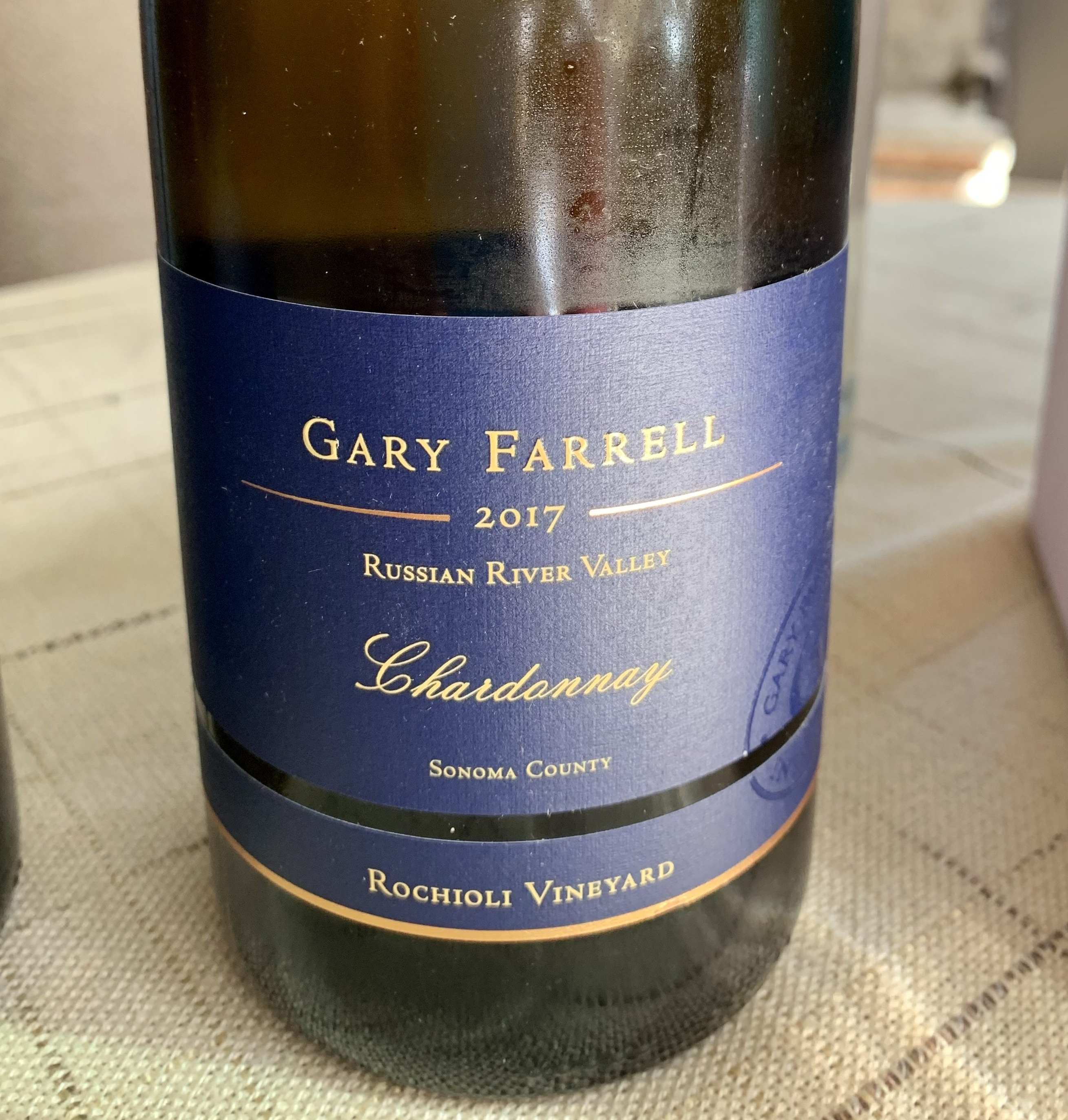
A more classic California Chardonnay, though in Gary Farrell style, subtle and elegant. On the nose, pineapple, pear, and citrus, with a whiff of butter. Surprisingly crisp acidity on the palate, with pear, apple, lemon curd, and butter, with a light toast note in the finish.

2017 Bacigalupi Vineyard Pinot Noir 
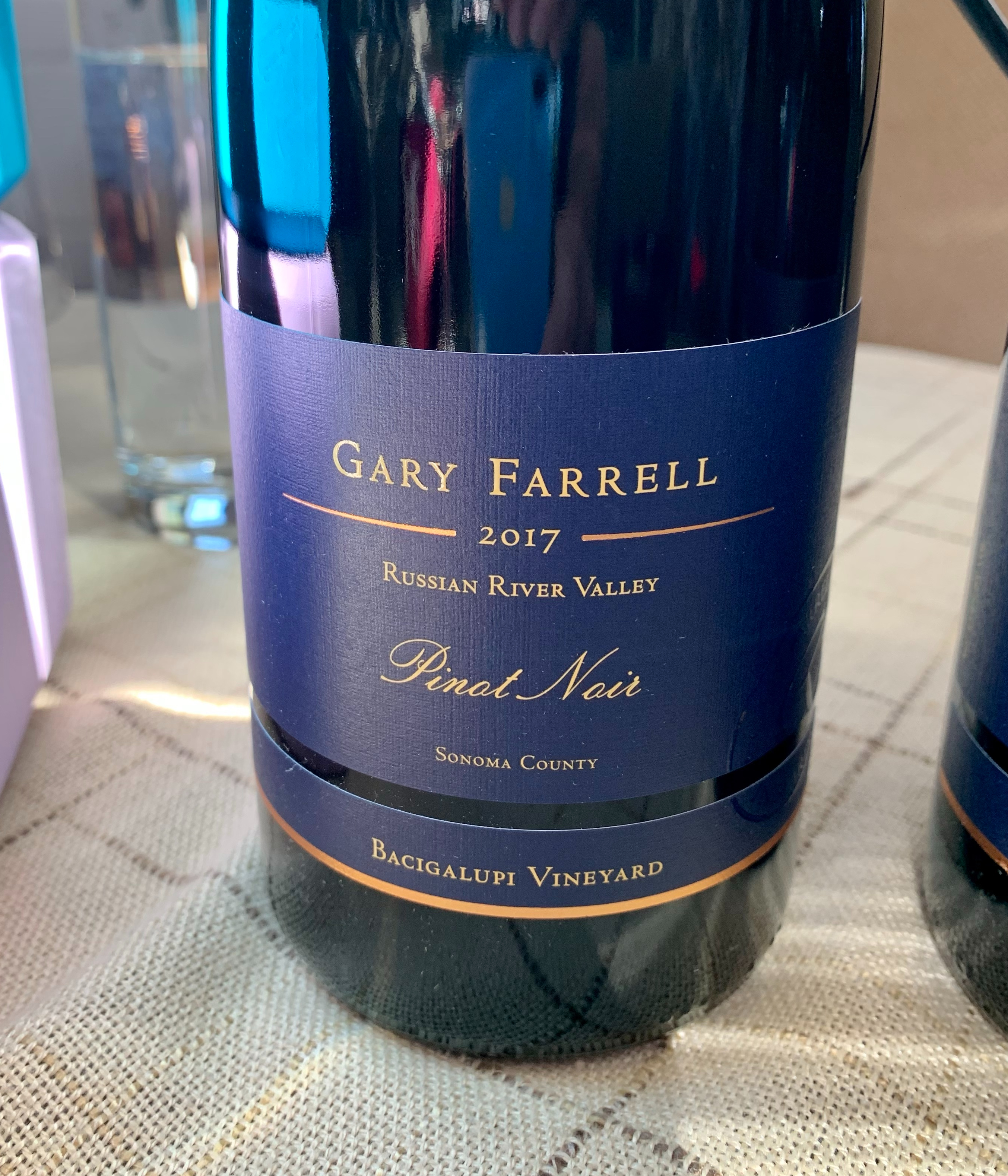
Exquisite and our favorite of the tasting. The nose opens with cherry, raspberry, and cedar, with earthy notes. On the palate, the cherry leads the charge with raspberry, violet, cedar, and mushroom supporting. Medium body and acidity, with a long finish of red fruit and black tea.

2017 Hallberg Vineyard Pinot Noir 
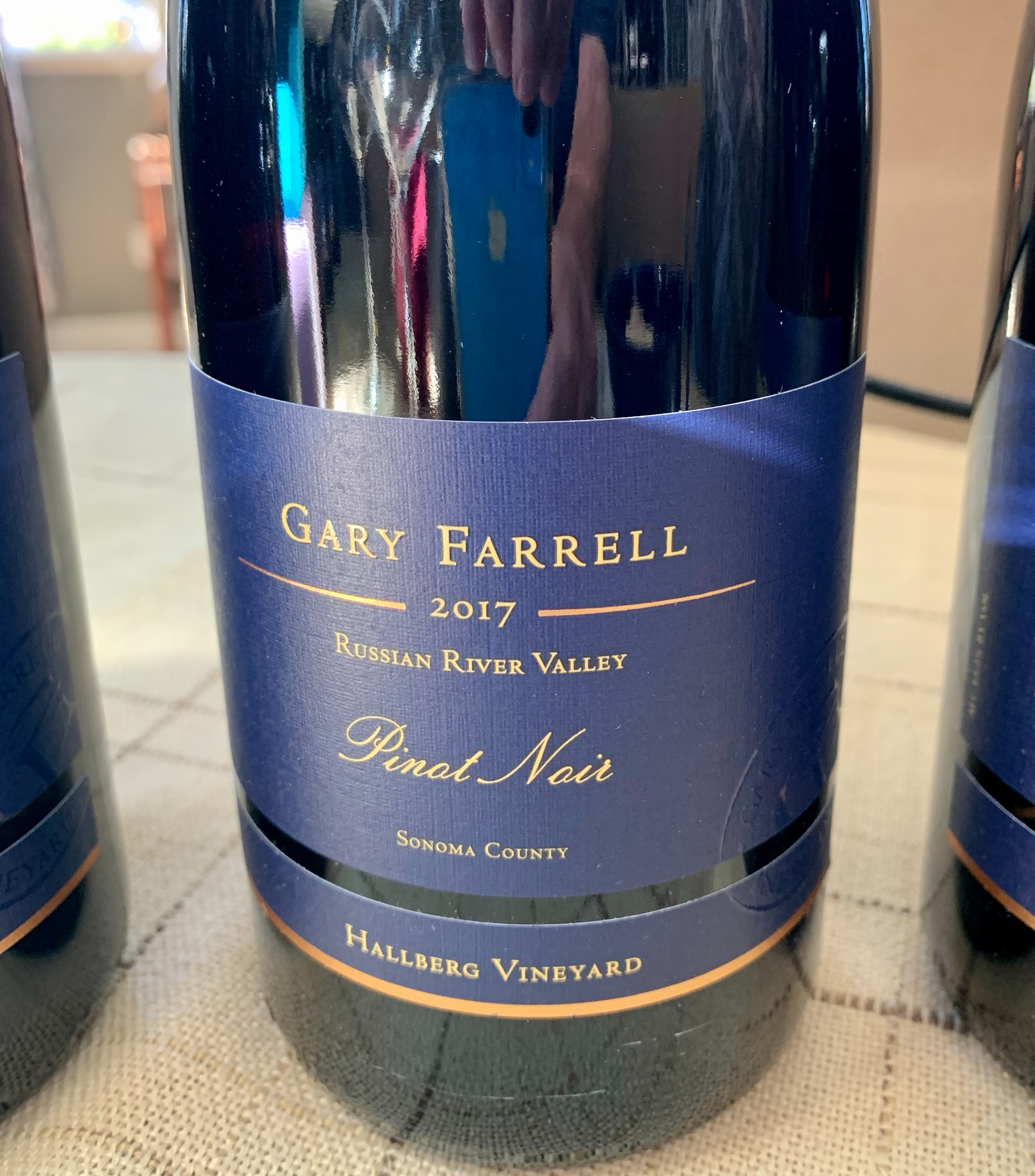
Beautiful Pinot Noir. The nose opens with black cherry and blueberry, with some earthy notes. On the palate, lush cherry, raspberry, and blueberry fruit mingles with mushroom, earthy notes, and a general funk that I’ve come to appreciate in a well structured PN. Medium body and acidity lead to a pleasing finish of red fruit, black tea, and smoke. 

2017 McDonald Mountain Vineyard Pinot Noir
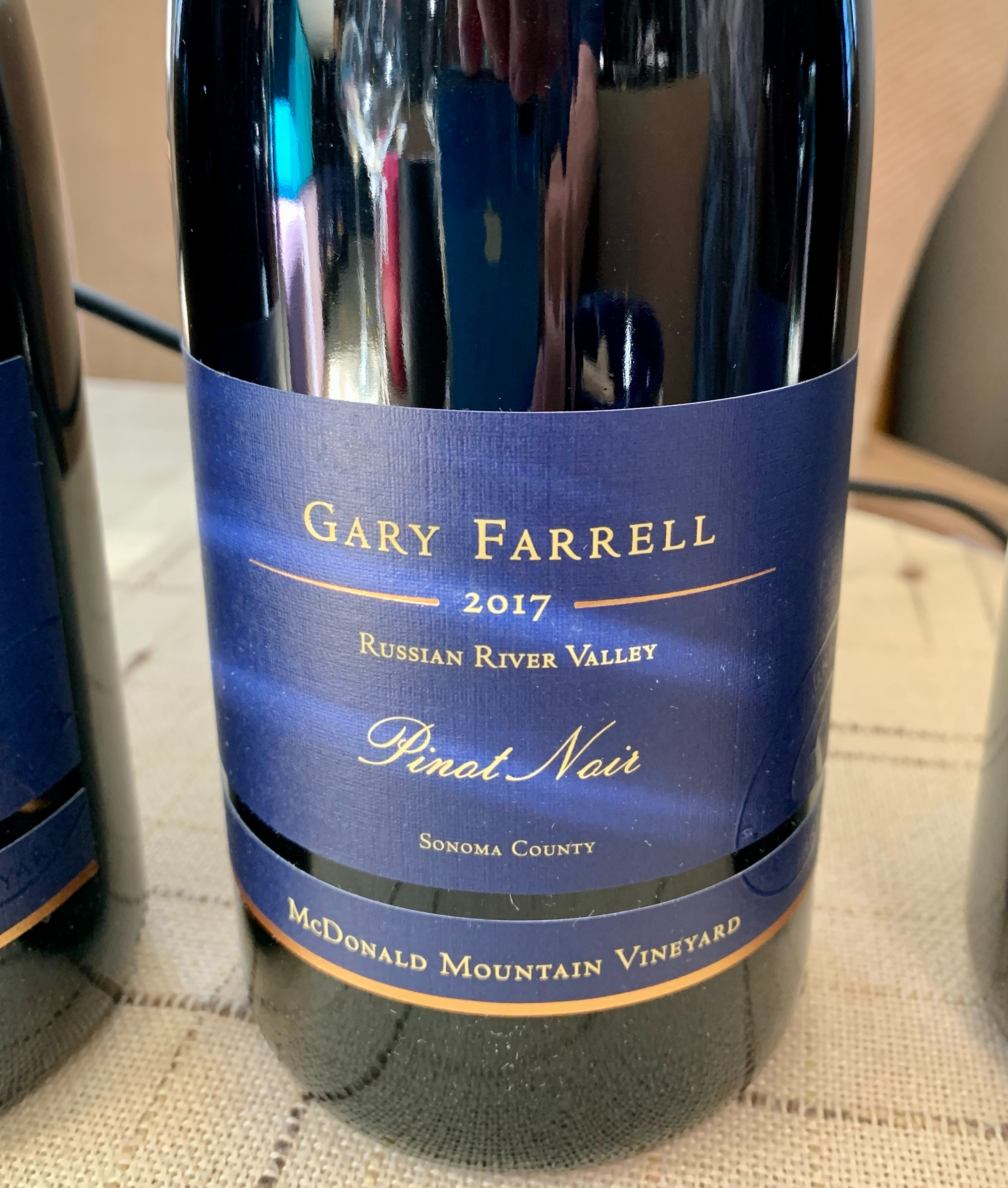
Quite interesting with herbal and vegetal notes up front, including bay leaf and eucalyptus, with red fruit following. On the palate, cranberry, pomegranate, and raspberry with the bay leaf enhancing the fruit. Medium body with bright, lively acidity. Long fresh finish. 

2017 Martaella Vineyard Pinot Noir 
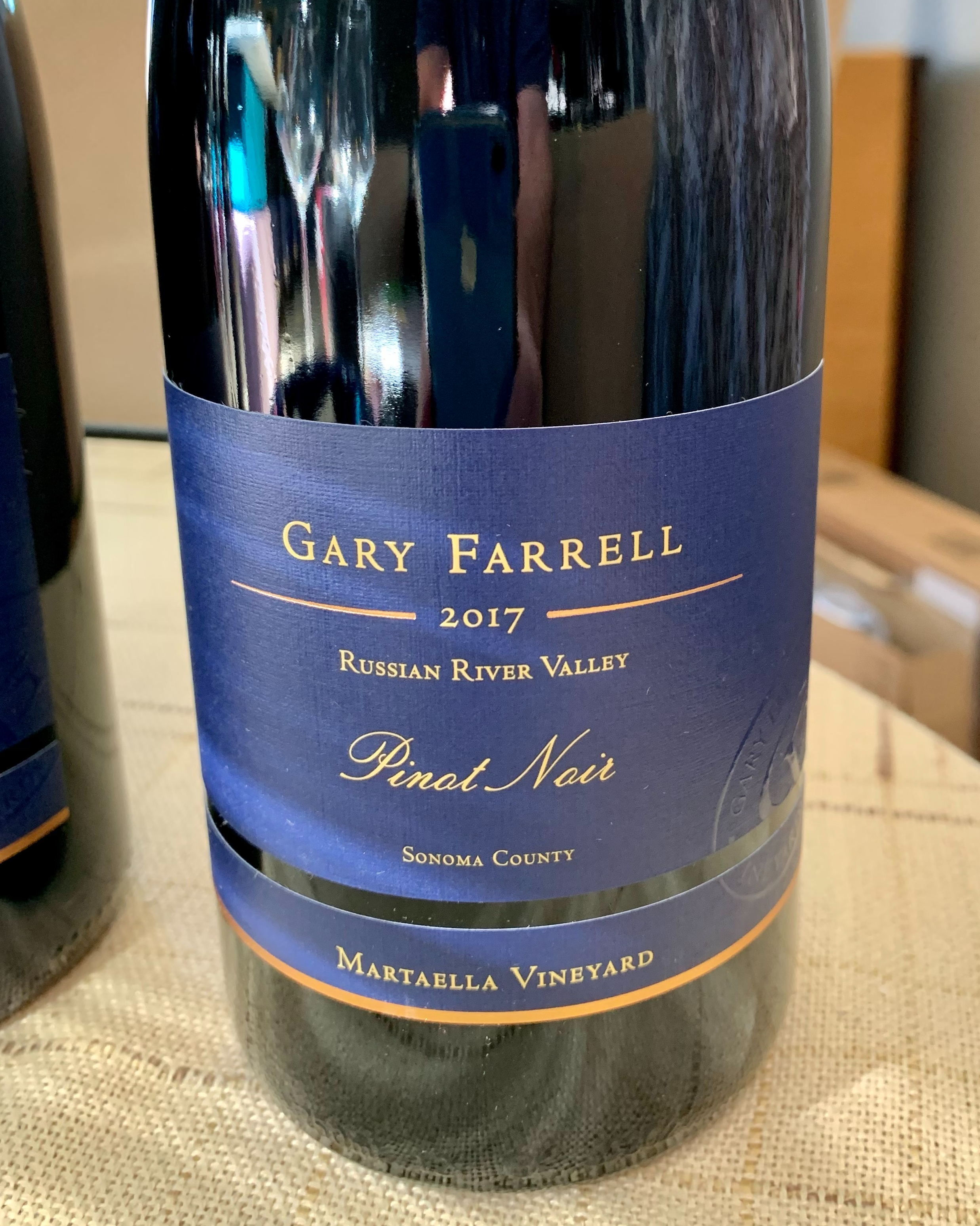
Nice, fruit driven Pinot. Aromas of cherry, raspberry, and cranberry. On the palate, these red fruit flavors continue, joined by blueberry, cedar, and bay leaf. Soft and velvety, with bright acidity and a long finish of red fruit and rose petal. 

We heartily recommend any and all of these wines, and we look forward to venturing out to the Russian River Valley to explore the neighborhoods in person. 

————————————————————

We close on a somber note. We were sad to learn this week, as we prepared this post, that earlier this month, Gary Farrell Winery oenologist, Mark Osbourne, was killed after being struck by a motorist while riding his bicycle. Even more tragically, the motorist is accused of driving under the influence. Our hearts and prayers go out to the Gary Farrell Winery family. 

  • By Kent Reynolds and Robyn Raphael-Reynolds

Paso Robles, Robert Hall, Sample, Wine Review

Review: Robert Hall Paso Red 2018

As many people already know, Paso Robles is trending in the wine world. Many consider it the next up-and-coming wine region; an underrated hidden gem. Despite all this, we regrettably have not explored the wines of Paso Robles much, and have never been wine tasting there. There are many good wineries in Paso Robles, and our friends who have been have given us dozens of recommendations. As happens every so often…so often it can seem a little creepy…we had been discussing Paso Robles with some friends not long ago, and the very next day we received an email offering us a sample of Robert Hall Paso Red 2018, from Paso Robles. After tasting the wine, our resolve to get to Paso, and soon, was dramatically intensified.

The following wine was provided as a media sample for review. All reviews, descriptions, and opinions are our own. We received no additional compensation.

Robert Hall was a successful businessman in St. Paul, Minnesota. After developing a taste for wine, he made his way west and founded his namesake winery in the heart of Paso Robles wine country. From the beginning, winemaker Don Brady has been leading production of a portfolio that now includes more than a dozen wines. 

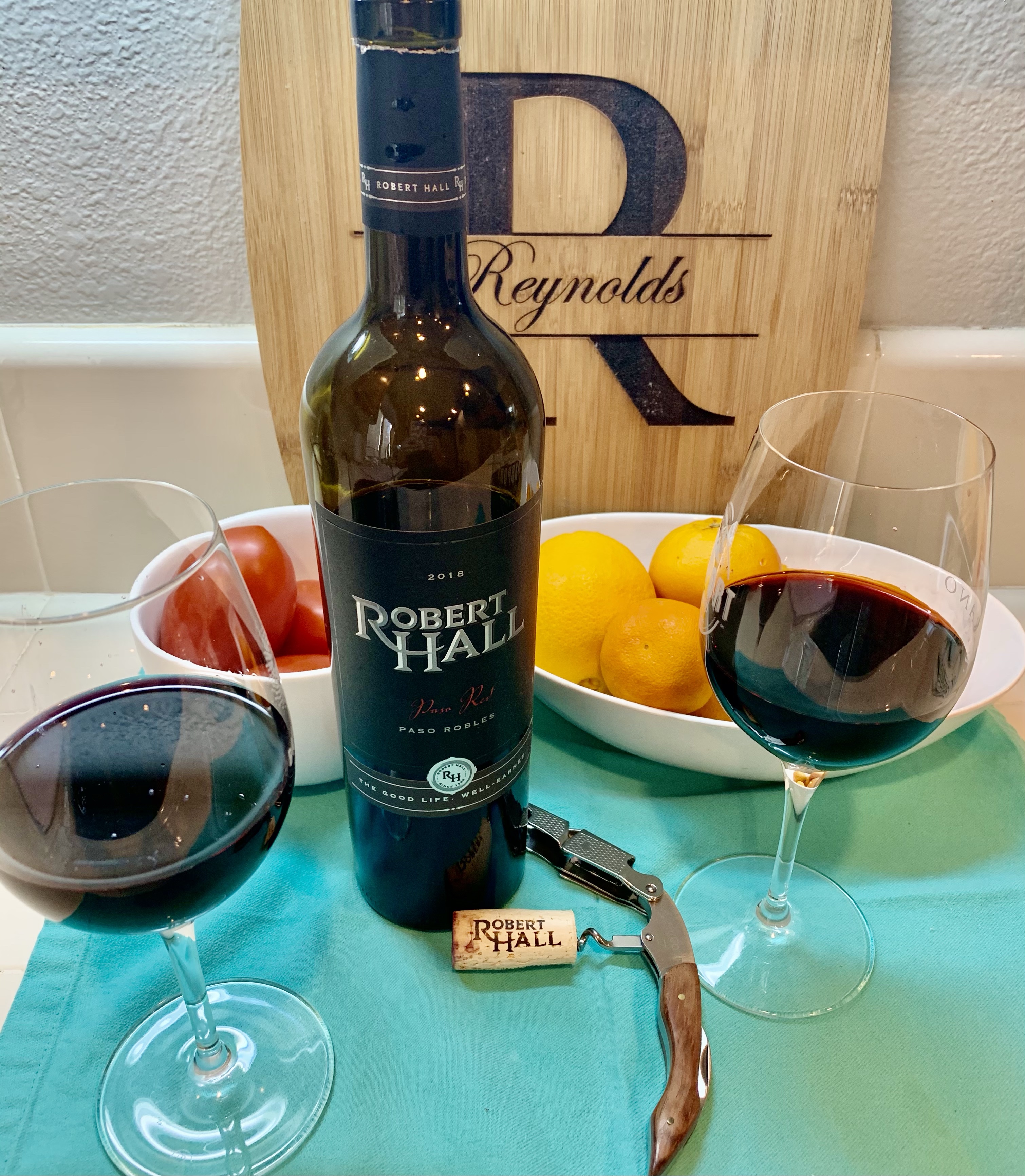
The Robert Hall Paso Red 2018 is a multi-award winning blend of grapes from all 11 sub-AVAs in the Paso Robles region. It is a wine that truly captures the essence of Paso Robles. Petite Sirah (43%), Syrah (21%),and Zinfandel (19%) drive the blend, supported by Petit Verdot (10%), and splashes of Grenache and Mourvedre filling it out. Sounds pretty good to us!

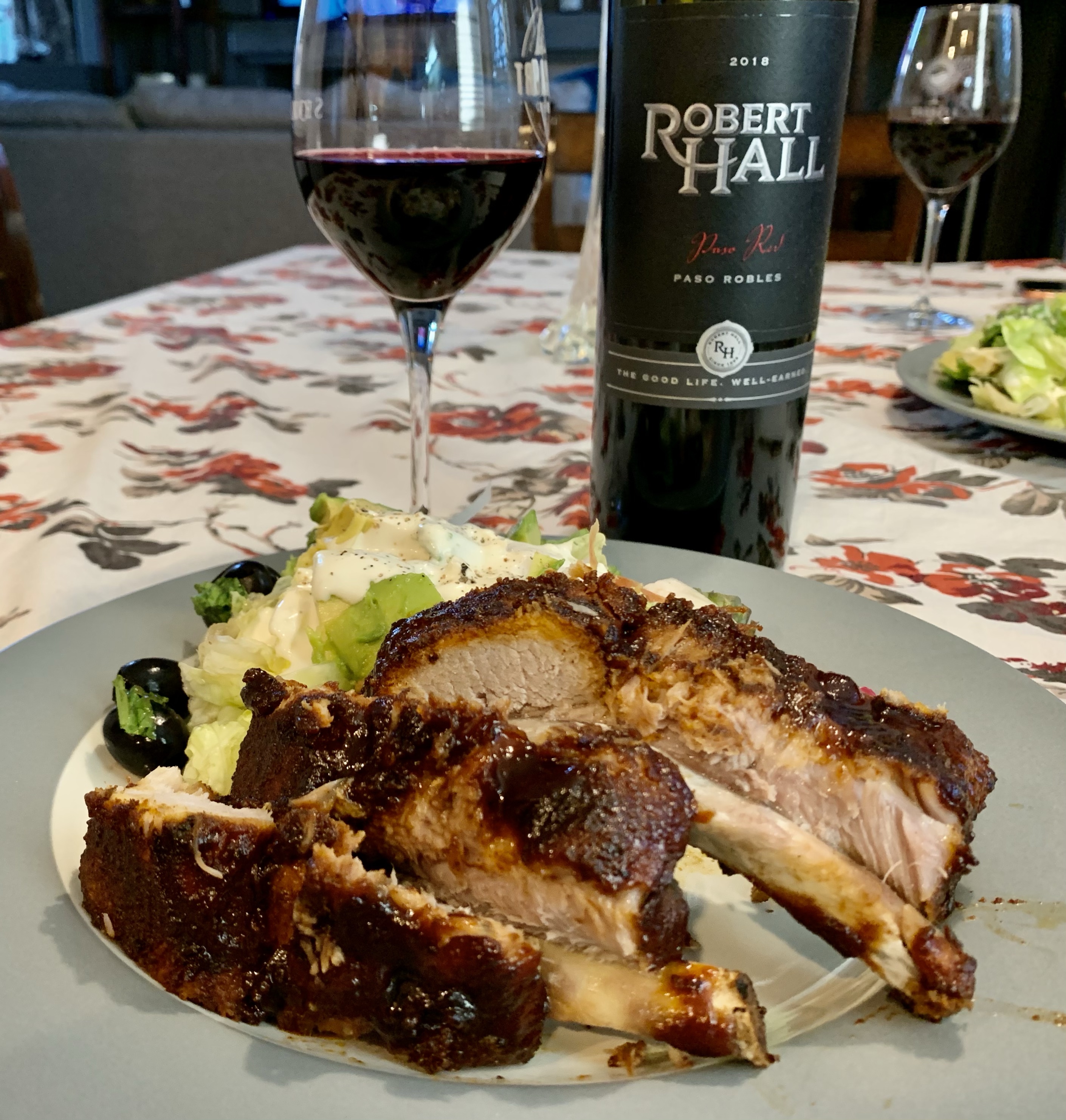
A rich, big, bold red blend. Vibrant deep purple color. The nose is filled with ripe black fruit: blackberry, boysenberry, and Marionberry, with smoky notes. On the palate, blackberry, black cherry, plum, tobacco, baking spice, and black pepper. Full bodied, with fine, smooth tannins and ample acidity. The finish is long with black fruit and spice. Excellent with baby back ribs.

Truth be told, we’ve found a lot of California Red Blends to be on the jammy side. When we tasted the Robert Hall Paso Red 2018 with our ribs, we thought it would be a bit jammy without food. Yet this wine is so well structured it holds up after dinner as a very nice sipper. Beware: this big wine sports an ABV of 15.5%! But why would you drink a big, bold red like this without food anyway? The food enhances the wine, and the wine enhances the food. Yin. Yang. 

Did we mention the value quotient? Robert Hall Paso Red 2018 retails for just $20! You really need this wine in your life. It’s available at select retailers, or online at the Robert Hall Winery website. Try this, or any of the wines, and let us know what you think.

Cheers! 

  • By Kent Reynolds and Robyn Raphael-Reynolds
  • Photo cred: Robyn Raphael-Reynolds
Bordeaux, Chateau Haut-Rian, Sauvignon Blanc, Semillon, Wine of the Week

Our Wine of the Week: Chateau Haut-Rian Bordeaux Blanc 2019

In the world of wine, few words hold such mystique and reverence as Bordeaux. Classy, elegant, and refined are some of the terms we think of when imagining Bordeaux. Known for its bold, often pricy red blends based on Cabernet Sauvignon or Merlot, Bordeaux is one of the most recognized names in wine. 

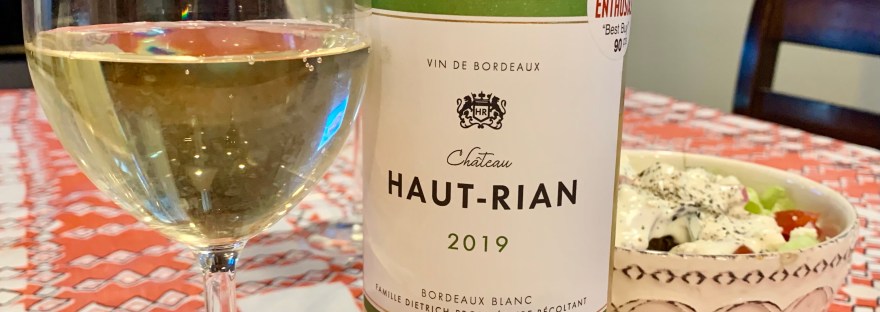
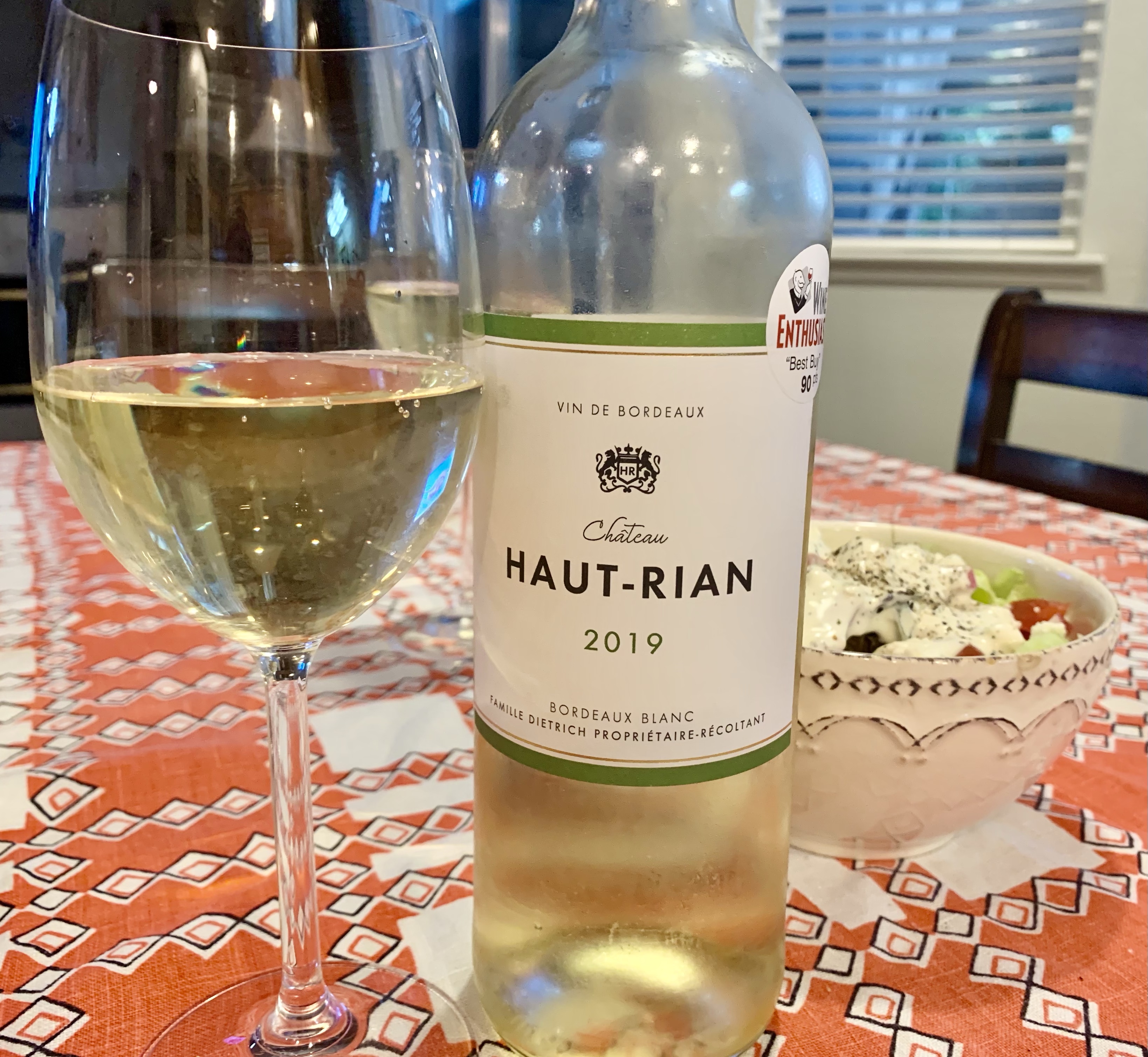
Yet not everything in Bordeaux is pricy, nor is everything red. Our wine of the week is a light, crisp, tasty white blend: Chateau Haut-Rian Bordeaux Blanc 2019. This wine is a blend of 60% Sémillon and 40% Sauvignon Blanc, and is juicy and refreshing. It’s also affordably priced at just $10.99 at wine.com.

Chateau Haut-Rian is a family-owned winery with 85 hectares of vineyards, located along the Garonne River. Their white grapes are grown in the Entre-Deux-Mers region, about 12 miles inland from the river. The clay-limestone soil in the area is ideal for growing Sémillon and Sauvignon Blanc. Chateau Haut-Rian is committed to sustainable farming practices, and has earned the distinction of being Terra Vitis, Haute Valeur Environnementale, and Bee Friendly Certified.

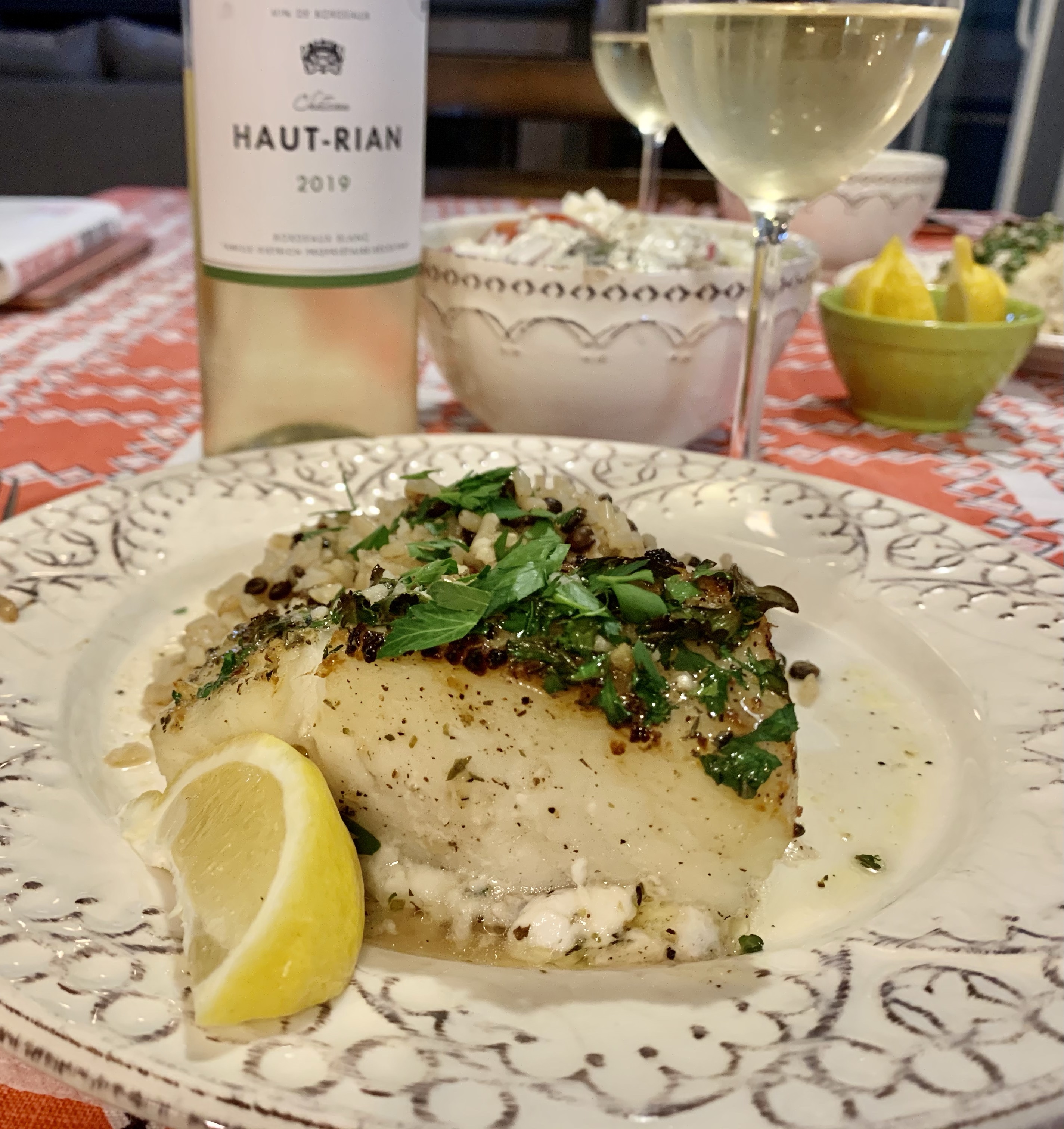
So how’s the wine? We opened this to enjoy with a light meal of baked Sea Bass and green salad. We were duly impressed and look forward to trying some of Chateau Haut-Rian’s other wines.

Medium golden color. Aromas of citrus, pear, and apple. On the palate, flavors of lemon lime, grapefruit, pear, green apple, and minerals. Light body with bracing acidity that dances on the tongue. Zesty finish. Paired with sea bass, a perfect match.

What was your wine of the week?

  • By Kent Reynolds and Robyn Raphael-Reynolds
  • Photo cred:  Robyn Raphael-Reynolds
Diora, Monterey County, Review, Sample, San Bernabe AVA, Wine, Wine Review

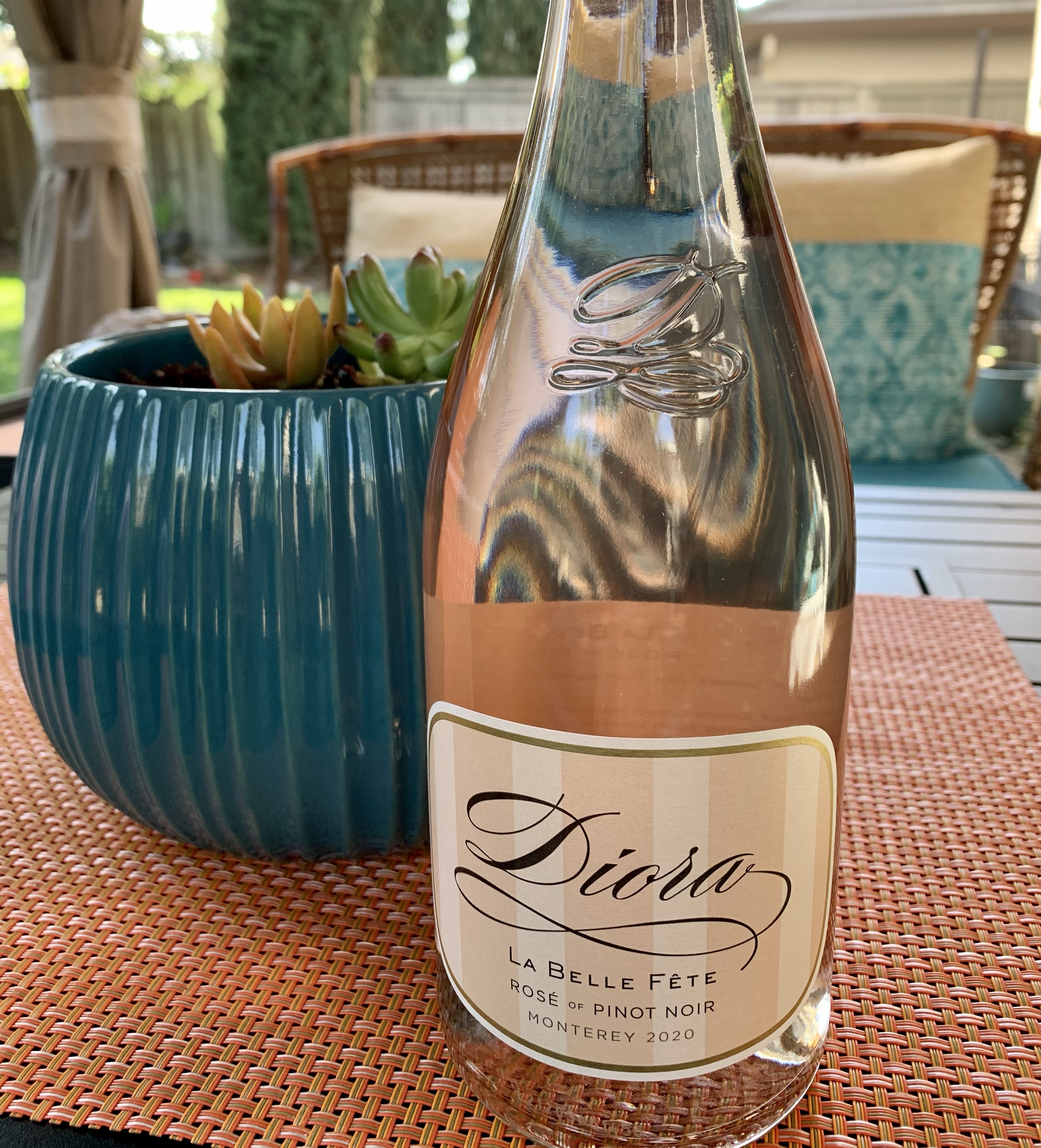
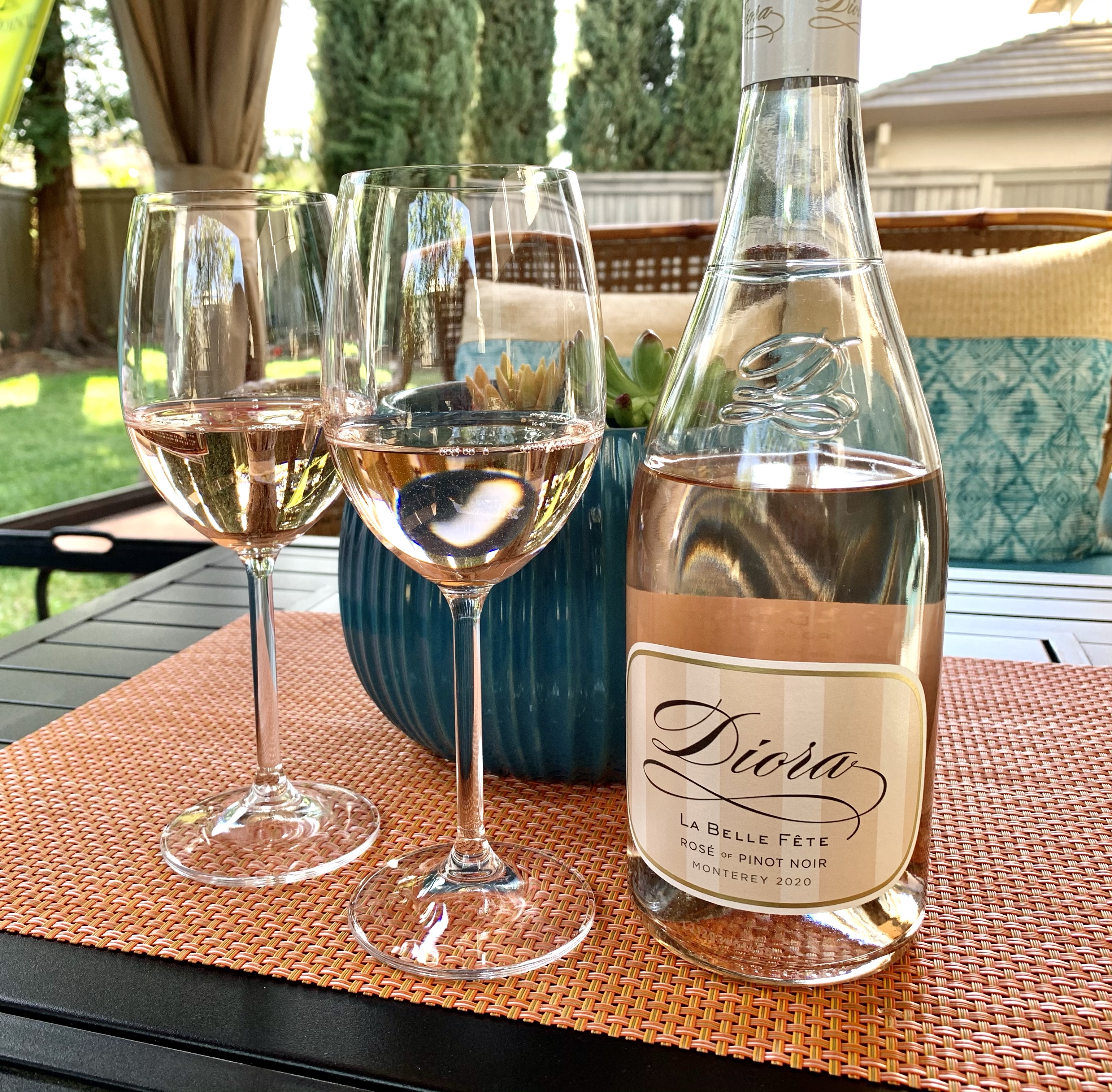
Review: Diora La Belle Fête 2020 Rosé of Pinot Noir

Spring is upon us, and summer soon to follow, with warmer, sunny days, and the anticipation of backyard barbecues and lazy afternoons lounging poolside. As COVID restrictions continue to loosen, and we move beyond the dark days of pandemic lockdowns, we look forward to celebrating with friends and family. Not long ago, we received a sample wine that will be the perfect bottle to open for these parties: Diora La Belle Fête 2020 Rosé of Pinot Noir.

The following wine was provided as a media sample for review. All reviews, descriptions, and opinions are our own. We received no additional compensation.

La Belle Fête translates from French to “the beautiful party”, and what a beautiful party it will be with friends and family gathering to enjoy each others’ company, sharing stories and food, and of course tasty and refreshing wines like Diora La Belle Fête 2020 Rosé of Pinot Noir. 

Diora winery is located in the San Bernabe AVA, in Monterey County. A lesser known region, San Bernabe AVA is made up of a single vineyard, planted to about 5,000 acres under vine, consisting of 21 different varieties of wine grapes. The soil composition is dominated by sandy loam, which drains water quickly, forcing the vines to dig deep to find sustaining water. The soil also cools rapidly in the evenings, helping to create wines with crisp acidity. 

The name Diora is inspired by the golden hills of the nearby Santa Lucia mountain range. The name is derived from the French term “d’Or”, which is translated to “golden.” Using the estate fruit from the family owned San Bernabe vineyard, winemaker James Ewart crafts wines of elegance and distinction. 

The Diora La Belle Fête 2020 Rosé of Pinot Noir is made from 83.1% Pinot Noir, with a few friends joining the party to complement and enhance the host: 7.9% Grenache, 3.2% Chardonnay, and 5.8% Other Aromatics. The majority of the blend was fermented in stainless steel, but a small portion fermented in neutral oak to add just a hint of creaminess. The result? Read on! 

An exquisite, elegant Rosé of Pinot Noir. Pale pink color. Aromas of raspberry and strawberry. On the palate, red cherry, raspberry, strawberry, and a hint of watermelon. Dry, light bodied, with bright acidity. The finish carries the red fruit, with the addition of some orange zest and rose petal. Delicious.

With a retail price of $19.99, Diora La Belle Fête 2020 Rosé of Pinot Noir is affordable elegance you will definitely want to share with others at your own Beautiful Party. You won’t find Diora wines in your big box retailer, but they are worth seeking out. You can search on the Diora winery website for the restaurants and small retailers carrying the label, or purchase online through the Delicato Family Wines Tasting Room site. Either way, your party will be even more beautiful with a few bottles of Diora La Belle Fête 2020 Rosé of Pinot Noir.

Cheers!

  • By Kent Reynolds and Robyn Raphael-Reynolds
  • Photo cred: Robyn Raphael-Reynolds
Assyrtiko, Greece, Greek Wine, Malagouzia, Vriniotis Winery, Wine, Wine of the Week

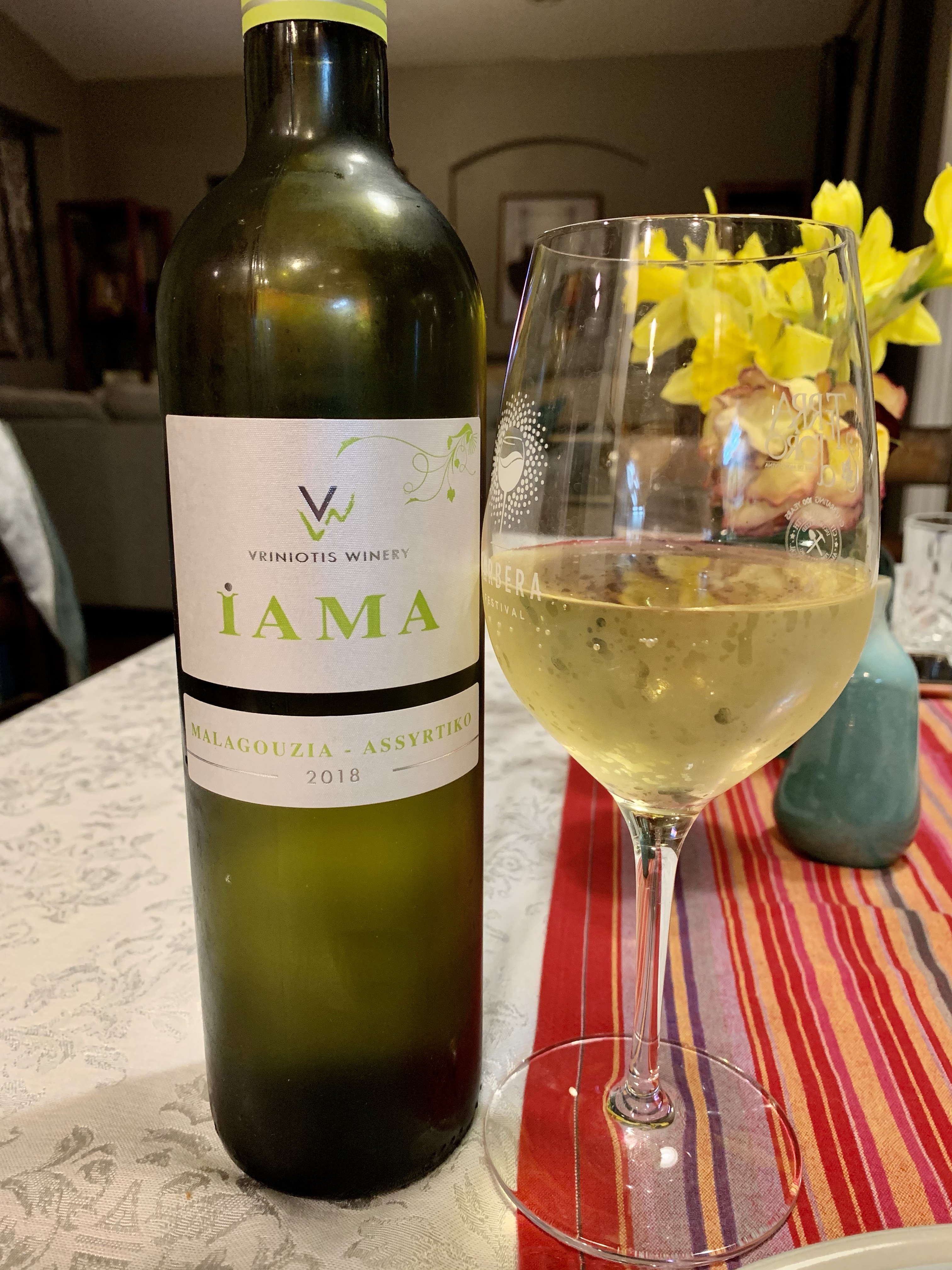
Our Wine of the Week: Vriniotis Winery IAMA White 2018

As the days grow longer and warmer, our thoughts turn to crisp, refreshing, white wines. Who are we kidding? We enjoy white wines all year round! But the onset of spring brings a sense of newness, hope, and anticipation. We look forward to shorts and t-shirts, summer vacations, and afternoons on the patio with friends and a good glass of chilled white wine. 

Wine can also evoke memories, and this week’s Wine of the Week did just that. Though we did not visit Vriniotis Winery during our Big Fat Greek Honeymoon, we did fall in love with Greek wine, and every bottle we open brings us back to that trip. Keeping with the theme of warmer weather, summertime also reminds us of the warm days on the Greek islands, and our time at the beach on the Aegean Sea. 

We picked up this bottle of Vriniotis Winery White 2018 from Uncorked Greeks. Vriniotis Winery has become one of our favorite producers of Greek wine, and Uncorked Greeks carries a wide selection of their wines. The White 2018 is a blend of two indigenous Greek grapes, Malagouzia and the more widely known Assyrtiko. Malagouzia was nearly extinct until 1983, when winemaker Evangelos Gerovassiliou planted the variety in his vineyard at Epanomi. The grape is often blended with the lighter Assyrtiko to provide body.

 Vriniotis Winery is located in the town of Gialtra, on the island of Evia (also known as Euboea), overlooking the North Eviokos Gulf, about three hours north of Athens. They are a family owned winery, with 100 acres under vine, and absolutely stunning views. Check out their gallery on their website! We need to go there! Until then, we can enjoy the wines at home. 

Outstanding Greek white blend. Golden color. Aromas of pear, citrus, floral notes, and the saline nose we appreciate about Greek wines. On the palate, citrus, green apple, pear, and tropical fruit, with that saline and minerals. Medium body with fresh acidity. Perfect with garlic shrimp or any other seafood dish.

We look forward to the day when travel restrictions have eased, and we can once again move about the planet. We have many new places we want to visit, but Greece is definitely on our return-visit list!

What was your Wine of the Week?

Cheers!

  • By Kent Reynolds and Robyn Raphael-Reynolds
  • Photo cred: Robyn Raphael-Reynolds
Berryessa Gap, Grenache, Salengo, Sample, Wine, Wine Review, Yolo

Review: Salengo Grenache 2018 – A Winemaker’s Dream

Sometimes, the search for fine wine is like an expedition; studying wine reviews like they were scouting reports, patiently stalking the aisles of the wine shop, asking the advice of the local guide (wine shop staff), and occasionally checking in with your fellow hunters to see how they’ve done. 

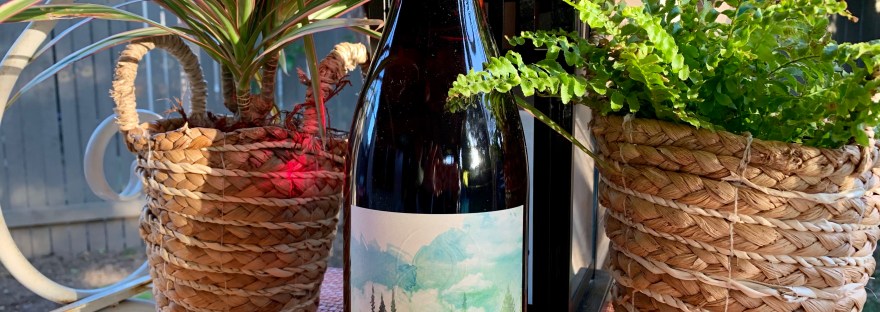
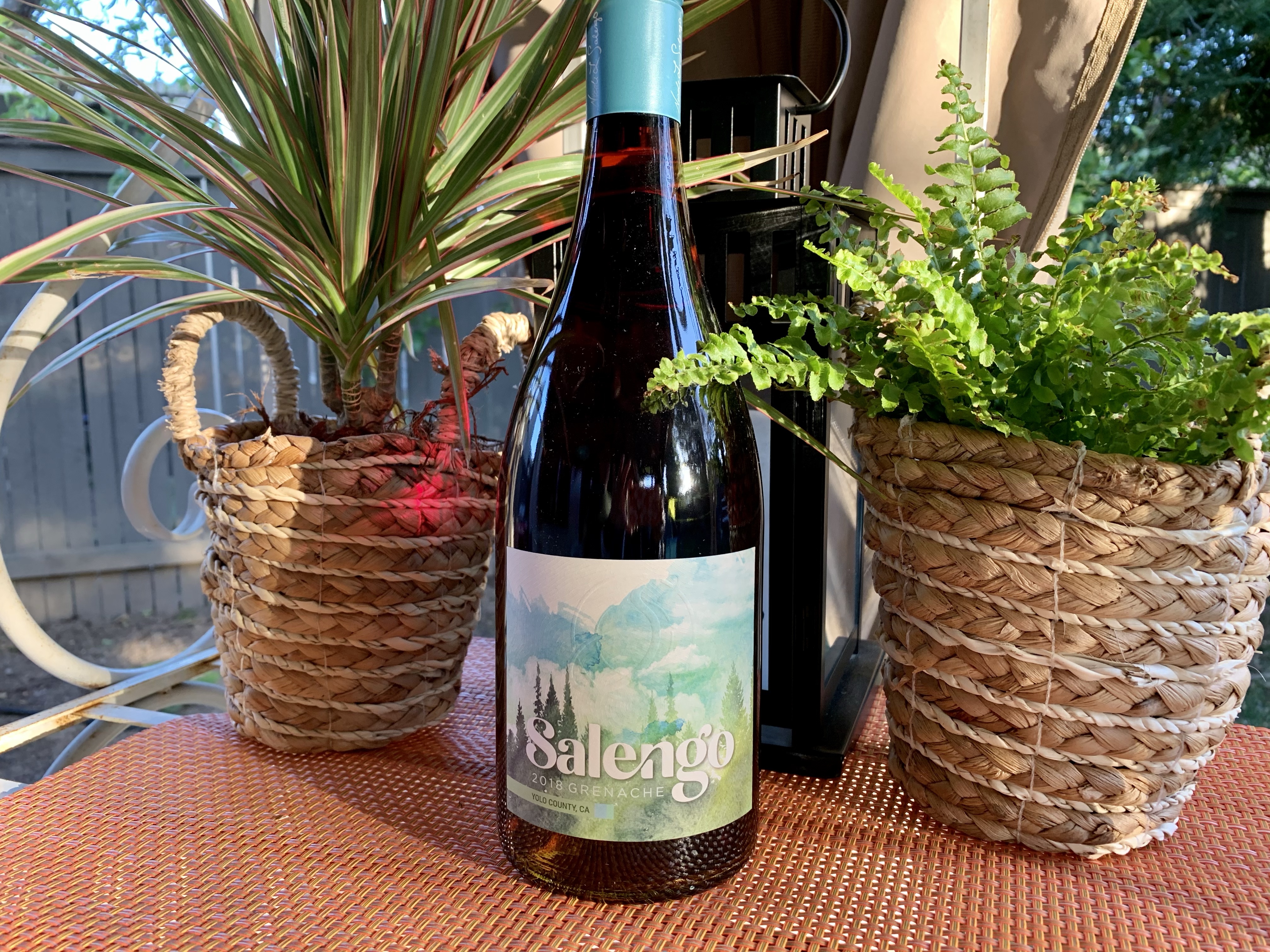
Other times, it lands on your doorstep, unannounced and unexpected. So it was when the UPS driver left a distinctive, single-wine-bottle-sized package on the porch a few weeks ago. Upon opening, we discovered a bottle of Salengo Grenache 2018, with its beautiful watercolor art label, and a note indicating the wine was sent at the request of friend and wine broker, Bill Tobey.

We’d never heard of Salengo, but fortunately the box also included a spec sheet, and bio of winemaker Nicole Salengo. In addition, we reached out to Nicole via email, and she was gracious enough to answer a few questions and fill in some additional detail. 

The Salengo Grenache 2018 is from Yolo County. Wine lovers may be familiar with wines from Clarksburg…a designated AVA also in Yolo County. Yolo County is in the Sacramento Valley, just west of Sacramento. Its bordering counties include Solano to the south, and Napa and Lake Counties to the west, all known for quality grape and wine production. The fruit for the Salengo Grenache 2018 comes from the Coble Ranch in Winters. 

Nicole Salengo is the winemaker at Berryessa Gap winery in Winters. She has nearly 20 years of wine industry experience, including time in Napa and New Zealand. With the release of the Salengo Grenache 2018, Nicole is realizing her long-term dream of having her own label. 

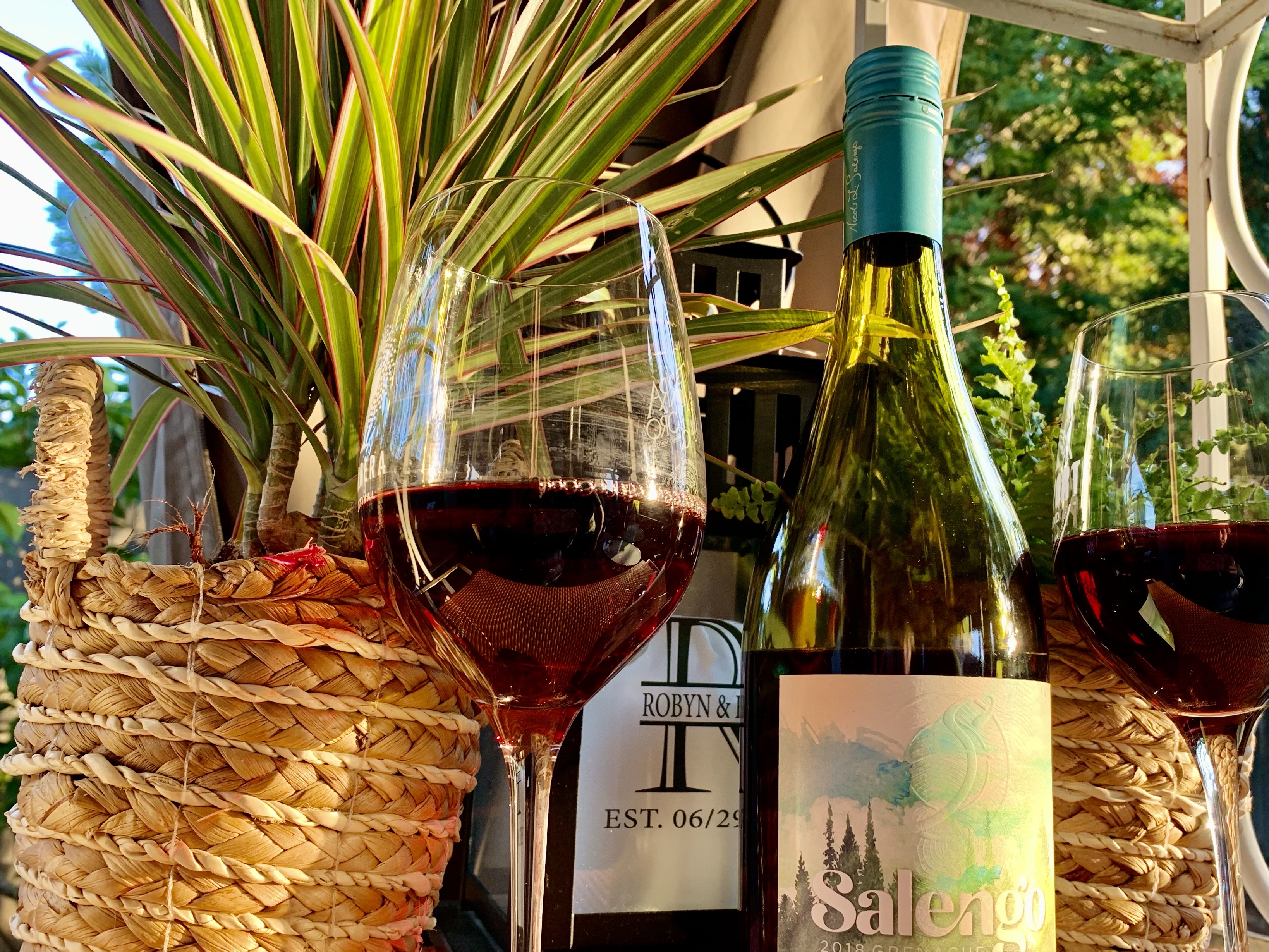
The first thing we noticed when we looked at the bottle was the very light color of the wine, noticeable even through the green glass. We are big fans of Grenache, and have had many Grenache wines from numerous regions, but had never seen one this light in color. During our initial email exchange, Nicole said her goal was to model the wine in a Châteauneuf-du-Pape style; light and elegant, yet complex, and with lower alcohol.

In Nicole’s bio, and on the back label on the bottle, there is reference to Nicole’s origins from New England. We were intrigued by this, partly because Robyn is from Boston, and partly because one doesn’t often think of New England heritage when discussing wine. So after we tasted the wine (more on that in a minute), we reached out to Nicole again with some follow-up questions. In reply, she said she was born in Vermont and graduated from high school and college in upstate New York. Not Boston, but cose enough! 

Beyond that, Nicole responded to our other questions…(warning: wine review spoiler alert!)

AfW: What brought you from New England to Northern California? Other than the weather, of course.

NS: You said it…the weather! I don’t like being cold!

I would call it ‘opportunity’. I’ve always been driven and when I was 8, I told my mom I wanted to move to California. I wanted to go to college here but that didn’t work out so I moved here after college. I had an aunt and uncle living in Davis and they offered to let me come stay with them. So the same year I graduated from college, I had $1,000 and a suitcase (almost like a dollar and a dream) and got on the plane to Sacramento. The rest is history. Once I was here, I worked in a lab and eventually quit to work in a wine shop. That’s where I learned about wine, and then was hired at my first winery. I went back to school at UC Davis for the Winemaking Certificate.

AfW: Your wine is exceptionally light and elegant. What was your process? Length of skin contact, stainless vs oak, oak selection and aging? 

NS: Thank you. I try to allow for the variety and place where it’s grown express itself. Grenache is like Pinot Noir in that you can have a lighter expression or a darker, heavier expression. It also has a tendency like Zinfandel to creep up in sugar content once it’s in the fermenter (something I want to avoid). So I wanted to pick it earlier than other red varieties to maintain the acid profile and a lower alcohol level. Other things that I think contributed to the lightness and elegance of this wine are the way it was farmed and the area it was farmed in. 2018 was a year with a large crop so we had more fruit. So all of the energy of the vine was distributed among more grapes resulting in lighter color. In addition, the grapes are from the Coble Ranch Vineyard in Winters (owned and farmed by Berryessa Gap) where it has a warm, Mediterranean climate. Warm weather creates less anthocyanins (color compounds) and can result in lighter-colored wines. Both of these factors contribute to how light and elegant the wine turned out.

I visited the South of France (Châteauneuf du Pape) when I first was starting this project and had the most amazing 100% Grenache: light in color and body with nuanced complexities that really made you think about the wine and every sip was a different experience. My Grenache is modeled after that beautiful wine I tasted out of the barrel in France. I remember thinking that it was the perfect wine. And it liked that it wasn’t showy, it was just being itself, something I strive to do in life. In other words, the wine really spoke to me and created inspiration. The grapes in that French wine were grown on similar soils that give it a nice minerality, so that’s what is creating much of the texture (rather than the skins or barrel) of the wine. The Salengo Grenache was aged in old, neutral barrels so I think that also contributes to the lightness of the wine as well and allows for the fruit to be accentuated. Also the light color: as a young red wine ages, it reacts with the oxygen getting into the wine through the oak staves in the barrel and the wood tannin which can help to stabilize color. This wine was aged in very old barrels, that kept the color light too.

The juice was on the skins for about two weeks, just enough time to ferment but not get any over-extraction. We performed manual punch-downs twice a day, pressed it and aged it for 18 months in neutral oak, as mentioned. The wine really blossomed as it was aging and it was so exciting to taste it along the way to see it open up and release all of these yummy flavors.

AfW: How long have you been making wine? Where did you start, history? 

NS: This year will be my 17th harvest. It’s basically been a process of elimination and me trying to prove people wrong and find a career that keeps my attention. I’m hard-headed and have a good palate which has a lot to do with why I’m making wine. It’s been a lot of hard work, and sometimes I try too hard and have too high of expectations and it makes me discouraged but it’s a fabulous combination of art, science, tradition with possibility of great things in the future. That is why I’m a winemaker.

The whole story is I worked at a Belgium-style brewery in college which started to develop my palate. I always had an interest in science, particularly chemistry and geology. I was made wine buyer at a wine shop which expanded my palate significantly when I was an age where I couldn’t afford fine wines. Then, I was hired at a start-up winery and discovered my love for making wine. I fell in love with it the first day of my first harvest. I went back to school, got promoted to assistant winemaking positions, did harvests in Napa and New Zealand and was hired as head winemaker at Berryessa Gap in 2013. I’ve now worked with over 50 varieties and have fulfilled my dream of having my own label. It’s a very fun industry to be a part of.

AfW: What is your wine story? That first bottle that got you hooked? 

NS: The wine I referenced earlier has been a part of my inspiration to want to make wine.  This is going back to my early twenties when I was a wine buyer. It was a bottle of 1995 Chateau Rayas, Pignon. That wine is 100% Grenache like mine and it’s the same winery I referenced above where I serendipitously saw the small rusty sign while in the village of Châteauneuf-du-Pape in 2016. I was by myself and didn’t speak French but after an afternoon of waiting, I had a tour with the winemaker Emmanuel Reynaud and tasted the 2015 Pignon from barrel.

I also recall tasting some really amazing Pinot Noirs from Willamette that really moved me early on. Then some Tempranillos form the Ribera del Duero that were really amazing. There are lots of great wines out there and I just love the ones that take you to a place. There are times when I taste a wine and I almost feel transported to that region where it was grown and made, those are the very special ones for me, the ones that take you on a mini-vacation and get your imagination going. You know a truly great wine when you taste it, so I just keep tasting.

So it turns out that New England isn’t the only bond we have with Nicole. Kent’s start in wine was with a Willamette Valley Pinot Noir; from St. Innocent. Turns out Nicole knows St. Innocent, too, and loves their wines. It’s always good to make new wine-friends!

So what about the wine? Very impressive! It’s a wine that gets better with each sip. Honestly, it’s a wine for wine geeks, like us, but not for everybody. We have a number of wine friends who favor jammy fruit bombs. Salengo Grenache 2018 is not that wine. It is a sophisticated wine with layers of complexity. Here’s our review: 

Very pale ruby color, with an almost tawny port rim. The nose is unique, with subtle raspberry and red cherry notes, with dusty, earthy notes. On the palate, raspberry and cherry, cherry cola, and licorice notes, with hints of smoked meat and black pepper. Tannins are soft and smooth. Bright acidity, excellent balance, and a medium finish of red fruit and a bit of licorice. We paired with brats, which complemented nicely and drew out even more earthiness. This is a very sophisticated wine that grows on you the more it opens up! 

Are you ready to try an out-of-the box Greneache? You can find Salengo Grenache 2018 online at the Berryessa Gap Winery website. Of course, if you’re in NorCal, please stop by the winery and give it a try. Tell Nicole that Kent and Robyn sent you! 

Cheers!

  • By Kent Reynolds and Robyn Raphael-Reynolds
  • Photo cred: Robyn Raphael-Reynolds
Rioja, Wine, Wine of the Week

Our Wine of the Week: Asúa Rioja Crianza 2016

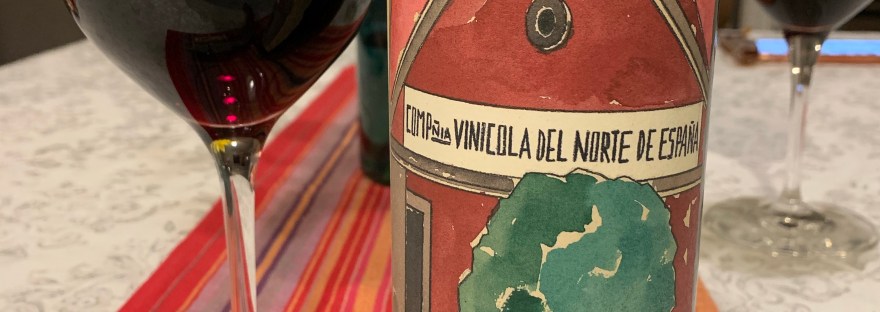
This week, our Wine of the Week takes us to Spain. Specifically, the Rioja region in Northern Spain. Rioja red wines are all Tempranillo based. There are many well known producers in Rioja, and wines from this region have gained wide popularity in recent years. One of the more historic Rioja wineries is Compañia Vinicola del Norte de España, abbreviated in their production and most of their labels as CVNE. Many of the CVNE wines are quite affordable, in the $20 or under range, while others are cellar-worthy, top cuvées, with correspondingly higher prices. 

CVNE has been producing wine since 1879, and remains under a family owned and operated winery. They own 545 hectares (1,350 acres) of vineyards, and also source fruit from nearby independent vineyards. 

In addition to the eponymous label, CVNE offers a number of others, one of which was recently featured by Total Wine & More as a “Top 20 Wines Under $20”: Asúa Rioja Crianza 2016. Eager to see what all the hubbub is about, we added a bottle to our cart and a few days later, pulled the cork. 

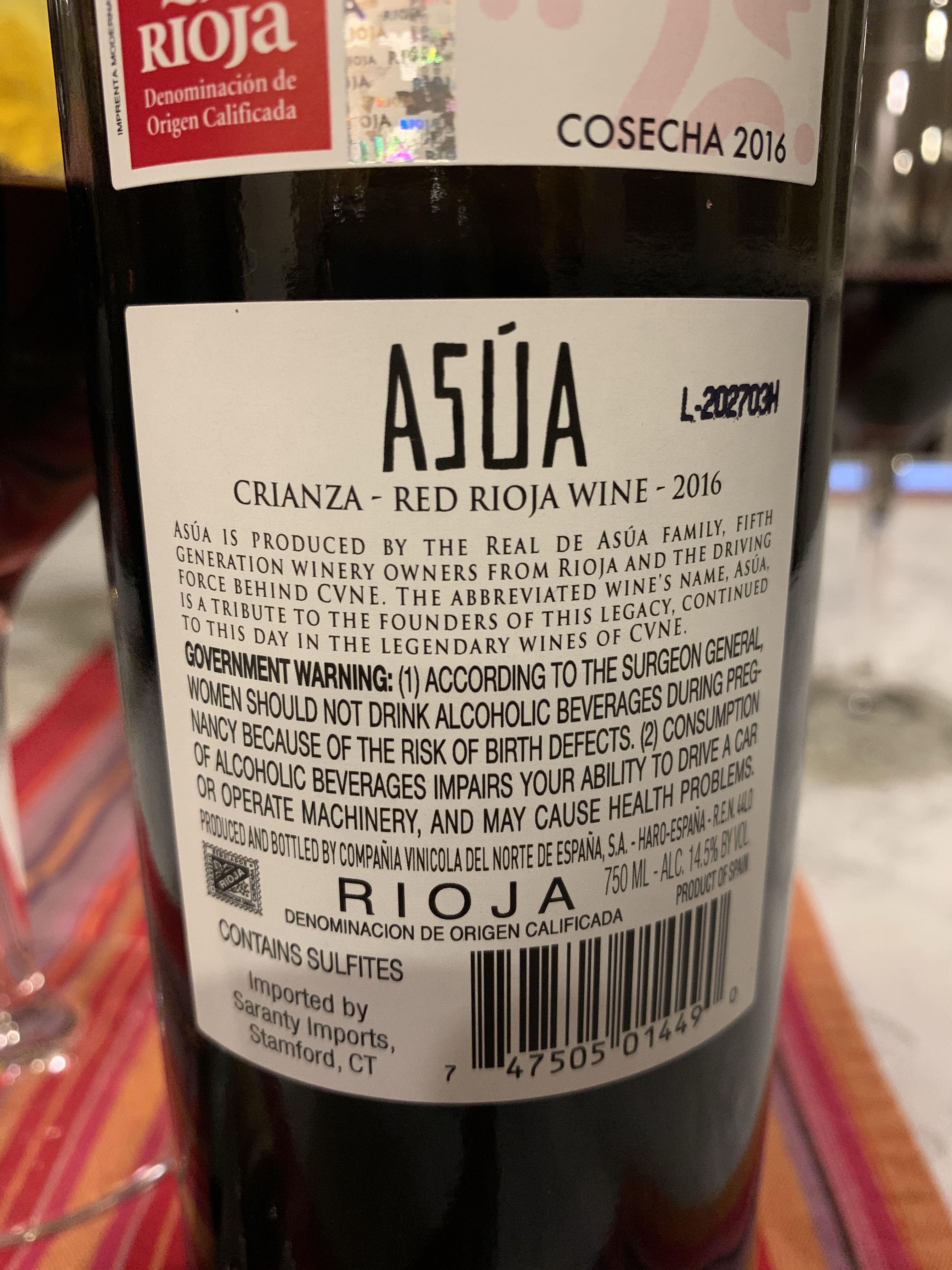
Despite being produced by CVNE, this wine is currently absent from their website, so finding information about it proved challenging. The back label declares: 

“Asúa is produced by the Real de Asúa family, fifth generation winery owners from Rioja and the driving force behind CVNE. The abbreviated wine’s name, Asúa, is a tribute to the founders of this legacy, continued to this day in the legendary wines of CVNE.” 

Rioja is one of the rare regions in the wine world where words like Reserva and Gran Reserva have meaning. In most of the world, those are mere marketing terms, with no regulation or control. But in Rioja, you will find these terms, plus Joven and Crianza, on the bottles, and each identifies the treatment and aging of the wine. 

Joven wines are young and fresh, with little to no oak aging. They are intended for consumption within two years of production. Crianza wines must be aged in oak for at least one year, and an additional year in the bottle. Reserva wines also spend one year in oak, but must age in the bottle for three years before being released. Finally, Gran Reserva wines age for two years in oak, and another three years in the bottle. As one would expect, prices and ageability increase with each designation. 

Asúa Rioja Crianza 2016 

A young, fresh, and fruity Rioja. Garnet color with a ruby rim. On the nose, fresh raspberry and blackberry with hints of oak and vanilla. Flavors on the palate include bold, fresh blackberry, blueberry, and cherry, with clove, tobacco, and vanilla. Medium body with vibrant acidity; perfect for food pairing. Medium finish of red fruit and baking spice. We paired with shredded chicken tacos and it was magical.

For a great wine and an amazing price, check out Asúa Rioja Crianza 2016 

Cheers!

  • By Kent Reynolds and Robyn Raphael-Reynolds
Bordeaux-Style Blend, Chardonnay, Finger Lakes, New York Wine, Riesling, Samples

Three Gems from Ravines Wine Cellars

A few weeks back, we were talking about different wine varieties, and decided we needed to incorporate more Riesling into our lives. Mere days later, as if she overheard our conversation from 3,000 miles away, Courtney from Ravines Wine Cellars, in the Finger Lakes Region of New York, emailed us offering samples of their wines, including their flagship Dry Riesling. How could we refuse?

The following wines were provided as media samples for review. All reviews, descriptions, and opinions are our own. We received no additional compensation.

Riesling is a very versatile grape. It can also be polarizing; you either like it or you don’t. In our observation, the polarization is directly related to the versatility – Riesling wines can be made in a variety of styles, from dry to sweet. A few years ago, the market was flooded with cheap, sweet Riesling from Germany, which has turned a lot of wine drinkers away from Riesling in general. That’s a shame, because Riesling is a stunning grape, food friendly and elegant. While we tend to prefer dry wines, we’ve enjoyed some excellent off-dry Rieslings, and have an appreciation for the occasional sweet sip. 

The Finger Lakes Region, in Upstate New York, is known for its Riesling. With a short growing season and cold, snowy winters, Riesling finds itself right at home there. The name, Finger Lakes, comes from the 11 long, narrow lakes formed by glacial movement millions of years ago. Seneca Lake and Cayuga Lake are two of the deepest in the US, at 618 feet and 435 feet, respectively. 

Ravines Wine Cellars is celebrating its 20th anniversary this year. In 2001, husband and wife team Morten and Lisa Hallgren founded Ravines Wine Cellars, with a mission to produce a bone dry Riesling. Born in Denmark, Morten learned winemaking at his family’s estate winery in Côtes de Provence, France. Morten went on to earn a degree in winemaking from Ecole Nationale Supérieure d’Agronomie in Montpellier. Meanwhile, Lisa studied the culinary arts and is now a professionally trained Chef. As an adult, Morten came to the United States, eventually settling in Upstate New York, where he and Lisa purchased land between two ravines in the Finger Lakes region. You can read more of Morten and Lisa’s story on the Ravines Wine Cellars website.

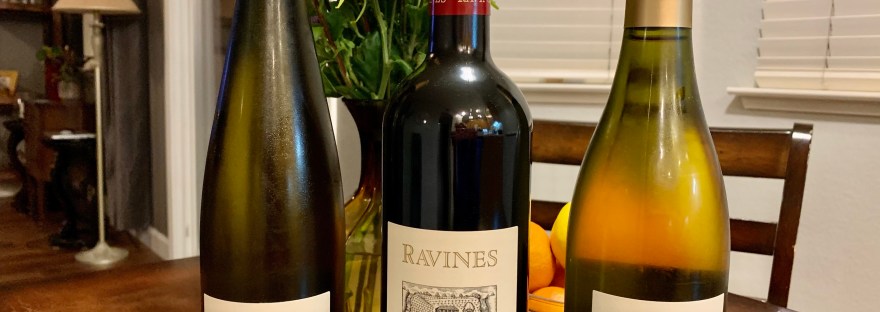
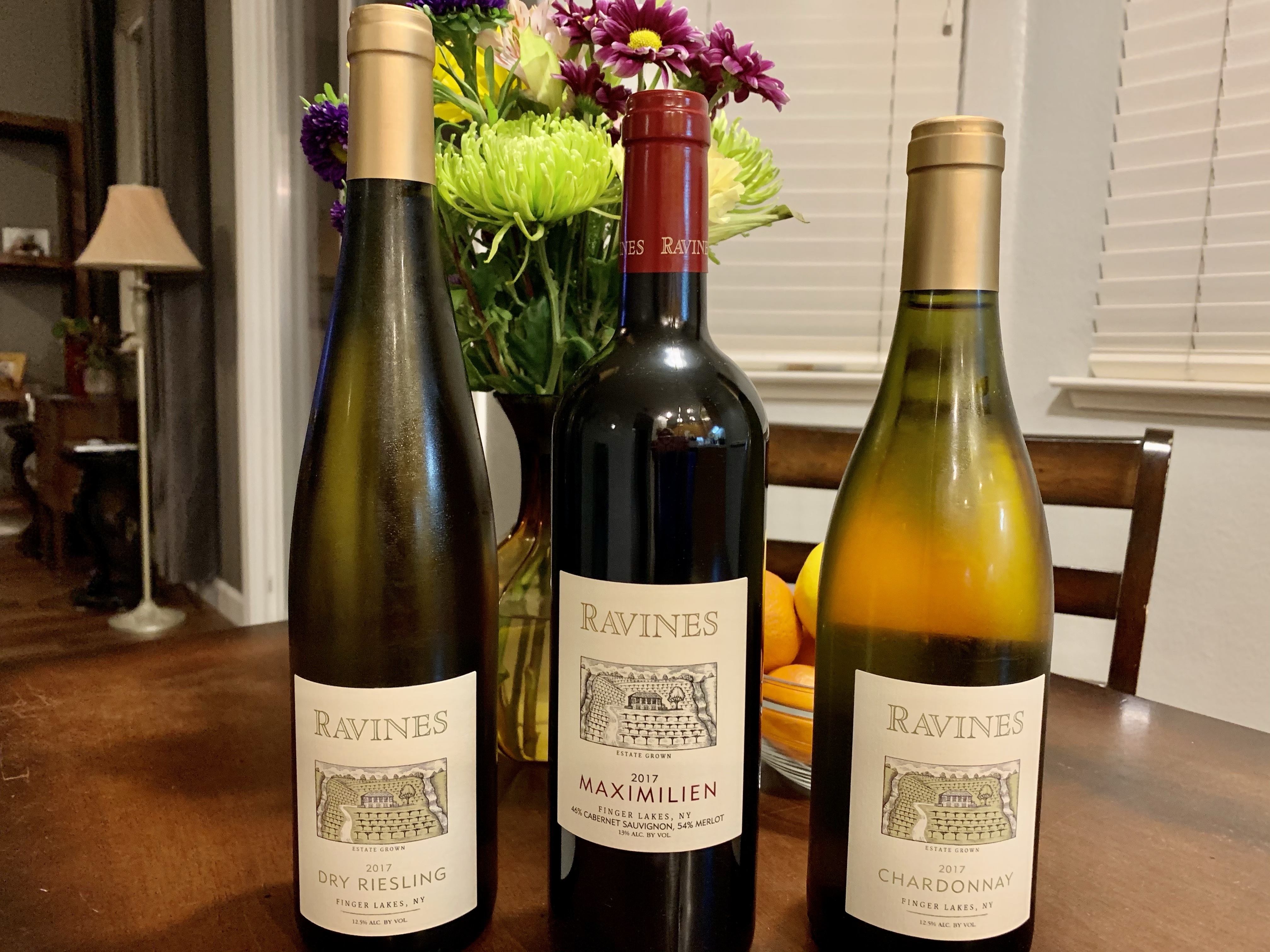
Our sample pack from Ravines Wine Cellars included three wines; a 2017 Chardonnay, the flagship 2017 Dry Riesling, and their Bordeaux-style red blend, Maximillen 2017. These, and all of their portfolio wines are available for purchase on their website.


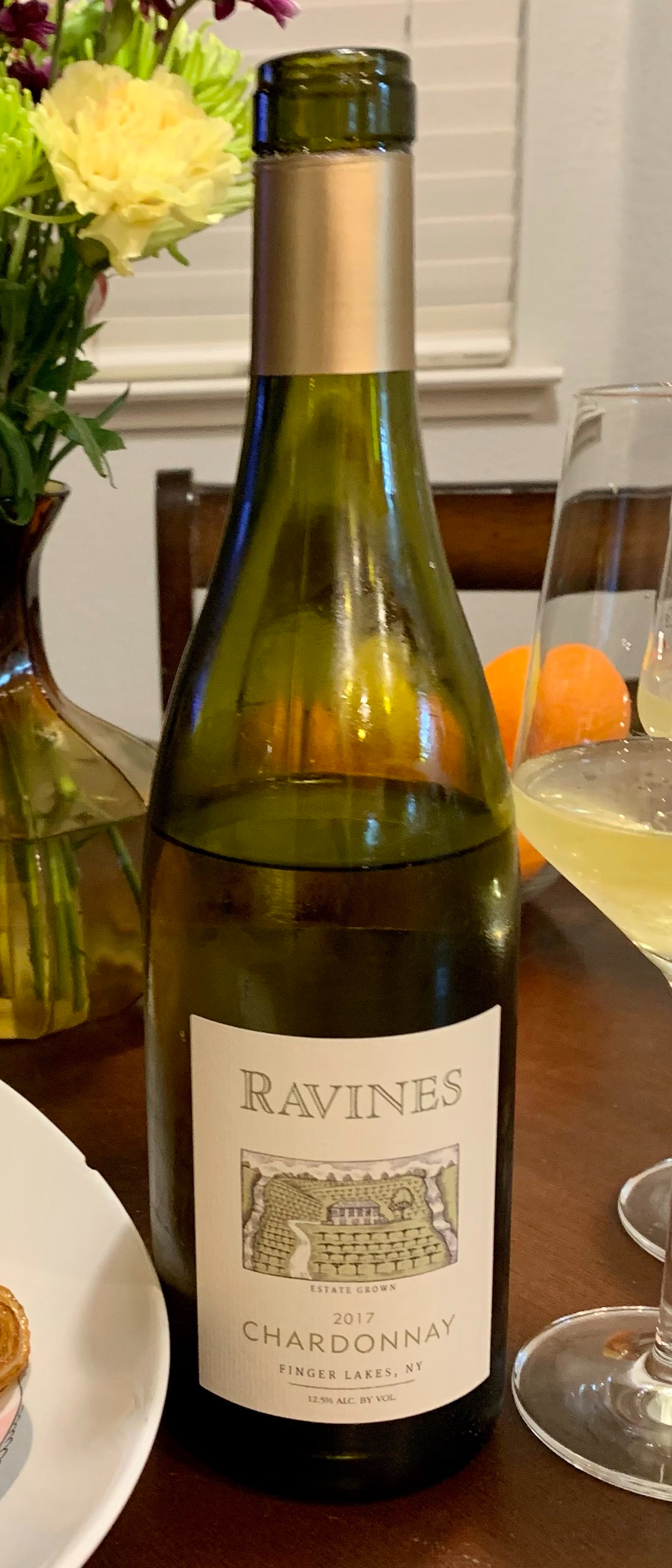
2017 Chardonnay (SRP $19.95)

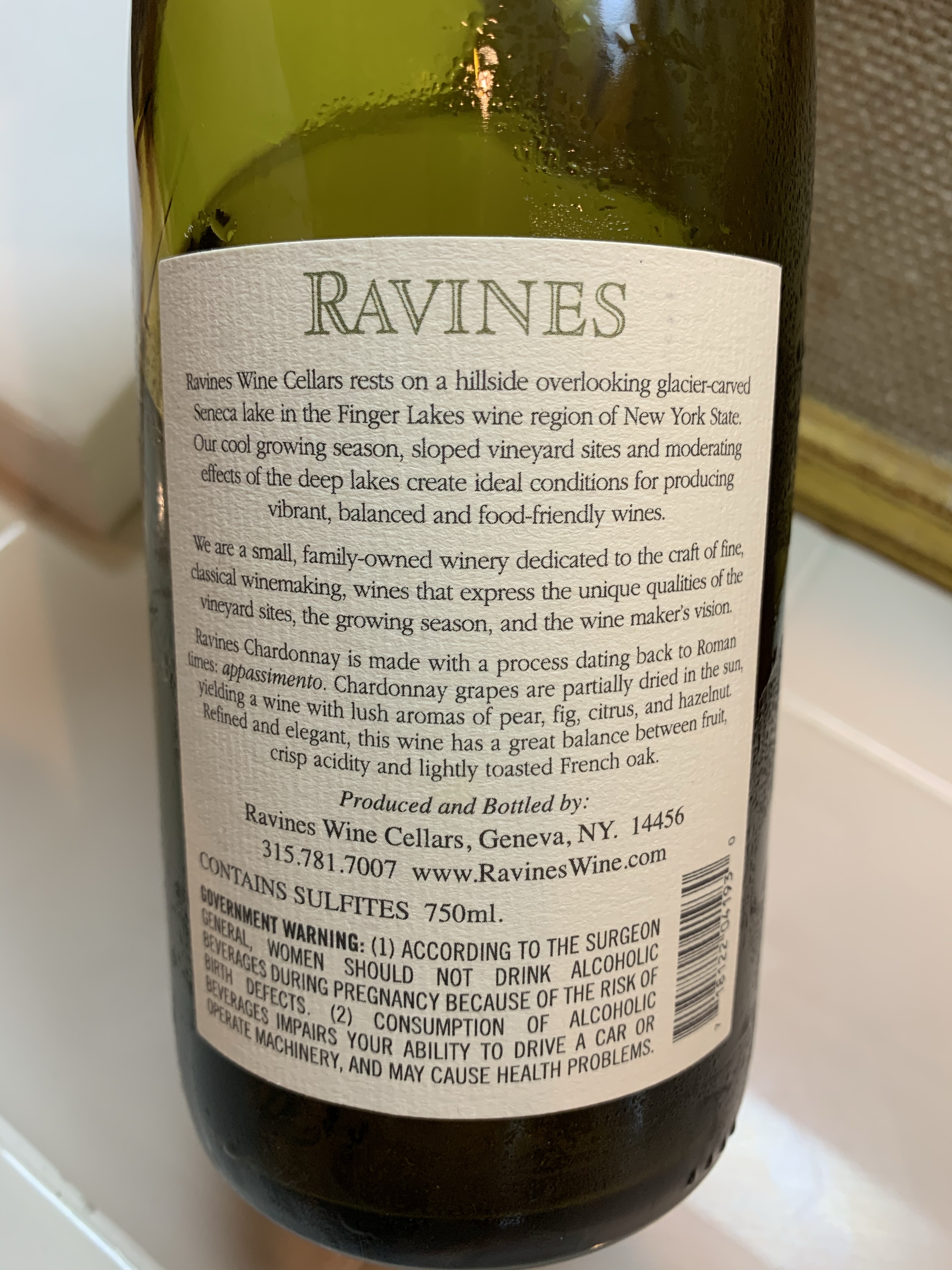
A unique Chardonnay, made in the appassimento method by partially drying the grapes before pressing. The appassimento method is of Italian origin, and is used in making the rich and concentrated Amarone wines. 

Clear golden color. Aromas of ripe apricot, mild citrus, and pear. On the palate, there are flavors of grilled lemon, pear, peach, and citrus. Medium body with vibrant acidity. The finish lingers with fresh citrus and just a hint of toasty warmth at the end. Excellent paired with roast chicken. 


Dry Riesling 2017 (SRP $17.95)

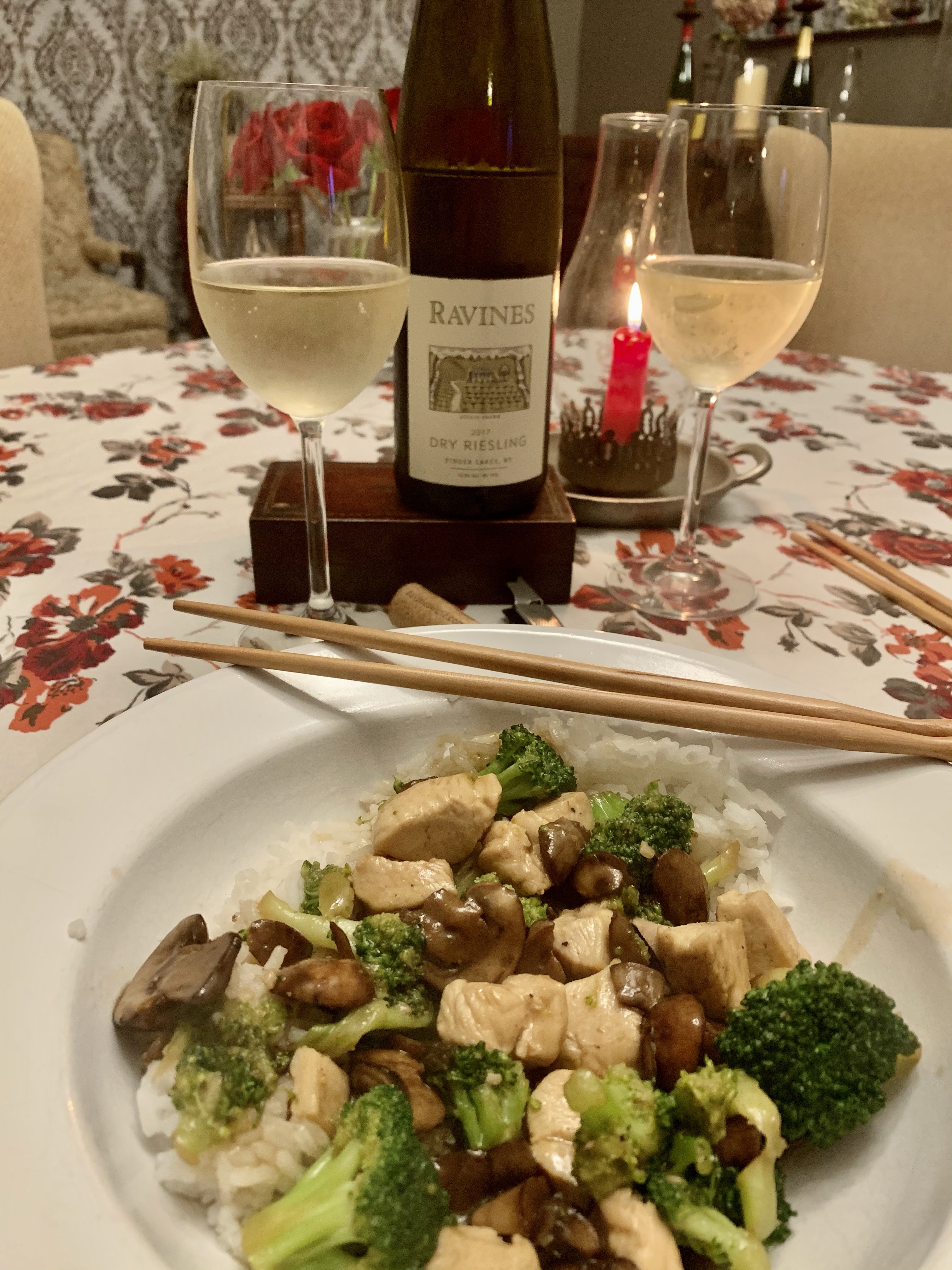
Clear, golden color. Aromas of pear, apple, and citrus, with floral notes. On the palate, there are flavors of Bartlett pear, yellow apple, lemon lime, and lychee, with hints of honeysuckle and lemon blossom. Light body with brisk acidity and a lingering finish. Paired well with chicken and broccoli stir fry. 


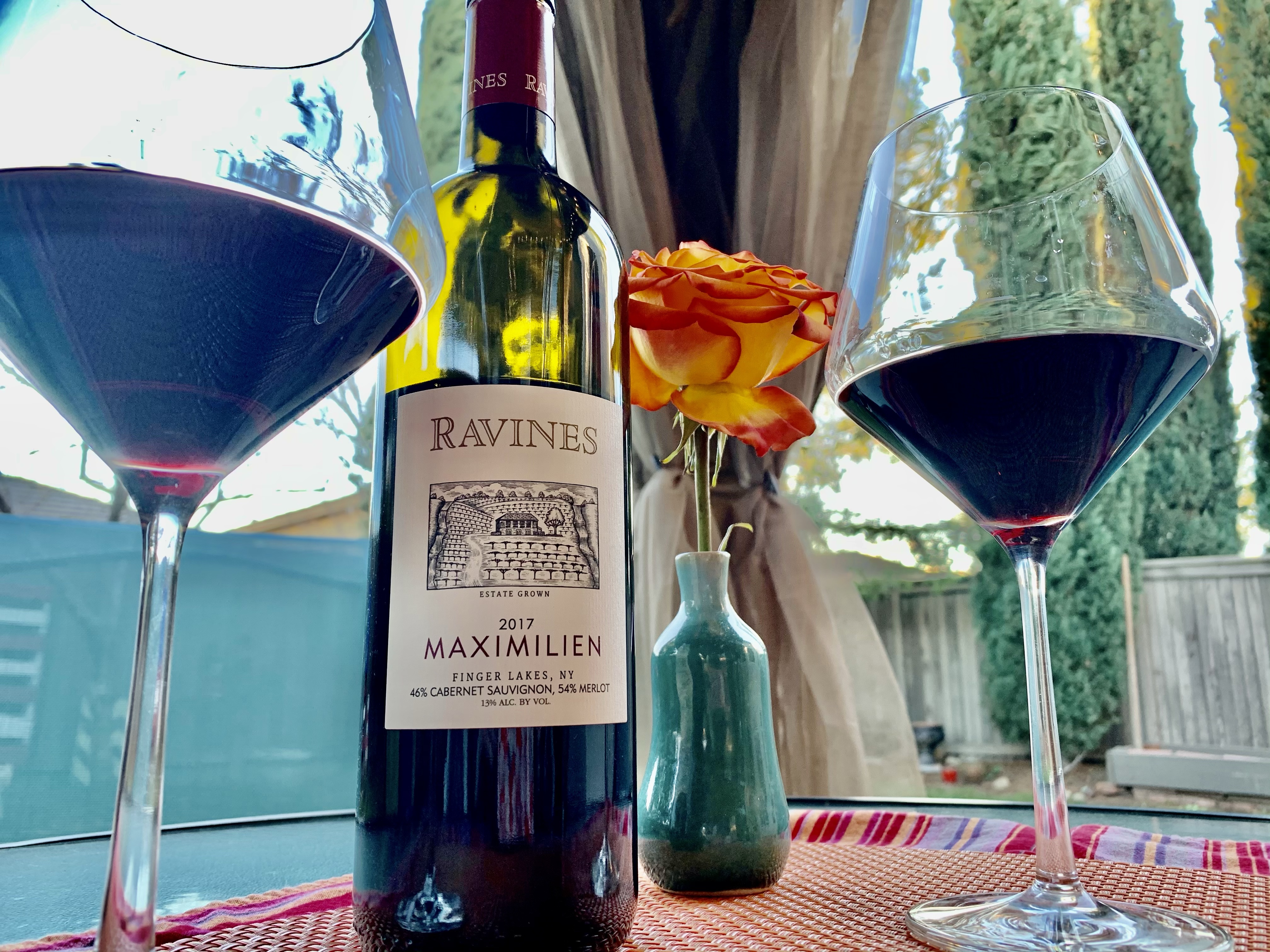
Maximilien 2017 (SRP $24.95)

54% Merlot, 46% Cabernet Sauvignon. 

This is a classic Bordeaux blend. A New World wine with a distinctly Old World vibe. Ruby-garnet color. The nose is earthy, cherry, raspberry, and ripe plum. On the palate, smoky with blackberry, black cherry, ripe raspberry, and red currant, with black pepper, tobacco, cigar box, and wisps of bell pepper. Medium-plus body, with grippy tannins and bold acidity. Long finish of black fruit and spice. Somebody please get me a ribeye! 

Thank you.

We found each of the Ravines Wine Cellars wines to be distinct, expressive, and downright delicious. We are happy to have more Riesling in our lives, and will remember Ravines Wine Cellars when it’s time to re-stock that corner of the cellar.

  • By Kent Reynolds & Robyn Raphael-Reynolds
  • Photos by Robyn Raphael-Reynolds
Amador County, Casino Mine Ranch, Grenache, Mourvedre, Pot Roast, Wine

Our Wine of the Week: Casino Mine Ranch Simone 2018

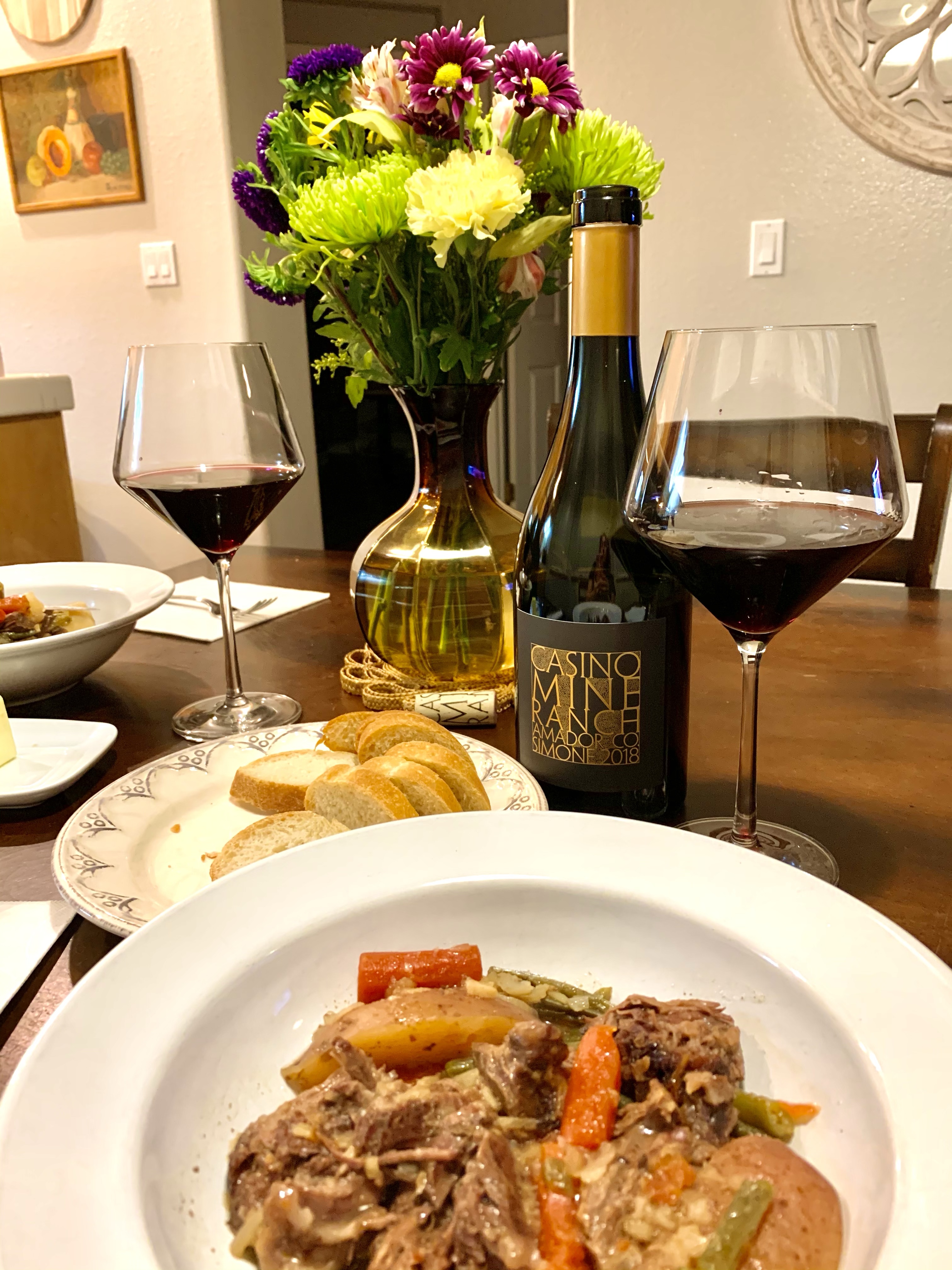
This week, our Wine of the Week was an easy choice. Not that any of the other wines were bad, but the Casino Mine Ranch Simone 2018 was hands down the best of the week. We have been fans of Casino Mine Ranch and their entire portfolio of wines since our first visit a little over a year ago. We were so impressed, we even wrote about it

The Simone wine is a tribute to Simone Vanophem Shaw, who founded the ranch in 1936. Simone is Great Aunt to Rich and Jim Merryman, the current owners of the ranch. Simone’s is a fascinating life story, filled with adventure and elegance; from living with her father at his Alaskan fold mine, to jet-setting to New York, Los Angeles, Paris, and other glamorous destinations, to later buying and managing this beautiful, rugged ranch property in Amador County. The Simone wine embodies the lady. As the Casino Mine Ranch website describes it:

“Like its namesake, it’s elegant yet tough, and brims with joie de vivre. It’s a wine for feasting, both opulent and earthy, best enjoyed while wearing dungarees and boots. Or, alternately, diamonds, furs, and pearls.”

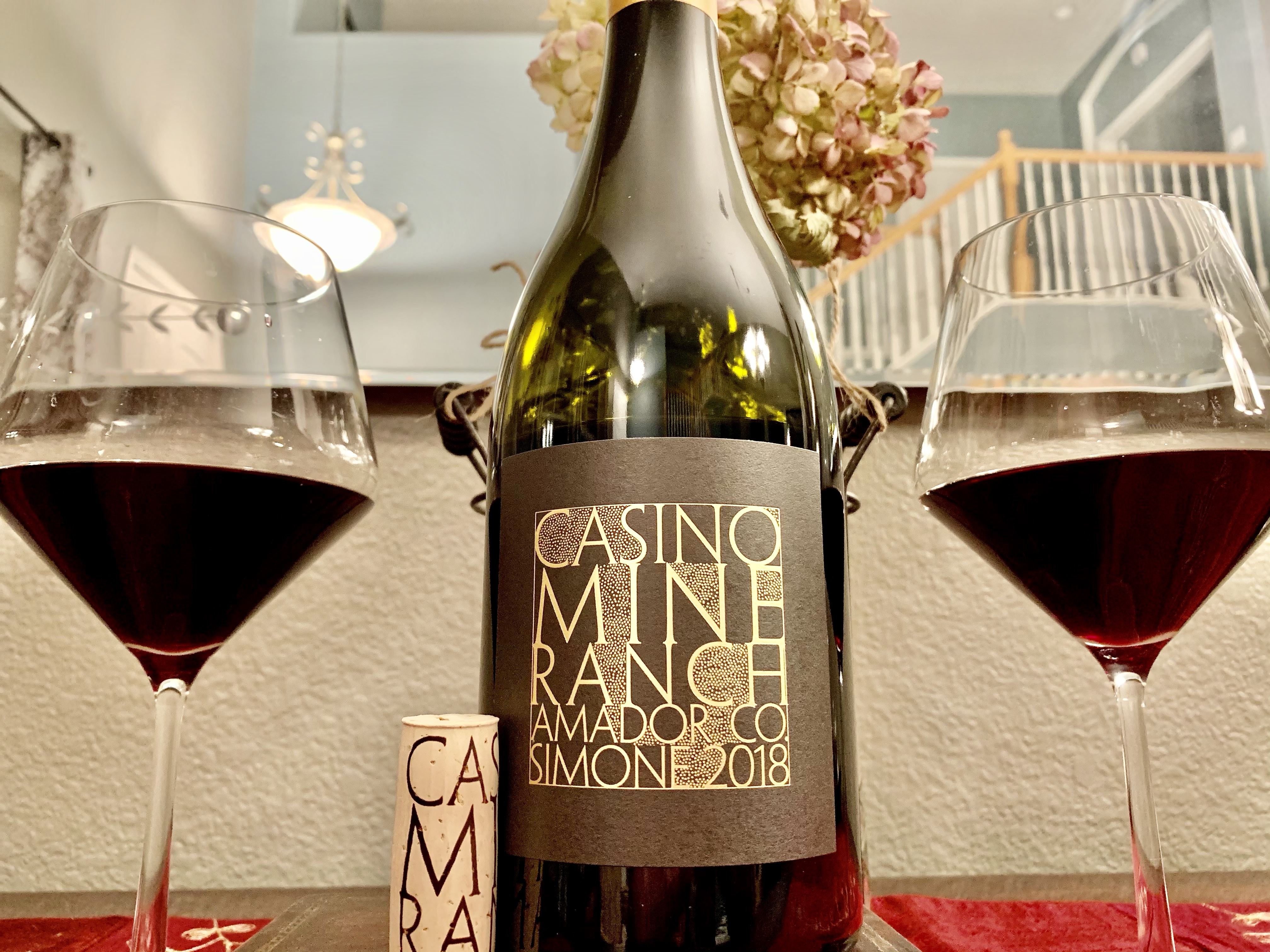
The Casino Mine Ranch Simone 2018 is a blend of 57% Mourvèdre and 43% Grenache Noir. As with all of their wines, Simone is made with 100% estate grown fruit. It is a rich, lush, powerhouse of a wine, perfect for cold winter nights and pot roast. 

Ruby color. Aromas of raspberry, cherry, and smoke. On the palate, flavors of blackberry bramble, raspberry, cherry, cola, tobacco, white pepper, and smoke. Medium body, lively acidity, and smooth tannins. Magical paired with pot roast.

We wish we could have met Simone, we know we would have loved her. But at least we can enjoy the wine made and named in her honor. 

What was your wine of the week?

Cheers!

  • By Kent Reynolds and Robyn Raphael-Reynolds
  • Photo Credit: Robyn Raphael-Reynolds
Brut Rosé, Cremant, Cremant d'Alsace, Lucien Albrecht, Valentine's Day, Wine

Valentine’s Day Brunch with Lucien Albrecht

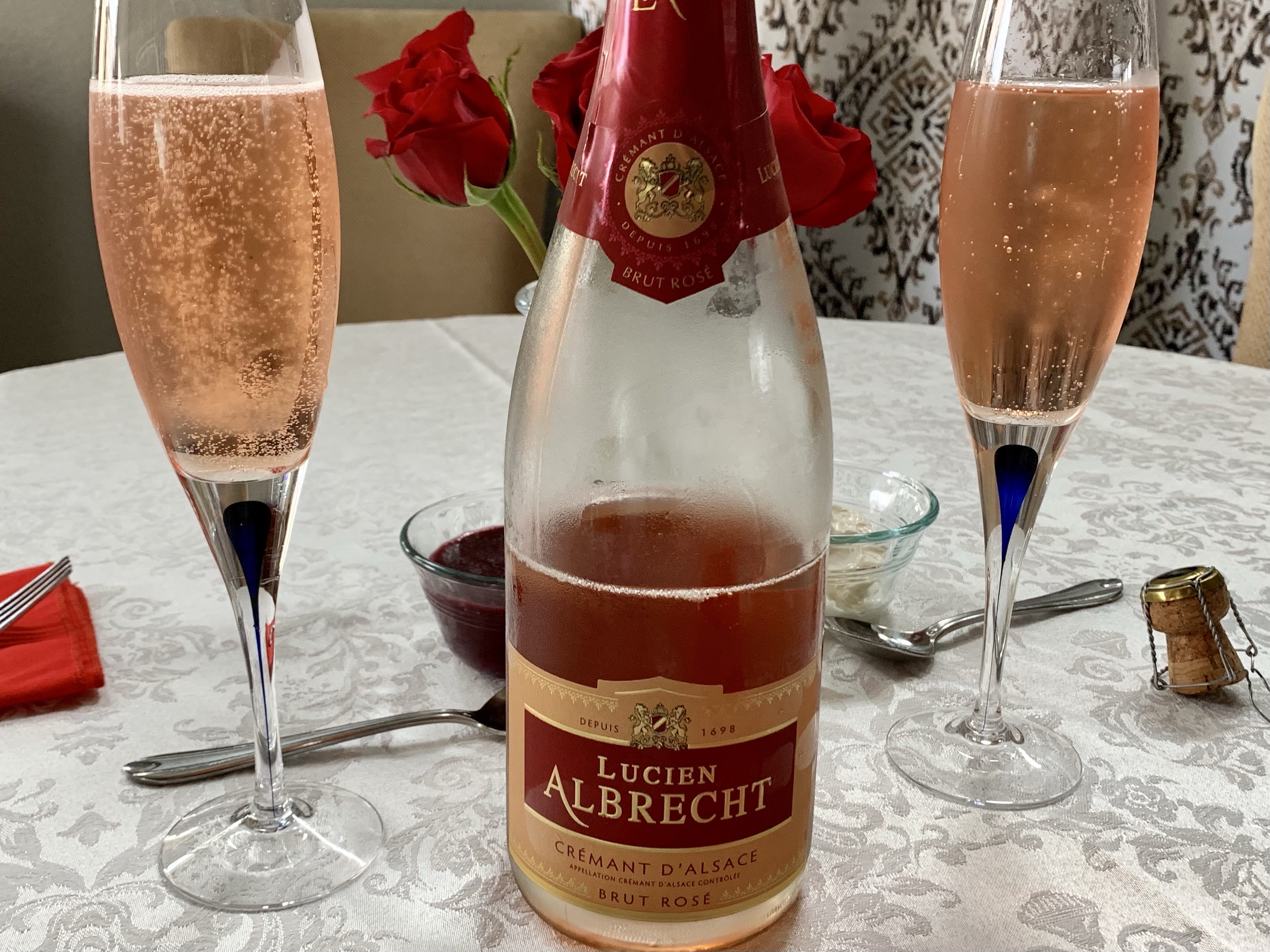
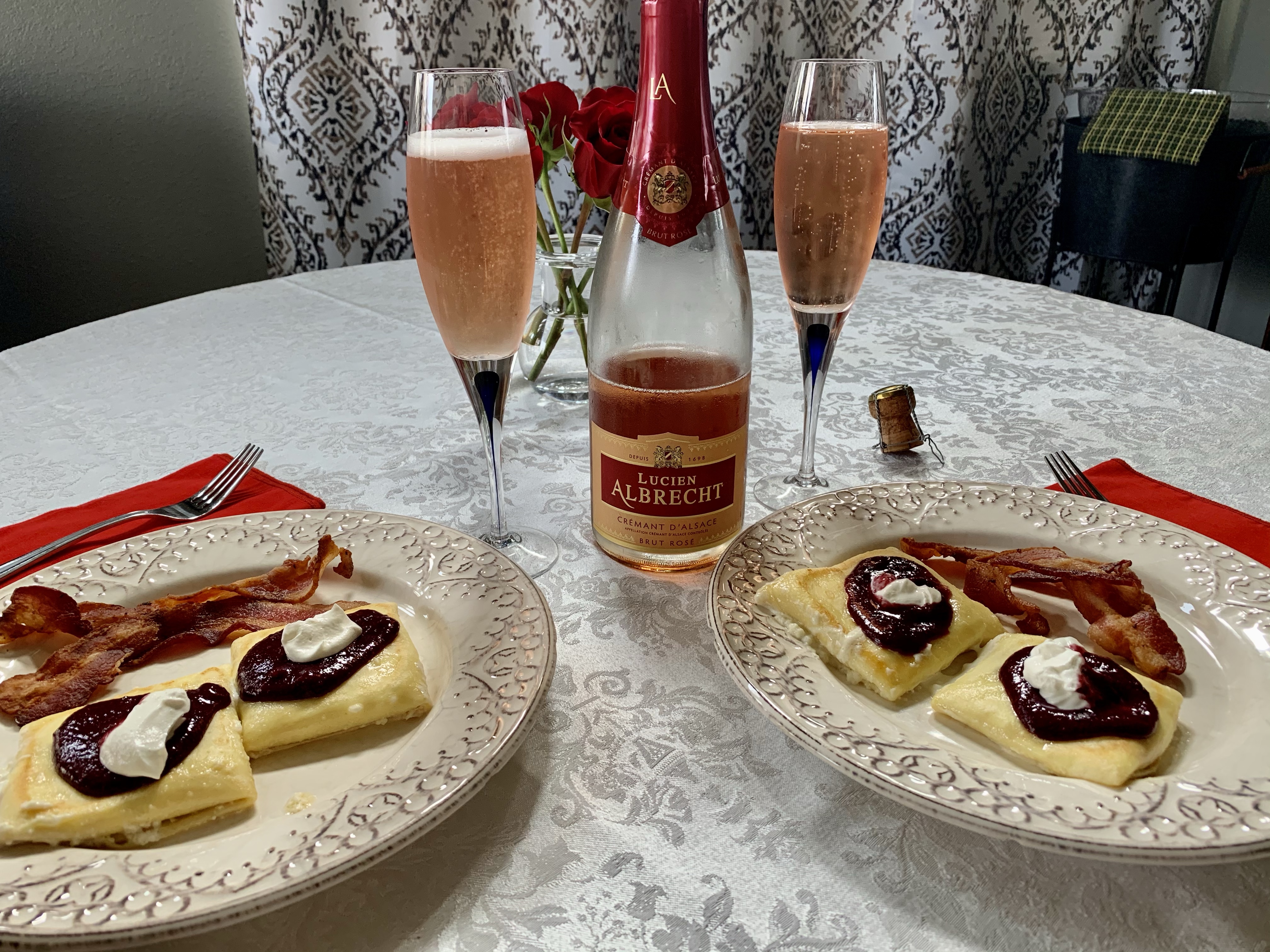
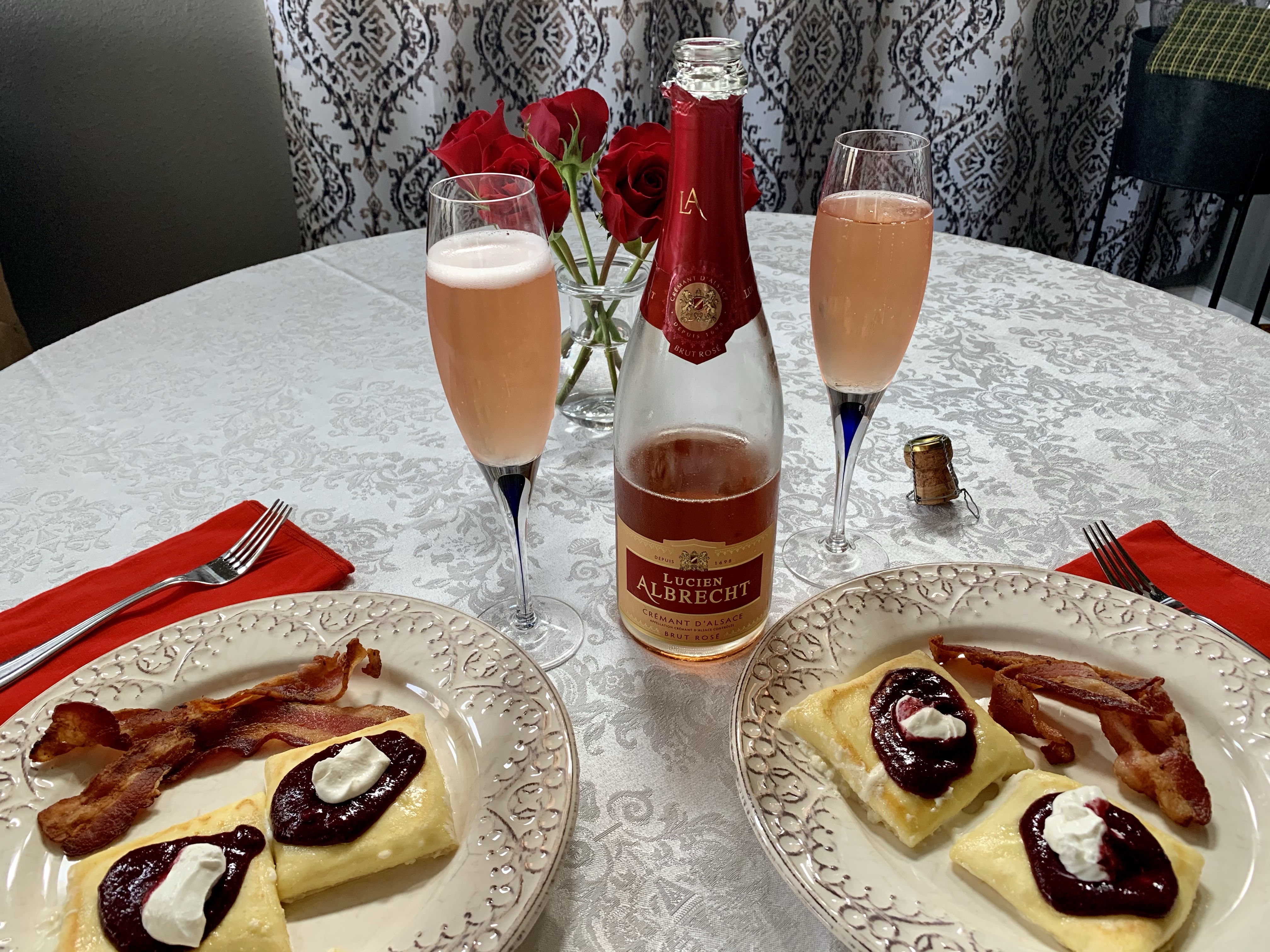
In lieu of our wine of the week, we’re celebrating Valentine’s Day with brunch! Cheese blintzes topped with peach-blueberry purée (peaches from our own back yard, frozen last summer) and some pink bubbles! Lucien Albrecht Crémant d’Alsace Brut Rosé is always the right choice for a romantic meal, at any time of day! 

We’ve been fans of Lucien Albrecht wines for some time, and have written about some of them in this blog, including the Crémant d’Alsace Brut Rosé. As a non-vintage wine, there may be some variations year to year, but we’ve never been disappointed. Here are our notes from Valentine’s Day 2021, followed by what we believe are some drool-worthy snaps. Keeping it short, since as they say, a picture paints a thousand words!

Delightful and perfect for Valentine’s Day brunch. Salmon color. Steady streams of tiny bubbles. Aromas and flavors of raspberry, strawberry, and cherry, with hints of yeast and cream. Vibrant acidity and a medium finish. 

Happy Valentine’s Day!

Cheers!

  • By Kent Reynolds and Robyn Raphael-Reynolds