Most wine geeks know the name Chateau Montelena. For those who don’t, allow me to inform you. Chateau Montelena is the Calistoga, California, winery that produced the Chardonnay that beat out Burgundy, France, in the famous Judgement of Paris in 1976. The Chateau Montelena 1973 Chardonnay put Napa on the wine map, and forever changed the landscape of California wine, both literally and figuratively. (Been to Napa lately?)
Would it surprise you to learn that Chateau Montelena is more than world class Chardonnay? Of course being in the Napa Valley, they produce a stunning Cabernet Sauvignon. But did you know they also make a spectacular Zinfandel?
Zinfandel is often thought of as “America’s grape” although genetic testing has determined that the grape originated in Croatia. Nevertheless, Zinfandel is associated with California due to its historical roots to the Gold Rush. Most people associate Zinfandel with Lodi, Russian River Valley in Sonoma County, or perhaps the Sierra Foothills (some of my favorites), but many forget that Napa Valley produces some impressive Zinfandel.
Zinfandel is a hearty grape; a survivor. The vines can live much longer than many other vines, and still produce stunning fruit. Some would say Old Vine Zinfandel is better, softer, and smoother than wine from younger vines. From my tasting experience, I’d have to agree. Zinfandel is also drought tolerant, and thrives in warmer climates, where some other grapes would suffer.
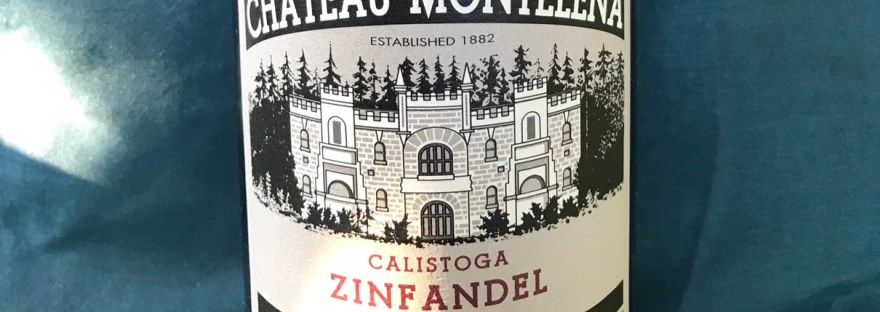
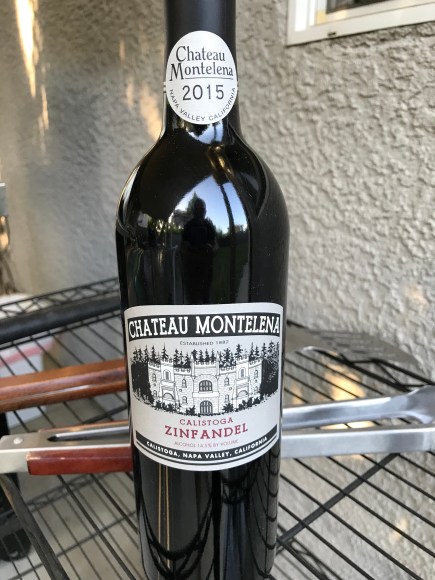
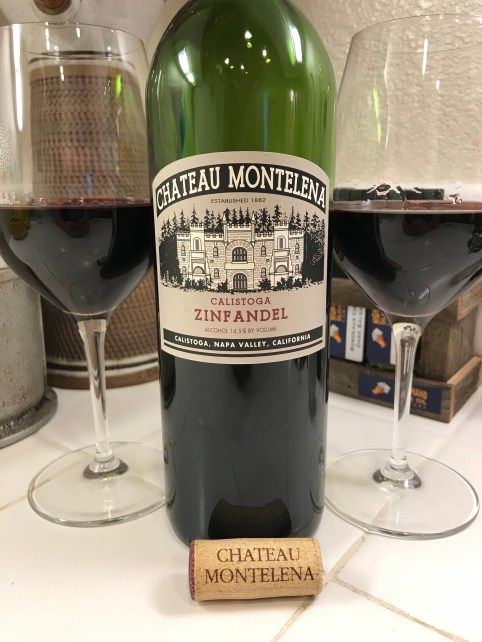
I had never really thought of Napa Valley or Calistoga for Zinfandel, much less Chateau Montelena, known for its Chardonnay and Cabernet. So I was intrigued when I received a sample bottle of Chateau Montelena Calistoga Zinfandel 2015. Winemaker Matt Crafton says of this wine: “…the 2015 vintage showcases [the survivor] quality beautifully. There’s something hallowed in the old, war-torn vines that have endured many challenging growing seasons coupled with the vitality and exuberance of younger plantings that allow us to create this truly compelling wine.”
The 2015 is crafted from fruit harvested from Estate vines that were among the first planted the year Jim Barrett founded Chateau Montelena, 1972, blended with grapes from younger vines. This blend provides the best of both worlds; the soft, smooth qualities of Old Vine Zin, with the youthful fruit and zip of newer vines. 2015 was a very dry year, as California suffered through one of the worst droughts on record. Trees and other vegetation suffered, but the sturdy Zinfandel vines took it in stride, producing rich, intense fruit resulting in an exquisite wine.
This wine was submitted to me as a media sample for review. I received no other compensation. All thoughts, opinions, and tasting notes are my own.
Chateau Montelena Calistoga Zinfandel 2015
Medium purple color with ruby rim. On the nose, more earthy than other Zinfandels I’ve had, but all the fresh blackberry bramble and fruit aromas I expected. On the palate, fresh blackberry, blueberry, cherry, and spice, with dusty chocolate notes, and secondary flavors of vanilla and leather, with smoky notes on the finish. Tannins are bold and chewy; balanced with light acidity. Served with grilled pork chops, the food tames the tannins and really brings out the character. The finish lingers, enticing yet another sip. Perhaps another bottle.
SRP $39.00
This Zinfandel is truly one of a kind. I’ve tasted dozens of Zinfandels over the years; it is one of my favorite varietals; and this one is definitely unique. It’s bigger, earthier, and with more structure and tannin than many other Zinfandels. If you get the opportunity to try this spectacular wine, take it!
Riesling. A divisive grape, to be sure. Most people either love it or hate it. For many of us in the United States, Riesling means syrupy sweet, low quality wine. Yet the greatest Rieslings are actually dry, with low residual sugar, and layers of complex flavors. Renowned wine expert Jancis Robinson calls Riesling “the wine world’s greatest underdog.” Of course, she is referring to dry Riesling, but even sweeter styles have their qualities, and are appealing to a vast segment of wine consumers who prefer sweet wines. My dad is one of them; a sweet Riesling is his favorite style of wine. Indeed, many wine experts assert that Riesling is the world’s greatest grape variety.
Riesling is a versatile grape, and can be made into sweet, dessert wines, or crafted into dry, refreshing dry wines, or anything in between. Many Rieslings produced in the U.S. are sweet, which leads to much of the confusion about the varietal. When all you know is one style, you assume all labels are that same style. Riesling originated in Germany, and the fact is, German producers did themselves, and the grape, no favors in churning out barrels of low-quality Riesling back in the 1980’s and ‘90’s. Today, quality has improved, and there are many high quality Rieslings readily available to consumers.
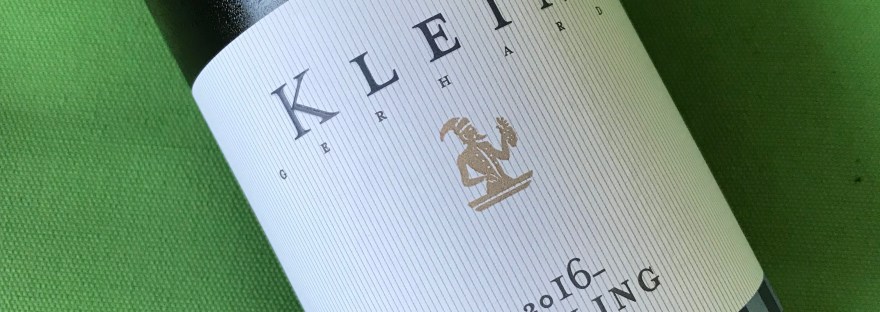
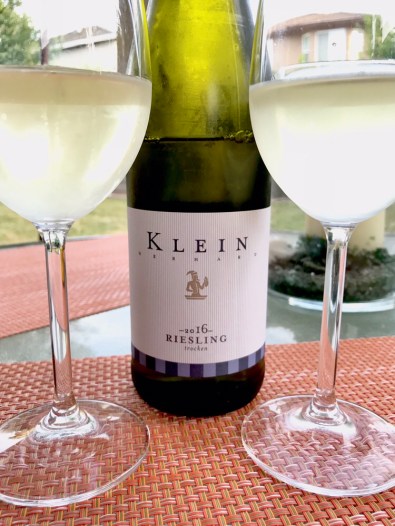
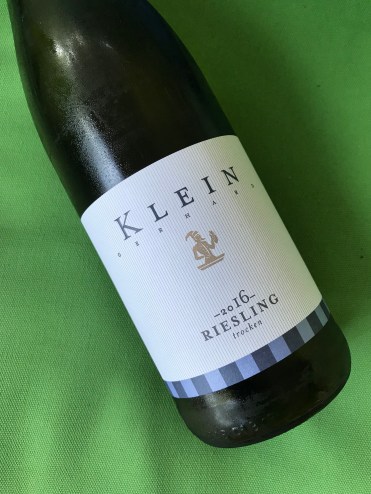
I had the privilege of tasting one such German Riesling recently. As a member of NakedWines.com, I ordered a bottle of the Klein Riesling Trocken 2016. Admittedly, German wine labels are among the most confusing and confounding on the planet. Just remember this: “Trocken” means “DRY.” And dry this wine is! Winemaker Peter Klein is a rising star in the German winemaking scene. He is a 14th generation winemaker! (Read that again…fourteen generations!!) He was runner-up in Germany’s “Young Winemaker of the Year” competition this year. And his Riesling Trocken is all that!
Pale straw color. Aromas of pineapple and pear. On the palate, crisp acidity and flavors of pineapple, quince, pear, and white peach. Definitely fruit-forward, but not sweet. We started ice-box cold and let it warm as we drank it on the patio. As the wine warmed, enticing floral aromas emerged. We enjoyed this sans food, but it would be an excellent accompaniment to spicy Asian food or local, German cuisine.
If you have always assumed all Riesling is sweet, get your hands on a Trocken, chill it down a bit (but not too much) and get ready to experience the greatest grape in the world. If this Klein Riesling Trocken 2016 sounds like a good place to start (and it is) click here for a voucher worth $100 off your first NakedWines.com order. You’ll be glad you did.
If you think all Rosé is White Zinfandel, I have two things to say to you. (1) You’re not alone, and (2) you need to get out and explore Rosé!
I’ve actually been in conversation with people who say, “I don’t like Zinfandel; it’s too sweet.” When they see the quizzical look on my face, they say, “You know, Zinfandel? The pink wine.” (Spoiler alert: Zinfandel is actually a red wine grape.) While it’s true that many of us got our start with White Zinfandel, myself included, Rosé wines have come a long way in the past 40 years! (A nod to all you purists who will argue that Rosé from Provence has always been good.) But the popularity of dry Rosé, as I opine all Rosé should be, has taken off in recent years, and thankfully, there’s no end in sight!
Many people think of Rosé as a spring and summer wine, and for good reason. A well-chilled, crisp, dry Rosé is quite refreshing when lounging by the pool, or dining al fresco. I am a believer that there is no Rosé season, and drink it all year round, but I will concede that it is best when the weather is warmer.
When you think of Rosé, what grape varieties do you think of? Other than Zinfandel, of course. What? You mean Rosé isn’t a varietal? Nope. Rosé can be made from virtually any red wine grape. Yet it seems that most domestic (U.S.) Rosé wines, and many Old World examples, are made from Pinot Noir, Grenache, or other Rhône varietals. However, Lodi winemakers are pushing the envelope with some stellar Rosé wines made from grapes you may have never considered.
The Lodi AVA is home to more than 125 different grape varieties. The temperate climate; warm temperatures and dry summers; is conducive to Mediterranean grapes, which thrive here. Lodi winemakers produce Rosé wines from Carignan, Grenache, Barbera, Pinot Noir, Tempranillo, Sangiovese, and many others. The characteristics that make each of these varieties great red wines, also serve to produce Rosé wines with distinct profiles themselves.
The following wines were provided as media samples for review. I received no other compensation, and all opinions and tasting notes are my own.
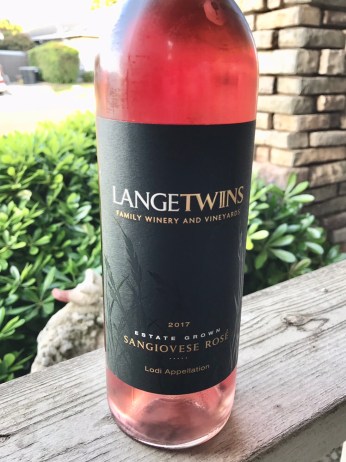
I’ve written about LangeTwins Winery before, when Robyn and I had the good fortune to meet some friends for a personal tour, with winemaker David Akiyoshi as our guide. It was a memorable experience, to be sure! So I was excited when I opened the box that the nice FedEx courier delivered, and found a bottle of the LangeTwins Sangiovese Rosé 2017. (Click the link to read about the day, and some of the LangeTwins story.)
From the winery:
With an alluring vibrant pink color, our 2017 Sangiovese Rosé is delightfully refreshing. Opening with juicy aromas of watermelon and strawberry, the same fruit notes carry over to the palate and are balanced by bright acidity. These smooth flavors and a lasting finish will leave you wanting another sip.
Here are my tasting notes:
Crisp, dry, and refreshing. Medium pink color. Aromas and flavors of strawberry and raspberry, with a pop of watermelon jolly rancher on the finish. This’ll be great all summer long!
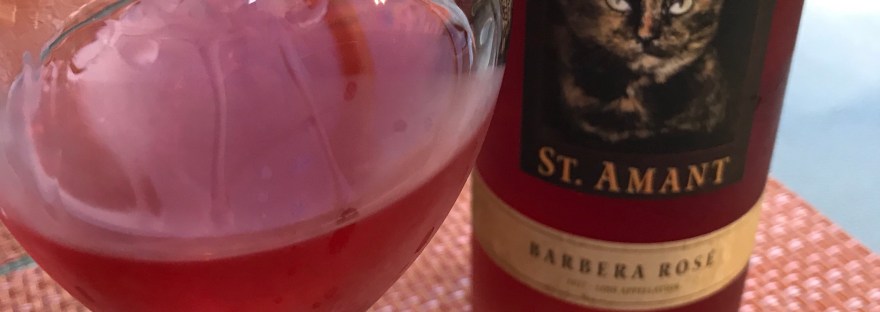
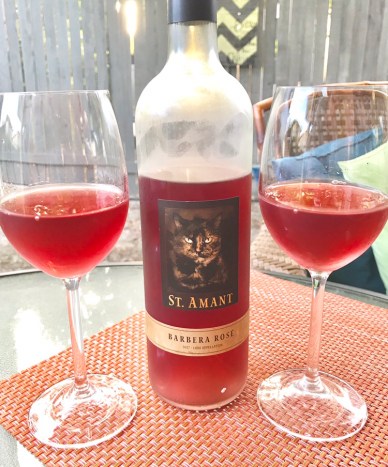
Well, now. I’ve actually never had a Barbera Rosé before. Barbera is one of my favorite varietals. I’ve enjoyed many red Barbera wines, and even a White Barbera (fermented with no skin contact.) But never pink!
St. Amant Winery was born in the early 1980’s in Amador County, growing their own grapes, and making wine in borrowed facilities. The name comes from the founder’s wife’s maiden name., Their first emphasis was on port-style wines, with some success. In the late 1980’s, the White Zinfandel craze exploded, and St. Amant jumped on board. The success of their White Zin sales allowed the family to purchase their own winery, in French Camp, California, just outside Lodi. In 1996, they moved to their current location in Lodi. The history of St. Amant is quite fascinating, and I encourage you to read the whole story on their website.
I think the cat is angry because it can’t drink Rosé.
About the wine, from the winery website:
This delicious dry rosé of Barbera is the perfect refreshing wine for a hot summer day. Barbera’s natural acidity and Lodi’s decadent fruit flavors come together to create a lively wine that is sure to please. Yes, it may be a pink wine, but then again, it’s a delicious pink wine. The 2016 Rosé was such a hit that we couldn’t resist doing another one. If for no other reason, it’s a wine I like to drink during the summer. It’s a dry, lighter-styled version of our Barbera, with a zesty refreshing quality that lends itself well to warm summer days. Barbera’s natural acidity and luscious fruit lend itself perfectly to this unpretentious and quaffable wine. It has a deep pink color with a bright fuchsia edge. Strawberry and cranberry aromas follow through on the palate capturing the essence of spring in the glass. Drink Pink!
Here are my tasting notes:
Great color! Deep rose petal in the glass. Aromas of wild strawberry and red cherry burst from the glass. On the palate, a variety of red fruit rolls across the tongue, including strawberry, cherry, and raspberry, with hints of kiwi and watermelon. Rich texture and mouthfeel, with bright acidity. The finish is medium with sour cherry (almost like the Lifesaver flavor!), strawberry, and raspberry. A delicious summer sipper, and great wine to pair with light food dishes.
This wine retails at the winery for just $15! (Noticing a trend?)
If you’re not convinced to get out and try some delicious Lodi Rosé wines, well, I guess I’ve failed. Lodi winemakers and producing some stunning Rosé wines, that are delicious, unique, satisfying, and affordable. So, get up, head to your local wine shop…or better yet, come out to Lodi…and try some Rosé!
Cheers!
By Kent Reynolds
Photo credit (unless otherwise noted) and inspiration by Robyn Raphael
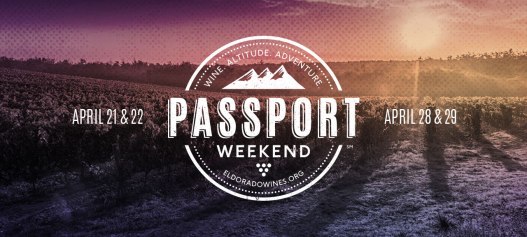
Off again on another exciting wine tasting weekend! This time we were headed to El Dorado County, for the El Dorado Passport Weekend. El Dorado County is right in our back yard, just about an hour from home. As guests of the El Dorado Winery Association, who provided us with complimentary VIP passes to the event, we were looking forward to a deeper exploration of the region. While we’ve lived nearby for many years, quite honestly, our ventures to the land of gold discovery had been few.
El Dorado Winery Association represents nearly 50 wineries. About half were participating in the annual Passport Weekend. With so many wineries to choose from, we had to map out our strategy. Compounding the mathematical quandary was the fact that we had only Saturday to attend. We had other commitments on Sunday! Clearly, we needed a plan.
El Dorado County is located east of Sacramento, and runs from the valley floor all the way to the peaks of the Sierra Nevada mountains. In fact, the town of South Lake Tahoe is in El Dorado County. The highway that one travels from Sacramento to South Lake Tahoe is U.S. Highway 50, part of the historic Lincoln Highway. As it happens, Highway 50 bisects El Dorado wine country, with the Apple Hill area wineries on the north side, and Pleasant Valley, Mount Aukum, and Fair Play regions to the south. Of these regions, Fair Play is perhaps the most well-known, at least in the area, and is the part of El Dorado County we’ve explored the most. With that realization, our plan was established. We would delve into the Apple Hill area, on the north side of Highway 50, and visit wineries that were completely new to us! Well, mostly, as you will read.
Image Credit: El Dorado Winery Association
The El Dorado Passport Weekend actually spans two weekends. We attended the second. The first weekend was met with sunshine and unseasonably warm temperatures. The second weekend was, well, more seasonable. It was overcast and chilly, with an often biting wind at outdoor venues. Nevertheless, even cold weather would not prevent us from enjoying the day and sampling some fantastic El Dorado County wines.
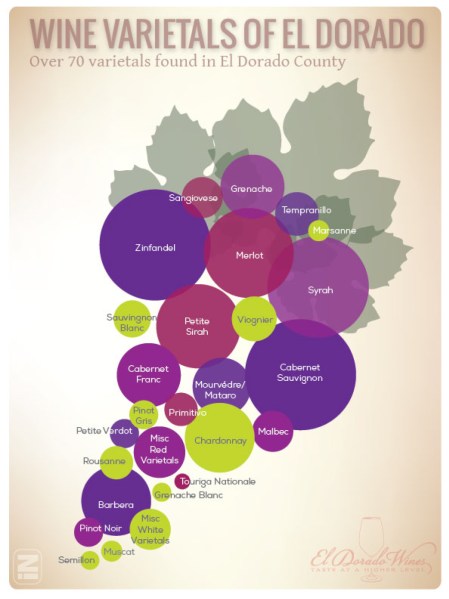
High elevation wines are what sets El Dorado Wine Country apart from other California regions. The growing region varies from 1,200 to more than 3,500 feet above sea level! That’s some serious altitude! Some 50 grape varieties thrive here, from Gewürztraminer to Cabernet Sauvignon, to Barbera, to Chardonnay, to Zinfandel, and many others. Rhône and Bordeaux varietals do especially well here. There are many soil types, including volcanic rock, decomposed granite, and fine shale, each providing its own influence to the terroir.
Image Credit: El Dorado Winery Association
From here, please enjoy the photo montage along with brief descriptions of each winery we visited. We quickly learned that El Dorado Winery Association knows how to host a party, as each winery had food pairings for almost all of their wines. We did not go hungry!
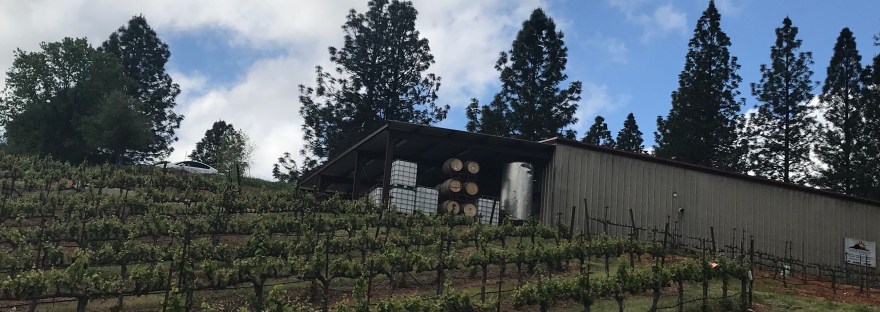
Our first stop was Fenton Herriot Vineyards. Perched atop a hillside with spectacular views, Fenton Herriot is located just outside Placerville, a quaint Gold Rush era town. The wines were as amazing as the views, and we enjoyed the catered food pairings as well. As part of the VIP experience we were invited to a three-vintage vertical tasting of their Sangiovese.
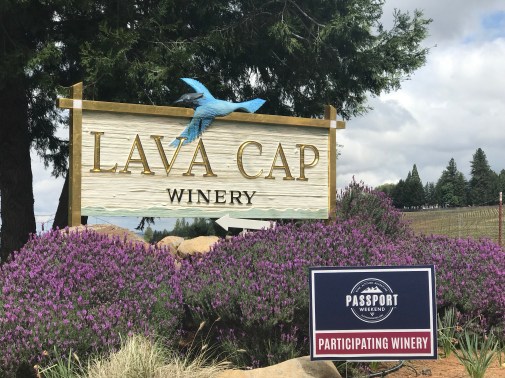
Next was Lava Cap Winery. This is the one I intimated above; we’ve been familiar with Lava Cap for years, because their production is such that they can be found in Sacramento area restaurants and even grocery stores. Don’t let this dissuade you, however, their wines are first-class! As part of our VIP experience, we tasted a flight of library wines, including a 12 year old, oak aged Viognier. Yes, you read that right – a 12 year old Viognier! It was spectacular!
Moving on, we stopped at Madroña. Established in 1973, Madroña is one of the oldest El Dorado County wineries. I even remember them being there when I visited Apple Hill as a child! Here was tasted a flight of Cabernet Sauvignon including a 1985. That’s the year my daughter was born! The wine has aged and mellowed as much as my daughter has. Amazing! They also have a red blend, El Tinto, composed of 25 different grape varieties. Delicious!
Next we stopped at Via Romano Vineyards. Via Romano specializes in Italian varietals, and they do them exceptionally well. Check out the Pinot Grigio paired with mango, peach, and apple bruschetta! Simply ethereal!
From there, we stopped at Bumgarner Winery. Any San Francisco Giants fans in the audience? Owner Brian Bumgarner did some genealogical research, and found at least a distant relation to starting pitcher and future Hall of Famer, Madison Bumgarner. Even if baseball is not your thing, stop on by their rustic tasting room for some rich, full-bodied red wines.
At the recommendation of one of the staff at Bumgarner, we next ventured just south of Highway 50 to Chateau Davell. There we were reunited with owner and winemaker, Eric Hayes, who we had met at the Wine Bloggers Conference a few months earlier. Eric is a skilled winemaker, and also an accomplished painter. Each label is adorned with a portrait of a family member, lovingly painted by Eric himself.
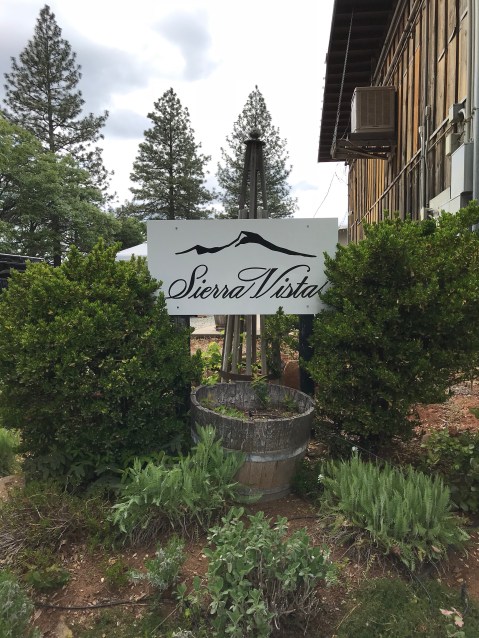
As you can imagine if you’re keeping score, by now we were getting palate fatigued. Nevertheless, we had some time to kill before we would be meeting friends in Placerville. So we forged on to one last winery, Sierra Vista Vineyards and Winery. Another early pioneer in El Dorado Wine Country, established in 1979, Sierra Vista was also on the forefront of the Rhône movement in the area. Their dedication to the craft is evident in each sip.
With a renewed fascination and enthusiasm for our backyard wine region, we are determined to return soon and continue our adventure of discovery. If you are planning a trip to Northern California, perhaps to the more famous wine regions like Napa, Sonoma, or Lodi, you owe it to yourself to plan a little detour to the east, and come discover the fantastic wines of El Dorado County.
Cheers!
By Kent Reynolds and Robyn Raphael
Unless otherwise credited, all photos by Kent Reynolds and Robyn Raphael
When you live in suburbia, surrounded by big-box chain eateries, you get rather excited when a quality, independent restaurant opens up. And you do all you can to support them, hoping to ensure their success and longevity. So it was a couple of weeks ago, when bored with all the same old, same old places for a Friday evening happy hour, that I checked Yelp (love it or hate it, it still serves a purpose) and spotted a “Hot and New” listing for RANGE Kitchen & Tap.
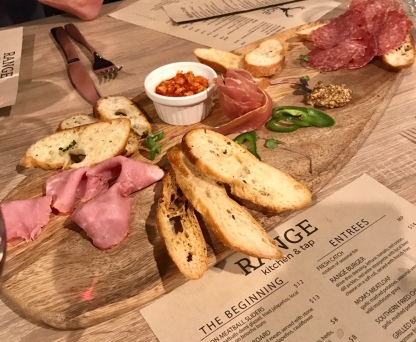
We headed there directly, excited about the prospect of a new place that might suit our needs. We were not disappointed. Our first time in, we really only wanted a glass of wine and some small plates. When we scanned the menu, and saw the plethora of delicious-sounding salads and entrees, we decided to go all in. We were sitting at the bar, which overlooks the prep-kitchen, so we could see everything coming out of the back, and we were amazed at what we saw. We also got to talk with the prep cooks, and Chef Kevin for a few minutes when he emerged from the main kitchen. We learned that RANGE Kitchen & Tap specializes in farm fresh, local ingredients, prepared on site, to create comfort food with a twist. Everything is made there, from fresh ground beef all the way down to the homemade salad dressings and even mayonnaise. That night we split a Ceasar salad (homemade dressing, yum!) and Mom’s Meatloaf. Sliced, then seared on the flat-top for a crispy crust, it was amazing!
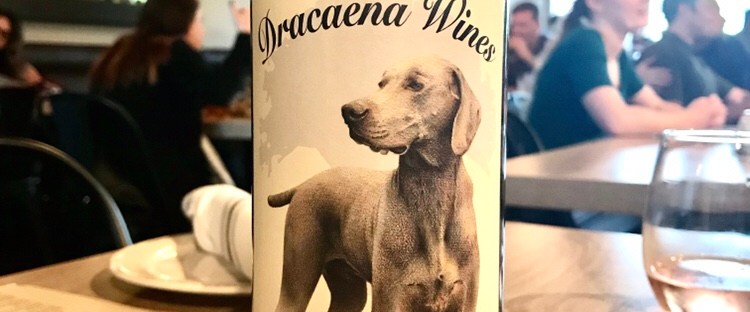
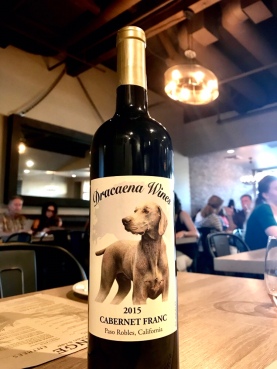
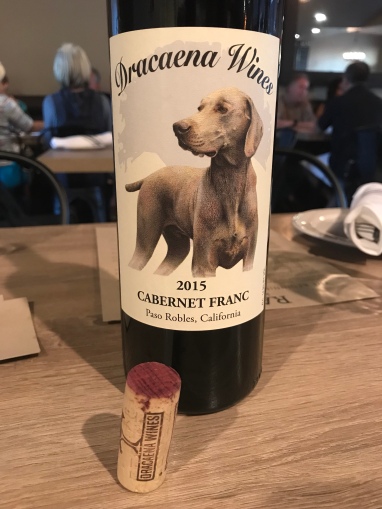
Determined to share the wealth, we invited friends Jason and Heather Thomson, to join us for the full meal deal. And although RANGE Kitchen & Tap has put together a very impressive wine list, we decided to bring our own, and open a bottle we’ve been holding onto for a while: Dracaena Wines Cabernet Franc 2015, made by friends and fellow wine bloggers, Mike and Lori Budd.
If you haven’t tried bringing your own wine to a restaurant, give it a go. Just make sure it’s not something that’s already on their wine list. Most places charge a nominal corkage fee (the charge for the server/somm/owner to pull the cork) although some restaurants don’t charge for corkage at all. I’ve often wondered, and have yet to get a straight answer, but with the increasing popularity of screwcap wines, when you bring your own wine closed by screwcap, do they charge you a “screwage fee”? Anyway, not only does BYOW save money, but it’s a great way to share a special bottle with friends.
But I digress…we met Jason and Heather and set about perusing the menu. We decided to start with the Charcuterie Board. The meat selection changes frequently, and each day the offerings are listed on a chalkboard near the kitchen. Tonight’s board was delicious, though I can’t remember all of the meats that our server described.
Onto the mains, where were delighted with the selections. The catch of the day, which Robyn ordered, was fresh halibut over asparagus and peas. Heather got the fried chicken over garlic mashed potatoes, Jason The Range pizza, featuring daily market fresh ingredients, and I ordered The Shorty flatbread, made with short rib meat that had been cooked sous vide for 36 hours. As you can see, the food looked amazing, and I can assure you it tasted even better! But how would this wide variety of foods stand up to our big, bold red wine?
This slideshow requires JavaScript.
The Dracaena Wines Cabernet Franc 2015 paired magnificently with each and every dish. A well-crafted and food friendly wine, Dracaena is definitely a crowd pleaser. Bold enough to stand up to short ribs or steak, yet restrained and elegant so it complements lighter dishes like grilled halibut just as well.
Mike and Lori Budd have a passion for Cabernet Franc. So much so, that they were the driving force behind the annual Cabernet Franc Day, celebrated on December 4th each year. As one would expect, when someone has a passion, their product is going to be sensational. Dracaena Wines Cabernet Franc 2015 definitely is that. Here’s my review:
A truly spectacular gem! Deep, inky purple color. Aromas of ripe blackberry, black cherry, and vanilla. On the palate, there are big, both flavors of blackberry pie, black currant, and chocolate covered cherries, mingled with soft oak and vanilla notes. With a rich, full mouthfeel, velvety smooth tannins, balanced acidity, and a long, juicy finish of black fruit and spice, this is an exquisite wine that pairs well with a wide range of foods, from grilled halibut to a thick steak.
You really should give Dracaena Wines Cabernet Franc 2015 a try. It’s available direct from the winery on their website. You won’t be disappointed.
Oh, I almost left out dessert. Silly me. We love crème brûlée. Do you know what’s better than crème brûlée? Espresso crème brûlée! Oh, yes! This stuff is rich, decadent, and delicious. We’d come back in just for dessert!
If you happen to be in the Sacramento area, I encourage you to make the trek out to the ‘burbs of Roseville and check out RANGE Kitchen & Tap. But before you do, make sure you order a bottle or three of Dracaena Wines Cabernet Franc, and bring it with you.
Cheers!
Content and photos by Kent Reynolds and Robyn Raphael
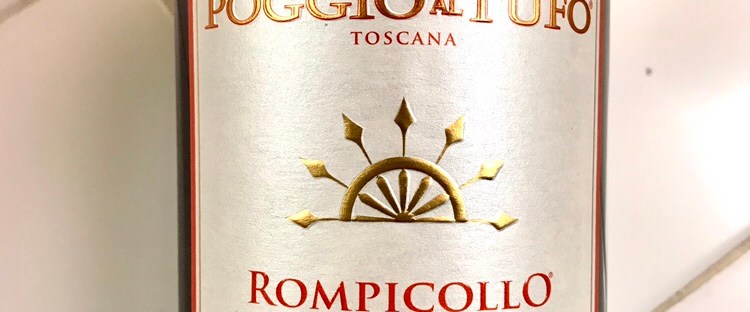
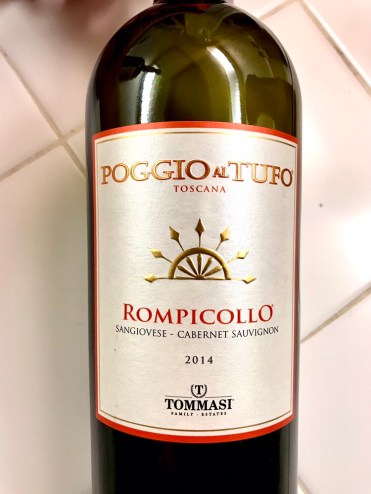
On a recent business trip, Robyn met a fellow conference attendee who gave her a recommendation for a new wine. Frank said this wine is one of he and his girlfriend’s favorites, and suggested Robyn and I give it a try. The wine is Tommasi Poggio al Tufo Rompicollo, from Toscana, Italy. Robyn texted me a picture of the bottle, and I went on the hunt. I didn’t have to look far. Our local Total Wine & More store just happens to carry this wine.
When Robyn arrived home from her trip, she had a little surprise waiting for her on the counter. We adore Italian wines, and some of our favorites are the Sangiovese-based wines out of Tuscany. So naturally, I had stopped at Total Wine on my way home from work the day after her text, and bought a bottle to try.
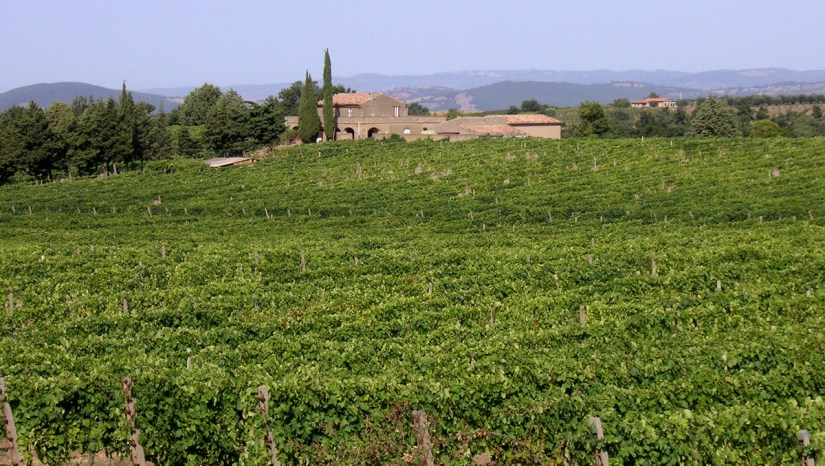
Tommasi Family Estates has been producing wine grapes since 1902. The family got their start in Valpolicella Classica, Verona, and has since expanded to other regions in Italy. They launched the Poggio al Tufo line of wines in 1997 with the acquisition of the Pitigliano Estate, 66 hectares of vineyards planted in volcanic soil, in the rolling Tuscan hills. The addition of two more vineyards, the 24 hectare Doganella Estate and the Scansano Estate, 80 hectares in the DOC Morellino zone, expanded the operation. The Doganella Estate is an organic production, producing high quality grapes due to the hot, dry Tuscan summers and cooling breezes from the Tyrrhenian Sea.
The Tommasi Poggio al Tufo Rompicollo is a blend of 60% Sangiovese and 40% Cabernet Sauvignon. Several vintages of this wine have won numerous awards and accolades, including 93 points from Vinous Media (2012), No. 31 in the Wine Spectator Top 100, with a 92 point score (2011), and 87 points from both Wine Spectator and Wine Enthusiast (2010).
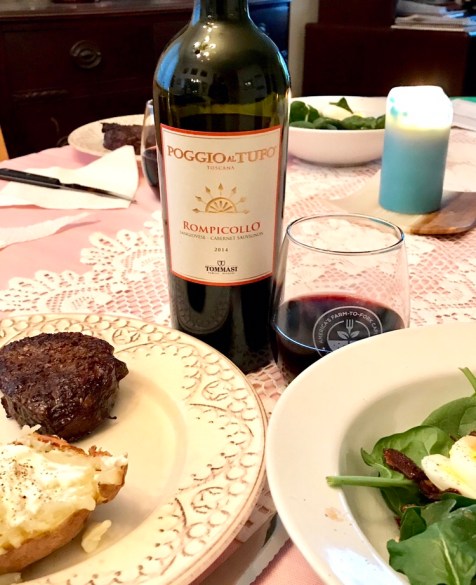
The current release, at least what is available in our local store, is the 2014. We opened it to enjoy with our meal of grilled filet mignon steaks, baked potato, and spinach salad with warm bacon dressing. Exquisite is the best word to describe it! Here’s my review posted on Vivino:
Delicious Toscana blend. Dark purple and ruby colors. Aromas of bing cherry and soft cedar. On the palate, juicy cherry and blackberry flavors meld with notes of cola, vanilla, and oak. Soft, silky tannins and medium acidity balance the wine and make for great dipping or food pairing. Long, black fruit and spice finish. We had this with grilled filet steaks and it was outstanding!
I highly recommend this outstanding Toscana wine. And at $15.99 retail, it’s a bottle you can enjoy often!
Cheers!
By Kent Reynolds, with inspiration by Robyn Raphael
Photos by Kent Reynolds (unless otherwise credited)
Robyn made a great find yesterday at the market! We were picking up some provisions at one of our favorite shops, where in addition to great prices on groceries, they have a wide selection of quality wines at blow-out prices. We refer to this establishment as “Winevana.” You may know it as Grocery Outlet.
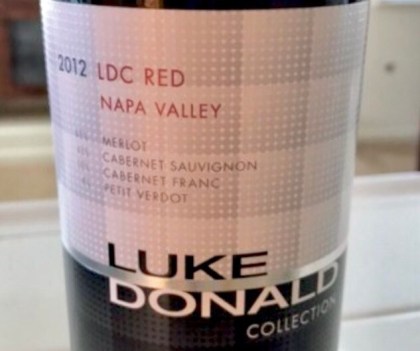
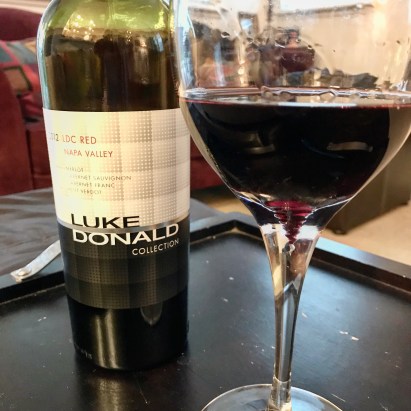
At any rate, we wandered into the well-stocked wine department. Alas, our Wine Genie, Jerry, was not working, so we wandered the aisles reading Jerry’s shelf-talkers instead. Suddenly, Robyn stopped, and blurted out “Bordeaux Blend!” She had stumbled upon (not into, thankfully) a display of Luke Donald Collection LDC Red wine. I’d never heard of this label, but when I read Jerry’s description, I agreed with Robyn. We had to take one home with us. Robyn also made a brilliant suggestion: “Let’s open this tonight with our burgers. So we did.
I’ve never been one to chase celebrity or athlete wines, and frankly, I didn’t know this was such a wine until I read the back label. Luke Donald is a British professional golfer, who partnered with Bill Terlato of Teralto Wines to create wines of excellence, that reflect Luke’s personality and style.
Here’s my Vivino review, describing what I thought of the wine:
This is a remarkable Bordeaux-style blend. Definitely New World, with a big, bold profile. Deep, inky purple color in the glass. Aromas explode from the glass on the nose, including blackberry, dark black cherry, ripe raspberry, and mocha. On the palate, flavors of Marionberry pie, ripe blackberry, black cherry, baking spice, vanilla, and toasty oak. A little hot at first but tamed with food. Tannins are firm and chewy, and acidity is medium and balanced. We had it with grilled cheeseburgers with tarragon-Russian dressing. Exquisite! The finish goes on for days, with dark berry and white pepper. 43% Merlot, 43% Cabernet Sauvignon, 10% Cabernet Franc, 4% Petit Verdot.
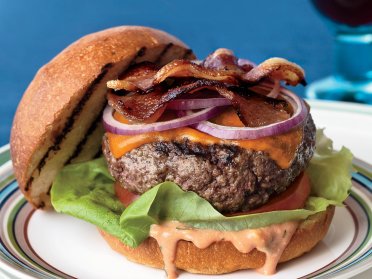
Oh, those cheeseburgers? They were no ordinary cheeseburgers. They were Cheddar BLT Burgers with Tarragon-Russian dressing. If you want to try them, you can find the recipe at Food & Wine. (Click the link!) OK, OK, the picture here is from the Food & Wine website. We’re eating low-carb, so we had these sans-bun in lettuce wraps. They really weren’t photo-worthy, but they still tasted amazing! If you close your eyes, you can almost taste the toasted brioche bun.
If you can find this wine, I encourage you to try it. Check your local Grocery Outlet, and maybe you’ll get lucky. This wine averages about $35 on the Internet. We got our bottle at Grocery Outlet for just $9.99!
Cheers!
By Kent Reynolds, with credit and inspiration to Robyn Raphael.
The office Holiday Party gift exchange. You know the drill. Everyone who wants to participate brings a wrapped gift to the conference room. Each person draws a number, and the festivities begin. In numerical sequence, gifts are selected. Gifts can be stolen, but a limited number of times before they are “dead,” and the final possessor is the owner.
Recently, the trend has been “white elephant” gift exchanges. No, you can’t go out and buy something. You have to bring something you already own, but is no longer useful to you. So it was at my office Holiday Party this year. With the all-important rule established: two steals and the third person in possession is the owner, we were ready to get the party started.
I never do well at these events, usually coming home with a gawdy picture frame or some “As Seen on TV” gadget that never works as advertised. Compounding the anxiety was the fact that I was the new guy in the office, having just started this job three weeks earlier. Still, these gift exchanges are always fun, and a great way to get to know my new coworkers, and superiors, in a more relaxed setting.
Numbers were drawn. The tension mounted as Number 1 scanned the table for some hidden gem. They say one person’s junk is another’s treasure. Would he score? Would his new prize possession be snatched from his fingers by Number 2, or some other “come-lately?” Selection made, Number 1 tore into the bag. A tacky vase. Delightful. Cue hilarity and excitement!
As so it went. Bags and boxes opened. Gifts stolen, then stolen again and deemed dead; the proud, final owner beaming with joy. Finally it came to me. I had drawn Number 13. Would 13 be lucky for me this time? Alas, this was a “white elephant” exchange. What were the chances that someone would deem wine “no longer useful?” With a sigh in my heart, but eager anticipation on my face, I reached in for the slender, rectangular box. Sure, it was the right size, but what are the odds? Besides, this was an office party and I didn’t yet know if this company had the dreaded “no alcohol on the premises” policy.
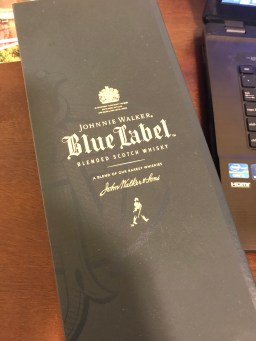
Tearing into the wrapping paper, I was stunned! What’s this I see? Johnnie Walker Blue Label? Really?? Had I just scored a nice bottle of Scotch? Naw, who would “white elephant” Scotch? Well, there are always a few who don’t get the memo and actually bring nice, new gifts. Fingers crossed, I lifted the lid.
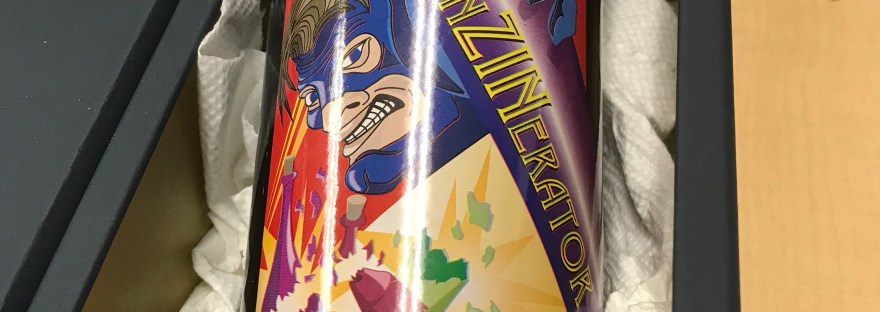
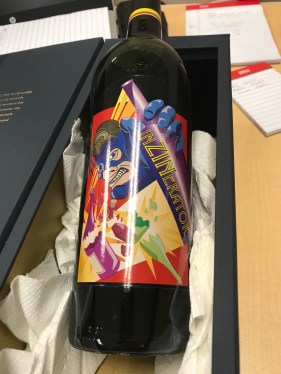
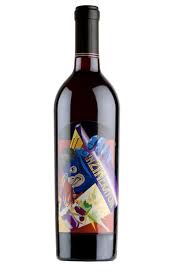
No Scotch, but…wine!! Score!! As to the donor? Who knows, maybe someone who gave up the drink. Or didn’t know what they had. Kind of like an Antiques Roadshow for wine. Regardless, I was now the proud owner of a bottle of 2003 InZINerator Zinfandel.
For now.
With nearly 30 people participating, the chances of a steal were real and serious. Lots of my new coworkers were eyeballing my prize. They clearly didn’t know that they were staring down Kent-the-wine-blogger. We don’t call this “Appetite for Wine” for nothing!
Remember Number 1, the guy with the tacky vase? Well, Number 14 apparently has a thing for tacky vases, and right after my turn, stole it from Number 1. So immediately after the thrill of my victory, I suffered the agony of defeat as Number 1 deftly lifted my beloved InZINerator from my clutches. Curses! Foiled again.
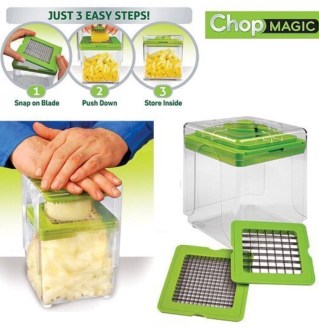
Now faced with stealing or drawing, I selected another wrapped box. Nothing left remotely resembling the shape of a wine bottle, so I went for an unassuming square box. Ah, there it is…the “As Seen on TV” Chop Magic!
Now I love to cook, but I prefer slicing and dicing with my kitchen knives. I actually find it relaxing and cathartic. So this is how it’s going to be. Stuck with yet another gadget that I’ll never use. Seriously, who would steal this from me?
Around the room it went. With each new number, the dissatisfied masses held their gifts high, hoping to entice a steal. Nobody even took a second look at my Chop Magic. Until…wait…what? Number 23 took a liking and stole my chopper!
It was a Christmas miracle! The fates smiled on me that glorious day! Yes, the HR rep moderating the event confirmed that it is permissible to steal back a gift. Number 1, my wine if you please. And so it was over. I was the third and final owner of this cherished bottle.
Part of the Super Hero Wines line, InZINerator is produced by Scott Harvey Wines. Zinfandel is not known for age-worthiness, so honestly I was a little apprehensive about a 14 year old bottle. Fear not!
Ruby color with brick rim. Aromas of raspberry and plum with smoky notes. Flavors of ripe blackberry, stewed plum, raspberry, and baking spice, with notes of milk chocolate, white pepper, and vanilla. Tannins, as expected, are velvety soft and smooth, and the acidity is surprisingly bright. The finish lingers with blackberry, plum, and spice. Excellent!!
May the Spirit of Christmas shine bright on each of you.
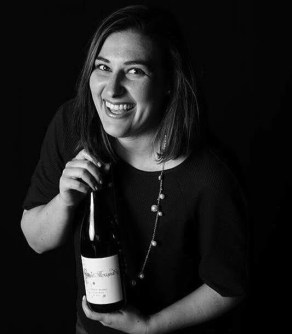
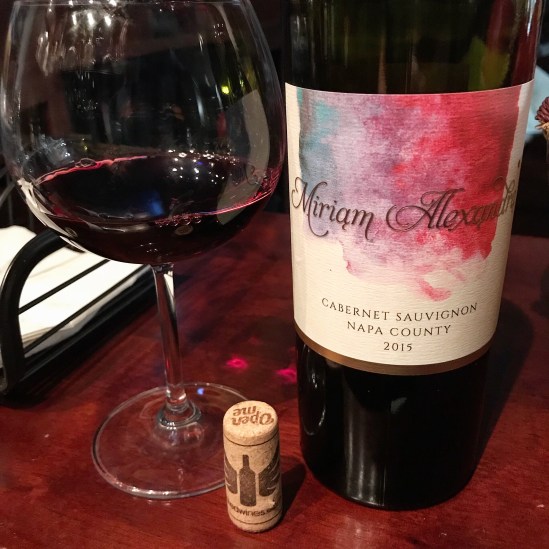
By now you probably know that I am a long-time customer of NakedWines.com. One of the things I like about the NakedWines.com business model is that the company encourages employees, who have an interest in winemaking, to pursue their dream. A number of wines available through NakedWines.com are made by winemakers who also hold staff positions within the company. One such winemaker is Alexandra (Alex) Farber, who produces her wines under the Miriam Alexandra label. Alex’s first wine was a 2014 California Chenin Blanc. Prior to tasting that wine, my only knowledge of Chenin Blanc was my memory of the jugs of cheap wine my folks would drink when I was little. My first taste of Alex’s Chenin opened my eyes to the wonder of today’s Chenin Blanc, and sparked an appreciation for this amazingly delicious wine! I’ve enjoyed three successive vintages of Alex’s Chenin Blanc, each one better than the last. This year, Alex released her first red wine, a 2015 Napa County Cabernet Sauvignon. When I saw it, I knew I had to try it.
I have had the pleasure of meeting and visiting with Alex on several occasions. Recently I had the opportunity to ask her about her story, and her journey into winemaking. My first question was about the label name, Miriam Alexandra. The “Alexandra” is pretty obvious, but where does the “Miriam” name come from? Her response is interesting, and sheds some insight into her entry into the wine business.
Miriam Farber was my great-grandmother. She was an Art institute of Chicago graduate, and an incredible artist. She did lots of watercolor, and that is where the inspiration of my label comes from. Alexandra, was my mom’s first choice of first names for me, but didn’t like the way Alexandra Miriam sounded, and liked the idea that on a resume my name could be written as M. Alex Farber (gender neutral!), so I could go under the radar and be a successful female in business. Times have changed a little bit since then, so showcasing my full name was very important to me. Hence, Miriam Alexandra on my label.
How long have you been in the wine business, and how did you get your start?
I went to Davis for college and entered straight from high school into the V & E program. I worked my way through every quarter getting further away from all the pre-med pre-rec. classes and closer and closer to the wine classes. They were so interesting, challenging, and fun. So, I just kept going. Eventually graduating and getting an internship in Napa.
Do you have a family history in wine?
There is no family history in wine, other than lots of drinkers! I come from a family full of insurance brokers, bankers, lawyers, and accountants.
When did you bottle your first wine, and what varietal or style was it?
My first wine was bottled with NakedWines.com, my Chenin Blanc! I learned to make Chenin Blanc during my three year stint with Pine Ridge Vineyards as their Enologist. I spent those years in the Clarksburg Chenin Blanc vineyards and it is the wine I really wanted to make on my own with my own twist.
Have you worked at any wineries other than NakedWines.com?
Yes, I started as a harvest intern the summer/fall after I graduated from Davis at Trefethen Family Vineyards, I then went down to Chile and worked for Veramonte Wines, came back and was harvest enologist for Trefethen (for a year!), then did a very short time over the summer with Round Pond Estate, and finally took a full time job as Enologist for Pine Ridge Vineyards. Ultimately, I wanted to do something more than just be in the lab, I wanted to be in the vineyards, work with winemakers to learn more, and contribute more to the wine industry, that is when I found NakedWines.com, and I have been working here since then. Both as a winemaker and now as our Head of Planning.
What is your favorite grape varietal? Why?
This is such a tough question for me to answer. If you are asking me what I like to make the most, it’s probably Cabernet Sauvignon. It is so expressive of place, it tells its own story through the winemaking process, and I love the age-ability. If you’re asking me what I like to drink the most? It’s Grenache, Syrah, Rhone Varietals, Pinot Noir, Champagne – a variety of its own :).
When Alex isn’t busy making wine and fulfilling her staff duties at NakedWines.com, she is committed to giving back to the community. Two projects she is passionate about are Service Dogs, and empowering young girls to become strong, independent women. To further the first passion, Alex is raising Maui, an energetic and adorable Black Lab puppy. She told me how she got involved in this project:
Isn’t he cute?
I have been involved with puppy-raising for Guide Dogs for the Blind out of San Rafael for quite a few years now. I took a break after having shoulder surgery, and recently wanted to get back into it. An opportunity came up with a fellow guide dog raiser, who is now training diabetic alert dogs, to take Maui for a few months as a puppy. He is now about 8 months old, and is well on his way to becoming a canine diabetic alert dog for a type 1 diabetic child.
In Alex’s other project, she serves on the board of directors of the Napa and Solano County chapter of Girls on the Run. Alex said that she wanted to get involved in the non-profit world so she could give back to the community in a way that would provide life-changing impact on young peoples’ lives. She found Girls on the Run, an after school program for girls in grades 3 through 8, that teaches life skills and promotes individual identity. Through exercise, discussion, and teaching, the 10-week program empowers the girls, develops an appreciation for health and fitness, and provides important skill they will carry throughout their lives. Alex started as a volunteer Life Coach, meeting with girls twice per week. Once she started her job with NakedWines.com, she had fewer hours available to volunteer, so she became a board member. She’s been on the board for about three years now, and says the organization will impact more than 1,000 girls in 2017.
Finally, I asked Alex if she wanted to add anything else about her exciting journey into winemaking. Here’s what she had to say:
Because of NakedWines.com, I had the opportunity to become a winemaker much sooner than I had ever dreamed of, and it has been so incredible. I had four vintages of wine as a winemaker under 30! Without the support of Angels, and their trust in me as a winemaker, I wouldn’t have ever been able to make the wine I get to make today. It’s been such an honor and I can’t wait to continue making wine.
So now that you know a bit more about Alex, the winemaker, let’s explore Miriam Alexandra Cabernet Sauvignon Napa County 2015, the wine.
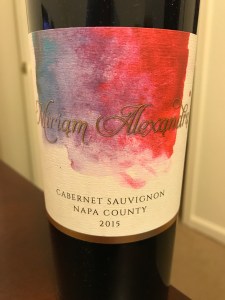
The wine is a deep purple color with a brick colored rim. The nose is a delight of blackberry, cassis, and oak aromas. On the palate, I was greeted with flavors of fresh blackberry, cherry, cassis, oak, and vanilla, with some red currant and chocolate notes. As expected for such a big, yet young wine, the tannins are firm and edgy, providing a mouth-drying punch but offering a deep, pondering complexity. The tannins will soften with age, but if you can’t wait, I recommend at least an hour decant before tasting. With medium acidity and mouthfeel, the finish lingers long with black fruit, spice, and vanilla. With aging potential of 5-10 years, or longer, this is a spectacular value for a Napa Cab.
I brought this to a house party a few weekends ago, and we opened and tasted it sans food. Everybody enjoyed the wine, and commented on the solid fruit structure and compexity. Once we drained this bottle, the hosts opened a different Napa Cabernet, a 2012 from a small boutique winery in Napa. They boasted that their bottle set them back $80 (4x the Angel price for Alex’s offering.) While the 2012 was nice and had good fruit flavor, it lacked the oomph, complexity, and structure of the Miriam Alexandra. I can imagine that in a blind tasting, Miriam Alexandra would beat out the older boutique wine.
Though I didn’t get to taste this bottle with food, this is a wine that would pair exceptionally well with a marbled rib-eye or prime rib. The fat would help tame the tannins and the wine would enhance the deliciousness of the meat. Fortunately, I have a few more bottles, so I can experience the magic of the meal I just recommended.
If you would like to try one of Alex’s wines, click on this link, or the logo below, to receive a voucher worth $100 of a first-time order of $160 or more.
Though Zinfandel is not the most popular varietal wine, it is certainly one of my favorites! I may have waded into my wine journey pool with Pinot Noir, but when I first tasted a quality, red Zinfandel wine, it was like diving head first from the high dive!
Today is the third Wednesday in November, which means it’s National Zinfandel Day! In celebration, I encourage all of you to drink some Zinfandel today. You’ll be glad you did! Done right, Zinfandel is a balance of bold, fruity, and spicy. It is a great wine to pair with food, especially casual fare, making it the perfect bottle to crack open on a Wednesday evening. Pizza, burgers, barbecue, steak, and even rich chicken dishes all pair with Zinfandel.
Photo Credit: VinePair
The Zinfandel Events website, powered by ZAP (Zinfandel Advocates and Producers), has this to say:
“Bold and celebratory, independent and unpretentious, versatile and individual, Zinfandel has charted a course all its own, and National Zinfandel Day offers many ways for our members to chart their own course to help celebrate and draw positive attention for America’s Heritage grape.”
“Zinfandel Day is a worldwide celebration of the Zinfandel grape variety, intended to give Zinfandel lovers around the globe a platform to express their passion for grape and the wines made from it.”
Throughout California, Zinfandel grows well in a number of regions. It was introduced in the Sierra Foothills during the California Gold Rush by resourceful entrepreneurs who realized the hoards of miners were getting mighty thirsty in their backbreaking quest for riches. They were right. Zinfandel gained a strong foothold, and is now knows as “America’s Heritage grape.“
One of the most famous Zinfandel regions in California is Lodi. In fact, Lodi has declared itself the Zinfandel Capital of the World. Roughly 40% of the Zinfandel grapes grown in California come from the Lodi AVA. That’s about 110,000 acres under vine, tended by 750 grape growers!
Over the years, Zinfandel’s reputation has ebbed and flowed. We all know about the White Zin craze that started in the 1970s. In fact, I’d bet that White Zin was the first wine many of you tried. I know I drank my fair share of it before my first Pinot Noir encounter! As more wine drinkers started embracing red Zinfandel, and production increased in the Central Valley, many Zinfandels produced were in the jammy, high-alcohol, fruit-bomb style. You know the ones; open with corkscrew, consume with tablespoon! Jammy! While the masses loved this style, more discerning wine lovers abandoned Zinfandel. (Is my snobby showing?)
It is true that during this time, more subtle and restrained versions of Zinfandel were available in other California regions, and even some from the Central Valley, they were somewhat difficult to find, and often outside the price range of the average consumer. In recent years, however, a group of Lodi producers have started to revisit the more nuanced, minimalist approach to Zinfandel. The Lodi Native Project started as a collaborative project by six Lodi wine growers who are committed showcasing the merits of the heritage plantings. Their goal is to highlight the terroir of the vineyards themselves, and to produce small, artisan wines that reflect the character of the grape.
Just in time National Zinfandel Day, I received two samples of Lodi Zinfandel for review. Both were subtle, restrained, and delicious. I can heartily recommend either, or both.
Fields Family Wines 2013 Old Vine Zinfandel – Family Vineyard
Mokelumne River AVA
Retail: $28.00
Brick color with pale ruby rim. Earthy nose with restrained raspberry and cherry aromas. On the palate, bright, juicy flavors of raspberry, bing cherry, and plum, with spice, black pepper, and a hint of licorice. Medium body and tannins with a bite of zesty acidity. The finish lingers with red fruit and spice. We paired this with Margarita pizza and it was delightful. A very nice example of what Lodi can do with a lighter, more restrained version of Zinfandel.
Tizona by Bokisch 2014 Old Vine Zinfandel – Kirschenmann Vineyard
Mokelumne River AVA
Retail $32.00
Deep ruby color with brick rim. On the nose, soft aromas of blackberry bramble, black cherry, and a hint of anise. This is going to be something special! On the palate, the magic continues with a soft, round mouthfeel and flavors of blackberry jam, black cherry, white pepper, and baking spice. The tannins are silky smooth, and there is light acidity. The finish goes on for days, with raspberry and spice notes. This one went down way too easily with a combo pizza. Noticing a trend? We really don’t eat that much pizza! But…Zinfandel! This easily falls into the category of best Zinfandels I’ve ever had! Spectacular!
Head on over to the Zinfandel Events page for five suggestions on ways you can participate in the celebration today. On the top of the list, of course, is “Share a Bottle with Your Friends!” I can’t think of any better advice!
Please share in the comments what bottle (or bottles) you opened for National Zinfandel Day!
Cheers!
(Both of the wines in this article were submitted for review. I received no other compensation, and all reviews, opinions, and observations are my own.)













 Now I love to cook, but I prefer slicing and dicing with my kitchen knives. I actually find it relaxing and cathartic. So this is how it’s going to be. Stuck with yet another gadget that I’ll never use. Seriously, who would steal this from me?
 Ruby color with brick rim. Aromas of raspberry and plum with smoky notes. Flavors of ripe blackberry, stewed plum, raspberry, and baking spice, with notes of milk chocolate, white pepper, and vanilla. Tannins, as expected, are velvety soft and smooth, and the acidity is surprisingly bright. The finish lingers with blackberry, plum, and spice. Excellent!!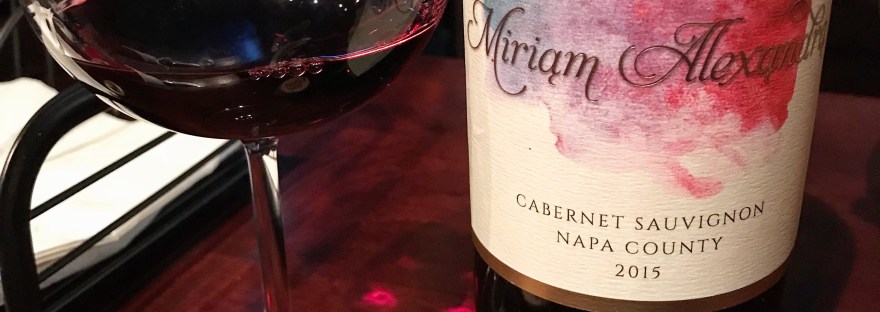




 Appetite for Wine