Amador County, Casino Mine Ranch, Grenache, Mourvedre, Pot Roast, Wine

Our Wine of the Week: Casino Mine Ranch Simone 2018

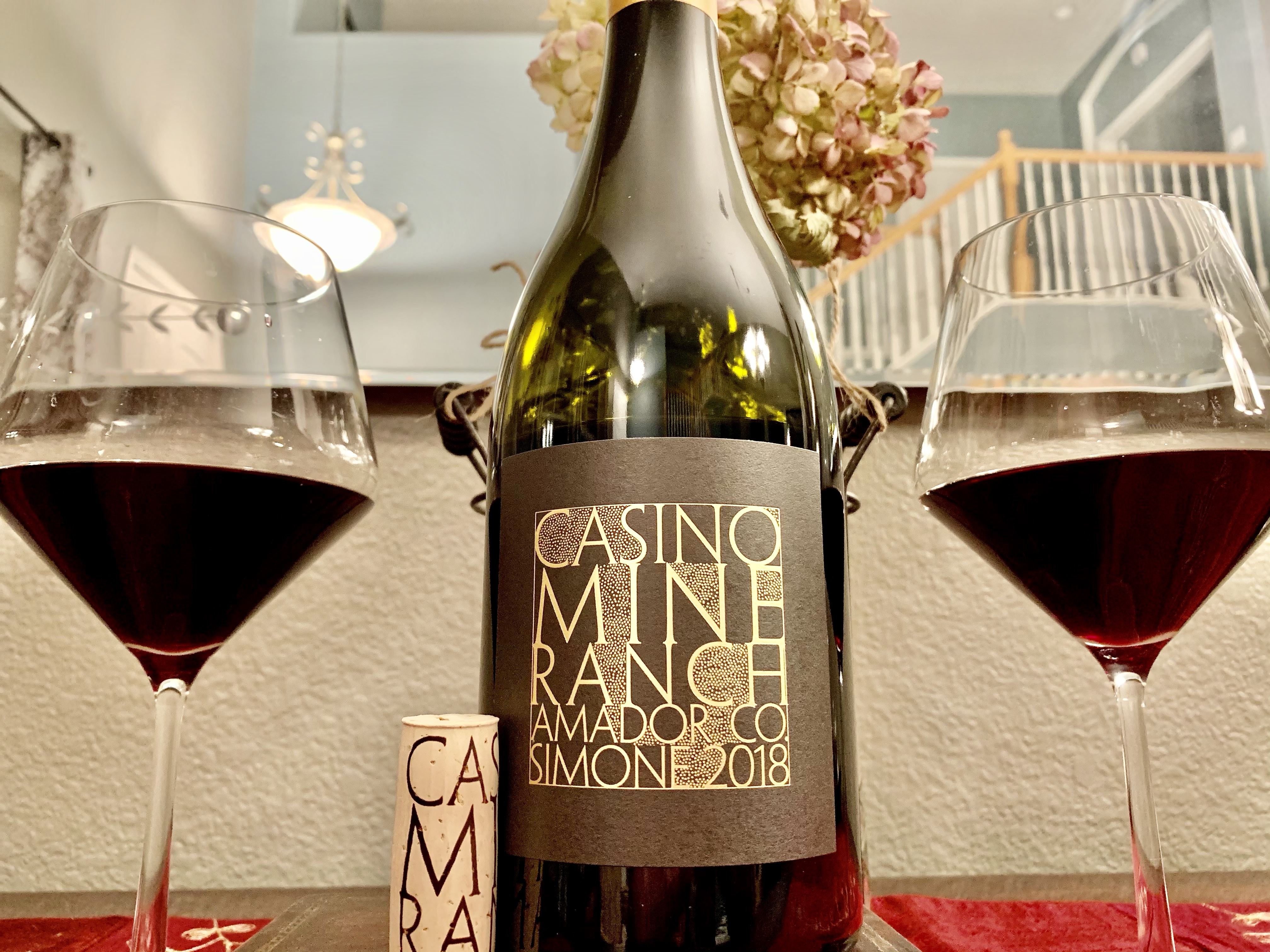
This week, our Wine of the Week was an easy choice. Not that any of the other wines were bad, but the Casino Mine Ranch Simone 2018 was hands down the best of the week. We have been fans of Casino Mine Ranch and their entire portfolio of wines since our first visit a little over a year ago. We were so impressed, we even wrote about it

The Simone wine is a tribute to Simone Vanophem Shaw, who founded the ranch in 1936. Simone is Great Aunt to Rich and Jim Merryman, the current owners of the ranch. Simone’s is a fascinating life story, filled with adventure and elegance; from living with her father at his Alaskan fold mine, to jet-setting to New York, Los Angeles, Paris, and other glamorous destinations, to later buying and managing this beautiful, rugged ranch property in Amador County. The Simone wine embodies the lady. As the Casino Mine Ranch website describes it:

“Like its namesake, it’s elegant yet tough, and brims with joie de vivre. It’s a wine for feasting, both opulent and earthy, best enjoyed while wearing dungarees and boots. Or, alternately, diamonds, furs, and pearls.”

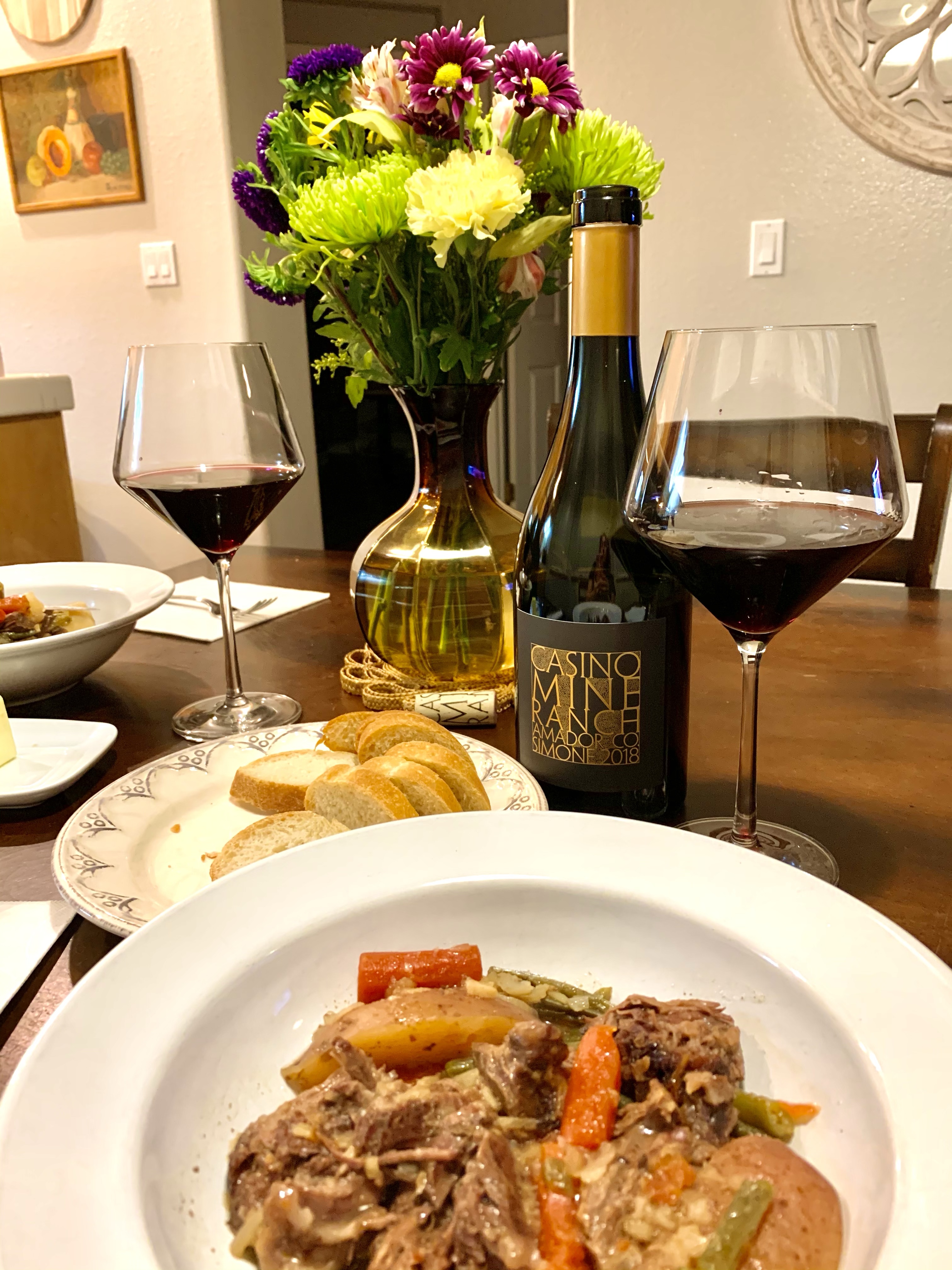
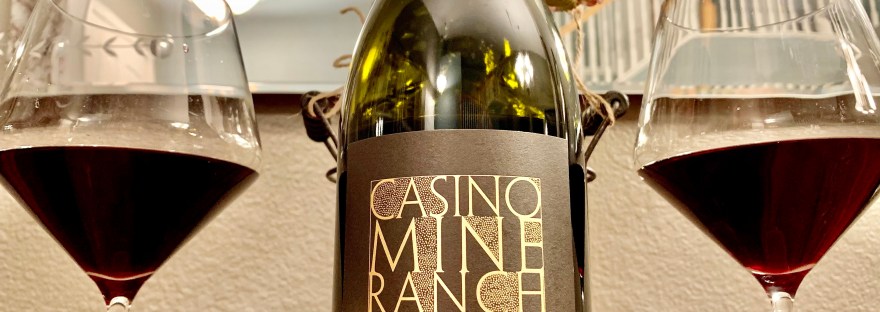
The Casino Mine Ranch Simone 2018 is a blend of 57% Mourvèdre and 43% Grenache Noir. As with all of their wines, Simone is made with 100% estate grown fruit. It is a rich, lush, powerhouse of a wine, perfect for cold winter nights and pot roast. 

Ruby color. Aromas of raspberry, cherry, and smoke. On the palate, flavors of blackberry bramble, raspberry, cherry, cola, tobacco, white pepper, and smoke. Medium body, lively acidity, and smooth tannins. Magical paired with pot roast.

We wish we could have met Simone, we know we would have loved her. But at least we can enjoy the wine made and named in her honor. 

What was your wine of the week?

Cheers!

  • By Kent Reynolds and Robyn Raphael-Reynolds
  • Photo Credit: Robyn Raphael-Reynolds

Lodi, Lodi Wine, Wine, Wine Blog, Wine Country, Wine of the Week, Wine Review, Wine Tasting, Wine Tourism

Our Wine of the Week: m2 Old Vine Zinfandel 2017

We like to explore the world through wine, eagerly trying wines from various countries, at various price points. Some wines we wouldn’t drink again, others go on the rotation list, and some are really impressive. Here is our favorite wine of this past week. 

With the post-holiday COVID-19 curve finally tapering off and the regional stay-at-home orders lifted, we ventured out for the first time in months. On a beautiful, warm January afternoon, we took the short walk from home to our favorite local wine bar, Platinum Wine Lounge, for some al fresco wine and nibbles. 

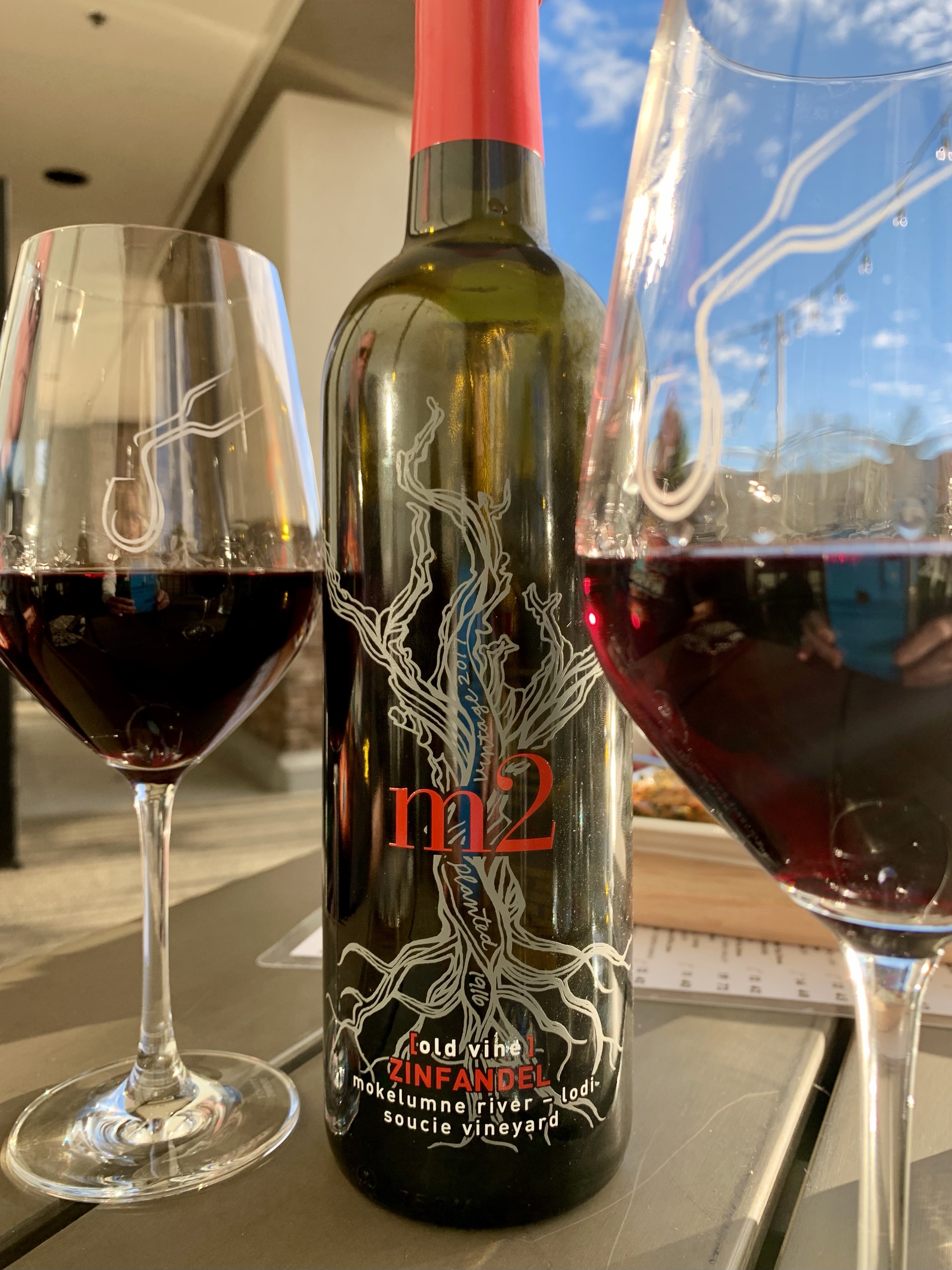
As we sat on the patio, basking in the late afternoon sunshine, we perused the wine list. Platinum features many local wines, from the Sierra Foothills and Lodi. We decided on the m2 Old Vine Zinfandel 2017, and we were not disappointed.

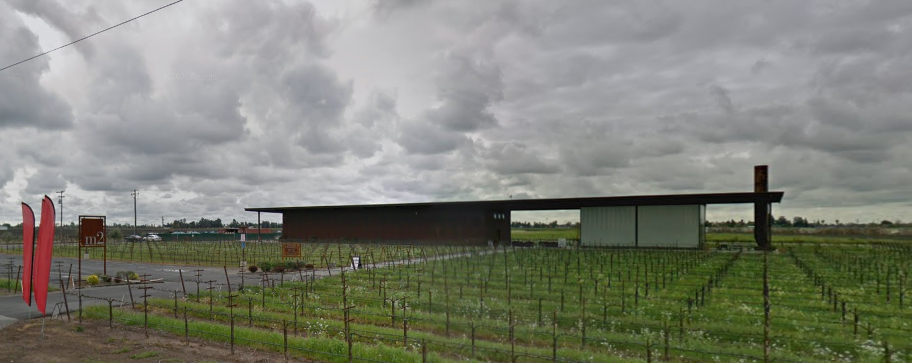
Recognize this building? Image credit: Google Maps

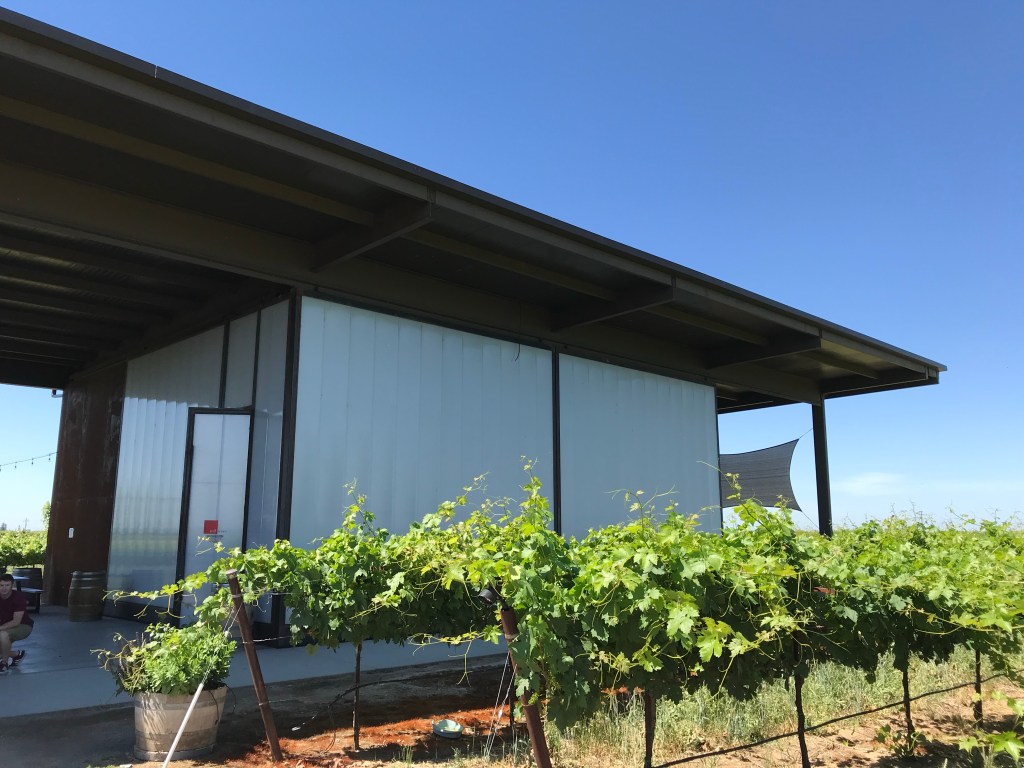
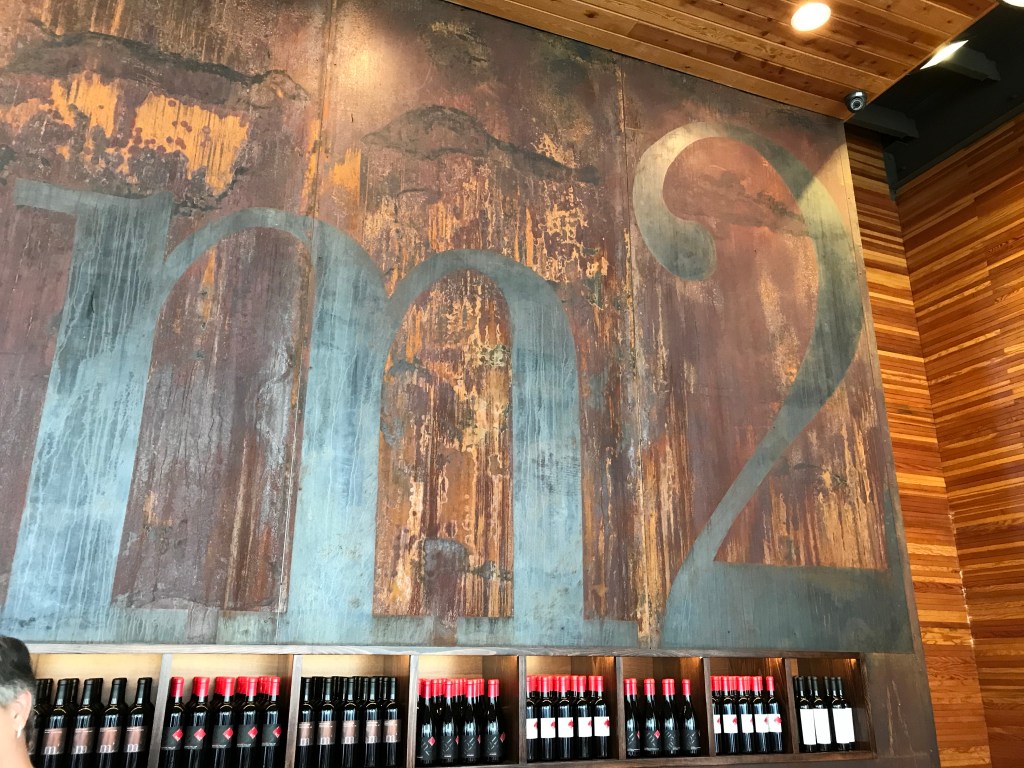
If you’ve ever been wine tasting in Lodi and driven down Peltier Road between I-5 and Highway 99, you’ve seen m2 Wine’s distinctive steel winery and tasting room. We have always enjoyed m2’s wines, and their Old Vines Zinfandel is among our favorites in their portfolio. The Old Vines Zinfandel 2017 is a single-vineyard wine, from the Soucie Vineyard in the Mokelumne River AVA. The vines were planted in 1916. While there’s no legal definition for “Old Vines”, I’d say 101 years meets the generally accepted definition.

Photo credit: Robyn Raphael-Reynolds

m2 Wines Old Vine Zinfandel 2017, Soucie Vineyard, Mokelumne River AVA

Clear dark ruby color. On the nose, aromas of bing cherry, cranberry, blackberry, and smoke. These notes continue on the palate, with flavors of cherry, plum, blackberry, and cranberry, with white pepper and vanilla. Medium-plus body, with soft, supple tannins and medium acidity. Very nicely balanced, with a long finish of red fruit and baking spice. 

What was your wine of the week?

Cheers!

  • By Kent Reynolds and Robyn Raphael-Reynolds  
Cabernet Sauvignon, Napa, Napa Valley, Samples, Sauvignon Blanc, Wine

Two Beauties from Black Stallion

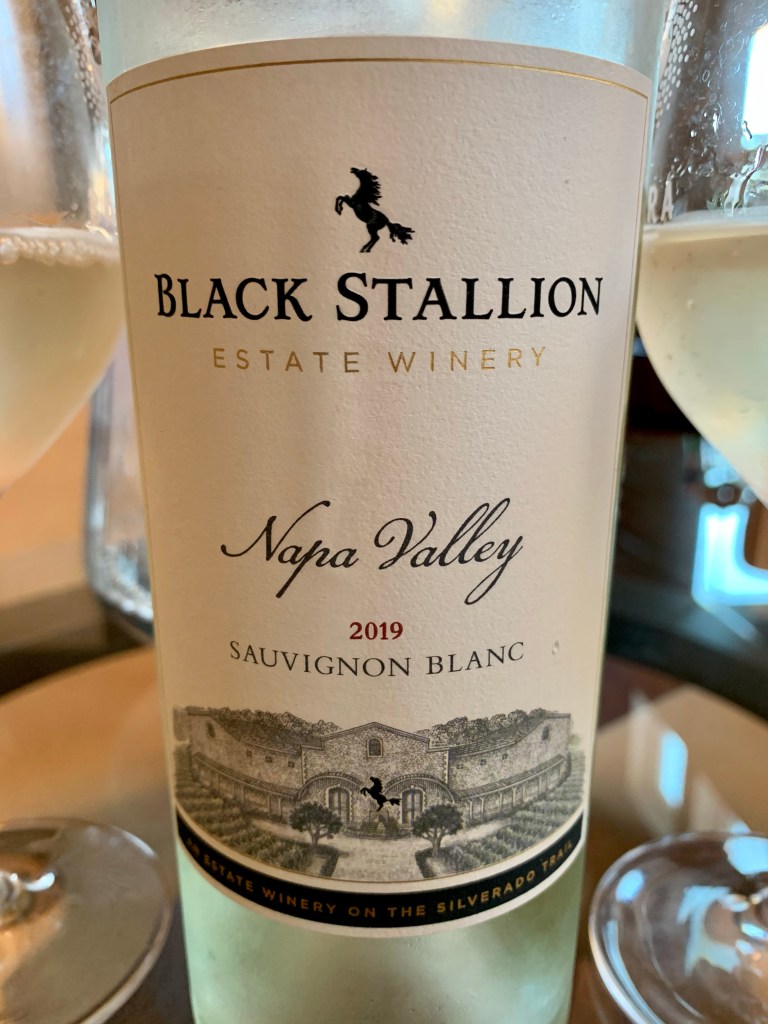
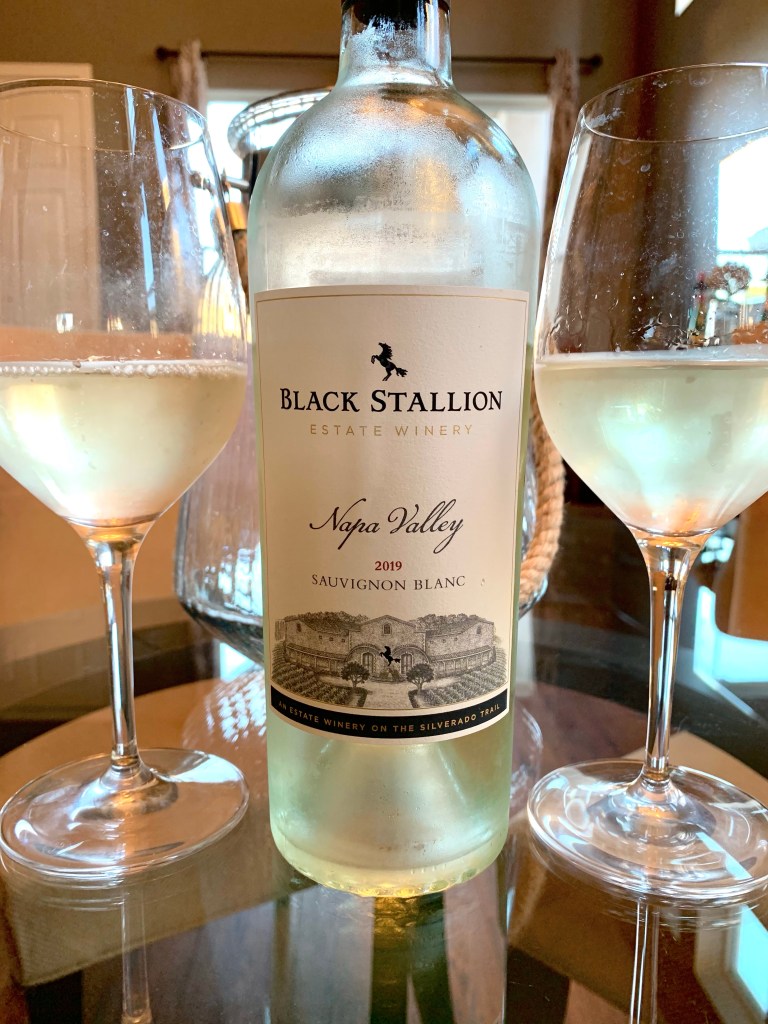
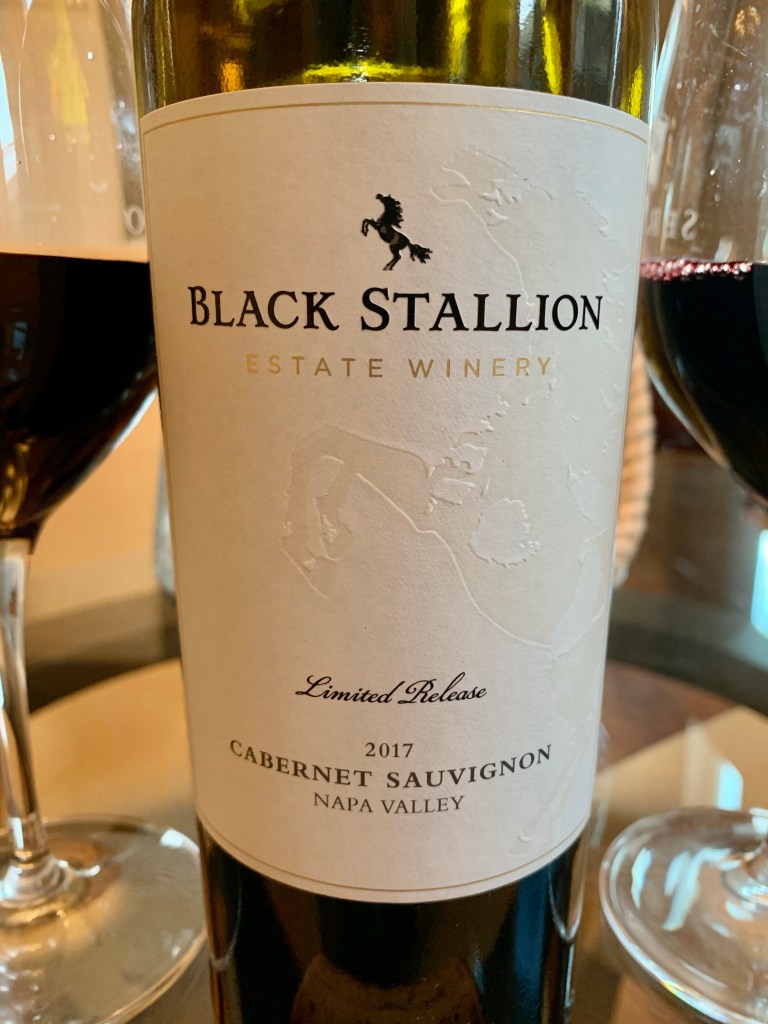
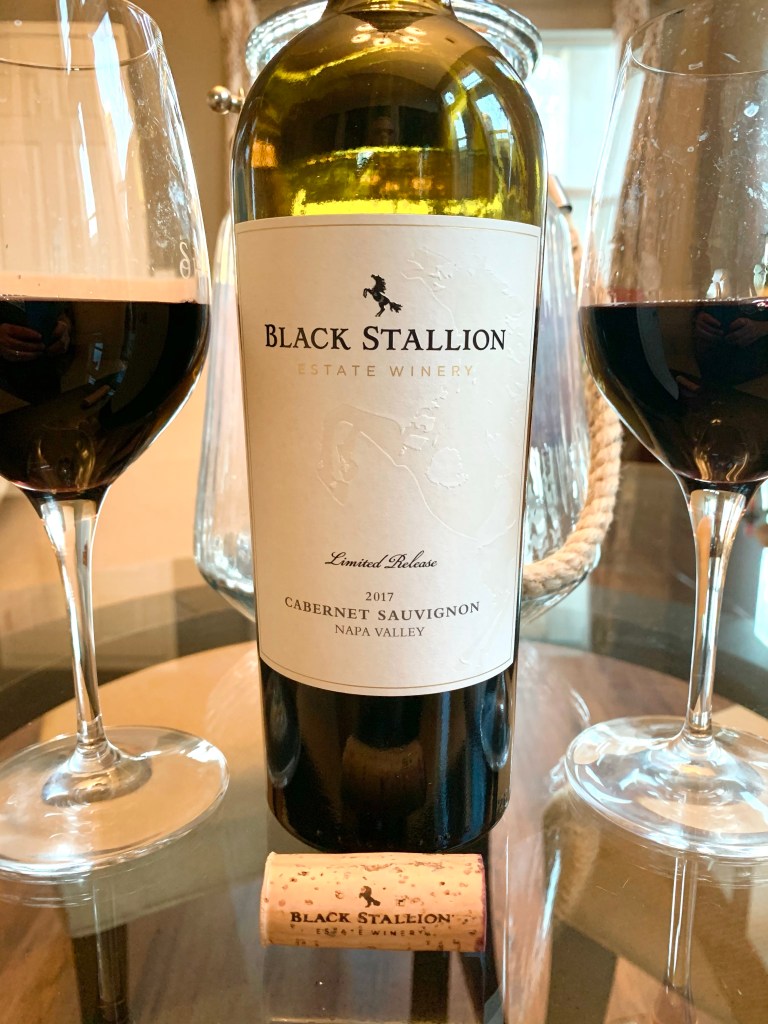
Even during a pandemic, and with wineries and tasting rooms shut down due to regional stay-at-home orders, the work of the farmers, winemakers, and winery staff continues. Though nobody can visit, vines are tended, grapes harvested and crushed, and wine production must press on. (See what we did there?) So it is at Black Stallion Estate Winery. We were fortunate enough to receive samples of two of Black Stallion’s wines recently: Black Stallion Napa Valley Heritage Sauvignon Blanc 2019, and Black Stallion Limited Release Napa Valley Cabernet Sauvignon 2017. 

The following wines were provided as media samples for review. All reviews, descriptions, and opinions are our own. We received no additional compensation.

We’ve been intrigued by Black Stallion Estate Winery’s history since we first heard of them. Located along the Silverado Trail, on the east side of the Napa Valley, the property was once the Silverado Western Center. The equestria center was home to prize-winning horses, and complete with an indoor riding track and outdoor arena. The original equestrian center has been converted and is now the winery’s production facility.  

Crafted by winemaker Ralf Holdenried, these wines are classic Napa Valley; complex but decidedly drinkable and delicious. Ralf has more than 20 years of harvest experience, and this translates into the quality of the finished product. 

Black Stallion Napa Valley Heritage Sauvignon Blanc 2019 (SRP $22)

Pale straw color. The nose is a burst of fresh pineapple with some citrus/lemon. On the palate, the pineapple continues with quince, lemon lime, white peach, and a hint of chalky minerals. Fresh and lively with zesty acidity. Nicely balanced with a crisp finish. 

Black Stallion Limited Release Napa Valley Cabernet Sauvignon 2017 (SRP $60) 

Opaque purple color. Aromas of plum, blackberry bramble, black cherry, and vanilla. On the palate, blackberry, stewed plum, cassis, black cherry, vanilla, and caramel, with white pepper and baking spice. Medium-plus body, soft tannins, and medium-minus acidity. Soft, creamy mouthfeel and a long finish of black fruit and spice. Outstanding paired with grilled lamb chops. 

After tasting these wines, we have no doubt that despite the challenges of this past year, the wines of the 2020 vintage will be stunning! We can hardly wait to try them. 

Cheers!

  • By Kent Reynolds and Robyn Raphael-Reynolds
Book Review, Professional Drinking, Wine, Wine Blog

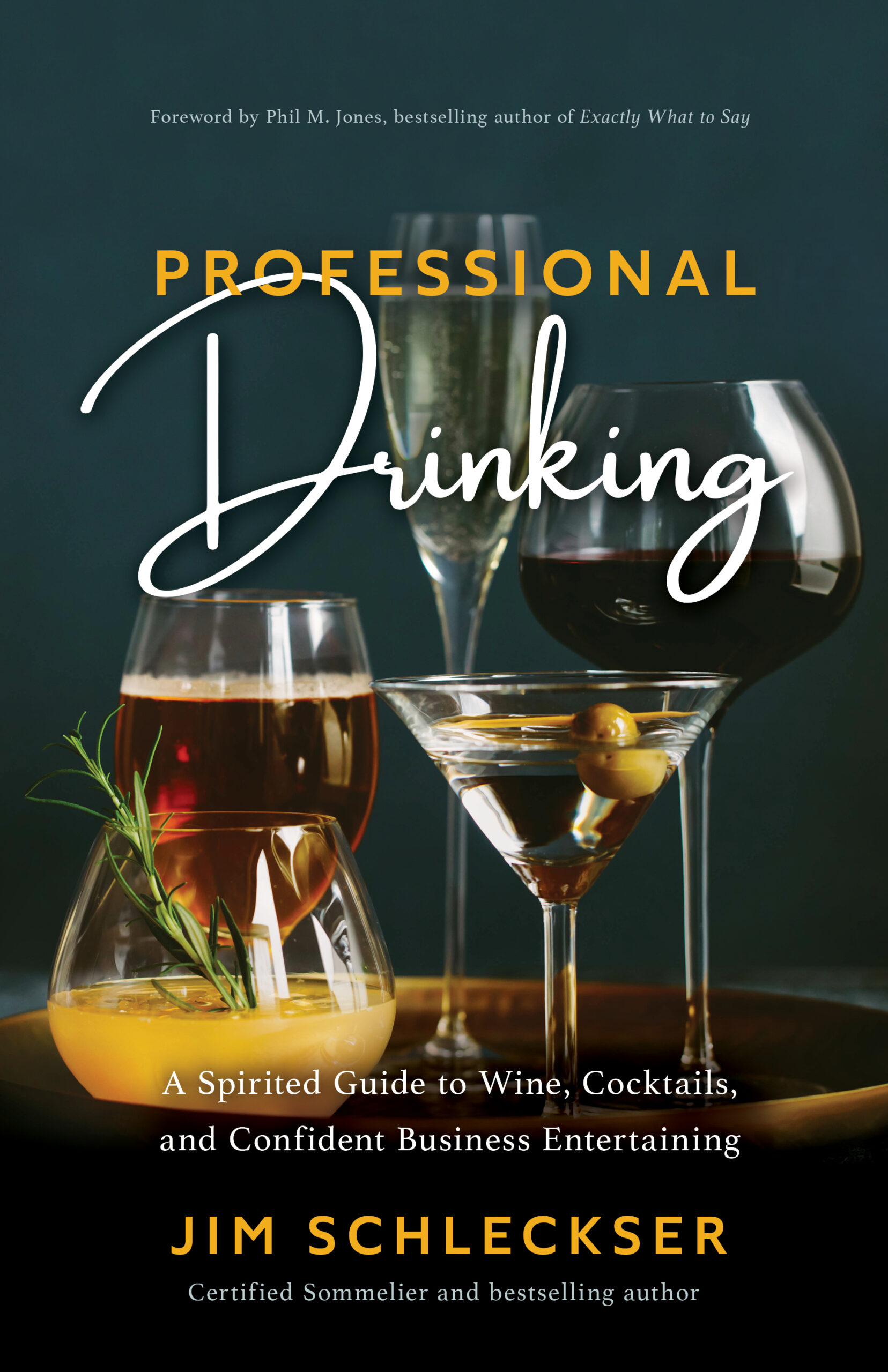
Book Review: Professional Drinking

For many people, the term “Professional Drinking” conjures up images of humorous t-shirts one would wear to a frat party. Being the wine geek that I am, when I read the title of this book, my mind went to my dream job: Wine and Spirits Critic, tasting fine wine and spirits for a living. In reality, this book is not about either of those things. 

The following book was provided by the author as a media sample for review. All reviews, descriptions, and opinions are my own. I received no additional compensation.

Somewhat surprisingly, Professional Drinking, by Jim Schleckser, is more of a business book. Jim Schleckser has more than 30 years of professional drinking experience. As the CEO of the Inc. CEO Project, a CEO coaching business, Jim has entertained and coached business people all over the world. That he is also a Certified Sommelier from the Court of Master Sommeliersand has an Advanced certification from the Wine and Spirits Education Trust only strengthens his drinking street cred. 

Yet the fact that Professional Drinking stems from Jim’s business experience, and is largely about how to entertain, engage, and responsibly drink in business settings, it is far from a typical, stuffy, boring business book. Jim’s writing style is personable and approachable, sprinkled with humor as well as insight, and occasional embarrassing stories from Jim’s own experiences. (Something about a hot tub and the entire software development team?)

The book opens with a brief biography, in which Jim tells the tale of his introduction to wine, involving a case of 1982 Chateau Haut-Brion that his father received as a gift from a business associate. Not a bad way to start a wine journey.

Throughout the book, Jim takes us through an imagined business party. Covering virtually all occasions from lunch, to a more formal dinner, to entertaining associates at home, Jim provides valuable insight into pre-meal beer or cocktails, moving to wine time, and onto the meal. Chapters include such topics as the history of wine, the 100-point rating scale, and wine clubs. Jim even weighs in on the raging debate over screwcap versus cork. 

Have you ever been intimidated by a massive wine list at a restaurant? Professional Drinking has you covered. Need help deciding what wines to stock in your cellar at home for entertaining? Yup, Jim helps you out there, too. He discusses still wine, sparkling wine, wine storage, and many more topics. 

It also turns out that Jim is as personable and approachable as his writing style. When he emailed me to offer a copy of his book, he also offered to schedule a Zoom call for an interview. I took him up on his offer, and found Jim to be quite friendly, engaging, and welcoming. We talked and laughed about wine, cocktails, childhood and young adult memories of jug wines, travel, and life in general. I asked about the hot tub and software development team story. Jim let me in on the background, but his secret is safe with me! 

On wine clubs, we agreed that there are many of varying quality, and most are good for people new to wine. They give newbies an opportunity to explore different varietals and regions, and that’s always a good thing. 

I asked Jim his strategy for holiday wines. I’ve heard different schools of thought; do you bring the good stuff knowing that your Drunk Uncle will guzzle that $100 Bordeaux like it’s a can of Bud on a hot day? Or do you withhold the quality and pour only cheaper wines? Jim typically follows more of a hybrid model. He’ll bring one or two “killer bottles” to enjoy; this allows the family and other guests to try something they might never purchase themselves. Then, he’ll bring out the daily drinkers that are perennial crowd-pleasers. A sound strategy that I intend to employ from now on. 

In summary, Professional Drinking is a captivating, informative book that has something for everyone, even if you’re not in business. No matter your position on the Org Chart, your drinking experience, or your life-path in general, you’re sure to be entertained and learn a few things when you read Professional Drinking. You can get your copy by following this link to the Professional Drinking website.

  • By Kent Reynolds

Atlas Wine Company, Calaveras, Omen, Oro Bello, Samples, Sierra Foothills, Sierra Foothills AVA, Sonoma County, Wine

A Very Good Omen

When the Shelter-in-Place orders first rolled out, there was a lot of tension and anxiety around what it all means, what we will do during quarantine, and how long it will last. There was also uncertainty about supplies, not only how to get them, but whether there would even be the products we need. Would life resemble any form of normalcy?

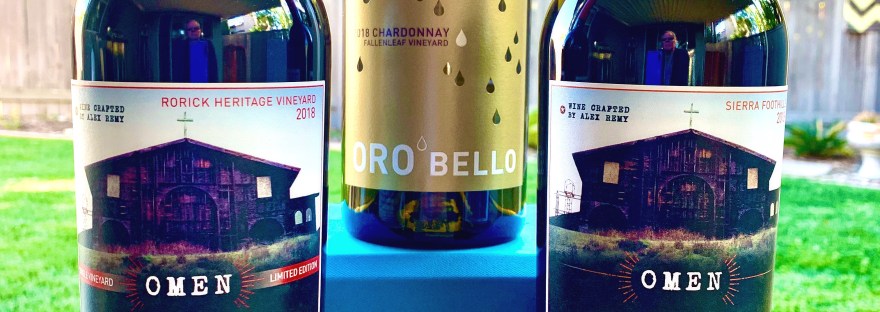
Only a few days into the lockdown, we received a very good omen. Actually, two Omens and an Oro Bello. While we get the occasional sample of wine, we normally receive an email offering the sample. This time, the wine just arrived unannounced! Looks like we’re going to be just fine.

The following wines were provided as a media sample for review. All reviews, descriptions, and opinions are our own. We received no additional compensation.

Omen and Oro Bello wines are produced and distributed by Atlas Wine Company. With headquarters in Napa, Atlas Wine Company is building a portfolio of wines that are sustainable, approachable, and ready to drink; no long-term cellaring required, though they would hold up well if you laid them down. They source grapes from “hidden gem” vineyards. These vineyards are located in regions that are perhaps less well known, but are up and coming, and producing excellent fruit. Places like Calaveras County in the Sierra Foothills, Paso Robles, Madera, and Rouge Valley, Oregon. Grapes from these areas come at a much lower cost than say, Napa, which allows Atlas Wine Company to produce wines that are affordable.

The real test of any wine, of course, is opening the bottle! All of the wines we received proved to be exceptional, and quite food friendly. The Omen line is comprised of red wines, while Oro Bello is whites and rosé.

img_1352

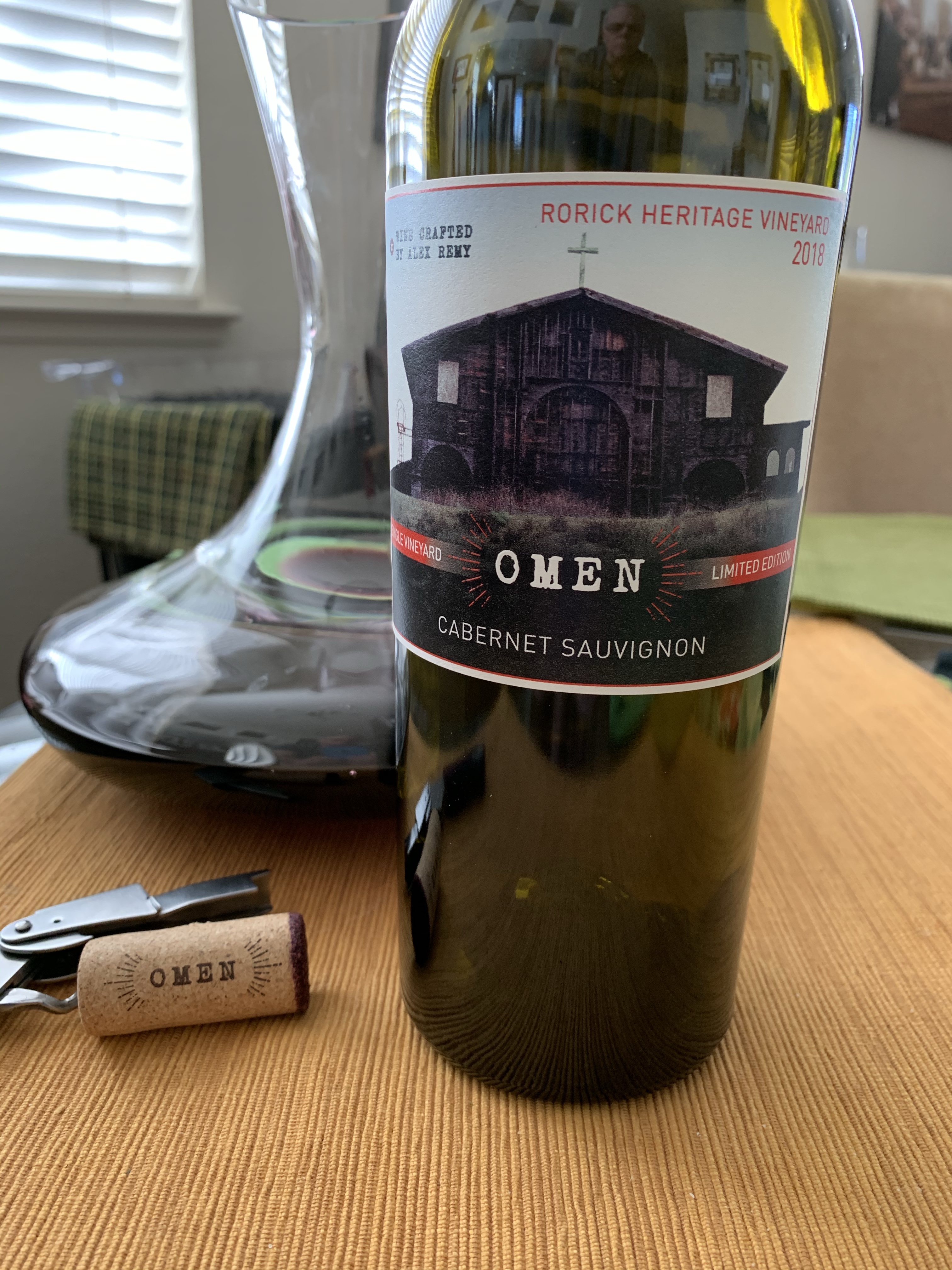
Omen Wines Cabernet Sauvignon 2018 ($40)

This is a single vineyard wine, from the Rorick Heritage Vineyard in Calaveras County. Since Calaveras County has not yet received it’s own (well deserved) AVA designation, this wine is labeled with the Sierra Foothills AVA.

Inky purple color in the glass. Aromas of rube blackberry, black currant, and clove. On the palate, rich and full bodied with flavors of blackberry, blueberry, cassis, plum, and black cherry, with clove, baking spice, leather, and tobacco. Bright acidity makes it quite food friendly; we enjoyed it with grilled rib eye steak. Long finish of black fruit and black pepper.

img_1408

Omen Wines Red Blend 2018 ($20)

Another Sierra Foothills AVA wine, this is one tasty blend.

A juicy blend of 63% Zinfandel, 21% Syrah, 8% Barbera, and 8% Petite Sirah. Inky purple color. On the nose there are aromas of ripe blackberry, cherry, and fresh black pepper. Flavors of Marionberry pie, black cherry, dark plum, blueberry, and smoky, spicy notes. Rich, full bodied, with soft tannins and medium acidity. Long, spicy finish. The label says “Pairs great with burgers.” And, boy, they’re not wrong!


img_1367

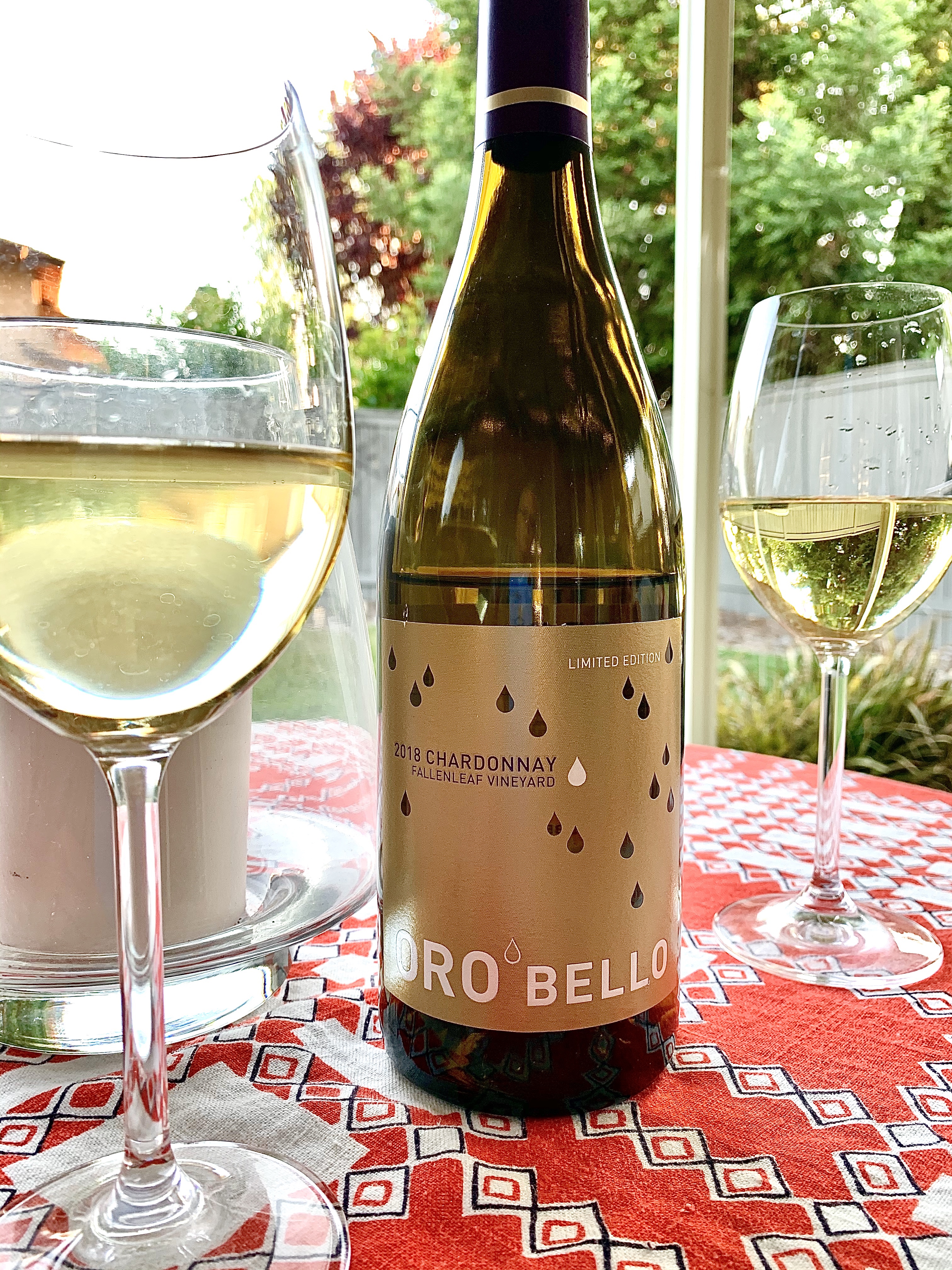
Oro Bello Chardonnay 2018 ($35)

Another single vineyard delight, this wine hails from the Fallenleaf Vineyard in the Sonoma Coast. After press, the wine was transferred to neutral French Oak barrels to mature. This is the style of Chardonnay we really enjoy, with little to no oak influence.

Golden straw color. Wonderful citrus and tropical nose, with pineapple and lemon-lime notes, and the slightest hint of butterscotch. On the palate, fresh and clean, with pear, apple, pineapple, and citrus, with slight butter and butterscotch flavors. Medium body and lively acidity. Paired with grilled salmon with lemons, a very complementary pairing.

img_1366

Omen and Oro Bello wines are available for purchase online at their respective websites. We definitely recommend giving them a try. As a special thank you, through the rest of 2020, readers and followers of Appetite for Wine can receive 15% off when you use the coupon code: APPETITE15! Just go to https://store.atlaswineco.com/#/ and enter the coupon code at checkout!

In addition to the samples we received, the Omen line also includes a non-single vineyard California Cabernet Sauvignon  and an Oregon Pinot Noir. The Oro Bello line offers a non-single vineyard Chardonnay, a Russian River AVA Rosé of Pinot Noir, and a couple of canned wines; a Blanc de Blancs, and a newly released Light Chardonnay, with lower ABV and fewer calories. Whether you chose red, white, or rosé, still or sparkling, it’s never wrong to seek out a good omen! 

  • By Kent Reynolds and Robyn Raphael-Reynolds
Justin Brown, Music, Music Review, Review, Wine, Winery Music

Some Music with your Wine

In these days of Shelter in Place, we’ve all had to adapt. “Virtual” is the new normal, and “Zoom” has become a verb. It’s not all bad, though. We’ve connected, or reconnected, with friends and family across the country we haven’t seen in years.

The wine world has had to make adjustments, too. With physical wineries and tasting rooms closed for the foreseeable future, winemakers have had to get creative. Direct-to-Consumer (DTC) is the new normal for wineries and merchants. With many offering discounts, free shipping, and other incentives, online sales have skyrocketed. Wine shopping has become so easy, delivered directly to your door (where allowed), we believe the increase in DTC sales will continue long after the Shelter in Places orders have been lifted. 

Many wineries have also pivoted to digital, and are offering virtual tasting experiences. These are a fun way to enjoy your favorite wine from the comfort of your home, while learning about the wine, winery, production, and more. Often hosted by the winemakers themselves, virtual tastings are informative and entertaining. All the ones we’ve attended have been live-streamed, so they are not interactive, other than through typed comments. 

We’ve also hosted Zoom or Skype tastings with friends. We all order the same wine, then taste together virtually and talk about the wine, among other things. 

But what’s missing in all this? Music.

We miss the winery experience; sidling up to the tasting bar, sipping samples while chatting with the tasting room staff and other guests, and enjoying the ambiance and vibe. Often, we’ll grab a glass of wine and a chair on the patio, and ease in while enjoying some live music. All the makings of a relaxing afternoon in wine country. 

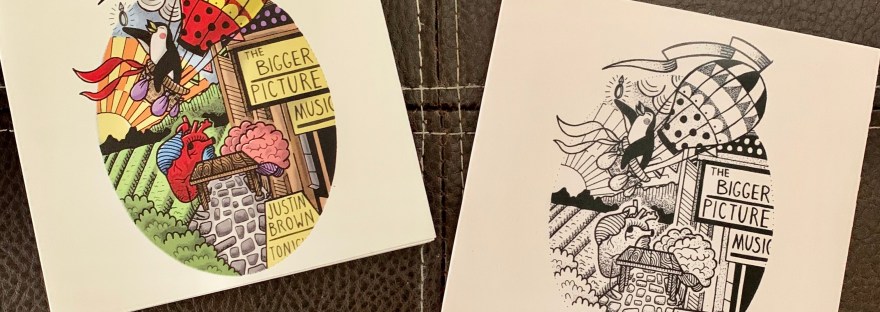
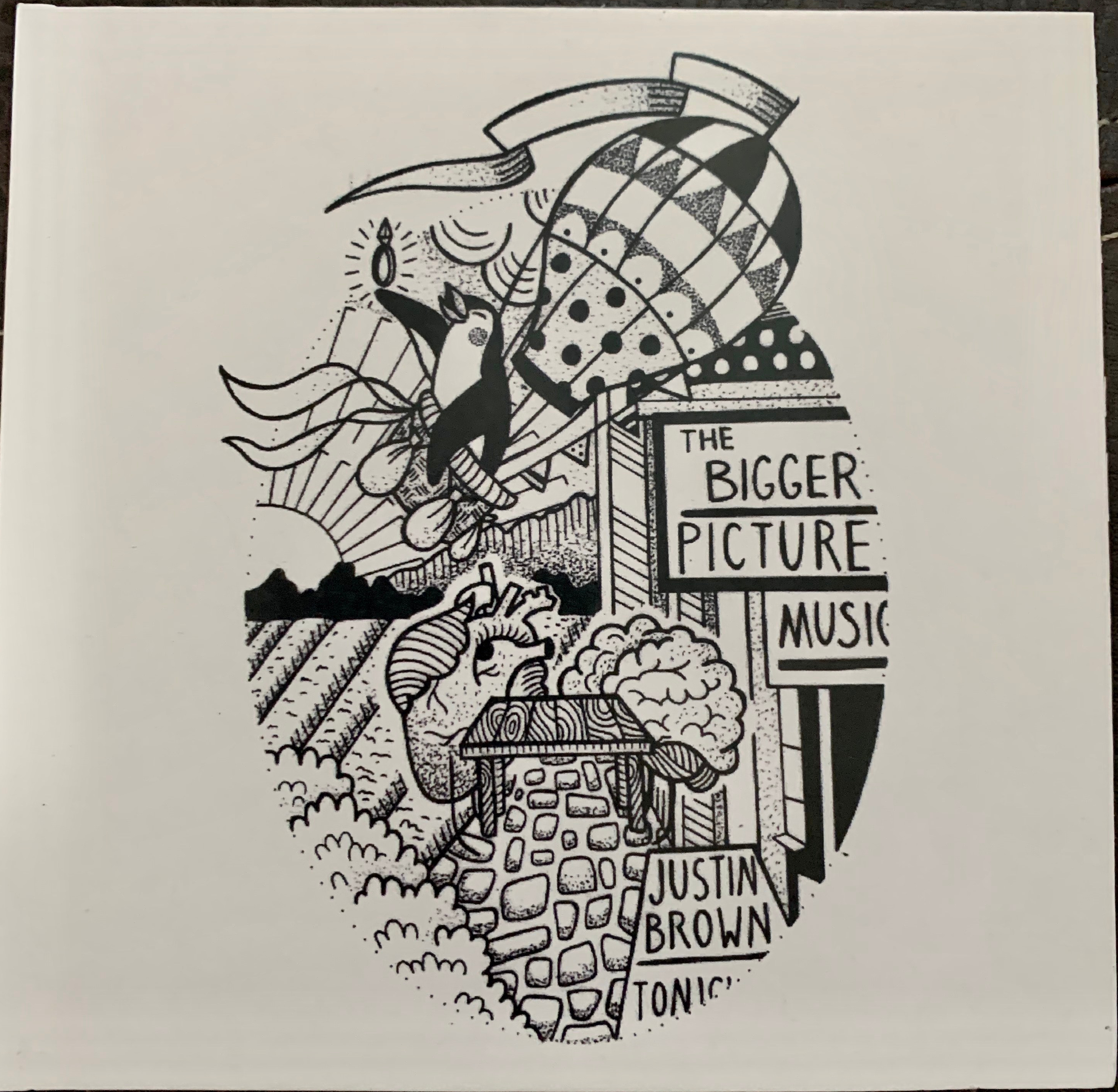
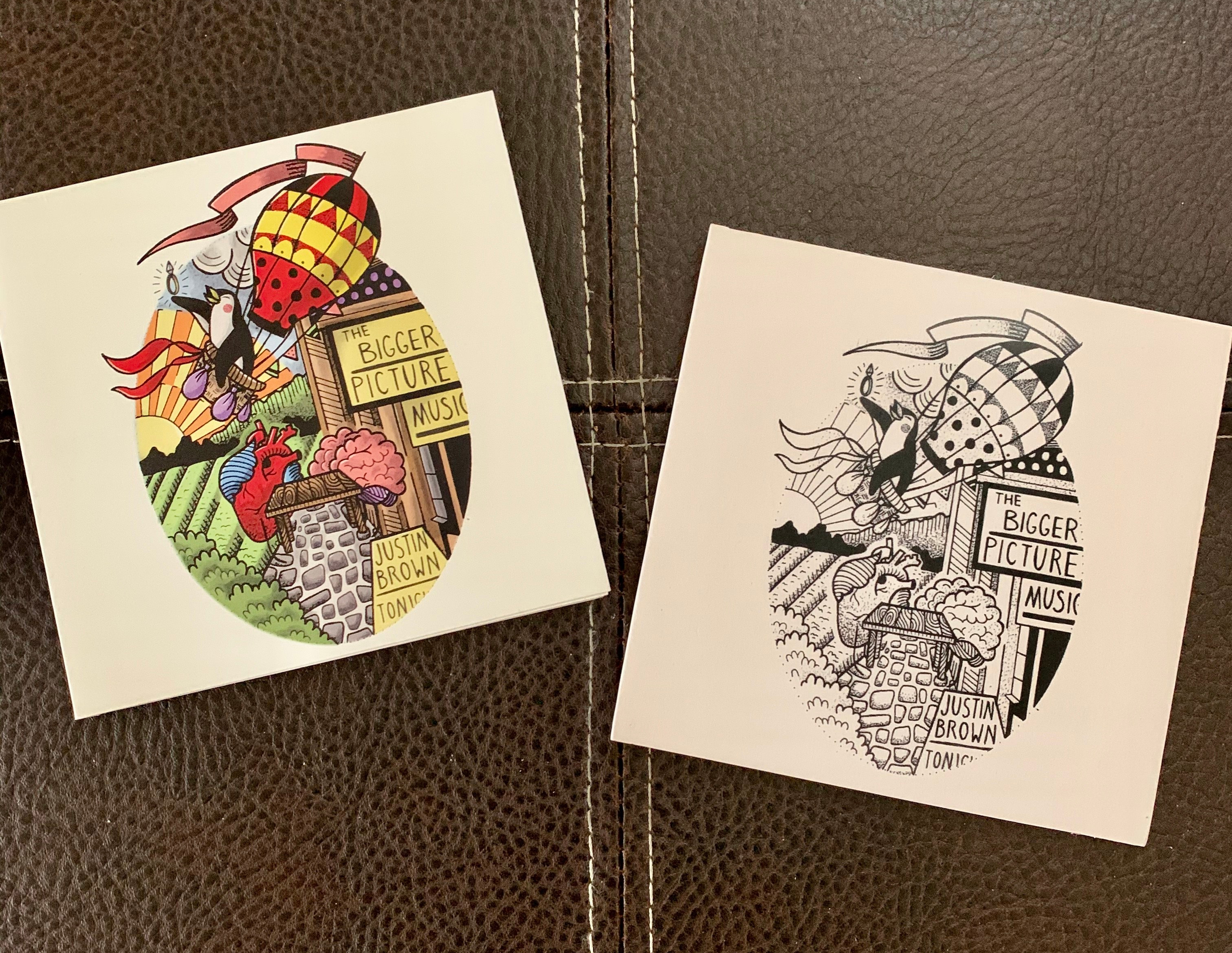
If you miss winery music as much as we do, we have good news! Justin Brown is a winery musician in the Napa Valley area. He recently released a new EP album, The Bigger Picture. Now you can enjoy some winery music with your virtual tastings!

img_1356

Justin recently reached out, and provided us with complimentary copies of his newest releases. Yes, plural. In addition to The Bigger Picture, he also released an acoustic set, The Bigger Picture Acoustic. 

img_1357

With smooth, soulful vocals, and toe-tapping instrumentals, The Bigger Picture transports you to that winery patio, and brightens your entire day! 

img_1355


img_1359

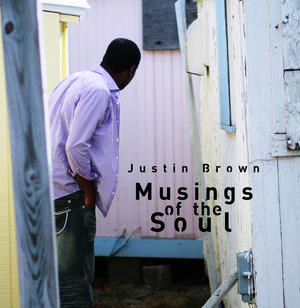
Justin Brown’s musical career started at the age of 15, when he taught himself to play the guitar. In 2013, he recorded his first album, Musings of the Soul. In that same year, he moved from New Jersey to the San Francisco Bay area. Since then, he has become a successful part of the Napa and Sonoma winery music scene. 

If you want to add some smooth jazz ambiance to your next virtual wine tasting, or just want to enjoy some really good music, click this link to go to Justin’s website and purchase one or both of his new EPs. Both are available for download, or you can order physical CDs for delivery. While you’re there, you can also download Musings of the Soul. Justin is actually offering Musings of the Soul downloads for free, but there is an option to enter a purchase price at checkout. Please consider this option to help Justin out during these difficult and uncertain times. 

cover

Now, pop that cork, pour a glass, log into the virtual call platform of choice with your family and friends, fire up some Justin Brown smooth jazz, and enjoy some music with your wine. 

Cheers!

  • By Kent Reynolds and Robyn Raphael-Reynolds

Amador County, Casino Mine Ranch, Sierra Foothills, Sierra Foothills AVA, Wine, Wine Blog, Wine Blogger, Wine Cave, Wine Review, Wine Tasting, Wine Tourism, Wineries, Winery, Winevana

Winning Big at Casino Mine Ranch

We have been big fans of Amador County wines for a long time. Awhile back, we connected on Instagram (@appetite_for_wine) with @casinomineranch, a relative newcomer in the wine landscape of the Sierra Foothills. During our early online chatter, we expressed an interest in visiting. We learned that visits to Casino Mine Ranch are by appointment only. Alas, our frequent trips to the area are often spontaneous, so, embarrassingly, we went several months without scheduling a visit. 

Thankfully, that negligence came to an end earlier this month. We were planning a trip to Amador County wine country, and Kent remembered Casino Mine Ranch. After a quick DM on Instagram, Chief of Staff Mackenzie Cecchi confirmed our reservation. 

It was a lovely November day when we arrived at Casino Mine Ranch. Rather spring-like weather, in fact. (Sorry, not sorry to our East Coast family and friends.) Up a winding, nondescript driveway (even with GPS, we missed it and had to turn around), past Lola’s vineyard, until we saw Casey’s tree fort, and we knew we had arrived.  

Mackenzie greeted us as we entered the house. Yes, house. Casino Mine Ranch’s current location is the owners’ second home. Mackenzie said they are in the planning stages of a tasting room down the road near some other tasting rooms, but for now, welcome to this beautiful home! 

Mackenzie poured us our first taste. There would be eight total during the hour-long tour and tasting. The 2017 Vermentino. Simply stellar! Plenty of pineapple and citrus, with bracing acidity. Just the way we like it. If the Vermentino was any indication, we were in for a very special, and tasty hour. (Spoiler alert: the Vermentino was definitely an indication!) 

All of the wines in Casino Mine Ranch’s portfolio are 100% estate fruit. The ranch is 60 acres, but currently there are only 14 acres under vine. However, they are planning to plant more vineyards so they can increase production.

The second tasting on the tour was the 2017 Grenache Blanc. Mackenzie said the 2016 wasn’t quite what they’d hoped for, and asked our opinion of the 2017. Ironically, Kent had taken a wine survey just the day before, and had to respond in the negative to the question: have you tasted a Grenache Blanc in the past six months. Timing, people. Timing is everything! And so is this Grenache Blanc. Straw color, aged in 30% new French oak, with flavors of apricot and peach, with hints of butter and caramel. Exquisite. 

img_0857

As we moved outside, and prepared to enter the mine, Mackenzie provided a history lesson. Casino Ranch Mine was founded in 1936 by Simone Shaw. Simone was born in Belgium, and with her family escaped the 1914 German invasion. Her father had a mining operation in Alaska, where Simone spent time in her younger days. Always stylish and worldly, Simone caught the eye of many a suitor. The family eventually moved to New York City, where Simone met Sam Shaw, Jr., hotelier and art patron. It was a match made in heaven, and the two were soon married. 

As socialites, the Shaws spent time in San Francisco, Los Angeles, New York, and Paris. Somehow, they found their way to what was then the middle of nowhere…Amador County. (Let’s be real, Amador County may not be the middle of nowhere today, but it’s only just outside the border! We love it that way.) Simone bought the property, with the intention of mining for gold. Always the realist, she felt that striking it rich in gold mining was a gamble, hence the name: Casino Mine Ranch. 

Simone’s instincts were right. Nothing more than a modicum of gold was discovered in their mine. However, what they did find was as precious as gold in the remote Sierra Foothills: water. Under the lava caps on the property were reserves of water. The Shaw’s excavated and dammed the springs, and even today they are used for irrigation on the ranch. 

Into the mine we went. The water was located only a few yards beyond the entrance, so the tour does not go deep into the mine. Here, we tasted the 2018 Rosé, a blend of Grenache and Mourvèdre. Another exquisite wine. Three-for-three! Pale pink color, with flavors of strawberry and raspberry. Bone dry and zesty. 

From the mine, we went back through the house, and downstairs to a beautiful cellar room. Here we tasted the 2017 Grenache Noir; 100% Grenache, aged in 30% new French oak. This wine recently received a score of 90 points from Wine Spectator magazine. A luscious, spicy wine, with bold red fruit and licorice notes. There was an ashtray on the counter, crafted from a bear claw. (Not the pastry, but an actual claw from an actual bear!) Mackenzie said legend has it, that Simone herself shot that bear! 

Venturing outside through the back of the house, we made our way to the pool house. Pool house? Pool house. Not too many wineries have a pool and a pool house! But this was just the beginning. The two-story pool house is a home unto itself, complete with kitchen and entertainment. Upstairs there is a full-scale shuffleboard table, and down the spiral staircase to the lower level, you will find a pinball machine, video arcade game, and an air hockey table. In case you were wondering, as we were, the answer is yes. At wine club events, members have the opportunity to use these games! 

Back outside and down a grassy hill, Mackenzie continued the family tale. Shortly after World War II, Sam passed away. Sam’s brother, Hollis Shaw, came to stay on the property to help the widow with the ranch. Hollis initially lived in one of the small mining shacks on the property. However, after some time, he moved into the main house. Not long after, Simone and Hollis were married. 

During the 1960’s and 70’s, Simone’s grand-nephews, Rich, Jim, and Steve Marryman, would come to the ranch for visits. They were intrigued by their aunt, living in such a remote area but still being so glamorous, serving the children their meals off fine china, and dressing for dinner. In 1999, Rich Merryman bought Casino MIne Ranch. 

In 2011, Rich called brother Jim to tell him he is going to plant a vineyard on the property and wanted to make wine. Jim thought Rich was crazy, though he eventually joined the venture. They hired winemaker Andy Erickson, and in 2015, produced their first vintage. 

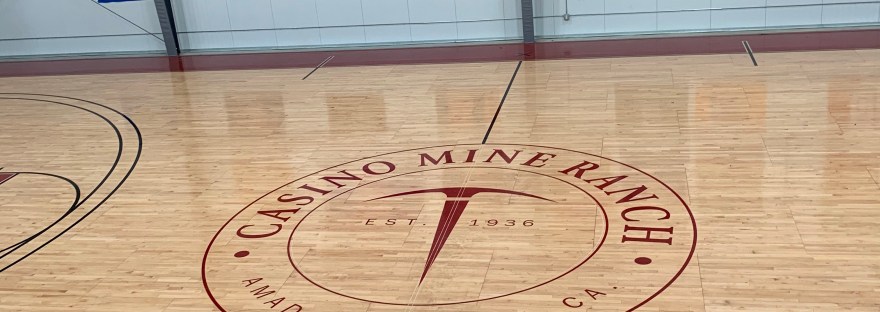
Mackenzie escorted us to a large, metal building at the bottom of the hill. She referred to it as the “midlife crisis building.” This, she said, was to be the Casino Mine Ranch winery production facility. However, their winemaking team is in Napa, and they didn’t want to have to come all the way out, almost to the border of nowhere, to produce the wine. With construction started, what is one to do with a massive building that now has no purpose? Turn it into an NBA regulation basketball court, of course! 

Several NBA stars have visited the ranch to play on the court. In addition, college flags adorned the back wall. These are the alma mater of wine club members. Joining the club earns one the right to display their school’s flag. Guests on tour are invited to go downstairs onto the court to shoot some hoops, but we decided to stay topside and just watch. 

Back up the hill to the house, and onto the patio with breathtaking views, where we enjoyed the rest of the wines. Next on the list was the 2017 Mourvèdre. Another 100% varietal wine, this medium bodied red has spicy red fruit, raspberry, cherry, and cranberry, with baking spice and a long finish. 

The 2016 Simone, obviously named in honor Great Aunt Simone, is a blend of 52% Grenache and 48% Mourvèdre. This is a big, powerhouse of a wine, with red fruit and spice on the nose, and flavors of raspberry, bing cherry, baking spice, and mineral notes. Big, chewy tannins and bright acidity lead to a very long finish. 

Next was the 2016 Tempranillo, one of only two non-Rhône style wines in the portfolio. This wine pours inky purple, and has flavors of blueberry, spice, and a bit of raspberry. The tannins are very soft and smooth, balanced with medium acidity. 

The final wine on the tour was the 2016 Marcel. Wait, we sense another story here. Marcel Tiquet moved to Casino Mine Ranch after World War II. He was just 19 years old at the time. Marcel and his wife didn’t intend on staying long, but raised their family there and they loved the place so much, they just never moved away. Making a life here, Marcel became the heart and soul of Casino Mine Ranch. Sadly, Marcel passed away in September 2018, at the age of 93. 

The wine in his honor is 80% Tempranillo and 20% Teroldego. Here is another big, bold red wine, worthy of such a man as Marcel. Inky purple color, with aromas and flavors of blueberry, raspberry, baking spice, and white pepper on the finish. Big, firm, chewy tannins mingle with medium acidity, leading to a long finish. This is a wine that wants a rib-eye or grilled lamb. 

Alas, the tour was over. Nevertheless, we were so impressed with the wines, the story, and the property, that we decided to join the wine club. So, as they say…we’ll be back! 

If you’d like to visit Casino Mine Ranch, and you know you do, you’ll need to make a reservation. You can do this on their website. They are open for guests Thursdays, Fridays, and Saturdays, with appointment times at 11 a.m., 1 p.m., and 3 p.m. When you go, tell them Robyn and Kent sent you! 

Cheers! 

  • By Kent Reynolds and Robyn Raphael-Reynolds
Agiorgitiko, Assyrtiko, GAI'A Wines, Greece, Greek Wine, Santorini, Wine, Wine Travel

Greek Wine Tasting: GAI’A Wines

If you haven’t tried Greek wine, or have only tried what is available in many stores in the U.S., you owe it to yourself, your palate, and the Greek wine industry to stop what you are doing, get on a plane, and visit Greece! Greece is producing some spectacular, world-class wines. They just don’t often find their way out of the country. 

If you didn’t catch our previous Greek Wine Tasting blog, you can read it here to catch up. Go ahead, we’ll wait.

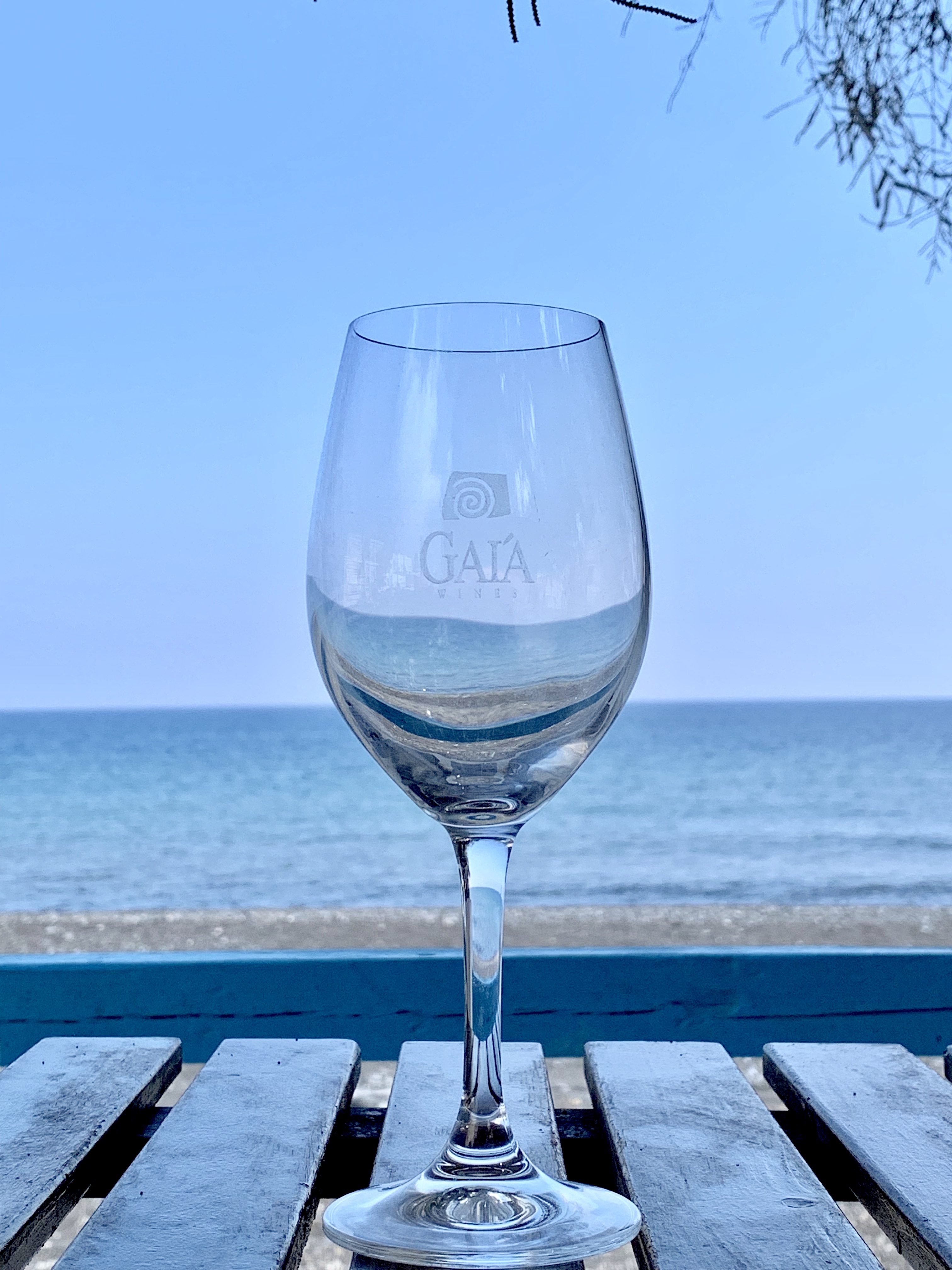
Our next stop on our day of Greek wine exploration was GAI’A Wines. GAI’A is the greek word for “earth.” The name is derived from Greek mythology, in which the primordial mother-goddess, GAI’A, brought the earth into existence out of chaos. In Greek, the letter G is pronounced almost like a “Y”, so the pronunciation here is “yay-yah.” 

GAI’A Wines graciously provided us with a complimentary tasting. All opinions and notes are our own. We received no other compensation. All the wines we bought were purchased ourselves. 

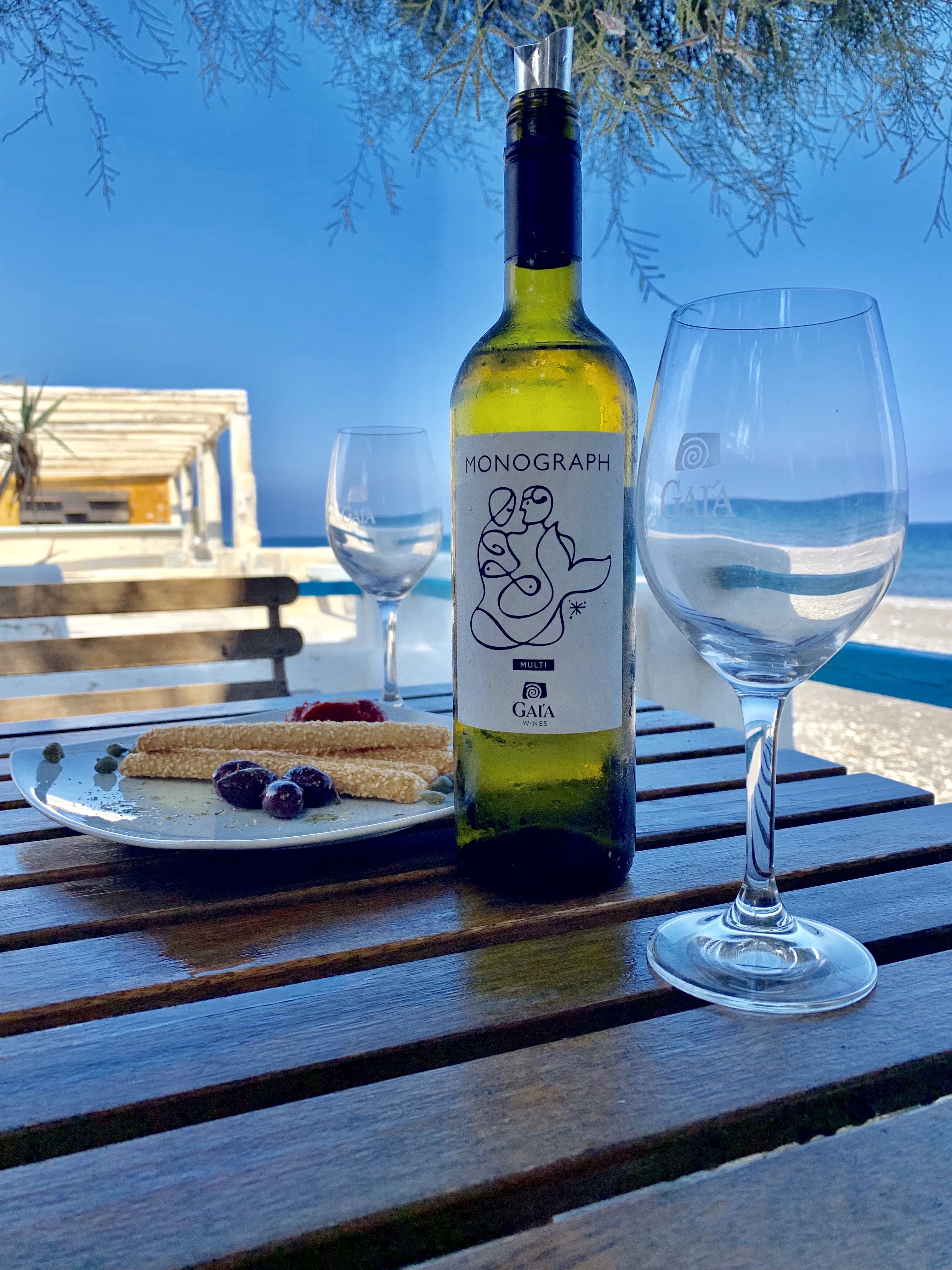
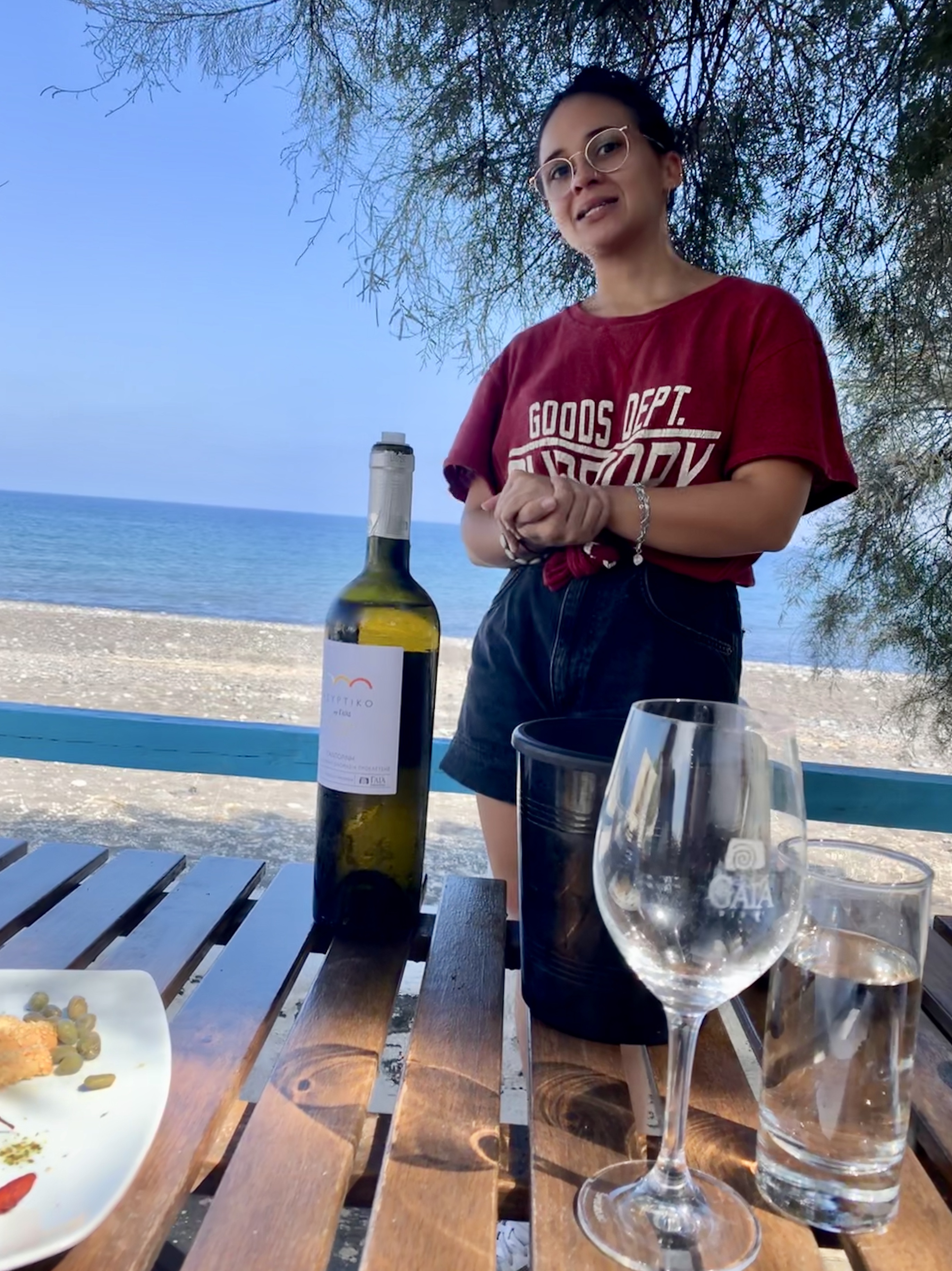
GAI’A Wines has two winery locations, one in Nemea, on the Greek mainland, and one on Santorini, which is the one we visited. Our taxi dropped us off at the winery, which is literally adjacent to the beach on the eastern side of Santorini. The winery complex was, at one time, a tomato paste processing plant. We were greeted by the friendly staff, and escorted to a table overlooking the beach and Aegean sea. Our host for the day, Vassilina Tzagkaraki, brought us a plate of breadsticks, capers, olives, and of course, a dollop of tomato paste, to enjoy while we tasted the wines and enjoyed the stunning view. 

GAI’A Wines started in 1994 by Yiannis Paraskevopoulos and Leon Karatsalos, with the introduction of a Santorini wine. If you recall from the earlier post, to bear the name Santorini, the wine must be made from at least 75% Assyrtiko. This wine was released with the name Thalassitis. Over the years, GAI’A has led innovation and challenged convention in their production and quality.

All of the wines we sampled were sensational. It would be hard to say which was our favorite, and we would have liked to take some of each home with us. Alas, luggage limitations required us to make hard decisions!

img_0645

img_0500

We started with two white wines from their Monograph line. The first, Multi, is a blend, primarily of Assyrtiko, with Moschofilero, and Roditis. Multi spent two months in stainless steel, for a clean, crisp wine with lemon and citrus notes. The second was 100% Assyrtiko. This wine also fermented in stainless steel, but spend four months on the lees, resulting in a softer, slightly creamier wine with notes of lemon, orange peel, and citrus.

img_0646

The third wine we sampled was the Assyrtiko by GAI’A, Wild Ferment. This amazing wine is made with various fermentations: 50% in stainless steel, 40% in oak, and 10% in cement tanks. The result is a striking wine, with an almost Chardonnay-like profile. But don’t let this scare you if you don’t like Chardonnay. This is a delicious wine with flavors of pear, citrus, and grapefruit, with notes of butter and toast. 

Next up, Rosé! GAI’A produces two Rosé wines, 14-18h, and 4-6h. Both are made from Agiorgitiko grapes, and are named for the amount of time they spent in contact with the skins. We sampled the 14-18h, which, as the name suggests, spent between 14 to 18 hours in skin contact. This gave the wine a deep pink hue, and enticing flavors of cherry, strawberry, watermelon Jolly Rancher, and a hint of cranberry on the finish. This is a bone dry Rosé, with brisk acidity, just the way we like it. (We liked it so much, this is one of the wines we brought home with us!) 

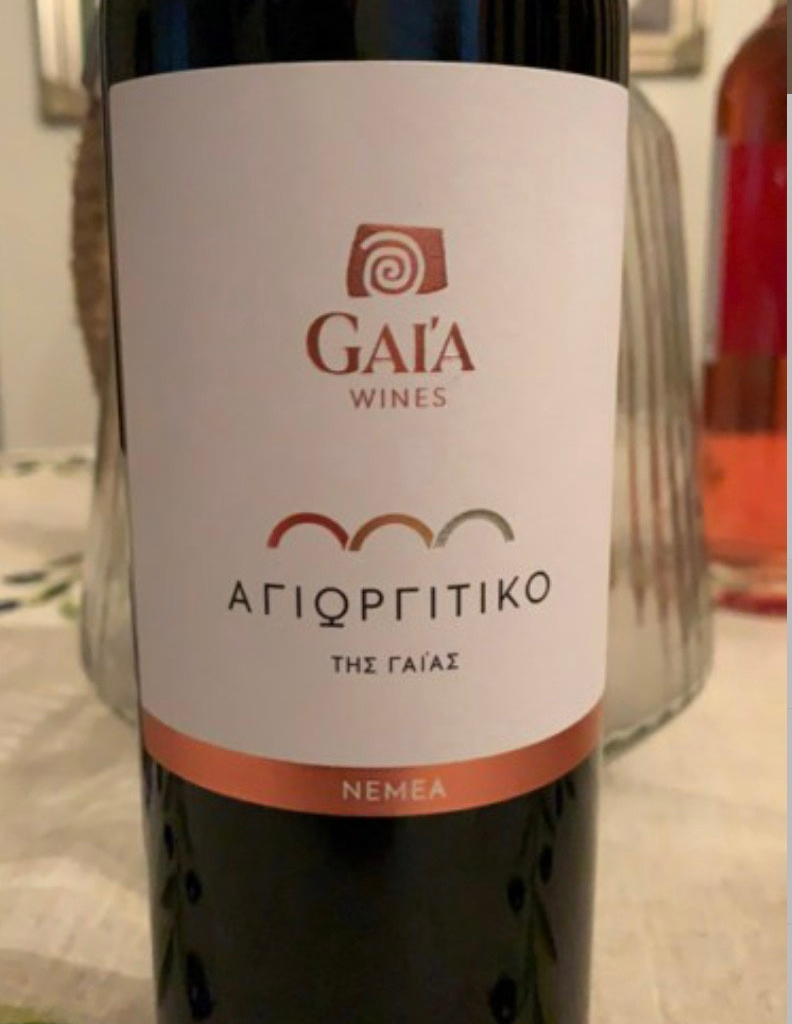
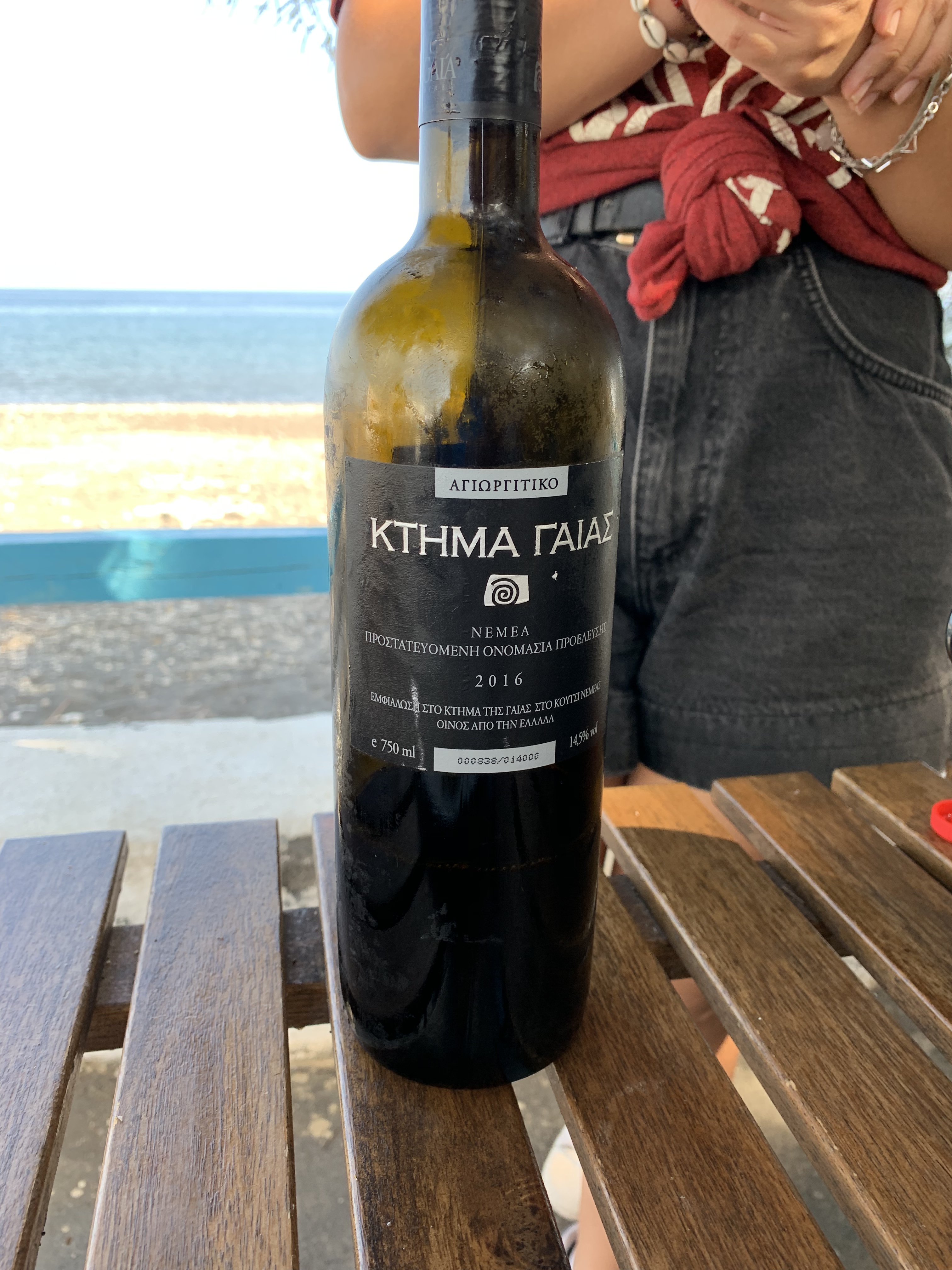
On to the reds we went. In contrast to the light, crisp Rosé, the 2017 Agiorgitiko by GAI’A is big and bold. Rather than mere hours on the skins, this wine underwent a 2-3 week extraction, followed by 12 months in French oak. The result is a refined wine with soft, smooth tannins and flavors of raspberry and bing cherry. 

img_0804
Nobody knows what happened to the picture of the bottle at the winery, but fortunately, this also came home with us, so we do have a bottle shot!

img_0502

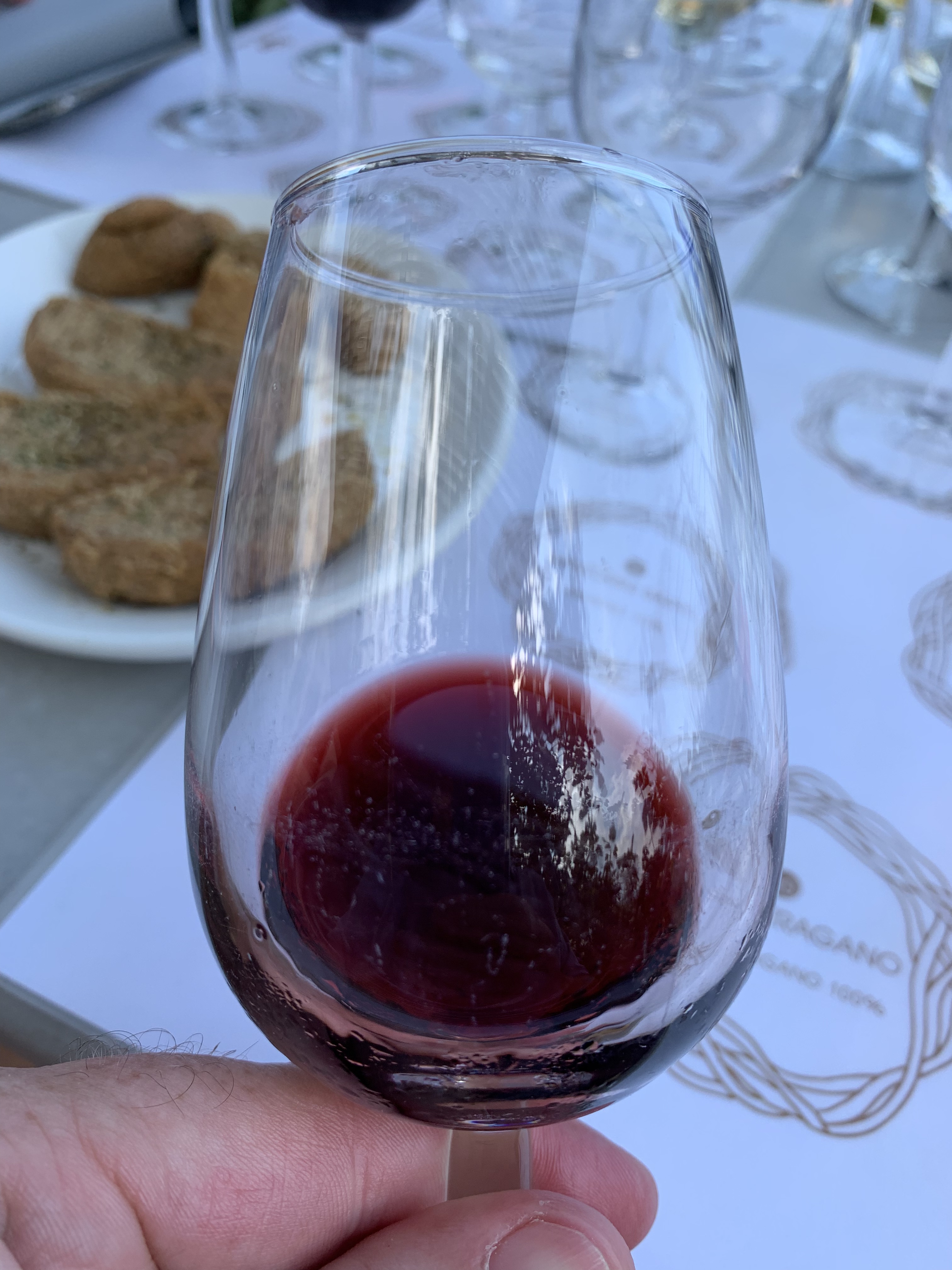
The final red wine was a spectacular, monster of a red wine. This beauty has aging potential of 15-20 years! Behold, the 2016 GAI’A Estate. Made from Agiorgitiko grapes, this wine spent 15-18 months in French oak. It is a wine of distinction, with a rich, full body, and big, firm tannins, with intense flavors of cherry, blackberry, plum, baking spice, and a bit of bell pepper. This is a wine that wants some meat! Pair it with a juicy rib-eye, or some grilled lamb.

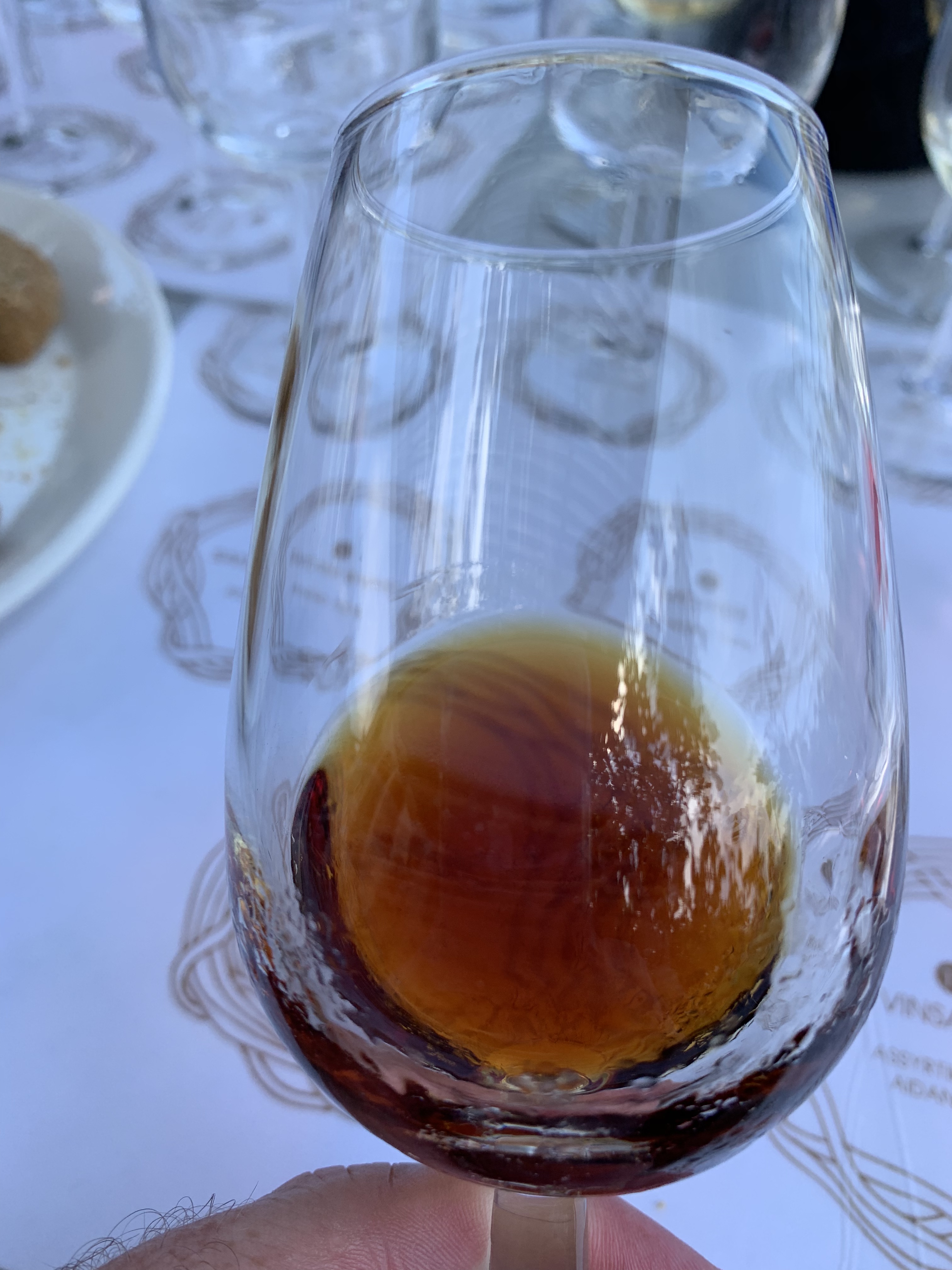
The final treat was the Vinsanto dessert wine. Made from Assyrtiko, with small amounts of Athiri and Aidani, Vinsanto is made by allowing some of the grapes to dry in the summer sun, and some in the shade. Drying results in more concentrated sugars and flavors. Once pressed, the wine then ages for 10 years in French oak. Best served slightly chilled, Vinsanto is rich and creamy, with flavors of fig, dates, caramel, vanilla, and Crème brûlée. The perfect way to end a delightful day of Greek wine tasting! 

As much as we wanted to stay awhile longer, we had to get back into town. We had dinner reservations on the waterfront in Oia, and a date with Roger, the Gilt head bream (yes, we named our dinner), and the spectacular Santorini sunset. More great reasons to come to Greece! 

Yammas!

  • Text and photos by Kent Reynolds and Robyn Raphael-Reynolds
Assyrtiko, Domaine Sigalas, Greece, Greek Wine, Santorini, Wine, Wine Travel

Greek Wine Tasting: Domaine Sigalas

On the plains of Santorini, just outside the historic town of Oia (pronounced “ee-ya”), sits Domaine Sigalas winery. Founded in 1991 by Paris Sigalas, Domaine Sigalas produces some world class wines from indigenous Greek grapes. Considering we would be visiting Santorini during our honeymoon, we contacted the winery to arrange a tasting.

sigalaslogo

Domaine Sigalas graciously provided us with a complimentary tasting. All opinions and notes are our own. We received no other compensation. All food featured, and wines we bought, were purchased ourselves. 

Domaine Sigalas organically farms 37 hectares of vineyards, and also work with other Santorini farmers to source grapes for their production. Their average production is about 300,000 bottles per year. 

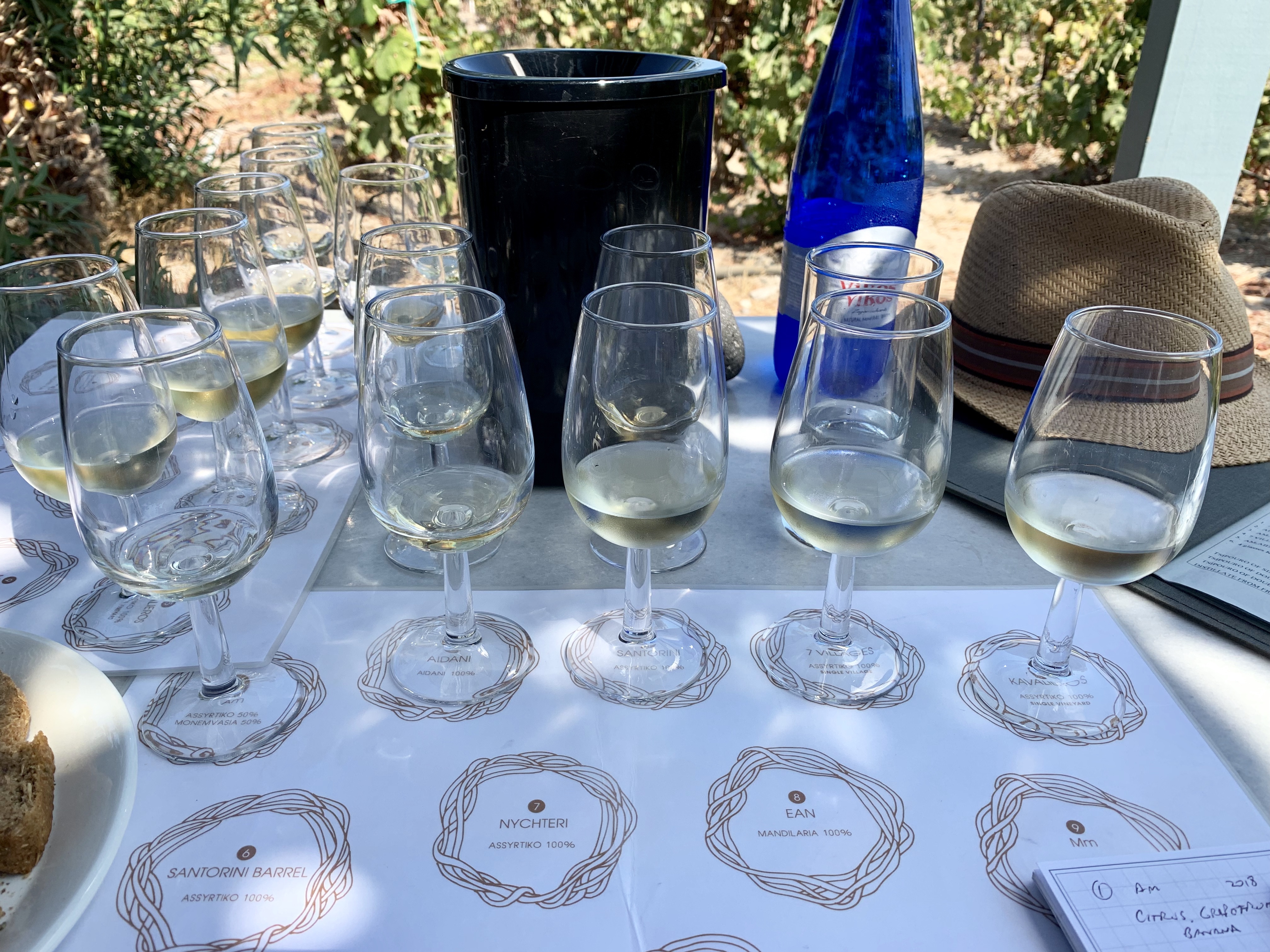
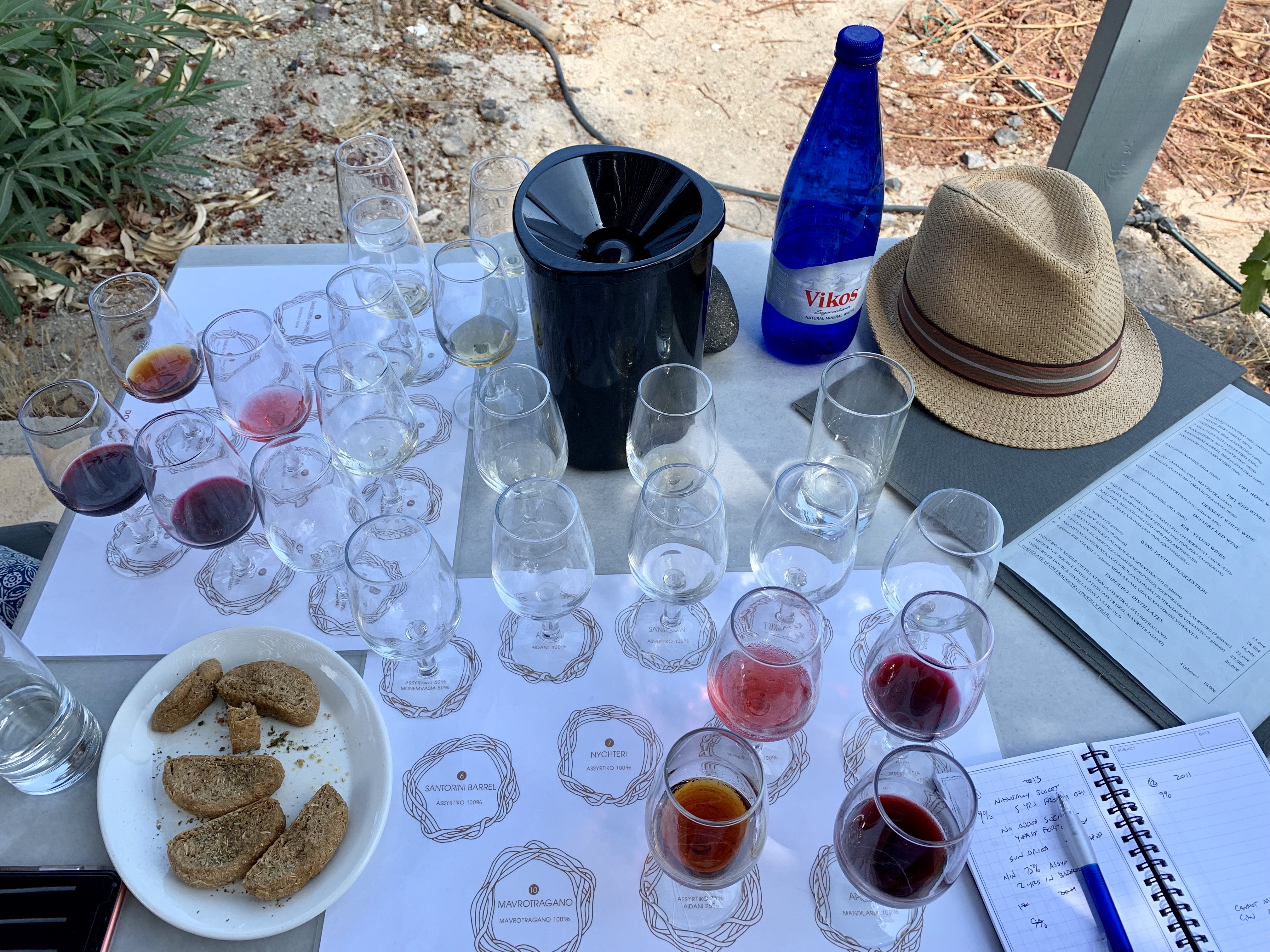
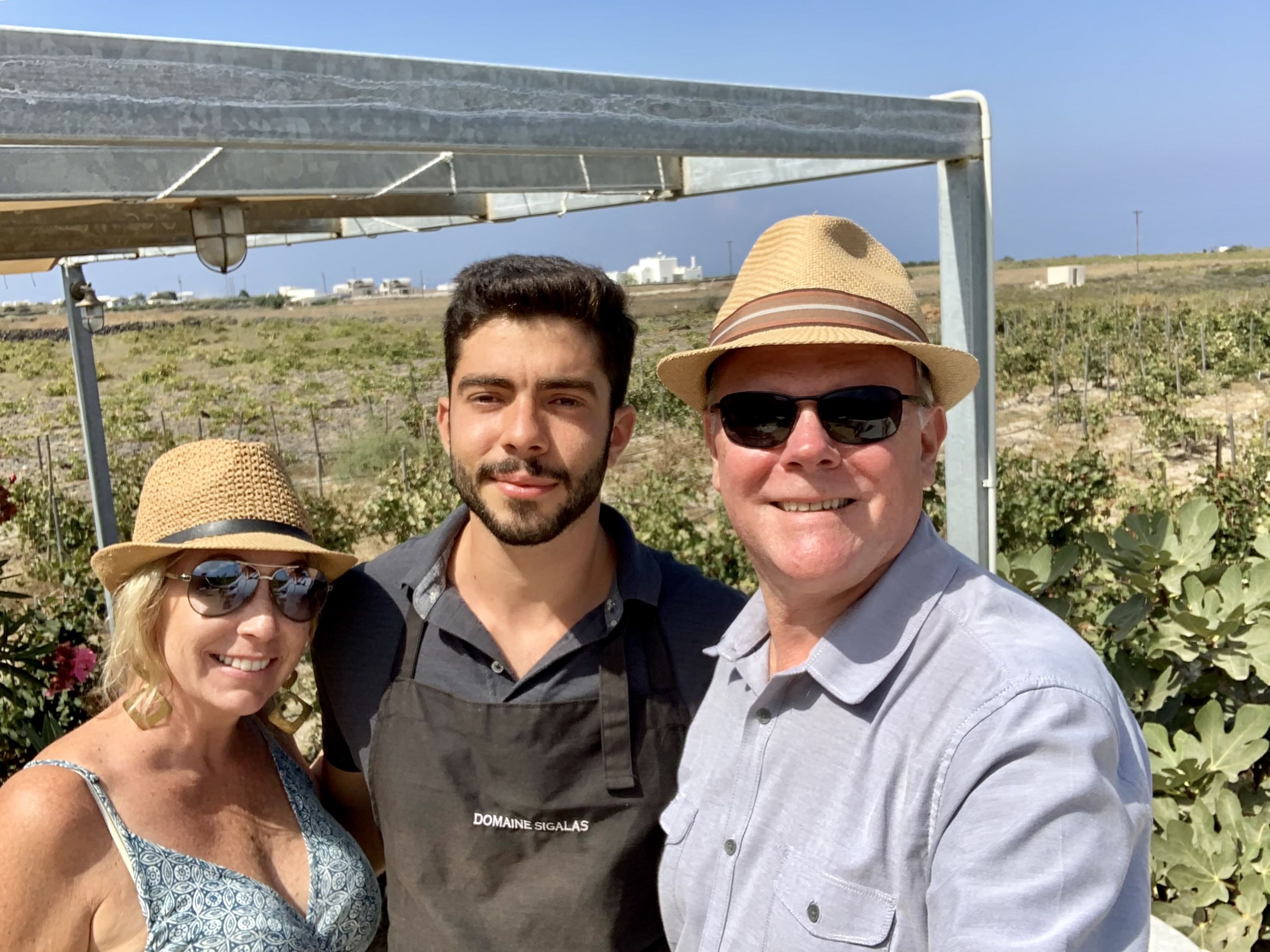
When we arrived for our tasting, we were greeted by our host, Pavlos. Pavlos guided us through an amazing experience of seven whites, a rosé, a red, and two dessert wines. The normal tasting flight is 12 wines, but three of their wines were sold out, so Pavlos subbed in two additional whites (the Aa blends, described below), and also treated us to something special: a sample of their distillate, known as Tsipoyro. 


We selected our table on the patio, shaded from the hot Santorini sun by a vine covered pergola, looking out into the adjacent vineyard. We were immediately surprised to see trellis-trained vines. Santorini is known for its unique grape growing method, known as kouloura, in which the vines are trained into a round, basket shape to protect them from the high winds common on the island. Pavlos explained that this is an experimental vineyard, planted to Mavrotragano grapes. Mavrotragano is a red grape that was nearly extinct just a few years ago. Paris Sigalas planted this vineyard to bring it back, and opted to use a trellis system. The vines are thriving and producing fantastic wines. So fantastic, in fact, that the 100% Mavrotragano was one of the ones sold out during our tasting. However, their other red is a blend that includes Mavrotragano, so we can still attest to the quality! 


Roughly 75% of Domaine Sigalas vineyards are planted to what is the most well known Greek grape, Assyrtiko. Assyrtiko is a white grape, producing wonderfully dry, crisp wines. Among the other varieties grown on the estate are Aidani and Mandilaria. They source Monemvasia from the nearby island of Paros, for use in “Am”, their 50/50 blend of Assyrtiko and Monemvasia, the first wine we tasted. 

img_0483

The 2018 Am is considered their entry level wine, but that only speaks to their high standards and quality! This is a delightful dry wine, with notes of citrus, grapefruit, and hints of banana. 

img_0478

Aidani was originally made into a dessert wine. For the past eight years, Domaine Sigalas has crafted a dry wine with it. The 2018 spent six months on the lees, resulting in a wine with medium body and acidity, with tropical fruit and citrus notes.

We got to compare the newly released 2017 Aa, with the aged 2011. Both are blends of 75% Assyrtiko and 25% Athiri. Both are vinted in stainless steel with no time on lees. The 2017 was bright and dry, with sea/saline on the nose, and citrus/lemon flavors. The 2011 was slightly oxidized, as one might expect from an 8-year-old white, but was still very pleasant with solid structure and acidity, with flavors of banana and grilled lemon. 


2016 Santorini Assyrtiko – Similar to rules in other wine regions, the Greek Protected Geographic Indication (PGI) specifies that for a wine to be called “Santorini” it must be made of at least 75% Assyrtiko. This one is 100%, and is amazing. Lemon, Kumquat, and citrus, with notes of herbs, saline, and mineral. It is vinted in stainless steel and spends six months on the lees. (A bottle of this one made its way into our suitcase!) 


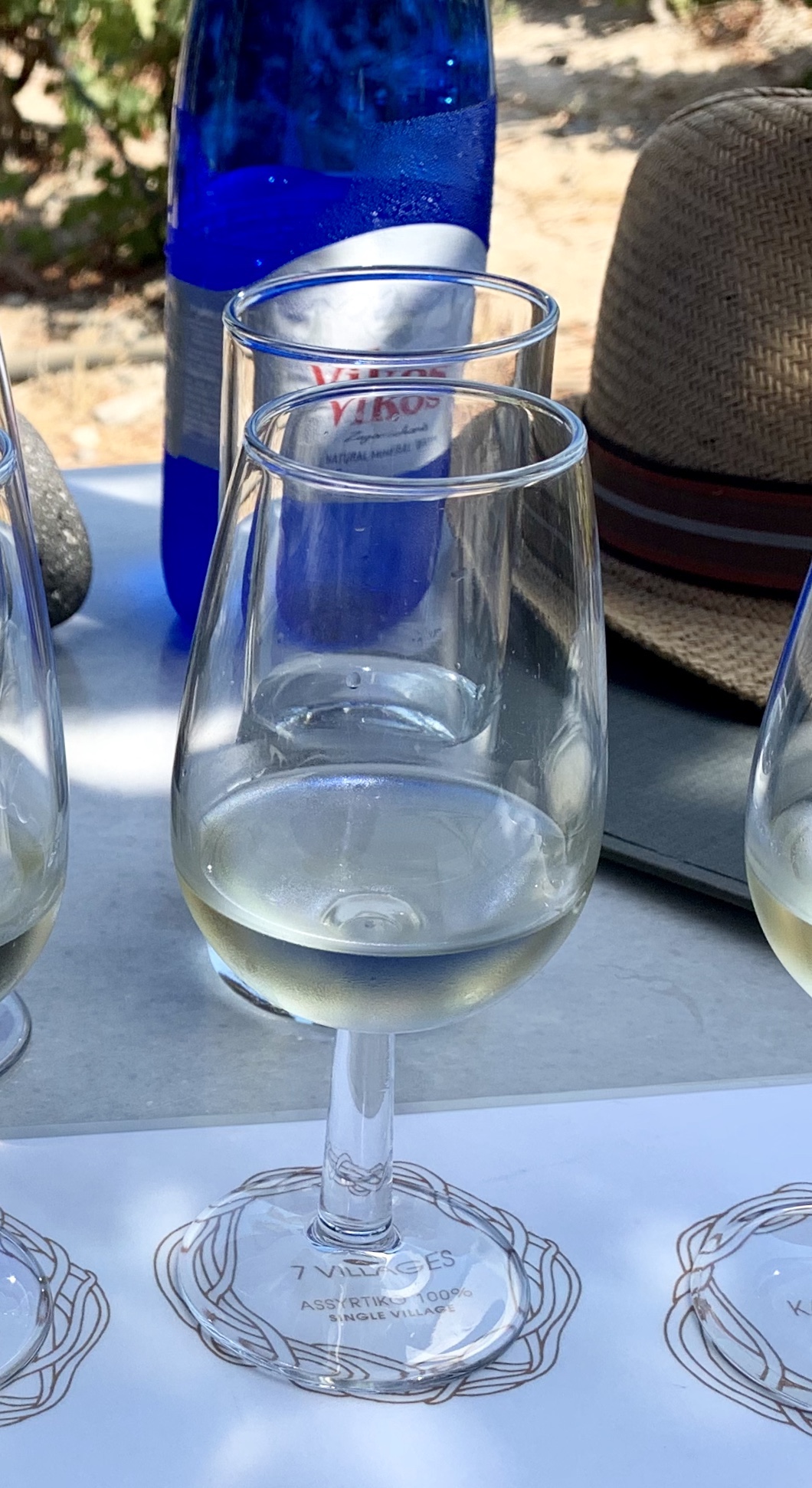
2015 7-Villages – dialling down even more, much like the AVA system in the US, the Greek PGI identifies large regions, smaller sub-regions, and single vineyards. The 7-Villages line represents wines from grapes in a single village. As the name suggests, Domaine Sigalas makes individual wines from seven different villages. This one spend one year on the lees, and has mineral/earthy notes of decomposed granite, along with creamy lemon curd flavors. 

img_0483-1

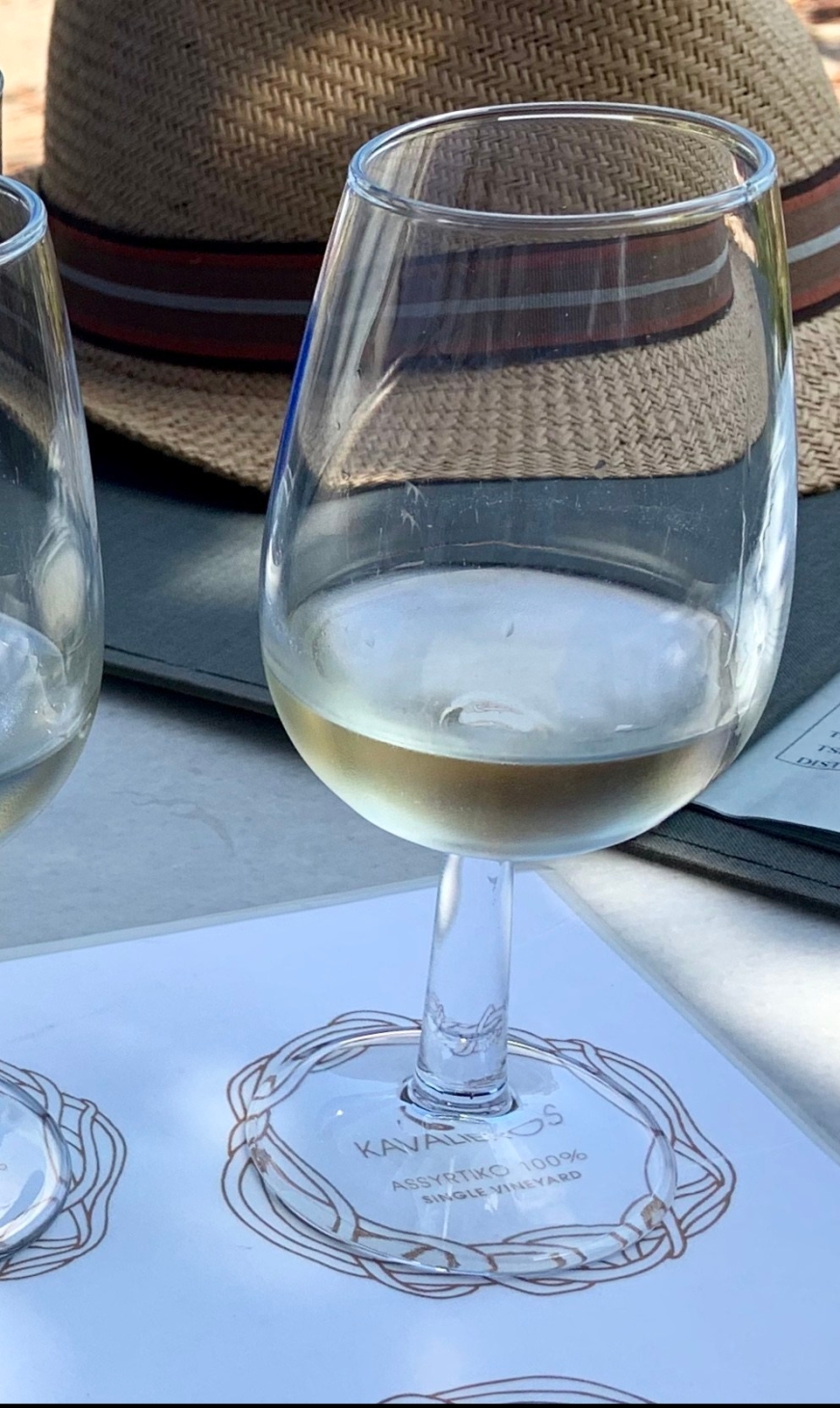
 2017 Kavalieros Single Vineyard – 100% Assyrtiko from 70 year old vines. This wine is the most place-specific in the PGI. Kavalieros loosely translates to “the one that climbs on other things,” a reference to the tendrils on grapevines that grasp anything they can to allow the vine to climb higher and higher. After spending 18 months aging on the lees, it is very smooth with noticeably more body, yet still crisp with brisk acidity and flavors of lemon and citrus.

img_0483-2

Next up was the Rosé – the 2018 Ean. Made from 100% Mandilaria grapes grown on Rhodes, this wine spent less than one hour on the skins. This is surprising given the bold, deep pink color. Pavlos said that Ean means “if.” As in, “if” not Rosé, this would be a red wine. Delightfully crisp, Ean has flavors of strawberry, cherry, and cranberry. (This one to, came home with us.)


And now, onto red! The 2017 Mm, named for the two grapes in the blend: Mandalaria and Mavrotragano. This medium-bodied red spent 18 months in French oak. It boasts rich flavors of blackberry, black cherry, clove, baking spice, and a bit of earth. With big, bold tannins, this is a dinner wine to be sure. 

img_0484

The only other red on the menu, the 100% Movrotragano, was sold out, so we moved on to dessert wines. 

An interesting bit of Santorini history, including the story of how the island got its name. In times of antiquity, the island was known as Thera. For mariners crossing the Mediterranean, Thera was a famous stop to pick up supplies, including wine. Even in modern times, it is not recommended to drink the water on Santorini, so in ancient days, wine was considered the preferred beverage. During Medieval times, the chapel of Saint Erini was built, and was visible from the sea. Chrisian crusaders renamed the island in honor of Saint Erini, thus the name became Santorini. 

The name Vinsanto comes from the Venetians, who referred to is as the wine of the saint, Vino Santo. The 2013 Vinsanto is a naturally sweet wine, with no added sugar or fortification. This wine is made by allowing the grapes to sun dry, thereby concentrating the sugar content. It takes seven times the grapes per bottle, since the grapes lose juice during the drying process. Though tawny-port-like in appearance and taste, the alcohol content is only 9%, so you can sip it all night! Vinsanto must contain a minimum of 75% Assyrtiko, and this one had 25% Aidani blended in. After five years in French oak, the wine spends an additional two years in barrels before bottling. 

img_0487

The final wine of the tasting was a red dessert wine. The 2011 Apiliotis is 100% Mandilaria, and is made in the same manner as the Vinsanto; using sun dried grapes. Again, a naturally sweet wine with no added sugar. Spending a minimum of 24 months in oak, the wine is deep, rich, and complex, with black cherry and boysenberry flavors. 

img_0488

Our final treat was a taste of the distillate, Tsipoyro. Similar to Grappa (only better, in our opinion), Tsipoyro is a distilled spirit made from Assyrtiko and Mavrotragano grapes. This stuff is 40% ABV, so proceed with caution! You’ll be tempted to shoot it, but please slow down and savor it! Clear color, with herbal and floral flavors, it is quite smooth and easy to drink.

img_0489

We had the opportunity to sample some sparkling wines from a related winery, too, but after such an extensive tasting thus far, and with another winery stop on our agenda for the day, we decided to just have some lunch and let our palates savor the wines of Domaine Sigalas. 

img_0486

img_0613
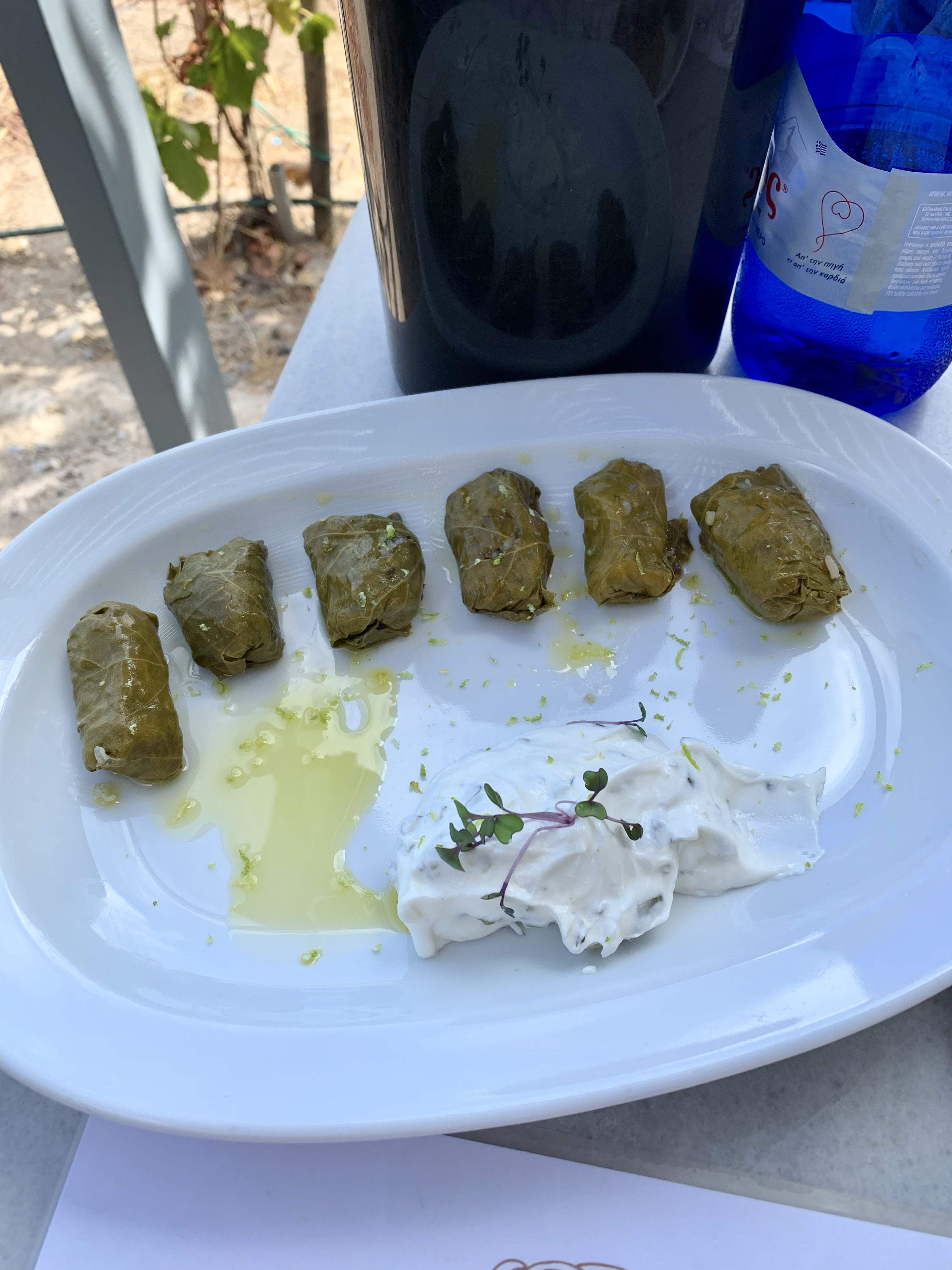
House made Dolmades – stuffed grape leaves. Pavlos said the tzatziki is made with ginger instead of garlic, because “garlic is a wine killer.” It was delicious!

img_0614
Taramosalata with fresh pita. The dip is similar in appearance to hummus, but is made with fish roe, with onion, lemon juice, and olive oil. Quite tasty and surprisingly filling!

img_0620

We heartily recommend visiting Santorini, and Greece in general. The wines here are outstanding, the food is spectacular, and the people are amazing. Sadly, not many good Greek wines are available outside the country, due to economic and political factors. So to enjoy the best, you have to come here. When you do, be sure to book a tasting at Domaine Sigalas. You’ll be glad you did! 

Yammas! 

  • Text and photos by Kent Reynolds and Robyn Raphael-Reynolds
100, Ambassador, Seghesio, Seghesio Family Vineyards, Vivino, Wine

100 Zinfandels, and Counting!

When I first heard about Vivino, way back on Thanksgiving Day, 2014, I thought it was a pretty good idea. The concept is simple: users upload pictures of wine labels, give the wine a rating from 1 – 5 stars, and write up a brief review. The label recognition technology is pretty good, so if a wine is already in the database, the user doesn’t have to manually enter it. With a global crowd-sourcing base, the database is extensive and I rarely have to manually enter a new wine. With this database of wine ratings, users can look up a wine and check scores and ratings and reviews before they buy it. If a wine has a low rating, and the reviews don’t sound promising, you might want to pass on it.

Within Vivino, users themselves are ranked. Using a complex algorithm I’ve yet to fully comprehend, but generally based on number of wines rated, quality of reviews, and participation in the social platform (liking other users’ reviews), users are assigned a ranking within their country; Number 3,421 in the U.S, for example. Also, users can earn distinctions based on how many of a given wine style they have rated. These ranks start with Explorer after your first rating, to Enthusiast after rating six wines, to Expert after 26, to the pinnacle, after rating 100 wines of a regional style: Ambassador. 

After using the app for awhile, I noticed my ranking was getting higher and higher. Suddenly my normally docile competitive spirit kicked in. I wanted to see how high I could get in numerical and regional ranking. I started trying more and different wines from around the world. I was obnoxiously diligent in taking pictures of every label of every wine I tasted, be it at the wine shop, a restaurant, a friend’s house, or anywhere else. Eventually, I made it as high as 124 in the U.S.! As of today, I’ve slipped down to 143, largely because I’ve been a little busy getting married. According to data from October 2018, there are 32.8 million Vivino users worldwide. The U.S. has the highest number of users, followed by Brazil. It’s hard to find information on number of users per country, but by my estimation, there are more than 5 million in the U.S. So 143 is still respectable, and I’m working my way back up!

Due to the wide variety of wines I was rating, however, my regional-wine ranking was slower to evolve. California Cabernet Sauvignon and Zinfandel were always my top two, but I was enjoying other varietals and regions as well. Then one day, earlier this month, I rated a California Zinfandel, and saw that it was my 99th review. I was about to become an Ambassador!  

 As I was getting ready to write this post, I went back to the beginning to recall which wine was my first rating. To my amusement, it was a Zinfandel! Back then I was a member of NakedWines.com, and a big fan of winemaker Leigh Meyering. Her “ElegantLeigh” Zinfandel 2013 was my very first Vivino entry. 

img_0113
My reviews have gotten more descriptive since then!

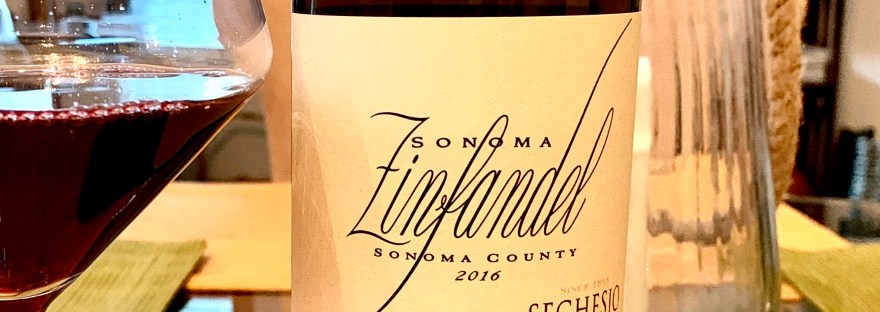
For my 100th California ZInfandel, I selected the Seghesio Sonoma Zinfandel 2016. I’ve only had Seghesio a few times, but have always enjoyed it, and it’s widely known and recognized for its quality. 

img_0085

Seghesio Family Vineyards has been in operation for more than 120 years, across five generations. In 1895, Edoardo Seghesio planted a Zinfandel vineyard in Alexander Valley. In 1902, Edoardo and his wife, Angela, built a winery and began making wine. Seghesio Winery was born. The winery flourished and gained a reputation for quality, and even managed to survive during Prohibition. Once Prohibition ended, Edoardo re-opened the doors for commercial winemaking. Fourth generation brothers, Ted and Pete Seghesio now run the operation, and are committed to quality over quantity. Ted’s nephew, Ned Neumiller, is now working in the family business; the fifth generation to do so. 

With over 300 estate vineyards planted to Zinfandel and Italian varieties, Seghesio continues to produce high-quality wines and expand their reputation in the wine world. I know I was impressed when I opened my 100th Zinfandel! 

img_0084

Deep purple color, with ruby rim. Aromas of blackberry, blueberry, and baking spice. On the palate, ripe blackberry, cassis, blueberry, cherry, baking spice, black pepper, and vanilla. There’s a lot going on here. Definitely one of the more complex Zinfandels I’ve had in awhile. Big, bold, and full bodied with bright acidity and medium tannins. The finish is spicy with black fruit notes, and goes on for days. Perfect with baby back ribs!

img_0087
The aforementioned Baby Back ribs, with a twice-baked potato and corn on the cob! I do love summer eats.

img_0090

If you haven’t tried Seghesio Zinfandel yet, you really ought to. Pop a bottle, download the Vivino app, and rate and review it! Your California Zinfandel Ambassador recommends it. 🙂

Cheers!

  • By Kent Reynolds