What do a Norwegian ship owner, a verdant Chilean valley, and sustainable farming have in common?
Wine!
What did you think we were going to say? This is a wine blog, afterall.
More than 25 years ago, Norwegian Armador (that’s “ship owner” in case you were wondering) Dan Odfjell discovered the Maipo Valley in Chile. Well, not discovered in the Viking explorer sense; he found it for himself. Dan fell in love with this little corner of the planet, far from home both in distance and climate. He settled in the valley, and began pursuing his passion for wine.
Today, sons Laurence and Dan Jr. are at the helm, managing 284 acres of 100% certified organic and biodynamic vineyards in the heart of the Chilean wine country. They carry on the family mission of producing unique quality wines in a sustainable way.
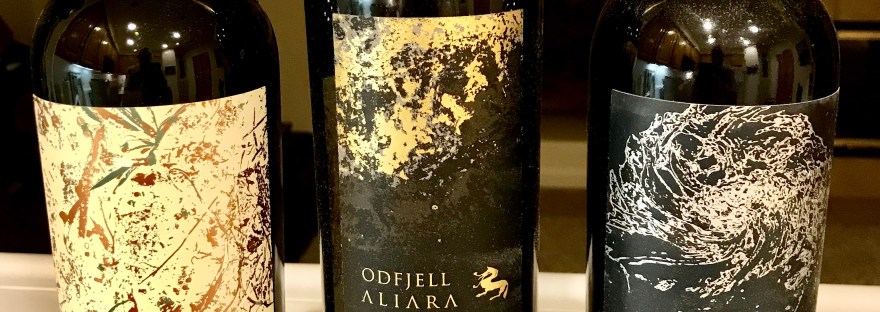
Recently, we were given the opportunity to experience their craft. Odfjell Premium Organic Wines are offered in three different tiers, with labels representing Land, Water, and Fire. We were fortunate to receive samples of each.
The following wines were provided as a media samples for review. All reviews, descriptions, and opinions are our own. We received no additional compensation.
I really don’t know what happened to our photos. Sorry, but it’s your loss. The marinated flat iron steak was delicious with this Cabernet!
2016 Odfjell Armador Cabernet Sauvignon (SRP $15)
From the website: In the bygone days of sailing ships, wine was the drink of choice on long voyages. Today Dan Odfjell, a Norwegian shipowner, perpetuates his legacy by making wines to sail from Chile across the seven seas.
Winemaker’s Tasting Notes: Ruby-red in color with a hint of violet. Red-fruit aromas recall strawberries and plums, along with notes of licorice and anise. Perfectly balanced on the palate with ripe tannins and a long, refreshing nish.
Here’s what we thought:
Inky purple color in the glass. Aromas of blackberry, bramble, and cassis. On the palate, there are flavors of ripe blackberry, raspberry, bramble, black currant, and cherry, with oak, cedar, tobacco, and black pepper, with earthy notes mid-palate. Tannins are firm and chewy, balanced with bright acidity. Full bodied with a long, spicy finish of black fruit, earth, and smoke. Outstanding paired with balsamic marinated flat iron steak.
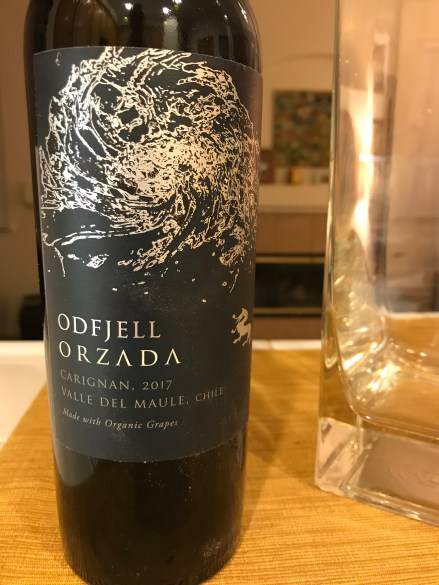
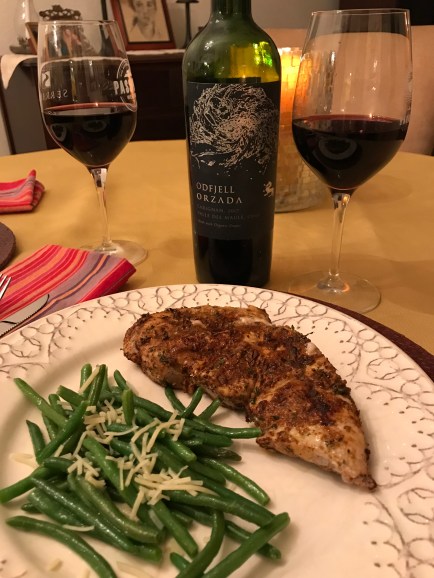
2017 Odfjell Orzada Carignan (SRP $23)
From the website: When the Norwegian shipowner Dan Odfjell founded our winery, he embarked upon adventure filled with challenge and promise. Orzada is a nautical term for sailing up against the wind before setting a direction. Our Orzada wines reflect our staking a course in pursuit of a beautiful and memorable wine.
Winemaker’s Tasting Notes: Dark red in color. Intense and complex on the nose, with spices and ripe red fruits such as cherries, raspberries, and plums mixed with aromas of blackberries and anise. The palate is juicy and powerful with velvety-soft tannins and a long finish.
Now we’re talking!
Here’s what we thought:
Deep purple color with a brick rim. Aromas of fresh-picked cherry, oak wood, and spice. On the palate there are flavors of raspberry, boysenberry, tart cherry, licorice, cedar, and black pepper. Soft tannins, medium body, and bright, lively acidity. The finish is long, with red and black fruit, oak, and spice. We paired this with grilled, chili-rubbed pork chops and it really complemented the meal nicely.
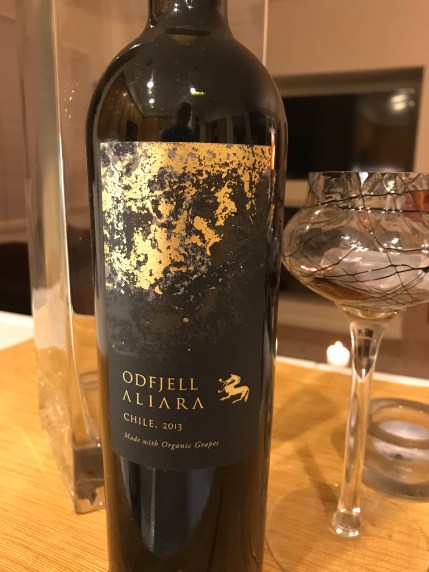
2013 Odfjell Aliara (SRP $44)
From the website: In the age of sail ships, safe and healthy provisions were crucial for the success of the adventure. A “liara” was a tin cup measurement for the crew´s daily ration of wine. Our Aliara is an assemblage made in small and precios quantitites as a tribute to this tradition.
Winemaker’s Tasting Notes: Concentrated deep violet in color. The nose is attractive and intense with a range of aromas from the different varieties in the blend, including nuts such as hazelnuts, dates, and dried figs, as well as floral notes recalling jasmine and roses. The palate is sophisticated, intense, and juicy and complemented by chocolate, coffee, and tobacco leaves. The finish is long with ripe and velvety tannins. An unforgettable experience.
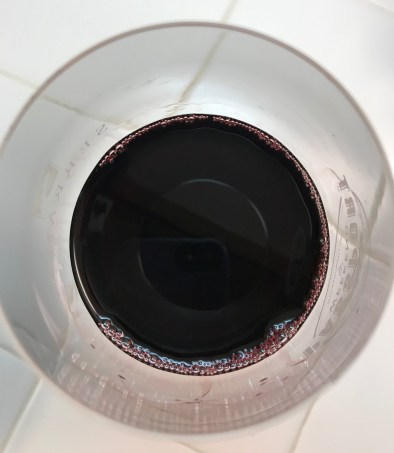
That’s some dark, inky wine.
Here’s what we thought:
A blend of 65% Carignan, 20% Syrah, and 5% Malbec. Deep, inky purple color. Aromas of blackberry bramble and plum. On the palate, flavors of blackberry, cherry, blueberry, and plum, with white pepper and cedar. Tannins are big and chewy. Medium acidity. Long finish of black fruit and black pepper. Outstanding with spice-rubbed grilled steak tacos.
The Odfjell is doing some remarkable things with organic, biodynamic wines in Chile. If you get the opportunity to try these wines, don’t let it pass you by!
Wine. Travel. Wine and travel. The two just seem to go together. Sometimes, the travel can be as simple as a picnic at a local park. Other times, it’s a trans-ocean, international dream trip. Depending on your journey, you may need different wine transport options. Fortunately, our friends at I Love Wine have compiled a list and review of a number of different Wine Travel Bags for your consideration. From a single-bottle picnic tote, complete with glassware and corkscrew, to a full-blown 12-bottle wine suitcase, they have you covered.
We’ve used bubble wrap wine sleeves when travelling, similar to No. 9 in the featured article below, and we’ve been very happy with the results. No breakage, no leaks, and no problems with packing – as long as you keep your suitcase under the weight limit! Remember, a bottle of wine weighs an average of about three pounds! Whether we’re bringing wine with us on our trip, or planning to buy some at our destination to bring home…or both…these sleeves are practical and affordable.
Now’s the time to start planning your 2019 getaways. Don’t forget to consider the wine! Let us know in the comments if you’ve tried any of these bags, or something similar!
We love wine more than anything. Traveling comes in a close second, so traveling with wine is nearly perfect. It presents some challenges depending on how far you’re traveling and whether you need to keep the wine chilled in transit. Wine travel bags with insulated interiors solve part of the problem, but they vary in quality. Wine bags are also available in a variety of styles, so you need a carrier that reflects your taste as well as the formality of the event. Here we share ten of the best wine travel bags. Whether you’re carrying wine for a picnic on the beach, a train ride through Napa Valley, or a plane trip across the Atlantic, we have the perfect options for you.
1. OPUX Insulated 2-Bottle Wine Tote: $17
This insulated wine tote from OPUX is perfect for an afternoon picnic. The wine compartment is insulated to keep the bottles cool and has a divider to protect them from clinking together. It has convenient dual zippers, plus a front pocket for carrying other accessories. For a wine tote under $20, we’re impressed with its durability. It has a handle at the top, plus a detachable shoulder strap, offering a few transit options. We also love that it’s available in so many colors. For the price point, you can easily pick up a few of these to match the mood of the occasion. As a bonus, it comes with a free corkscrew.
2. Picnic at Ascot Deluxe Insulated Wine Tote: $24
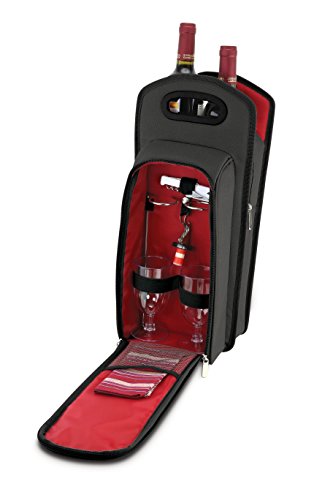
This kit from Picnic at Ascot is an even more complete picnic kit. It includes two acrylic wine glasses, a wine opener, and a pair of napkins. With the goblets in place it holds just one bottle of wine. Remove the goblets and you can carry two bottles. The panel that holds your wine opener folds neatly between them so they won’t collide. The tote is made of sturdy canvas and comes in a variety of colors and patterns. Although it’s and extremely durable carrier, we love that it comes with a lifetime guarantee from the company.
3. KOVOT 9-Piece Wine Travel Bag and Picnic Set: $25
KOVOT boasts one of the most complete picnic kits on the market, including accessories you might not have thought about. It includes an insulated compartment to hold two bottles of wine with a divider in between. The side pocket holds two acrylic wine glasses, cloth napkins, a corkscrew, and a bottle stopper. The surprise accessory is a pair of stakes so you can secure your wine glasses on uneven ground. At first blush, this might seem like overkill, but it’s perfect if you need to set your glass down on the beach. This picnic set would make a wonderful impression on a first date and also makes a marvelous gift for any wine lover.
4. Kato Insulated 2-Bottle Wine Carrier: $20
If you want a 2-bottle carrier that looks more like a regular tote, Kato makes this stylish wine bag. It keeps wine chilled for hours thanks to its internal padding and insulation, plus it has a flexible divider to protect the bottles in transit. We love the zippered side compartment for carrying your phone, keys, or wine accessories. Like some of the other kits, it also comes with a free corkscrew. Above all, we love the variety of colors and patterns available, making this one of the most versatile and stylish totes at this price point.
5. Vina 3-Bottle Insulated Wine Carrier: $18
The Vina is our favorite 3-bottle wine tote. The bottles are held in place by dividers and the insulation does well in keeping chilled bottles cool until you get to your destination. One thing we especially love is how easy this carrier is to clean. The high-quality polyester is just a wipe down from looking perfect again, making it the ideal carrier for picnics, festivals, and other outdoor events. It has a convenient side pocket for storing the free corkscrew and any other items you need handy.
6. Kato 4-Bottle Insulated Wine Tote: $22
We love the styling of this 4-bottle carrier from Kato, with its leather accents and stainless steel hardware. The tote is made of canvas and comes in gray or a cute navy and white striped pattern. It doesn’t have side pockets, but we love that the divider inside is removable, which gives some storage flexibility. For such a stylish bag, we love the affordability. The quality of insulation is also impressive, keeping chilled wines cold for hours.
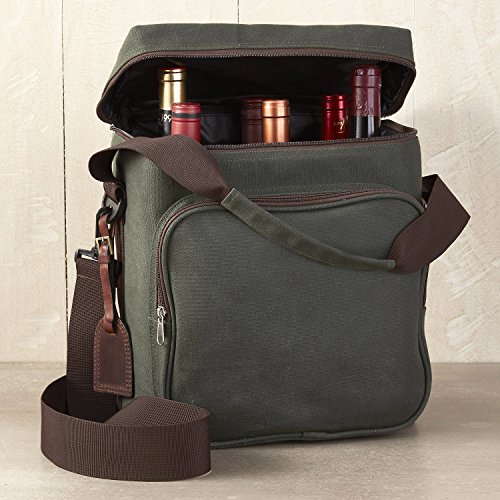
For higher-capacity totes, sturdy construction becomes critical. If the carrier isn’t built to handle the weight of the bottles, it will wear out quickly. Worse, it might break while you’re carrying it. For transporting up to 6-bottles, our favorite is this canvas wine carrier from Wine Enthusiast. It has a padded divider which leaves space to carry up to six Bordeaux bottles, plus a side pocket for accessories. The insulation and padding are both excellent and the exterior construction is just as impressive. The forest green canvas is durable and we love the chocolate brown trim. There’s also a monogrammable leather hang tag in case you’d like to personalize it.
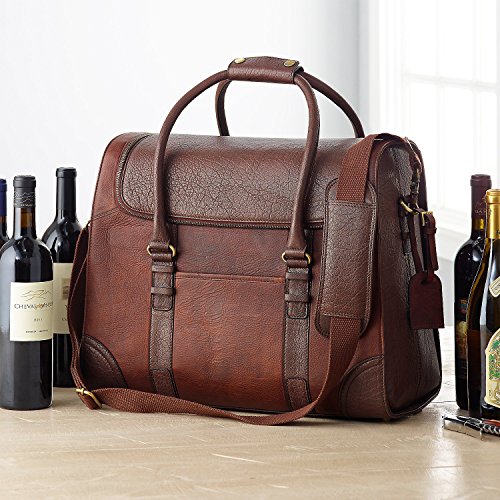
For a 6-bottle tote that doesn’t look like a standard wine carrier, Wine Enthusiast offers this gorgeous leather weekend bag. It’s much more expensive than a simple canvas carrier, but you won’t find a classier wine travel bag. It’s 100% handcrafted and the attention to detail is apparent in all aspects of the bag, both inside and out. It holds up to six bottles upright, separated with padded dividers, and has an outer pocket for small accessories. It’s the perfect bag to accompany you on that train trip through wine country you’ve always dreamt of.
9. Wine Wings Wine Bottle Protector Sleeve: $20 for 4
Planning a longer journey? If you’re traveling by plane, Wine Wings are an inexpensive way to safely pack your wine. These bags completely seal the wine bottle inside with Ziplocks and velcro to keep any leaks contained. The bags are also padded internally with bubble-wrap and have a stronger exterior to prevent piercing by other items in your bag. They’re durable and reusable, so investing in these means your only worry will be keeping your suitcase under the weight limit.
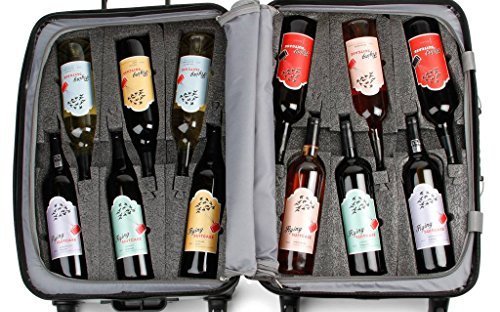
Finally planning that wine vacation through Europe and plan to bring a lot of bottles home? VinGardeValise makes suitcases specifically designed to keep your wine safe during its journey. This suitcase holds 12 bottles and weighs between 43 and 49 lbs when filled to capacity. This keeps it safely under the checked bag weight limit for most airlines, though be sure to doublecheck when you buy your tickets. The suitcase meets TSA, FAA, and airline luggage standards and is a sturdy piece of luggage, as well. It has double channel zippers, a reinforced internal frame, and wheels that spin 360 degrees for easy mobility. We also love that it has a TSA-compliant lock to keep the wine even more secure.
I first learned about Toccata wines several years ago, when one of their sales reps was hosting a tasting at a wine bar near my home. I happened in, by happy coincidence, and was immediately impressed by the quality, complexity, and character of the wines. Alas, the wines are not widely distributed, so Toccata was difficult to find and enjoy regularly.
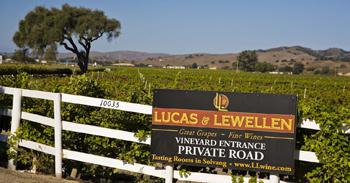
The Toccata label is owned by Lucas & Lewellen Vineyards, a family owned estate in Santa Barbara County. I’m fairly certain the Toccata tasting all those years ago was the first Santa Barbara wine I had experienced. Lucas & Lewellen is fairly well known to travellers along Highway 101 south of Paso Robles, as their large estate vineyards are adjacent to the highway, and are well marked with signs identifying ownership and often the variety of grape.
Photo Credit: llwine.com
Years after that original Toccata tasting, my son started college at U.C. Santa Barbara; another happy coincidence. During the hours-long drives from Northern California to visit, as I passed the Lucas & Lewellen vineyards, I was reminded of the Toccata wines I had enjoyed. When I discovered that Toccata has a tasting room, just a few miles off Highway 101 in the quaint village of Solvang, I was thrilled to be able to enjoy these wines again while also enjoying time with my son, and the beauty of Santa Barbara. Still, once he graduated, and my regular trips to Santa Barbara came to an end, so did my ready access to Toccata.
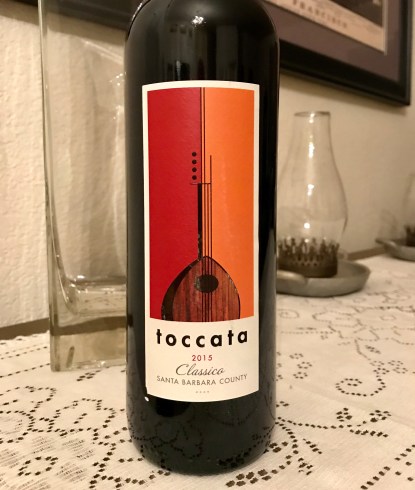
To my sheer delight, I was recently offered a sample of the Toccata Classico 2015. There was no hesitation in my affirmative response to the offer!
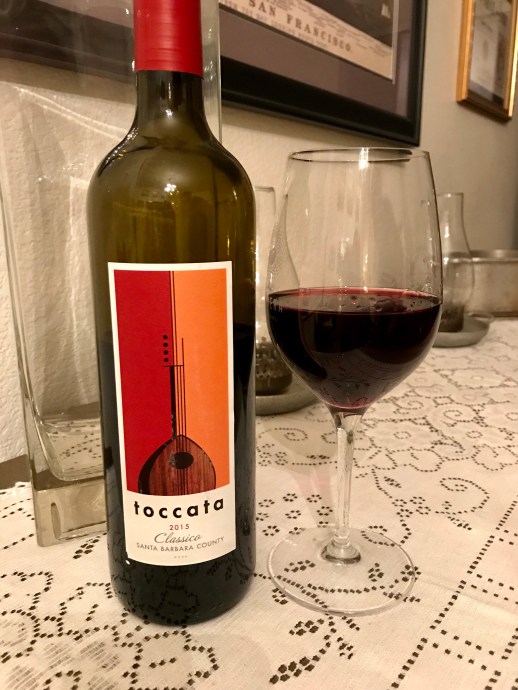
Toccata wines are all Italian varieties and styles. Toccata Classico is a red blend made in the Super Tuscan style. The fruit comes from two estate vineyards; Los Alamos Vineyard in the Santa Barbara AVA and Valley View Vineyard in the Santa Ynez Valley AVA. The 2015 is composed of 50% Sangiovese, 30% Cabernet Sauvignon, and 5% each of Merlot, Cabernet Franc, Freisa, and Petit Verdot. Here’s what we thought of it:
The following wine was provided as a media sample for review. All reviews, descriptions, and opinions are our own. We received no additional compensation.
Rich, deep purple with ruby rim. Initial nose is vanilla, with ripe red berry. On the palate, flavors of ripe raspberry, blackberry, and cassis, with baking spice, vanilla, tobacco, white pepper, and toasty oak. Firm, chewy tannins, with medium acidity. Rich and full bodied. The finish is long with red and black fruit, oak, and black pepper.
SRP $29.00 per bottle
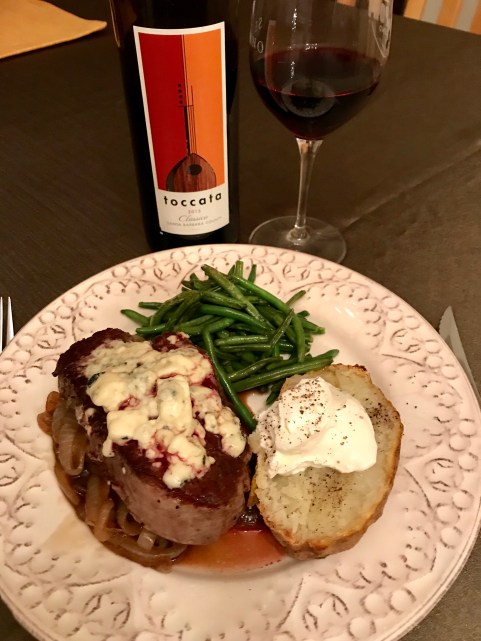
Perfect for Italian cuisine, and also fantastic with other genres of food, too. We loved it with Pan Seared Filet Steaks with Gorgonzola and Caramelized Onions. Sheer delight!
If you are in the Santa Barbara area, be sure to take a detour out to Solvang and visit the Toccata tasting room. It’s well worth the trip!
Cheers!
By Kent Reynolds
Photo credit, except where noted, and inspiration by Robyn Raphael
More and more wine producers are embracing environmental consciousness. Whether out of concern for conserving our planet and its resources, or reacting to consumer and market demands, there is no doubt that organic, sustainable, natural, and biodynamic wines are on the rise and here to stay.
It’s not just the small, boutique, dare I say “hippie” or “hipster” wineries that are turning toward Earth-friendly farming practices. Many well known, large production producers are getting on board, and at converting at least a small percentage of production to sustainable farming, most with an eye toward long-range growth and conversion.
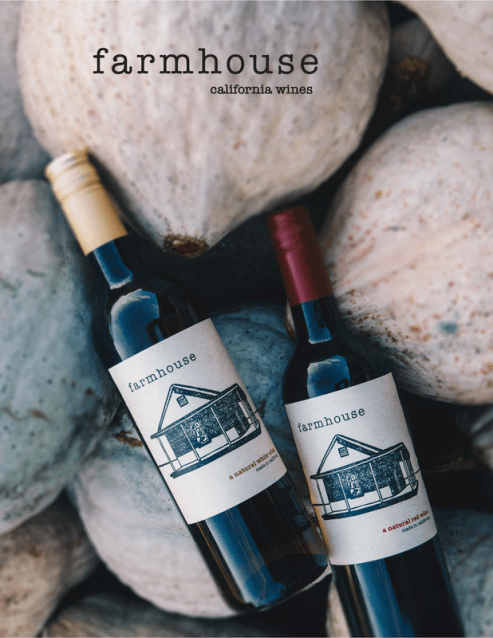
Recently, we received an invitation to sample two natural wines, Farmhouse Wines, produced by Cline Family Cellars. If you don’t know Cline, you really ought to get out more. Fred Cline founded Cline Family Cellars in 1982. He started in Oakley, California, in the Delta region, east of San Francisco. In 1989, he moved the winery to Sonoma County. One of the original Rhone Rangers, Fred Cline helped establish Northern California as a serious producer of Rhone varieties like Syrah, Viognier, Marsanne, and Roussanne. Cline Family Cellars has gone on to expand their portfolio to include a plethora of grape varieties, and produces some stellar wines.
Photo Credit: Cline Family Cellars
Fred Cline and his Soil Manager, Bobby Cannard (aka The Soil Whisperer) have developed biodynamic practices they dubbed the Green String method. A significantly environmentally friendly farming process, it minimizes pollution of the air, soil, and water, and minimizes the overall environmental footprint. Utilizing natural weed control (sheep and goats), cover crops, aviary pest control (owls and hawks), and ar power, they have made big inroads in sustainable farming. They established a farm, the Green String Farm, in Petaluma, CA, to foster these practices, producing a variety of crops for consumers. They even established an internship program to expose farming students to these practices.
There are two Farmhouse wines; a white blend and a red blend. Both are natural, sustainably produced wines. They are unpretentious, user-friendly, sealed with screwcap, and easy drinking. Oh, and they retail for just $10.99! That’s wallet friendly, too!
Photo Credit: Cline Family Cellars
Winemaker Charlie Tsegeletos wants the grapes to take center stage in these wines. He uses minimal oak, and incorporates blending to bring out the best of each variety and vintage.
The following wines were provided as a media sample for review. All reviews, descriptions, and opinions are our own. We received no additional compensation.
The 2017 Farmhouse White is a blend of Palomino (41%), Muscat Calelli (25%), Rousanne (22%), Marsanne (6%), Viognier (5%), and Riesling (1%). Cold fermented in stainless steel tanks, the resulting wine is light and fruity, with balance and finesse. Here’s what we thought of it:
A very interesting white blend. Don’t serve too cold or the bouquet and flavors will be muted. Pale peach color. Aromas of peach, honeysuckle, mango, and tangerine. On the palate, there are flavors lemon curd, guava, mango, and peach, with a touch of honey on the finish. That’d be the Muscat! Medium body and acidity. Fruity, mildly sweet. Pleasant for sipping, structured enough of fish, chicken, or spicy Thai.
The 2017 Farmhouse Red leads with a punch of Zinfandel (59%), followed by Syran (15%), Carignane (9%), Mourvèdre (6%), Petite Sirah (5%), and the remaining 6%, splashes of other red varieties. Fermented in stainless steel tanks, the wine is racked into 40% new French oak to enhance the flavors as it ages. Here’s what we thought:
Inky purple color. On the palate, aromas of raspberry, fresh blackberry, clove, and spice. On the palate, boldly fruit forward; bordering on jammy but there is enough complexity to bring some balance. Flavors of ripe blackberry, black cherry, cassis, and black plum, with licorice, baking spice, black pepper, and caramel. Rich and full bodied with round mouthfeel and bright acidity. The finish is very long with black fruit, ripe plum, and black pepper.
Both Farmhouse wines would be at home on your Thanksgiving or other holiday table, and equally comfortable snuggled up on the couch in front of a warming fire, binge-watching your favorite Netflix show.
Let us know, in the comments, what you paired it with, and what you’re binging on Netflix!
In Western Placer County, near where the suburban housing tracts meet the rural farms and ranches, the Loder family has a small parcel of wine grapes. Ron and Kathy Loder are long-time wine lovers. When they were raising their children, they had grassy fields for the kids to play and practice football. Once the kids were grown, Ron and Kathy decided to plant grapes and make their own wine.
Getting started wasn’t as simple as just planting some vines and waiting for them to produce fruit. Ron was serious about wanting to make good wine, so he contacted U.C. Davis; renown for their viticulture program; and asked for help. Ron and Kathy really, really wanted to grow Cabernet Sauvignon – their favorite varietal wines. However, the experts told them that their microclimate and soil were not suitable. Instead, they were advised to grow grapes more suited to the Mediterranean climate here – Barbera and Tempranillo, and interestingly, Cab Sauv’s parent, Cabernet Franc. In all they have about ¾ of an acre of Estate vines, and they also source other varieties from vineyards around Northern California.
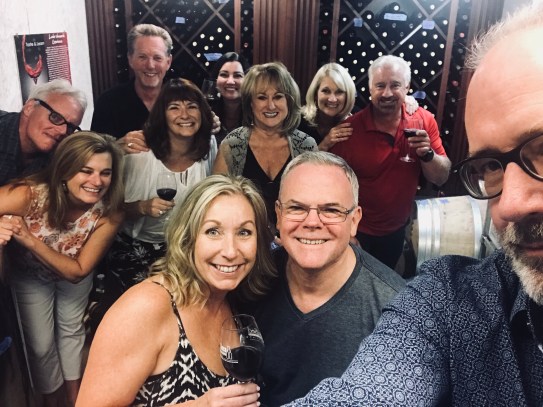
A couple of weeks ago, we were invited to visit and experience Ron and Kathy’s production. The group started with appetizers and wine in the Loder family home, and then Ron escorted us out to the vineyard for an educational tour. One of first things I noticed about Ron is his passion for wine growing and winemaking. Ron enthusiastically talked us through the process, from initial plantings, to waiting the three years before the vines produce wine-quality grapes, to harvest, crush, and production. While in the vineyard, he brought out his refractometer, the instrument used to determine the brix (sugar level) in the grape juice, and allowed each of us to have a look.
Ron is also a humble man, relating the story of his efforts to cheat the process and make wine with grapes from two years old vines. It was a complete failure, and they marked the bottles with an “F”. They still have a few bottles, just as a reminder.
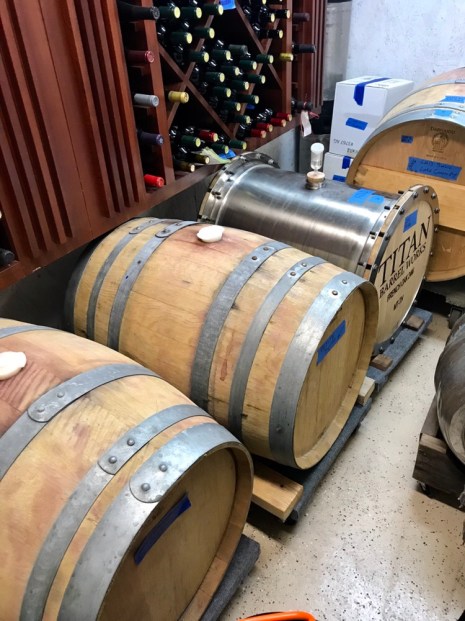
After the vineyard tour, we moved on to the fermentation room and cellar. Robyn even had the chance to punch down some recently harvested grapes that were in the fermentation tank! Then, of course, we got to sample more wine.
Loder Vineyards is not a commercial production, but with the quality of their wines, they should be. Touted as “no headache wine”, Ron uses a minimalist approach, with microscopic amounts of sulfites used, and little other intervention. All of the wines spend nearly two years in oak before bottling. Just a few weekends before our visit, they had just bottled their 2016 vintage.
A true “friends and family” production, the Saturday following our visit, they would host their annual harvest and crush party. We were invited, but already had plans to be out of town.
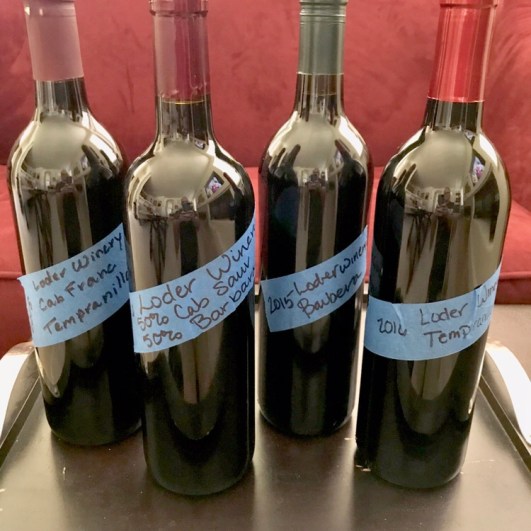
Ron’s vocational background is in commercial building construction. As such, when they first started bottling wine, they used blue painter’s tape as labels; having an ample supply on hand. This tradition continues today, and Ron says if he ever does enter commercial production, his labels will be designed in similar fashion.
All of the wines we tasted were well made and complex. Fruit forward without being jammy, with smooth tannins and balanced acidity and oak influences. We tasted Estate Barbera and Tempranillo, some interesting blends such as Tempranillo-Cabernet Franc (Kent’s favorite) and a Barbera-Cabernet Sauvignon. Yes, Ron and Kathy have made connections in the wine world, and source Cabernet Sauvignon from Lake County, so they can make and drink their beloved favorite. We barrel tasted the 2016 Cabernet Sauvignon, and it is already coming along, with promise to be a fantastic wine!
We were honored to be invited to this event, and consider Ron and Kathy, and all of the other’s there that evening, to be new wine friends.
Cheers!
Text and photos by Kent Reynolds and Robyn Raphael
During the 2017 Wine Bloggers Conference, we were introduced to the wines of Cariñena, Spain. Predominantly Garnahca based wines, we were instantly in love. As we enjoyed the flavors of these wines, we began to yearn to explore other regions noted for their Garnacha wines. Perhaps the most famous of these regions is the Rhône Valley in France. There, as in most of the wine world, this fantastic and versatile red grape is known as Grenache.
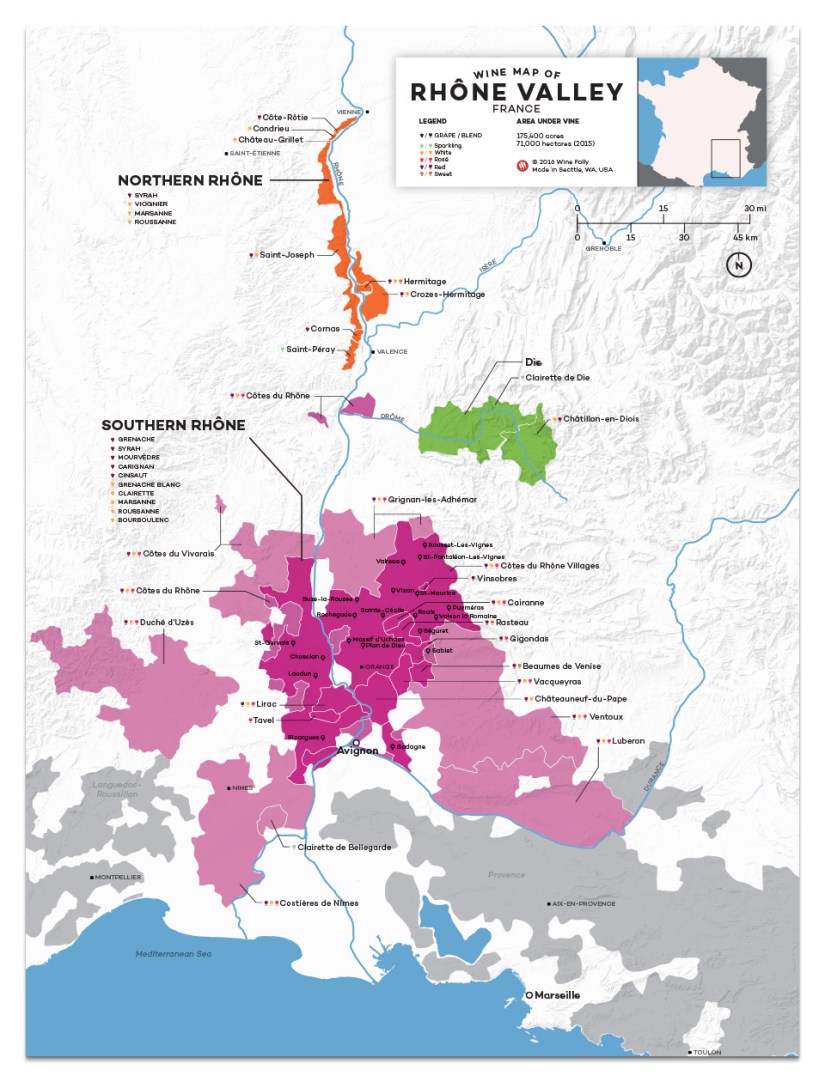
The Rhône Valley is in the southeast of France. It is one of the oldest grape growing regions in the world, with viticulture documented as early as the 4th century B.C. The valley runs some 150 miles in a north-south direction, and as such, encompassess a wide variety of soil and growing conditions. The Rhône Valley can generally be divided into the Northern and the Southern. In the Northern Rhône, Syrah is king, with the wines generally dominated by this grape. Village (and wine) names such as Côte-Rôtie, Condrieu, Crozes-Hermitage, and Hermitage may be familiar to you, as these are some of the more famous Syrah regions in France.
Credit: WineFolly.com
In the Southern Rhône Valley, the wines are most often blends, with Grenache playing the lead role, usually supported by such cast of characters as Syrah and Mourvèdre. These wines are commonly known as GSM. In addition to reds, the Rhone Valley also produces some stunning white wines, from Viognier, Marsanne, and Roussanne grapes. While we’ve had Grenache and Viognier wines before, including GSM and Viognier from the Rhône Valley, we wanted to deliberately dive into some fine Southern Rhône Valley wines to explore and get to know the region as well as the wine.
The more well-known villages in the Southern Rhône are Côtes du Rhône, a rather generic term for wines from this area, Côtes du Rhône Villages – denoting a more specific identity of place and quality, Gigondas, Vacqueyras, and what is arguably the most famous and best quality Southern Rhône region, Châteauneuf-du-Pape. There are many other villages worth exploring, but we wanted to focus on the most famous and prolific for now.
The Southern Rhône is a Mediterranean climate, as one might expect in the South of France. Long, warm summers and mild winters provide ideal growing conditions for Grenache. In addition, the Mistral winds, blowing up to 60 miles per hour, some 150 days per year, provide cooling and drying to the tight, fungus-prone Grenache grape clusters. Hold on to your hat, to be sure, but appreciate those high winds for the effect they have on this cherished wine!
Before we dive into the wines, allow us to share another little tidbit from history. The famous Châteauneuf-du-Pape is roughly translated to “New Castle of the Pope.” In 14th century, the papacy moved from Rome to Avignon, a village along the Rhône River near the southern end of the valley. Apparently the Popes enjoyed the tranquility of French countryside! In 1317, Pope John XXII had a summer residence built at what is now Châteauneuf-du-Pape. Although construction was not completed until 1333, a year before Pope John XXII’s death, the name remains and the wines from this region remain coveted for their quality.
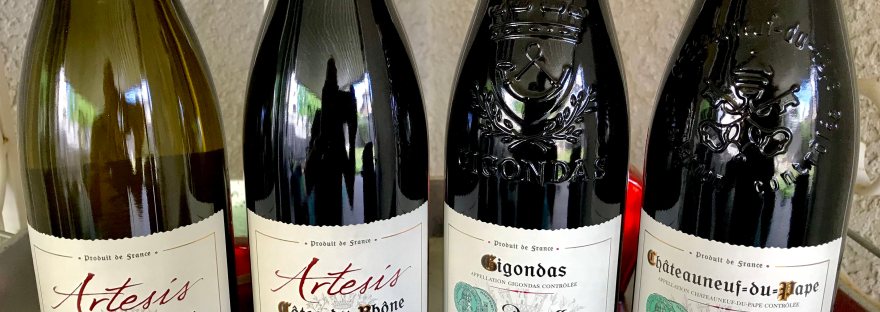
With our interest in Southern Rhône wines, we were pleased to receive the following bottles as media samples. Tasting through these wines, we were transported to the South of France in each glass. Though we have not yet been in person, the Rhône Valley is definitely high on our list of places to visit.
Now, on to the wines!
The wines below are media samples. All thoughts, opinions, and notes are our own. No other compensation was received.
Ogier Côtes du Rhône Artesis Blanc 2016
Golden color in the glass. Aromas of white flower, light straw, and tropical fruit. In the palate, there are flavors of lemon and grapefruit, with hints of mango, and soft floral and herbal notes rounding out the mouth. Soft, full mouthfeel with vibrant acidity. The finish is medium with pleasing notes of citrus, tropical fruit, and floral. Excellent pairing with grilled sea bass and rosemary quinoa.
Ogier Côtes du Rhône Artesis 2016
Deep, rich purple color. We decanted for about an hour before serving. On the nose, luscious aromas of blueberry, raspberry, and plum with spicy notes. On the palate, blackberry, black cherry, blueberry, and plum, with black pepper, baking spice, and vanilla. Notes of milk chocolate as the finish develops, ending with spicy black fruit. The mouthfeel and tannins are incredibly soft, round, and smooth, with medium acidity. We paired this with, of all things, carne asada tacos with a radish-cilantro salsa, and it was sublime. A truly amazing Côtes du Rhône.
Ogier Gigondas Dentellis 2014
Deep ruby color. Decanted for about an hour and pleasing aromas of raspberry, bramble, and black pepper. On the palate, there are flavors of cherry, red currant, cranberry, raspberry, and spice. At mid palate mineral and crushed granite notes emerge, along with hints of milk chocolate and black pepper. Medium body with mild tannins and acidity. We paired this with grilled Ahi tuna steaks, and the combination was amazing! The spice in the wine really enhanced the flavor of the tuna. This is a truly amazing wine!
Ogier Châteauneuf-du-Pape Reine Jeanne 2014
They call this the wine of kings, king of wines for a very good reason. Rich, complex, and delicious. Cherry red color with brick rim. Aromas of chocolate covered cherry, licorice, and smoke. On the palate there are flavors of black cherry, ripe raspberry, tobacco, licorice, cloves and other baking spice, and smoky notes. Tannins are firm but smooth, and ample acidity perfect for food pairing. We had this with grilled rib eye cooked medium rare, and it was heavenly perfection. Long, spicy finish with abundant red fruit and milk chocolate. Please may I have another?
As you can tell, we were very impressed with the wines of the Southern Rhône Valley. If you’d like to travel to the Rhône in a wine glass, head to your local wine shop and get yourself some of these amazing wines today!
Cheers
By Kent Reynolds and Robyn Raphael
Photo Credits, unless otherwise noted: Kent Reynolds
Nestled on the southwestern slopes of the Haleakala volcano, just past a stretch of white-knuckle switchbacks, near the community of Ulupalakua, lies an oasis. A wine oasis. Yes, a wine oasis in Paradise!
We had been planning a trip to Hawaii, to include a few days on Oahu, then a week on Maui. Knowing that there are now wineries in all 50 states, we turned to Google to find out where might be the Hawaiian wineries. As luck would have it, right there on Maui, there is MauiWine. We contacted them in advance to arrange a tour and tasting, and General Manager Joe Hegele graciously offered to be our personal tour guide.
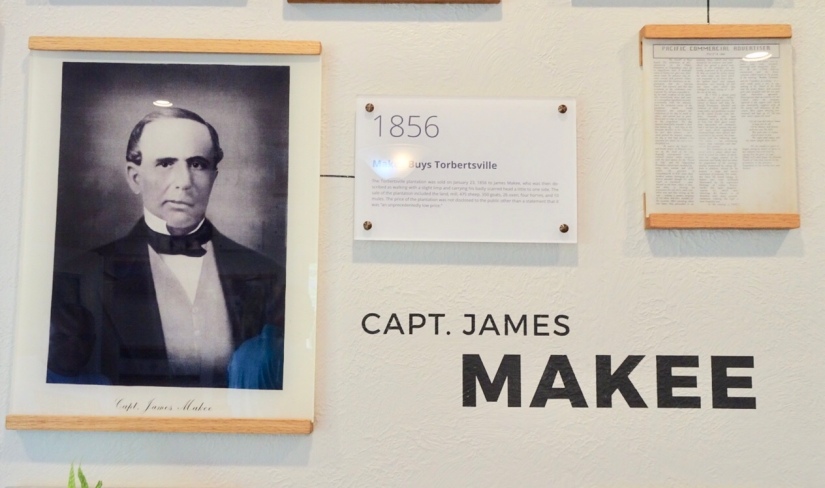
MauiWine’s story is rich in history and culture. The winery lies on a property formerly owned by Captain Makee, a whaling captain in the mid-1800’s. The story goes that Captain Makee spotted the land while passing by the south side of Maui on the way to Oahu. He committed to himself that one day he would live there.
Prior to Captain Makee owning the land, however, King Kamehameha III leased it to a rancher, L.L. Torbet, who established a plantation and ranch. Torbet raised potatoes, and during the California Gold Rush, bought a boat to carry his crop to hungry gold miners on the mainland. Unfortunately, his boat sank, and he lost everything.
Meanwhile, Captain Makee was having his own challenges. A crewman aboard ship, upset at being denied leave, snuck into Captain Makee’s cabin at night, and attacked him with a hatchet. The attack failed, the crewman escaped, and Captain Makee decided it was time to retire. After settling in Honolulu, he eventually followed through on his commitment to settle on the land he had seen on Maui. In January 1856, he purchased the Torbetsville plantation, establishing a home and cattle ranch.
Having survived the attempt on his life, Captain Makee came to understand that life is a gift, and devoted his days to celebrating life. He loved the local roses, Lokelani, and dubbed the property Rose Ranch. He soon became known for his hospitality and day’s long parties. Dignitaries, including Hawaiian King Kalakaua and Queen Kapiolani would visit for hula dancing, poker games, and relaxation.
Even today, the property is considered sacred ground. As you enter, in front of the King’s Cottage, you pass a hula circle, carved from cypress trees planted in the 1870’s for King Kalakaua, known as “the Merrie Monarch”, who would sit and watch hula dancers on that spot. The cypress trees stood for nearly 150 years, until a storm in 2012 brought two of them down. Local artist Tim Garcia, was brought in to carve the remaining trunks into representations of King Kalakaua, hula dancers, and vessels. Joe said that even to this day, ōlapa (hula dancers) from around the world will visit the MauiWine Hula Circle to perform their dances.
Joe has a long-standing connection to Rose Ranch. He was raised here from the age of five. Though he did head to the mainland to attend college and gain some work experience, he returned to Rose Ranch five years ago to manage winery operations.
Once known only for their pineapple wines, under Joe’s direction, MauiWine has undergone renaming, rebranding, and the expansion of their grape wine program. Though they do source juice from the mainland, their 16 acre vineyard is planted to several varieties, including Syrah, Grenache, Viognier, and Chenin Blanc.
Unlike most vineyards, where sun exposure is paramount to encourage ripening, the MauiWine vineyards biggest threat is fruit rot. With the humid climate in Hawaii, the vines and grape clusters here are pruned to encourage air flow. This includes a canopy management program focused on leafing, rather than shade, and fruit drop to open up the clusters. From flower to fruit set, they have about a 40% conversion rate. They have also been experimenting with grape shattering, which further reduces rot risk. All of the vineyards are harvested, then field sorted to ensure only the best fruit comes in. No sorting tables are used in the winery.
At about 2,000 feet elevation, and relatively short sun exposure; just 11 to 12 hours per day, despite to the tropical location, MauiWine is considered a cool climate vineyard, with average temperatures in the mid-70’s. The grape growing season on Maui runs from about January through August. The early season helps to avoid hurricanes, which could – and have – damaged crops.
On August 8, 2014, Hurricane Iselle made landfall on Maui. Harvest had begun, but the entire 6 acre Syrah crop remained in the vine. Winds from the hurricane blew the vines over and there was fear the crop would be lost. However, MauiWine put out a call on Social Media, and volunteers arrived to help. The harvest came in, and production went on as normal. It turned out the the vines were not severely damaged, and they continue to produce today.
When most people think of wine from Hawaii, they think of pineapple wine. And they’re not necessarily wrong. Pineapple is a year-round crop, which enables MauiWIne to run it’s production year-round as well. More than 84,000 pounds of Maui Gold pineapple is processed at MauiWine each month, and turned into three different styles of wine.
This may come as a surprise, MauiWine pineapple wine is NOT the syrupy sweet wine you may be expecting!We had the opportunity to sample all three pineapple wines offerings:
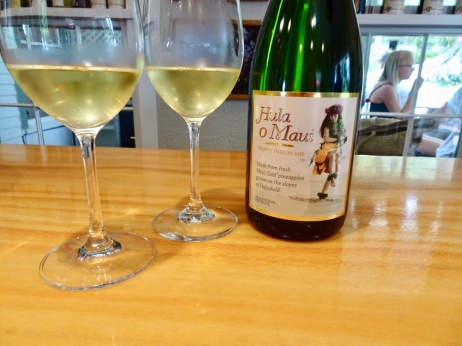
Hula o Maui – Pineapple Sparkling Wine
A brut sparkling wine made entirely of Maui Gold pineapple. Pale straw color, with vigorous streams of bubbles. Dry and fruity, and quite tasty. Produced in the traditional champagne method, this is a serious bottle of bubbles, that also doubles as a playful mixer for mimosas!
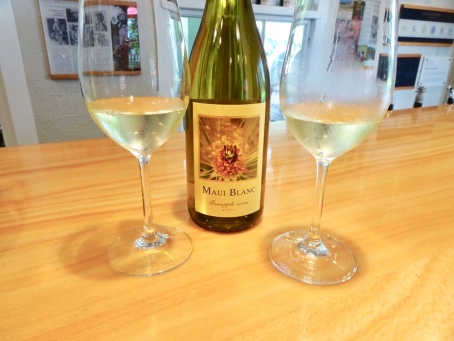
Maui Blanc – Off-dry Still Wine
Here’s a wine sure to please the Mosacto lovers in your party. Semi-dry but with plenty of character and depth. Also produced from 100% Maui Gold pineapple, this wine would pair nicely with spicy foods. This was the first wine produced by MauiWine, back in 1977, while waiting for their grape vineyards to mature. Don’t miss this one of a kind wine!
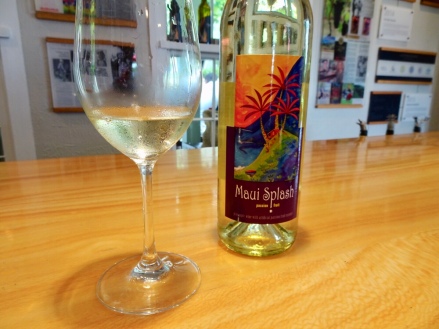
Maui Splash – Pineapple Wine infused with Passion Fruit
The sweetest of the trio, and perhaps the most popular. It retains the pineapple character, but adds a splash of tropical sweetness on the palate and finish. It’s like a day at the beach, in a glass. Great on it’s own, or add a splash of soda for a refreshing spritzer. In production since 1992.
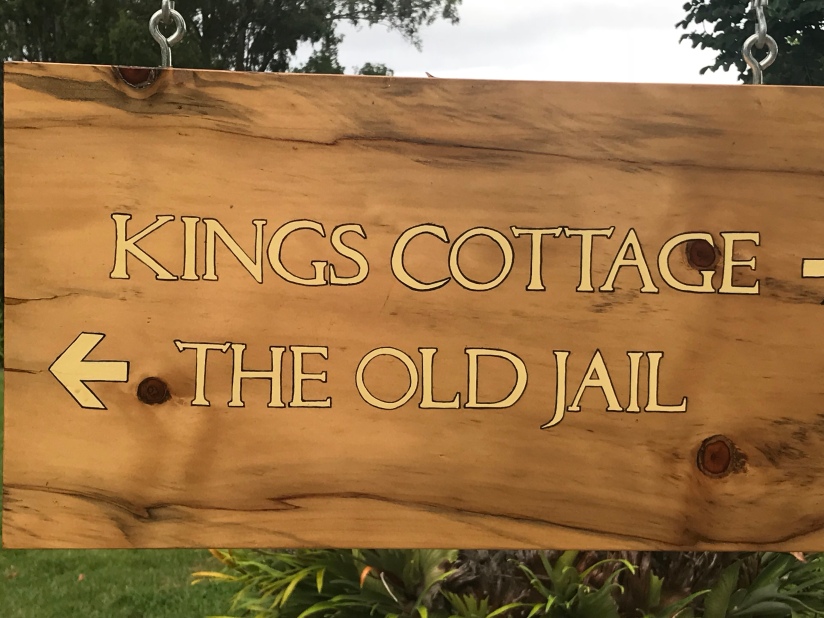
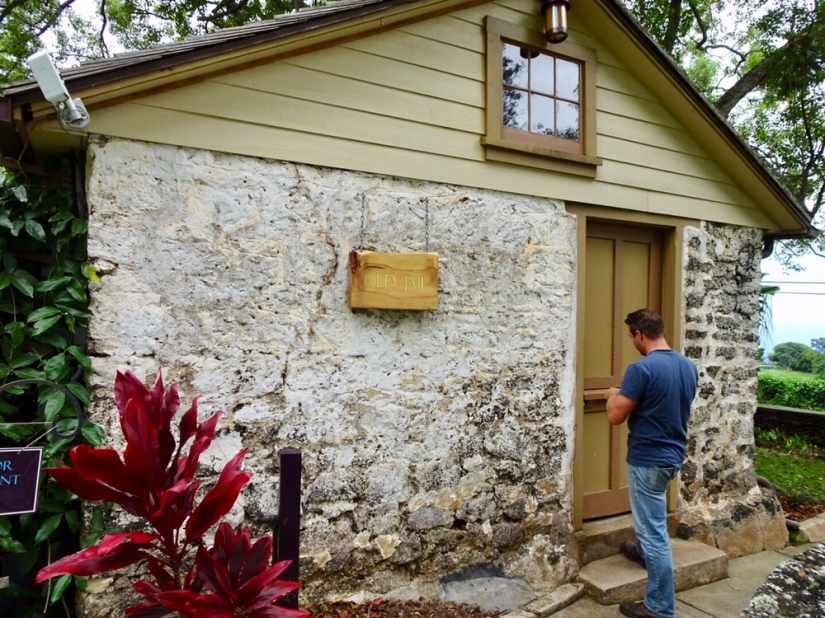
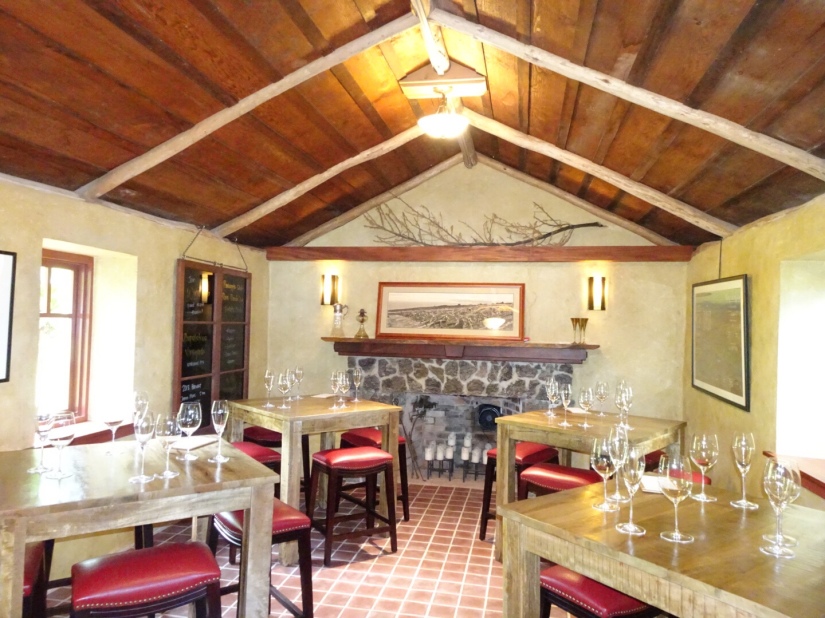
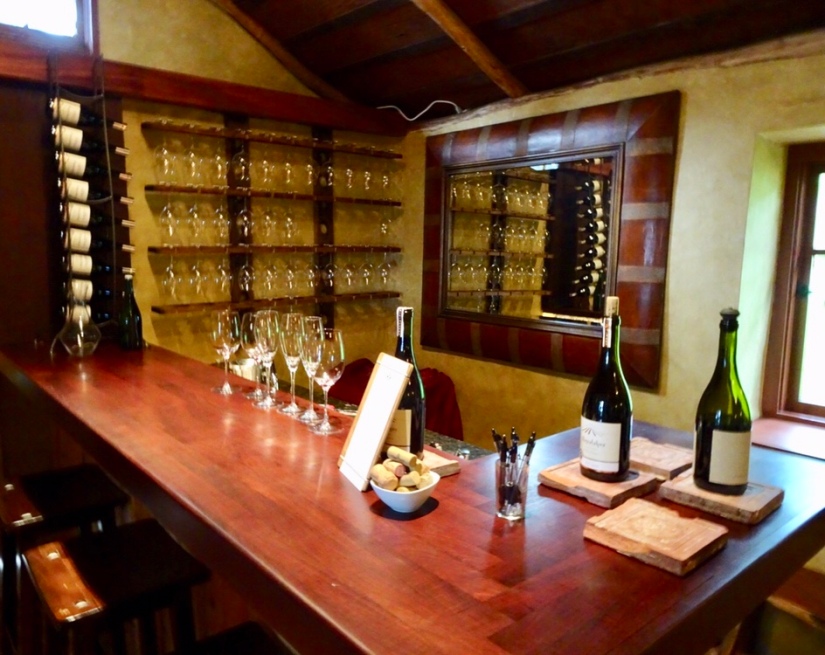
As good, and intriguing, as the pineapple wines were, the real treat of our visit was the personal tasting of the Rose Ranch Wine and Estate Wine lines. MauiWine is proud of their pineapple wine, and as we learned, there is good reason for that. Still, the vineyard is the passion project, and the one that intrigued us most. Joe hosted us in The Old Jail; an historic building on the property that was once, well, the local jail. MauiWine has updated the space nicely – no dank cells and bread & water here – this is as upscale a tasting venue as we’ve ever visited. While most guests enjoy tastings in the King’s Cottage tasting rooms, club members and others looking for a deeper experience may reserve personalized tastings in the Old Jail. Here, Joe poured us samples of the best that MauiWine has to offer.
No. 001 – Traditional Method Sparkling Wine
From the Estate Collection. A crisp, delicious wine, made from 60% Chardonnay and 40% Pinot Noir. The juice is sourced from California, from a well known Napa producer (but who cannot be named for proprietary reasons.) Vigorous streams of fine bubbles rise in the glass. Flavors of almond, yeast, and fresh-baked bread, with apple and pear, and a nutty finish. If I didn’t know this was a MauiWIne, I’d swear it was from Champagne!
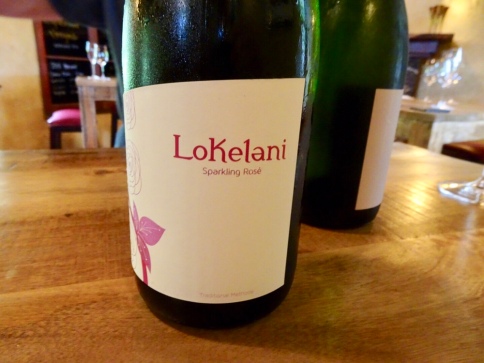
LoKelani – Sparkling Rosé
A Rose Ranch Wine Collection wine. A brut sparkling wine made from Syrah and Pinot Noir. Very pale pink. Honestly, neither of us would have known it was a Rosé if Joe hadn’t said so before pouring. Flavors of strawberry, cranberry, and some citrus notes. Quite a delight!
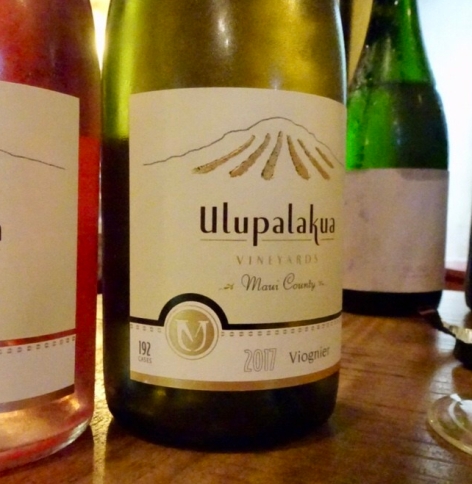
2017 Ulupalakua Vineyards Viognier
Another from the Estate Wines collection. We are big fans of well-made Viognier. And we’re now big fans of the Ulupalakua Vineyards Viognier! Dry, with floral aromas and flavors of apricot, citrus, and mineral notes, with a spicy finish.
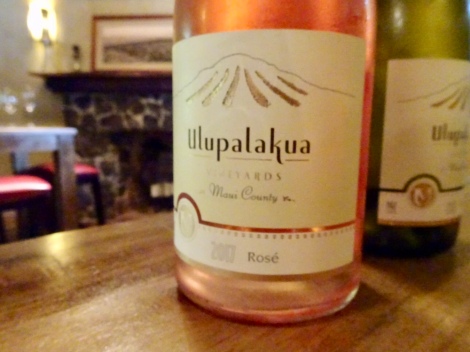
2017 Ulupalakua Vineyards Rosé
Estate Collection. A blend of 90% Syrah and 10% Grenache, and an interesting blend it is. The Syrah from Block 2 is farmed specifically to be vinified into Rosé, in the maceration method; harvested early to preserve acidity, and left on the skins after harvest for a very short time, just to add some color. Meanwhile, the Grenache portion is made in the Saignée method, in which the grapes are pressed for red wine production, and a small portion is bled off (saignée in French) to intensify the color of the red wine. The bled off portion is then made into a Rosé wine, and in this case, added to the Syrah Rosé. The result is a delightful, dry, crisp Rosé wine with flavors of strawberry, cherry, raspberry, and tropical fruit.
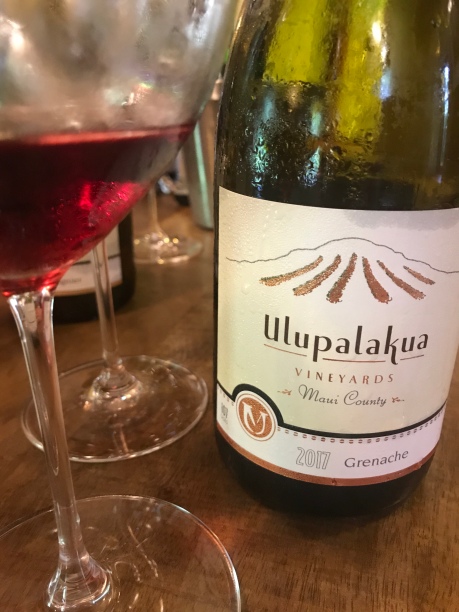
2017 Ulupalakua Vineyards Grenache
Estate Collection. You might think of Grenache as a full-throttle, big red. In this case, you couldn’t be more wrong. This Grenache is as elegant and restrained as we have ever had. Pale ruby color; crystal clear (look at that color in the photo!) But don’t let the pale color fool you. This beauty is bursting with flavors of black cherry, plum, licorice, and earthy notes. It is bone dry, with zippy acidity and a spicy finish. Joe recommends serving slightly chilled, and since that is how he served it to us, we absolutely agree!
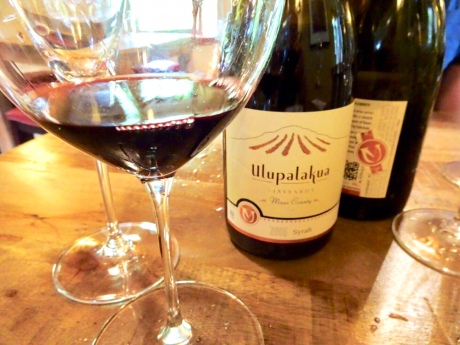
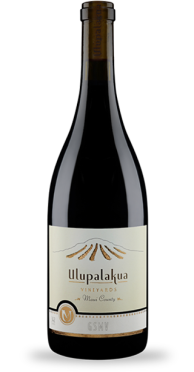
2016 Ulupalakua Vineyards Syrah
Estate Collection. This is the big, bold, meaty red you’ve been looking for! Inky purple color. Big flavors of crushed blackberry, chocolate-covered cherry, licorice, and earth. Big, chewy tannins balanced with medium acidity, On the finish there is kirsch and mineral. A stunning wine, indeed!
After we wrapped up our Old Jail tasting, Joe escorted us on a walking tour of the winery production area. MauiWine is a study in contrast; the vintage, plantation-style buildings housing the facility and cellar are juxtaposed with state-of-the-art winemaking equipment. Joe pointed out their new bottling line; a shiny stainless steel workhorse that has the capability to seal bottles with all four major wine closures: traditional cork, screwcap, crown caps (part of the sparkling wine production, for secondary fermentation), and the familiar sparkling wine cork, secured with a wire cage. The facility, view, and surroundings are all very impressive, and well worth a visit! Tours are complimentary, so come on up!
This slideshow requires JavaScript.
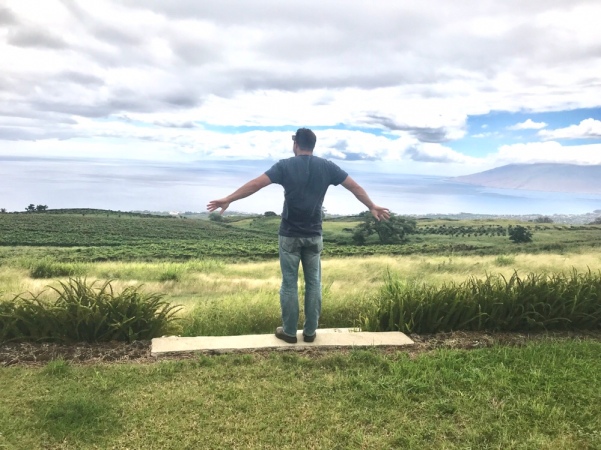
Before delivering us into the capable hands of the tasting room staff, Joe had one more surprise for us. We followed him a couple of miles back up the road to the vineyards. Joe mentioned to us that the vineyard is greatly protected and generally reserved for staff and family. The views here are spectacular, and the photos we took simply cannot do them justice! On the slope of Haleakala, overlooking the Pacific Ocean, the Kaho’olawe island, and the U-shaped volcanic crater that is Molokini, the views literally took our breath away. Rather than try to describe it, just enjoy the photos.
With Hurricane Lane approaching, we asked Joe if any special precautions were necessary. Not very many vineyards or wineries have to contend with hurricanes! Joe said that all of this years’ harvest is in, so there is no worry about the fruit. The only concern is loss of power from winds and falling trees.
After we returned to the King’s Cottage tasting room, Joe introduced us to Denae and Tamara, two of the friendly and knowledgeable staff members. There, we sampled Pineapple Wines (described above), the rest of the Rose Ranch Collection, and a taste of the 2012 Syrah – the hurricane wine!
Kula – White Blend
Photo Credit: MauiWine.com (not sure what happened to our photo!)
An enticing and delicious blend of 44% Sauvignon Blanc, 44% Viognier, and 12% Muscat. Lots of citrus and tropical fruit flavors. Dry, yet fruity with zesty acidity.
Mele – Red Blend
Racy and delicious, this is a blend of 40% Syrah, 10% Cabernet Sauvignon, 40% Merlot, and 10% Sangiovese. Medium body with smooth tannins, flavors of blackberry, raspberry, and cherry, with hints of green bell pepper and black pepper spice.
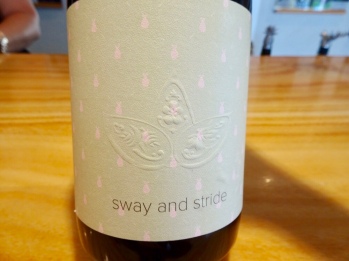
Sway & Stride Blend
An Aussie style blend with 80% Syrah (or Shiraz, if you prefer!) and 20% Viognier. Nicely balanced and delicious, with blackberry, cherry, and spice.
Cool embossed label!
Ulupalakua Vineyards GSMV
Photo Credit: MauiWine.com (another one we were so into we forgot to take a picture.)
Not your typical GSM! Grenache, Syrah, Malbec, and Viognier. Big and bold, yet elegant, with violet, blackberry, cranberry, and tobacco notes.
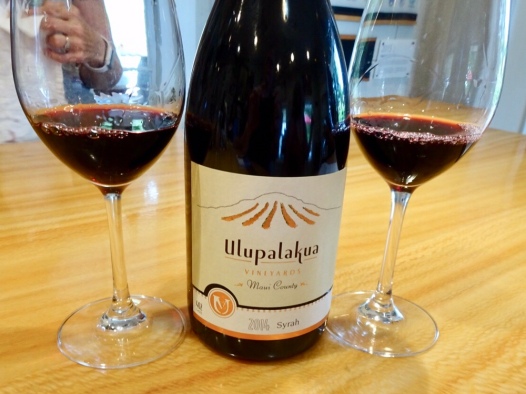
2014Ulupalakua Vineyards Syrah
The hurricane wine! Very few bottles remain, and are available only in the tasting room. This is an amazing wine of deep character and flavor. RIpe blackberry and plum, earth and tobacco. Big, bold tannins, with a long, satisfying finish.
We were honored that Joe hosted us as guests of MauiWine. Relatively small in production, with about 30,000 total cases annually, and their estate wine releases range from about 100 to 400 cases each, they are mighty and impressive. Although available for purchase online, they are well worth a visit if you happen to be in Hawaii.
In conclusion, Robyn would like to share her personal impressions:
As we planned for our trip to Maui and our visit to MauiWine, I envisioned that it would be beautiful and unlike any winery I had experienced thus far. I had no idea how understated my vision was. I may be back on the mainland, but I can assure you that my experience has left a lasting impression. The rich legacy of culture, the majestic grounds, the sense of value for close relationships with staff and customers, and the passion behind how MauiWine came to be, is a hidden treasure. When Joe explained how the climate is unlike any other traditional grape growing region and that even all the “experts” truly can’t predict the outcome of a crop, I said, “it’s like a big experiment every year?” To which he replied, “exactly”, with a smile on his face! Like a biography, Joe described the triumph, heartbreak, and thrill, that is MauiWine. The common thread connecting all of them is passion!
Mahalo, MauiWine!
By Kent Reynolds and Robyn Raphael
Photo Credits, unless otherwise noted: Kent Reynolds and Robyn Raphael
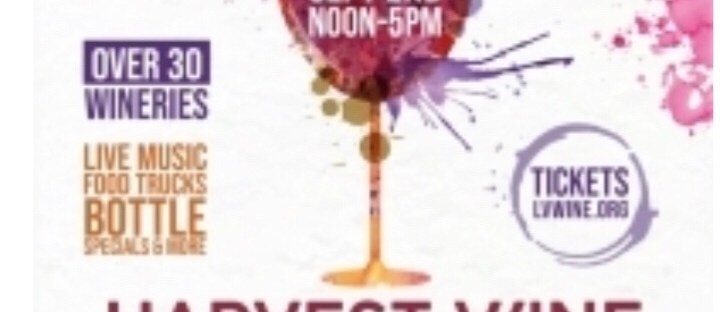
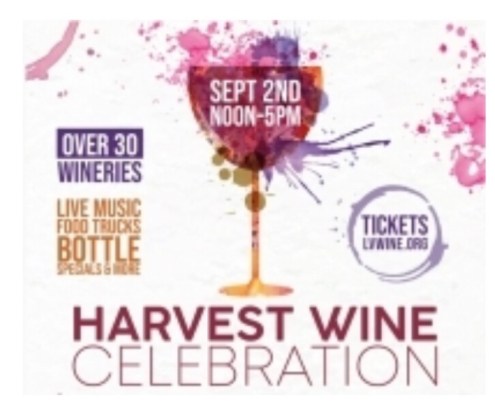
This past spring, Robyn and I fell in love with Livermore Valley Wine Country when we attended the Barrel Tasting Weekend there. (You can read our two-part series about our adventures here and here.) So we were very excited when we received the email from the Livermore Valley Winegrowers Association announcing the upcoming Livermore Valley Harvest Wine Celebration! The celebration is held on the Sunday of Labor Day Weekend, and this year promises to be a fantastic event!
Credit: Livermore Valley Winegrowers Association
This summer has been hot in Northern California. Hotter than ever? Apparently not. We humans have very short memories. Last year’s Livermore Valley Harvest Wine Celebration was canceled – the first time in 36 years – because of excessive heat. So maybe this summer hasn’t been so bad afterall!
With more than 35 wineries participating, the Harvest Wine Celebration is a great opportunity to experience the best that Livermore Valley has to offer. Not only wine – as if that’s not enough – but also food, art, crafts and music at the various wineries. The press release describes some of the special events at participating wineries:
Embodied Wines, Livermore Valley’s newest winery, will give guests a sneak peek at their 5,000-square-foot tasting room that will open this fall. Embodied Wines is the latest addition to the cluster of “urban wineries” on Vasco Road in Livermore—there are currently eight wine tasting rooms, two distilleries and a brewery within a block of each other.
Wente Vineyards will serve up barrel samples with a food pairing at the Estate Tasting Room on Tesla Road
el Sol Winery will present beekeeping demonstrations throughout the day
Participating wineries include: 3 Steve’s Winery, Bent Creek Winery, Big White House, Boa Ventura de Caires Winery, Caddis Winery, Cedar Mountain Winery, Charles R Vineyards, Concannon Vineyard, Crooked Vine Winery, Cuda Ridge Wines, Darcie Kent Vineyards, Eagle Ridge Vineyard, Embodied Wines, Eckert Estate Winery, Ehrenberg Cellars, el Sol Winery, Garre´ Vineyard & Winery, Fenestra Winery, Leisure Street Winery, Longevity Wines, McKahn Family Cellars, Mitchell Katz Winery, Murrieta’s Well, Nella Terra Cellars, Nottingham Cellars, Omega Road Winery, Occasio Winery, Page Mill Winery, Retzlaff Estate Winery, Rios-Lovell Winery, Rodrigue Molyneaux Winery, The Singing Winemaker, The Steven Kent Winery, Vasco Urbano Wine Co., Wente Vineyards, Winemakers Studio and Wood Family Vineyards.
Here are some photos from previous years’ events:
This slideshow requires JavaScript.
What a great line up, and all for $40 advance purchase or $45 on the day of the event. But wait, there’s more! Many participating wineries will help to make this a two-day event; by waiving tasting fees on Labor Day Monday to any guest with an event wristband. You can buy tickets online by following this link…
Another amazing benefit of visiting a smaller wine region, is the collaboration between wineries and other local businesses. Follow these links to make your Harvest Wine Celebration weekend extra memorable with help from Livermore Valley area hotels, transportation operators, and restaurants.
If you are looking for an amazing event to fill your Labor Day Weekend, point your car in the direction of Livermore Valley, and come experience the 2018 Harvest Wine Celebration!
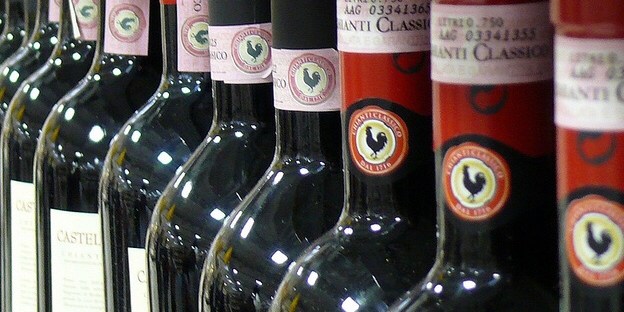
A couple of weeks ago, we were out to dinner with friends at a quaint, local Italian restaurant. As one does when dining Italian, we ordered a bottle of Chianti, or more specifically, Chianti Classico. As we sat enjoying the food, wine, and company, the discussion turned to the little black rooster on the Chianti Classico bottle. Perhaps you’ve seen it…
I started to explain the history behind the black rooster, and why it appears on every bottle of Chianti Classico. However, much to my own embarrassment (I’m a wine blogger, after all; people look to me as a font of wine knowledge and wisdom) I couldn’t recall the story. I knew there was some dispute some centuries ago, and that a black rooster was somehow involved, but that was all I could remember at the time.
So I did what any self-respecting and self-proclaimed wine “expert” would do.
I Googled it.
Contrary to some popular belief, Chianti is not a wine grape. It is a region in Tuscany, Italy, renowned for its red wines made from the Sangiovese grape. Sure, a few decades ago, Chianti suffered from a bit of an identity crisis, but then again, didn’t we all? Back then, Chianti was usually a cheap, low quality wine, better known for its gitchy “basket” bottle (bonus points if you know that it’s called a “fiasco”) than for the wine quality. The fiasco, in turn, was better known as a holder for colorful, dripping candles than as a vessel containing delicious wine.
The Chianti wine region is expansive, spanning some 100 miles between Florence in the north and Siena in the south. However, the most highly regarded Chianti wines come from what has been designated the Chianti Classico region. The Chianti Classico region is that portion of Tuscany considered the original and best Chianti hills and vineyards, dating back to the 1700’s when the Chianti region was first designated.
As legend has it, in the 13th century, before Italy was a unified country, Florence and Siena were engaged in a land dispute. Can you blame them? If you could claim rights to a prime wine region, wouldn’t you? Anyway, the two feuding cities decided to end their dispute with a race. The plan was that at the crack of dawn on the day of the race, each city would send a rider on horseback toward the other. Where the riders met, the new land border would be established. Of course, 800 years ago, they didn’t have Smartphones to wake them up, or even alarm clocks. Back then, they relied on the good old, low tech rooster!
In Siena, a white rooster was selected as the most dependable, and was given the task of waking their rider. Of course, some strategy must be employed to ensure victory, so the people of Siena fed their white rooster well, to keep him happy and crowing strong! To the north in Florence, a black rooster was chosen. However, the people of Florence had a different strategy. They put their rooster in a box for a few days before the race, with no food.
On the morning of the race, the very hungry and understandably grouchy black rooster of Florence woke at the first sign of light and began crowing, waking the town and more importantly, the rider. In Siena, however, the white rooster, content with a full stomach, slept in a bit. Thus, the rider from Florence got a head start on the rider from Siena and covered much more territory. So much so, that they met just 20 kilometers (about 12 miles) from the walls of Siena. The new border was established, much in Florence’s favor, and the black rooster was established as the mascot of Chianti. The emblem was first adopted in 1384, and has been in use ever since.
Now that you know the story, make a reservation at your favorite local Italian restaurant, order a bottle of Chianti Classico, and amaze your friends with your very impressive knowledge of this entertaining tale.
If life is full of disappointments, Alexander Valley is a refreshing breath of fresh air. Robyn and I had been invited to attend Experience Alexander Valley, and we were looking forward to our Sunday Experiences; Yoga in the Vineyard for both of us in the morning, and a Spa Treatment in the afternoon for Robyn. Alas, a few days before the event, Rosie, from Alexander Valley Winegrowers contacted us to let us know that, because not enough guests had signed up for those two Experiences, the host wineries were forced to cancel them. Fortunately, however, there were plenty of exciting Experiences available from which we could choose.
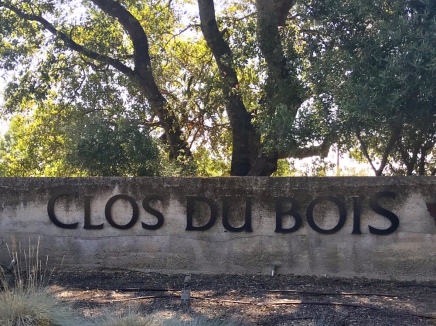
So, Sunday morning we headed to Clos du Bois winery for an exploration of Marlstone Through the Years. When we arrived, our host, Chris, greeted us in the tasting room with a chilled glass of Lightly Bubbled Chardonnay; a delightful and refreshing unoaked, frizzante wine, perfect for the warm day. Thankfully, the previous day’s record heat had abated, and Sunday was more seasonal in the mid-80’s, so our tour of the demonstration vineyard, with chilled Chardonnay in hand, was quite pleasant.
You may know Clos du Bois; their “Classics” series wines are widely distributed in wine stores and supermarkets across the country. What I didn’t know, and you may not either, is that in 1978, Clos du Bois was the first winery in Sonoma County, and only the second in California, to produce a Meritage wine. Contrary to popular belief, the word Meritage is not French, and is not pronounced as a French word. Meritage is a term coined by a group of American vintners to identify American made, Bordeaux-style blends. The term is a conjunction, representing Wines of Merit, Vines of Heritage. The pronunciation rhymes with Heritage – as “Meri-tidge.”
Clos du Bois’ Meritage wine is called Marlstone. As Alexander Valley is a prime Cabernet Sauvignon region, Marlstone is dominantly Cabernet Sauvignon, with Merlot as the secondary component. However, in any given year, the blend can include some or all of the other five noble grapes; Malbec, Petit Verdot, and Cabernet Franc. Here’s where the real fun began!
After the vineyard tour and some barrel tasting, Chris escorted us into a private tasting room where we got to taste through all five components, and the finished Marlstone 2014. Once we had our baseline, we got to create our own blend to see how close we could come to the winemaker’s version. Each component was spectacular on its own, and it was amazing to experience the changes as we blended them in the glass. I don’t know how the others did, but my blend was nowhere near as good as the Marlstone!
After lunch, Robyn and I parted ways again so we could cover more Experiences for you. (You’re welcome!) Robyn spent the afternoon at Trione Vineyards & Winery for a Bocce Ball Tournament, while I enjoyed a mountain-top Cabernet Sauvignon tasting at Alexander Valley Vineyards. Here’s Robyn to tell you about her Experience:
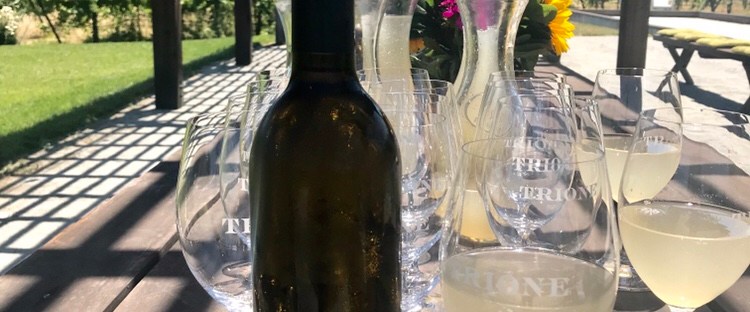
When I arrived at Trione, anticipating the Bocce Ball Tournament, they welcomed me outside with a glass of their tasty 2017 Sauvignon Blanc. I sipped on the cool, crisp Sauv Blanc under the trellis, parallel to two Bocce courts. I sat with Henry Trione, son of the founders, and learned about the family and winery history. Trione Vineyards & Winery was established in 2005. The winery building was completed in 2008. The winery is located next to an historic 1908, beautiful stone building, which the family restored and is now an event center.
As the Bocce Ball Tournament got started, since Kent was across the valley, I needed a partner. Luckily, as promoted, there was a handsome instructor to teach me the rules. I was quickly “adopted” by wine club member, Meredith, and her husband. For a while, we were in the lead. Although not a Bocce veteran, I do enjoy a good game of corn hole, and my accuracy is not too bad. I think my dead-eye aim came in handy on the Bocce court!
Adding to the friendly vibe, throughout the tournament, we sipped on Trione Rosé of Pinot Noir 2017. It was so good; I had to bring a bottle home to share with Kent. It’s a crisp and refreshing wine, and the perfect thirst quencher on the Bocce court. Sadly, our luck didn’t hold, and we lost the round. No worries, it was super fun and it’s always all about the company. Oh, and the wine! Cheers!
While Robyn was getting her Bocce on at Trione, one of Alexander Valley’s newer wineries, I headed across the valley to one of the older wineries, Alexander Valley Vineyards. There, Head of Operations and Family Partner Harry Wetzel met us for a history lesson and Cabernet Sauvignon tasting. Alexander Valley is named after Cyrus Alexander, who settled in the area in 1840. Fast forward to 1962, when Harry and Maggie Wetzel (our host’s grandparents) bought a portion of Cyrus’ original homestead. In time, they planted a small vineyard, and in 1975, their son Hank produced the first vintage of Alexander Valley Vineyards wine.
As we toured the property, Harry took us to The Adobe, the oldest structure in Sonoma County, and one-time home to young Cyrus Alexander. We also saw the old, 1868 Alexander School, a one-room schoolhouse, moved from its original location, just down the road, in 1972. Finally, Harry drove us up to a mountaintop picnic bench, set with a flight of Alexander Valley Vineyards Cabernet Sauvignon. We tasted through the 2016 Estate, the 2015 Organic, the 2014 Reserve, the 2012 Single Barrel, and the 1999 Wetzel Family Estate. I normally gravitate to slightly younger wines, but the 18 year old 1999 was amazing; mature, soft and subdued, yet still retaining juicy fruit notes. (Yea, I bought some.) I don’t know which was more amazing; the fantastic wines, the breathtaking view, or having 45 minutes to visit with the family partner of such an historic and wonderful winery.
As we headed down the mountain back to reality, I got Robyn’s text that her Experience was winding down. Back across the valley, I picked up Robyn and we reluctantly headed home. We enjoyed our time at Experience Alexander Valley, and have a new love for the region. We will definitely be back!
Be on the lookout for next year’s event. We encourage you to come and Experience Alexander Valley for yourselves. Please. We really want to do Yoga in the Vineyard next year!

































 Appetite for Wine