
CMS, Sommelier, Wine

Sommeliers: Do We Need Them?

First of all, congratulations to Arvid Rosengren, from Sweden, who was recently named World’s Best Sommelier for 2016. He recounts, in an interview with Food & Wine Magazine,[1] the six years of constant study and preparation for the event. Held once every three years by the Association de la Sommellerie, the World’s Best Sommelier competition challenges sommeliers to written and practical exams. It is an intense, grueling event, and in the current culture of celebrity chefs and rock-star somms, winning could really go to one’s head. Yet Rosengren humbly concludes, “You know, whoever’s the best sommelier is really the one who makes his or her guests feel the best.”

2016 Worlds Best Somm
Arvid Rosengren, World’s Best Sommelier, 2016

Which got me to thinking about sommeliers in general, and I wondered: are sommeliers still relevant and necessary? In today’s social media culture, with Smartphones and apps constantly at our fingertips, do we really need a studied expert to tell us what wine we should drink with our meal? Spoiler alert…I believe we do. But perhaps the deeper question is: what qualifications should exist to be sommelier? I’ve read a number of articles lately arguing one point or another on this question, some of which I discuss in this post.

Living in suburban Northern California, I really don’t have a lot of experience interacting with sommeliers. There’s a fantastic wine bar and bistro down the street, owned and operated by a certified sommelier. I enjoy visiting there and talking wine, when he’s available. More often than not, if suggestions aren’t listed in the menu, it’s his wait staff who make pairing recommendations. Indeed, most of the restaurants in the community, even those with serious wine programs, rely on well-trained servers, rather than sommeliers. This doesn’t seem to be that uncommon here in the Wild Wild West. A San Francisco Chronicle article, from March 2015, asks “Where are all S.F.’s wine pros?” [2]

It's called 'Pretentious.' It tastes like crap, but it's $100 per bottle!
It’s called ‘Pretentious.’ It tastes like crap, but it’s $100 per bottle!

Let’s lay the groundwork with a definition. What is a sommelier? A sommelier, at the core, is somebody who manages a wine list. Not a very elegant or romantic definition, I know. The practice of certification for sommeliers is a relatively recent development. While wine and wine service has been around for thousands of years, the first Master Sommelier exam was held in 1969, and the Court of Master Sommeliers (CMS) wasn’t established until 1977. Since then, there has been a movement by some people to elevate certified sommeliers to a revered status, and restrict the use of the “S-word” to those who have passed their CMS exams.

wine-snob

I do agree that earning one’s Certified Sommelier pin is an impressive achievement, worthy of respect. However, we should not lose sight of the basic role sommeliers play. Like any other profession, there are book-smarts, and then there are street-smarts. Earning certification does not necessarily equate to the ability to be a successful sommelier in a day-to-day, customer service operation. Many highly qualified people have worked their way up, learning hands-on, on the job, but have not invested the time and considerable cash in obtaining certification. Arguably, these experts are no less sommeliers than those who have studied for, and passed their exams. Indeed, in an article published in Punch, Dustin Wilson, Master Sommelier and Wine Director at New York’s Eleven Madison Park, asserts that “in order to have a mature profession you need both the structure and standards that certification offers and the sort of openness that allows people to choose a different path.”[3] And in another Punch article, Carson Demmond goes so far as to say that “sommelier” is simply a job title. She says, “Sommelier” isn’t an abstract title or a generic, yet high-brow name for “wine expert”—it’s a job. A restaurant job. And certification is by no means prerequisite to being a good one.”[4]

Still, I do think that sommeliers, whether certified or not, are a valuable asset for the hungry masses. At least for some. Early in my wine journey, I was much too intimidated to ask questions of the few sommeliers I encountered. That’s a negative consequence of the mystique that the profession has created for itself. However, as wine culture expands and becomes less pretentious, more people are interested in learning. This is especially true for the younger generation, which tends to demystify much in life, breaking through boundaries, and bringing lofty things down to earth. In fact, in yet another Punch article, author Francis Percival describes the shift from stuffy, suit and tie “sommelier,” to the more casual, hipster, tattooed and jeans-wearing “somm.”[5] This eagerness to explore is not limited to millennials. As I’ve expanded my wine knowledge, I now know enough to be curious, and appreciate the opportunity to talk wine with an expert.

Finally, along with their knowledge and expertise about wine, and the foods with which to pair them, sommeliers bring with them the human element, so often lacking in our modern, connected, face-in-a-phone society. Smartphone apps only go so far, and like social media in general, remove actual, human interaction from our existence. Besides, they haven’t yet invented an app that can pull the cork and decant that pricey bottle of Burgundy for you.

So, yes, I do believe the sommelier is not only relevant, but necessary. Whether certified or not, it is about providing a service and enhancing a guest’s experience. For this reason, I value and respect sommeliers everywhere.

What do you think?

_________________________________________________________

[1] http://www.foodandwine.com/blogs/what-it-takes-become-best-sommelier-world

[2] http://www.sfchronicle.com/wine/article/The-last-sommelier-standing-where-are-all-6119178.php

[3] http://punchdrink.com/articles/op-ed-in-defense-of-sommelier-certification/

[4] http://punchdrink.com/articles/the-myth-of-sommelier-certification-debunked/

[5] http://punchdrink.com/articles/the-rise-of-the-american-somm/
Cabernet Sauvignon, nakedwines.com, Napa, Wine

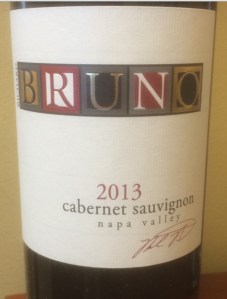
Review: Bruno Cabernet Sauvignon Napa Valley 2013

Cabernet Sauvignon. The king of the grapes. The stuff of Grand Cru Bordeaux, and Napa legends. From poets to journalists, critics to bloggers, much has been written about this most famous varietal, and much more will be in the future. None of the words put to print can adequately capture the magic that happens when a skilled winemaker plies his art on this noble grape, and produces the fine elixir sought by kings and paupers alike.

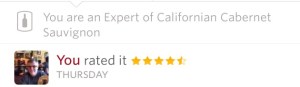
Ah, but I wax poetic. Who am I kidding? That’s not my style! Let me just say that Cabernet Sauvignon is some darn fine wine! It is one of my favorite varietals, and if you believe the stats, it is my #1 favorite. And you can’t argue with stats! I had always considered Zinfandel my favorite, but looking back on my wine apps, I have consumed and rated more Cabernet Sauvignon than any other varietal! So much so, that Vivino considers me an Expert of California Cabernet Sauvignon! I don’t know that I’m an expert of much of anything, but if Vivino says it of me, I’ll take it!IMG_0917If you follow my blog, or have read my very first post, Appetite for Wine, (found under the About tab), you know that I tend to live in the Under-$35 world of retail wine prices. Most of my purchases are in the sub-$20 region. At this price point, you can find quality, but a lot of Cabernet Sauvignon in this range is rather one-dimensional and uninspiring. Not that it’s all bad…many have very good flavor, but are often blends that dilute the unique terroir, and/or spend very little time in oak, which I consider to be very important for Cabernet. As I discussed in a previous post, A Cabernet is a Cabernet. Or Is It?, not all wines are created equally, and things like climate, soil, and blending can change the character of wines made from the same varietal. Generally speaking, as with most things in life, the higher the quality, the bigger the price tag.
Another thing you probably know about me is that I am a NakedWines.com Angel. NakedWines.com is a crowd funded winery, whose winemakers produce high quality, boutique wines, which they sell directly to Angels. By avoiding the costly and archaic three-tier system, NakedWines.com is able to pass their savings to the Angels by selling at reduced prices. Therefore, Angels get better quality for the price. NakedWines.com seeks out the best and brightest winemakers. Many of them have worked in big name wineries, and have years or decades of experience.

The wine I am reviewing today is an excellent example of both Napa Cabernet Sauvignon, and what makes NakedWines.com such a great deal. The winemaker, Richard Bruno, has more than 20 years of experience, making award-winning wines at such notable wineries as Francis Ford Coppola and Sebastiani. He is a recent addition to the NakedWines.com family, and this is the first of his wines that I have tried. It will not be my last!

Since Vivino considers me a California Cabernet expert, I am making an “Expert Recommendation” for this wine!

IMG_0915

Oh wow! I had to double check the Angel price on this beauty! $19.99? Must be a typo. This is at least a $40-45 bottle of Napa Cabernet!

This wine is a great example of why Cabernet Sauvignon is the king of grapes. Deep garnet in the glass, the nose is a basket of freshly picked boysenberries, blackberries, and blueberries. On the palate these berries are joined by deep, dark black currant, spice, and hearty oak. The oak enhances, but does not overpower the wine. This is a dry wine with bold tannins. But even straight from the bottle without decanting or aerating, (yes, into a glass! I’m a oenophile, not a wino!) the tannins are not harsh, but are smooth and chewy, and balanced with bright acidity. After decanting for an hour, the tannins are even smoother, the flavors enhanced, and the acidity nicely balanced. The finish lingers long with berry, spice, leather, and smoke.

This wine will age gracefully for several years, but if you have a slab of beef or lamb laying around that needs grilling, open this one up and find out what everybody is talking about. 4.5 hearts (92-94 points) now. Definite 5.0 with a couple years of age.

NW LogoIf you’d like to try this, or any of the other outstanding wines available from NakedWines.com, click here for a voucher worth $100 off a first-time order of $160 or more. You’ll be glad you did.

Cheers!


Cabernet Sauvignon, Club W, Pinot Grigio, Wine

Club W, Part II

Hooray! I received my second Club W order! I reviewed and discussed my first Club W experience a few weeks ago in Club W, Part I. As you may recall, I ran into a small glitch in my first order; a $26 introductory credit did not apply correctly, leaving me out of pocket for the full price of the order. Faster than a speeding bullet, the Club W customer service team credited my account for the $26, resolving the issue for me, and ensuring a repeat customer for them.

I had high hopes for my second order. Being somewhat underwhelmed by the standard $13 wines, I included in my order a $24 “Porter & Plot” 2011 Napa Valley Cabernet Sauvignon, along with three of the $13 selections: 2013 “Likelihood of Confusion” Sierra Foothills Zinfandel, 2012 “La Forza” Super Tuscan, and 2014 Più Gioia Pinot Grigio (IGT delle Venezie, Italy.) Living in the shadow of the Sierra Foothills, I am especially partial to Zinfandel from that region, so I was really looking forward to experiencing a “Likelihood of Confusion.” Purchasing four bottles gets you free shipping, saving $6, so it’s like getting the fourth bottle for only $7.

Unless otherwise specified, Club W orders are processed on the day of the month in which one’s first order was placed. My processing date was March 2. Alas, on March 3, I received an e-mail from Natalie, a Club W Wine Concierge, with some bad news. There had been an accident in the warehouse, and the last few cases of “Likelihood of Confusion” had been damaged. Natalie apologized, and had already credited my account for the $13 cost of that bottle, once again assuring another repeat order from me. I understand that accidents happen, and to the best of my knowledge, nobody was hurt, which is the most important thing. So at worst, I missed out on trying a wine I was looking forward to tasting. Also, this provides fodder for “Club W, Part III” sometime down the road.

Eager with anticipation, my (now) three-bottle box arrived at my office. Like a kid a Christmas, I cut the seal and lifted the lid.  ExcitedThere’s my 2011 Napa Cabernet! There’s the Super Tuscan. But…where’s the golden-hued Pinot Grigio? In its place, there is a 2014 Meraki Cabernet Sauvignon Paso Robles. 11275856-Confused-emoticon-Stock-Vector-smiley-face-cartoon

Now, I love Cabernet. And I’m starting to explore Paso Robles wines more. Stock-outs happen, I get it. But if that’s the case, substituting a big, bold Cabernet for a light, refreshing Pinot Grigio? That just doesn’t make sense. Perhaps it was an order-fulfillment error. Those happen, too.

I e-mailed Natalie, explained what had happened, and asked that she look into it for me. 12 minutes later, Natalie replied. (There’s that speeding bullet again!) Natalie said she would look into it, but affirmed this appeared to be a warehouse error. In the meantime, she had already submitted an order to send me that missing 2014 Più Gioia Pinot Grigio, shipped expedited service. She also told me to keep and enjoy the Meraki Cabernet, and even recommended it as one of her favorites!

So while my ordering experiences have not been without hiccups, the Club W Customer Service team has been on top of it with prompt, courteous, and satisfactory service. Kudos to Natalie and the rest of the team for providing such good service in a day and age when good service is hard to find! 61_1_blue-ribbon-perfect-logoAnd now, on to the reviews!

 Meraki Cabernet Sauvignon Paso Robles 2014

This is one of the best mistakes I’ve ever received!

“Medium purple color in the glass. Appealing, classic Cabernet Sauvignon aromas of blackberry and cassis. On the palate, flavors of ripe plum, cherry, blackberry, and oak. The tannins are remarkably soft and smooth for such a young wine, giving it a creamy mouthfeel. On the finish there are light berry notes with a hint of leather and tobacco.

Biodynamically produced if that’s your thing. This is the best wine I’ve had so far from Club W! Great value at just $13!”

4.5 Stars (92 to 94 points)

La Forza Super Tuscan 2012

“Ruby-purple color. Aromas of fresh blackberry, cherry, and spice. On the palate there are flavors of blackberry, red currant, black pepper, oak, and just a bit of earthy notes. Medium bodied with firm tannins and bright, fresh acidity, this wine is made for food. Yet is fruit-forward enough to stand up on its own. The long finish lingers with blackberry and spice, and that acidity keeps the mouth tingling for several minutes. A very nicely made Super Tuscan!”

4.0 Stars (88-91 points)

Più Gioia Pinot Grigio 2014

“Light golden/dark straw color. Initial aromas of stone fruit and mango give way to pineapple and grapefruit on the nose. Light bodied with bold, lively acidity. Tangy citrus flavors dominate; grapefruit and lemon-lime, with pineapple, and a hint of pear on the finish. As it warms and opens, I get a whiff of banana candy. Definitely more tangy than most Italian PGs I’ve had; almost more of a Cali Sauv Blanc style, but well made and interesting. Paired well with grilled shrimp.”

3.5 Stars (85-87 points)

Porter & Plot Cabernet Sauvignon 2011

And at last, the $24 bottle I’ve been waiting to try!

“Ruby/purple color in the glass. Aromas of Marionberry pie, black plum, and violet. On the tongue, there are a variety of flavors going on, including Marionberry/blackberry, ripe plum, black currant, and a hint of cedar and spice. The tannins are very soft and smooth, with mild acidity. The mouthfeel is rich and full, coating the mouth. This wine has aged well these five years, (although with the wax seal preventing any air getting in, necessary for long-term aging, I’m not sure how much longer it will continue to improve.) The finish is pleasant and lingers with dark berry, cola, smoke, and mild vanilla/oak notes.”

4.0 Stars (88-91 points)

Conclusion

After two orders, I still think Club W is a novel concept and a good source for people who are newer to wine exploration. As I mentioned in my earlier post, their target market appears to be millennials who are just starting to enjoy wine. In summary, here are the pros and cons, as I’ve experienced them so far.

Pros:

  • They have a wide selection, including some lesser known varietals, and are supporting small production winemakers.
  • They have some unique features that other online retailers and clubs do not. For example, it appears that once you’ve placed a bottle in your basket, it’s yours – even if you don’t complete and ship the order for a couple of months, and it otherwise sells out in the meantime.
  • Their customer service team is prompt, courteous, and efficient.
  • You can easily skip a month, or several, without cost or penalty.
  • Their packaging is second-to-none.

Cons:

  • Limited ability to review (1-5 scale ratings, only, and no half-stars), or otherwise communicate with the winemakers. It seems ratings are only used to power the algorithm to determine recommendations.
  • The wines are good, but not what I consider great. Of seven bottles, my average rating is 3.7 stars (roughly 86-88 points.) Not bad, but frankly, I can get equal quality for less, or better for the same price. For example, the Porter & Plot 2011 Cabernet Sauvignon was good; I rated it 4.0. However, for the same $24, I can get a Beaulieu Vineyards Rutherford Cabernet, a solid 4.5+ wine, from my local Total Wine & More store.
  • While their customer service team is very good, the fact that I have had contact with, or from, their customer service team three times in two orders is telling. Hopefully it’s just growing pains and they’ll get the kinks worked out.

As I’ve mentioned, I foresee continuing to order from Club W once in a while. If you are new to wine, and want to try out the Club W algorithm for recommendations, do us both a $13 favor, and follow this link to sign up!

I think for my next order, I’ll let Club W do all the heavy lifting, and go with their recommendations. I’ll let you know what I think in Club W, Part III. Stay tuned!

Cheers!

Jac Cole, Mosaico, nakedwines.com, Wine

Review: Jac Cole Mosaico Napa Valley 2014

Regular readers know that Jac Cole has become one of my favorite winemakers. As one of the winemakers for NakedWines.com, his wines may be unknown to folks who are not Naked Wines Angels. Yet Jac knows his way around a winery. He’s been making wine in California for more than 40 years. Some better known labels for whom Jac has worked include Charles Krug, Spring Mountain, and Cliff Lede.

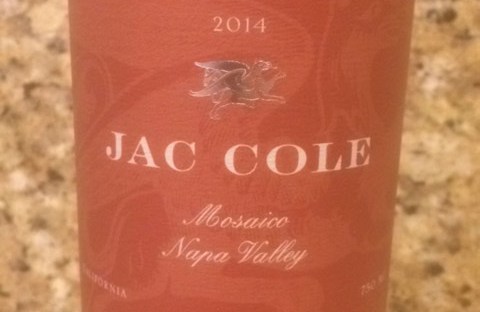
Jac Cole Mosaico Napa Valley 2014

I reviewed Jac’s Mosaico Sonoma Valley 2013 here, so this will, in a way, be my first vertical review. I say “in a way” because I did not taste these wines at the same time, but more importantly, these are two distinctly different wines, from different regions. The 2013 was a blend of Sonoma County Cabernet Sauvignon and Malbec. The 2014 is all Napa Valley, and in addition to the Cabernet Sauvignon and Malbec, Jac added some Merlot to the blend. Still, these two wines showcase Jac’s winemaking talent in his ability to make consistently outstanding wines from varied blends, from different regions.

Despite their differences, both 2013 and 2014 are outstanding wines. Big, bold, and complex, showcasing the best of all the varietals in the blends, Jac’s Mosaico blends are fantastic now, and will continue to improve for several years in the cellar…if you can hold onto them that long!

Here’s what I thought of the Jac Cole Mosaico Napa Valley 2014, posted on NakedWines.com:

Jac, you’ve done it again! Your 2013 Mosaico Sonoma County was one of the best red blends I’ve tasted. This 2014 Mosaico Napa Valley surpasses it.

Deep purple color with a ruby rim. Aromas of blackberry, plum, and oak greet the nose. On the tongue, this is a rich, full-bodied wine with flavors of chocolate-covered cherry, ripe plum, blackberry, oak, and spice. Tannins are firm and full, but balanced with lively acidity. The finish is long and full, with dark berry, tobacco smoke, and spice.

Bearing the Napa Valley designation, the grapes may have come from all over the valley. However, the terroir in this wine is distinctive, and I would not be surprised to find there is Rutherford and/or Oakville fruit in the blend. Exquisite!

Although outstanding now, like the 2013, this wine will only improve with time. Get several, and lay some down for a year or 10.

5 out of 5 stars/hearts (95+ points)

MSRP: $34.99, Angel Price: $16.99

One of the really cool things about NakedWines.com is that Angels NW Logoget to interact directly with the winemakers on the social media site. The day after I posted my review, Jac Cole replied, and confirmed that the Cabernet Sauvignon in this blend is, in fact, from Rutherford. This is high quality stuff!

You can only get Jac Cole Mosaico Napa Valley 2014 from NakedWines.com. If you haven’t tried them yet, here’s a voucher worth $100 off a first-time order of $160 or more. You’ll be glad you did!

Franc Dusak, nakedwines.com, Sonoma Valley, Wine, Zinfandel

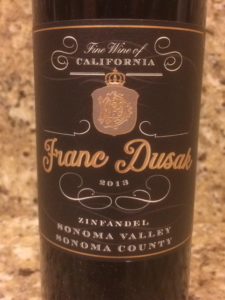
Review: Franc Dusak Zinfandel Sonoma Valley 2013

IMG_0827

I love Zinfandel. This may be in part because my red wine journey started in earnest with Zinfandel. Also, living minutes from the Sierra Foothills, famous for its Old Vine Zinfandel, I have access to some of the best Zin on the planet. I admit a Sierra Foothill bias, but I enjoy exploring other regions and have found a few that continue to impress me with outstanding Zinfandel. Among these are Dry Creek Valley, in Sonoma County, and the greater Sonoma County region in general. This is where today’s wine is from.

Zinfandel is a versatile grape that can present in a variety of different ways, from jammy fruit bombs; to big, bold, and spicy; to light and floral. I think a lot of people who say they don’t like Zinfandel have only been exposed to the former – those jammy, “please pass the peanut butter” fruit bombs. These tend to fall in the lower end of the price spectrum, which is where I have found most people start when exploring new varietals. Generally speaking, fruit bomb Zin comes from warmer climates, like Lodi in California’s Central Valley. Fruit bombs have their place, and many people prefer them. However, my personal preference is big, bold, and spicy Zinfandel. These are most common from slightly cooler regions like the Sierra Foothills and Sonoma County.

Having such a fondness for Zinfandel, imagine my excitement when Franc Dusak’s Zinfandel Sonoma Valley 2013 appeared for sale on the NakedWines.com website! I’ve had other Franc Dusak wines before, and been blown away by all of them, but this is his first Zinfandel for NakedWines.com. This wine spent 23 months in the barrel, which will give it a soft, smooth texture along with the delicious flavors. I ordered some the first day it was available.

Franc Dusak has been making wine for more than a decade, but his name has always been behind the scenes. About a year ago, NakedWines.com got ahold of him, and propelled him to instant stardom! (In my book, at least!) But enough with the lead-in…on to the review!

I’m a Zin freak. Over the years, I’ve had more Zin than any other varietal. Franc, your 2013 Sonoma Valley Zinfandel is dee-licious!

Deep purple with brick rim. Aromas of blueberries and blackberries, along with the promise of oak and spice. On the palate, blackberry, black pepper, black cherry, and promise kept: smooth oak and a spicy finish. Exceptionally balanced fruit and spice ratio; medium body. The tannins are velvety smooth and balanced with soft acidity. Those 23 months in oak really paid off! I’m glad I bought more than one!!

4.5 out of 5 hearts (92-94 points)

Available only from NakedWines.com. Angel Price: $13.99

NW Logo

If this sounds like your kind of Zinfandel, and you aren’t yet a NakedWines.com Angel, click the Naked Wines logo above, or here for a voucher worth $100 off a first-time order of $160 or more. You won’t be sorry you did!

Alto Adige, Italy, Lagrein, Varietals, Wine

Review: Kupelwieser Lagrein 2013

I love variety. That is one of the things I like so much about wine. In a lifetime, it is humanly impossible to sample all the variety that exists in the wine world. Two wineries making wine from the same varietal in the same region can produce vastly different results. Beyond winemaking variety, there are the thousands of different varietal grapes out there; many of which the average wine drinker may never hear about. In my wine journey, I strive to seek out, find, and taste those lesser known varietals.

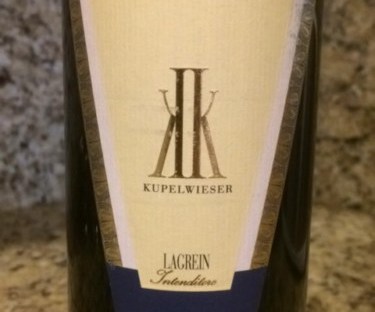
Kupelwieser Lagrein

Recently I purchased and opened my very first Lagrein, the Kupelwieser Lagrein 2013. Until about six months ago, I had never heard of the Lagrein grape, but it has certainly left a lasting impression on me! The funny thing about this wine: it made its way to my “Must Try” list, but I can’t remember how. Somewhere along the line, I must have read a review on Vivino or some other social media site, and thought it sounded good. I’d like to thank whoever it was who posted whatever review it was, because this is a darn good wine!

Lagrein is an Italian varietal, grown in the northeastern Italian region of Trentino-Alto Adige. According to wine-searcher.com, Lagrein is likely native to this area. Historical records mention the grape as early as the 16th century. The grape is known for rich, full-bodied wines of deep, dark color. As with many Old World varietals, Lagrein is best when paired with food.

250px-Trentino-South_Tyrol_in_Italy.svg

I found my first experience with Lagrein to be most pleasant. The Kupelwieser Lagrein 2013 carries the Alto Adige DOC designation. True to Old World form, there is bright, lively acidity that makes it great with food. Yet I found it to also have well-structured fruit, providing balance and complexity, and giving it a profile that will please many a New World wine drinker. Here’s my review on Vivino:

 “My first Lagrein. Deep, deep purple color. The aroma is of butter and red fruit. On the palate, ripe raspberry, blackberry, black pepper, cherry, and light oak, followed by a spicy, smoky, medium finish. Medium body, with sharp tannins and bright, lively acidity, making this a great food wine. Exceptional with our Steak Pizzaiola.”

  • Rating: 4.0 stars (88 to 91 points)
  • Price: $18.99 at Total Wine & More


If you have never tried a Lagrein, I urge you to head to your local wine shop, pick up a bottle or two, and take a virtual trip to this beautiful region in Northeastern Italy.

Cheers!

Rating, Reviews, Wine

How to Rate Wine

parker-note-100-points

I’ve written about wine ratings before, in one of my early blog posts. My conclusion is that wine ratings are, by their nature, subjective. They represent how one taster felt about a wine at a given time in a given situation. Collectively, a large number of ratings for a wine can be averaged, giving what is arguably a more accurate picture of the wine’s quality, and certainly its mass appeal. Websites and Smartphone Apps like Cellar Tracker, Vivino, and Delectable provide this sort of ratings averaging.

There are different types of rating scales. Probably the most well known is the 100-point scale, popularized by wine critic Robert Parker, and adopted by the powerhouse publication, Wine Spectator. 100 Point ScaleThe 100-point scale is easily adaptable to a 1-10 scale, with increments of 0.1 (e.g. 9.1 points.)  However, many user-based reviews rely on a 1-5 scale, be it stars, hearts, or some other emoji. Most wine retailers embrace the 100-point scale for their shelf-tags, because it is so familiar and easy to understand. The higher the rating, the better the wine. In theory, a 91 point wine is far better than an 85 point wine, right? Using the 1-5 scale, how much better is a 4.0 than a 3.5?

So how does one decide what rating to give a wine? I’m sure there are different schools of thought. Here’s how I do it:

I rate wines primarily for myself; to remember which wines I loved, and which I would not buy again. On public sites and apps, there is a secondary purpose which is to contribute to the larger average, in the hopes that somewhere, someone will find my input useful in their wine buying decisions. My ratings are based on how much I liked the wine in general, and how it compares to other wines of the same varietal, region (Rioja, Bordeaux, Piedmont, etc.), or genre (California Bordeaux-style blends, etc.) Early in my wine drinking journey, I followed the Wine Spectator 100-point scale, so all my ratings were done in that format. As social media and Smartphone Apps became more popular, I’ve had to convert to the 1-5 scale, and adapt my ratings accordingly. vivino-ratings-explained-1_ratingsI know of some people who refuse to give a wine 5-points regardless of quality. Their line of thought is that 5-points represents perfection, which can’t exist. I take a different approach, using a range for each half-point in the 1-5 scale. Over the years, I’ve refined this conversion and have settled on this:

  • 95-100 = 5.0 Stars/Hearts
  • 92-94 = 4.5 Stars/Hearts
  • 88-91 = 4.0 Stars/Hearts
  • 85-87 = 3.5 Stars/Hearts
  • 82-84 = 3.0 Stars/Hearts
  • 80-81 = 2.5 Stars/Hearts
  • 77-79 = 2.0 Stars/Hearts
  • 74-76 = 1.5 Stars/Hearts
  • 71-73 = 1.0 Stars/Hearts
  • < 70 = 0.5 Stars/Hearts

For me, anything rated 84 or lower (3.0 stars/hearts) falls into my “would not buy again” category. Frankly, I don’t encounter these wines very often. I like to think that I have a discriminating palate, but maybe I’m just easy to please. On the other hand, since the vast majority of the wine I taste is paid for out of my own pocket, I tend to buy only what I’m pretty sure I’ll like. (I’m open to samples, if anyone would like to send me some!) Oh, sure, I have had a couple of wines that I’ve rated in the mid-70’s, but thankfully, those are very rare!

In today’s world, with modern production methods, I think truly bad wines are uncommon. Somebody in the distribution chain must like them in order for them to make it to store shelves. If a wine is faulty, don’t rate it. Return it and get a new bottle to rate. I scratch my head in wonder when I see, on Vivino or similar sites, people rating wines at 0.5 or 1.0 stars. soapiconAre those people only willing to drink “blow your socks off” wines? I think social media and the “reality” TV culture have made people too eager to criticize, slam, and malign. Trolls are everywhere, and seem to forget (or don’t care, which is even more disturbing) that there are real people behind the labels of these bottles. Even the big, conglomerate wine companies, churning out case after case of mass produced wine, employ people who are doing their best.
In conclusion, now that I’ve stepped off my soapbox, wine ratings are subjective. However, they are useful in helping consumers select wines they may like. As I’ve said before, find a few reviewers with whom you have similar tastes, follow them, and buy what they like. Then, contribute to the global collective, and with whatever scale you choose, rate those wines!


Ceja Vineyards, Pinot Noir, syrah, Vino de Casa, Wine

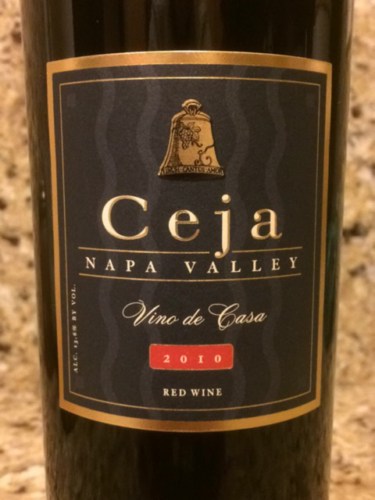
Review: Ceja Vineyards Vino de Casa 2010

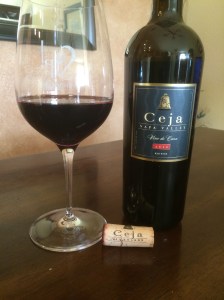
Ceja Vino de Casa

In my continuing periodic series, Wines Scantily Clad, today’s review is the Ceja Vineyards Vino de Casa 2010.

As you may know, I am a member of NakedWines.com, a crowd-funded winery offering excellent wines at excusive, member prices. Wines Scantily Clad are wines that are not NakedWines.com wines, but are produced by NakedWines.com winemakers. These are often private labels, or part of a family venture, as is today’s selection. While not Naked Wines, they are almost Naked, thus, Scantily Clad.

The NakedWines.com connection is Dalia Ceja. Her “La Tapatia” line of Chardonnay and Pinot Noir wines are popular favorites among Angels, and sell out quickly. Dalia’s family came to Napa Valley in the 1960’s as farm workers, and later established the first Mexican-American owned winery in Napa County. (Read their inspiring story here.) When she isn’t making her own wines for NakedWines.com, Dalia is the Brand Marketing Manager for Ceja Vineyards.

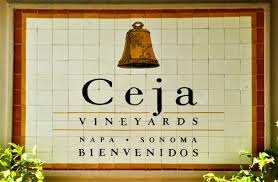
Ceja Tiles

When I found the Ceja Vineyards Vino de Casa, my first reaction was, “Interesting. A blend of one of the most delicate red grapes with one of the boldest. I’ve got to try this!” Vino de Casa is a blend of 60% Pinot Noir and 40% Syrah, all from Napa Valley.

From the website:

Aromas of bright cherries, dark fruit, spice and ripe plum. The palate is medium-bodied and showcases hints of black currant and tobacco while ending in a supple finish. Flavors of cedar infused with blueberry abound. This is the perfect “everyday” wine.

 IMG_0746

Here’s my review:

A blend of 60% Pinot Noir and 40% Syrah. The color is a deep Ruby in the glass. Aromas of Bing cherry, plum, and oak greet the nose. First sip, oh so smooth! Raspberry, cranberry, cherry, and vanilla on the palate with soft cedar and blueberry on the finish. A creamy mouthfeel and light acidity make this a truly delightful wine. Delicious on its own, but magical paired with a spice crusted pork steak!

4.5 out of 5 stars

I got mine at Total Wine & More: $26.99.

I highly recommend that you get some, too!

Club W, Wine

Club W, Part I

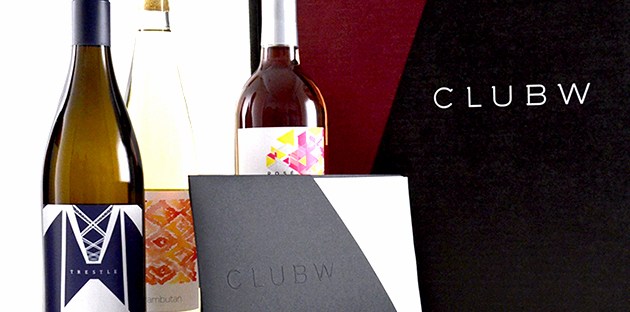
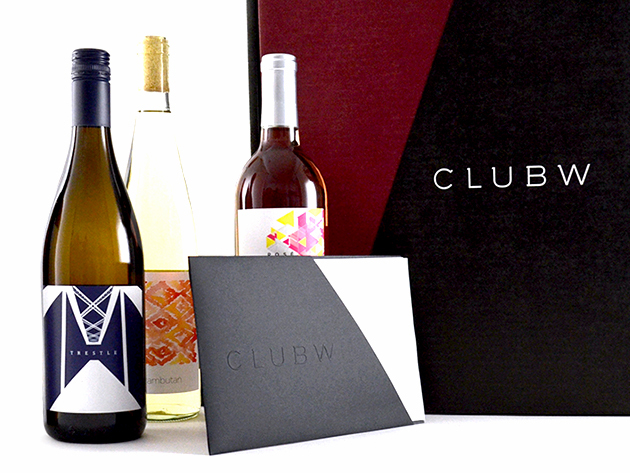
Club W Stock Photo

I first learned of Club W more than a year ago, from a Facebook ad. Already happily participating in NakedWines.com, I didn’t really give Club W much thought. However, after some of my wine friends shared their favorable experiences with Club W, I decided to check them out.

The premise of Club W is similar to other monthly wine clubs, but it does have some distinctions that help to set it apart. When you first sign up, you answer six questions that are intended to help identify your flavor and taste profile. Questions like:

  • How do you like your coffee?
    • Strong & black.
    • Mild but nothing in it.
    • With cream and/or sugar.
    • Frappuccino’ed.
    • I don’t
  • Do you like earthy flavors like mushrooms and black-truffles?
    • Yes. I’ll more-or-less eat dirt.
    • Yeah, I like these flavors.
    • In moderation, as a secondary flavor.
    • No really my thing.
    • Gross. No.

Club W uses your responses to recommend wines they think you’ll like. Later, when you purchase Club W wines, you rate them (1-5 scale) and those ratings help to refine the recommendations. I’m sure there are other wine clubs that use similar algorithms to match you to wines you’ll love, but Club W was the first one I encountered.

Club W partners with independent winemakers to direct-market their wines. Thus, the wines they sell are available exclusively from Club W. This cuts out the middle tier of the archaic U.S. distribution system, and keeps costs down. The majority of the wines offered through Club W are $13, with a few higher priced options. I have not seen any wines for more than $35. In my book, that’s affordability!

Club W is a monthly club, with a welcome twist. When you sign up, you are agreeing to monthly shipments of three, $13 bottles of wine. By default, they will ship the recommended wines they have selected based on your profile. However, you can substitute different wines if you prefer. Shipping on three bottles is a flat $6, but they offer free shipping on orders of four bottles or more, so it’s like getting a fourth bottle for just $7. Here’s the welcome twist: you can skip a month, or two, or more, with no charge or penalty. Just remember to log in and click the “Skip” button each month before your default order is processed.

My First Club W Experience

To explore the company, I had to create an account, which I did several months ago. New customers get a credit for a free bottle ($13). Perhaps because I delayed in placing an order, upon logging in a few weeks ago, I discovered I had a two bottle, $26 credit. I’m no rocket scientist, but getting three bottles of wine for $13, plus tax and shipping, is kind of a no-brainer.

As I browsed the available wines, I noticed that among the tried and true regulars; Cabernet Sauvignon, Chardonnay, Sauvignon Blanc, and the rest we all know, there were a large number of lesser known varietals. I selected a Lodi Alicante Bouschet, a Portuguese white blend of Arinto and Fernão Pires, and a Paso Robles red blend of Syrah, Barbera, and Valdiguié.

Then I ran into my only real problem. At checkout, when I clicked “Purchase”, my $26 credit did not apply to the order. I immediately e-mailed customer service and asked that they apply my credit to this order. Since this was Saturday morning of a holiday weekend I had to wait a couple days for a response, which came first thing Monday morning. Polite and professional, Jenna apologized for the mix-up. She posted a new $26 credit to my account, and assured me it will apply on my next order. However, the order had already been processed (and my account charged) so they could not apply the credit retroactively. Not exactly what I wanted, but with this resolution, I still get my credit, and Club W gets a repeat customer. Win-win.

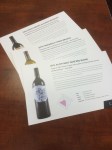
Shipping and delivery were smooth and fast. I was very impressed with the packaging, including the nifty carrying handle. Inside, I found half-page, glossy information sheets. On one side, detailed information about the wine, and on the other, a recipe with which to pair it.

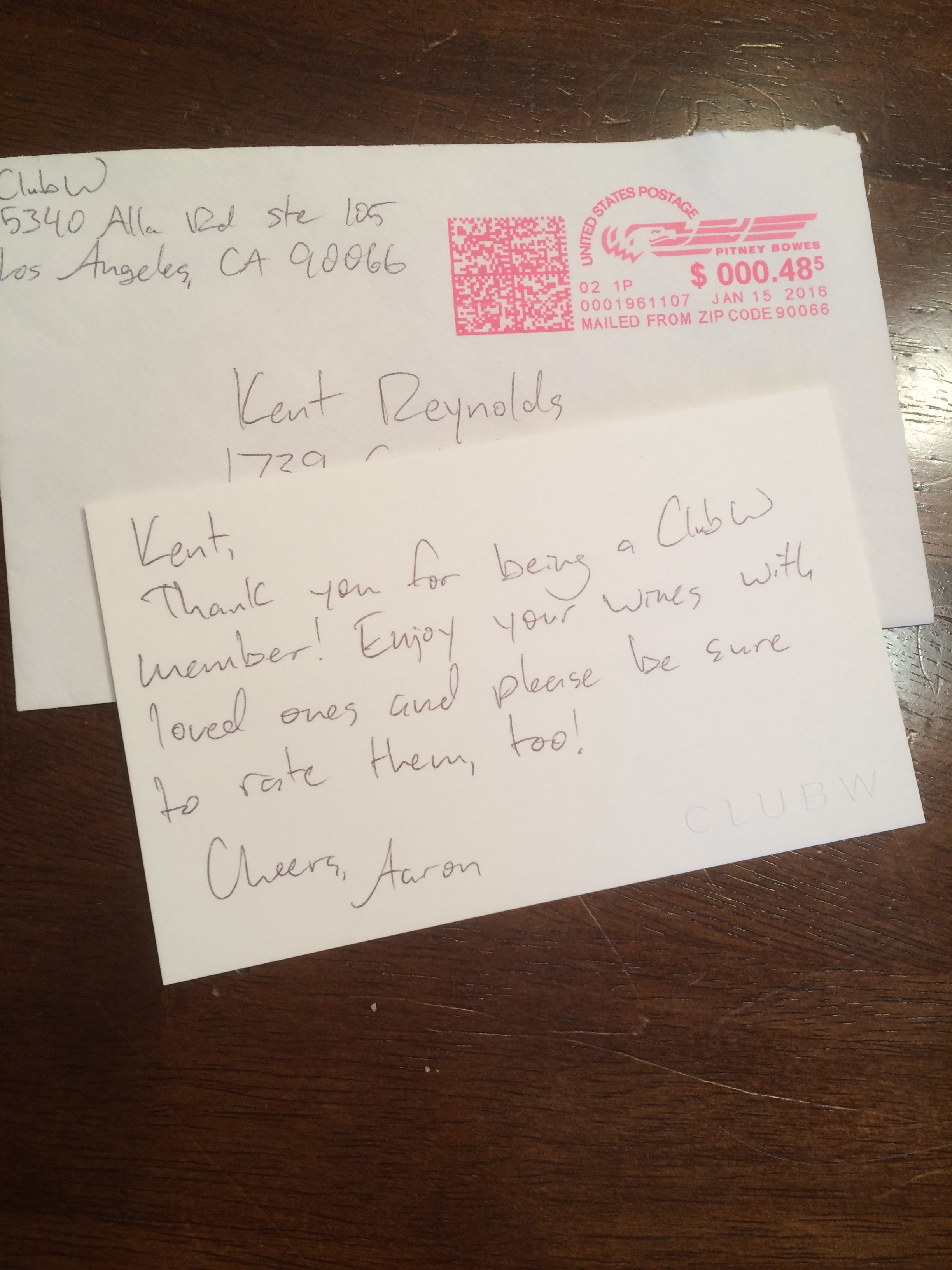
To top it all off, about two weeks after my wine arrived, I received a hand-written note from Aaron at Club W, thanking me for my business. Impressive.

Hand Written Note
A hand-written thank you note! How cool is that?


Most importantly, though, is how the wine tastes! Which brings me to…

Wine Reviews:

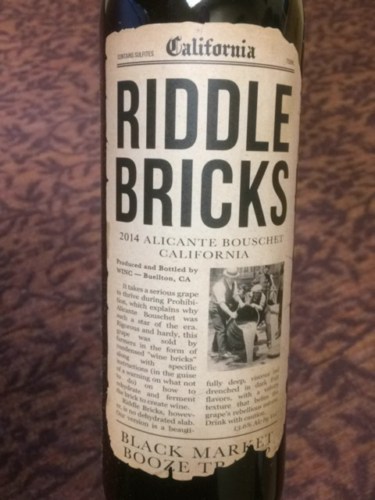
Riddle Bricks

Riddle Bricks Alicante Bouchet California 2014

Deep purple in the glass. Plum and black pepper aromas. Flavors of plum, dark berry, and baking spice. Fruit forward with a full, rich mouthfeel, smooth tannins and soft acidity. Short finish. Not overly complex or deep. Aerating opens it up a bit, but it’s still fairly one dimensional. Still, it is an easy drinking wine, good on its own or with food.

3 out of 5 stars

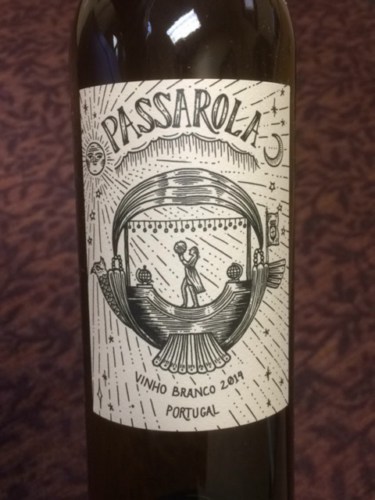
Passarola

Passarola Vinho Branco 2014, Portugal

Golden color in the glass. There are aromas of apricot, pear, and mango. In the palate there are flavors of lemon, lime, and pineapple, with hints of mineral/wet gravel on the back of the tongue. The body is light with bright, lively acidity. The acidity carries into the finish along with fresh citrus. This is a delightful white, that would be quite refreshing on a hot summer afternoon. At just 12% ABV, it’s definitely a gulpable quaff.

4 out of 5 stars

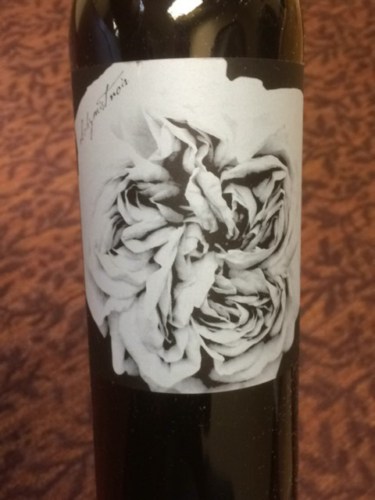
Alcymist

Alchymist Red Blend Paso Robles 2013

An interesting red blend: Syrah, Barbera, and Valdiguié (the grape formerly known as Napa Gamay.) Ruby/purple in the glass, with initial aromas of raspberry, bramble, and some spice. On the palate, there is raspberry, strawberry, and a little smokiness. As it opens up, cherry flavors emerge. The tannins are edgy, but not overpowering, and are met by bright acidity. I would say this is medium bodied, with a medium finish of red fruit and spice.

Based on the description that accompanied the wine: a “big red” with the recommended pairing of dark chocolate, I was expecting something bolder, almost port-esque. It does go nicely with chocolate, bringing out more cherry notes. However, it also is a nice general food wine. Overall, it is another pleasant, easy drinking wine from Club W.

3 out of 5 stars

So…

What I like:

  • Ability to easily skip a month, or several months
  • Supporting the little guy
  • The packaging
  • Info cards with recipes
  • Exploring unusual varietals
  • Availability of International wines
  • Personalized, hand-written thank you note!

What I’d like to see:

  • Club W does not offer the ability to review wines; only assign them a 1-5 scale rating. In my experience with NakedWines.com – where they encourage both ratings and reviews, I have found that, for me, writing a review and describing the flavors and elements in the wine enhances my enjoyment of the wine. Rather than simply knocking back a glass, I become more attentive and contemplative, and enjoy the wine more. True, there are nights that knocking back a glass or two is exactly what’s needed, but for me those nights are the exception.
  • I’d also like the ability to communicate with the winemakers. Through NakedWines.com I have gotten to know several winemakers, meeting many in person. Placing a face, personality, and story with the name on the bottle makes enjoying wine a much more personal experience.
  • At the risk of sounding like a snob, and in fairness I’ve only tried the $13 level wines, but I’d like to see wines with more depth and complexity. (My next order will include at least one of their higher priced Napa Cabernets. This way I can evaluate their upper tier line, and compare quality of a varietal with which I am very familiar.)

Many of the marketing materials I have seen for Club W, including television commercials, Facebook ads, and the photos on their website, suggest to me that their target audience is 20-somethings who are just getting into wine. (I haven’t been in that demographic for 30+ years!) This is certainly an important and potentially lucrative market. Based on my experience, I’d say they’ve hit their mark. The wines are good, and easy-drinking, but not overly complex. If this is the type of wine you enjoy, check out Club W.

All in all, I like the Club W business model. Club W is a convenient source for approachable, easy-drinking wines, and is very customer-friendly. Although not monthly, I will buy from Club W in the future. When I receive my next order, including that Napa Cabernet, I’ll review the wines in another post, Club W, Part II. Stay tuned!

If you are interested in giving Club W a try, do yourself and me a favor and use this link: https://www.clubw.com/kreynolds11. We each get a $13 credit when you order!

Cheers!

Chardonnay, Jac Cole, nakedwines.com, Wine

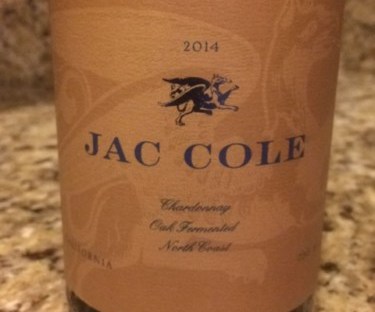
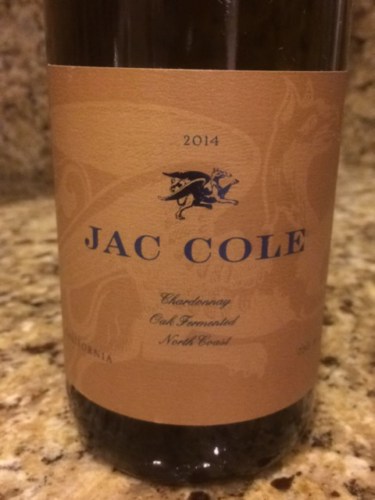
Review: Jac Cole Oak Fermented Chardonnay 2014

Jac Cole Oak Fermented

ABC – Anything But Chardonnay. That was me, until about a year ago. When I started my wine journey in the mid-1990’s, Big Oaky was king of Chardonnay. Just about everything coming out of California and many other regions was essentially oak juice, mixed with a little bit of fruit. A very popular style, to be sure, and it remains popular for some today, just not for me. So I abandoned Chardonnay, thinking that’s just what it tastes like. I prefer my whites with little or no oak. Don’t get me wrong, I like big oak in my wine…full-bodied red wine. As a newbie back then, I didn’t understand or appreciate the role oak plays in enhancing the flavor and texture of some white wines.

About a year ago I received, from NakedWines.com, a sample of Jac Cole’s Unoaked Chardonnay for review. I was astounded to discover that when left to itself, the Chardonnay grape is fruity and delicious! So I started to explore the varietal a bit more, including oaked styles. Further along in my journey now, I have a greater appreciation of the nuances, warmth, and flavors that oak brings to a finely crafted white wine.

Jac Cole Oak Fermented Chardonnay 2014 is just that: a finely crafted white wine. I’ve written about Jac and his wines before. Former winemaker at Charles Krug, one of my favorite Napa Valley producers, he is a highly skilled craftsman. I also had the honor to meet him about a year ago at a picnic, and he is a truly kind, humble man. This fact makes enjoying his wines even more of a pleasure.

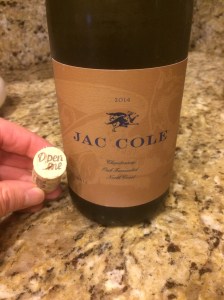
Open Me
Always obedient when a cork speaks to me.

Here is my review, posted on the NakedWines.com website:

Once again, Jac Cole knocks it out of the park. Once, I was an ABC’er – Anything But Chardonnay. Then I tasted Jac’s Chardonnay, and I was converted.

Straw yellow on the glass. Aromas of creamy butter and golden delicious apple. On the palate, there is apple, pear, and pineapple, with soft oak. The mouthfeel is rich and creamy, with balanced acidity. On the finish there is green apple, caramel, and toasty oak, and butter.

We started well chilled, and enjoyed it as the wine warmed. Flavors emerged as the temperature increased. It is quite a complex wine. Paired with roasted chicken and butternut squash, it was magical!

Oak fermented, but not overly oaky. That’s Jac. He lets the delicious fruit of the grape shine, and allows the oak to enhance and soften.

ABC? You bet! Anything By Cole!!

4.5 out of 5 hearts

NakedWines.com exclusive, $13.99 member price.

Become a NakedWines.com Angel here, and order some today!

Cheers!

_____________________________________________