Cabernet Sauvignon, Club W, Pinot Grigio, Wine

Club W, Part II

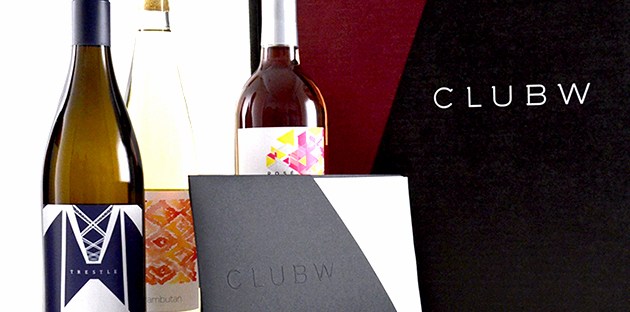
Hooray! I received my second Club W order! I reviewed and discussed my first Club W experience a few weeks ago in Club W, Part I. As you may recall, I ran into a small glitch in my first order; a $26 introductory credit did not apply correctly, leaving me out of pocket for the full price of the order. Faster than a speeding bullet, the Club W customer service team credited my account for the $26, resolving the issue for me, and ensuring a repeat customer for them.

I had high hopes for my second order. Being somewhat underwhelmed by the standard $13 wines, I included in my order a $24 “Porter & Plot” 2011 Napa Valley Cabernet Sauvignon, along with three of the $13 selections: 2013 “Likelihood of Confusion” Sierra Foothills Zinfandel, 2012 “La Forza” Super Tuscan, and 2014 Più Gioia Pinot Grigio (IGT delle Venezie, Italy.) Living in the shadow of the Sierra Foothills, I am especially partial to Zinfandel from that region, so I was really looking forward to experiencing a “Likelihood of Confusion.” Purchasing four bottles gets you free shipping, saving $6, so it’s like getting the fourth bottle for only $7.

Unless otherwise specified, Club W orders are processed on the day of the month in which one’s first order was placed. My processing date was March 2. Alas, on March 3, I received an e-mail from Natalie, a Club W Wine Concierge, with some bad news. There had been an accident in the warehouse, and the last few cases of “Likelihood of Confusion” had been damaged. Natalie apologized, and had already credited my account for the $13 cost of that bottle, once again assuring another repeat order from me. I understand that accidents happen, and to the best of my knowledge, nobody was hurt, which is the most important thing. So at worst, I missed out on trying a wine I was looking forward to tasting. Also, this provides fodder for “Club W, Part III” sometime down the road.

Eager with anticipation, my (now) three-bottle box arrived at my office. Like a kid a Christmas, I cut the seal and lifted the lid.  ExcitedThere’s my 2011 Napa Cabernet! There’s the Super Tuscan. But…where’s the golden-hued Pinot Grigio? In its place, there is a 2014 Meraki Cabernet Sauvignon Paso Robles. 11275856-Confused-emoticon-Stock-Vector-smiley-face-cartoon

Now, I love Cabernet. And I’m starting to explore Paso Robles wines more. Stock-outs happen, I get it. But if that’s the case, substituting a big, bold Cabernet for a light, refreshing Pinot Grigio? That just doesn’t make sense. Perhaps it was an order-fulfillment error. Those happen, too.

I e-mailed Natalie, explained what had happened, and asked that she look into it for me. 12 minutes later, Natalie replied. (There’s that speeding bullet again!) Natalie said she would look into it, but affirmed this appeared to be a warehouse error. In the meantime, she had already submitted an order to send me that missing 2014 Più Gioia Pinot Grigio, shipped expedited service. She also told me to keep and enjoy the Meraki Cabernet, and even recommended it as one of her favorites!

So while my ordering experiences have not been without hiccups, the Club W Customer Service team has been on top of it with prompt, courteous, and satisfactory service. Kudos to Natalie and the rest of the team for providing such good service in a day and age when good service is hard to find! 61_1_blue-ribbon-perfect-logoAnd now, on to the reviews!

 Meraki Cabernet Sauvignon Paso Robles 2014

This is one of the best mistakes I’ve ever received!

“Medium purple color in the glass. Appealing, classic Cabernet Sauvignon aromas of blackberry and cassis. On the palate, flavors of ripe plum, cherry, blackberry, and oak. The tannins are remarkably soft and smooth for such a young wine, giving it a creamy mouthfeel. On the finish there are light berry notes with a hint of leather and tobacco.

Biodynamically produced if that’s your thing. This is the best wine I’ve had so far from Club W! Great value at just $13!”

4.5 Stars (92 to 94 points)

La Forza Super Tuscan 2012

“Ruby-purple color. Aromas of fresh blackberry, cherry, and spice. On the palate there are flavors of blackberry, red currant, black pepper, oak, and just a bit of earthy notes. Medium bodied with firm tannins and bright, fresh acidity, this wine is made for food. Yet is fruit-forward enough to stand up on its own. The long finish lingers with blackberry and spice, and that acidity keeps the mouth tingling for several minutes. A very nicely made Super Tuscan!”

4.0 Stars (88-91 points)

Più Gioia Pinot Grigio 2014

“Light golden/dark straw color. Initial aromas of stone fruit and mango give way to pineapple and grapefruit on the nose. Light bodied with bold, lively acidity. Tangy citrus flavors dominate; grapefruit and lemon-lime, with pineapple, and a hint of pear on the finish. As it warms and opens, I get a whiff of banana candy. Definitely more tangy than most Italian PGs I’ve had; almost more of a Cali Sauv Blanc style, but well made and interesting. Paired well with grilled shrimp.”

3.5 Stars (85-87 points)

Porter & Plot Cabernet Sauvignon 2011

And at last, the $24 bottle I’ve been waiting to try!

“Ruby/purple color in the glass. Aromas of Marionberry pie, black plum, and violet. On the tongue, there are a variety of flavors going on, including Marionberry/blackberry, ripe plum, black currant, and a hint of cedar and spice. The tannins are very soft and smooth, with mild acidity. The mouthfeel is rich and full, coating the mouth. This wine has aged well these five years, (although with the wax seal preventing any air getting in, necessary for long-term aging, I’m not sure how much longer it will continue to improve.) The finish is pleasant and lingers with dark berry, cola, smoke, and mild vanilla/oak notes.”

4.0 Stars (88-91 points)

Conclusion

After two orders, I still think Club W is a novel concept and a good source for people who are newer to wine exploration. As I mentioned in my earlier post, their target market appears to be millennials who are just starting to enjoy wine. In summary, here are the pros and cons, as I’ve experienced them so far.

Pros:

  • They have a wide selection, including some lesser known varietals, and are supporting small production winemakers.
  • They have some unique features that other online retailers and clubs do not. For example, it appears that once you’ve placed a bottle in your basket, it’s yours – even if you don’t complete and ship the order for a couple of months, and it otherwise sells out in the meantime.
  • Their customer service team is prompt, courteous, and efficient.
  • You can easily skip a month, or several, without cost or penalty.
  • Their packaging is second-to-none.

Cons:

  • Limited ability to review (1-5 scale ratings, only, and no half-stars), or otherwise communicate with the winemakers. It seems ratings are only used to power the algorithm to determine recommendations.
  • The wines are good, but not what I consider great. Of seven bottles, my average rating is 3.7 stars (roughly 86-88 points.) Not bad, but frankly, I can get equal quality for less, or better for the same price. For example, the Porter & Plot 2011 Cabernet Sauvignon was good; I rated it 4.0. However, for the same $24, I can get a Beaulieu Vineyards Rutherford Cabernet, a solid 4.5+ wine, from my local Total Wine & More store.
  • While their customer service team is very good, the fact that I have had contact with, or from, their customer service team three times in two orders is telling. Hopefully it’s just growing pains and they’ll get the kinks worked out.

As I’ve mentioned, I foresee continuing to order from Club W once in a while. If you are new to wine, and want to try out the Club W algorithm for recommendations, do us both a $13 favor, and follow this link to sign up!

I think for my next order, I’ll let Club W do all the heavy lifting, and go with their recommendations. I’ll let you know what I think in Club W, Part III. Stay tuned!

Cheers!
Cabernet Sauvignon, California, Wine

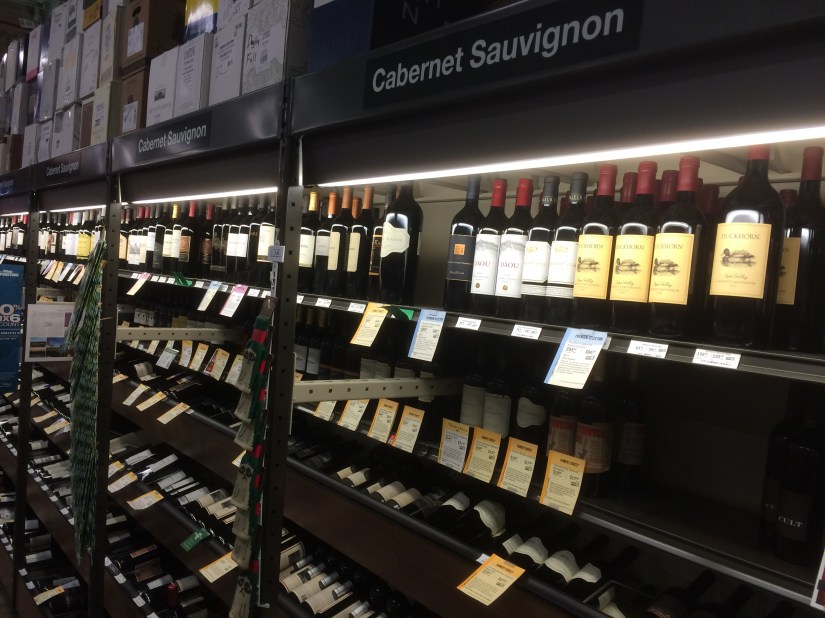
A Cabernet is a Cabernet. Or is it?

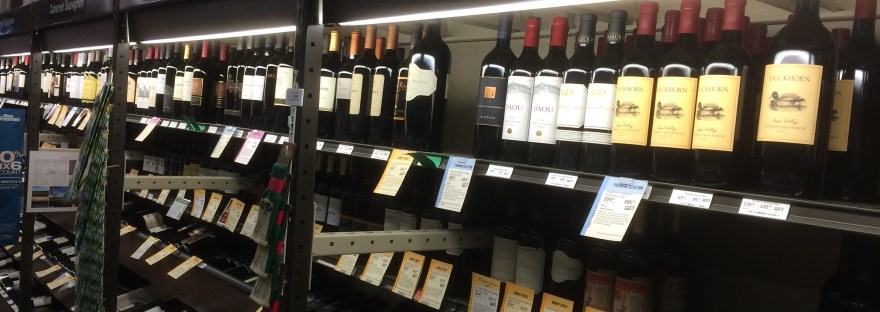
Cabernet Aisle

Not all wines are created equal. There are many variables that can affect the quality and profile of a wine; from weather conditions, to the quality of the grapes harvested, to the winemaker’s skill. Some wineries create their wines for specific demographic markets and price points. Large scale productions may want to make affordable wines that appeal to a mass audience, by blending grapes from different locations to achieve consistency year after year. Boutique wineries may craft single-vineyard wines that highlight the unique characteristics of the region’s soil and climate- the terroir.[1] These are just two examples of different winemaking philosophies and goals that can result in dramatically different styles from the same varietal.

While the information in this post applies to all varietals, I am partial to Cabernet Sauvignon, so that will be my reference and examples throughout. Also, though Cabernet Sauvignon is grown all over the world, my focus is on California, because that is where I live, and the wines I know best.

I was at my local Total Wine & More store a few weeks ago, partaking of their weekly wine tasting. They were pouring two Cabernets; one from Sonoma, and one from Lodi. A couple at the tasting bar next to me was enjoying the wine, but they were asking questions that made it clear they were relatively new to the wine experience. They did not understand why two wines made from the same grape, both from California, would taste so different. Always eager to educate people about wine, whether they want it or not, I talked to them about the differences in climate, terrain, and soil and that influence the resulting wines. (They appreciated the tutelage…or so they said.)

Climate

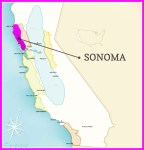
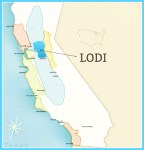
Both Sonoma County and the Lodi Region (in Sacramento and San Joaquin Counties in the Central Valley) are in Northern California. While both regions have a lot in common, they have their differences, too. Perhaps most notable is that Sonoma is a coastal county, whereas Lodi is inland. Several mountain ranges separate the two regions, isolating Lodi from the cooling marine influences found in Sonoma.

sonoma-map-ava-wine-map
Sonoma Wine Region
lodi-california-ava-map
Lodi Wine Region

Although I can personally attest that both Sonoma and Lodi can be darn hot in the summer, Sonoma can get a bit cooler at night from the influence of evening ocean breezes. This cooling can make a difference in how grapes taste, with the Sonoma grapes ripening slightly slower and later. I find that Lodi Cabernet is often bursting with ripe fruit flavors, because of the hotter growing season, while Sonoma Cabernet tends to be more restrained and nuanced.

Terrain and Soil

Wine grapes grow best when the vines are stressed.[2] This sends the vine into survival mode, and causes the roots to dig deep to find water. As the roots dig and locate water, they absorb minerals from the soil. Soil in different regions has varying mineral composition and density. The influence of these minerals in the grape causes variations in taste. This is the terroir that we wine geeks talk about. Terrain and location also play a factor. Grape vines like hillsides. An east-facing vine gets morning sun and evening shade, but west-facing vines get the afternoon heat. Thus, terrain and location affect the speed and timing of ripening.

Blending and Labeling

What many casual wine drinkers don’t realize is that winemakers blend to achieve their desired result. It surprises a lot of people to learn that, in the United States, a wine labeled Cabernet Sauvignon need have only 75% Cabernet in it. The other 25% can be any combination of other varietals, used to soften harsh tannins, or add structure, or simply to achieve a desired taste profile.

Carnivor California

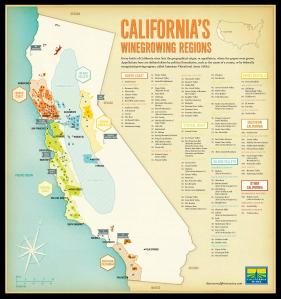
The other key factor with blending and labeling has to do with the region, appellation, or American Viticultural Area (AVA.) Once again, labels can seem misleading. Laws relating to location designations vary, depending on the designation. If a label identifies a wine as a California Cabernet Sauvignon, then 100% of the grapes used in production must have come from California. CaliforniaMap(For other states, that requirement is just 75%)[3] However, this means the grapes could have been grown all over the state, from Napa, Sonoma, Lodi, Amador, Paso Robles, Santa Barbara, or any other location. These grapes are processed and blended to produce the wine. This regional blending eliminates any sense of terroir, but results in smooth, easy-drinking wines.
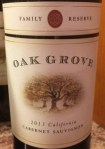
If the label specifies the AVA (Lodi, Sonoma County, Paso Robles, etc.), including sub-appellations (Howell Mountain, Rutherford, Calistoga, etc.), 85% of the grapes must have been grown in that AVA.[4] This allows for blending of up to 15% of grapes from other regions. Again, this blending is used to balance and improve the wine. However, with AVA designated wines, dominated by local grapes, will retain the characteristics that made those regions great.

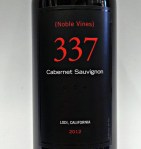
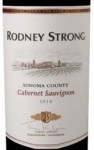
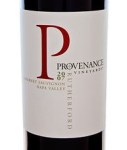
Oak Grove CaliforniaNoble Vines LodiRodney Strong SonomaProvenance Rutherford

I Just Want My Cabernet

For many wine consumers, none of this matters. They just want a Cabernet and don’t care where it comes from. And there’s nothing wrong with that. I live by the motto: Drink What You Like. Yet, if you want to learn more about wine, compare different bottles of the same varietal. Grab a California Cabernet, in which the grapes could have been grown anywhere in the state and blended. Compare that with a Lodi Cabernet, grown in the hotter Central Valley, or one from cooler Sonoma County. Finally, splurge on a sub-AVA specific Cabernet from the Napa Valley region, like Rutherford, for example. Or explore Oakville, or Calistoga. Take your pick. Now that you have three or four wines for comparison, prepare some hors d’oeuvres, invite some friends over, and have yourself a tasting party. I predict you will be surprised at the differences between the wines. Yes, same grape, but different location, different terroir, and different blends. Let me know in the comments what you think, and which you like best.

Cheers!

—————————————————–

[1] http://www.terroir-france.com/theclub/meaning.htm

[2] http://www.wineanorak.com/struggle.htm

[3] https://napavintners.com/wines/how_to_read_a_wine_label.asp

[4] http://www.wine-searcher.com/wine-label-usa.lml

Cabernet Sauvignon, Joel Gott, Wine

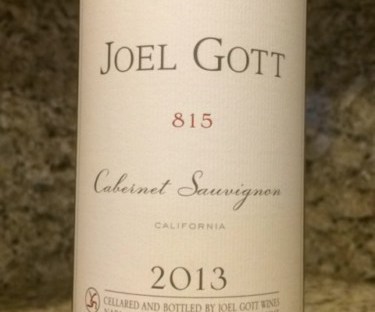
Review: Joel Gott 815 Cabernet Sauvignon 2013

Joel Gott 815 Cab Sauv 2013

“I’ve read a lot of reviews for this wine, so I gave it a try. A solid California Cabernet, for less than $15! Purple-Ruby color, aromas of blackberry and black currant. On the palate, these flavors are present and joined with black pepper and spice, with some cedar notes, and a fruit-driven sweetness. The finish is spicy with a bit of earthiness. This is a medium bodied wine, with moderate tannins. I found the acidity a bit high, but with bottle aging this may soften. All in all, a nice Cab at a good price.”

This is how I described the Joel Gott 815 Cabernet Sauvignon 2013 on Vivino. As I mentioned, I’ve seen a lot of reviews on this wine recently, ranging from other Vivino users, to friends and fellow wine aficionados, to The Reverse Wine Snob (2010 vintage). If there’s an app that tracks trending wines, I have no doubt this one would be high on the list. There is good reason for this. As a “California” Cabernet, as opposed to being AVA-specific, Joel Gott 815 Cabernet Sauvignon is made from grapes all over the state. This allows the winemakers to blend and achieve the exact result they want; one that is smooth and easy-drinking, and will appeal to the masses. The more demanding connoisseur, who prefers only single-vineyard or AVA-specific wines, may not favor this as much, but the average consumer will enjoy it. At around $15, it is a good everyday Cabernet, and would be an excellent choice for newbies who want to try a Cabernet for the first time.

The Joel Gott website describes the wine this way:

 “The 2013 Joel Gott 815 Cabernet Sauvignon has aromatics of mocha, roasted blue fruits, plums, and cherry spice. The wine enters sweet on the palate, well-structured and with firm tannins mid-palate, followed by a long, balanced finish.”

Joel Gott himself narrates a short video describing the wine, and the processes that went into making it. He even includes some food pairing suggestions.

If you are looking for an affordable California Cabernet Sauvignon, that is approachable and easy-drinking, give Joel Gott 815 Cabernet Sauvignon 2013 a try.

I found it at Total Wine & More for $14.99.

Rating: 3.5 out of 5 stars.

Cabernet Sauvignon, Steak, Wine

​The Day After the Day After Thanksgiving – and a Review of Sullivan Cabernet Suavignon 2012

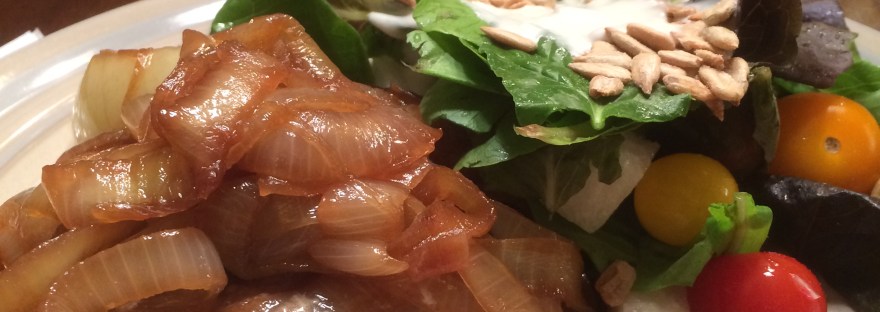
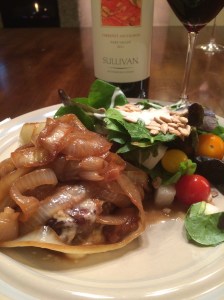
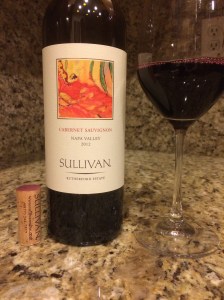
I am so turkeyed-out! What I need tonight is beef. As luck (and a little planning and foresight) would have it, I have Seared Sirloin with Caramelized Onions and Gorgonzola on the menu. Paired with a bottle of Sullivan Vineyards Cabernet Sauvignon Napa Calley 2012, it was just what the doctor ordered!
IMG_0527
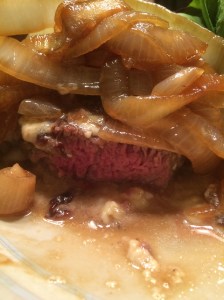
Honest, there’s a Gorgonzola-smothered steak under all those caramelized onions.
IMG_0528
See, I told you.
Sullivan Vineyards Cabernet Sauvignon Napa Valley 2012 is produced by NakedWines.com winemaker Scott McLeod. A part of a series I’m calling “Wines Scantily Clad” (non-Naked but made my NakedWines.com winemakers) here’s my Vivino review:
IMG_0525
My wife’s initial reaction: “Oh, that’s smooth. Very nice.” Thus the stage is set for this excellent Napa Cabernet.
Deep, inky purple in the glass. Aromas of blackberry bramble, tobacco, smoke, and spice. On the palate there is blackberry, cassis, pepper, black cherry, and hints of oak. And those tannins – dry, but oh so smooth. It’s hard to believe this is only a 2012. The finish lingers with dark berry and tobacco.
Purchased from WTSO.com, $30
Rated 4.5 out of 5 stars
This day-after-the-day-after-Thanksgiving, I’m thankful for beef.
Bordeaux, Wine

Bordeaux: It’s Not a Grape

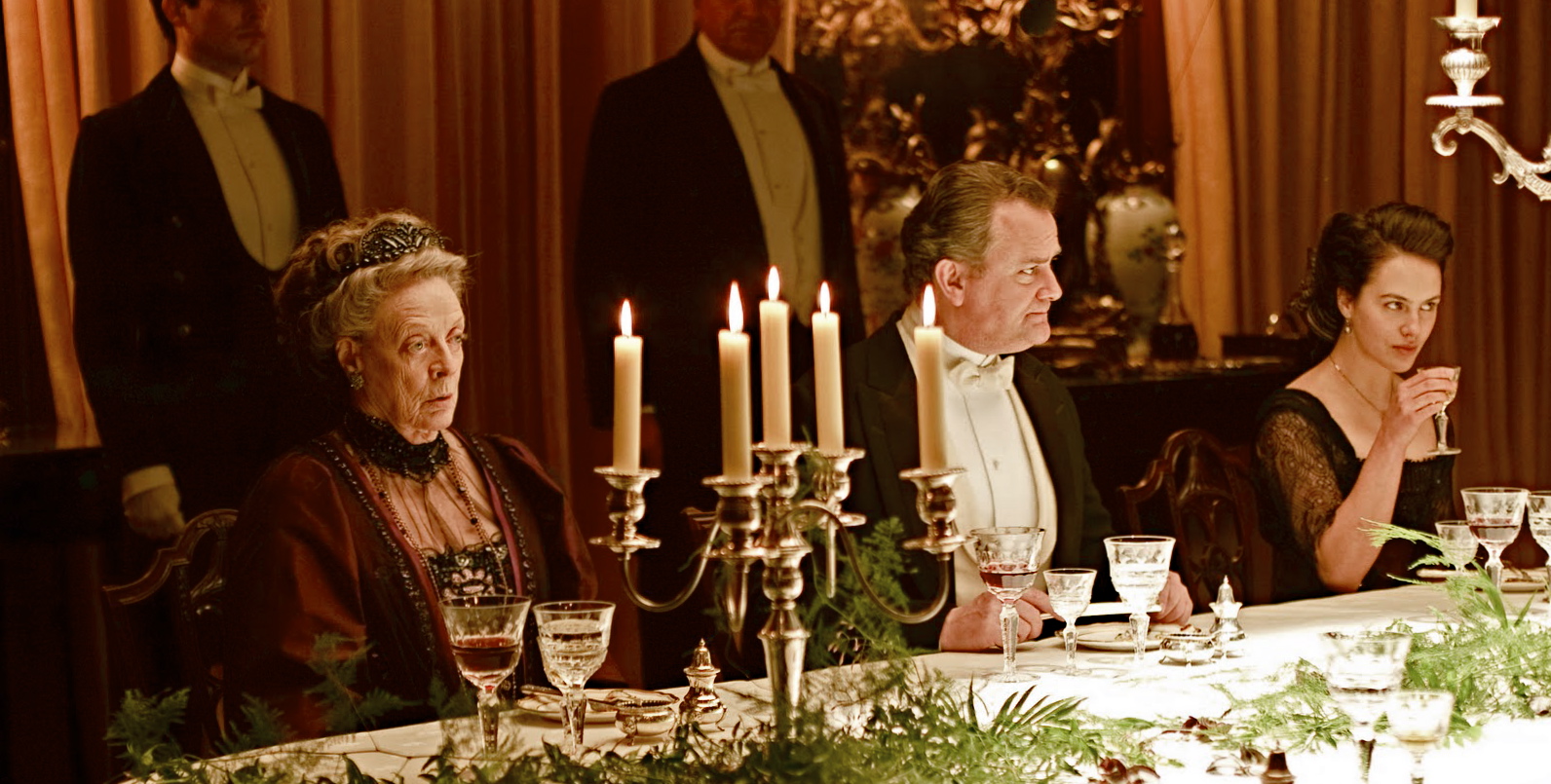
bordeauxreflectionsBordeaux. The name evokes images of luxury and glamour, Downton Abbey-esque dinner parties, and the ultimate in fine wine – the standard against which all other wines are measured. This is not undeserved; Bordeaux is very good wine. It is one of the most recognized names in the wine world. As such, it is also misunderstood, and intimidating to many people.

downton-abbey-dinner-tableA while back, I invited some friends over for dinner, and to share a bottle of Bordeaux. This particular bottle, a $60 Saint-Émilion (obviously not a Grand Cru, but a very nice wine), had been sent to me to review, so I wanted to share it with people who would appreciate the quality. These friends are into wine, but drink mostly California wines. I opened and decanted, and when dinner was served, poured the wine. As they tasted, I explained that as a Right Bank Bordeaux, this wine was predominantly Merlot, blended with Cabernet Sauvignon and Cabernet Franc. The looks on their faces betrayed their surprise. “Bordeaux isn’t a grape?” one of my friends asked.

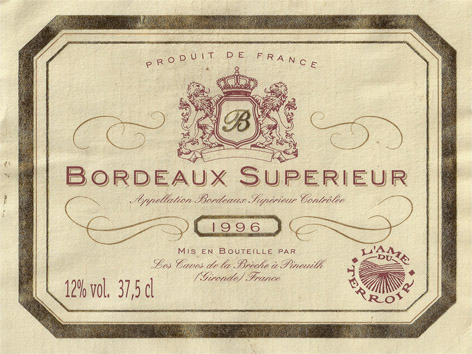
Old World wines can create confusion to American wine drinkers. Had I served a Napa Valley Merlot, the label would say “Napa Valley Merlot.” A red blend with less than 75% of one varietal would say “Red Blend” or something similar, and often lists the grapes on the back label. European wines, on the other hand, name the region on the label, but usually not the varietal. There, people just know that Red Burgundy is Pinot Noir, Chianti is Sangiovese, Rioja is Tempranillo, and Bordeaux is a blend of Cabernet Sauvignon, Merlot, and other grapes.

bordeaux-superieur-1996

Napa Merlot

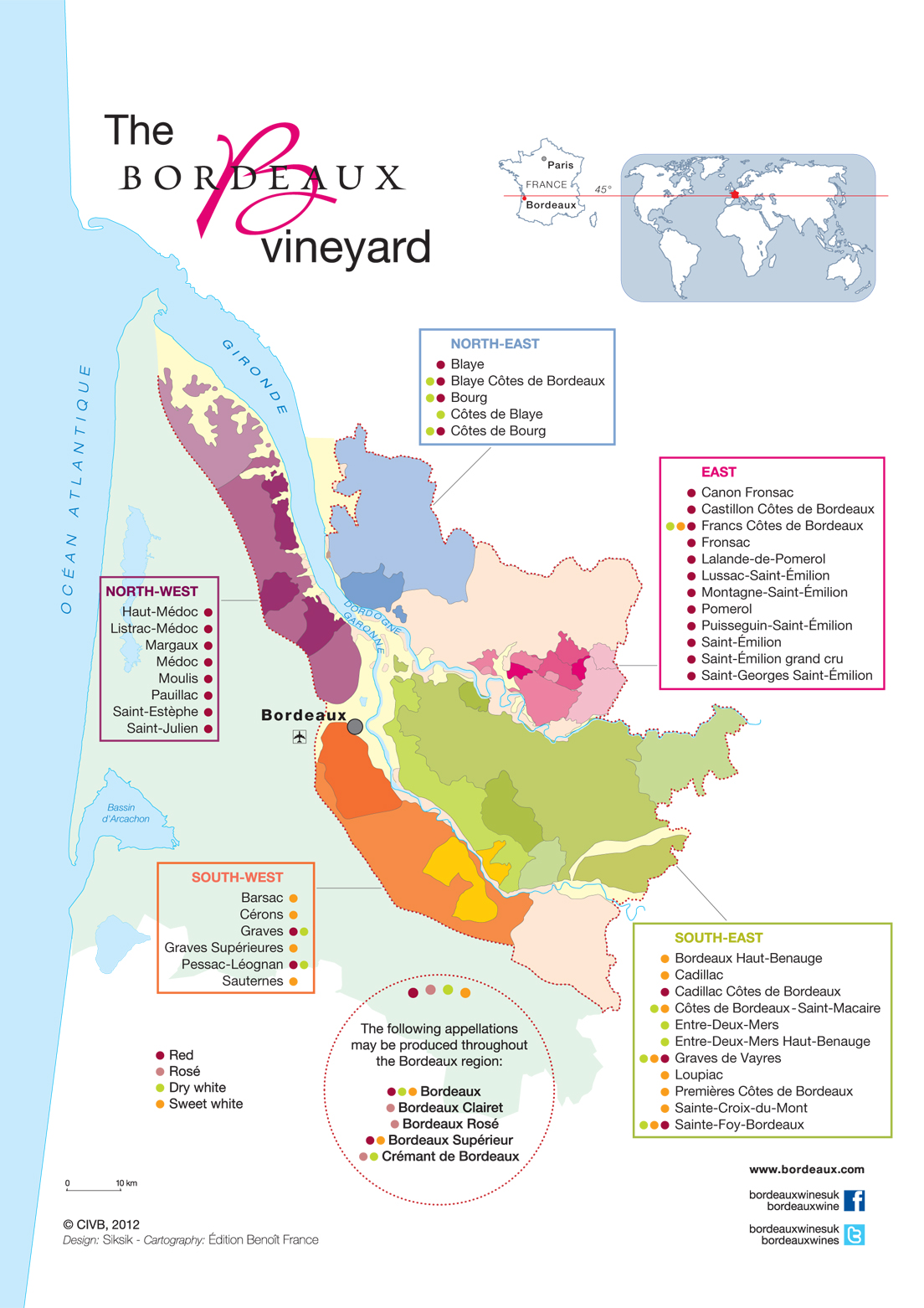
The Bordeaux region is in southwestern France, along the banks of the Gironde river. The predominant red grapes are Cabernet Sauvignon and Merlot. Historically, red wines from producers on the Left Bank of the river are Cabernet-based, while those from the Right Bank are Merlot-based. Other common varietals, used for blending, include Cabernet Franc, Petit Verdot, and Malbec. As mentioned, Bordeaux wines are renowned for their quality, their aging potential, and their glamour.

CarteUltraSimp2012_UK

While high-end Bordeaux, Grand Crus, can fetch thousand of dollars per bottle, there are plenty of very good Bordeaux wines for less than $20. Check your wine shop or market, and try a bottle! Bordeaux has earned it’s reputation for a good reason. Just don’t look for a Bordeaux grape!

naked wines, Wine

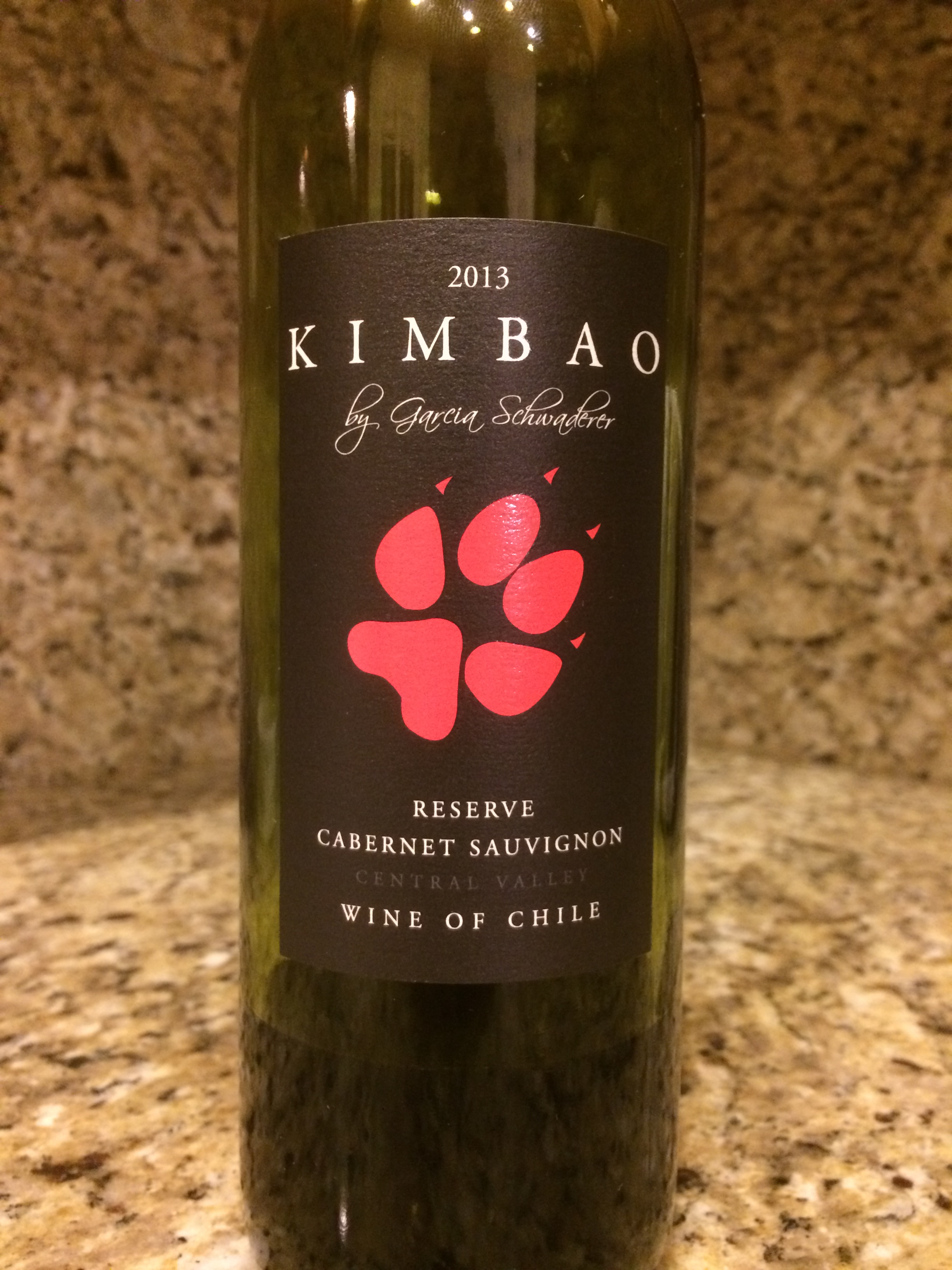
Review: Kimbao Reserve Cabernet Sauvignon 2013

Kimbao Reserve Cabernet 2013

This is a very nice, rich, full Cabernet from Chile. It is produced by winemakers Constanza Schwaderer and Filipe Garcia, and distributed via Naked Wines. Prior to this bottle, I’d not been a big fan of Chilean Cabernet. Constanza and Filipe have changed my mind. Here’s what I thought:

The color is inky purple in the glass. Initial aromas are blackberry and some clove-like spice.

I poured straight from the bottle and found it to be a bit tight and tannic. However, after I ran it through my Vinturi, the wine is smooth and full bodied.

The dominant flavor is fresh picked blackberry. There are also flavors of black currant, with oak and a hint of violet around the edges. The finish lingers with berry and spice.

There are ample tannins, with nicely balanced acidity which helps prolong the finish. This wine definitely has aging potential, but with proper aeration/decanting it is quite enjoyable now.

Rating: 4 out of 5 Hearts

NW LogoThis wine is available exclusively through Naked Wines for $11.99. Naked Wines operates in the U.K., Australia, and the U.S. Click here for a voucher worth $100 off a first time order of $160 or more. You’ll be glad you did!

naked wines, nakedwines.com

Something About Rutherford

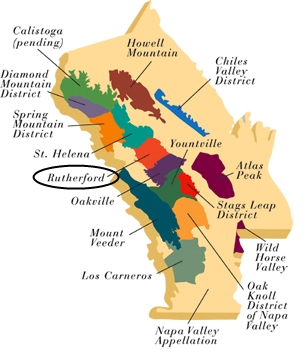
There’s just something about Rutherford. Centrally located in the heart of the Napa Valley, Rutherford is one of 16 sub-appellations within the greater Napa Valley American Viticultural Area (AVA). The Rutherford AVA is noted for intense Cabernet Sauvignon, Merlot, and other varietals (Napa Valley Vintners, 2015).

NapaValleyAppelationMapMy favorite Cabernet Sauvignon comes from the Rutherford AVA. I have found that certain growing regions set the standard for certain varietals. For example, the Willamette Valley is the standard by which I judge Pinot Noir, and the Sierra Foothills AVA, specifically Amador County, produce what I consider to be premier Zinfandel, by which I compare examples from other areas. To be sure, everybody’s preferences are different, but in my opinion, Rutherford Cabernet is the best. How well I like Cabernet from other regions depends on how closely they resemble Rutherford.

The Rutherford AVA is noted for its legendary Rutherford Dust. The term is often credited to André Tchelistcheff, former winemaker at Beaulieu Vineyards (Swan, 2011). According to Andy Backstoffer, who worked with Tchelistscheff, the term refers to the terroir of the AVA.

When Tchelistcheff said, “The wines must have Rutherford dust in them,” he did not mean they had to taste of dust. “André meant they needed to taste like they came from Rutherford’s vineyards,” Beckstoffer explained. Tchelistcheff was talking about terroir. (Swan, 2011).

Terroir is the influence the climate, soil, and terrain on a wine (Puckette, 2013). The concept of terroir is a bit nebulous, since the word is French in origin and has no direct translation into English (Balik, 2012). However, it is that terroir that gives wines from a certain region or appellation its distinctive profile and taste. Such it is with Rutherford Cabernet Sauvignon, for me.

Napa Cabernet, in general, and Rutherford specifically, tends to be pretty pricey in comparison to that of other regions. A recent search of the Total Wine & More website revealed the lowest priced Rutherford Cabernet was BV Rutherford Cabernet at $24.49 for a 750 ml bottle. The highest price was Inglenook (Niebaum-Coppola) Rubicon, 2009, for $199.99. Compare this to Cabernet from the Central Coast (California) region, for as low as $7.97 for the same sized bottle, from Cupcake. I’ve never tried this one, and frankly doubt I ever will, but I’d bet there’s more than a little difference in quality and taste.  Not to suggest that Central Coast Cabernet is bad, but the fruit from which it is made is less expensive. Feel free to draw your own conclusions.

Speaking of the cost of fruit, one of the reasons Napa and Rutherford Cabernet is more expensive is that the grapes from that region fetch a higher price. In 2013, Cabernet Sauvignon from District 11, generally southeastern Sacramento County and northern San Joaquin County (e.g. Lodi), sold for an average $709 per ton. Compare this to District 4, Napa County Cabernet grapes, which sold for an average of $5,499 per ton (Adams, 2014), nearly 8x the price!mediumCutout

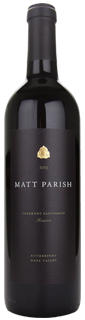
I’ve said before that my wheelhouse for wine is $10-18, with $25-35 for special occasions. Suffice it to say, I don’t get to enjoy as much Rutherford Cabernet as I’d like. When I do indulge, it’s usually on the lower end of the spectrum, such as it is. I’ve tasted more expensive brands at wineries, but Beaulieu Vineyards and Provenance are usually what I buy, but as a Naked Wines Angel, I also have access to a new release from Matt Parish.  At Angel price, this sells for $29.99, and it is as good a Rutherford Cabernet as any I’ve tried – even in the $80-100 range. It’s a very small lot, so the two bottles I bought recently are probably all I will get of the current, 2013 vintage. I plan to save one for at least a couple years. In the meantime, hopefully Matt will be able to make more in another vintage. It’s worth the splurge!

Whatever your favorite is, whether its Cabernet Sauvignon from Rutherford AVA, Sta. Rita Hills Pinot Noir, genuine Bordeaux, or any other wine from any other region, just remember to drink what you like!

Works Cited
Adams, A. (2014, March). Wines and Vines. Retrieved August 18, 2015, from Record California Wine Grape Harvest: http://www.winesandvines.com/template.cfm?section=features&content=129025&ftitle=Record%20California%20Wine%20Grape%20Harvest
Balik, A. R. (2012, July 19). Napa Valley Register. Retrieved August 18, 2015, from Terroir: What does it mean?: http://napavalleyregister.com/lifestyles/food-and-cooking/wine/columnists/allen-balik/terroir-what-does-it-mean/article_593f6df8-d205-11e1-81a6-0019bb2963f4.html
Napa Valley Vintners. (2015). Napa Valley Appellations. Retrieved August 18, 2015, from Napa Valley Vintners: http://www.napavintners.com/napa_valley/appellations.asp
Puckette, M. (2013, November 6). Wine Folly. Retrieved August 18, 2015, from Terroir Definition for Wine: http://winefolly.com/tutorial/terroir-definition-for-wine/
Swan, F. (2011, July 14). NorCal Wine. Retrieved August 18, 2015, from What is Rutherford Dust?: http://norcalwine.com/blog/51-general-interest/523-what-is-rutherford-dust
Wine

Appetite for Wine

We enjoy wine. A lot. We are not wine professionals. We hold no certifications; we have no experience in the wine industry. We just enjoy tasting and drinking wine, and exploring wine regions.

Most of the wines we drink are from California, mainly because that is where we live, so when we go wine tasting, that’s what we buy. Nevertheless, we enjoy wines from other states in the U.S., and all over the world. We have an affinity for Spain (Rioja, Cariñena), Italy (Tuscany, Montepulciano d’Abruzzo, Barolo), and France (Red Bordeaux, Loire Sauvignon Blanc). We enjoy finding affordable wines from under-rated regions.

Over the years we have tasted several hundred wines, and can only recall a handful that were so bad we could not drink them. (One of those was early in my (Kent) wine journey and I now believe it was corked, but I didn’t know it at the time.) While we have favorites, and prefer big, bold reds, we haven’t met a grape – red or white – that we don’t enjoy in some measure.

Our main format for micro-blogging is Instagram. We are very active there, posting several times per week to share what we’re drinking, and what we’re thinking. Please visit us @appetite_for_wine and @robz_lyfe. If you like what you see, please follow us.

You may also want to follow Kent on Vivino, the wine rating app. He’s consistently rated in the top 140 users in the United States. That’s out of more than 5.5 million users! You can find him here: http://www.vivino.com/users/kent-rey. His Vivino reviews also post to his Twitter feed at https://twitter.com/k1reynolds.

If you’d like to reach us directly, or are interested in having us review your wine (samples gladly accepted), please send an e-mail to appetiteforwine (at) gmail (dot) com. Cheers!

– Kent Reynolds & Robyn Raphael