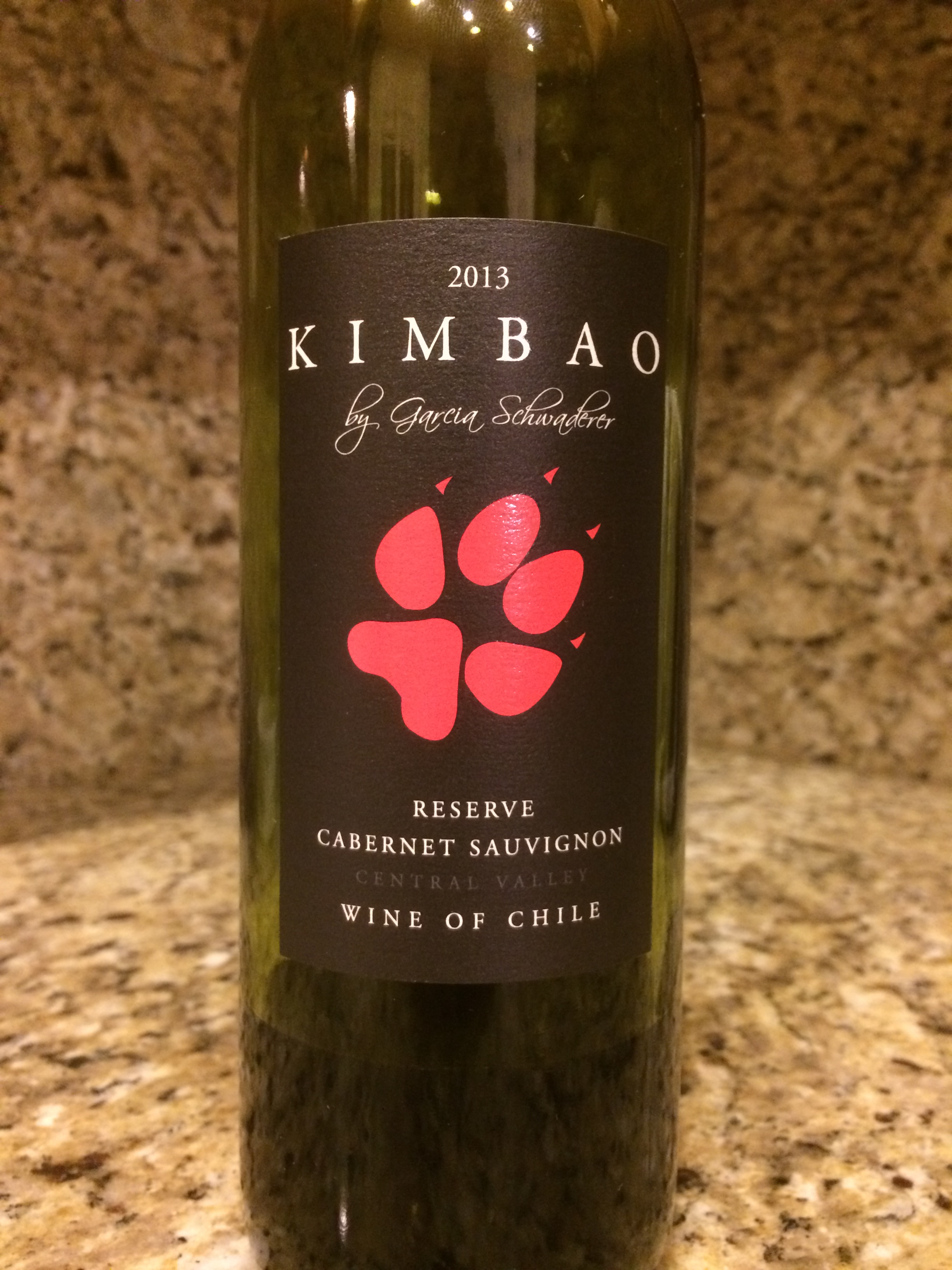
This is a very nice, rich, full Cabernet from Chile. It is produced by winemakers Constanza Schwaderer and Filipe Garcia, and distributed via Naked Wines. Prior to this bottle, I’d not been a big fan of Chilean Cabernet. Constanza and Filipe have changed my mind. Here’s what I thought:
The color is inky purple in the glass. Initial aromas are blackberry and some clove-like spice.
I poured straight from the bottle and found it to be a bit tight and tannic. However, after I ran it through my Vinturi, the wine is smooth and full bodied.
The dominant flavor is fresh picked blackberry. There are also flavors of black currant, with oak and a hint of violet around the edges. The finish lingers with berry and spice.
There are ample tannins, with nicely balanced acidity which helps prolong the finish. This wine definitely has aging potential, but with proper aeration/decanting it is quite enjoyable now.
Rating: 4 out of 5 Hearts
This wine is available exclusively through Naked Wines for $11.99. Naked Wines operates in the U.K., Australia, and the U.S. Click here for a voucher worth $100 off a first time order of $160 or more. You’ll be glad you did!
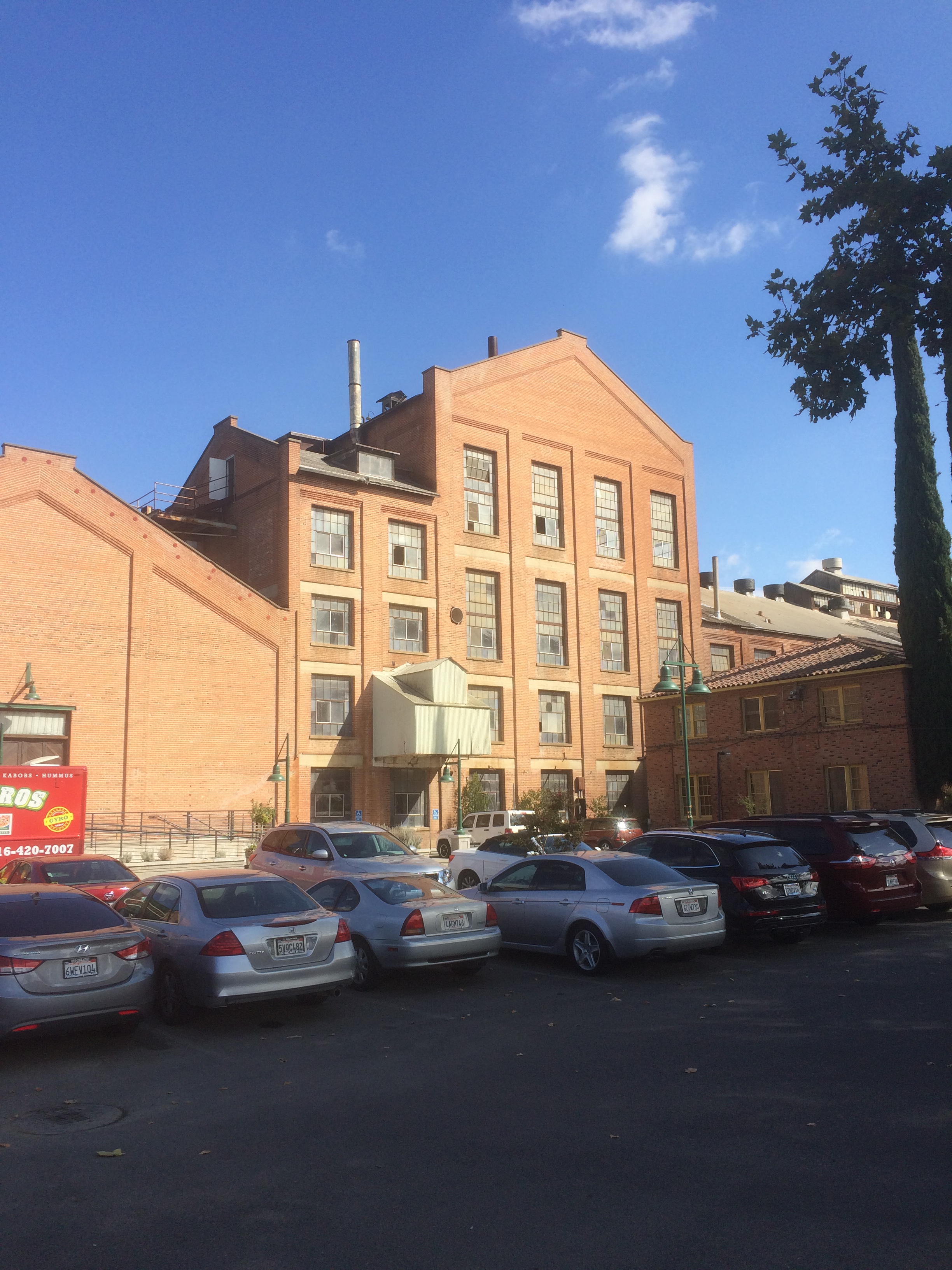
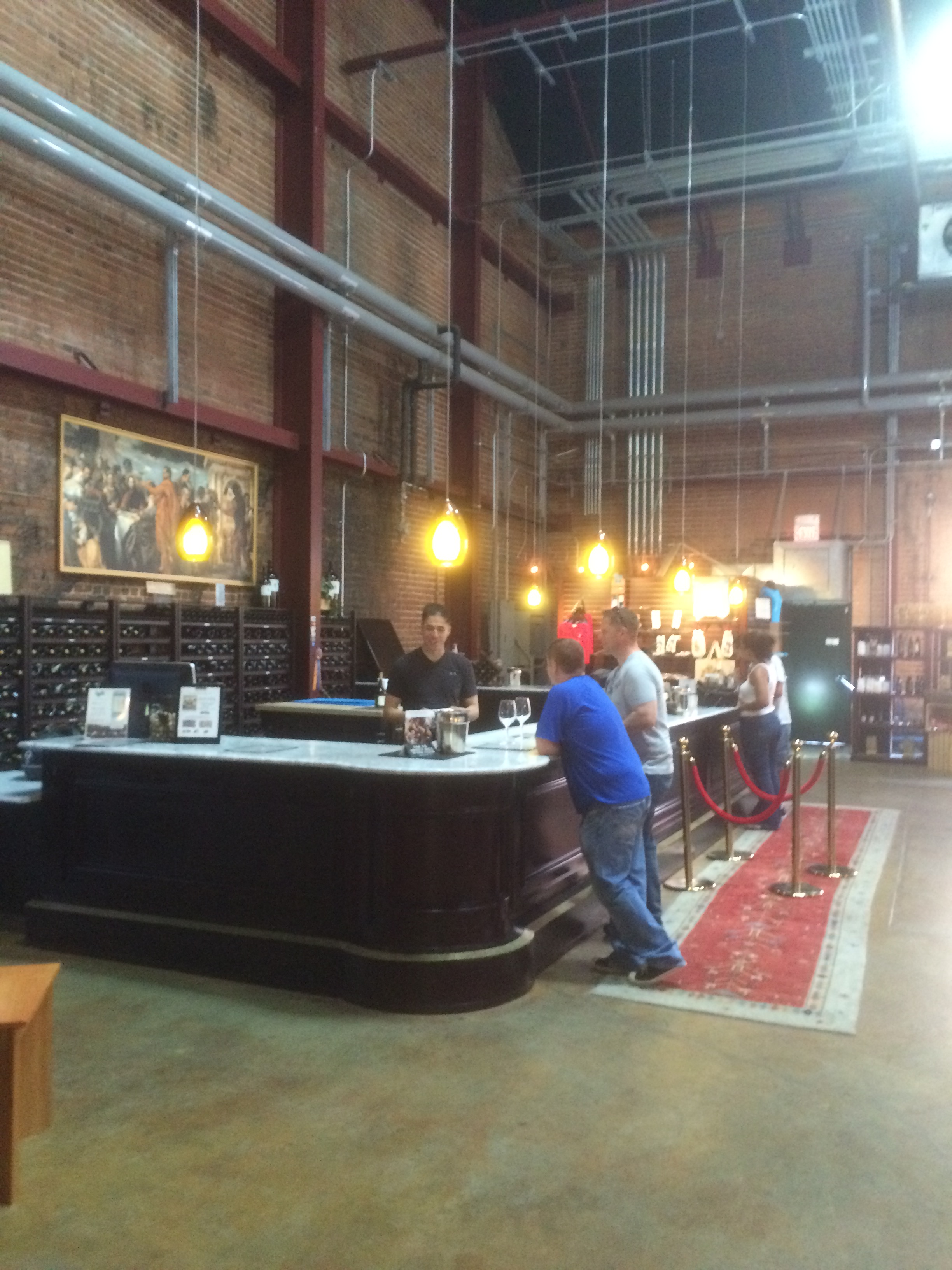
Located less than 20 minutes from downtown Sacramento, the Old Sugar Mill in Clarksburg, CA, is a wine lover’s dream destination. Take a scenic drive along the Sacramento River to the home of 11 tasting rooms, and several full winery operations. Besides the wine, the venue hosts a number of events including Art Walks, Yoga and Wine, Food Truck Mania, seasonal events, and frequent weddings. This is truly a one-stop wonderland.
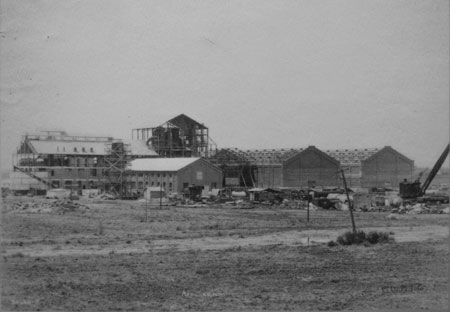
As the name implies, this regional hub for Central Valley wines is housed in an old sugar production mill. But that’s not the most interesting bit about this historic building. Formerly owned by the Amalgamated Sugar Company, it was originally located at Smithfield, Utah. In 1933, the plant was closed, dismantled, and transported brick-by-brick to its current location. It was reassembled between 1934-1936 and resumed operation, processing sugar beets into granular sugar. In 1993, the location closed as a sugar processing plant forever, and remained vacant until 2000. In that year, John Carvalho, Jr., purchased the location and began renovation and conversion into a winery and tourism destination. [1],[2]
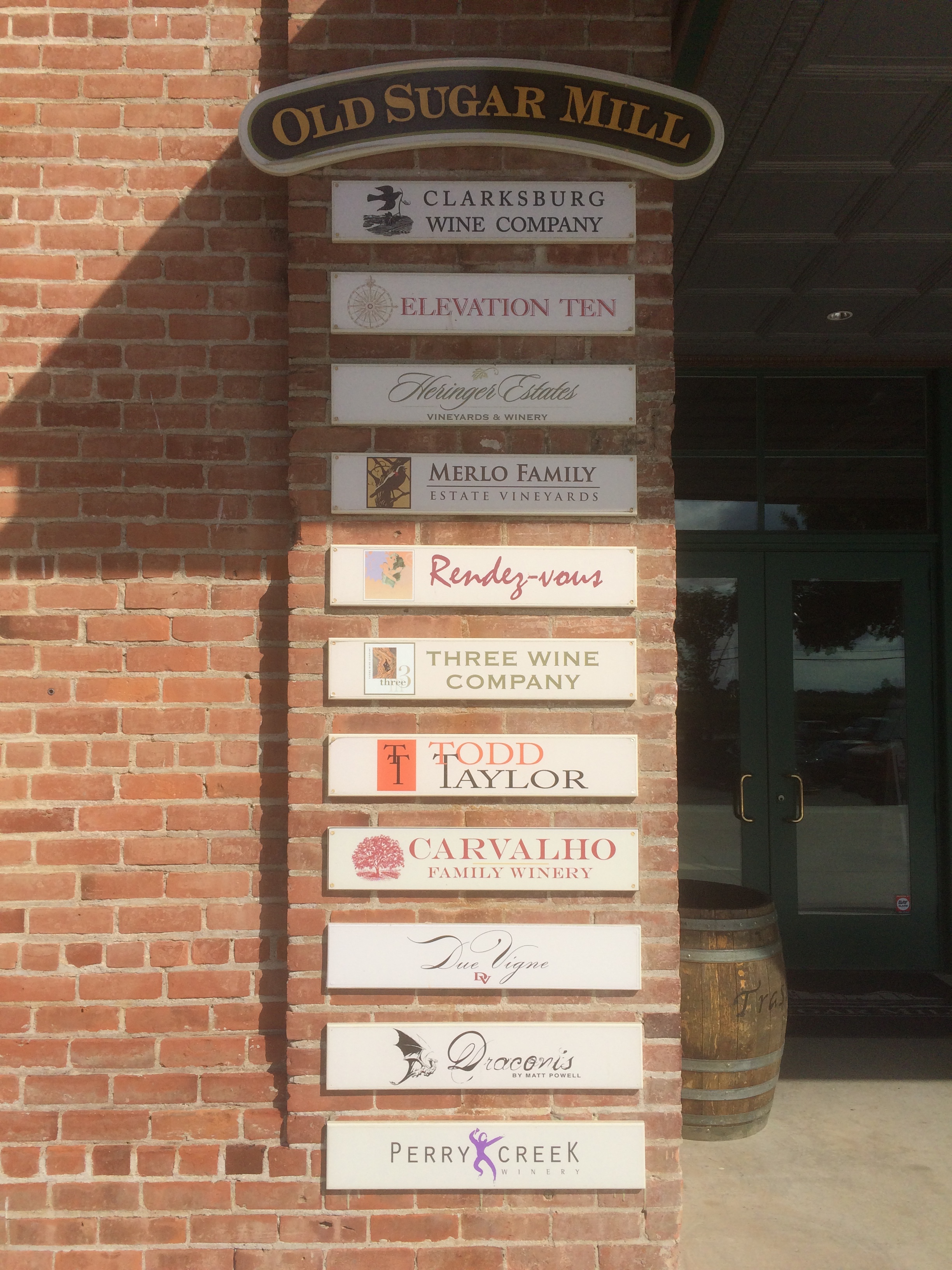
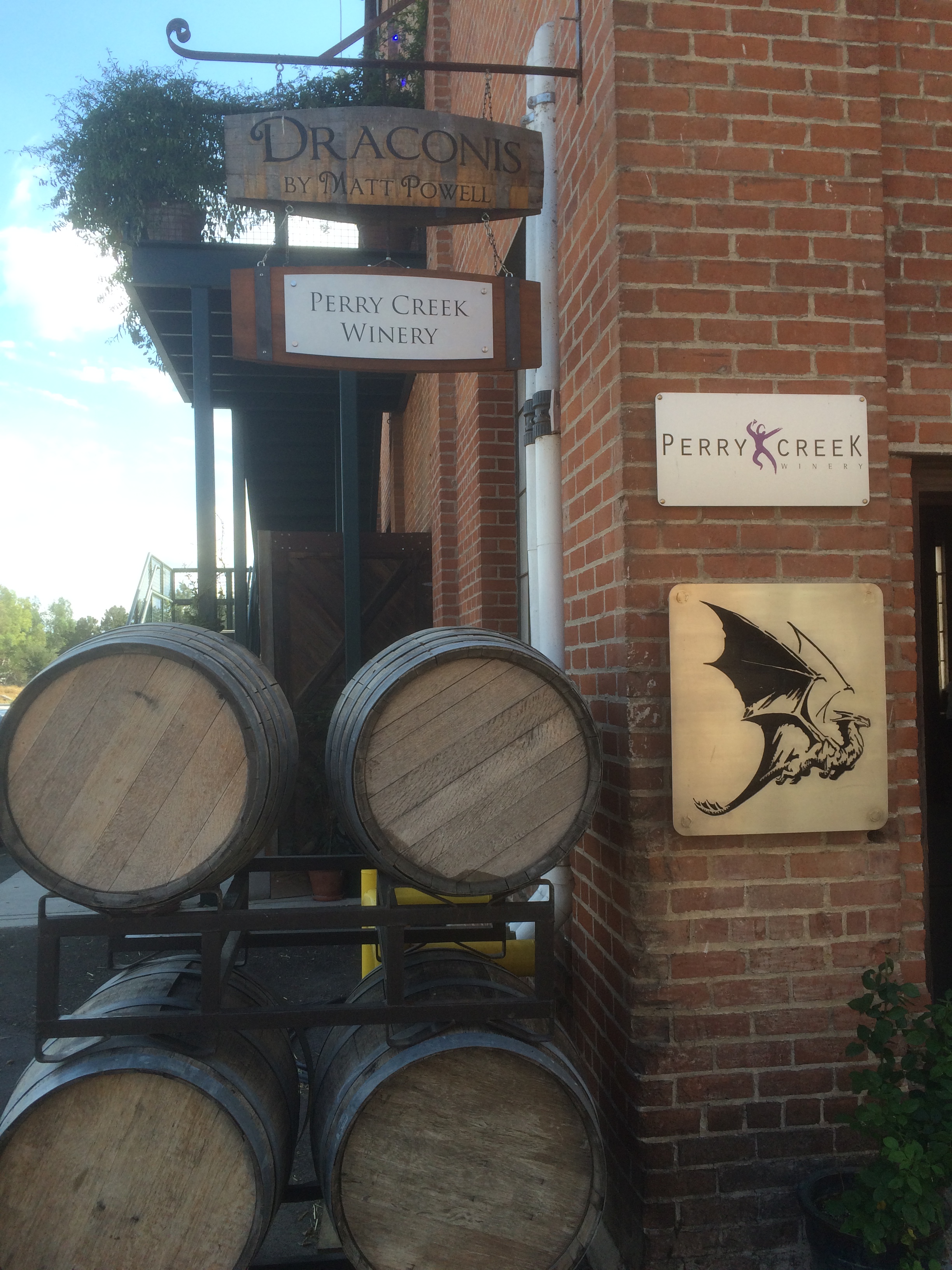
Most of the current occupants of the Old Sugar Mill are wineries from the Clarksburg AVA, although other California AVA’s are represented also. These include Fair Play AVA in the Sierra Foothills (Perry Creek Winery) and Trinity County AVA (Merlo Family Estate).
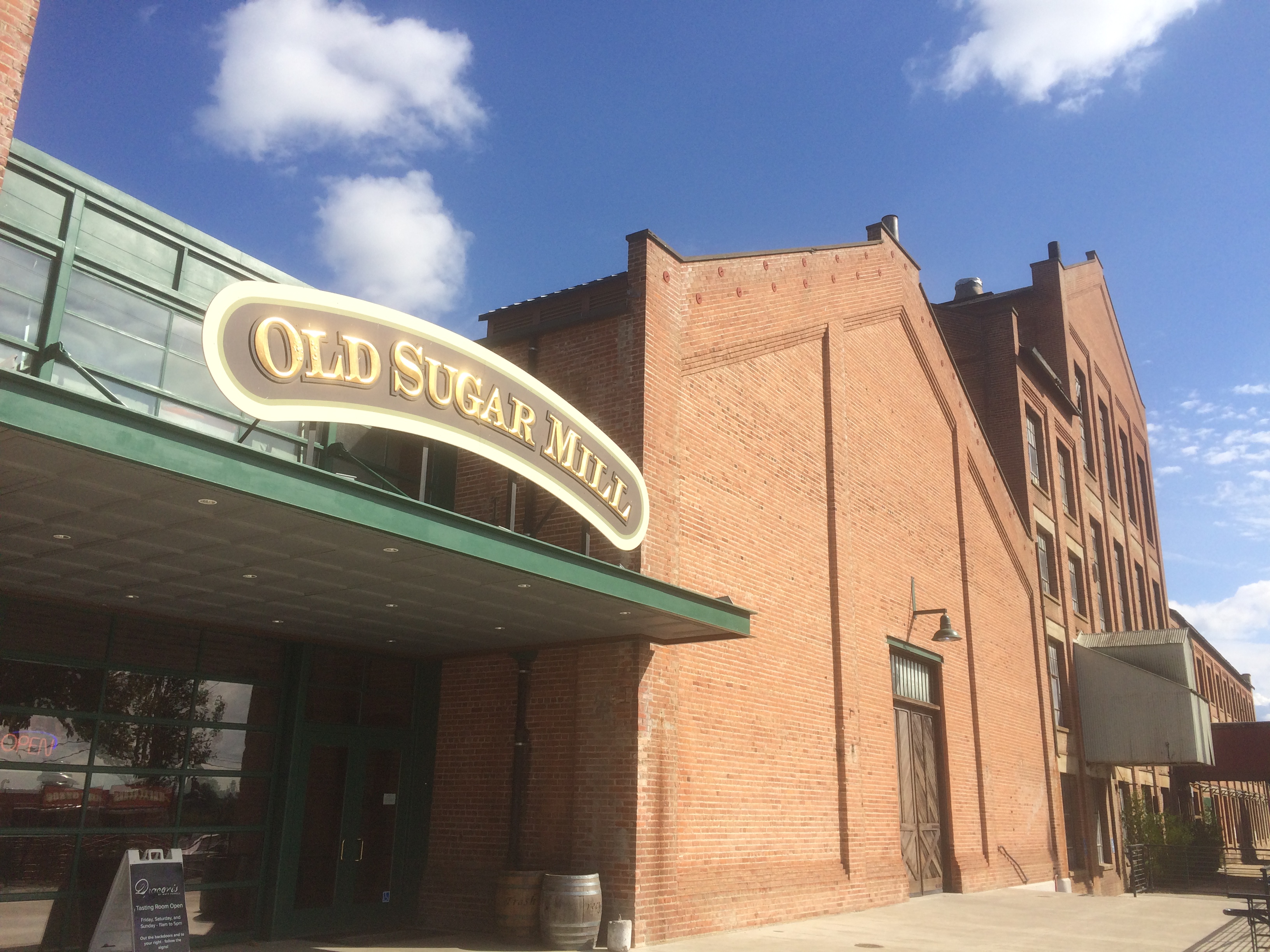
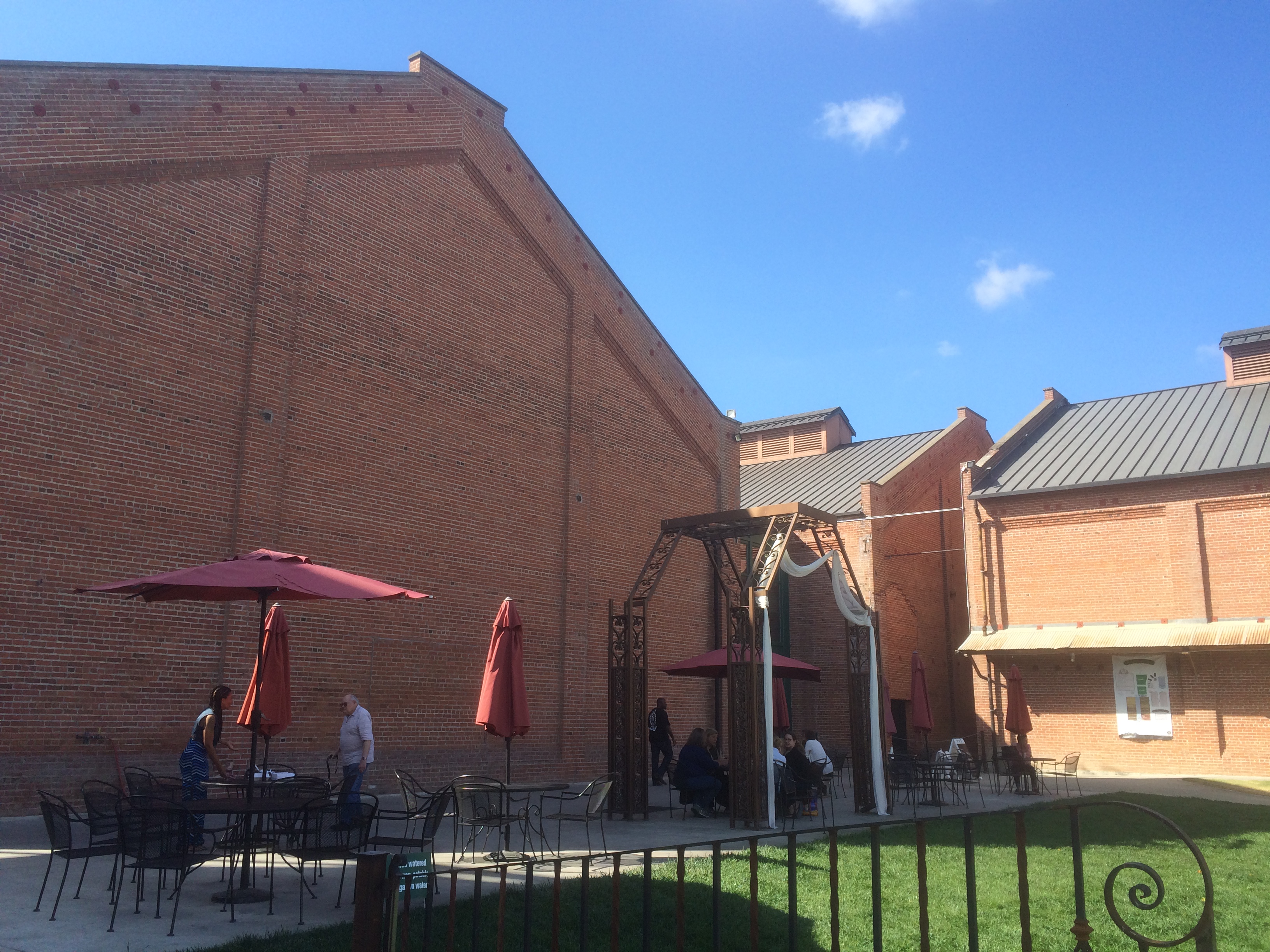
The buildings themselves are worth the visit. The massive, high-ceiling brick edifices are beautiful; the architecture reminiscent of a bygone era.
When you pass through the main doors, you enter the main building that houses nine of the tasting rooms, and a barrel room that functions as an event hall.
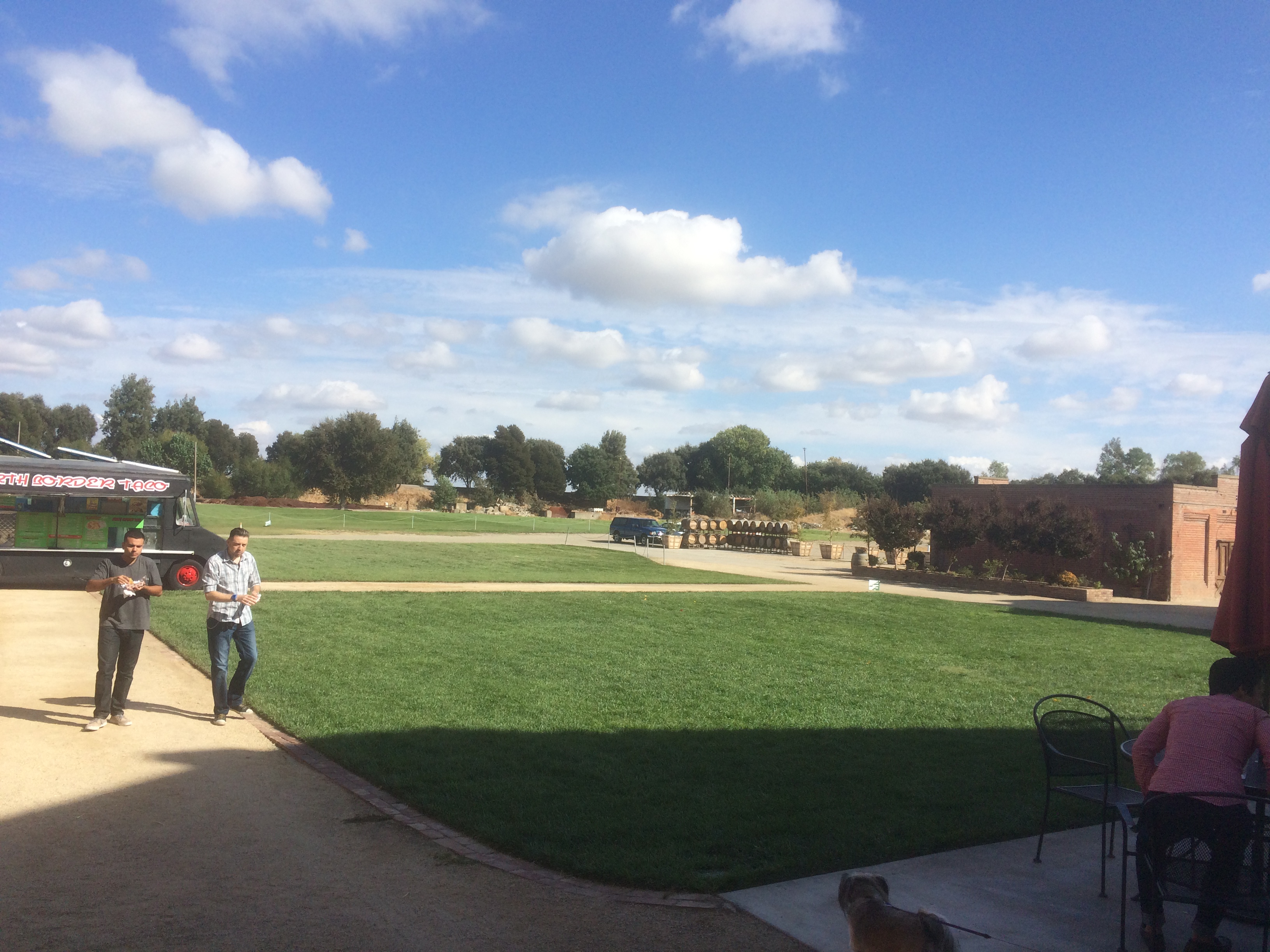
Continue through the building and out the back doors, where you’ll find a large lawn area where Food Truck events and weddings are held. Also out back are the other two tasting rooms. Bring a picnic lunch, or buy something from one of the ever-present food trucks, and make an afternoon of it!
With 11 wineries all in one place, you have plenty of choices and options. In addition to the outdoor seating, many tasting rooms have seating areas for leisurely tasting enjoyment. Most tasting rooms charge $5 for tasting; typically 6-8 pours; but will waive the tasting charge with a purchase. On this trip, we visited four wineries.
Draconis Vineyards specializes in just two varietals: Zinfandel and Petite Sirah, and their wines are excellent. Their tasting room staff is friendly and helpful.
Perry Creek and Draconis
Clarksburg Wine Company has a huge selection of reds and whites. Give their Delta Blanc white blend and the Delta Rouge red blend a try!
Clarksburg Wine Company
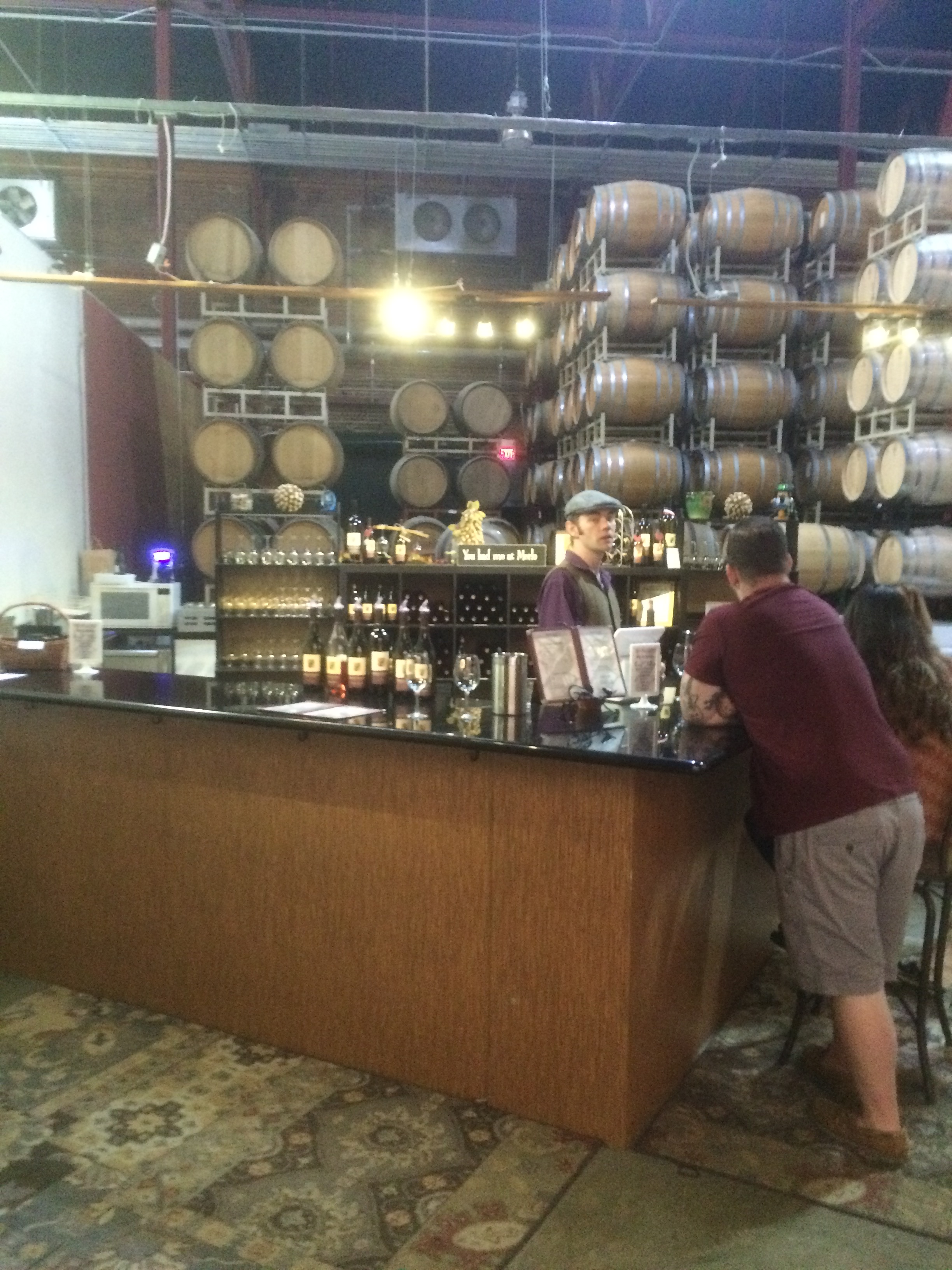
Merlo Family Estate produces rich, delicious wines from the volcanic soils of Trinity County. Be sure to say “hi” to their tasting room manager, Djimi. In the summer months, he’ll likely be sporting his kilt.
Merlo Family Vineyards
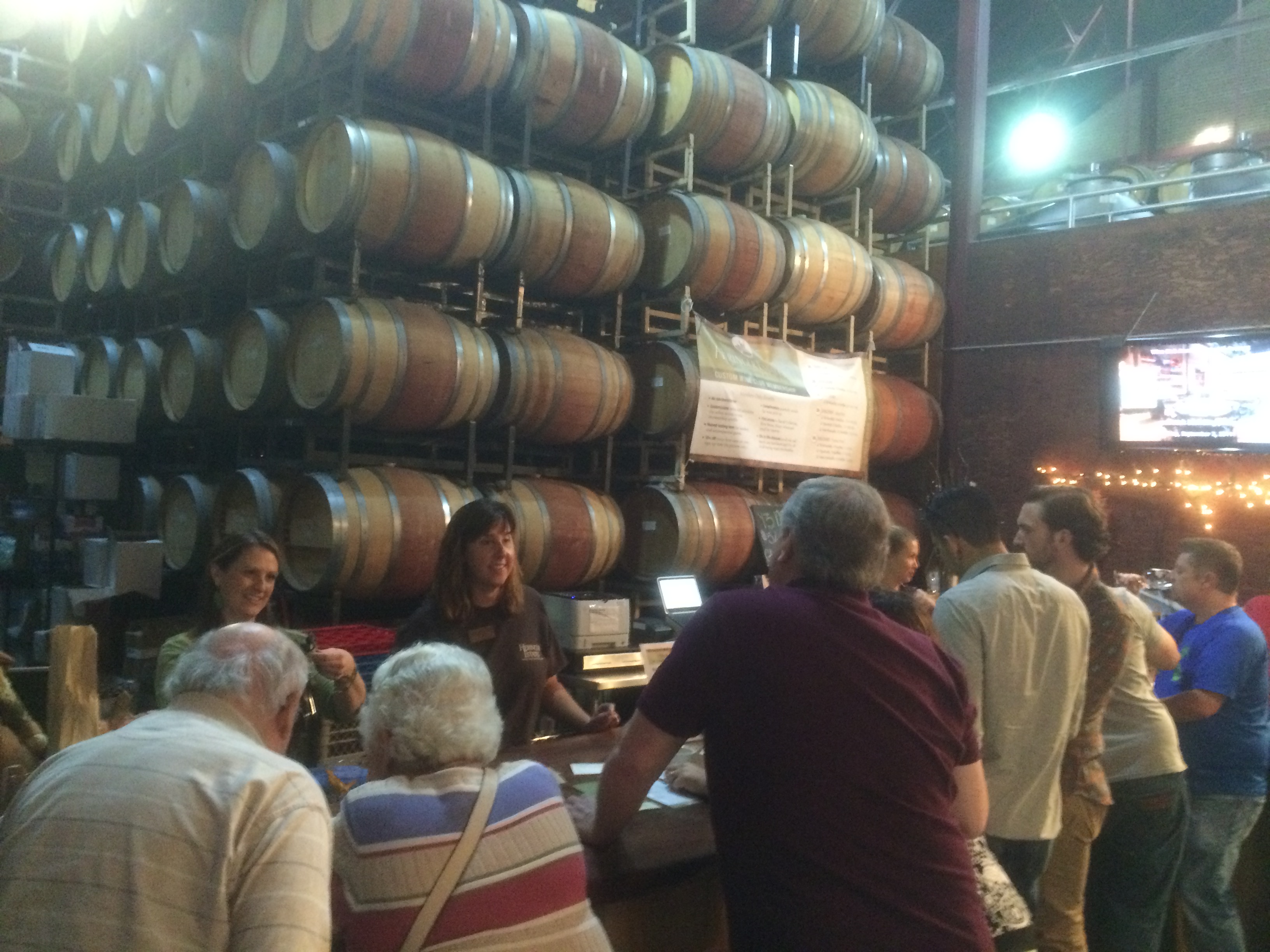
Heringer Estates operates their winery on site at the Old Sugar Mill. They offer a wide portfolio of wines, including such unusual varietals as Tannat and Teroldedo.
Heringer Estates
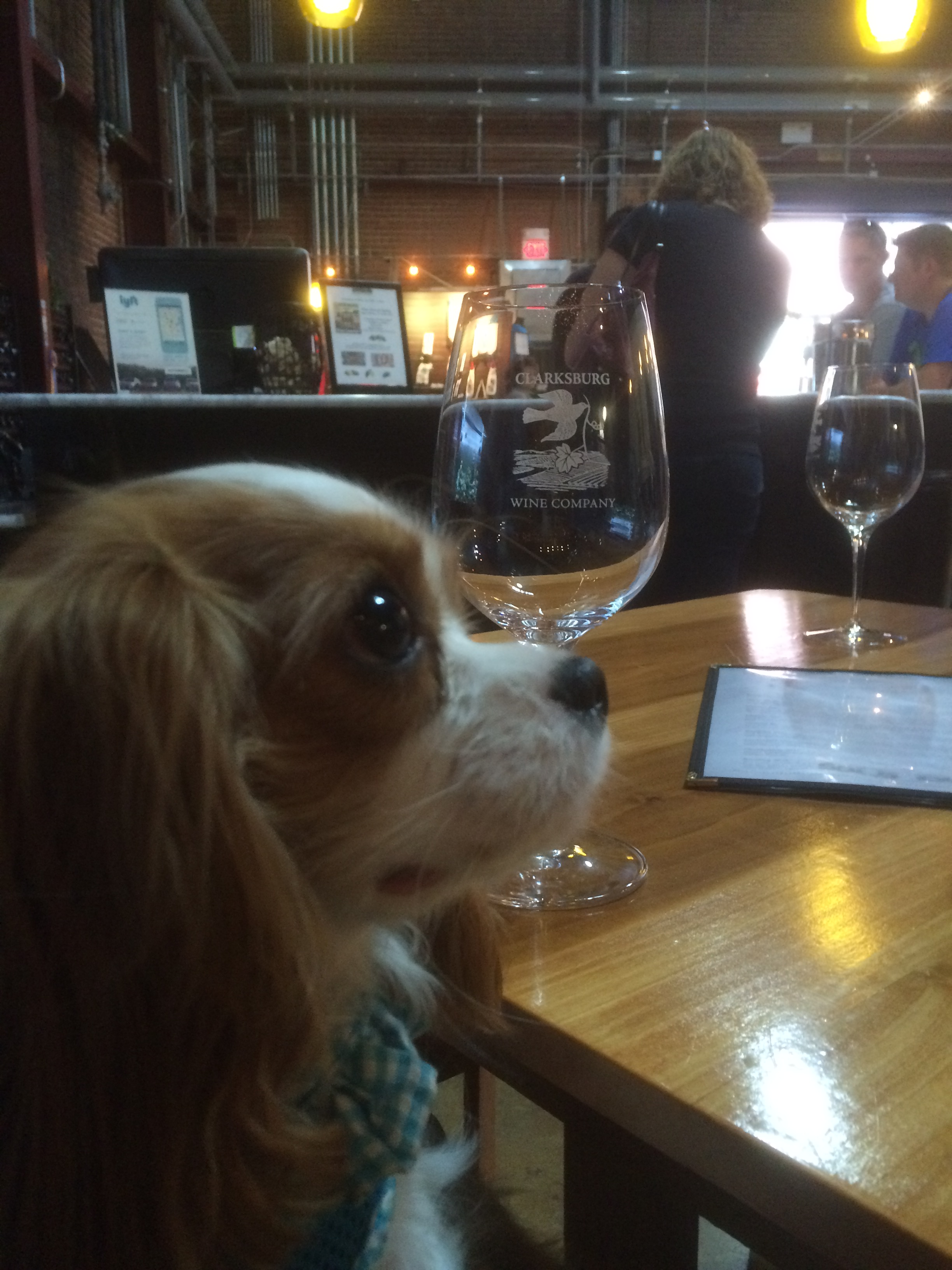
The Old Sugar Mill is a dog friendly venue. Well behaved dogs on leashes are welcome. Many tasting rooms have water and/or snacks available for four-footed visitors.
Colette the Cavalier King Charles
If you are in the area, be sure to stop by for a visit! Here’s a map to help you find the way!
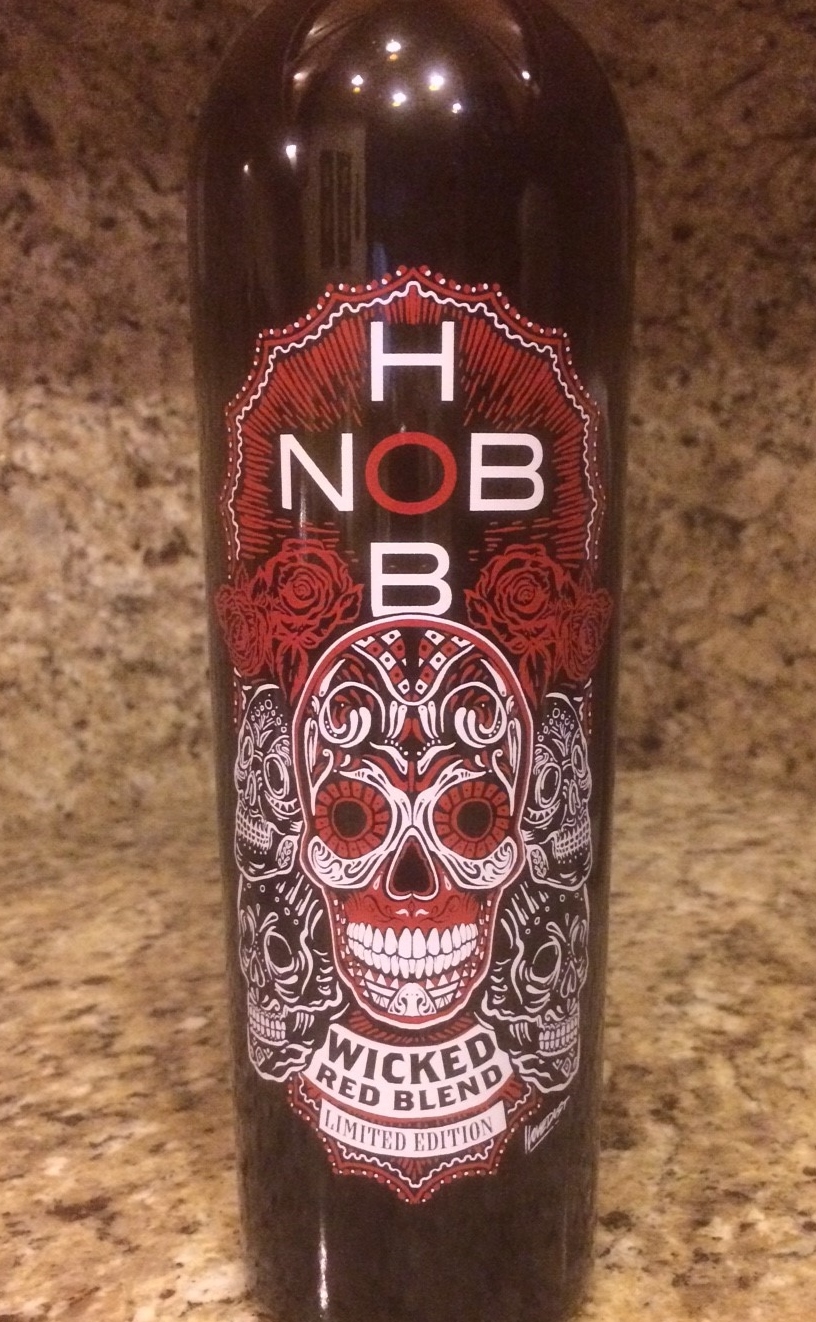
Just in time for Halloween comes the limited edition Hob Nob Wicked Red Blend. Sporting a Calavera, or “Sugar Skull”; the traditional Mexican Dia De Los Muetros symbol; on the label, this wine actually hails from France. The Languedoc-Roussillon region, to be precise.
As stated on the label, this is a Limited Edition wine, released each year around Halloween. It is a great wine to bring to an All Hallows Eve party; full of surprises and devilishly good. The Languedoc-Roussillon region is known for excellent wines at outstanding values. Hob Nob Wicked Red Blend is no exception. A traditional blend of Grenache and Syrah, with some Cabernet Sauvignon as well, the folks at Hob Nob threw a surprise into this blend: Pinot Noir. The Pinot adds zing; a brisk acidity and layers of complexity to make this wine the life of the party! With plenty of backbone and structure, plus lively acidity, it pairs with a variety of foods; even a juicy grilled rib eye steak!
From the back label: “Celebrate Halloween with Hob Nob Wicked Red Limited Edition, a fruit forward, opulent red blend with hints of oak, hazelnut, mocha, and an eerily smooth finish. Are you ready to get Wicked?”
Here’s what I thought of the 2012 Hob Nob Wicked Red Blend, as posted on Vivino:
“Fun label, good wine. Deep burgundy color in the glass. Aromas of blackberry bramble and dark berry, with some earthy notes. On the tongue the first thing I notice is the smooth body and bright acidity. Flavors of blackberry and fresh raspberry with cherry and cedar. The acidity creates a fresh, long finish.”
I got mine at Total Wine & More for $8.99. Tasty wine at a scary-good value! Get some, before it vanishes!
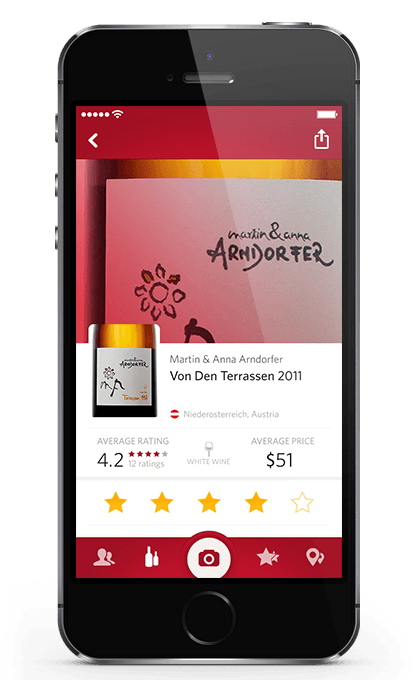
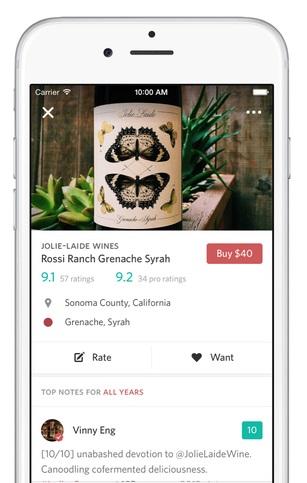
We’ve all read wine reviews in magazines and wine-industry websites. These are written by trained, often certified, wine professionals. In addition, social media has enabled us all to become wine reviewers. Sites like Cellar Tracker, Vivino, and Delectable allow consumers to rate and review wines on the go, using Smart Phone apps.
Cellar TrackerVivinoDelectable
This can be a great help in the wine aisle, overwhelmed by the vast selection and not knowing what’s good. Simply pull out your phone and check the reviews!
There are also a number of online retailers that encourage consumers to rate and review the wines they buy.
With all those reviews out there, professional and amateur, how can you know which wines you’ll like?
Subjectivity is about individual experiences and perceptions. Its how you feel, what you enjoy; your personal preferences. Whereas you may really like a particular wine, the next person may disdain it.
Objectivity, on the other hand, refers to fact-based findings. When you go to the doctor, you describe your symptoms: pain and swelling in your ankle, for example. Perhaps you assume you sprained your ankle, but your symptoms are your subjective perception of what is wrong. The doctor orders x-rays. The objective fact established by the x-ray shows that you actually broke your ankle. With objectivity, your doctor can properly treat your injury.
Wine is a subjective experience. Everybody has different preferences, tastes, likes, and dislikes. Some people only like white wine. Some people only like sweet wine. There are “ABC’ers” – Anything But Chardonnay. Others, influenced by popular culture, and won’t drink Merlot. Price and value play a part, too. I know people who simply won’t spend more than $7 or $8 on a bottle of wine.
So are wine reviews of any value? Yes, but…
Wine reviews express the subjective opinion of another person. Professional reviewers, with years of training and tasting experience, can guide you to a wine you may enjoy. But…only if you share a similar taste profile and preferences. I have found that the best way to use reviews is to find reviewer with similar subjective preferences to mine. This requires a lot of reading, but pretty quickly you can identify who likes what you like.
Another thing to remember about professional reviews is that most (if not all) of the wines they review are samples submitted by the producer. That is, the reviewer is not paying for these wines. Professional reviewers rarely consider price in their ratings. It is easy to rave about a $200 wine when you’re not paying for it. One refreshing exception is Jon Thorsen, “The Reverse Wine Snob“, whose tagline is “Thumbing Your Nose at Bottles Over $20”. He has devised a rating scale that considers price as well as taste and quality.[1]
But what about amateurs?
In today’s social media culture, anybody can post a wine review. While this can make it more challenging to sift through the chaff to find a good match with your profile, it can be done. But…you have to be careful. The quality of the reviews runs the gamut, from one-or-two words (e.g. “loved it”), to troll-like wine bashing, to well-written and thoughtful. Again, finding and following a few users with whom you find unity will go a long way to helping you find that new favorite wine.
When I rate wines, my ratings (five-star scale) are based on how much I liked or enjoyed a wine at a given time in a given setting. I’ve found that the same wine can taste different in different situations. In my reviews, I try to be as descriptive as possible, so readers can decide if a given wine might taste like what they like.
Notable among online retailers encouraging ratings is Naked Wines, where members communicate directly with the winemakers through reviews and comments. Naked Wines actually uses member feedback to determine which wines to produce in future years. (Get your $100 voucher here!)
Isn’t the 100 point scale objective?
The 100 point wine rating scale, popularized by Robert Parker in the 1970’s [2], is helpful, but has come under increased scrutiny recently [3]. Critics argue that it is one-dimentional – it does not consider situational nuances; it favors higher-end, more expensive wines; and…wait for it…it is largely subjective, based on the preferences and biases of the reviewer. Robert Parker’s 92 might be an 85 for me, and vice-versa.
Nevertheless, over the years, a number of wines have earned a perfect 100 points from professional reviewers. These wines are the gold-standard for a particular varietal or region. Let’s assume for a moment that all the experts agree that these are all 100 point wines. That would be pretty objective! However, for the average consumer, pure objectivity would require tasting every 100 point wine of every varietal and region to get a baseline for quality. As much as I’d love to do this, it simply isn’t possible. Furthermore, since wine is subjective, not everyone will love every 100 point wine.
So what to do?
Embrace the subjectivity in wine. Part of the marvel and enjoyment is the fact that we are all different. There is enough variety that everyone can find something they like. Read reviews, both of professionals, published in magazines and on wine websites, and amateurs on social media, apps, and blogs. Follow those who share your preference, but don’t be afraid to venture out and try something new, too.
Finally, try not to get distracted by reviews. They are just opinions. The most important thing to remember is…
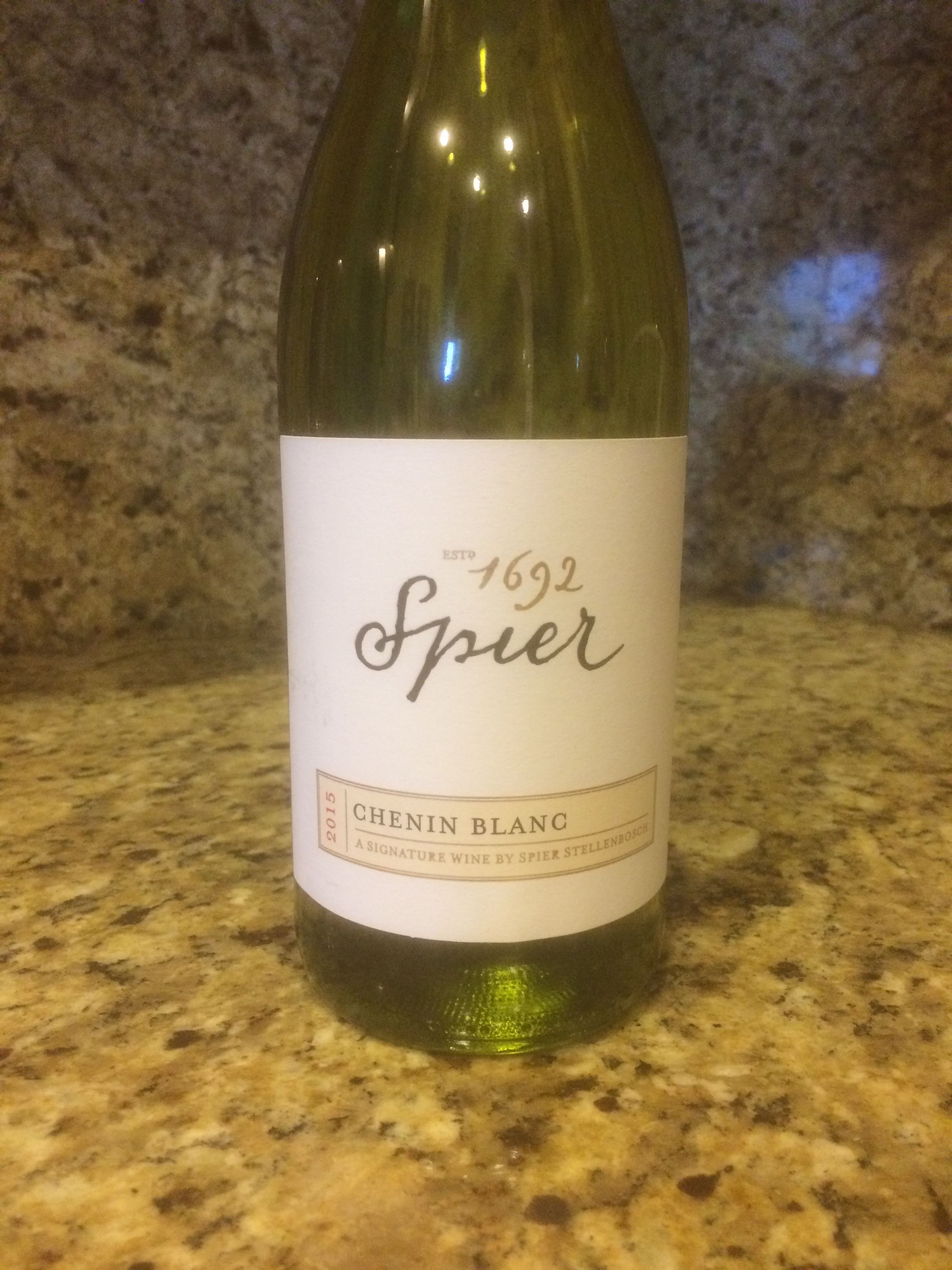
Once upon a time, I was pretty much a red-only wine drinker. In the past couple of years, however, I’ve ventured into whites and Rosés, as well. As I continued my journey in the realm of whites, I came across this delightful, refreshing Chenin Blanc.
I’m a recent convert to Chenin Blanc. I have childhood memories of neighborhood parties, where the adults were drinking cheap, jug Chenin Blanc. I recall it being a very sweet, low-end wine. As a result, when I started enjoying wine, I avoided Chenin Blanc.
Fortunately, that changed when I received a sample of a Chenin Blanc. Tasted with a fresh, open mind, I thoroughly enjoyed it. Thus began the quest for more delicious Chenin Blancs.
Today my quest brought me to this delightful example. From the Western Cape region of South Africa, the Spier 2015 is light, crisp, and refreshing. The color is light Amber in the glass. Initial aromas are apricot and tropical fruit. The wine presents with a luscious mouthfeel balanced by fresh acidity. The stone and tropical fruit flavors continue on the tongue with mango, passion fruit, and peach, as well as fresh pear. Typical of the recent Chenin Blancs I have had, this is dry, but fruit-driven giving it a pleasantly sweet feel. The wine finishes well, and is very refreshing.
As summer like weather continues to persist in Northern California, cool, refreshing whites are a delightful way to relax. Spier Chenin Blanc 2015 is a good pick. I found it at Total Wine & More for only $7.99, making it affordable as well as enjoyable.
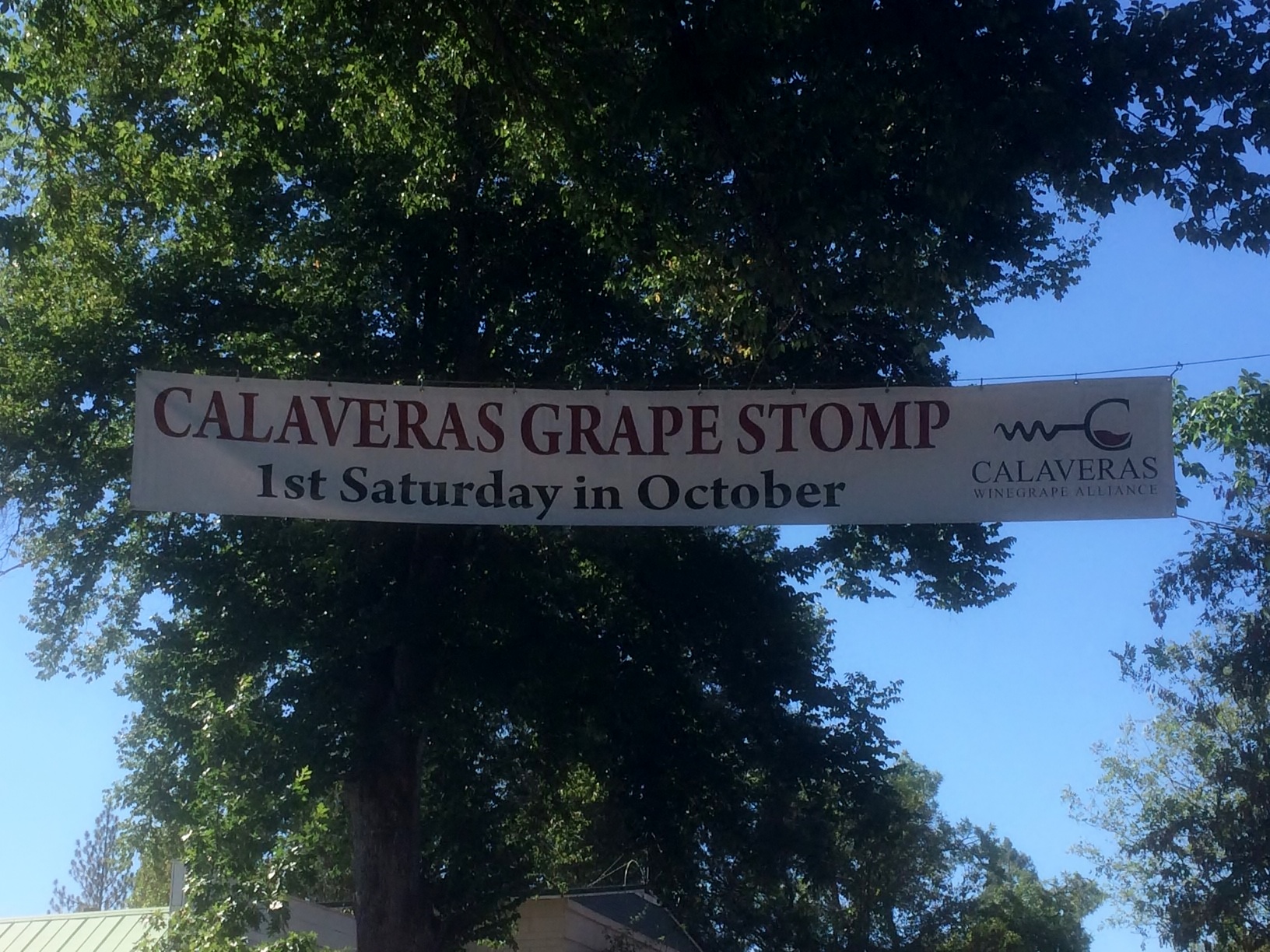
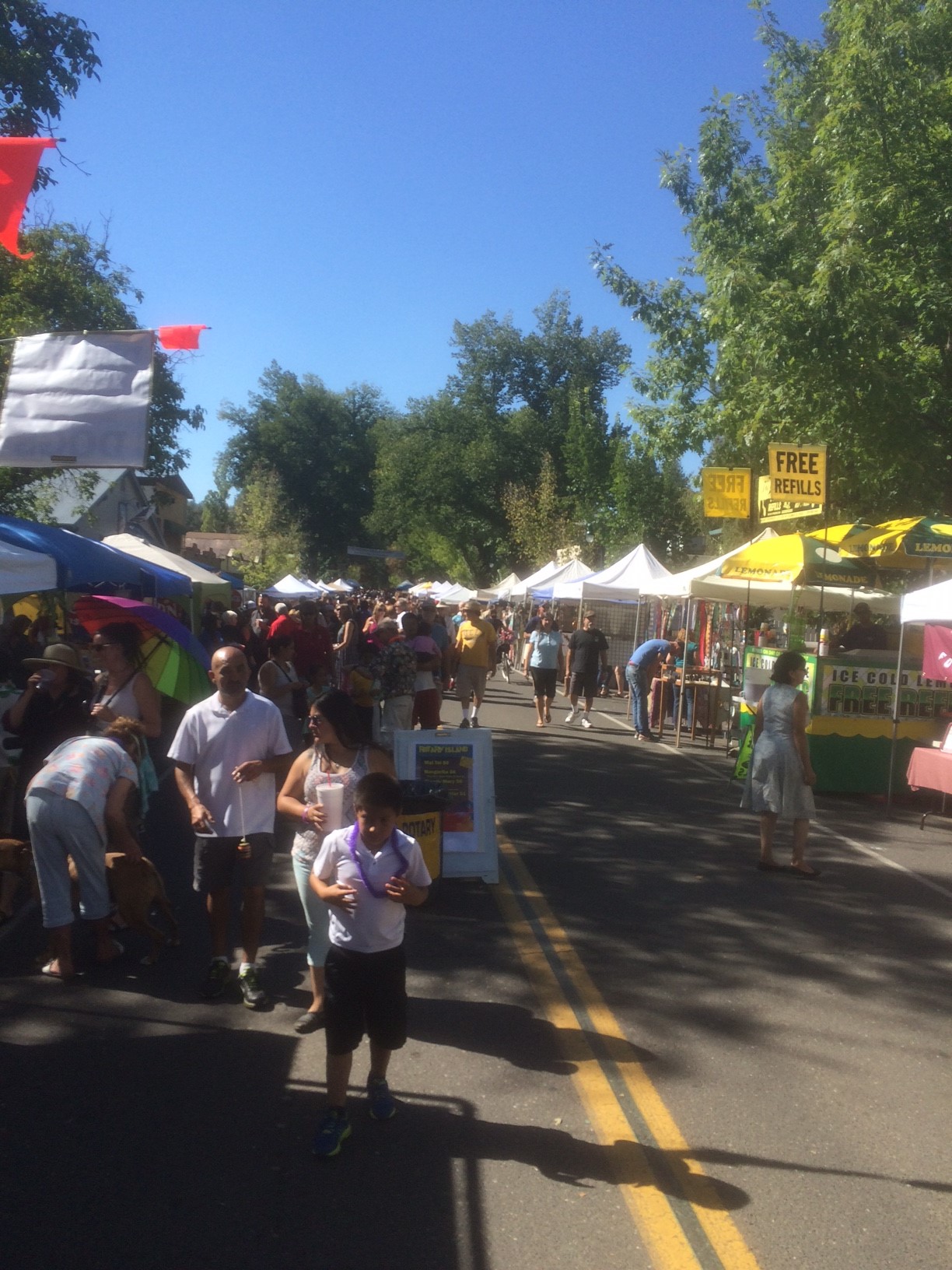
The weather was perfect; crystal-clear skies, low 80’s, and a slight breeze. The juice was flowing; from the barrel, and from the bottle. Welcome to the 2015 Calaveras Grape Stomp, in Murphys, California!
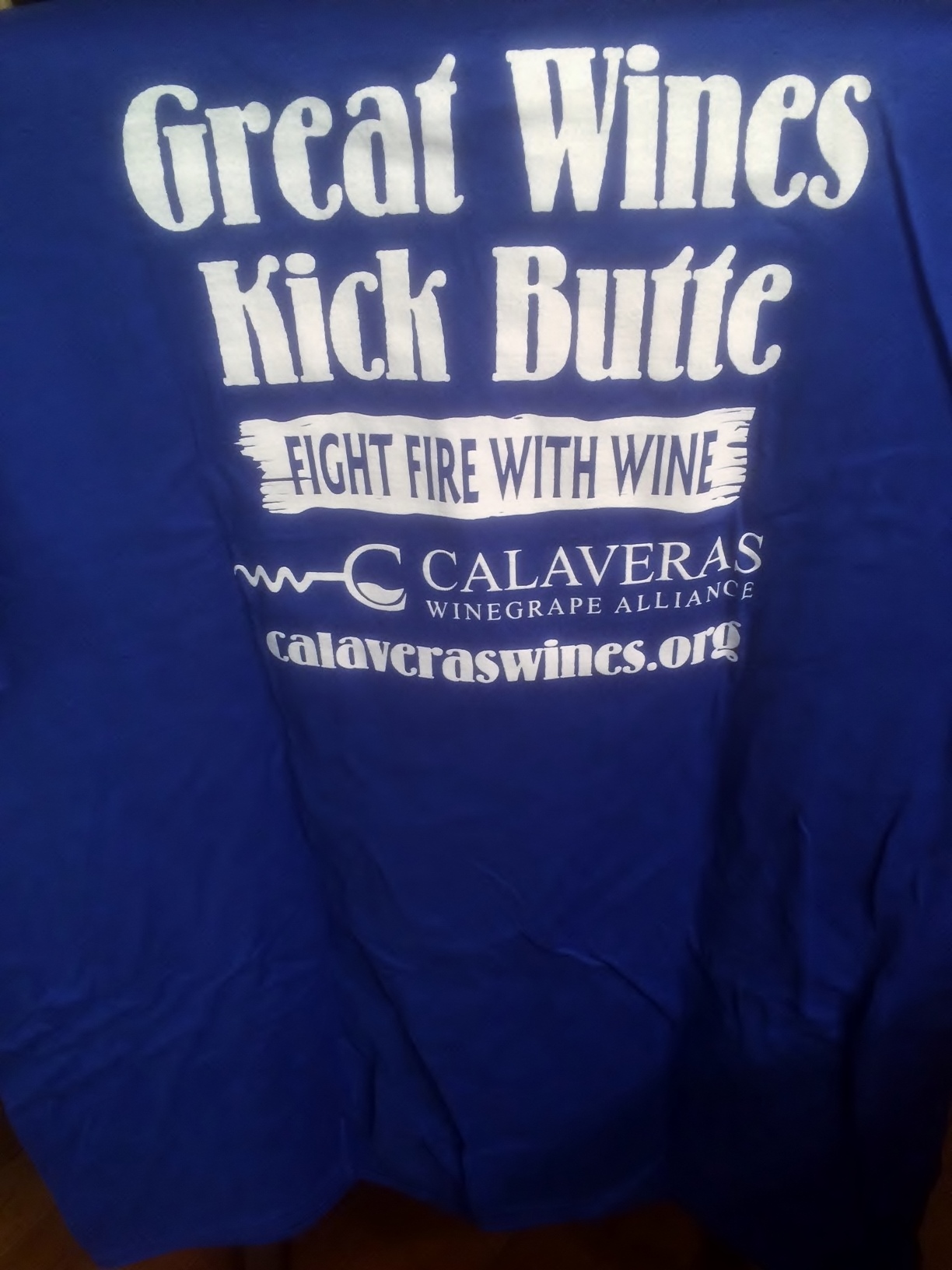
Held the first Saturday of every October, in conjunction with Gold Rush Street Faire, this year’s Grape Stomp held special meaning, as Calaveras County residents begin the recovery and rebuilding process following the devastating Butte fire. The Butte fire raged for nearly a month, burning 70,868 acres and destroying 475 residences[1]. Mandatory evacuations displaced thousands of people, and disrupted the local economy, which is highly dependent on tourism.
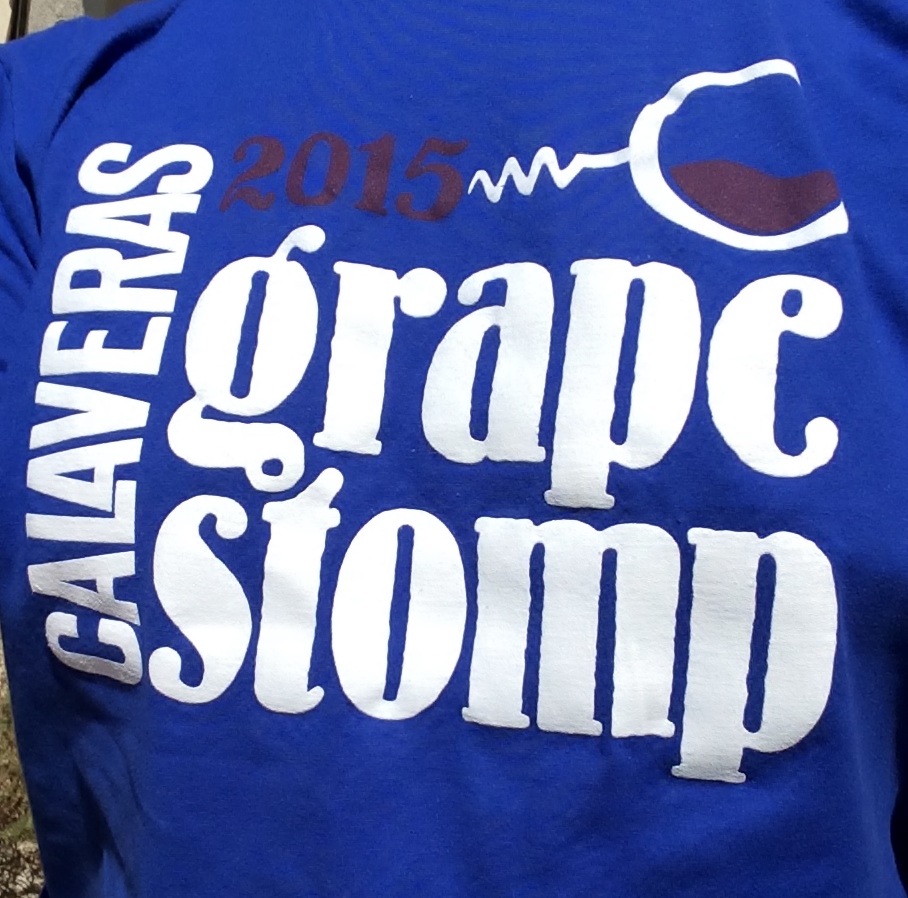
The Calaveras Winegrape Alliance produces the annual Grape Stomp as a benefit for local community groups. This year’s beneficiary is the Disaster Relief Fund for the Butte Fire. Proceeds from t-shirt sales, silent auction, and wine tasting will help to support those impacted by the fire.
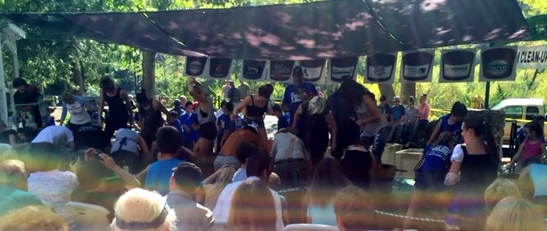
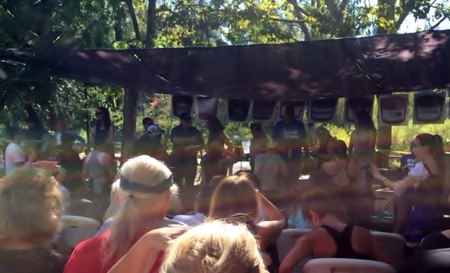
The Grape Stomp takes place in the Community Park in picturesque Murphys, “Queen of the Sierra” and heart of Calaveras County wine country. The competition pits teams of two in a juicy, sloppy, purple race to see who can extract the most juice from 25 pounds of grapes in three minutes. The teams consist of a Stomper and a Swabber. The Stomper’s job is self-described. The Swabber collects the pressed juice. It’s a raucous, high-energy event, with many teams dressed in costume[2].
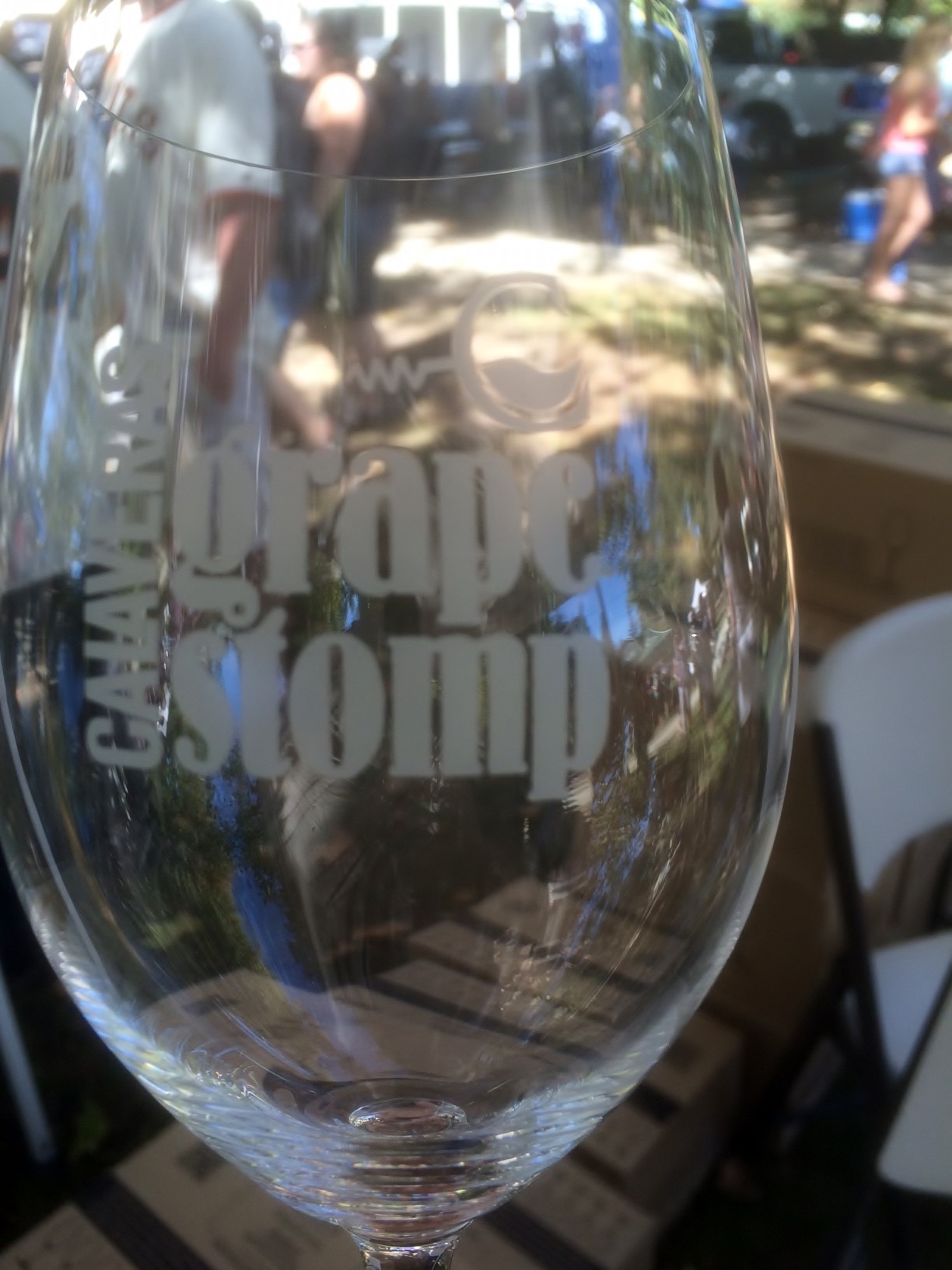
The fun isn’t limited to the stage. There is a silent auction, and of course, wine tasting. $15 gets you an etched Riedel glass and a coveted wrist band, entitling the wearer to sample the wares of the more than two dozen wineries in the area.
Up the hill from the park on Main Street, the Street Faire delights with arts and crafts, music, food, and even a Mai Tai booth! Unlike street fairs and festivals in more populated areas, the Gold Rush Street Faire in rural Murphys was well attended, but not crowded.
Murphys
Murphys is an historic Gold Rush town. In recent years, the regional wine industry has sprung up, and is quite successful. There are some 27 tasting rooms along Main Street, in the space of just a few blocks. The wine is sensational, and the people are friendly and inviting.
This is also, by far, the most dog-friendly community I’ve ever visited. Most of the shops and tasting rooms welcome four-legged guests, and many restaurants feature outdoor seating to accommodate Fido. Be sure to stop in at Murphys Dog Store (281 Main Street, Suite B) for concierge-level service and a great selection of dog supplies[3].
After a fun afternoon of enjoying the festivities, we were hungry. Fortunately for us, Murphys boasts a number of gourmet dining options. We chose the Alchemy Wine Bar & Café [4]. They feature an extensive list of local wines by the glass or bottle. (Their adjacent market has more than 100 beers on hand, if you’re into that.)
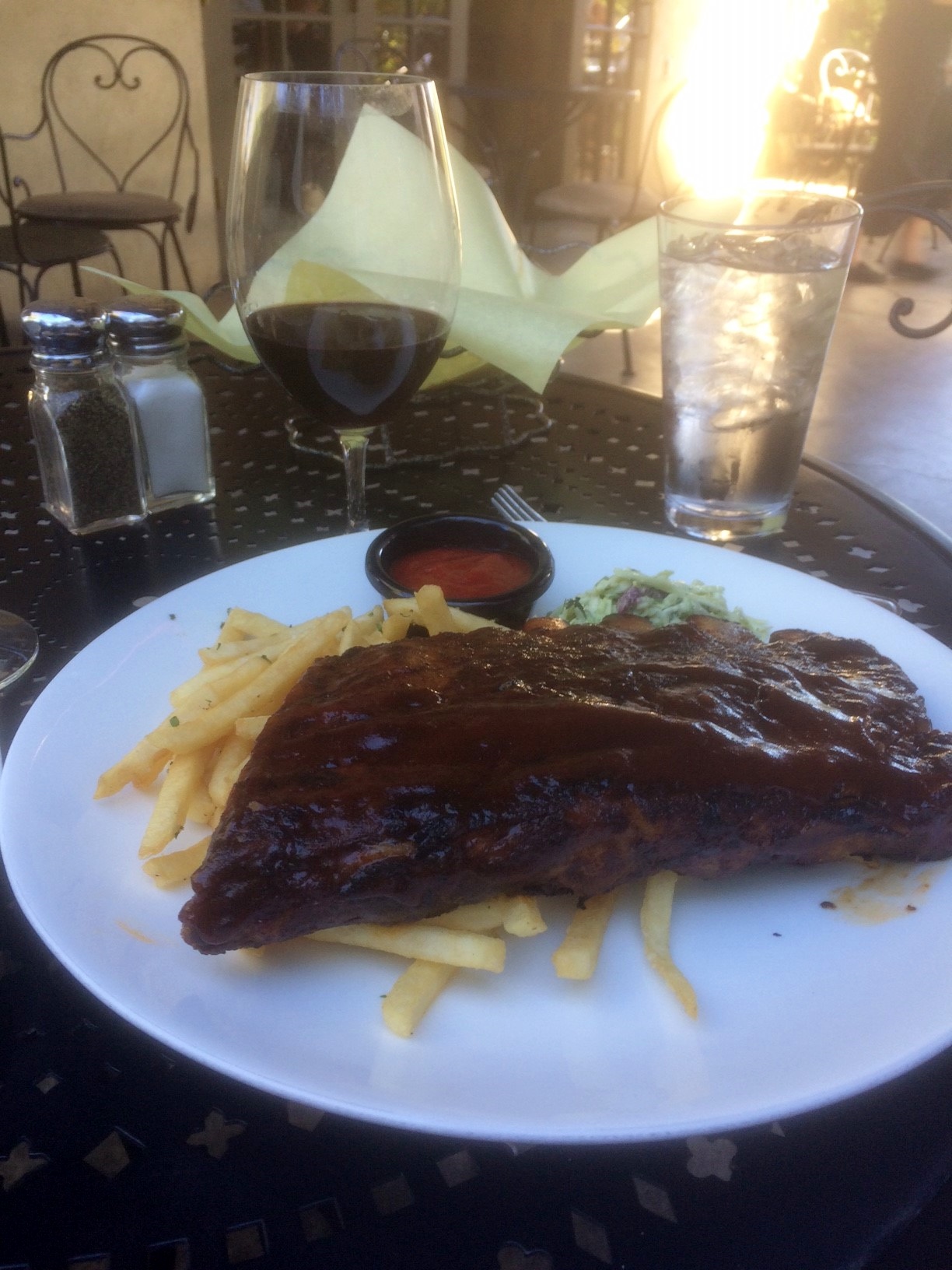
The Slow-Smoked BBQ Spareribs with garlic fries and homemade cilantro slaw was amazing, and paired nicely with a glass of Klassen “Big Mouth” Syrah.
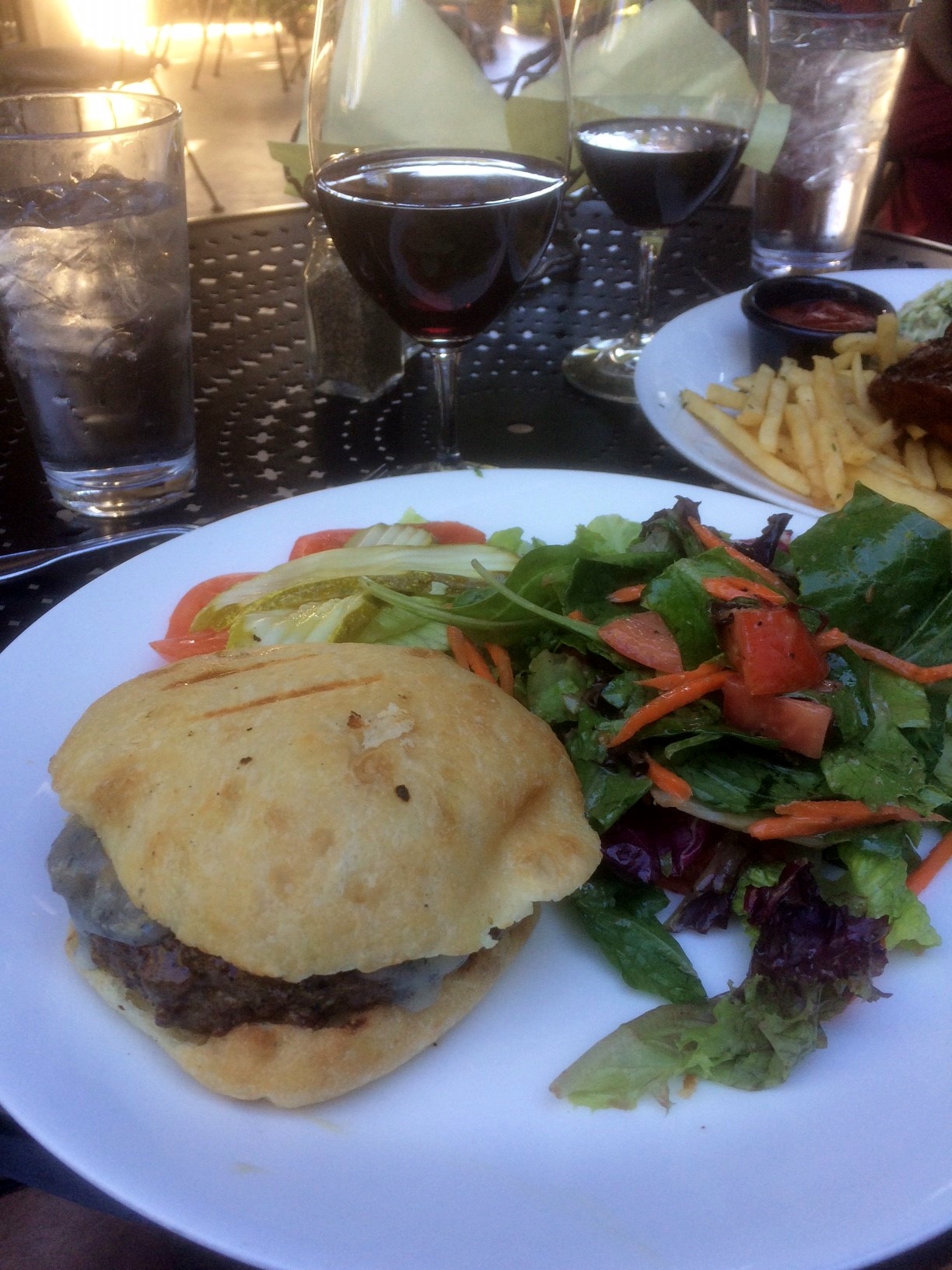
Likewise, the Chef’s Burger – topped with melty blue cheese and caramelized onions, with a side salad (meager attempt at eating healthy) was amazing! I gave up trying to hold it in my hands; this is a “knife and fork” burger! My glass of Black Sheep Zinfandel washed it down beautifully.
Too full to even look at the dessert menu (but check it out online…we’ll be back!), we meandered back to the car for our drive home.
Travel Tips:
Bring cash. T-shirts and tasting tickets are cash only. There are no banks in Old Town Murphys. The nearest one is about a half-mile walk. There were reports of ATMs in various locations in town, but I was not able to find one.
If you are staying overnight, be sure to wander Main Street after the Street Faire has folded up. Murphys, like many old Gold Rush towns, is full of history.
Check out the Gold Mining museum at Ironstone Vineyards. It’s really interesting!
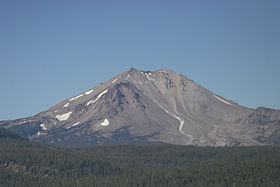
California wine country continues to grow. The Manton Valley American Viticultural Area (AVA) was approved on August 1, 2014. Situated in the foothills of Northern California’s Mount Lassen…wait, what?
Yes, Manton Valley AVA is in far Northern California’s foothills, east of Redding. [1] Mount Lassen is a dormant volcano, noted more for its bubbling, aromatic sulfur pools and mud pots than for pastoral vineyards. [2] Yet grape vines thrive in volcanic soil, so this is an excellent area for viticulture.
Manton Valley AVA is a small wine region, just 9,800 acres, with about 200 acres of vineyards. [3] The Manton Valley Winegrowers Association website lists only seven wineries. Although only recently distinguished as an AVA, Manton Valley farmers have been growing grapes for 20 years, and trucking them nearly 200 miles to wineries in Napa, Sonoma, and Mendocino counties. [4]
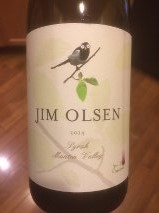
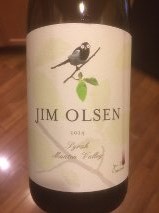
My first taste of a Manton Valley wine came last night, in the form of the Jim Olsen Syrah Manton Valley 2014, from Naked Wines (www.us.nakedwines.com). The Naked Wines copy suggests this may be the first red wine with “Manton Valley” printed on the label. As a 2014 vintage, this wine is still quite young, and will benefit from some bottle aging. However, even at this young age, the character of this wine shines through. I find wines grown in volcanic soil to have a rich profile, yet a light, mineral mouthfeel. Jim’s wine is like this. Available exclusively from Naked Wines, and already sold out, the Angel (member) price is $11.99. As popular a winemaker as Jim Olsen is with Naked Wines Angels, I am sure he will produce another vintage.
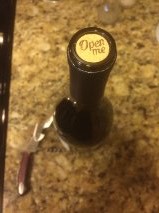
Naked Wines has some fun with corks. As if I need an invitation!
This Syrah is a rich, deep ruby color. I poured it through a Vinturi aerator, and was met with pleasing aromas of ripe plum and white pepper. On the palate, there are flavors of late season, ripe raspberry and bramble, with cherry and tobacco leaf notes. The finish is medium length with spice and plum.
This is a very young wine. When I tasted this wine, on 9/29/15, I am aware that these grapes were likely still on the vine a year ago. As a result, there is high acidity, and the tannins are a bit rough. Aeration and decanting will help in the short term, and a couple of years in the bottle will definitely transform this wine into a real gem!
Frankly, I’ve not been to the Manton Valley AVA in person. As a relatively unknown, rural area, there would be none of the crowds and traffic that plague the more famous wine regions. Manton Valley is now on my list of places to visit. If you can’t make the trip, you can at least get there through a bottle of wine!
Sauvignon Blanc has enjoyed a recent rise in popularity [1]. Although Chardonnay remains undisputed king of the white wine world, Sauvignon Blanc is achieving status as the latest trendy wine. All the cool kids are drinking it! I normally shun trends, but I am completely on board with this one. Sauvignon Blanc is crisp and refreshing; great for a warm summer day. It is food friendly, pairing well with white fish, chicken, pork, grilled vegetables, and salads – basically any light, summery food. And it’s affordable! Whereas Chardonnay can run upwards of $40-50 for a midrange bottle (and hundreds for a Grand Cru White Burgundy), the most expensive Sauvignon Blanc at my local Total Wine & More store, a White Bordeaux, is just $54, with the second most expensive being less than $40 [2]. Good Sauvignon Blanc is available for as little as $8 to $12.
Sauvignon Blanc grows well in wine regions all over the world. It has adapted well to the southern hemisphere, with some of the most award-winning wines coming from New Zealand. This summer, I have enjoyed a “world tour” of Sauvignon Blanc, enjoying examples from France, Australia, New Zealand, Chile, and California. The California wines I’ve had have come from Mendocino, Napa, Sonoma, and Lake Counties, Clarksburg, and San Luis Obispo. Yes, I drank a lot of Sauvignon Blanc this summer!
I have found I prefer California Sauvignon Blanc, with my favorites coming from Mendocino and Napa. However, I recently enjoyed a truly delightful example from Clarksburg. Nestled along the Sacramento River, less than 30 minutes south of the capital city, Clarksburg is a hidden gem of a wine region. The wines are spectacular, and generally substantially less expensive than nearby Napa or Sonoma.
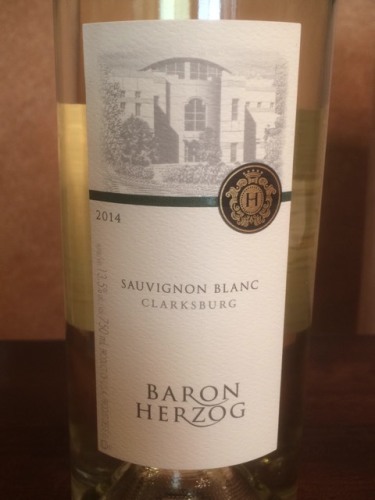
Baron Herzog Sauvignon Blanc 2014 is one of these excellent, affordable wines. It is available at my local BevMo store for $10.99. I found it at Trader Joe’s for just $7.99!
My review, posted on Vivino:
Pale straw color, with aromas of lemon-lime and pineapple. The mouthfeel is light, with lemon/citrus, pineapple, fresh white peach, and tart apple notes. The acidity is bright and crisp, and the finish lingers with zesty citrus, and a hint of sweet elderflower in the back of the throat. A very nice Sauvignon Blanc from California’s Central Valley, and a great value at $8!
If you haven’t tried Sauvignon Blanc in a while, do yourself a favor and get some. Even though the calendar says it’s autumn, the weather still says “summer” here in NorCal. Sauvignon Blanc is a great way to relax and refresh. Cheers!
Montepulciano d’Abruzzo is an Italian varietal that is gaining in popularity in the U.S. Still unknown to many wine drinkers, there are great values to be found.
Not to be confused with Montepulciano the village in Tuscany, famous for its stellar Sangiovese based wines, Montepulciano is itself a varietal grape from the Abruzzo region of Italy. Tuscany is in central Italy, north of Rome, whereas Abruzzo is east of Rome, bordering the Adriatic Sea. Montepulciano, the grape, is noted for its deep, rich color and hearty character. Smooth tannins and relatively low acidity make these wines excellent for every day, yet they are bold and structured enough to complement a variety of foods. Their value pricing is an added bonus.
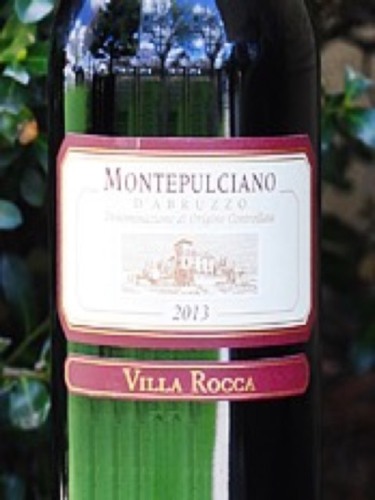
I’ve only just begun exploring this fantastic wine, and so far have sampled only two. The most recent was a 2013 Villa Rocca, purchased online for $9.99 from Wines Till Sold Out (WTSO.com). Here is what I thought of it:
Rich and full bodied. Inky purple in the glass with aromas of dark berry, violet, and vanilla. A bit tannic at first, but this softens with time. Concentrated flavors of blackberry, black pepper, and black cherry with an earthy, spicy finish. Best with food; we paired this with Grilled Margherita Sandwiches, and it was a delightful combination. It would be great with pizza and pasta, also.
I look forward to many more Montepulciano d’Abruzzo wines as fall and winter set it. I highly recommend exploring this region of Italy.
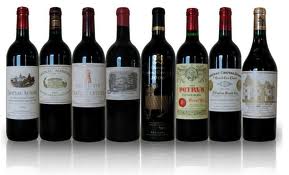
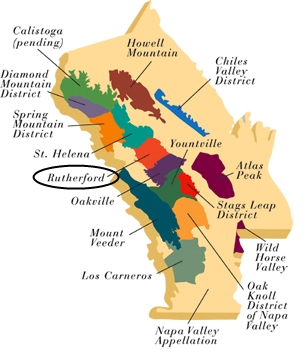
There’s just something about Rutherford. Centrally located in the heart of the Napa Valley, Rutherford is one of 16 sub-appellations within the greater Napa Valley American Viticultural Area (AVA). The Rutherford AVA is noted for intense Cabernet Sauvignon, Merlot, and other varietals (Napa Valley Vintners, 2015).
My favorite Cabernet Sauvignon comes from the Rutherford AVA. I have found that certain growing regions set the standard for certain varietals. For example, the Willamette Valley is the standard by which I judge Pinot Noir, and the Sierra Foothills AVA, specifically Amador County, produce what I consider to be premier Zinfandel, by which I compare examples from other areas. To be sure, everybody’s preferences are different, but in my opinion, Rutherford Cabernet is the best. How well I like Cabernet from other regions depends on how closely they resemble Rutherford.
The Rutherford AVA is noted for its legendary Rutherford Dust. The term is often credited to André Tchelistcheff, former winemaker at Beaulieu Vineyards (Swan, 2011). According to Andy Backstoffer, who worked with Tchelistscheff, the term refers to the terroir of the AVA.
When Tchelistcheff said, “The wines must have Rutherford dust in them,” he did not mean they had to taste of dust. “André meant they needed to taste like they came from Rutherford’s vineyards,” Beckstoffer explained. Tchelistcheff was talking about terroir. (Swan, 2011).
Terroir is the influence the climate, soil, and terrain on a wine (Puckette, 2013). The concept of terroir is a bit nebulous, since the word is French in origin and has no direct translation into English (Balik, 2012). However, it is that terroir that gives wines from a certain region or appellation its distinctive profile and taste. Such it is with Rutherford Cabernet Sauvignon, for me.
Napa Cabernet, in general, and Rutherford specifically, tends to be pretty pricey in comparison to that of other regions. A recent search of the Total Wine & More website revealed the lowest priced Rutherford Cabernet was BV Rutherford Cabernet at $24.49 for a 750 ml bottle. The highest price was Inglenook (Niebaum-Coppola) Rubicon, 2009, for $199.99. Compare this to Cabernet from the Central Coast (California) region, for as low as $7.97 for the same sized bottle, from Cupcake. I’ve never tried this one, and frankly doubt I ever will, but I’d bet there’s more than a little difference in quality and taste. Not to suggest that Central Coast Cabernet is bad, but the fruit from which it is made is less expensive. Feel free to draw your own conclusions.
Speaking of the cost of fruit, one of the reasons Napa and Rutherford Cabernet is more expensive is that the grapes from that region fetch a higher price. In 2013, Cabernet Sauvignon from District 11, generally southeastern Sacramento County and northern San Joaquin County (e.g. Lodi), sold for an average $709 per ton. Compare this to District 4, Napa County Cabernet grapes, which sold for an average of $5,499 per ton (Adams, 2014), nearly 8x the price!
I’ve said before that my wheelhouse for wine is $10-18, with $25-35 for special occasions. Suffice it to say, I don’t get to enjoy as much Rutherford Cabernet as I’d like. When I do indulge, it’s usually on the lower end of the spectrum, such as it is. I’ve tasted more expensive brands at wineries, but Beaulieu Vineyards and Provenance are usually what I buy, but as a Naked Wines Angel, I also have access to a new release from Matt Parish. At Angel price, this sells for $29.99, and it is as good a Rutherford Cabernet as any I’ve tried – even in the $80-100 range. It’s a very small lot, so the two bottles I bought recently are probably all I will get of the current, 2013 vintage. I plan to save one for at least a couple years. In the meantime, hopefully Matt will be able to make more in another vintage. It’s worth the splurge!
Whatever your favorite is, whether its Cabernet Sauvignon from Rutherford AVA, Sta. Rita Hills Pinot Noir, genuine Bordeaux, or any other wine from any other region, just remember to drink what you like!
Works Cited
Adams, A. (2014, March). Wines and Vines. Retrieved August 18, 2015, from Record California Wine Grape Harvest: http://www.winesandvines.com/template.cfm?section=features&content=129025&ftitle=Record%20California%20Wine%20Grape%20Harvest
Balik, A. R. (2012, July 19). Napa Valley Register. Retrieved August 18, 2015, from Terroir: What does it mean?: http://napavalleyregister.com/lifestyles/food-and-cooking/wine/columnists/allen-balik/terroir-what-does-it-mean/article_593f6df8-d205-11e1-81a6-0019bb2963f4.html
Napa Valley Vintners. (2015). Napa Valley Appellations. Retrieved August 18, 2015, from Napa Valley Vintners: http://www.napavintners.com/napa_valley/appellations.asp
Puckette, M. (2013, November 6). Wine Folly. Retrieved August 18, 2015, from Terroir Definition for Wine: http://winefolly.com/tutorial/terroir-definition-for-wine/
Swan, F. (2011, July 14). NorCal Wine. Retrieved August 18, 2015, from What is Rutherford Dust?: http://norcalwine.com/blog/51-general-interest/523-what-is-rutherford-dust
 This wine is available exclusively through Naked Wines for $11.99. Naked Wines operates in the U.K., Australia, and the U.S. Click here for a voucher worth $100 off a first time order of $160 or more. You’ll be glad you did!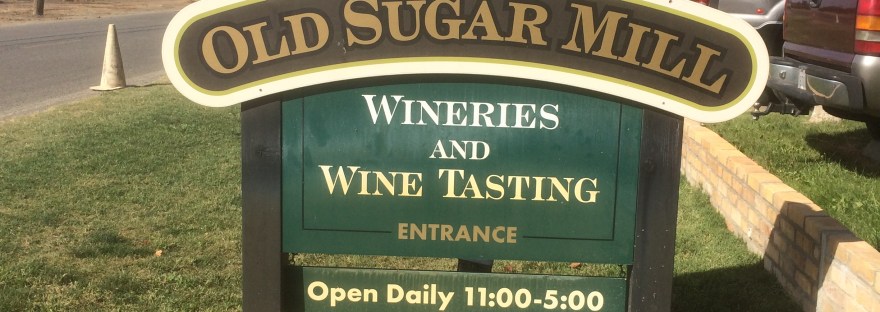





 Appetite for Wine
