Last Sunday, December 4, 2016, was the second annual Cabernet Franc day. There are celebratory days for several popular wine grape varietals throughout the year. However, the regal Cabernet Franc grape had been overlooked until 2015. Enter Lori Budd. She and her husband, Michael, are the proprietors of Dracaena Wines in Paso Robles, California. Much more than a winery owner, though, Lori is a champion of Cabernet Franc. To bring attention to this oft overlooked grape, she established December 4th of each year as Cabernet Franc day. You can read Lori’s story about the creation of Cabernet Franc day here.
Cabernet Franc is a grape many wine drinkers have never heard of. Of those who are aware of it, many know it only as a blending grape used in red Bordeaux wines. Surprisingly few people have experienced Cabernet Franc as a stand-alone wine. That is a shame, and Lori is doing all she can to remedy that problem.
So what happens on Cabernet Franc day? A lot! Social Media is inundated with hashtags like #cabfrancday, #cabfranclove, and #lovecabfranc. In the wine blogger community, blog posts about Cabernet Franc abound. The day culminates with a Tweet-up on Twitter, with the hashtag #cabfrancday. I participated in the Tweet-up – my first one ever – and it was a lot of fun, and very informative! I had no idea there were so many producers making stand-alone Cabernet Franc, in so many styles.
I’ve had a few Cab Francs before, but haven’t really explored the grape in depth. All the wines I’ve had have been excellent; medium bodied with black fruit, tobacco, and spice, with the classic bell pepper on the finish. It is a very food friendly wine, and pairs well with basically anything you would serve with Cabernet Sauvignon or Merlot.
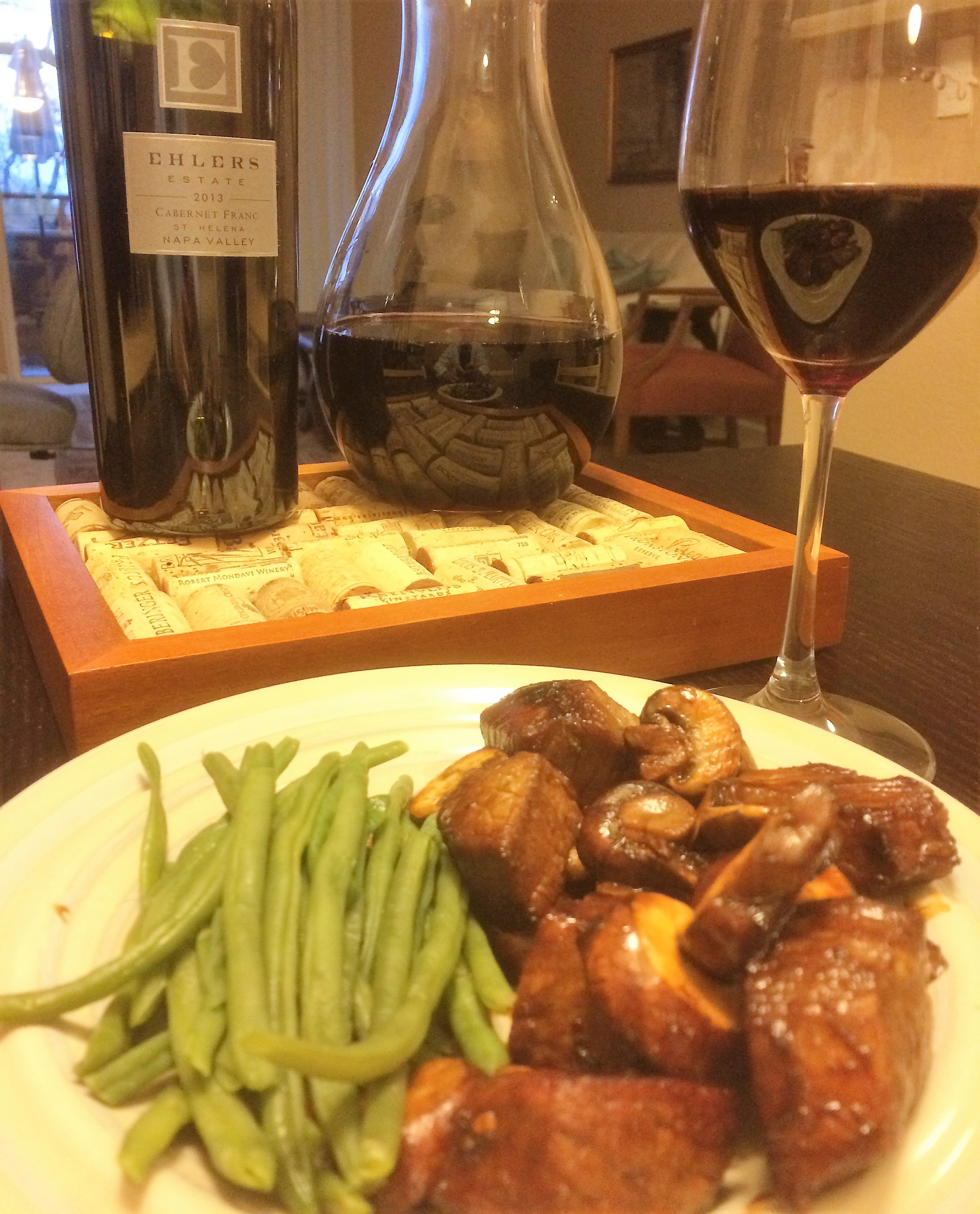
Cab Franc Loves Beef Tips and Mushrooms!
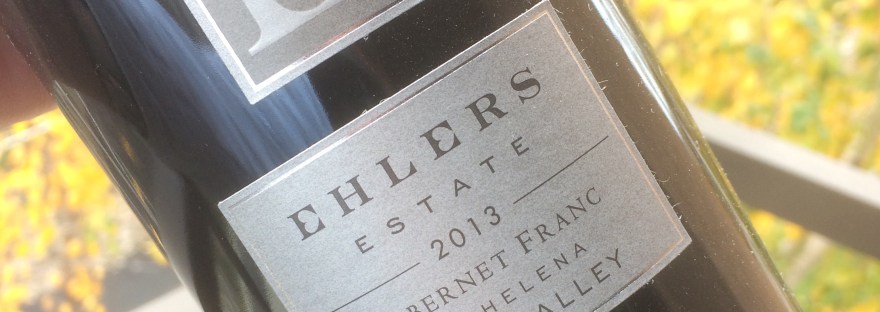
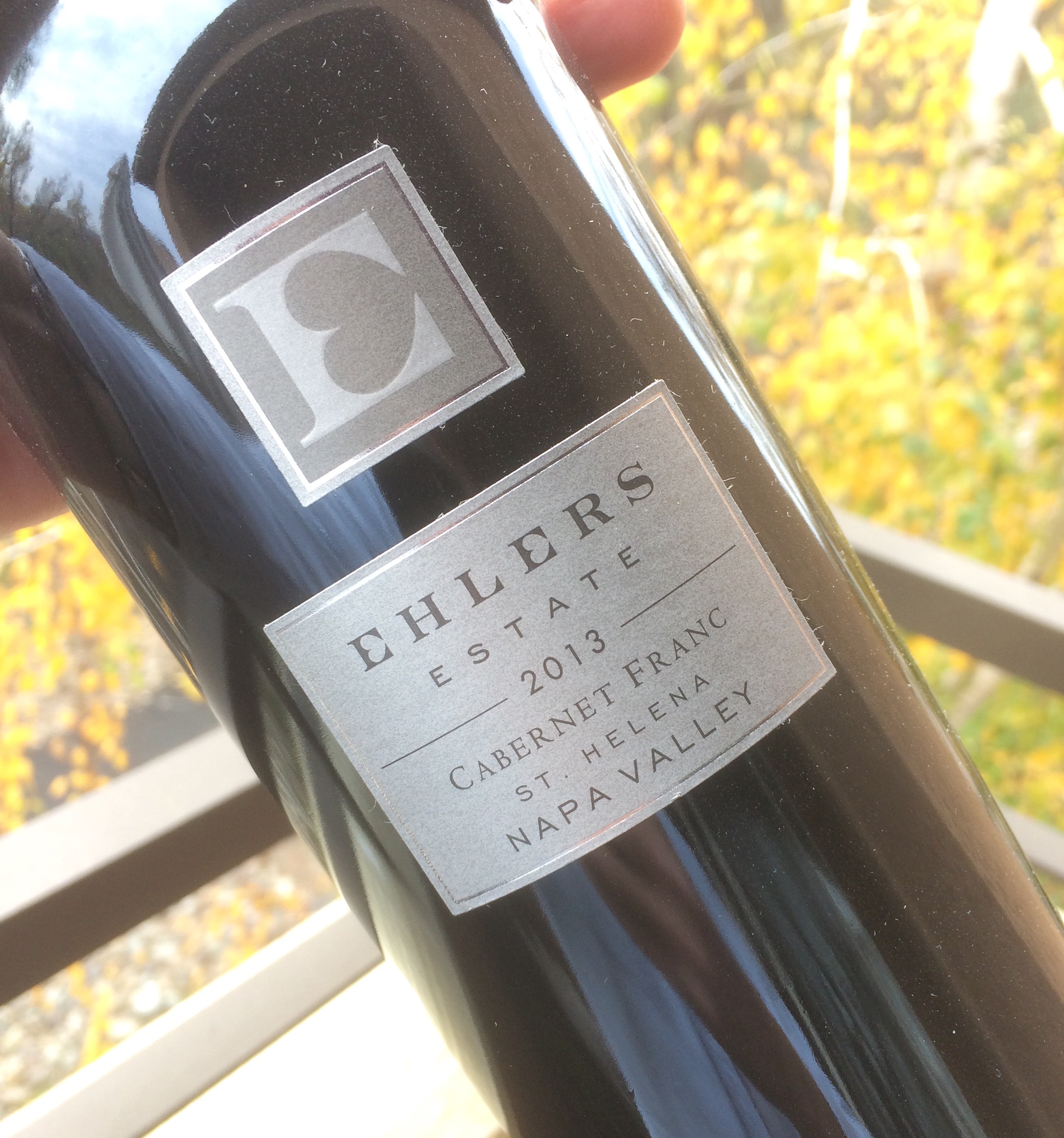
To celebrate Cabernet Franc day, I had the good fortune to receive a bottle of Ehlers Estate Cabernet Franc 2013, from Beth, the Traveling Wine Chick. The Ehlers Estate Cabernet Franc will blow your mind! It is crafted from 100% Cabernet Franc aged in 100% French Oak, and is rich, deep, and full bodied.
A beautiful, 100% Cabernet Franc with great structure, firm, mature tannins, and compelling flavors. Black and red berries, black cherry, toasted coconut, browned butter, and slight vanilla, this wine is pure Franc from a stellar terroir. Mouth-filling and built to last, with a long chewy finish, this is a perfect change-up to your best Cabernet Sauvignons. Off the charts.
Here’s what I thought:
A delicious way to enjoy #CabFrancDay! Deep purple with a ruby rim. Aromas of ripe raspberry and soft cedar and pencil shavings. As the wine opens up, I got a whiff of bell pepper, too. On the palate, this is a juicy, balanced delight. Ripe raspberry, blackberry, cedar, and spice. Tannins are soft and smooth, with vibrant acidity that makes my mouth happy! The finish is long and satisfying, with black and red fruit. Outstanding!
5 out of 5 stars (95+ points)
Retail: $60
With such famous lineage it is surprising that Cabernet Franc is so often overlooked and forgotten. If you haven’t tried this grape on its own, please go to your favorite wine shop now and buy some. Then join us every December 4th for the annual #cabfrancday festivities!
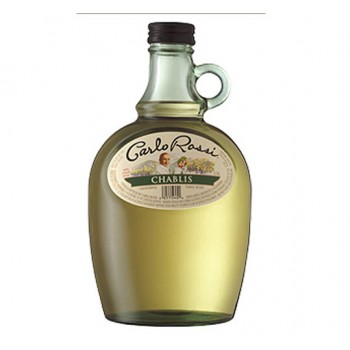
I can’t say exactly when I had my first taste of wine. As a child, Sunday dinner was a formal affair. We’d come home from church and change out of our “Sunday” clothes, only to dress again that evening for dinner. I clearly remember pot roast. Lots of pot roast. I also remember wine. My parents always served my sister and me a small glass of wine with Sunday dinner. I’m sure it was no more than an ounce or two. I assume that started around age 11 or 12. Mind you, this was wine from a jug, from one of the fine estates of E&J Gallo, Almaden, or Carlo Rossi, but wine it was.
Skip ahead a few years to junior high. In health class we studied a unit on alcohol, including a section on alcohol abuse and alcoholism. In one lesson, we took a quiz and to my shock, my parents’ drinking habits ticked almost all the boxes that indicate possible problems. Around this same time, I have vivid memories of my dad, passed out in his recliner after dinner. His normal habit after coming home from work was to toss back a couple of gin & tonics, then have a few glasses of wine with dinner. After dinner he’d retire to his recliner to watch TV, and within minutes, he was sawing logs. My sister and I laughed at it this first, but as I got older, it stopped being funny. One night, I tried to wake him up so he would go to bed, but I couldn’t, so I turned off the lights and went to my own bedroom to read.
I don’t know if my parents met the clinical definition of alcoholic, but with that kind of upbringing and exposure to excessive alcohol consumption, by high school, I had pretty much decided I was never going to let that happen to me. Whether alcohol abuse is an inherited genetic trait, or learned behavior (nature vs. nurture) I do not know. However, I do believe that children of alcoholics are much more likely to become alcoholics themselves. My sister is an example of this. She is a recovering alcoholic who, with the support of her AA friends and family, recently celebrated 18 years of sobriety!
So how, then, did I end up here? Not only drinking wine (and beer and liquor), but blogging about it? Glad you asked.
John Taylor, author of Pairs With: Life, won #MWWC28, and his Major Award was to select the topic for #MWWC29. He chose: Winestory. An opportunity for us to share our personal stories about how we got here, and why in the world we decided to start writing a blog. Having sufficiently (I hope) set the stage, here is my
Like any other kid in living in a college dorm, despite my convictions, I occasionally succumbed to peer pressure. That’s when I first learned about the joys of the sweet elixir. I’m referring, of course, to White Zinfandel. In the early 80’s, this fine juice was in its heyday, and priced right for starving college students! It was everywhere! Kool-aid with a kick, and all the cool kids were drinking it. But I still wasn’t hooked.
In our early married years, my wife and I were pretty much teetotalers. We might have a glass of wine when we went out for a special occasion dinner, and would buy a bottle for home maybe twice a year. However, one fateful December when we were living in Oregon, we attended a company holiday party at St. Innocent Winery. At first I demurred when the hostess offered me a glass. Sure, I knew Pinot Noir is what put the Willamette Valley on the wine map, but I truly subscribed to the (untested and erroneous) belief that red wine gives me headaches. The hostess assured me that St. Innocent’s wine would not give me a headache. She was right, and the wine was delicious. The rest, as they say, is history.
I started buying wine regularly, and joined a wine club, receiving quarterly shipments of wines from all over the world. My journey of discovery and adventure had begun! Soon, friends and family were asking me for advice: wines to buy, pairing suggestions, anything wine related. I was hungry for knowledge about wine. I subscribed to magazines, and enrolled in web-based classes. Then one day, I received a voucher in the mail. My wine journey was about to change, and go in an entirely new direction.
If you have read my blog before, you probably know that I am a member, and ardent supporter of NakedWines.com. (If you are unfamiliar with NakedWines.com, please follow this link to their FAQ page.) When that voucher arrived, I was skeptical. I had been disappointed by many of the wine clubs I’d tried, but I figured $160 worth of wine for $60 was worth the one-time risk. Once the wine arrived and I had my first taste from the first bottle I opened, I was hooked.
Not the actual First Bottle. It was so good, I bought more.
One of the things that sets NakedWines.com apart from traditional wine clubs is the social media aspect of the company. Members, known as Angels, are encouraged to post reviews of the wines they drink, and interact with each other…and the winemakers…on the website. I was surprised by how much I enjoyed writing the reviews of the wines. Even more surprising was the fact that other Angels were reading them, and commenting on how much they liked them. New Angels were starting to seek out my reviews and opinions. They were looking up to ME! I’m no sommelier, no winemaker, or any other sort of expert. I’m just a guy who drinks wine, with a new passion for writing about it.
The natural next step, then, was to figure out this whole blog thing, and start writing. So I did. My main focus is on sharing those wine reviews, expanding them beyond NakedWines.com, to include all the wines I enjoy. More than just reviews, though, I like to tell a story about the wine, the region, and if possible, the winemaker. My goal is to engage my audience, and if I may be so bold, perhaps educate them a little. Keeping my childhood in mind, and cognizant of my family history, and remain vigilant on my consumption. Nevertheless, wine has become my true passion, and sharing it brings me joy.
What is a Proper Pour? The answer varies, and depends on a number of factors, not the least of which is who you ask. This question came up recently during a friendly discussion at work, and answers ranged from four to eight ounces. Though many of my coworkers drink wine recreationally, as the de facto in-house “wine expert”, I shared that many wine glasses are designed to hold four ounces of wine, leaving sufficient space for swirling and aromatics to maximize the enjoyment of the wine. One of my coworkers responded with: “If I ordered a glass of wine in a restaurant and they only gave me four ounces, I’d be [expletive phrase indicating dissatisfaction in the extreme.]” This got me thinking about this question, and what may influence one’s answer.
Glassware
Many of the standard sized wine glasses in my home cabinet are designed to accommodate a four ounce pour. Larger glasses can comfortably hold up to six ounces. While they can all hold much more than that, overfilling the glass inhibits the ability for oxygen to enter and release the enticing aromas. As the alcohol in the wine evaporates, the aromas are released into the air. Wine glasses are shaped to funnel those aromas to the nose, providing maximum concentration for enjoyment. Furthermore, swirling wine in the glass can infuse oxygen, causing more aromas to be released. Try swirling an overfilled glass and, rather than enjoying the aromas and flavor of the wine, you are now instead cleaning up a mess and hoping that red wine doesn’t leave a stain!
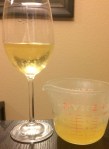
4 oz. White Wine Glass
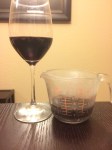
4 oz. Red Wine Glass
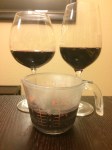
6 oz. Pinot Noir and Oversized Glass
The general rule of thumb is to fill the glass “to the bend.” This results in a perfect pour for whichever glass you may be using. However, as with so many things, pop culture has influenced an increase in the size of the average wine glass.
Wine drinkers should keep this in mind when shopping for glassware, and when pouring that third glass of the evening.
Social Setting
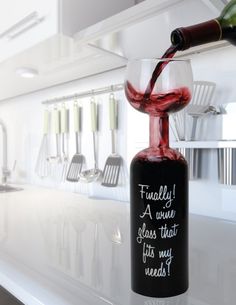
Where you are, who you’re with, and what you’re doing can all influence the size of the pour. Trying to look cultured at a frat party? At a friend’s house looking to get your drink on? In any other situation in which the primary objective is to get yourself good and hammered? Go ahead and fill that sucker to the rim! You might even consider one of these:
However, if you are hosting or attending a dinner party, trying to impress the in-laws who already worry their precious little snowflake made a bad choice in marrying you, or in any other social situation in which the wine is there to enhance the meal or general setting, consider scaling back on that pour. Economics can also be a consideration. A five ounce pour gets you about five glasses from each bottle. An eight ounce pour is only three per bottle. You do the math.
On the other hand, if you are dining out, or at a wine bar, let your server be your guide. If you are at a restaurant, the best value is a bottle, so pour size is less important. If you are ordering off the “by the glass” menu, then I would agree with my coworker and expect a 5-6 ounce pour. Most wine bars I have visited offer a three ounce half glass, and a six ounce full glass.
Individual Motivation
Related to Social Setting, Individual Motivation can strongly influence the size of your pour. Once again, if you are looking to get your drink on and become obliterated, pour away! However, if your objective is to savor the character of a particular wine, capturing the terroir, the nuanced aromas and flavors, and allowing the expression of the varietal to carry you away, then you will want to moderate the pour to take advantage of the design of your glass.
Wine Choice
Much in the same way as factors above, the wine you are drinking plays a major role in deciding how full to fill your glass. Two-Buck Chuck, or any bottom shelf supermarket deal-of-the-week? Fill ‘er up! But if you are tasting a quality wine, do yourself a favor and pay attention to your pour. It doesn’t have to be a Romanée Conte or Chateau Rothschild. Any well-made wine that is worth savoring, rather than chugging, deserves the respect of a proper pour.
The Medical Community
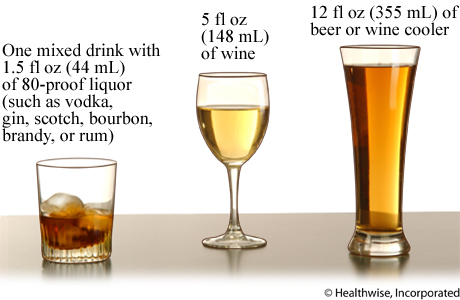
Finally, not to be a killjoy, but one must consider one’s health. The medical establishment, and the government, have established guidelines to identify the “serving size” for various adult beverages. Kaiser Permanente advises patients that a serving of wine is five ounces. This is based on the average alcohol content in each serving, so a serving of beer (12 oz.) is equal to a serving of liquor (1.5 oz. – Really? When’s the last time you had a cocktail with just 1.5 oz. of booze?) is equal to a serving of wine.
Photo Credit: kp.org
In addition, Kaiser Permanente recommends no more than 15 servings of alcohol per week. If you drink daily, that’s just two per day, plus a bonus glass on the weekend. Once again, pop culture and social media would have you believe that limits are for losers, but excessive alcohol consumption can cause real health problems. Everything in moderation, folks!
These memes are funny, but excessive alcohol consumption is no joke.
So what do you think? What’s your proper pour? 4 ounces? 6? 8? Or more? Let me know in the comments.
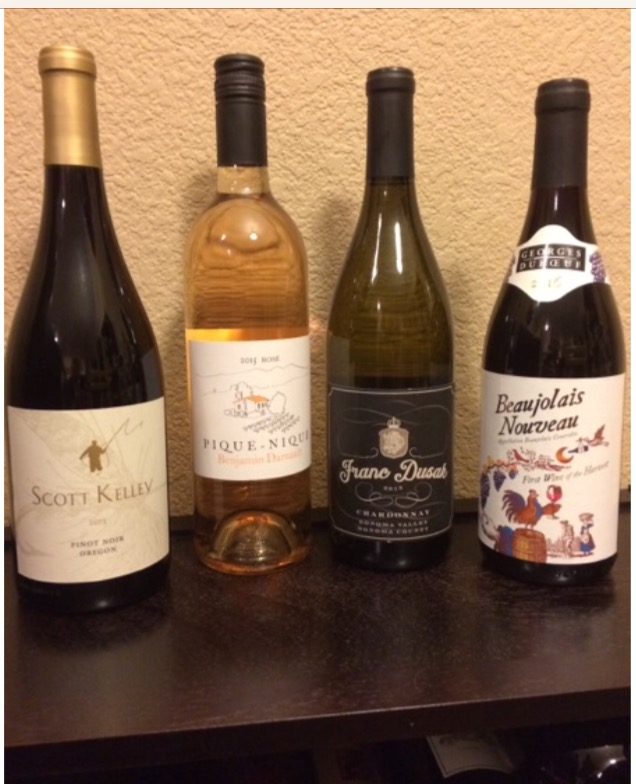
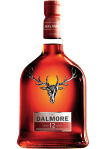
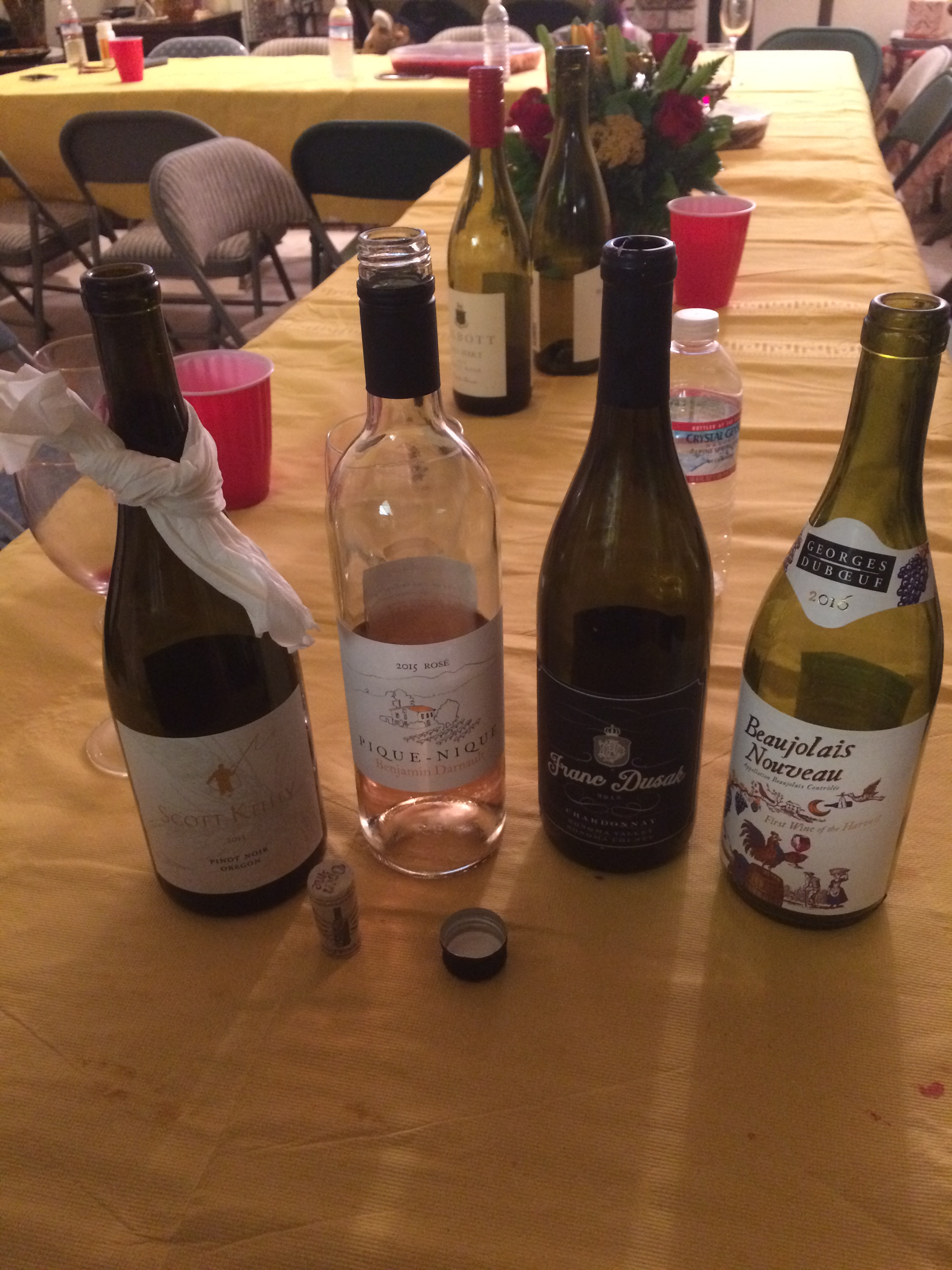
The wine was flowing at Thanksgiving this year! My son and I were invited to spend the day with the family of his friend, Edward. With about 20 people in attendance, we blended in and had a great time. In addition to the four wines I brought, which I review below, several other people brought several bottles to share. Those included Frei Brothers Cabernet Sauvignon, Joel Gott 815 Cabernet Sauvignon 2013, Talbott Pinot Noir, and William Hill Chardonnay. There were others, too, but I didn’t get a chance to make a note of which they were. In addition, a bottle of Dalmore 12-year Highland Scotch appeared on the bar. It would have been rude of me to not have a dram or two, right? It was absolutely delicious!
Photo Credit: totalwine.com
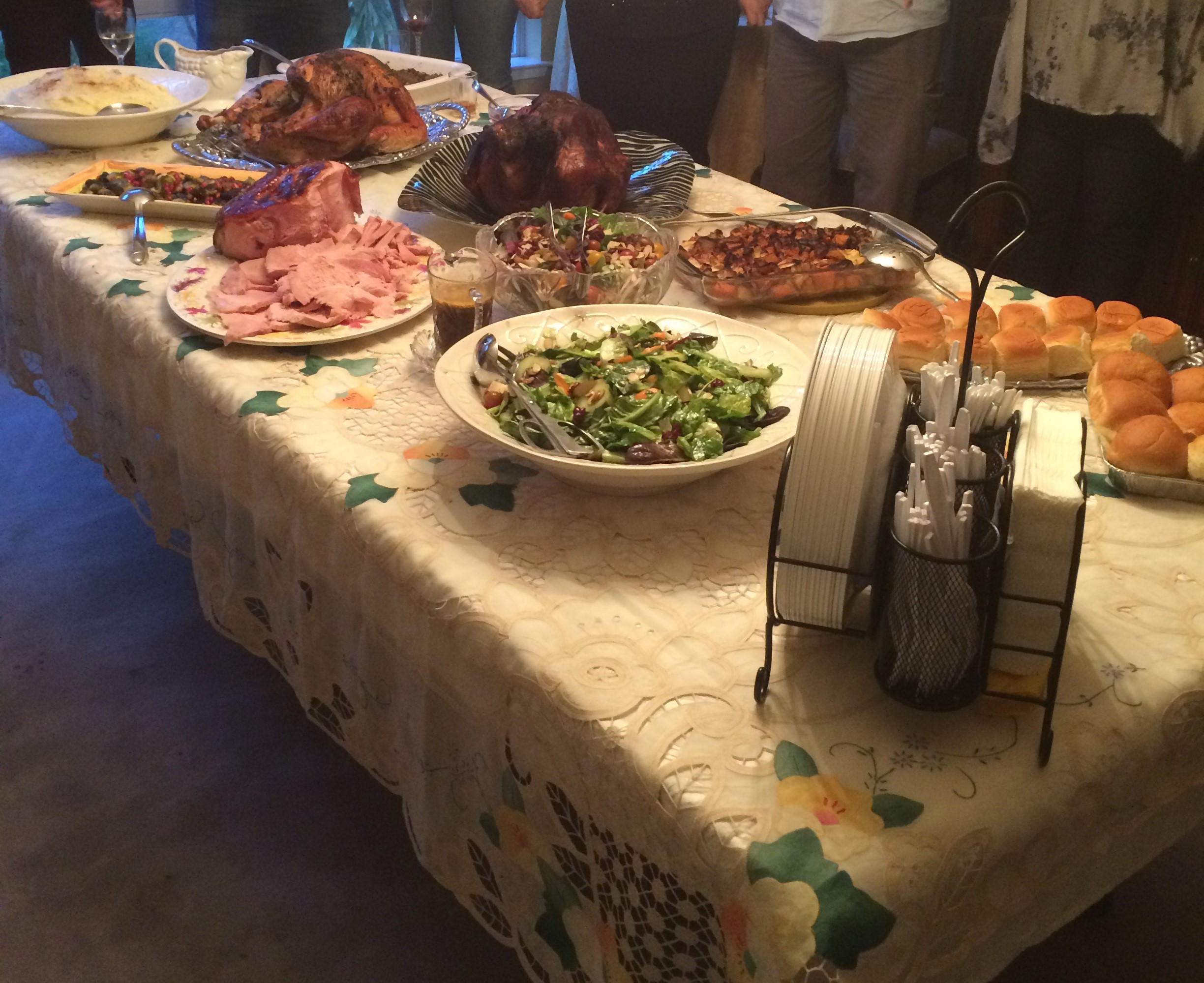
Dinner was a feast! There were two turkeys; one smoked, and one traditional; a honey-glazed ham, mashed potatoes and gravy, dressing, Brussels sprouts, sweet potatoes, two green salads, and rolls. Dessert was equally varied and delicious!
Let the feast begin!
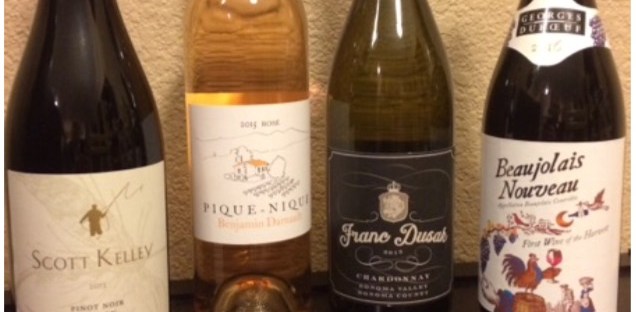
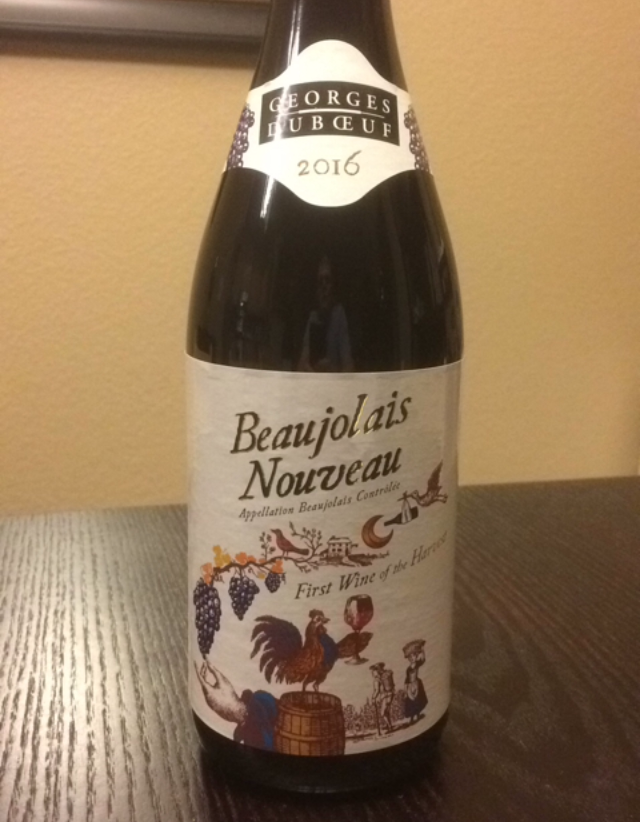
Of the wines I brought, three were from NakedWines.com. The fourth was the just-released 2016 Beaujolais Nouveau from Georges DeBouef. With varying levels of wine-tasting experience represented, from “I’m here for the Scotch, but I enjoy a glass of wine once in a while, too” to a wine industry professional, all the wines were big hits. The hands-down favorite, with it’s soft, easy-drinking, fruit-forward profile, was the Beaujolais Nouveau. In fact, that bottle was empty long before dinner was served!
These wines were all excellent companions to a traditional Thanksgiving dinner. With Christmas just around the corner, if you are having similar cuisine, I can wholeheartedly recommend each of these for that meal as well!
Georges DeBouef Beaujolais Nouveau 2016
The hands-down favorite around the Thanksgiving table. A party in a glass! Bright purple color, bursting with juicy fruit flavors; boysenberry, cherry, plum, blueberry, and raspberry. Soft tannins and bright acidity made this a light, fun quaff before and during the meal.
4.0 out of 5 stars (88 – 91 points)
$8.97 at Total Wine & More
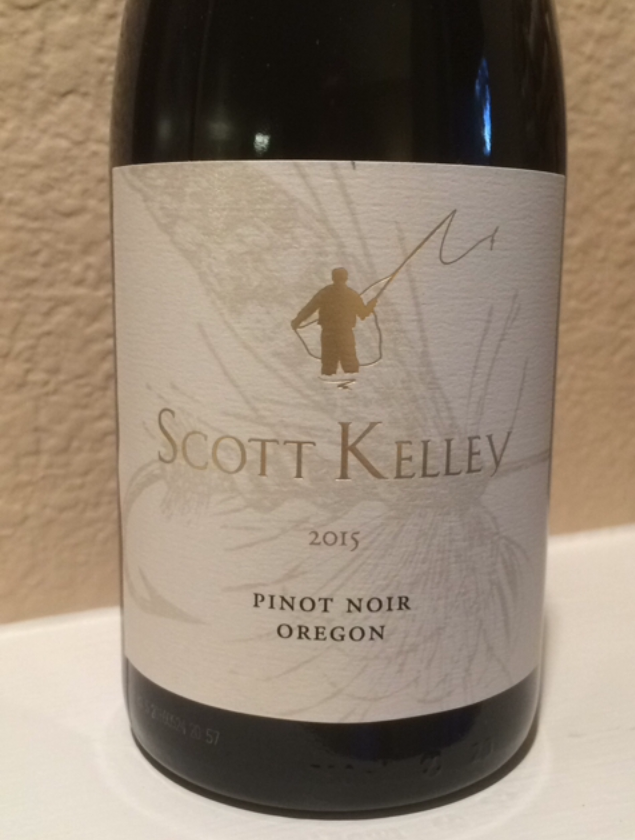
Scott Kelley Oregon Pinot Noir 2015
Classic Oregon Pinot. Ruby color. On the nose there is raspberry, fresh plum, and soft smoke. Flavors of ripe raspberry, cherry, and strawberry mingle with soft oak. Tannins are soft and super smooth, with balanced acid, leading to long finish. Pinot Noir just the way I like it!
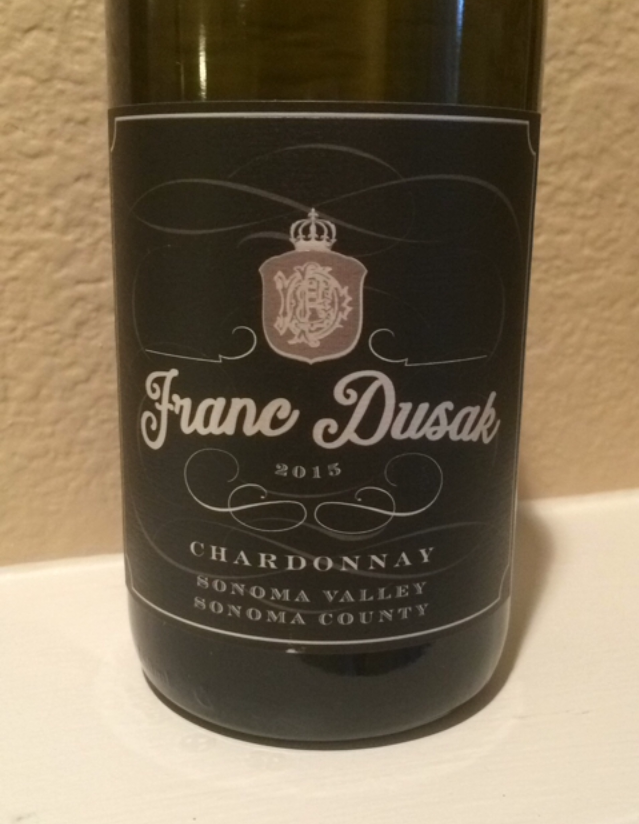
A well balanced Sonoma Chardonnay. Straw color in the glass. Aromas of apple and butter. On the palate, flavors of fresh apple and pear, with some caramel at the end. Medium body, very soft smooth with light acidity and perfect balance of oak and fruit.
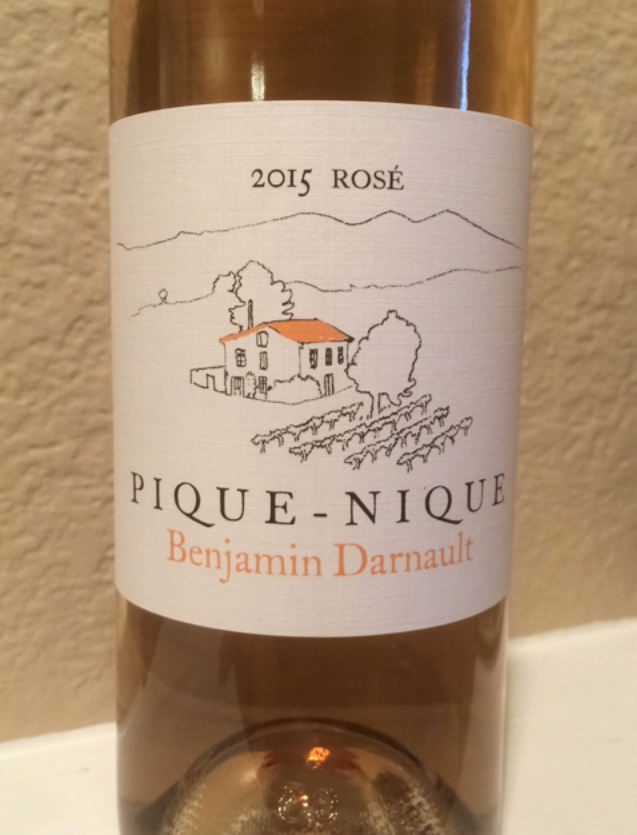
Wonderful dry Rosé of Grenache. Peach color, aromas of fresh raspberry and soft rose petal. Flavors of raspberry and strawberry with floral notes. Light body with bright acidity and a pleasing finish.
Warehouse Wine? Sure, why not? Premier Cru Chablis for $15? Heck, yea!
Costco Wholesale warehouses are known for offering good wines at great prices. Members can find well-known labels from around the world (depending on your state’s regulations), and enjoy substantial savings over traditional wine shops, and often at prices better than even large wine and liquor stores like Total Wine & More and BevMo. These are great deals, but for the biggest bang for your buck, look for the Costco Kirkland Signature label. No, Costco doesn’t make wine. They use their immense buying power to source and purchase wine from well-known producers, and label them with the Costco brand. Pulling the cork often reveals the secret identity of the estate or chateau that produced the wine, when they use their own corks. A 2015 article in Wine Spectator pulls back the curtain on some of those producers, and some impressive names they are. And Jon Thorsen, the Reverse Wine Snob, has written extensively on the Costco wine scene, and regularly reviews their wines.
So now we know about wine buying at Costco and the bargains to be found there. But what’s so special about Chablis? And what is this “Premier Cru” thing? Good questions. The short answers are: Chablis is Chardonnay wine made in Chablis, which is located in Burgundy, France. “Premier Cru” is a designation that identifies a Chablis wine that was made from grapes from better-than-average vineyards. The Best of the Best receives the Grand Cru designation. You can read a more in depth analysis at Wine Searcher.
When I was a kid, I remember my parents drinking “Chablis” from a jug. (Back in those days, the rules about naming wines were less strict.) So when I started my own wine journey, I had that image in my mind, and avoided Chablis, thinking it was nothing more than cheap plonk. Furthermore, when I started exploring wine, I stuck mainly to New World wines; those from the U.S., Australia, and South America. In those days, Chardonnay meant those overly oaked toast bombs, of which I’m not a fan. Thus began my ABC (Anything But Chardonnay) days. Only in the past two or three years did I learn that Chablis – the real stuff from Burgundy – is completely unoaked. There are no toasty, lick-the-inside-of-the-barrel flavors. Venturing out of my comfort zone, I tried a bottle several months ago, and I was very happy with what I tasted! (Fortunately, the trend with Chardonnay, even in the U.S., is toward lightly oaked or unoaked styles.) Thinking about all the delicious Chablis I missed over the years, because of my incorrect assumptions, is disturbing! Having since turned in my ABC Membership Card, I am now always on the lookout for good Chablis bargains.
So how does the Kirkland Signature Chablis Premier Cru 2014 stack up? Pretty darn good.
Light straw color in the glass. Aromas of pear, yellow apple, and elderflower. On the palate, there is pear and apple, with zesty lemon and grapefruit mid-palate. Bright acidity, and a lighter mouthfeel when cold, but as it warms it softens and becomes softer with a bit of creaminess. The finish goes on and on with tart citrus notes. Not the best Chablis I’ve had, but surely the best QPR for a Premier Cru.
4.0 out of 5 stars (88 – 91 points)
Retail: $14.99
This is definitely a wine I would serve to guests. The label may not impress, but in my opinion, it’s more important what is IN the bottle, than what is ON the bottle.
It’s been awhile since I’ve posted a wine review. In my zeal to share creative insights and tales of my wine travels, combined with life circumstances and busyness at work, I momentarily lost sight of one of the reasons I started this blog, and my tagline: “Reviews, musings, ponderings, and thoughts about wine.”
When I post reviews, I like to include a little about the winemakers. I find I enjoy a given wine more when I know some of the stories and passions of the people behind the label. Often I rely on information available on the Internet, but as a member of NakedWines.com, I have the opportunity to meet and interact with the winemakers directly.
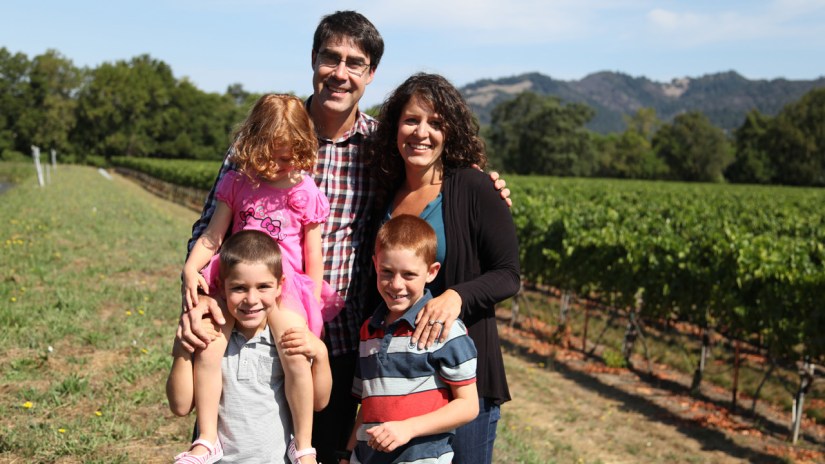
Jeff Jarvis and Jessica Tomei are a husband and wife winemaking team based in Northern California. Although I have not had opportunity to meet them in person, I feel like I know them through our communication on the NakedWines.com social media platform. Theirs is a compelling, moving story. Jeff and Jessica have an impressive wine-making background, having worked at wineries in Italy and Chile before settling in Northern California. In addition to making wine for NakedWines.com members (known as Angels), Jessica stays busy as the director of international winemaking at Cupcake Vineyards.
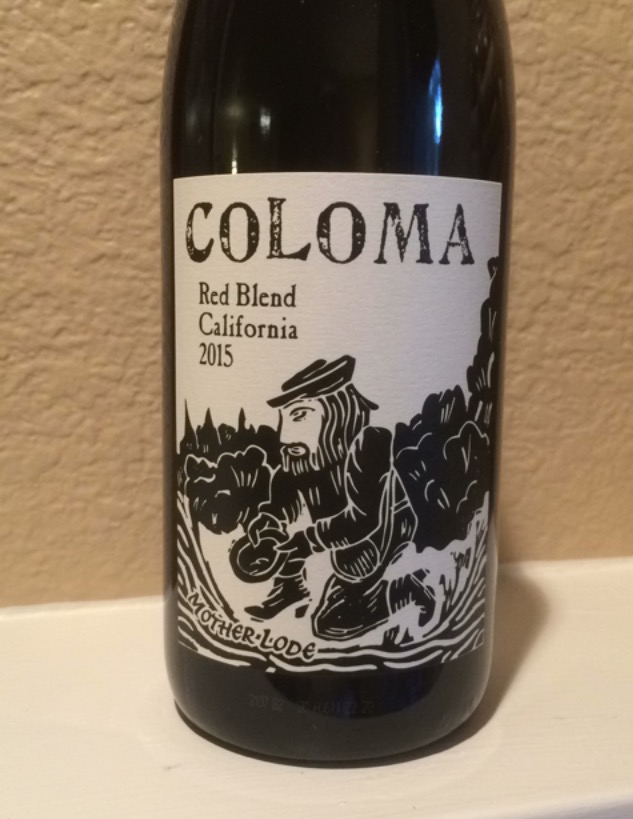
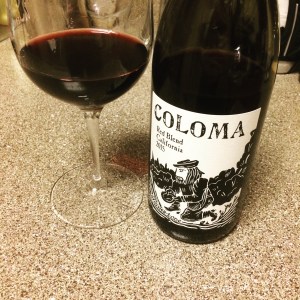
Jeff and Jessica source most of their fruit from El Dorado County, in the Sierra Foothills. Their primary NakedWines.com label, Coloma, is a nod to this origin. The small foothills town of Coloma, in El Dorado County, is the location of Sutter’s Mill, where gold was discovered in 1848. If you’ve read much of my blog, you know I have a special passion for Sierra Foothills wine, partly because I live less than 45 minutes the main winemaking regions there, and just 5 minutes from the El Dorado County line! Jeff and Jessica’s Coloma wines are rich and intense, with soft tannins, and a fruity, spicy finish.
Yet, as good as their wines are, the best part of buying them is knowing that I am supporting this young family through their trials and tribulations. You see, in 2012, their then-two year old daughter Sofia became ill with a mystery ailment. After months of medical visits and extensive tests, doctors were unable to diagnose the illness. Their story was carried by both local and national news outlets. Cue NakedWines.com and the army of Naked Angels to the rescue! Through the support of this wine-loving extended family, Jeff and Jessica produced and sold a special Helping Hands Six-Pack of their wines for Angels. The money raised went directly to Jeff and Jessica to help defray medical expenses. So when I have an opportunity to purchase any of their wines, I know I am helping to support this family, and little Sofia.
The Jarvis Tomei Family, Photo Credit: The Naked Way
Their latest Coloma label release is a spin on the classic Rhône GSM blend. The Mother Lode Red Blend is a GSZ – Grenache, Syrah, Zinfandel blend. In speaking with other Sierra Foothills producers, I learned that the challenge with GSZ is taming the hot, high alcohol content of the “Z” – Zinfandel. Leave it to Jeff and Jessica to master this by blending just 10% Zinfandel with 55% Syrah and 35% Grenache. The wine carries the California designation, because the fruit is sourced from both the Sierra Foothills and Paso Robles.
In the glass, a medium ruby color. Pre-aeration (patience is overrated) there are aromas of blackberry bramble, vanilla, and blueberry. Run thru a Vinturi (or decanted 30-60 minutes if you have patience) brings forth aromas and flavors of ripe blackberry, blueberry, black cherries, and soft oak. Is this really a 2015? It’s amazingly soft and smooth, with light acidity and medium to full body. The finish is medium long, with dark berry, plum, and a touch of spice and mineral. This is an easy drinking wine; great for sipping or with food. I’m glad I bought more than one!
4.0 out of 5 Stars (88 – 91 points)
MSRP: $19.99, Angel price: $11.99
This wine is still available, exclusively from NakedWines.com. If you’d like to try it, and aren’t yet a Naked Angel, follow this link for a voucher worth $100 off your first purchase of $160 or more. You’ll be happy you did!
My how time flies! It’s been almost a year since my first post on the Sierra Foothills AVA. When I wrote that piece, I had the grand idea of showcasing each of the five sub-appellations that comprise the Sierra Foothills: North Yuba, El Dorado, Shenandoah Valley, Fiddletown, and Fair Play. Alas, such is the life of a hobbyist blogger. Work, family, and life in general get busy, and grand ideas get set aside. It has taken some time, but I was finally able to make it to Amador County wine country recently to conduct some “scientific research” for this continuing series. It was arduous, but I’ll do whatever it takes for you, dear reader, to provide what I hope is interesting content.
As I lamented in my earlier post, the Sierra Foothills area is, in my opinion, an underrated and underappreciated wine region. Often flying under the radar of major wine publications, the wineries here are producing wines that rival bigger, better known producers and regions. Fortunately, the Sierra Foothills received some recent exposure when nearby Lodi hosted the 2016 Wine Blogger’s Conference. Although I was unable to attend, I’ve read some great posts from fellow bloggers on the field trips that were offered to the foothills. Several of the winemakers and owners I spoke with on my recent daytrip also commented on the visits, and appreciate the attention the conference gave to the region. Still, it is with some trepidation that I go on; for fear that too much exposure will spoil the tranquil, picturesque wine region located in my own back yard. Nevertheless, I wish nothing but success for these amazing wineries and wines, so I must shout my praises from the rooftops. Well, at least from my living room.
Amador County is home to two of the five Sierra Foothills sub-appellations; Shenandoah Valley and Fiddletown. These two neighbors adjoin one another, and while I did briefly venture into the Fiddletown AVA, my focus this day was the Shenandoah Valley.
The Shenandoah Valley is perhaps the best known Sierra Foothills wine region. It is the most easily accessible, and perhaps not coincidentally, is home to some of the larger and better known Sierra Foothills wineries. Many producers in the Shenandoah Valley, like Renwood and Montevina, have grown large enough to distribute their wines nationally, and perhaps internationally. In fact, some time ago I opened a Costco-branded Kirkland Signature Amador Zinfandel, and was surprised to find the Renwood Winery logo on the cork. That’s a testament to success!
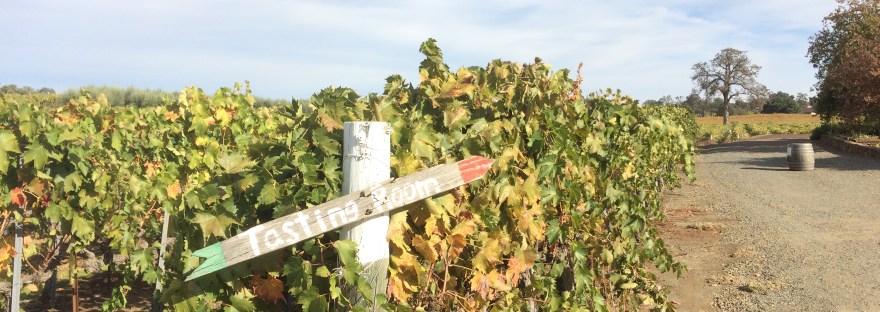
Just outside historic Plymouth, a gold-rush era town, Shenandoah Road intersects State Highway 49. A short drive up Shenandoah Road, and around a hilly curve, and you are greeted by lush vineyards and stunning views. The majority of the wineries in the Shenandoah Valley AVA are located along Shenandoah Road or Steiner Road, which loops off Shenandoah Road, meeting it again a little further up. There are some 31 wineries located in the Shenandoah Valley AVA. Most are small, family owned operations, and it is not uncommon for the winemaker to be the owner, or the owner’s son, daughter, or other relation.
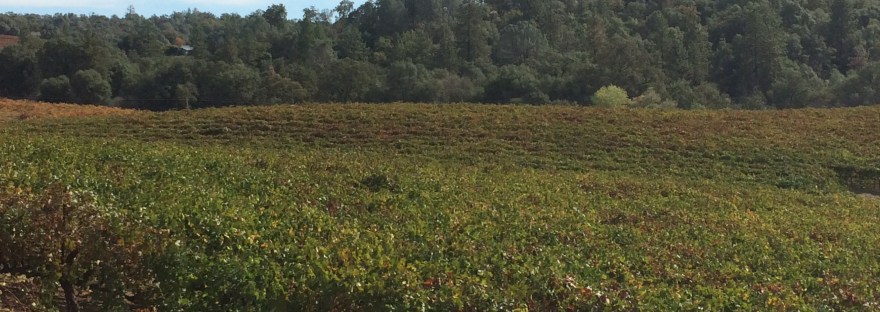
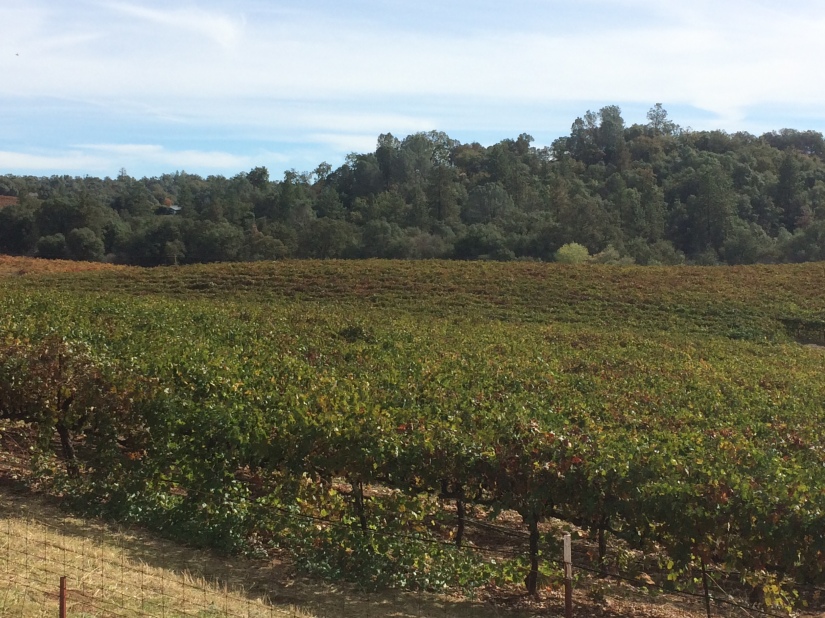
Since the early days of the California Gold Rush, this area has produced wine. Originally, vines were planted by enterprising emigrants to supply alcohol to the thirsty miners who came to strike it rich. Zinfandel vines were found to thrive here, so that became the dominant varietal. Today, some individual vines can be traced back more than 150 years to those pioneering days. Other varietals have since been added to the region; mostly Italian and Rhone grapes that thrive in the warm, dry climate. The west slopes of the Sierra Foothills afford abundant sunshine during growing season, and summertime temperatures that can hit the low 100’s help to create ripe, fruit-forward wines.
Like all of the Sierra Foothills wine regions, the Shenandoah Valley AVA’s natural beauty equals, or dare I say, even exceeds that of the more famous California regions. Certainly Shenandoah Valley lacks the crowds, traffic, and commercialization of those internationally recognized destinations. Many wineries still offer complimentary tastings. Those that do charge generally limit it to $5, and that is waived with the purchase of just one or two bottles. (Many Napa wineries are now up to $30 or more, and waiver requires signing up for the wine club, a commitment of several hundred dollars per year.) Even the bottle prices are much more affordable, typically less than $30 for spectacular, award-winning wines.
Photo Credit: helwigwinery.com
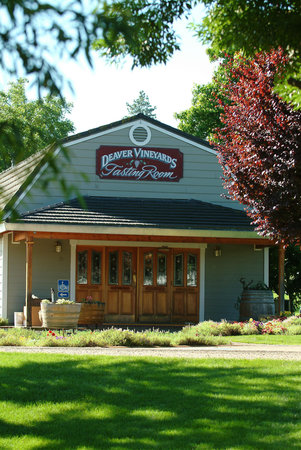
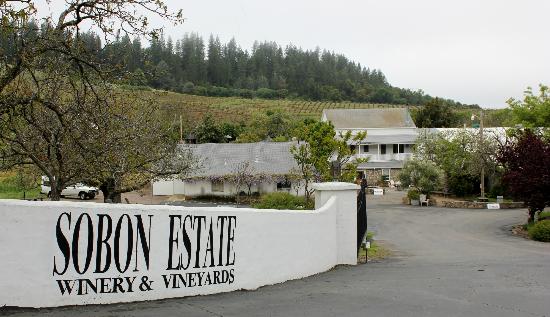
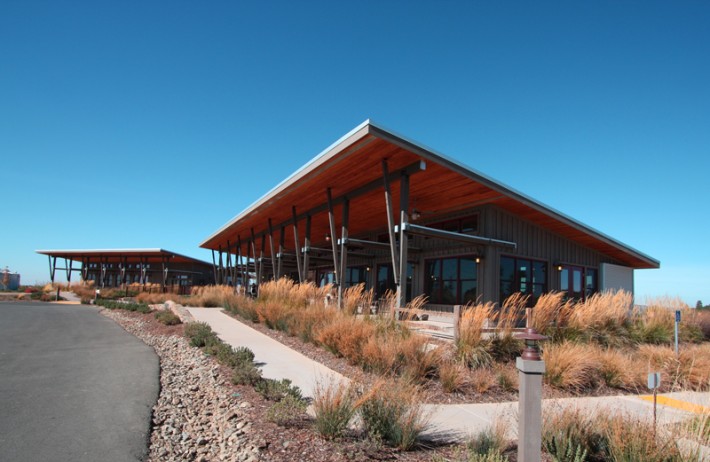
Winemaking here waned as the Gold Rush petered out. It wasn’t until the 1970’s that the potential for this region was noted, and commercial wineries established. Early wineries such as Deaver Vineyards and Sobon Estate are still going strong, and are joined by relative newcomers like Andis (est. 2010) and Helwig (est. 2011). The growing popularity of wine among the younger generation, and the trend away from exclusivity and pretentiousness in wine has driven the rise in popularity and demand.
The atmosphere at the wineries in this area vary from traditional, down-to-earth, and intimate, to state-of-the-art, hip, trendy, and vibrant. Some offer tours, including a Farm-to-Glass Vineyard Tour at Vino Noceto. Click the link to read my post on my recent experience and learn more. To attract even more people to the area, including non-wine-drinkers, Helwig Winery built an amphitheater along with their winery. They host a summer concert series each year, attracting some big name performers and plenty of fans, who are introduced to the beauty, and deliciousness, of the area. No matter your preference, you are sure to be greeted warmly, and will taste some underappreciated, world-class wines.
Vino Noceto
Story Winery
If you are thinking of visiting, the closest airport is Sacramento (SMF). Check out the Amador Vintner’s Association website for trip planning help and tips. Come to the foothills, check out the wines and history, and enjoy the stunning scenery. You’ll be glad you did!
Many wineries have tours. Visitors get to see the crush pad, fermentation tanks, and barrel room on the way to the tasting room. I have been on several of these tours, and always enjoy them. There is something enlightening in learning more about the processes that go into making this wonderful, enjoyable beverage. Still, I’ve often felt there was something missing in these tours: the vineyard. What goes on out there? I long to walk the rows, taste the berries straight from the vines, and learn more about the agricultural part of the process. Wine is, after all, the end result of months of patient and backbreaking farming. Then I learned about the Farm-to-Glass Vineyard Tour at Vino Noceto. I signed up immediately.
Vino Noceto is a family-owned winery in the Sierra Foothills. More specifically, they are in Amador County, in the Shenandoah Valley AVA, a sub-appellation of the Sierra Foothills AVA. Located in the rolling hills about an hour east of Sacramento, Vino Noceto is a fun, friendly, and inviting destination.
Pomegranates galore!
Olives nearly ready for harvest
Awards and Passion
The Farm-to-Glass tour is often led by either the winemaker, Rusty Folena, or owner Jim Gullett. For my tour, a small group of just three of us, Jim was our guide, providing us with intimate details and insight into the history of the winery. It was fascinating to hear Jim relate his personal journey from just starting out; to the successful operation he leads today.
Jim Gullett, owner and tour guide extraordinaire!
Jim and his wife Suzy purchased the land, formerly a walnut grove, in 1984. The name, Noceto, reflects a part of Suzy’s history. Suzy is from the city of Walnut Creek, in the east Bay Area of Northern California. Noceto is Italian for walnut grove. It is also the name of a town in Italy, located in the province of Parma. Noceto, Italy is the sister city of Walnut Creek, California.
In keeping with the Italian connection, Vino Noceto specializes in Sangiovese, the main grape used in Chianti. Vino Noceto is one of the leading producers of Sangiovese in California. This is quite a departure for a winery in a region known for Gold Rush-era Zinfandel vines, and the Rhone varietals many of their neighbors are producing. Still, Jim and Suzy had a passion, and they pursued it.
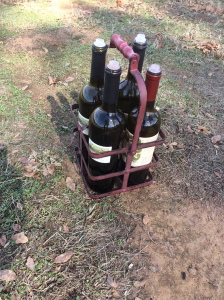
The tour began in the tasting room; just long enough to each receive a glass and a generous pour of Vino Noceto’s Clarksburg Pinot Grigio. Light, crisp, and delicious, this was a great way to start off! Jim grabbed his bottle caddy – more tastes awaited us along the way – and we headed off to the vineyard.
The next wine we tasted was the flagship Sangiovese Originale. We tasted the 2013, but the first release of this Chianti-style wine was in 1990. Light, ruby color in the glass with flavors of raspberry and cherry, and lively, balanced acidity. This wine is delightful on its own, and would pair exceptionally with a variety of foods. Jim said his vision was to create a “Chianti with California sunshine.” He didn’t want to simply imitate Chianti; he’s in California, and he wanted to allow the California influence to shine through. Mission accomplished, Jim!
Many of Vino Noceto’s Sangiovese vines can be traced back to nine original cuttings. These were obtained from a neighboring winery that had procured them some years earlier, but decided to go a different direction with their production. Other vines came from various other sources, all of which can be traced back to Italy. Some of these other cuttings had originally been brought to the U.S. from Chianti via (ahem) a briefcase import in the 1970’s. So the Vino Noceto vines have some pretty prestigious, if shadowy, heritage.
The original vineyard plot is called Dos Oakies, because of two large oak trees that stood watch over the vines. One of these sentinels fell in a storm a few years ago, but the other remains, providing shade and shelter for vineyard tourists and wildlife alike.
Dos Oakies, minus one.
As we walked through the vineyard, Jim informed us that Vino Noceto is a Certified Sustainable vineyard. After harvest and crush, the grape pressings are returned to the earth to help fertilize for next year. They also reclaim the water used in production. In addition, their winery and tasting rooms run completely on solar power, and investment that has already paid for itself.
Moscato Pressings back to the earth.Harvesting the California sunshine.
Harvest was already complete on the day of my tour, but some fruit lingered on the vines. This enabled us to sample some of the berries. We tasted Trebbiano and Malvasia, both white grapes, and Sangiovese, Canaiolo Nero, and Aglianico, the latter two used as a blending grapes in Italian wines. It was interesting to note the differences in flavor, texture, and tannin, right there among the vines that produced the fruit.
One the way to the winery building itself, we sampled two more wines; the Dos Oakies Sangiovese, a single vineyard bottling from that original vineyard block; and the Hillside Sangiovese. Both were stunning, and had the classic Chianti stylings, with that extra pop of California sunshine. The Hillside Sangiovese has just a hint more oakiness, giving it a fuller feel and flavor. Perhaps that is why it has won so many awards and high scores!
Don’t forget the wine, Jim!
At the winery, the tour included a stop at the crush pad, where Jim explained the processes from harvest, to sorting and de-stemming, to crush. Then we moved into the fermentation room and barrel room. Jim detailed the processes, including such decisions as which yeast to use in fermentation, and the level of toast required for their barrels.
Ha
Though Sangiovese experts, Vino Noceto is a Sierra Foothills winery. Therefore, they also produce a Zinfandel. Using his wine thief, Jim got us a barrel taste of the 2016. It is already coming along nicely, and when released in a couple of years, will be a superb Zinfandel. As we left the winery, Jim poured us a taste from their current release, 2012 OGP Zinfandel, made with grapes from the Original Grandpère vineyard. Unlike many jammy, powerful Zins, this is a lighter, more restrained Zinfandel that really allows the fruit to show its stuff!
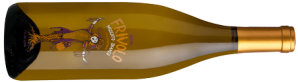
Normally when you hear “cult wine” you think of big, bold, in-your-face Cabernet from Napa. Would you believe: a cult white wine? Yes, Vino Noceto makes a Moscato blend called Frivolo. Slightly effervescent, and completely refreshing and delicious, Frivolo has a cult following, and its own wine club! That’s right, a club for a single wine. Members receive one shipment per year, in December – a case of the newly released vintage. While the 2014 is long sold out, the day of my tour the 2016 was undergoing cold stabilization. Naturally, as a good host, Jim got us a sample from the tank. Ice cold, but still delicious and flavorful!
Cult White Wine!
The tour ended back in the tasting room, where Jim said his goodbyes and left us in the care of the friendly, helpful staff. There, we were offered more tastes of wines we didn’t try on the tour, plus opportunities to re-try those we had. Like so many Sierra Foothills wineries, tastings at Vino Noceto are complimentary.
If you are in the area, I highly recommend the Farm-to-Glass Vineyard tour. Tours are held daily at 11:00 a.m.; free for club members, $10 for everyone else. Money well spent! You can book online here, or call Vino Noceto at (209) 245-6556 x2.
What’s the longest word in the English language? Smiles. There are only six letters, but there’s a “mile” between the first and the last!
This is my entry for #MWWC28. As the winner of MWWC27, Beth, The Traveling Wine Chick earned the honor of selecting the next topic. She chose “Smile.”
The first thought that comes to my mind when I hear the word “smile” associated with wine is: “Of course. Wine makes me smile.” But that makes for a pretty short blog post. Instead, I’m going to step outside my comfort zone, and try a little creative writing.
Steve had it all. He was the high school football quarterback, homecoming king, and just to complete the cliché, he dated the head cheerleader. With straight A’s and a league football championship his senior year, he received a full-ride scholarship to the prestigious university of your choice. Steve was no slouch.
After college, Steve accepted a position at a major investment firm, and was quickly working his way up the ladder, earning a fat paycheck plus commissions. Yes, he married his high school sweetheart, the cheerleader, and they started a family. Steve’s life was picture perfect, and his future looked bright.
One year, his company holiday party was held at a local winery. Steve had never been a wine drinker. Sure, he’d had a glass from time to time, but never really got into it. In fact, he had never been much of a drinker at all, preferring to focus on his personal goals and lifetime achievements. He felt that drinking could become a distraction, and he would lose his focus. Still, the winemaker herself was at the party, pouring her best wines. Steve enjoyed a few minutes chatting with the winemaker, but asserted that common argument: “wine gives me headaches.” The winemaker assured Steve he would not get a headache from her wine. He agreed to give it a try, and she poured him a glass. At the first sip, a smile emerged on Steve’s face. This wine was delicious! Steve had a hard time describing it, but he knew it was different, and better than any wine he’d had. He was hooked immediately.
With a fresh appreciation for the wonders of a finely crafted wine, Steve started a small collection. He began exploring varietals, regions, and styles. He joined clubs, and went wine tasting with his wife on the weekends. Pretty soon, Steve found himself planning vacations around wine regions, and he enjoyed exploring the beautiful landscapes of Bordeaux and Burgundy, Tuscany, Alsace, Rioja, and others. Over the years, Steve tasted hundreds of wines from regions the world over. He loved to share his love of wine, hosting dinner parties, and donating bottles to charity auctions. Whenever a friend or family member needed a wine recommendation, Steve got the call.
Then one fateful day, Steve’s phone rang. It was bad news. Cancer. Steve’s mom had been his biggest supporter; driving him to practices, mending his torn uniforms, tutoring him on those hard subjects. She was there for the good times and the bad. Now she needed him. Even those whose lives appear perfect from the outside can suffer life-changing tragedies. Our lives can change in an instant with a phone call or conversation. Steve’s world was rocked to the foundation. Cancer is something that happens to other people, not Steve and his mom. But it did happen; is happening. Steve was comfortably well-off, but cancer doesn’t discriminate between rich or poor. You can’t buy your way out of this.
Steve caught the next flight home and went to stay with his mom. The prognosis was not good. The cancer had spread quickly and by the time the doctors caught it, it was too far gone. They gave her only 30 days. Steve was with her for the duration. He drove her to doctor’s appointments, and helped arrange for the best hospice care in the area. In the end it was peaceful, surrounded by loved ones.
Steve returned home a changed man. The grief and pain had sucked the life and joy out of him. He found it difficult to smile at much of anything. He was a strong man; a survivor; so he knew intellectually that he would eventually heal. But at times, the emotional pain was crushing. Even his passion for wine waned. He’d still have a glass or two with dinner, but it wasn’t the same. He was careful with his drinking, because he knew that self-medicating his pain could be dangerous, so he regulated his consumption. Weeks passed, then months, and slowly the hurting became less intense, and he knew he was starting to heal.
A few weeks later, Steve was working late. The custodian, Jeff, came into Steve’s office to clean. Steve had worked late often enough that he knew Jeff, but they had never talked beyond pleasantries. Still, something in Jeff’s demeanor told Steve something was wrong. Steve inquired, and Jeff confided that his father had just passed away. Instantly, corner-office Steve and custodian Jeff were on level ground. A friendship was born out of mutual heartache and pain. Through Steve’s friendship and caring, Jeff walked through his grief and was soon feeling like his old self. But the friendship didn’t end with the end of the crisis. Steve and Jeff remained committed friends, and their families became inseparable.
On a bright, clear Saturday morning some weeks later, Steve took Jeff winetasting. They spent the day exploring the local wine region, tasting wine and enjoying the peaceful beauty of the vineyards. That evening, Steve cooked dinner for the two families, and opened a bottle of his favorite wine. It was a perfect ending to a perfect day. As they savored the meal and wine, Steve, Jeff, and their wives all shared happy, contented smiles.
And they lived happily ever after.
This is a work of fiction. The characters and events are made up. Except for the part about the holiday party when Steve first discovers quality wine. That really happened, and is how I got started on my wine journey. Nevertheless, although fictional, the emotions and feelings are real. When going through a rough time, stay focused on the things that are really important in life. Even in times of tragedy and pain, if you look for them, you can find things that can, from the depths, evoke a genuine smile.
This post has been therapeutic for me. Although not death, cancer, or any other illness, I have been walking through a very difficult time, and have had difficulty finding smiles. Writing this fictional story has helped me to realize the truth underlined above. If you are going through a painful time, my hope is that my words are helpful to you, and that you, too, can find a smile.
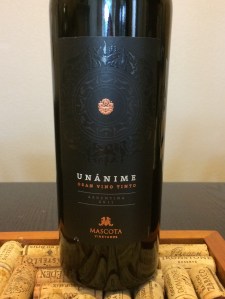
Sometimes a wine comes along that is special in ways that transcend the quality and ratings. Unánime 2011 is such a wine. Sure, Wine Enthusiast gave it 93 points. That’s impressive all on its own. Yes, it’s the Total Wine & More No. 1 red wine of 2016. All those customers and store associates can’t be wrong, so there’s that. Accolades certainly generate interest and drive sales, and that’s always a good thing. However, what makes this bottle special is the circumstances by which it ended up in my hands, and its contents in my glass.
Sometimes life throws you a curveball. Not long ago, I found myself facing a particularly difficult pitch. Fortunately, I have a great coaching staff around me, so I was able to swing and make contact. Circumstances arose that required we sell our home, and quick. As luck would have it, my brother-in-law, Todd, is a realtor, so we engaged his services. Through a combination of his professional talents and 11 years of loving care of our home, we accepted an offer after just 7 days on the market. The entire process ran smoothly and, thanks largely to Todd’s influence, the 30-day escrow closed on time.
I can’t begin to adequately express my appreciation for Todd’s help and expertise throughout this very stressful process. So imagine my surprise this morning, when I answered a knock at my new door, and there stood Todd, gift bag in hand. I should be buying him gifts, and yet as a “thank you” for allowing him to serve us, he brought me a gift of Unánime 2011.
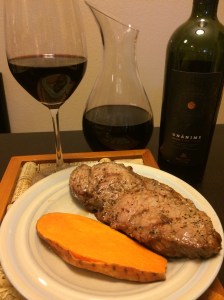
As it happened, I was planning to grill a New York steak for dinner tonight – my first grilling experience after several weeks in transition. It was to be a simple, but special dinner. I was debating what wine to open with my steak, but as soon as I pulled the bottle from the bag, I had my answer.
As I mentioned, Mascota Vineyards Unánime 2011 is the Total Wine & More No. 1 red wine of 2016. I’ve wanted to try it for some weeks, but just haven’t had the time. Todd solved this problem for me. From the back label:
UNANIME, from the Latin “Unanimis” refers to a group of people sharing the same opinions or views; being in complete harmony or accord.
This simple word summarizes this special project. When we were finishing the harvest 2005, both our Winemakers and Agronomists agreed that it was the time to start crafting a superior red blend, a “Gran Vino Tinto”.
We wanted to reflect the great wines Argentina can offer when exceptional climate and passionate people come together in harmony.
A blend of 60% Cabernet Sauvignon, 25% Malbec, and 15% Cabernet Franc, from the Uco Valley in Mendoza, the 2011 spent 20 months in French oak. Here’s what I thought about it:
Inky doesn’t begin to describe the color. Nearly black in the decanter with deep violet rim. Early aromas of ripe blackberry, black cherry, chocolate, and soft oak. On the palate, this is a big, bold, chewy wine with flavors of ripe blackberry, black currant, black pepper, spice, and black cherry. Full bodied with massive tannins, even after 3 hours in the decanter. The finish is long, with black pepper, spice, and dark chocolate. When paired with a juicy New York strip steak, spectacular. This wine will age well for the next 5-10 years.
4.5 stars, 92 – 94 points
$24.99 at Total Wine & More
NY Strip Steak and Baked Sweet Potato. The salad was on the side. Honest.
Argentina and beef are synonymous, and this wine is a natural complement to a juicy cut. Grab a bottle of Unánime 2011, fire up the grill, and enjoy the magic.

























 Appetite for Wine