BBQ, Beaujolais, France, Gamay, Summer Red, Wine

Longing for Some Summertime Red Wine

It’s only the first week of July, but it already feels like a long, hot summer. Here in NorCal we’ve seen near-record heat including a week-long heatwave (seemed more like a month) with temperatures pushing, or exceeding 110°F…and that just was in June!

Naturally, when the mercury rises this high, we all gravitate to the cold, crisp wines. But seriously, one can only drink so much Sauvignon Blanc, Pinot Grigio, and Rosé. (Yes, I know the more adventurous among you are cracking refreshing Albariño, Picpoul, and Torrontés. I’ve had my share of those, too!)

What I’m really craving right now is a nice, juicy red wine. But it’s just too hot for a big, heavy Cabernet Sauvignon, Merlot, or Malbec. What is one to do???

Beaujolais.

No, not the young, fun, fruity Beaujolais Nouveau released in November. You should have finished all of that by now. I’m referring to the grown-up, big brother: Beaujolais Villages wines. Made from the same Gamay grape as the youthful Nouveau wines, “standard” Beaujolais is often aged in oak before release, giving it more depth of character while still retaining that light, refreshing flavor that can satisfy your red wine craving in the heat of summer.

The Beaujolais region is located just south of Burgundy, but is actually part of the Rhone region of France. With a warm growing season, the resulting wines tend to be fruity, yet with proper care and aging, can develop complex flavors. The most prized Beaujolais wines are those from the 10 “crus”; those vineyards recognized as the best in the region.

Wandering through my local Total Wine & More store the other day, I was in search of a  red wine that I could pair with a grilled, New York strip steak that wouldn’t be too heavy in the sweltering heat. In a momentary flash of inspiration, I asked the store associate to direct me to the Beaujolais section. He gladly did so, but as I reached for the familiar label of the Louis Jadot Beaujolais (Retail $11.99), the clerk suggested I up my game.Jadot
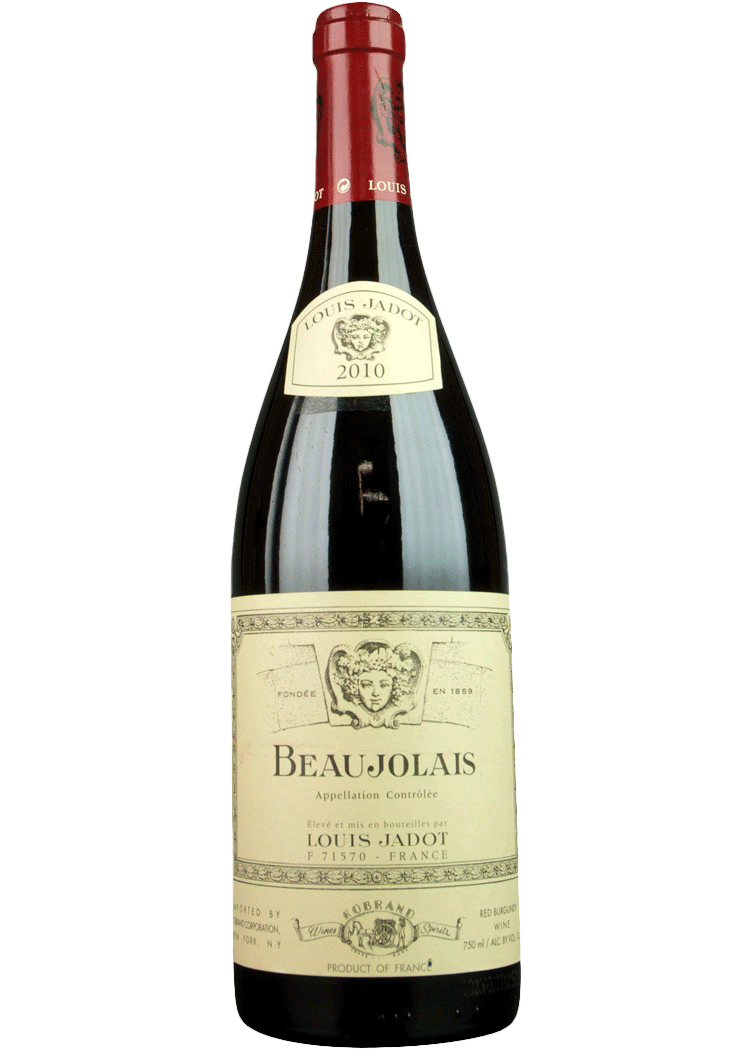
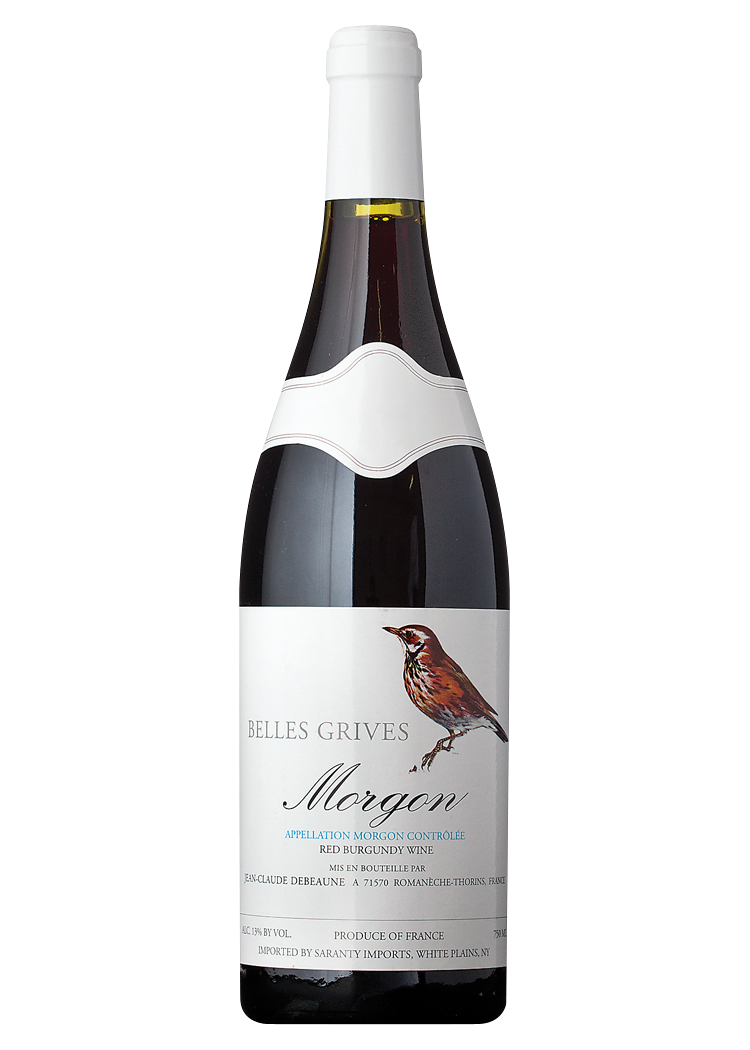
While there’s nothing wrong with the Jadot (and I bought a bottle for a BBQ that would be attended by less-discerning palates), for a mere $3 more, we could enjoy one of the best-of-the-best…a cru Beaujolais Villages wine. Powerless to resist, a bottle of Jean La Perriere Belles Grives Morgon 2014 landed in my cart. Morgon is one of the cru vineyards, producing superior Gamay. As you can see, the best quality can be had for a bargain price!

As expected, my craving for red wine and red meat was satisfied that night. The steak was cooked to perfection, and with wine was magnificent; fruity and light, yet deep and complex.


Belles Grives

Good price point for a Cru Beaujolais. Brick red with garnet rim. Aromas of raspberries and black pepper. Flavors of ripe raspberry, earth, and smoke, with medium body and super soft tannins. Finish is long with red berry, plum, and baking spice.

Retail: $14.99 ($13.49 with the six-bottle discount.)
 

That’s not the end of the story, however. A few days later, we popped open the Jadot at the BBQ party. It was a huge hit, and complemented the Tri-Tip very nicely! Fruit-forward with raspberry and cherry, but less of the oak influence and depth, everyone loved it. That bottle didn’t last long!

If you are already growing weary of summer, and can’t bear the thought of one more Rosé or crisp white, head down to your favorite wine shop and grab a bottle or three of a wallet-friendly Beaujolais Villages red wine. It’ll help you through until Cabernet season!

Cheers!


Franc Dusak, nakedwines.com, sonoma, Sonoma Valley, Viognier, Wine

Review: Franc Dusak Viognier Sonoma Valley 2016

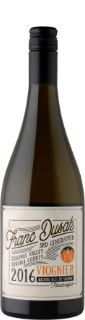
​Franc Dusak has been one of my favorite winemakers for some time, and he continues to impress. Under the umbrella of NakedWines.com, Franc produces excellent wines from a number of different varieties of grape, and some out-of-this-world blends, too. One of my favorite wines in his portfolio is his Viognier. I’ve reviewed Franc’s Viognier before; the 2015 vintage. I recently acquired a bottle of his 2016 vintage, and I was so impressed I simply had to share about it!

Franc Dusak Viognier 2016

Sporting a brand new label design, Franc’s Viognier Sonoma Valley 2016 is just as enticing, refreshing, and delicious as 2015…maybe more so! Franc reaffirms my newfound love for Viognier with this creation. In addition to being tasty and satisfying on a hot, late-spring day, it is quite versatile with food pairing and makes a terrific addition to a variety of dishes.

Currently the Head Winemaker for NakesWines.com, Franc is a third generation winemaker. The family hails from Slovenia, and Franc honors his family heritage and the original family winery on the label. In Franc’s Instagram and Facebook posts announcing the release of the 2016 Viognier, he explains:

“The new logo pays homage to the winemakers in my family and my Slovenia heritage. DVK represents Dusak Vinska Klet, which is our original family wine cellar. The mountain in the background of the logo is Triglav, (three heads) which has several meanings, but mostly refers to the impact my grandfather, uncle and father had on my wine journey.”

https://www.instagram.com/p/BSjT-y9FRev/?taken-by=francdusakwines 

I contacted Franc via Instagram chat, and asked him about his vision as a third-generation winemaker. Here’s what he said:

Franc Dusak
Photo Credit: NakedWines.com

“I think the most important thing for me is that I carry on the tradition of winemaking in my family. I make wine to enjoy and share with your family and friends. I am pleased when enthusiasts see the passion that I put into my wines, but my hope is that everyone can enjoy them. There is so much work and thought that goes into each wine, hopefully those who taste them can feel that.”

Personally, I clearly see the passion in Franc’s wines. Here’s my review of this amazing Viognier. I’ll be buying a case of this to get me through the long, hot summer!

img_2445

Another Franc Dusak hit! Franc’s Viognier is always delicious and this vintage is no exception.

Golden straw color. Aromas of nectarine and honeysuckle. This wine is florally aromatic; it smells so delightful it could be perfume. On the palate, flavors of nectarine and peach, elderflower, pear, and floral notes. Started well chilled, as it warmed some apricot started to emerge. With a round mouthfeel, tangy acidity, and medium body, this is a great wine for food. We had it with grilled miso shrimp and asparagus, with spinach salad and it was amazing!

Make no mistake: this is not a “sweet” wine. It is fruit forward and floral, which may be perceived as sweetness. But it is a dry, delicious white wine. Franc, I tip my hat to you, sir!

Available exclusively from NakedWines.com.

Angel Price $12.99

This wine is still available from NakedWines.com. If you aren’t already a NakedWines.com Angelclick here, or the banner below, for a voucher worth $100 off your first order of $160 or more! You’ll be glad you did!

NW Logo

Wine

Monthly Wine Writing Challenge #33–The Results

I am truly and deeply honored to have won this month’s challenge. This is my first time winning the MWWC, and I appreciate everyone who read and enjoyed my entry, and who voted for me. Thank you!

the drunken cyclist's avatarthe drunken cyclist

The results are in

Well, for the first time in what seems like a long time, I am announcing the winner of the Monthly Wine Writing Challenge by pounding away at my desktop keyboard and not sitting in a hotel bed in a far-flung wine region. Why is that important? It isn’t. Not even slightly, but I feel the need to fill this space with some sort of drivel so that I can justify being the curator (is that what I am?) of this writing challenge.

This was a strange month by a few measures. First, there were only eight entries, the second lowest amount since the Challenge began over three years ago (and we only got to eight after I extended the deadline by a week). On top of that, the number of votes cast to determine the winner was the lowest total since I took over the full-time administration of the Challenge…

View original post 150 more words

#MWWC33, Fun-Sucking Dragon, Prohibition, Wine

Once Upon a Time #MWWC33

once-upon-a-time

Once upon a time, there was a charming prince who lived in an enchanted land. Yes, I know. Fairy tales are supposed to be about princesses. This is an equal opportunity story.

Monthly Wine Writing Challenge

Anyway, there was this charming prince, living in an enchanted land. When he was young, each day he would ride about the kingdom, enjoying the beauty and wonder around him. He and his friends were well known for their kindness, as well as their laughter. To be sure, the prince had his mischievous side, playing practical jokes on friends and strangers alike. Always harmless jokes, though. There’s no charm in being hurtful.

As the prince grew older, his roaming expanded and he began exploring and experiencing surrounding kingdoms. One day, he entered a neighboring land where the people were demure and quiet. The prince wondered what was wrong. As he inquired and spoke with the people of the land, he learned that there was a Fun-Sucking Dragon terrorizing the land. The prince discovered that before the Fun-Sucking Dragon’s arrival, the people were just as happy as the citizens in his land. However, the Fun-Sucking Dragon imposed upon the people a law preventing anything fun. No singing, no dancing, no running, no galloping horses, and worst of all, no wine! No wonder the people of this land were sad!

Dragon

Some of the people were actually sympathetic to the Fun-Sucking Dragon, and took pleasure in seeing the quiet and melancholy that descended upon the land. Not that these people were mean, or possessed ill intent. They actually believed that temperance in all things, imposed by this prohibition on fun, was healthy and good; that the people would live healthier, safer, more productive lives. Admittedly, before the prohibition, some of the people did overindulge in fun, and would hurt themselves or miss work. Nevertheless, those people were in the minority. Most of the fun-lovers engaged with moderation, and felt the fun enhanced their quality of life. The prince didn’t think it didn’t seem fair that the entire land should be penalized for the actions of the few people who lacked self-control. So he set about trying to find a way to defeat the Fun-Sucking Dragon.

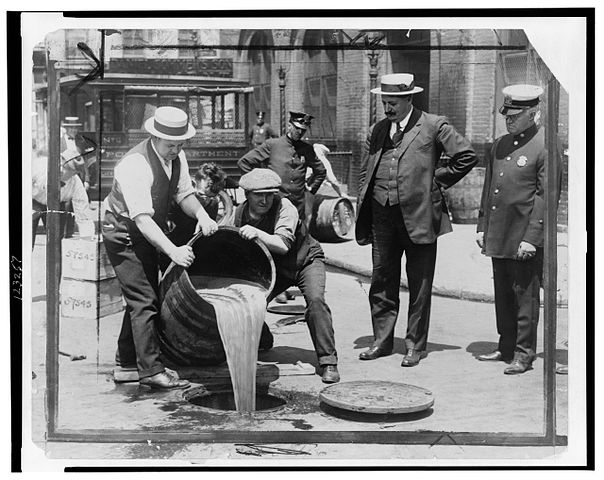
5_Prohibition_Disposal(9)

The prince learned that, despite the best motivations of the temperance groups, the prohibition on fun had unintended consequences. The loss of jobs in the entertainment and libation industries created a financial burden in the land. In addition, many people missed having fun, so they would gather in secret; singing, dancing, and drinking wine and other banned drinks. This resulted in a rise in criminal activity, as unscrupulous people took control of these hidden locations, and demanded money to keep quiet and not turn in the fun-lovers. And clearly, all the otherwise honest and law abiding citizens who engaged in illicit fun were now, themselves, criminals!

The prince organized a group of brave citizens to battle the Fun-Sucking Dragon. The fight lasted several years, and there were many casualties on both sides. Finally, the Fun-Sucking Dragon surrendered and repealed the law prohibiting fun. The people rejoiced, and fun and happiness once again reigned in the land.  Mostly.

Dragon Surrender

Despite the victory, the Fun-Sucking Dragon had only surrendered. The prince was unable to slay him entirely. There have been long-lasting effects of the fun prohibition, even to this day. On the one hand, the people became more aware of the risks of overindulging in fun, so this is seen as a positive. Yet nearly 100 years later, there are still residual impediments to fun in the land. Some parts of the country retained portions of the archaic law, making it difficult for the citizens in those regions to engage in as much fun as others.

The prince was happy that he could restore fun and happiness to his neighbors, but knew there was still much more work to do. Slowly, the prince’s influence continues to remove barriers to fun. The fun-lovers in the land are hopeful that one day, all the people will be permitted to engage in all the fun activities equally.

And there will be much rejoicing.

the_end-300px

This is a work of fiction. All characters are made up and any resemblance to actual people or dragons is purely coincidental. It is also my entry into this month’s Monthly Wine Writing Challenge (#MWWC33), the theme of which is “Once Upon a Time” as selected by last month’s winner, Mel of Wining with Mel. No dragons were harmed in the writing of this blog post.

BottleRock, BottleRock2017, BottleRockNapa, Music Festival, Napa, Napa Valley, Wine

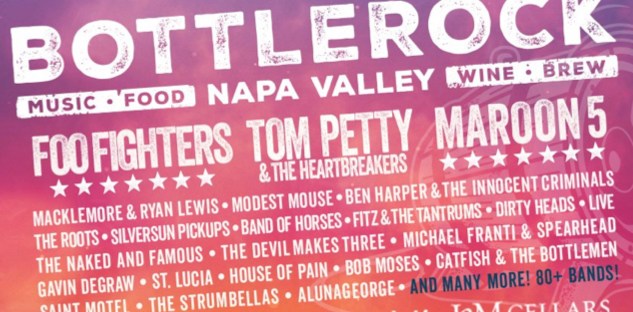
BottleRock Napa 2017

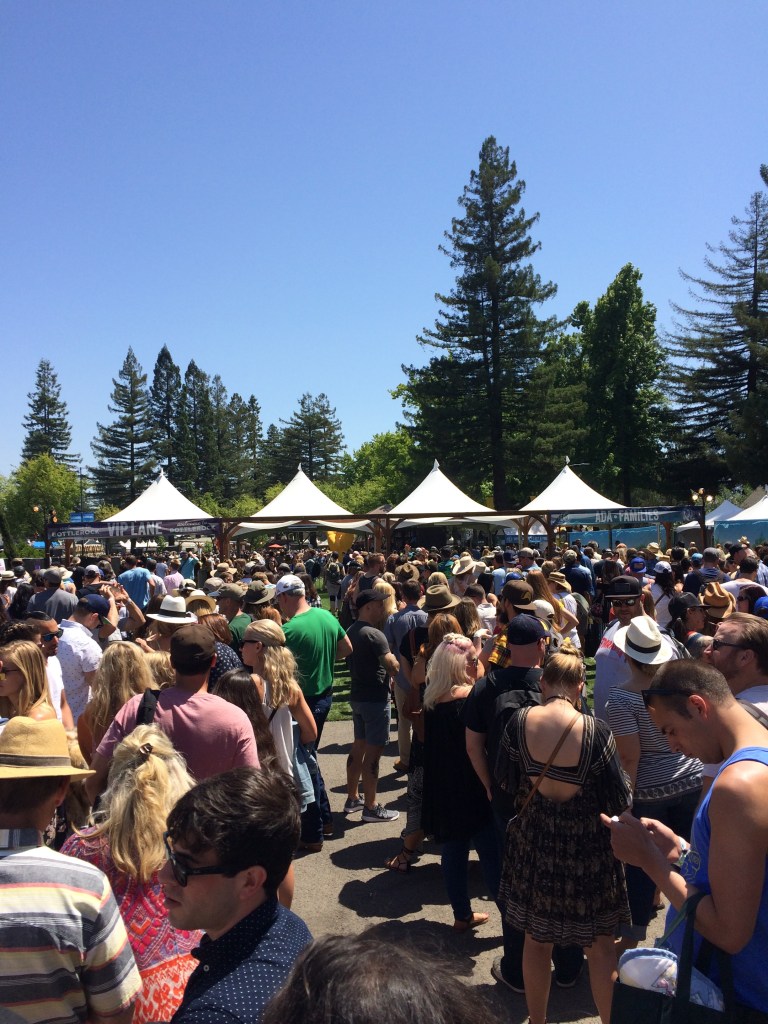
If you’ve never been to a three-day music festival before, BottleRock Napa is a good place to start. I wasn’t sure what to think when I decided to go, and I certainly didn’t know whether or not I’d be able to hold up for the entire weekend! I’m no spring chicken, you know! Still, the idea of spending the Memorial Day Weekend enjoying great wines, delicious food, and listening to awesome live music – at four different stages – sounded fun, so away I went. I’m glad I did!

BottleRock Napa is an amazing, high-energy event. The organizers did a great job of planning and preparing, creating a comfortable and welcoming environment for guests. The main stage area was laid with fresh sod for the comfort of concert goers, and there were plenty of places to sit and relax. The staff were all amazing, and everyone there was in a great mood all weekend. And why wouldn’t they be?

Naturally the wine was amazing! What I didn’t expect is that nearly all the food was from Napa area restaurants. This was no corn-dog-and-funnel-cake festival, folks. No, this was gourmet! (I only wish I had taken pics of the food before I devoured it!)

I had an amazing time at BottleRock Napa 2017. I’m looking forward to going again. Yet, rather than prattle on about the experience, allow me to share it in pictures; both Instagram posts and individual photos. I hope you enjoy them!

https://www.instagram.com/p/BUklwKHF_TH/?taken-by=appetite_for_wine

https://www.instagram.com/p/BUkoMxLlE37/?taken-by=appetite_for_wine

https://www.instagram.com/p/BUks-D8Fno0/?taken-by=appetite_for_wine

IMG_2360
Macklemore & Ryan Lewis poppin’ some tags!

https://www.instagram.com/p/BUlJfaAl2cJ/?taken-by=appetite_for_wine

IMG_2367
No, we weren’t that close. This is a pic of the Jumbotron. But still…
IMG_2372
Happy people enjoying wine, food, and music!

https://www.instagram.com/p/BUnsTO8lVSP/?taken-by=appetite_for_wine

IMG_2380
Tom Petty, rock icon

https://www.instagram.com/p/BUpm_3KFtKP/?taken-by=appetite_for_wine

https://www.instagram.com/p/BUpow85liYq/?taken-by=appetite_for_wine

https://www.instagram.com/p/BUp3QzGlBtm/?taken-by=appetite_for_wine

https://www.instagram.com/p/BUp-uXIFNFp/?taken-by=appetite_for_wine

https://www.instagram.com/p/BUqRxCllGSW/?taken-by=appetite_for_wine

https://www.instagram.com/p/BUqVXmjFU5y/?taken-by=appetite_for_wine

https://www.instagram.com/p/BUqeueXFybg/?taken-by=appetite_for_wine

Contest Winner, Hungarian Wine, Hungary, Sauska, Tokaj, Tokaji, Wine

Winning Wine: A Review of Sauska Tokaji Aszú 2003

Some days you lose.

Some days you win.

Some days you win wine!

Back in December, Sauska Wines US and the wine blog Wine Esquire sponsored an Instagram contest. The winner would receive a bottle of Sauska Tokaji Aszú 2003, 6 puttonyos.  Entry was simple: follow SauskaWineUS on Instagram. Boom. Done. Of course, I wouldn’t win. I never win contests.

On December 27, 2016, my luck changed. (It’s been continually improving since then, but that’s another story.) I received a private Instagram message from SauskaWinesUS informing me I was the winner of the Tokaji contest! A bottle of this golden nectar would soon be on its way to me. The bottle arrived at my office a few weeks later, with much fanfare (Well, in my head anyway. My coworkers couldn’t have cared much less. Silly coworkers.)

https://www.instagram.com/p/BPIy3jgA47u/

This would be my first excursion into Hungarian wines. Ever since the winning bottle’s arrival, I’ve been waiting for just the right time to open it. Last night was that right time.

Before we get into my description of just how incredibly decadent this wine is, let’s explore the story behind the wine…

Tokaji is the most famous and popular Hungarian wine. It hails from the Tokaj region in northeastern Hungary. The primary grape varieties used in Tokaji wines are Furmint, Hárslevelű, and Muscat Blanc. Tokaji is known for its rich, nectar-like flavors and sweetness. This characteristic is the result of the use of botrytized grapes. Botrytis is a type of fungus that affects grapes. When controlled and allowed to develop, it is known as Noble Rot, and dries the grapes which concentrates the sugars and flavors. Not all Tokaji wines use botrytized grapes. Those that do are labeled as Aszú, and are further categorized by their residual sugar levels, indicated by the designation “puttonyos.” Aszú wines range from 3 puttonyos, with 25 grams of residual sugar per liter, to 6 puttonyos, with 150+ grams per liter. The bottle I received was at the top of that scale, with 6 puttonyos.

Sauska Wines is a family owned winery, with vineyards in Tokaj and Villany. Using indigenous and international varietals, they produce a varied portfolio of wines, including sparkling, whites, rosés, and reds. The Tokaji Aszú 2003 that I received was crafted from hand-picked Furmint and Hárslevelű grapes. Barrel fermented with only indigenous yeasts, it spent 36 months in new oak before bottling. At 222 grams of sugar per liter, it’s definitely sweet, but at only 10% ABV, you can sip and enjoy it all evening.

Tokaji wines have a royal history. Kings and noblemen throughout history, including King Louis XIV of France, Peter the Great, and Catherine the Great have coveted the golden elixir. With such an impressive following, I knew this must be a wine of elegance and distinction.

However, in the interest of full confession, neither my guest nor I are fans of super sweet wines. Although we were excited to experience such a majestic and noble wine, we were also a little apprehensive when opening the bottle. As soon as I pulled the cork and took my first sniff, all apprehension evaporated. This isn’t your run-of-the-mill sugar bomb. This wine has depth, character, and complexity beyond anything I’ve experienced in a dessert wine.

IMG_2344

Rich, golden color in the glass. Opened cold (+/- 40F) and allowed to open as it warmed. Initial aromas on ripe apricot and honey. While sweet, this is so much more. There is an incredible complexity on the nose that entices and invites one in. On the palate, the mouthfeel is rich and creamy, almost syrupy, with flavors of apricot nectar, honey, overripe peach and pineapple, and golden raisin. This wine is dessert unto itself. The finish is sweet and lingers for several minutes. Very impressive, indeed!

I’d once again like to thank Sauska Wines US for their generosity in offering this incredible wine prize, and Wine Esquire for sponsoring and promoting this contest. For those of you who haven’t experienced the magic of Tokaji Aszú, I encourage you to seek it out and give it a try. Even if you think you don’t like sweet dessert wines, I think you’ll like this!

Cheers!

Cabernet Sauvignon, France, Merlot, Rosé, Wine

Review: Château Bélingard AOC Bergerac Rosé

Summer is the traditional season for Rosé wine. There is a movement afoot to encourage wine lovers to enjoy Rosé all year, and I’m all on board. I do enjoy Rosé wine year around. Nevertheless, lighter bodied, crisp wines taste best to me (any many others) when the weather is warmer. Poolside, lakeside, or parkside, a refreshing Rosé is a great way to enjoy a summer afternoon.

Rosé wine comes to the plate with two strikes against it. First of all, many people I know still think all Rosé wine is like the syrupy sweet White Zinfandel popular in the 80’s and 90’s. This is simply not true. The reality is that a good many of the Rosé wines available today are crafted in the classic, Provençal style: dry, crisp, and refreshing. Still, some simply aren’t willing to give dry Rosé a try. I say their loss is my gain: more for me!

Strike two is that there are a lot of low quality Rosé wines out there, lacking in flavor, interest, or character. I suppose this is to be expected when a product suddenly becomes as popular as Rosé has in recent years. Everybody wants a piece of the action; to ride the wave while it is high. So they’ll rush to put something, anything out there to enter the market before the tide turns. (I’m detecting a surf theme here. Appropriate, given that Rosé is a great beach wine!)

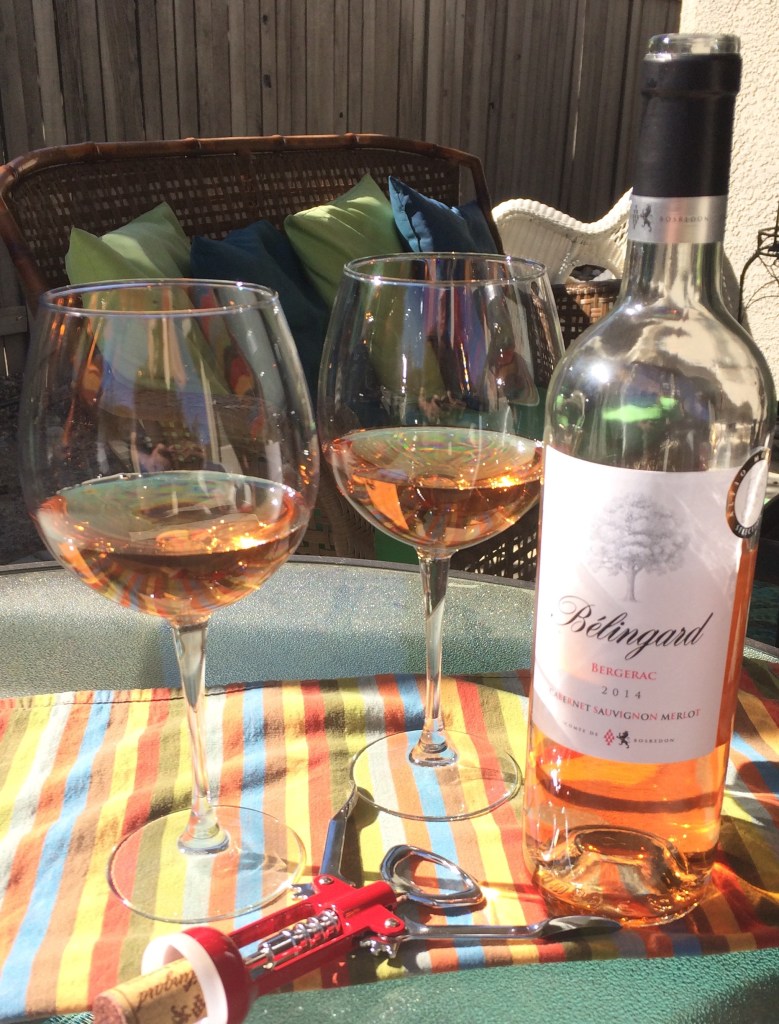
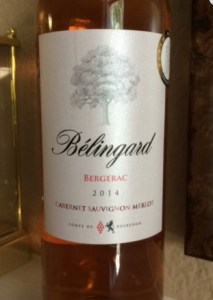
Fortunately, there are also many excellent Rosé wines available! I found one of them recently at my local Total Wine & More store. Château Bélingard AOC Bergerac Rosé (Retail: $11.99) is a blend of 70% Cabernet Sauvignon and 30% Merlot. As one might expect from the use of these two big, bold red grapes, this Rosé has a bit more body and heft than most. Make no mistake, though; this is still a dry, crisp, refreshing wine!

logo-header-chateau-belingard-03

Founded in 1820, Château Bélingard is located in Southwest France, in the Bergerac appellation, east of the more famous Bordeaux region. While Bergerac wines are made predominantly with the same varietals as those of Bordeaux – Cabernet Sauvignon and Merlot based red wines, and Sauvignon Blanc and Sémillon based whites – Bergerac wines are often considered softer and less serious. I don’t take this as a criticism in any way! On the contrary, these are high quality, value wines! Not everyone is a collector or connoisseur, and there is definitely a need for affordable, easy-drinking, everyday wines.

In addition to this Rosé, Château Bélingard produces an impressive portfolio of reds and whites, including a Sauvignon Blanc/Sémillon/Muscadelle blend, and several levels of Cabernet Sauvignon/Merlot blends. Below is my review of the Rosé, which we recently enjoyed as a cool refresher on a 102°F Sunday evening.

 IMG_2337

IMG_2342Salmon, almost orange color. Aromas and flavors of tropical fruit including mango and passion fruit, with a hint of mandarin, along with light red berry flavors of strawberry and ripe raspberry. Dry with medium body and a soft, round mouthfeel and lively acidity make this a refreshing wine, yet big enough to pair with grilled tri-tip steaks or other summer BBQ fare.
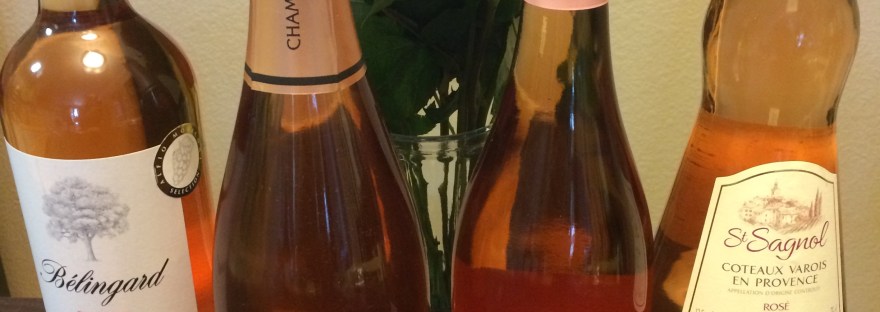
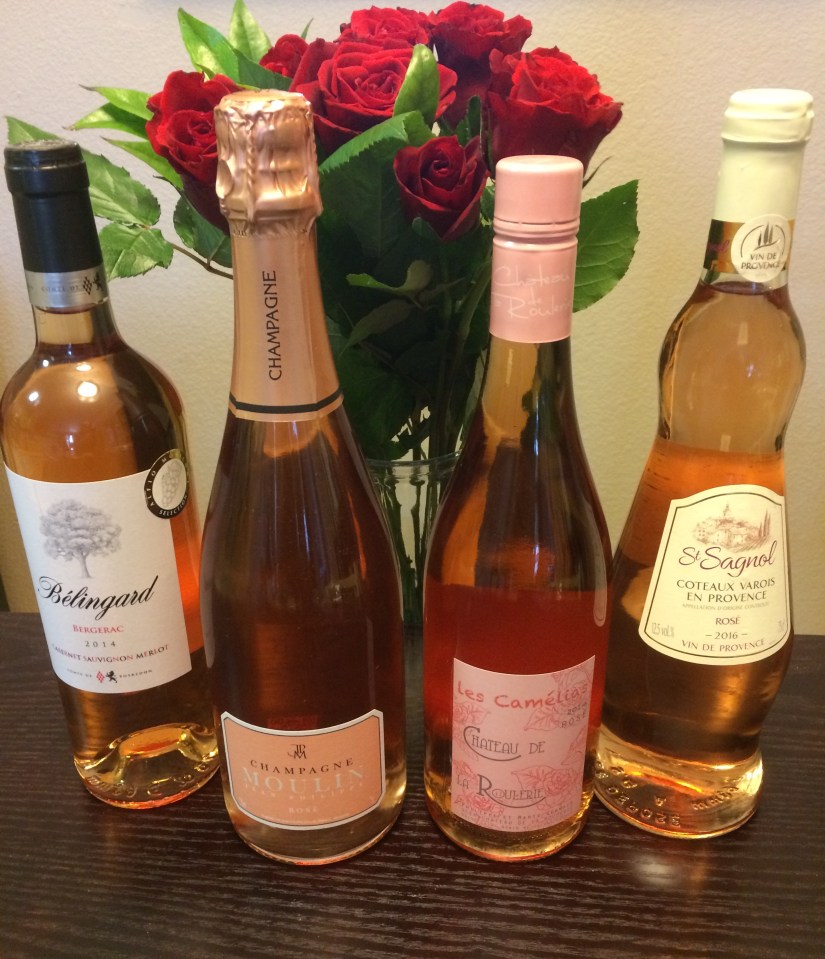
We really enjoyed this wine! I rated it 4.5 out of 5 stars (92 – 94 points).

Check your local retailer and seek out some of this amazing Rosé wine! You’ll be glad you did!

Cheers!

Chinon, Mom, Mother's Day, Rose, Roses, Wine

Roses and Rosé for Mother’s Day

IMG_2303

Today is Mother’s Day in the United States. I am fortunate, in that both of my parents are alive and healthy, in their early 80’s. What’s more, they live in a beautiful retirement apartment complex just a few minutes from my home. Over the years, we have not always lived so close; so many Mother’s Days were spent remotely. So I’m pleased to be able to celebrate this day over a meal and wine with both my mother and dad.

Contrary to popular belief, at least by me, Mother’s Day is not just another “Hallmark Holiday.” Indeed, the day we know today was started in 1908 by Anna Jarvis, to honor the sacrifices mothers make for their children. Hallmark wasn’t founded until two years later in 1910! In 1914, President Woodrow Wilson signed a declaration establishing Mother’s Day as the second Sunday in May. Yet celebrations of motherhood date much further back than that. The ancient Greeks and Romans held festivals honoring the mother goddesses Rhea and Cybele. More modern Christian celebrations of “Mothering Sunday” eventually evolved into the holiday we enjoy today.

I like to refer to the community where my parents live as a “land-based cruise ship.” It’s pretty much all-inclusive, with three meals a day, housekeeping services, social activities, recreation, and a shuttle bus for day trips and running errands. In fact, the apartments themselves don’t even have kitchens! Management is always gracious and invites guests for special occasion meals. Mother’s Day is no exception! Lunch is the big meal of the day, and there is always a main entrée, as well as an alternate in case you don’t care for the main. Mind you, these are chef-prepared meals so they’re always enticing and tasty!

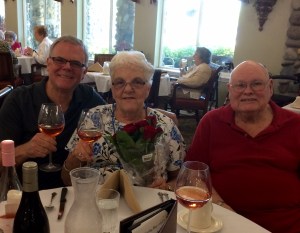
Today’s main entrée was marinated flank steak with hoisin sauce, with arepas and artichoke timbales. If you’re not feeling like beef, the alternate was crab cakes with papaya pepper puree and citrus dill aioli. When I come over for special meals, I always like to bring a bottle or two of wine to pair with the meal. After all, I am a wine guy, so my folks appreciate my recommendations! I went in assuming we would all want the flank steak, so I brought a Cabernet Franc; the Le Pré Vaujour Chinon 2016. However, it was possible that my mom would surprise me and order the crab cakes. Besides, this is Mother’s Day, so we have to have a Rosé, right? As you can see in the photo above, we had several Rosés to choose from. In keeping with the Cabernet Franc theme, we opted for the Château De La Roulerie Les Camelias Rosé 2014, a blend of 50% Cabernet Franc and 50% Cabernet Sauvignon.

IMG_2314
Roses and Rosé for Mother’s Day! 
IMG_2313
OK, props to dad, too. Without him, she wouldn’t be my mother! 

As expected, the meal was delicious! We started with a salad of spring greens, micro greens, and Belgian endive with peach-basil vinaigrette. Although we all ordered the flank steak, we opened the Rosé for the salad course. It was an amazing pairing! When the main course arrived, we chugged the remaining Rosé in our glasses to make room for the red wine. Honestly, I was a little apprehensive. I hadn’t realized until I got the bottle home that the Chinon was a 2016 vintage. The grapes in the bottle were on the vine only a few months ago! I needn’t have worried, though, as the pairing was heavenly! For dessert we enjoyed homemade tiramisu and sipped on the last of the Chinon. Yum!! It was a very pleasant and enjoyable way to celebrate the sacrifices my mother made in raising my sister and me. Mainly my sister. (Just kidding, sis!)

This slideshow requires JavaScript.

The Wines

Château De La Roulerie Les Camelias Rosé 2014

IMG_2311

​Salmon color in the glass. Aromas and flavors of strawberry, red raspberry, and red currant. Bright acidity with medium body. Light and lively. Red berry, including cranberry on finish. Excellent pairing with the spring and micro greens salad with endive.

4.0 Stars (88 – 91 points)

Le Pré Vaujour Chinon 2016

Yes, 2016. ​Very young, but very good! Bright purple color in the glass. Aromas and light mouthfeel are reminiscent of a Beaujolais Nouveau: Fresh raspberry, red currant, and violet, with some spice, and a bit of freshly tilled earth, with just a hint of oak influence. Surprisingly soft and smooth for such a young wine, with lively acidity and medium body. The acidity made it perfect with the flank steak, and led to a long, pleasing finish. Very good now, with aging potential for several years.

4.0 Stars (88 – 91 points)

My hope is that each of you enjoyed celebrating your mother as much as I did mine. Let me know in the comments what you did with your mom, and what wines you paired with it!

Cheers!


Celler Barcelona, Grenache, Spain, Tempranillo, Wine

Review: Celler Barcelòna Red Blend 2014

There are five wine bars in my hometown of Folsom, California. Pretty impressive for a sleepy suburb outside of Sacramento. Of course, when you consider that Folsom is less than two hours from four world-class wine regions (Sonoma, Napa, Lodi/Clarksburg, and the Sierra Foothills) it’s not so surprising after all.

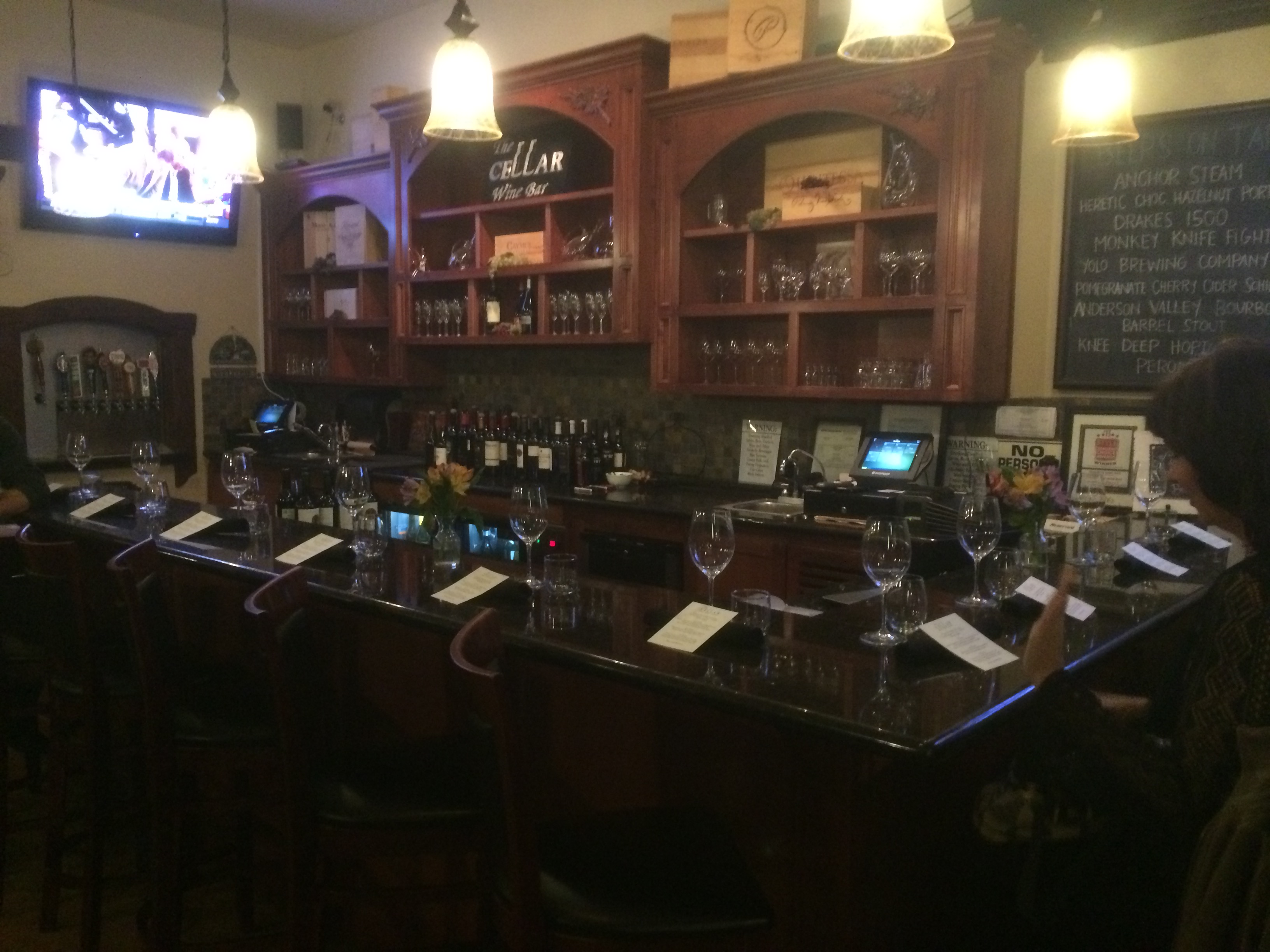
My favorite local wine bar is The Cellar, located in the heart of Old Folsom on Sutter Street. Maintaining its historic Gold Rush façade, Sutter Street is a charming stroll into yesteryear for tourists and locals alike. In addition to the three wine bars in a two-and-a-half block distance, there are taverns, restaurants, art galleries, antique and gift shops, and an old-fashioned chocolate shop. Old Folsom really is a hidden gem. You ought to come see for yourself!

The Cellar
Yup, those are beer taps on the left! For those who don’t wine.


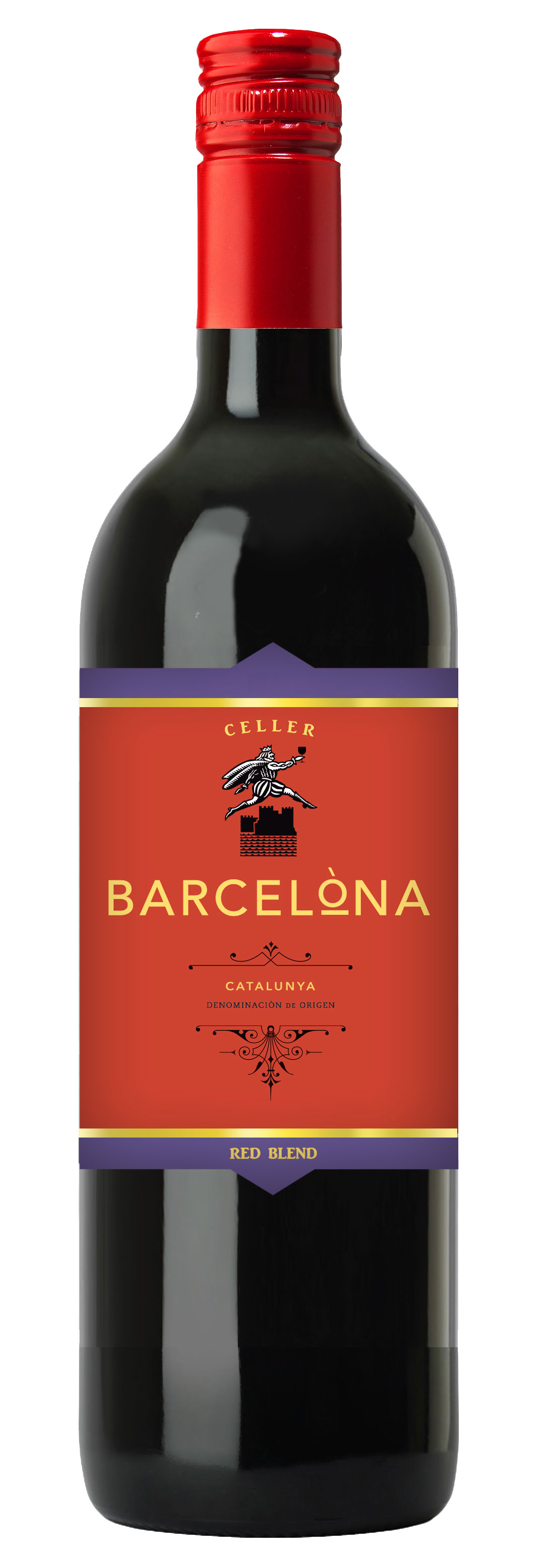
When I first started frequenting The Cellar a few months ago, their wine list included the most delicious Carménère I’ve ever tasted. The Vina Maipo Vitral Carménère 2012 was full, rich, and smooth. A few days ago I ventured in for a glass of this enticing delight when, to my shock and dismay, I discovered it was no longer on the menu. I shared my angst with Drew, the ever-present and helpful server, and he assured me that the replacement wine on their updated list would not disappoint. I’m a trusting sort, and Drew has never steered me wrong, so I ordered a glass of this new wine: Celler Barcelòna Red Blend 2014. Once again, Drew came through! This wine is spectacular!

Celler Barcelòna Red Blend 2014 is made from 50% Grenache and 50% Tempranillo. Hailing from Cataluña, Spain, it is aged 25% in French oak, and 75% in stainless steel and concrete over seven months.

Celler Barcelòna was founded by winemaker Russell Smith. Having worked at such prestigious California wineries as Joseph Phelps and Flora Springs, Russell pursued a dream of making wine in Northern Spain. He purchased vineyards in the famed Montsant region, and began production in 2013. Considering how impressive was the 2014 I tasted, this is a winery worth watching for many years to come!

Here’s what I thought of it:

Red_blend_2014

Deep purple color. Aromas ripe blackberry and soft oak. Flavors of blackberry, raspberry, and black cherry. Soft oak notes on the mid-palate mingle with soft tannins and light acidity. Long finish of dark berry, chocolate, and spice.

4.5 out of 5 stars (92 – 94 points)

Retail price: $16 on the website.

I had this wine on its own. It’s great by itself, and it would also pair very well with a variety of foods like tapas, grilled pork, or The Cellar’s amazing cheese plate.

If you find yourself in the Sacramento area and want some company for some suburban wine bar hopping, drop me a line. I’d love to show you around!

Cheers!

#MWWC32, Carlos Serres, Crianza, Regions, Rioja, Tempranillo, Translation, Wine, Wise Villa

Regions to Grapes: Understanding the Translation – #MWWC32

I’m a planner. My family used to tease me because I would write an itinerary for family vacations. I mean, we want to make sure we get to see and do all we wanted to see and do, right? Normally, when I write a blog post, especially one as significant as a Monthly Wine Writing Challenge, I like to start several weeks early, so I can take my time to ponder, refine, and polish my work.

Monthly Wine Writing Challenge

I am aware that not all people are like me. Some people thrive under the pressure of a deadline. They procrastinate until the bitter end, and then crank out whatever comes, and hope for the best. My son is one of those people. In high school he used to drive me insane! Up until all hours the night before a major paper was due, he produced some amazing work. My blood pressure would rise as he sat calmly reading his books, instead of writing his college application essays. Yet, he got into a great school, and always got good grades. Procrastination works for him. It does not work for me.

Nevertheless, my life has been crazy busy these past few weeks. So when I checked my email yesterday morning, and Jeff the Drunken Cyclist reminded me that entries for #MWWC32 are due Monday, my stress level rose. For this piece, I will have to channel my son, and try to crank out a worthwhile piece at the last minute! Working under the pressure of a deadline is foreign to me. So it is my hope that by writing in this unfamiliar method, I am able to adapt and produce a quality blog post. Will I be able to create a decent translation? We’ll see.

translation

As an international product, wine is interesting and confusing. In the United States, and many other New World wine producing regions, the label lists the dominant grape variety in the bottle. Cabernet Sauvignon, Chardonnay, Pinot Noir, Sangiovese, Tempranillo – consumers have a pretty good idea of what they are getting themselves into when they by a New World wine. This cannot always be said of European, or Old World, wines. Although some producers are starting to list the varietal on the bottle, tradition dictates that the label contains the name of the region, rather than the grape.

This difference between Old World and New World labels can cause no small amount of confusion for wine consumers. There is, one could say, a loss in translation. Many wine lovers who favor wines from the U.S. simply don’t understand European labels. This is not limited to newbies. Many experienced wine drinkers I know mistakenly believe that Bordeaux is a grape variety. It’s not. Bordeaux is perhaps the most famous wine region in France, characterized by wine blends made predominantly from Cabernet Sauvignon and Merlot. Much confusion surrounds Old World wine regions. Sometimes all that is needed is a simple translation. Many famous wines from regions in Europe are known by their regional names. However, many people do not know the grape varieties from which these wines are made. Allow me to help with the translation of some of the more notable regions.

  • Barolo: An Italian wine from in the area around the city of Barolo, in the Piedmont region located in Northern Italy. Barolo is made from Nebbiolo. Pricy and age worthy, it is often known as the “Wine of Kings.”
  • Bordeaux: Perhaps the most famous wine region in the world, Bordeaux is located in southwest France. The region is bisected by the Gironde estuary. A number of different grape varieties go into these blends, but they are dominated by Cabernet Sauvignon and Merlot. Wines from the left bank are typically Cabernet Sauvignon based, whereas right bank wines are predominantly Merlot.
  • Burgundy: Another famous French region, Burgundy produces some of the most expensive wines in the world. Don’t fret, though; not all the wines from Burgundy are from Domaine de la Romanee-Conti. Burgundy is most famous for its red wines, produced from Pinot Noir. However, the region also produces spectacular white wines using Chardonnay grapes. If you’ve had a bottle of Chablis, you’ve had a Chardonnay from a sub-region of Burgundy.
  • Champagne: One of the most widely misunderstood and misused wine terms (in my opinion.) Everybody knows what Champagne is, but many don’t seem to understand what Champagne is not. California Sparkling wine is not Champagne. (Yes, there are a handful of California producers who are allowed to use the term, but that does not make them true Champagne wines.) Prosecco isn’t either. Nor is Cava. Champagne is a sparkling wine produced only in the Champagne region of France. It is typically made from Chardonnay, Pinot Noir, and Pinot Meunier.
  • Chianti: Everybody knows Chianti! Those quaint straw-wrapped bottles found in Italian restaurants, often used as candle holders. Yet Chianti is so much more than kitschy decorations. Well-made Chianti is spectacular! Chianti is an Italian region in Tuscany. The wines from here are predominately made from the Sangiovese grape.
  • Rioja: From sunny Spain, Rioja is perhaps the country’s most famous wine. Located in the northeast part of Spain, Rioja is made mainly from Tempranillo and Garnacha (Grenache) grapes. Classifications on Rioja wines mean something, so a little study can help you find what you like. Wines labeled simply “Rioja” are young, and spend less than a year in the barrel. “Crianza” wines are aged at least two years, including one year in oak barrels. “Rioja Reserva” wines have aged three or more years, including one in oak. “Rioja Gran Reserva” wines see at least three years of age, of which two are in oak. As one might expect, the longer the aging, the higher the price.

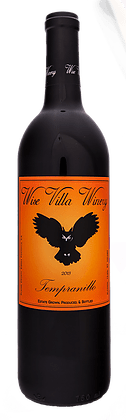
Speaking of Tempranillo and Rioja, I recently had an opportunity to compare a local, California Tempranillo and a Rioja Crianza. Out to dinner one evening a couple of weeks ago, while perusing the wine list, the Wise Villa Winery Tempranillo caught my attention.

Wise Villa TempranilloDeep purple color in the glass. Aromas of ripe blackberry and raspberry. On the palate, juicy blackberry, dark cherry, black plum, and soft oak notes. Soft, smooth tannins with nicely balanced acidity. The long finish is dark berry and soft spice. Great on its own, and pairs nicely with a variety of foods.

Then, about a week later, I selected the Carlos Serres Rioja Crianza 2012 from the list at a favorite wine bar. The difference in styles was interesting, and a great illustration for a New World versus Old World comparison.


Medium purple color in the glass. Aromas and flavors of fresh raspberries, Bing cherry, red plum, and baking spices. The tannins are smooth, and the acidity is bright and lively. The long finish is dominated by red berry, spice, and white pepper notes. This is a great wine for sipping with a special someone, and would also pair very well with tapas or other regional foods.

There are dozens of other wine regions worth exploring, both Old World and New World. I encourage you to do some research on your own and learn your own translations.