Bijou, Chardonnay, Chateau St. Jean, Wine

Review: Chateau St. Jean Bijou Chardonnay 2014

Once upon a time, I was an ABC’er – Anything But Chardonnay. This stemmed from my general dislike for the California Oak Bombs popular in the 90’s and early 2000’s. As much as I appreciate the influence of oak in wine, I prefer that oak is an enhancer, rather than the dominant flavor. If a wine tastes like I’m licking the inside of a barrel, I’m going to take a pass.

A couple of years ago, I took a leap of faith and started exploring Chardonnay again, but only the Unoaked style. Crisp and fruit-driven, I gained a new appreciation for this, the most popular white varietal in the world. Once I understood the grape, sans oak, I have slowly ventured into oaked styles in the hopes my palate would expand to the point where I could include all styles of Chardonnay in my wine repertoire.

While strolling the wine section of my local Trader Joe’s the other day, I had to do a double-take. A lightly oaked Chardonnay, from notable producer Chateau St. Jean, for just $6.99? Without a second thought, into the cart it went!

The Bijou Chardonnay is part of Chateau St. Jean’s California collection. This is their entry level line, carrying the general “California” designation. This means that the grapes may have come from anywhere in the vast Golden State, rather than from a specific, smaller American Viticulture Area (AVA). Thus, there is not going to be a concentrated expression of terroir, but rather, a more general blend of what Chardonnay has to offer. Nevertheless, I found this to be a remarkably well balanced Chardonnay; fruit dominant, with subtle oak influences and crisp acidity.

Here’s my review, posted on Vivino:
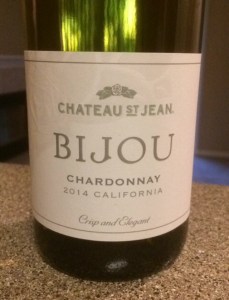
bijou-chardonnay-2014

For an entry level wine, this is a remarkably well balanced Chardonnay. Golden straw color in the glass. Aromas of pear, white peach, and browned butter. On the palate, flavors of pineapple, pear, peach, and tropical fruit mingle with toasty oak and just the right amount of zippy acidity. Medium body with a long, zesty finish. If you don’t like Chardonnay, try this lightly oaked version! It could open doors for you, and at just $7, you can’t go wrong!

4.0 out of 5 stars (88 – 91 points)

$6.99 at Trader Joe’s

At the risk of repeating myself…which I’m going to do anyway…if you are an ABC’er, give this wine a try. It’s only $7, so you really have nothing to lose, and an appreciation for this iconic grape to gain. What are you waiting for? Trader Joe’s closes at 9 p.m. Go!
Bordeaux, Burgundy, Cabernet Sauvignon, Chardonnay, Judgment of Paris, Michael Taber, Steven Spurrier, Wine

Judgment of Paris: 40 Years Later

Dateline: Paris (May 24, 1976)

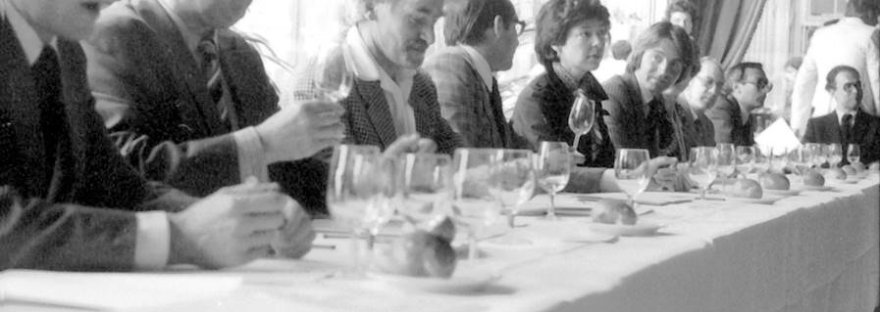
It was 40 years ago this week that Steven Spurrier, a British wine merchant living in Paris, held a wine tasting event, the results of which shocked the wine world. Spurrier gathered nine expert judges, all of them French, for a head-to-head blind tasting of the best of Bordeaux and Burgundy against relatively unknown wines from California. Spurrier and an associate, American Patricia Gallagher also participated in tasting and judging the wines. At the time, the commonly held belief was that French wines were the standard of quality, and anything else was inferior. The tasting was originally intended to simply generate publicity for Spurrier’s wine shop and school. Therefore, there was not a lot of outside interest in it, and only one journalist attended the event; George M. Taber, from Time Magazine (Taber, 2005).

Producers_from_Judgement_of_Paris_wine_tasting
Photo Credit: Wikipedia

There were two separate competitions: White Burgundy vs. California Chardonnay, and Red Bordeaux vs. California Cabernet Sauvignon. In each category, there were four French wines, and six from California. The outcome is now well known – a California wine won top honors in both categories. The event changed the landscape of the Napa Valley, figuratively and literally. Taber later compiled the experience in his book: Judgment of Paris: California vs. France and the Historic 1976 Tasting that Revolutionized Wine (Taber, 2005). It is a fascinating and educational account, not only of the tasting event, but also of the history of wine in France and the Napa region. The tasting was also dramatized in the movie Bottle Shock in 2008. It’s worth seeing if you haven’t, but keep in mind this is a motion picture dramatization, complete with editorial and creative license. If you want to really explore and learn about the history, I recommend reading the book!

Judgment of Paris Taber
Photo Credit: Amazon.com

Below are the results of the famous 1976 tastings, in order of their ranking:

White

  1. Chateau Montelena, 1973, Napa
  2. Meursault Charmes Roulot, 1973, Burgundy
  3. Chalone Vineyard, 1974, Monterey County
  4. Spring Mountain, 1973, Napa
  5. Beaune Clos des Mouches Joseph Drophin, 1973, Burgundy
  6. Freemark Abbey Winery, 1972, Napa
  7. Bâtard-Montrachet Ramonet-Prudhon, 1973, Burgundy
  8. Domaine LeFlaive, 1972, Burgundy
  9. Veedercrest Vineyards, 1972, Napa
  10. David Bruce Winery, 1973, Santa Cruz Mountains

Red

  1. Stag’s Leap Wine Cellars, 1973, Napa
  2. Château Mouton Rothschild, 1970, Bordeaux
  3. Château Haut-Brion, 1970, Bordeaux
  4. Château Montrose, 1970, Bordeaux
  5. Ridge Vineyards Monte Bello, 1971, Santa Cruz Mountains
  6. Château Léoville-Las-Cases, 1971, Bordeaux
  7. Mayacamas Vineyards, 1971, Napa
  8. Clos Du Val Winery, 1972, Napa
  9. Heitz Cellars Martha’s Vineyard, 1970, Napa
  10. Freemark Abbey Winery, 1969, Napa

Among my more cockamamie ideas, it occurred to me that it might be fun to taste each of the wines featured in the Judgment of Paris. Of course, I’ll have to purchase current vintages, but so be it. Many of the châteaux and wineries represented in the competition continue to produce stellar wines, and their prices and scarcity reflect the prestige. Others have remained more affordable and are readily available. In 2004, Chalone Vineyards was purchased by global conglomerate Diageo, which took the brand in the direction of mass-produced table wine; neglecting its historic importance. Fortunately, earlier this year the winery was purchased from Diageo by Foley Family Wines. Spokesman Bill Foley says that Foley Family Wines will work to restore the estate’s reputation and highlight its place in history (Worobiec, 2016).

As much as I’d like to, I won’t be able to recreate the blind tasting, but instead will have to purchase and sample the wines individually over several months. This may prove to be an insurmountable challenge, simply due to the availability (or lack thereof) and cost of some of the famous French wines. Nevertheless, other than those that are clearly out of my range (Château Moutin-Rothschild, for as much as $1,100 for recent vintages, comes to mind) I am determined to seek out and taste them all! Watch for reviews coming soon!

———————————————————————————————————————-

Works Cited

Taber, G. M. (2005). Judgment of Paris: California vs. France and the Historic 1976 Paris Tasting that Revolutionized Wine. New York: Scribner.

Worobiec, M. (2016, February 8). Foley Family Wines Buys Chalone Vineyards. Retrieved May 26, 2016, from Wine Spectator: http://www.winespectator.com/webfeature/show/id/52727


Chardonnay, Jac Cole, nakedwines.com, Wine

Review: Jac Cole Oak Fermented Chardonnay 2014

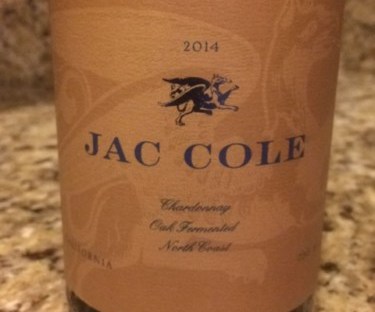
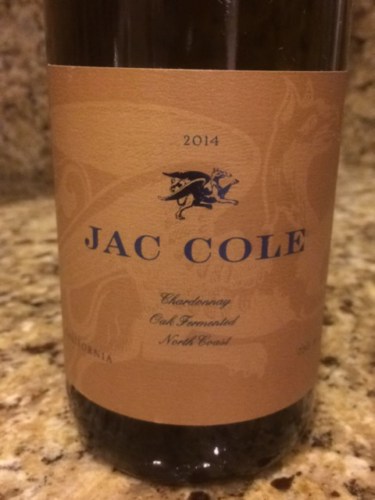
Jac Cole Oak Fermented

ABC – Anything But Chardonnay. That was me, until about a year ago. When I started my wine journey in the mid-1990’s, Big Oaky was king of Chardonnay. Just about everything coming out of California and many other regions was essentially oak juice, mixed with a little bit of fruit. A very popular style, to be sure, and it remains popular for some today, just not for me. So I abandoned Chardonnay, thinking that’s just what it tastes like. I prefer my whites with little or no oak. Don’t get me wrong, I like big oak in my wine…full-bodied red wine. As a newbie back then, I didn’t understand or appreciate the role oak plays in enhancing the flavor and texture of some white wines.

About a year ago I received, from NakedWines.com, a sample of Jac Cole’s Unoaked Chardonnay for review. I was astounded to discover that when left to itself, the Chardonnay grape is fruity and delicious! So I started to explore the varietal a bit more, including oaked styles. Further along in my journey now, I have a greater appreciation of the nuances, warmth, and flavors that oak brings to a finely crafted white wine.

Jac Cole Oak Fermented Chardonnay 2014 is just that: a finely crafted white wine. I’ve written about Jac and his wines before. Former winemaker at Charles Krug, one of my favorite Napa Valley producers, he is a highly skilled craftsman. I also had the honor to meet him about a year ago at a picnic, and he is a truly kind, humble man. This fact makes enjoying his wines even more of a pleasure.

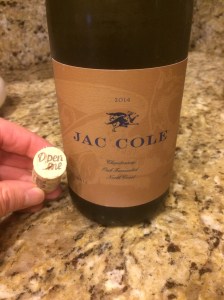
Open Me
Always obedient when a cork speaks to me.

Here is my review, posted on the NakedWines.com website:

Once again, Jac Cole knocks it out of the park. Once, I was an ABC’er – Anything But Chardonnay. Then I tasted Jac’s Chardonnay, and I was converted.

Straw yellow on the glass. Aromas of creamy butter and golden delicious apple. On the palate, there is apple, pear, and pineapple, with soft oak. The mouthfeel is rich and creamy, with balanced acidity. On the finish there is green apple, caramel, and toasty oak, and butter.

We started well chilled, and enjoyed it as the wine warmed. Flavors emerged as the temperature increased. It is quite a complex wine. Paired with roasted chicken and butternut squash, it was magical!

Oak fermented, but not overly oaky. That’s Jac. He lets the delicious fruit of the grape shine, and allows the oak to enhance and soften.

ABC? You bet! Anything By Cole!!

4.5 out of 5 hearts

NakedWines.com exclusive, $13.99 member price.

Become a NakedWines.com Angel here, and order some today!

Cheers!

_____________________________________________